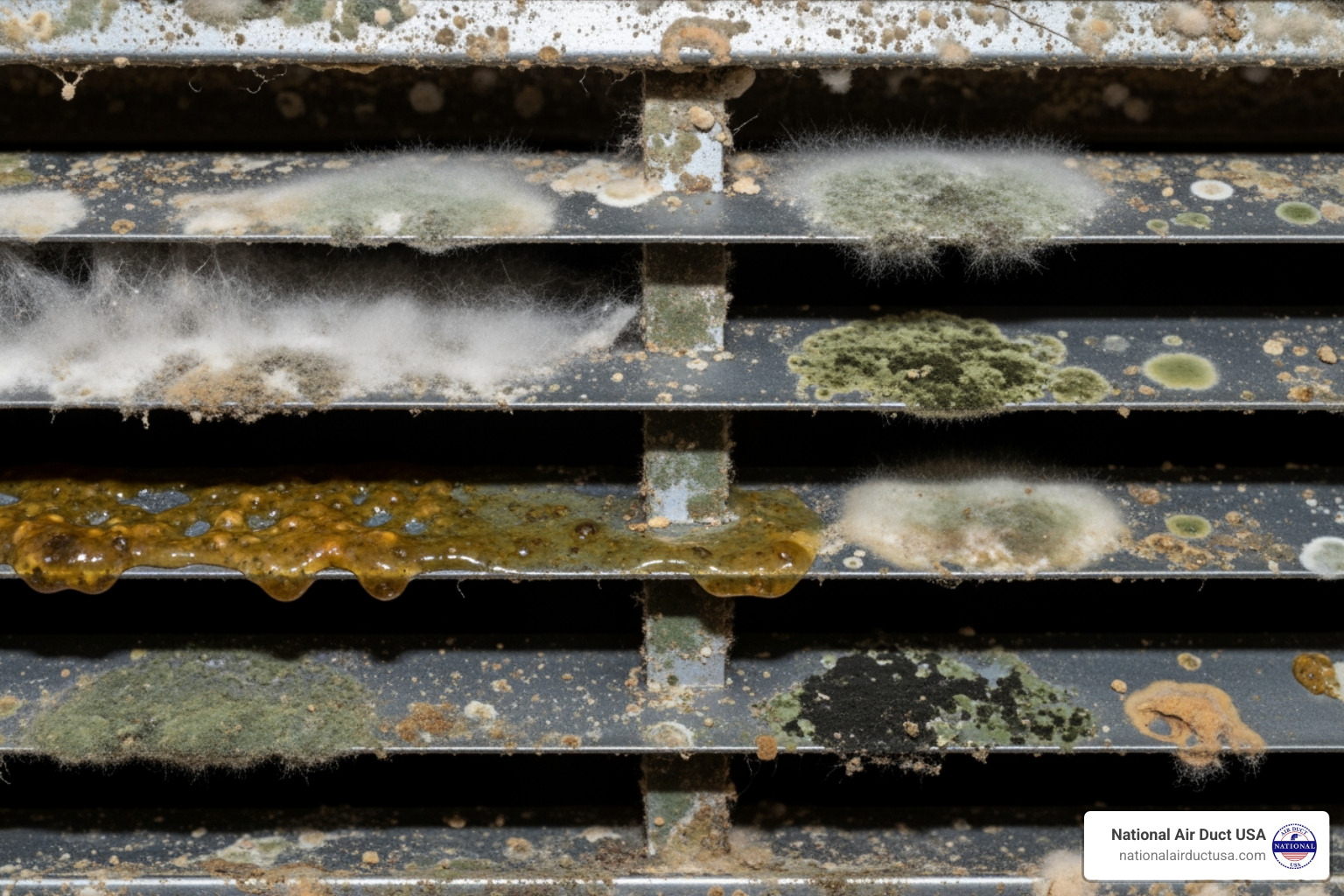
The Hidden Threat Lurking in Your Air Ducts
HVAC mold cleaning is the professional removal of mold from your heating, ventilation, and air conditioning system. This process involves specialized equipment and containment to safely clean air ducts, coils, and drain pans while addressing the root moisture problem to prevent recurrence.
Quick Guide to HVAC Mold Cleaning:
- Turn off your HVAC system immediately if you suspect mold.
- Call a NADCA-certified professional; DIY attempts often spread spores.
- The process includes: inspection, containment, HEPA vacuuming, sanitization, and moisture source elimination.
- Average cost: $1,125-$3,439 for mold removal, plus $100-$400 for duct cleaning.
- Prevention: Control humidity below 50%, change filters every 1-3 months, and schedule bi-annual HVAC maintenance.
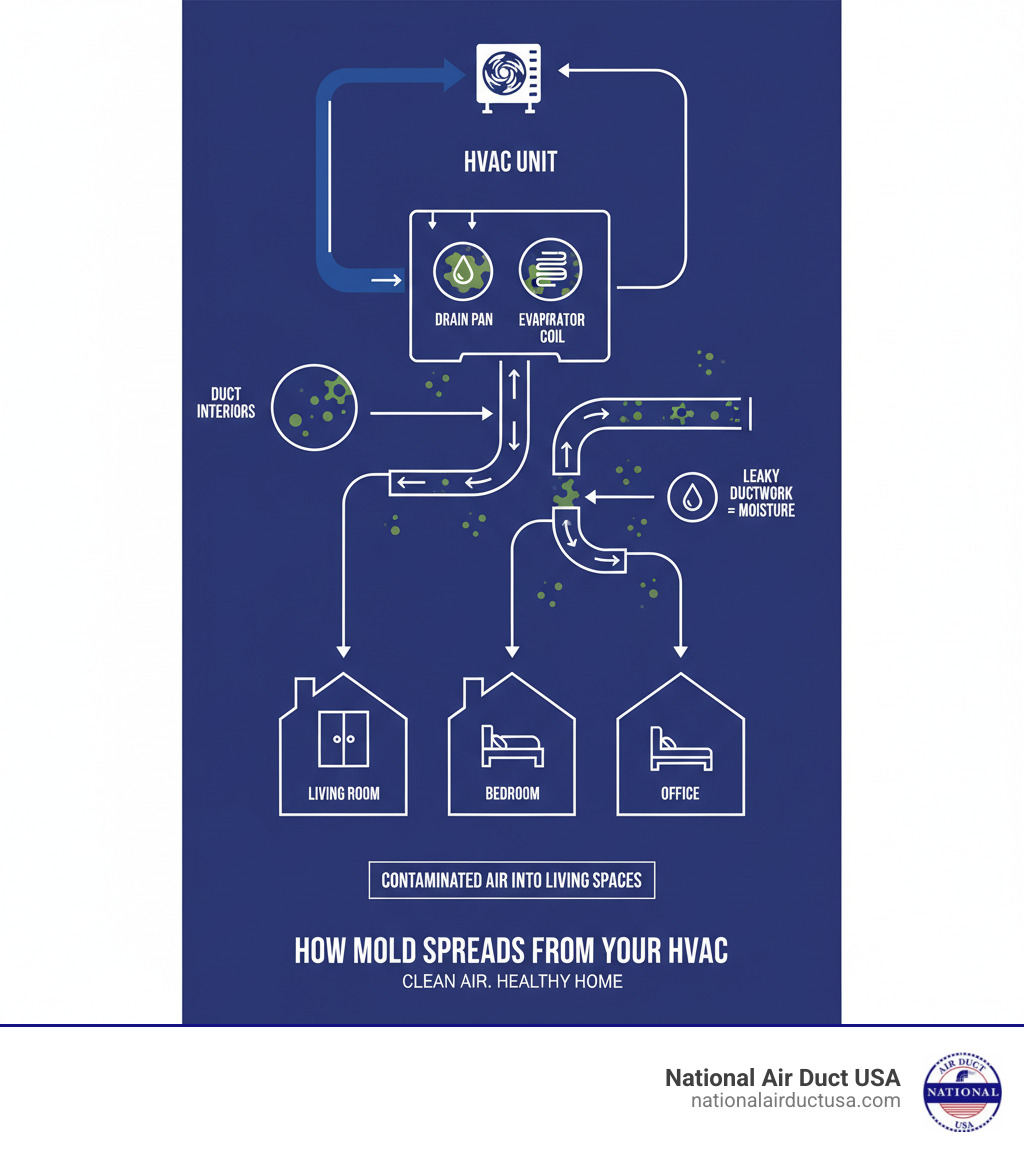
Mold in your HVAC system is a serious threat to your family’s health. When it grows in your air ducts, evaporator coils, or drain pans, your system spreads microscopic spores throughout your home every time it runs.
This can lead to persistent musty odors, allergy symptoms, respiratory problems, and even toxic mold exposure. Many homeowners don’t realize their headaches or worsening asthma could be coming from contaminated air ducts.
Mold thrives in the dark, damp conditions your HVAC system creates. A clogged drain line, leaky ductwork, or high humidity can create the perfect breeding ground.
The good news is that professional HVAC mold cleaning can eliminate the problem for good, but only if it’s done right and the root cause is fixed. This guide will show you how to identify mold, why professional cleaning is essential, and how to prevent it from coming back.
Identifying the Enemy: Signs, Causes, and Dangers of HVAC Mold
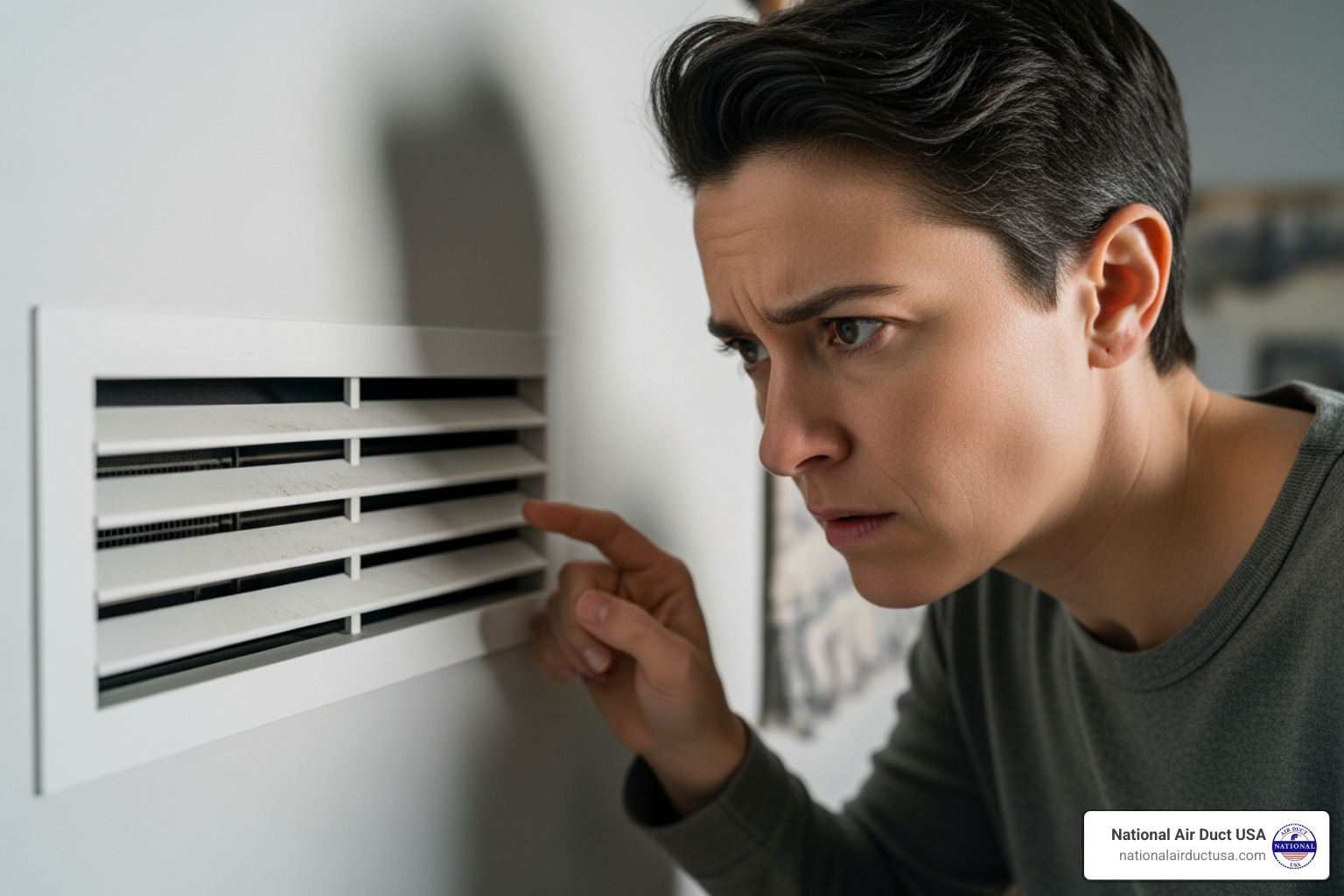
Mold in your HVAC system often grows undetected in dark, damp areas. By the time you notice a problem, it may have been spreading for weeks. Knowing the signs, causes, and dangers helps you catch it early.
The Telltale Signs of Mold in Your Air Ducts
Your senses often detect mold before you see it.
- Persistent Musty Odor: A damp, earthy smell that appears when your HVAC system runs is a classic sign of mold.
- Visible Dark Spots: Black, green, or gray patches on or around air vents and registers are a clear indication of growth.
- Unexplained Allergy Flare-ups: If you experience sneezing, coughing, or itchy eyes that improve when you leave home, your body may be reacting to airborne mold spores.
- Worsening Asthma or Respiratory Issues: Increased asthma attacks, difficulty breathing, or chronic headaches and fatigue can also point to contaminated air.
If these symptoms sound familiar, it’s time to investigate your indoor air quality. More info about our diagnostic services
Primary Causes: Why Mold Chooses Your HVAC System
Mold needs moisture, a food source (like dust), and the right temperature—all of which your HVAC system can provide.
- Excess Moisture: This is the main culprit. High indoor humidity (above 50%), especially in Long Island and Westbury, creates a perfect environment for mold.
- Clogged Condensate Drain Lines: When the line that removes condensation from your AC gets blocked, water backs up in the drain pan, creating a prime breeding ground for mold.
- Dirty Air Filters: Clogged filters trap dust and organic debris, which serve as food for mold.
- Leaky Ductwork: Gaps in ducts can pull in humid, unconditioned air, causing condensation and mold growth inside the ductwork.
- Improperly Sized AC Unit: An oversized unit cools the air too quickly and shuts off before it can adequately dehumidify, leaving behind excess moisture.
- Poor Ventilation: Inadequate ventilation in bathrooms and kitchens traps humid air, which can feed mold growth in your HVAC system.
The Health Risks and Long-Term Consequences of Ignoring Mold
Ignoring HVAC mold is dangerous. Each time your system runs, it circulates spores throughout your home, which can trigger allergic reactions and respiratory infections. The risks are higher for children, the elderly, and those with asthma or compromised immune systems.
Beyond health issues, mold degrades your indoor air quality, which the EPA ranks as a top environmental health threat. It also harms your HVAC system by restricting airflow, leading to higher utility bills and expensive repairs. If the moisture source is a leak, it can even cause structural damage to your home.
Any mold in your HVAC system requires immediate professional hvac mold cleaning. For more details, see the EPA guide on mold and health.
The Definitive Guide to Professional HVAC Mold Cleaning
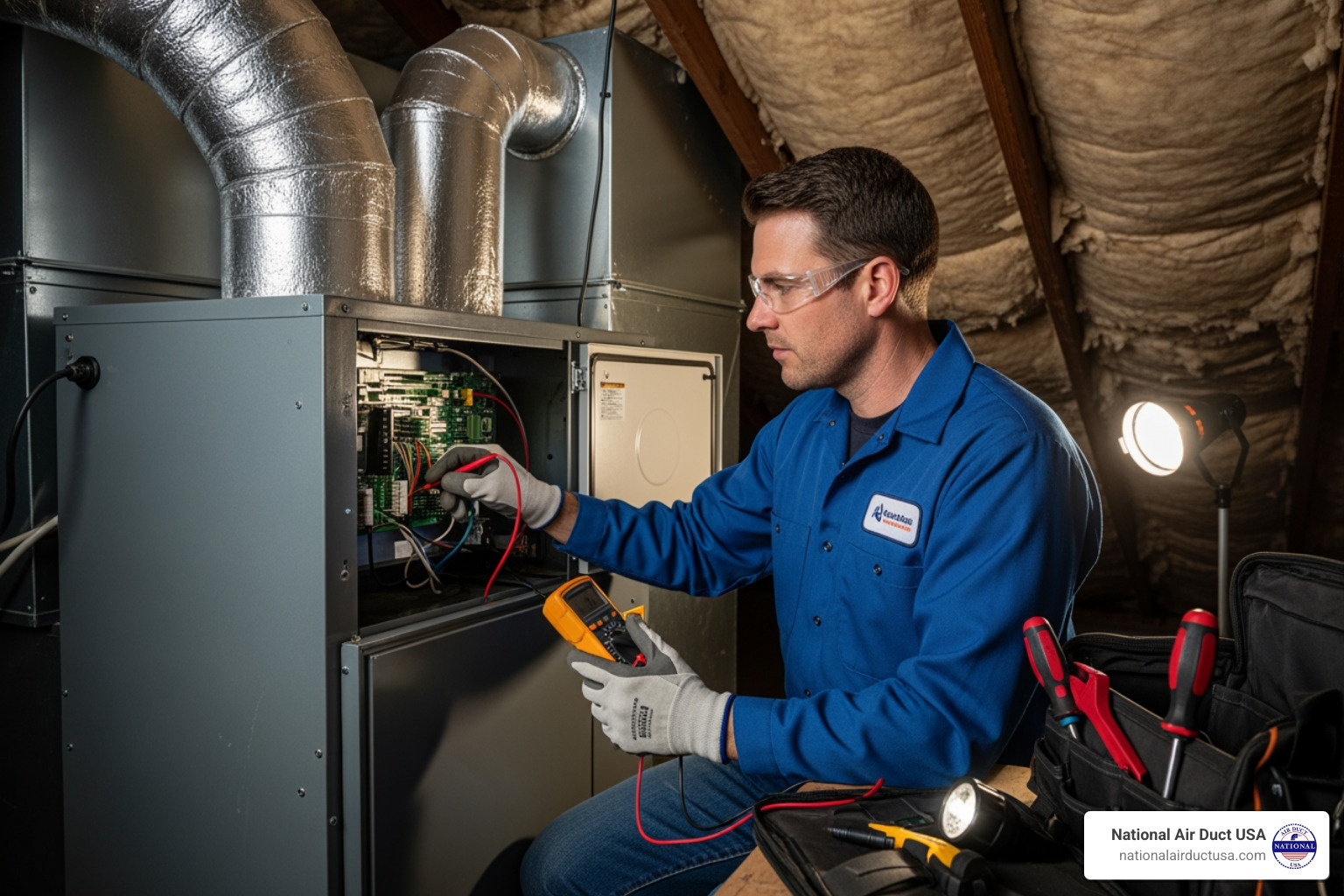
If you suspect mold in your HVAC system, it’s crucial to act correctly. HVAC mold cleaning is a job for trained professionals with specialized equipment, not a DIY project. It requires not only removing the visible mold but also fixing the underlying moisture issue.
Immediate Steps to Take if You Suspect Mold
- Turn off your HVAC system immediately. This stops the spread of mold spores throughout your home. Shut it down at the thermostat and the breaker.
- Resist the urge to clean it yourself. Disturbing mold without proper containment can release a massive amount of spores into the air, making the problem worse. Bleach is also ineffective on porous HVAC materials and can create hazardous fumes.
- Contact a professional. A certified specialist can safely assess the situation. We offer free quotes for our NADCA-certified technicians to visit your Long Island or Westbury home. Get a Free Quote
Why Professional HVAC Mold Cleaning is Non-Negotiable
DIY mold removal is risky. You can expose yourself to harmful spores and spread contamination further. Professionals use proper containment and HEPA filtration to work safely.
More importantly, professionals identify and fix the root moisture problem—like a clogged drain line, leaky duct, or high humidity. Without this step, mold will quickly return. As a NADCA-certified company, we have the training and equipment to clean your entire system and solve the underlying issue. Always look for a Find a NADCA-certified professional and be wary of companies making unverified health claims.
The Professional HVAC Mold Cleaning Process Step-by-Step
Our comprehensive HVAC mold cleaning process ensures the problem is solved correctly:
- Inspection: Our NADCA-certified technicians use cameras and moisture meters to find all mold growth and pinpoint the moisture source.
- Containment: We seal off the work area and use negative air pressure to prevent spores from spreading into your living spaces.
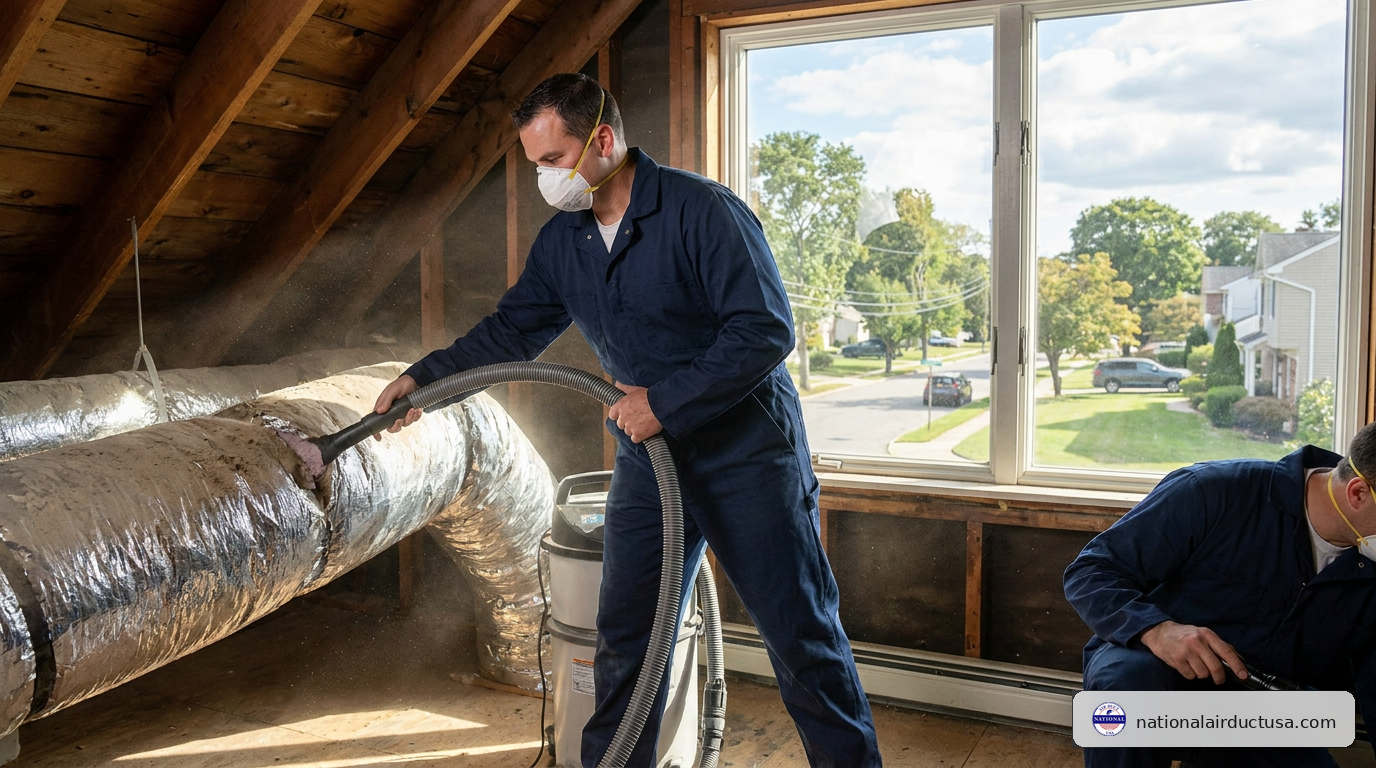
- Agitation and Removal: We use powerful tools like rotating brushes and air whips to loosen mold and debris from all surfaces inside your ductwork and HVAC components.
- HEPA Vacuuming: Industrial-strength vacuums with HEPA filters capture all dislodged contaminants, trapping microscopic spores so they can’t re-enter your air.
- Component Cleaning: We carefully clean the evaporator coil, drain pan, blower motor, and all registers and grilles.
- Sanitization: We apply an EPA-approved disinfectant designed for HVAC systems to kill any remaining spores and inhibit future growth.
- Final Inspection: We perform a final visual check to ensure all mold is gone and all components are clean. We can also arrange for post-remediation air quality testing for your peace of mind.
Proactive Prevention: Keeping Your HVAC System Mold-Free for Good
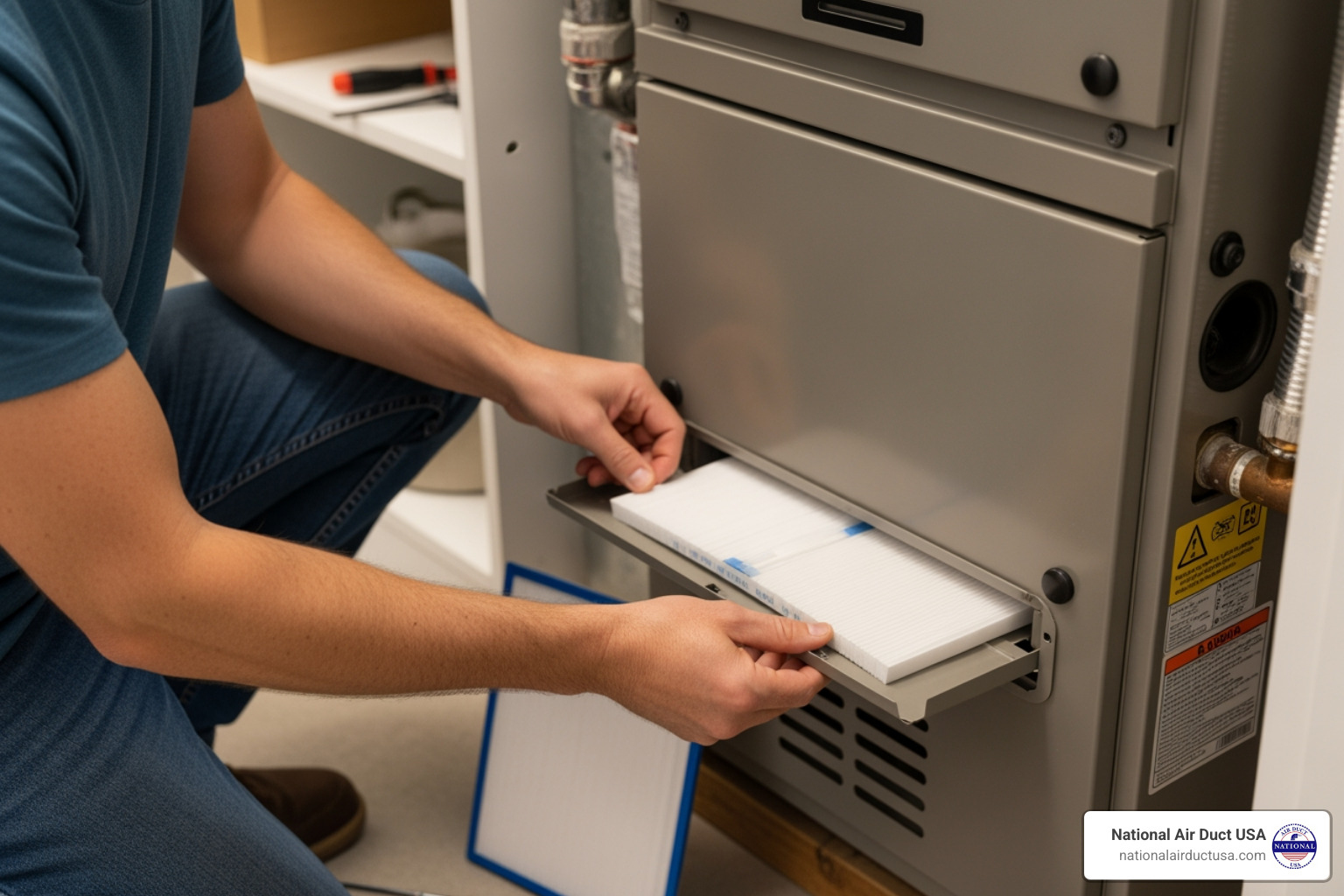
After professional HVAC mold cleaning, the next step is prevention. Keeping mold from returning requires consistent maintenance and a few smart strategies to protect your Long Island or Westbury home.
The Crucial Role of Humidity Control
Mold cannot survive without moisture. Controlling humidity is the most effective way to prevent it.
- Maintain indoor humidity between 30% and 50%. Use a hygrometer to monitor levels.
- Use dehumidifiers. A whole-house dehumidifier is a great investment for humid climates.
- Ensure proper ventilation. Run exhaust fans in bathrooms and kitchens to vent moist air outside.
- Fix leaks promptly. Even small water leaks can create enough moisture for mold to grow.
We can help you explore humidity control solutions, including UV light installation that works hand-in-hand with moisture management. Learn about our UV light installation services.
Essential HVAC Maintenance for Mold Prevention
Regular maintenance is your best defense against mold.
- Change air filters every 1-3 months. Dirty filters trap dust and organic matter that feeds mold.
- Schedule bi-annual HVAC tune-ups. Professional inspections in spring and fall can catch moisture issues before they lead to mold. A technician will clean coils, check drain lines, and inspect the system.
- Keep the condensate drain line clear. Ensure the line that removes moisture from your AC is not clogged.
- Seal leaky ductwork. Leaks can pull in humid air, causing condensation and mold inside ducts.
| DIY Maintenance Checklist | Professional Service Tasks |
|---|---|
| Change air filters (every 1-3 months) | Bi-annual tune-ups (spring & fall) |
| Visually inspect vents for dust/mold | Thorough system inspection (coils, drain pan, ducts) |
| Clear around outdoor unit | Clean evaporator and condenser coils |
| Ensure proper drainage of condensate pan | Clean and flush condensate drain line and pan |
| Check and seal leaky ductwork | |
| Assess HVAC system sizing and performance | |
| Apply EPA-registered mold inhibitor (if applicable) |
Advanced Solutions: UV Lights and Proper System Sizing
For improved protection, consider these options:
UV germicidal lights, installed inside your HVAC system near the coil, continuously kill mold spores, bacteria, and viruses. This is highly effective at preventing growth in the dampest parts of your system. Learn about our UV light installation to see if this is right for you.
Proper system sizing is also critical. An oversized AC unit cools too quickly to effectively dehumidify, leaving your home feeling clammy. A correctly sized system runs longer, removing more moisture and reducing mold risk.
Frequently Asked Questions about HVAC Mold Removal
Here are answers to common questions from homeowners in Long Island and Westbury about HVAC mold.
How much does it cost to remove mold from air ducts?
The cost for professional HVAC mold cleaning varies. On average, homeowners can expect to pay between $1,125 and $3,439 for comprehensive mold removal from the HVAC system. Standard air duct cleaning may add $100 to $400.
The final price depends on the size of your HVAC system, the level of contamination, and the type of ducts you have. For example, extensive growth in flexible ductwork will cost more to remediate than light mold in metal ducts. We provide a transparent, free quote upfront so you know the exact cost. Get a Free Quote
Can air duct cleaning alone get rid of mold?
No, air duct cleaning alone is not enough to solve a mold problem. While it’s an essential part of the process, it only removes visible mold and debris from the ducts.
True HVAC mold cleaning must also address the root moisture problem—be it a clogged drain line, high humidity, or leaky ducts. Without fixing the source of the moisture, the mold will inevitably return. Our comprehensive approach ensures we eliminate the mold and its cause.
How can I test for mold in my air ducts?
You can start by using your senses. A visual inspection with a flashlight may reveal dark spots on or in your vents. A persistent musty odor, especially when the system is running, is another strong clue.
While at-home mold test kits exist, they have limitations. They can detect the presence of mold spores in the air but can’t pinpoint the source or identify the type of mold.
For definitive results, professional mold testing is the best option. A certified technician can take air and surface samples from inside your HVAC system for lab analysis. This confirms the presence of mold, identifies the species, and determines the extent of the contamination, which is crucial for effective remediation.
Breathe Easy Again with a Clean, Mold-Free HVAC System
You now know that while HVAC mold is a serious issue, it’s one you can solve for good. With the right professional help and preventative care, you can ensure your home’s air is clean and healthy.
Here’s a quick recap:
- Identify the signs early: A musty smell, allergy symptoms, or visible spots are red flags.
- Prioritize professional remediation: DIY HVAC mold cleaning is risky and often ineffective. A NADCA-certified pro can safely remove mold and fix the root moisture problem.
- Focus on prevention: Control humidity, change filters regularly, and schedule bi-annual HVAC maintenance to keep mold from returning.
Your family deserves to breathe clean air. At National Air Duct USA, our NADCA-certified technicians provide comprehensive HVAC mold cleaning and prevention services across Long Island, Westbury NY, Hempstead NY, Garden City NY, Hicksville NY, Freeport NY, Nassau County, and Suffolk County. We don’t just clean—we provide lasting solutions.
We offer transparent pricing and a 100% satisfaction guarantee. From duct cleaning and UV light installation to full HVAC services, we are dedicated to improving your home’s air quality and system efficiency.
Ready to reclaim your indoor air quality? Explore our comprehensive HVAC cleaning services and take the first step towards a healthier, mold-free home today.