Introduction: The Secret to a Cooler Home and Lower Bills
AC cleaner is a specialized product designed to remove dirt, dust, and debris from your air conditioning coils, improving system efficiency and reducing energy costs. Here’s what you need to know:
Best AC Cleaner Types:
- Foaming Cleaners – Easy to apply and they lift dirt effectively.
- No-Rinse Cleaners – Convenient and evaporate after cleaning, making them ideal for hard-to-reach coils.
- Liquid Cleaners – More potent for heavy buildup, but require rinsing.
Quick Buying Guide:
- For DIY cleaning – Choose foam or no-rinse cleaners designed for HVAC systems
- For evaporator coils – Use gentle, no-rinse formulas
- For condenser coils – Foaming cleaners work best for outdoor units
- Always – Verify compatibility with aluminum or copper coils
There’s nothing quite as refreshing as stepping into a cool, comfortable home on a hot summer day. But that refreshing blast of cool air depends on something most homeowners never think about: clean AC coils.
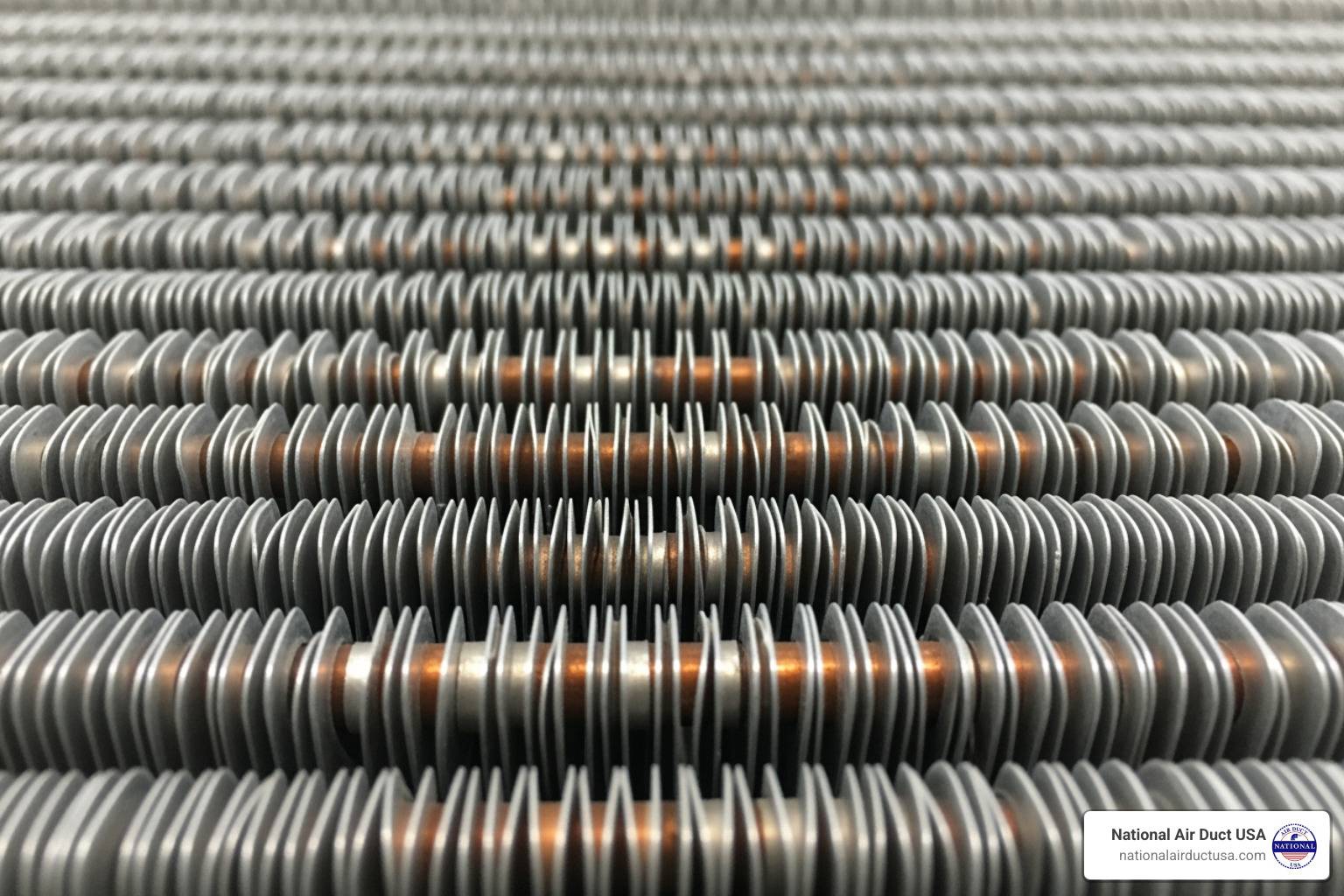
Your air conditioning system works hard to transfer heat from inside your home to the outside. At the heart of this process are two sets of coils—evaporator coils indoors and condenser coils outdoors—made of copper tubing wrapped in thin aluminum fins. When these coils get coated with dirt, dust, and grime, your AC has to work harder, run longer, and costs you more money.
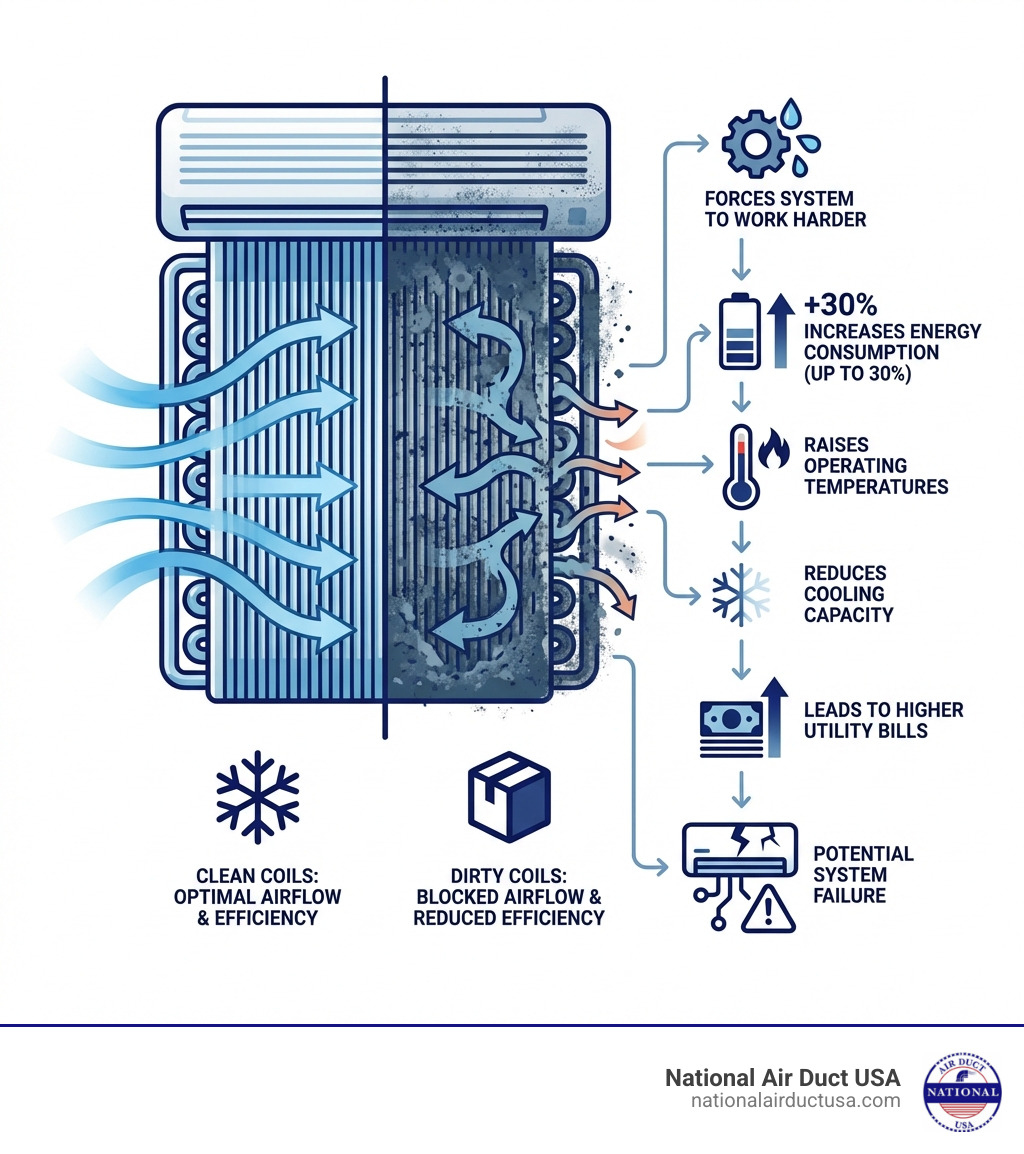
Dirty coils can lead to increased operating temperatures, reduced cooling efficiency, higher energy bills, and even complete system breakdowns. The buildup forces your system to work overtime just to achieve the same level of cooling, placing stress on the compressor and other components.
The good news? Regular cleaning with the right AC coil cleaner can reverse these problems, restore efficiency, and extend your system’s lifespan. Whether you’re a DIY homeowner or planning to hire a professional, understanding AC cleaners is the first step to better home comfort and lower utility bills.
Know your ac cleaner terms:
Why Clean Coils are a Homeowner’s Best Friend
Imagine trying to run a marathon with a blanket wrapped around you. That’s essentially what your AC unit is doing when its coils are caked in dirt and grime. AC coils, both the indoor evaporator and outdoor condenser, are the workhorses of your air conditioning system. Their job is to facilitate heat transfer – the evaporator coil absorbs heat from your indoor air, and the condenser coil releases that heat outside. This ingenious process is what keeps your home cool and comfortable.
But why do they need cleaning? Over time, these coils, with their delicate fins, become magnets for dust, dirt, pollen, pet dander, and even mold and algae. This buildup acts as an insulating layer, hindering the coils’ ability to efficiently absorb and release heat. When this happens, your AC system struggles, and that’s where the problems begin.
The benefits of keeping your AC coils sparkling clean are numerous, directly impacting your comfort, wallet, and even your health:
- Increased Efficiency and Lower Energy Bills: This is perhaps the most significant benefit. When coils are dirty, your AC has to work much harder and run for longer periods to reach your desired temperature. This “less efficient operation means higher operating costs.” By cleaning your AC coils, you help your unit operate more effectively, which in turn “reduces energy consumption and lowers your utility bills.” This is pure savings in your pocket!
- Improved Comfort: Your air conditioning system isn’t just about cooling; it also helps remove unwanted and uncomfortable humidity from your home. Dirty coils can reduce overall system effectiveness, leading to higher humidity levels indoors and less overall comfort. Clean coils ensure optimal humidity removal, making your living space feel truly refreshing.
- Better Air Quality: Coils can accumulate dust, allergens, and even mold spores. When your AC runs, these contaminants can be circulated throughout your home, impacting indoor air quality. By removing dust and debris from the coils, you help improve the overall air quality, creating a healthier living environment, especially important for those with allergies or respiratory sensitivities in areas like Long Island and Nassau County.
- Extended System Lifespan: Dirty coils put undue stress on your AC’s components, particularly the compressor, which is often the most expensive part to replace. This “increased system wear” can lead to premature failure. “Cleaning your AC coils helps maintain optimal performance and prolongs the lifespan of your unit.” It ensures that your system runs efficiently, providing you with consistent cooling for years to come.
- Prevent Costly Repairs and Breakdowns: “System break downs resulting from over-stressed components can lead to service calls, replacing system components, and in more extreme cases, replacing an entire system.” Regular cleaning helps prevent the buildup of grime that can lead to wear and tear, reducing the likelihood of unexpected repairs and keeping your AC running smoothly. This means significant savings in the long run.
Clean coils mean a happier, healthier home and a fatter wallet. It’s truly a win-win situation! You can learn more about how to keep your entire system in top shape by visiting our guide on Air Conditioner Maintenance.
Signs Your AC Coils Need Cleaning
Your AC unit is usually pretty good at telling you when something’s amiss, even if it’s just a subtle hint. When it comes to dirty coils, it often gives several clear signals that it’s time for a little TLC. If you notice any of these signs, it’s a strong indication that your AC coils are probably overdue for a cleaning:
- Reduced Cooling Efficiency: This is one of the most common and frustrating signs. If you find your home isn’t getting as cool as it used to, or your AC has to run longer to achieve the desired temperature, dirty coils are a likely culprit. “If you notice that your air conditioning unit isn’t cooling as effectively as it used to, dirty coils may be the underlying cause.”
- Increased Energy Bills: Are your utility bills suddenly soaring, even if your usage hasn’t changed? Dirty coils force your system to work harder, consuming more electricity. “Increased energy consumption can occur when coils are dirty, leading to higher costs.” This is a clear financial indicator that your AC is struggling.
- Reduced Airflow: If the air coming out of your vents feels weaker than usual, it could be due to dirty coils restricting airflow.
- AC Runs Constantly: An AC that cycles on and off frequently, or runs almost non-stop, is trying desperately to compensate for its inefficiency. Dirty coils make it harder for the system to reach and maintain the set temperature.
- Ice on Coils: If you see ice forming on your indoor evaporator coil, it’s a definite sign of a problem, often caused by severely restricted airflow due to dirt. This can lead to serious system damage.
- Musty Odors: A stale or musty smell coming from your vents can indicate mold or mildew growth on the evaporator coil, especially common in humid areas like parts of Long Island.
- Inconsistent Cooling: Some rooms feel cool while others remain warm, even with all vents open. This uneven cooling can be a symptom of an inefficient system due to dirty coils.
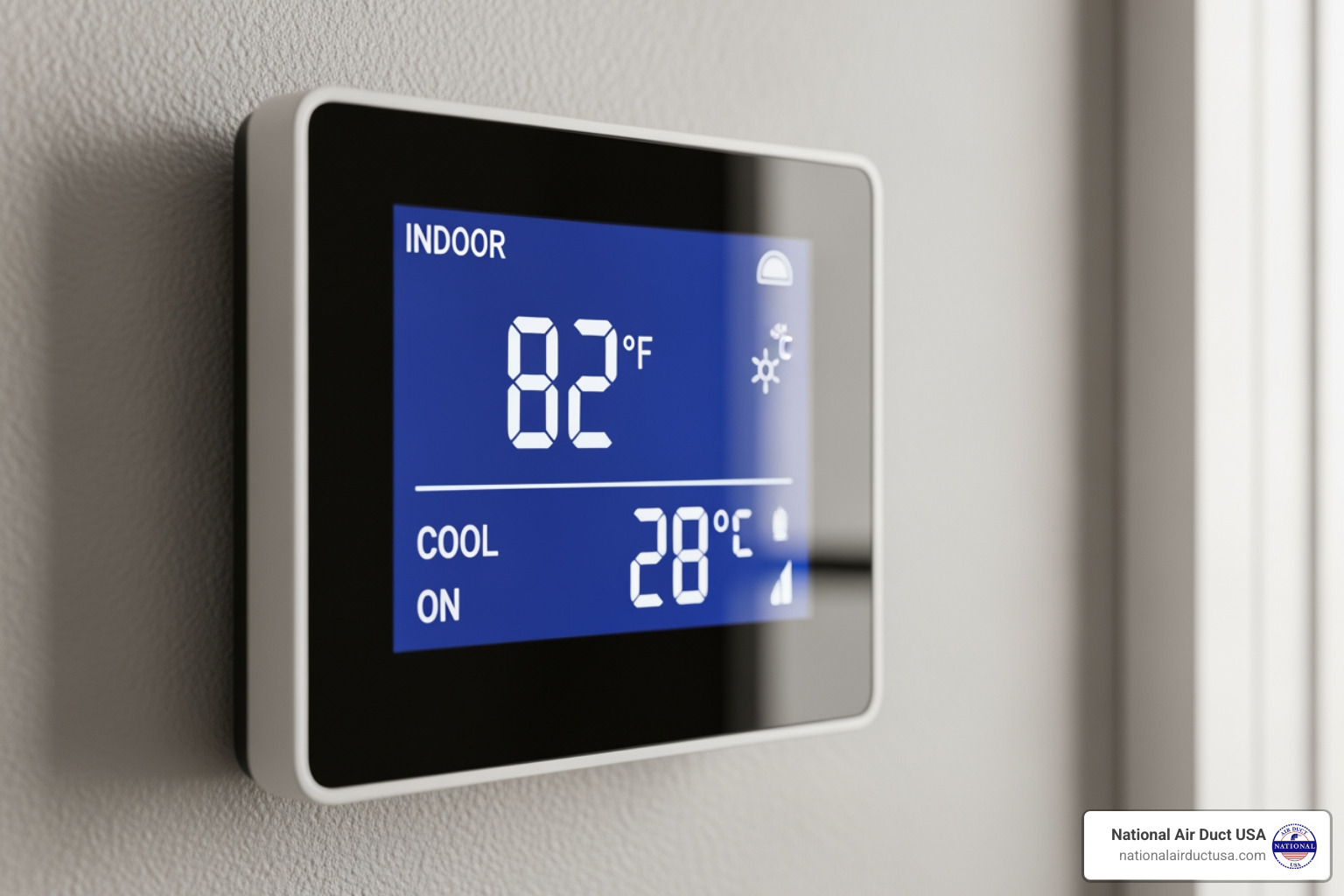
Don’t ignore these warning signs! Addressing dirty coils promptly can save you from more significant problems down the line.
Choosing the Right AC Cleaner for Your System
Selecting the right ac cleaner is crucial for effective coil maintenance. Just like you wouldn’t use dish soap to clean your car engine, you need a product specifically formulated for your AC coils. The market offers several types, each with its own advantages, and your choice will often depend on the type of coil (evaporator vs. condenser), the material, and your comfort level with DIY cleaning.
What are the different types of AC coil cleaners available?
Let’s break down the main contenders:
- Foaming Cleaners: These are very popular for DIY enthusiasts. They come in an aerosol can and spray on as a thick foam. The foam expands, penetrating deep into the coil fins, encapsulating dirt and grime. As it collapses, it carries the loosened debris away. Many foaming cleaners are designed for outdoor condenser coils and require rinsing.
- No-Rinse Cleaners: As the name suggests, these cleaners don’t require rinsing. They typically evaporate after breaking down the dirt and grime. This makes them incredibly convenient, especially for indoor evaporator coils where rinsing can be messy and challenging. They often contain enzymes or detergents that dissolve contaminants.
- Liquid Cleaners (Concentrates): These are often more potent and come in concentrated form, requiring dilution with water before application. They are excellent for heavy buildup and are frequently used by professionals. After application, they typically require thorough rinsing.
- Biodegradable Cleaners: These cleaners are formulated with environmentally friendly ingredients that break down naturally, reducing their impact on the planet. They can come in foaming, no-rinse, or liquid forms, offering an eco-conscious option for homeowners in areas like Suffolk County.
How do I choose the right AC coil cleaner for my system?
Making the right choice involves considering a few key factors:
- Evaporator vs. Condenser Coils:
- Evaporator (Indoor) Coils: These are delicate and often located in hard-to-reach places. A no-rinse ac cleaner is usually preferred here to avoid water damage to surrounding electrical components or drywall.
- Condenser (Outdoor) Coils: These are more robust and exposed to tougher outdoor grime. Foaming cleaners followed by a gentle rinse from a garden hose work well.
- Coil Material: Most AC coils are made of copper tubing with aluminum fins. Always ensure your chosen ac cleaner is labeled as “AC safe” and “non-corrosive” to aluminum and copper. Harsh chemicals can damage these materials, leading to costly repairs.
- Safety Considerations: Always prioritize your safety. Look for cleaners with clear instructions and safety warnings. Consider low-fume options, especially for indoor use.
- Environmental Impact: If environmental concerns are a priority, opt for biodegradable cleaners. These are designed to be less harmful to the environment when rinsed away.
- Ease of Application: For DIYers, a simple spray-on, easy-to-use product is often best. Concentrates might be more economical but require careful dilution.
Here’s a quick comparison to help you decide:
| Type of AC Cleaner | Pros | Cons | Best For |
|---|---|---|---|
| Foaming Cleaners | Easy to apply, expands to reach deep into fins, good for heavy buildup. | Often requires rinsing, can be messy indoors. | Outdoor condenser coils. |
| No-Rinse Cleaners | Convenient, no water needed, ideal for indoor use. | May not be as effective on extremely heavy grime. | Indoor evaporator coils. |
| Liquid Concentrates | Very powerful for tough jobs, cost-effective for large areas. | Requires careful mixing and thorough rinsing, can be harsh if not used correctly. | Professional use or very dirty outdoor coils. |
| Biodegradable | Environmentally friendly, safer for plants and pets. | May be less aggressive on heavy-duty grime. | Homeowners looking for a green solution. |