Why Your AC Might Be Making You Sick
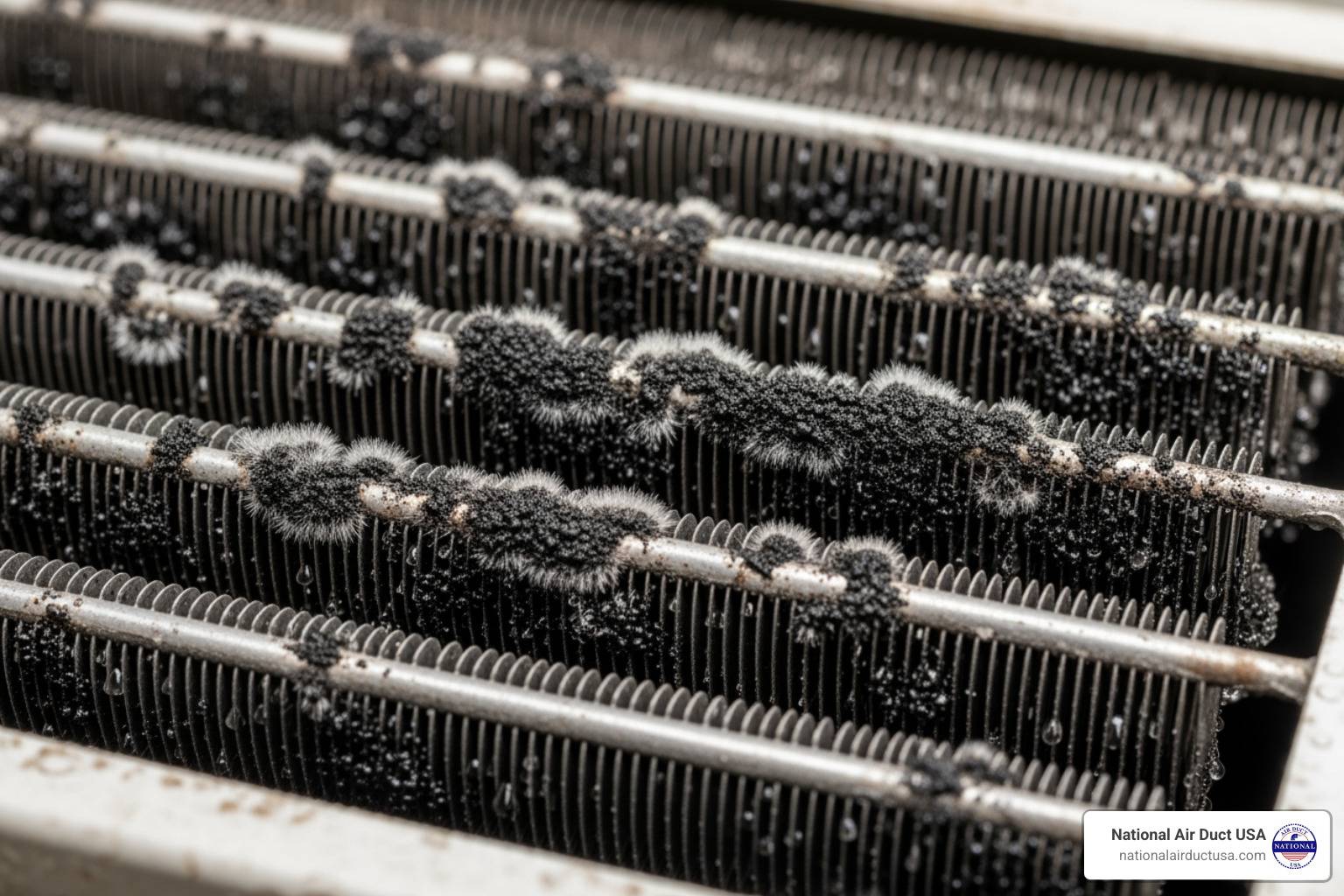
Aircon mold removal is essential for anyone dealing with a musty smell coming from their vents, unexplained allergy symptoms, or visible dark spots around their air conditioning unit. Mold thrives in the damp, dark environment inside your AC, and when your system runs, it can spread harmful spores throughout your home or business.
Quick Answer: How to Remove Mold from Your AC
- Turn off and unplug your unit completely
- Wear protective gear – mask, gloves, and goggles
- Remove and clean filters with soap and water (or replace if disposable)
- Clean visible mold on coils and components with a vinegar-water solution or EPA-approved cleaner
- Dry everything thoroughly before reassembling
- Call a professional if mold is in your ductwork or you have a central system
According to the EPA, up to 50% of all structures may have had mold growing within them at some point. Your air conditioner is particularly vulnerable because it creates the perfect breeding ground – moisture from condensation, darkness, and organic dust particles like dead skin cells give mold everything it needs to flourish.
The health risks are real. Mold exposure can trigger nasal stuffiness, throat irritation, coughing, wheezing, eye irritation, and skin problems. For people with asthma or weakened immune systems, the effects can be even more severe. HVAC experts urge homeowners to take mold seriously, stating it “can cause some damage to your lungs” and requires professional attention.
But here’s the good news: you can tackle many mold problems yourself if you catch them early. For window units and portable air conditioners, DIY cleaning is often effective and straightforward. For central air systems, you’ll need to know when to call in the experts.
This guide walks you through everything you need to know – from identifying the problem to removing the mold safely, and most importantly, preventing it from coming back.
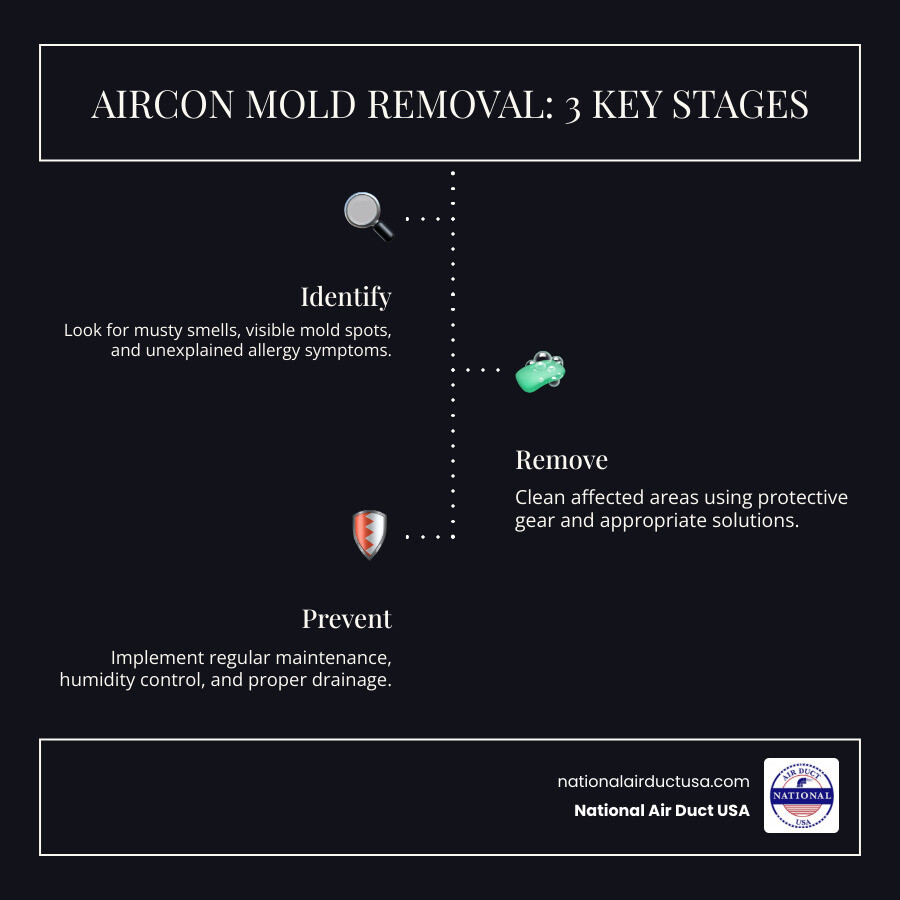
Common aircon mold removal vocab:
Why Mold in Your AC is a Health Hazard
When we think about maintaining a healthy home environment, the air we breathe is paramount. Unfortunately, a common culprit silently compromising our indoor air quality is mold growing within our air conditioning systems. This isn’t just an aesthetic problem; it poses significant health risks for us and our families.
Mold is a fungi that thrives on organic matter in damp, poorly ventilated areas. Our AC units, especially the cooling coils and drain pans, are prime locations for mold growth due to the constant moisture from condensation. Once established, mold reproduces by releasing microscopic spores into the air. What happens next? Our HVAC system, designed to circulate air throughout our homes, becomes an unwitting accomplice, spreading these mold spores to every room. The EPA states that HVAC systems can circulate mold spores and other allergens throughout a building, turning our cooling comfort into a health hazard.
The health risks associated with mold exposure are varied and can range from mild to severe, depending on an individual’s sensitivity and the type and amount of mold present. According to the CDC, “exposure to damp and moldy environments may cause a variety of health effects, or none at all. Some people are sensitive to molds. For these people, exposure to molds can lead to symptoms such as nasal stuffiness, throat irritation, coughing or wheezing, eye irritation, or skin irritation.”
Beyond these common symptoms, mold in our AC can be even more harmful. It can trigger allergic reactions, aggravate asthma symptoms, and lead to headaches, dizziness, and irritation of the eyes, nose, and throat. For vulnerable populations, such as children, the elderly, and those with compromised immune systems, the risks are amplified. Prolonged exposure can contribute to chronic respiratory issues and a general feeling of fatigue. Some types of fungal growths, particularly in commercial settings, can even produce mycotoxins, which are poisons that cause serious health effects on people exposed to them. While less common in residential settings, the potential for harm underscores the importance of prompt aircon mold removal.
Therefore, ignoring mold in our AC is not an option. It’s an investment in our health and comfort to identify, remove, and prevent its growth.
Spotting the Signs: How to Identify Mold in Your Air Conditioner
Before we can tackle aircon mold removal, we first need to confirm we have a mold problem. Sometimes, mold is obvious, but often it hides in plain sight or makes its presence known through subtle cues. Knowing what to look for can save us from prolonged exposure and more extensive damage.
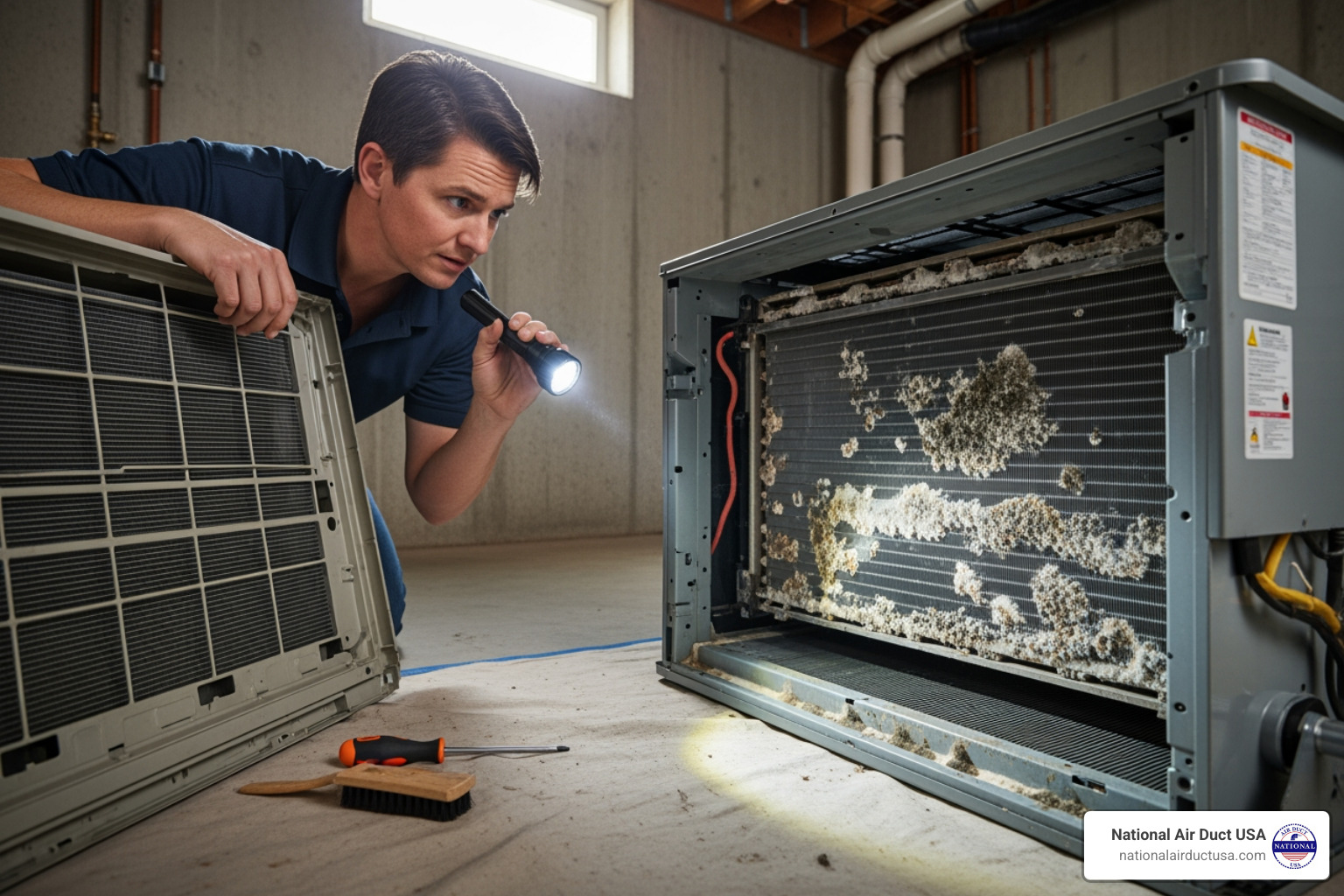
Here are the key signs that your air conditioner might be harboring mold:
- A Musty or Earthy Smell: This is often the first and most noticeable indicator. If you detect a stale, damp, or earthy odor, similar to wet socks or a damp basement, especially when your AC unit first kicks on, mold is likely the culprit. This distinctive smell is a byproduct of mold growth. A useful trick is to turn your system off for 10-20 minutes and then back on; if the smell gets stronger when the system is on and weaker when it’s off, it strongly suggests mold in the system.
- Visible Black, Green, or White Spots: While mold can come in many colors, black, green, or white spots or blotches are common. Carefully inspect the exterior and interior components of your AC unit. Look at the air vents, grilles, and especially the coils. The black stuff we often see in damp areas like air ducts or evaporator coils could very well be mold. Seeing small mold spots on window AC vanes is often a sign of deeper issues within the unit.
- Speckles on Air Filters: When we remove our air filters for inspection or replacement, we should check for any discoloration or speckling. Mold can grow on dirty filters, which then distribute spores into our indoor air.
- Growth on Vents or Grilles: Visible mold on the grilles or air direction vanes of a window unit, or on the registers of a central system, is a clear sign. This indicates that mold has colonized parts of the unit that are directly exposed to the conditioned air.
- Unexplained Allergy Symptoms: If we or family members experience increased allergy symptoms such as sneezing, coughing, itchy eyes, or a runny nose when the AC is running, it could be due to mold spores circulating in the air. Mold can make us sick, triggering these symptoms.
- Reduced Cooling Efficiency: While not a direct sign of mold, a noticeable decrease in our AC’s cooling performance or restricted airflow can be an indirect indicator. Mold buildup can obstruct coils and airflow, making the unit work harder and less effectively.
If we observe any of these signs, it’s time to take action. Addressing the problem promptly is crucial for our health and the longevity of our AC system.
Your Step-by-Step Guide to Aircon Mold Removal
Once we’ve identified the presence of mold, the next step is safe and effective aircon mold removal. Before we begin, safety is paramount. Mold spores can be irritating, and we’ll be working with cleaning solutions and potentially dusty components.
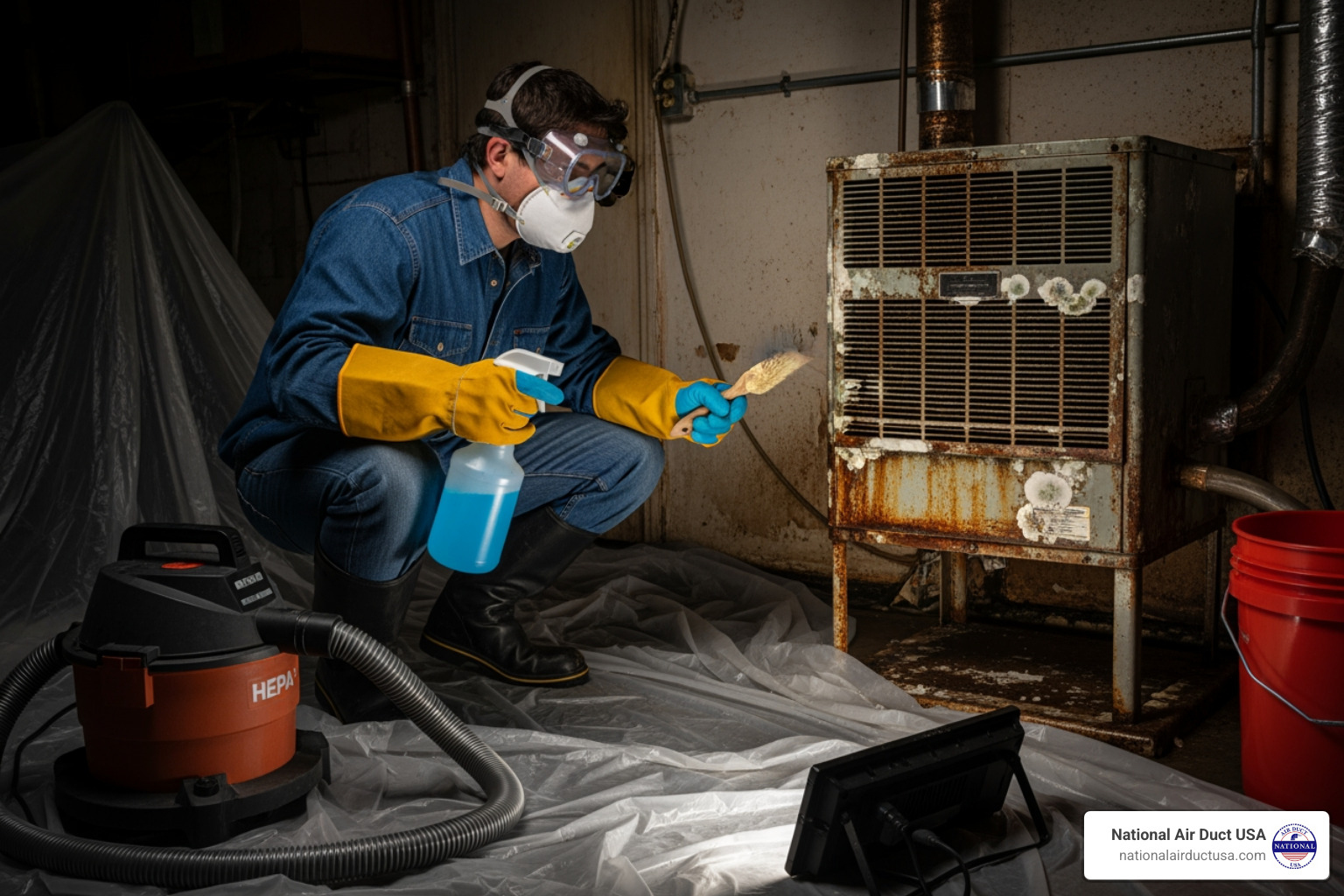
Safety Precautions:
- Power Off: Always turn off and unplug the AC unit completely before attempting any cleaning. For central systems, turn off the power at the breaker box. This prevents accidental startup and electrical hazards.
- Protective Equipment: We recommend wearing non-porous gloves, safety goggles, and a face mask (preferably an N95 respirator) to protect ourselves from mold spores, dust, and cleaning chemicals.
- Ventilation: Ensure good ventilation in the area we’re working in. Open windows and doors if possible.
Cleaning Solutions:
- Vinegar and Water Solution: A simple, effective, and natural mold killer. Mix equal parts white vinegar and water in a spray bottle. Vinegar is excellent for killing mold and inhibiting its regrowth.
- EPA-Approved Mold Cleaner: For tougher mold, we can use an EPA-approved mold cleaner specifically designed for HVAC systems. Always follow the manufacturer’s instructions carefully.
- Household Detergent: For general cleaning and scrubbing, a mild household detergent mixed with warm water works well. Bleach is generally not needed for mold removal and can be harmful if not used properly, especially in enclosed spaces or on certain materials. The EPA does not recommend applying biocides or surface treatments to kill or prevent mold in ductwork.
DIY Aircon Mold Removal for Window & Portable Units
Window units and portable air conditioners are generally easier to clean ourselves because their components are more accessible.
- Unplug the Unit: As mentioned, safety first!
- Remove the Front Panel and Filters: Carefully detach the front grille or panel. Locate and remove the air filters.
- Clean or Replace Filters:
- If disposable, and they show signs of mold, replace them. Cleaning disposable filters can reintroduce contaminants.
- If reusable, soak them in warm water with a mild detergent. Scrub gently with a soft brush, rinse thoroughly, and let them air dry completely.
- Vacuum Interior Components: Using a vacuum cleaner with a brush attachment, gently vacuum away any loose dust, dirt, and debris from the coils, fan blades, and the interior casing. Pay close attention to the cooling fins.
- Clean Evaporator Coils: These are the most common breeding ground for mold.
- Spray the vinegar and water solution or an HVAC-specific coil cleaner directly onto the coils.
- Let it sit for 10-15 minutes to allow the solution to penetrate and kill the mold.
- Using a soft brush (like a coil cleaning brush or a soft toothbrush), gently scrub away any visible mold or grime. Be careful not to bend the delicate fins.
- Wipe down the coils with a damp cloth. Some coil cleaners are “no-rinse,” but if you use a solution that requires rinsing, use a spray bottle with clean water, being careful to avoid electrical components.
- Clean the Drain Pan: The drain pan collects condensation, making it another hot spot for mold.
- Remove the drain pan if possible.
- Wash it thoroughly with warm, soapy water and scrub away any mold or slime.
- Rinse and dry completely.
- If you can’t remove the pan, spray it generously with your cleaning solution and wipe it clean.
- Clean Fan Blades (if accessible): Spray the fan blades with your cleaning solution and wipe them down. If the fan is a squirrel cage type, this might be more challenging, but clean as much as you can safely reach.
- Dry Components Completely: This step is crucial for preventing immediate mold regrowth. Allow all cleaned parts to air dry thoroughly before reassembling. You can use a clean cloth to wipe down surfaces, but ensure they are completely dry to the touch.
- Reassembly: Once everything is dry, carefully reassemble the unit. Run it for a few minutes with windows open to help clear any lingering odors or spores.
Tackling Central System Aircon Mold Removal
Central air conditioning systems are more complex, and aircon mold removal from these units often requires a different approach, especially when mold is present in the ductwork. While we can perform some basic maintenance ourselves, major mold contamination in central AC systems usually warrants professional help.
What We Can Do (DIY):
- Address Visible Mold on Vents and Grilles: We can clean the registers and grilles throughout our homes in Long Island, Westbury NY, Hempstead NY, Garden City NY, Hicksville NY, Freeport NY, Nassau County, or Suffolk County. Detach them, soak them in a vinegar and water solution, scrub them clean, rinse, and let them air dry completely.
- Replace Filters Regularly: This is perhaps the easiest and most important DIY step. A clean filter is our first line of defense against mold spores entering the system and circulating.
- Clean the Condenser Coil (Outdoor Unit): The outdoor unit’s coil can accumulate debris. Turn off the power, clear away leaves and dirt, and gently hose down the coil.
When to Call a Professional for Air Conditioner Mold Removal:
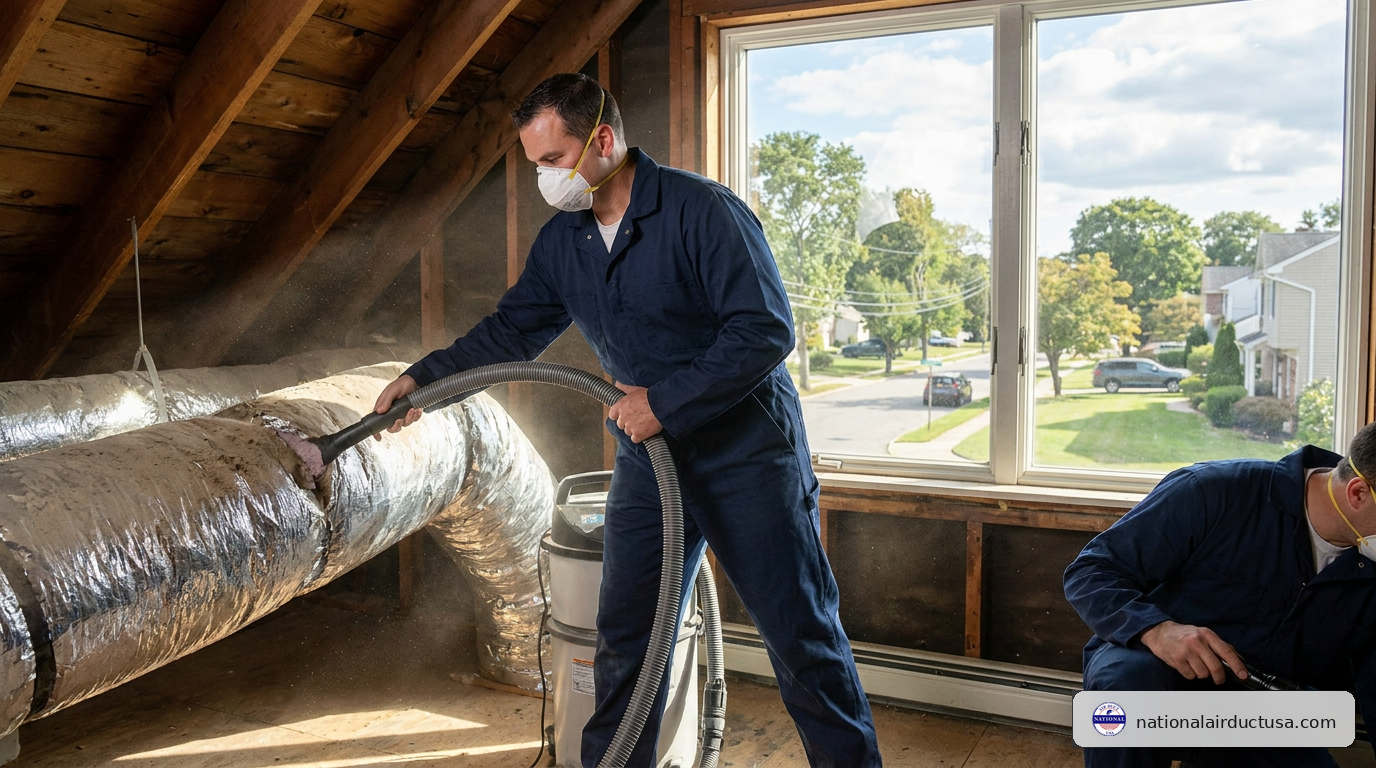
- Mold in Ductwork: If we suspect mold is growing inside our air ducts, this is where DIY efforts become limited and potentially ineffective. The EPA suggests professional help for ductwork contamination, recommending that we shut off the system as soon as we notice mold to prevent it from spreading. Cleaning ducts, especially sheet metal ducts which are easier to clean than fiberglass or lined ducts, requires specialized equipment and expertise to ensure thorough removal without spreading spores further.
- Extensive Visible Mold: If the mold growth is widespread throughout the indoor unit, on the evaporator coil, or in the drain pan, it may be too large a job for DIY. Professionals have the tools and experience to handle extensive contamination.
- Persistent Musty Smell: If we’ve cleaned what we can, but a persistent musty smell remains, it indicates hidden mold growth that we haven’t reached.
- Compromised Health: If anyone in our household is experiencing severe or persistent health issues that we suspect are linked to AC mold, it’s always best to bring in experts.
Our NADCA-certified technicians at National Air Duct USA are experienced in HVAC System Cleaning and mold remediation. We have the specialized equipment to safely and effectively remove mold from central air systems and ductwork, ensuring cleaner air for your home or business across Long Island and Westbury.
How to Prevent Future Mold Growth
After the hard work of aircon mold removal, the last thing we want is for the mold to return. Prevention is truly the best medicine when it comes to keeping our AC units mold-free. By adopting a few best practices, we can significantly reduce the risk of future growth and maintain healthy indoor air quality.
Here are our top prevention tips:
- Regular Maintenance and Cleaning: Regular cleaning of air conditioning units can prevent the buildup of mold and improve indoor air quality. For window and portable units, this means periodically cleaning the filters, coils, and drain pan as described above. For central systems, ensure we keep the outdoor condenser coil clean.
- Humidity Control: Mold needs moisture to thrive. Maintaining indoor humidity levels below 50% is crucial. We can achieve this by running our AC on dehumidify mode, especially in humid climates, or by using a standalone dehumidifier in particularly damp areas of our homes in Nassau County or Suffolk County.
- Proper Drainage: Ensure our AC unit is properly draining excess water. For window units, this means tilting them slightly outward to allow condensation to drip away. For central systems, regularly check the condensate drain line for blockages and ensure the drain pan is clear. A leaky AC unit can cause significant flooding if drains are clogged, creating prime mold conditions.
- Consistent Airflow: Keep all grates and air returns unblocked and clean to allow proper airflow in our HVAC ducts. Proper ventilation helps prevent moisture from lingering and discourages mold growth.
- Replace Filters Regularly: This simple step is incredibly effective. We should replace disposable air filters every 1-3 months, or more frequently if we have pets or allergy sufferers in the home. A clean filter captures spores and prevents them from circulating and settling in damp areas of the unit.
- Annual Professional Check-ups: Schedule regular AC tune-ups with a professional service at least every 12 months. Our NADCA-certified technicians can inspect our entire system, including hard-to-reach areas in the ductwork, for early signs of mold or conditions that promote its growth. They can also perform thorough cleanings that go beyond what we can do ourselves.
- Consider UV Light Installation: For an added layer of protection, consider UV Light Installation for HVAC systems. UV-C lights installed within the HVAC unit can kill mold spores, bacteria, and viruses as air passes through, providing continuous purification and preventing growth on coils and in the ductwork.
- Natural Mold Inhibitors: After cleaning, we can periodically spray a light mist of vinegar and water solution on accessible interior surfaces of our AC units to inhibit mold regrowth.
By diligently following these preventative measures, we can enjoy cleaner, healthier air and a more efficient cooling system, reducing the need for intensive aircon mold removal in the future.
Frequently Asked Questions about AC Mold
We often get asked common questions about mold in air conditioners. Here are some of the most frequent ones to help us better understand and manage this issue.
What does mold in an air conditioner smell like?
The most common and tell-tale sign of mold in an air conditioner is a distinct musty, damp, or earthy odor. Many describe it as smelling like old, wet socks, a damp basement, or decaying leaves. This smell is produced by volatile organic compounds (VOCs) released by the growing mold. The odor is usually strongest when the AC unit first turns on after being off for a while, as the spores and moisture are disturbed and circulated.
How often should I clean my air conditioner to prevent mold?
To effectively prevent mold, we recommend a multi-tiered approach to cleaning:
- Air Filters: Clean or replace disposable air filters every 1 to 3 months. In homes with pets, smokers, or allergy sufferers, we might need to do this more frequently, perhaps every two weeks for portable units.
- DIY Deep Cleaning (Coils, Drain Pan): A thorough DIY cleaning of accessible components like evaporator coils and drain pans should be performed at least once a year, ideally before the cooling season begins. This ensures any buildup from the off-season is removed.
- Professional Servicing: Schedule professional AC maintenance and cleaning for our entire system at least every 12 months. Our certified technicians can reach and clean areas that are inaccessible to us, like internal ductwork, and identify potential issues before they become major mold problems.
Regular cleaning of air conditioning units is key to preventing the buildup of mold and improving indoor air quality.
Is it safe to run an AC with mold in it?
No, it is absolutely not safe to run an AC unit with mold in it. Running an air conditioner contaminated with mold will actively circulate mold spores throughout our home or business. This degrades the indoor air quality significantly and poses serious health risks, especially for individuals with allergies, asthma, or weakened immune systems. Exposure to these airborne spores can trigger or worsen symptoms such as coughing, sneezing, wheezing, throat irritation, headaches, and skin rashes. It’s crucial to address the mold problem through proper aircon mold removal before operating the unit again to ensure a healthy and safe indoor environment.
Conclusion: Breathe Easier with a Mold-Free AC
Tackling mold in our air conditioning systems might seem like a daunting task, but as we’ve explored, it’s a critical step towards a healthier home. From understanding the very real health risks associated with circulating mold spores to learning how to identify the tell-tale signs, we now have the knowledge to protect our indoor air quality.
We’ve walked through practical, step-by-step DIY aircon mold removal methods for window and portable units, empowering us to handle common mold issues effectively. We’ve also highlighted the crucial distinctions for central air systems, emphasizing when professional intervention is not just recommended, but often necessary, especially when mold has infiltrated the ductwork. Our proactive efforts in controlling humidity, ensuring proper drainage, and regular filter changes are our best defense against future mold growth.
For those times when the mold problem is beyond DIY capabilities – perhaps it’s in the unseen depths of your central air ducts in Long Island, Westbury NY, Hempstead NY, Garden City NY, Hicksville NY, Freeport NY, Nassau County, or Suffolk County – remember that professional help is available. Our NADCA-certified technicians at National Air Duct USA are equipped with the expertise and specialized tools to perform thorough and safe mold remediation, guaranteeing 100% satisfaction and cleaner air for your home or business.
Don’t let mold compromise your comfort or your health. By staying vigilant, taking preventative measures, and knowing when to call in the experts, we can ensure our AC systems provide us with nothing but clean, cool air.
Contact us for professional air duct and HVAC services today and breathe easier tomorrow.