Why Your AC’s Drain Line Deserves Your Attention
HVAC drain line cleaning is a simple maintenance task that prevents water damage, mold growth, and system failures. Here’s what you need to know:
Quick Answer: How to Clean Your HVAC Drain Line
- Turn off power to your AC at the thermostat and breaker
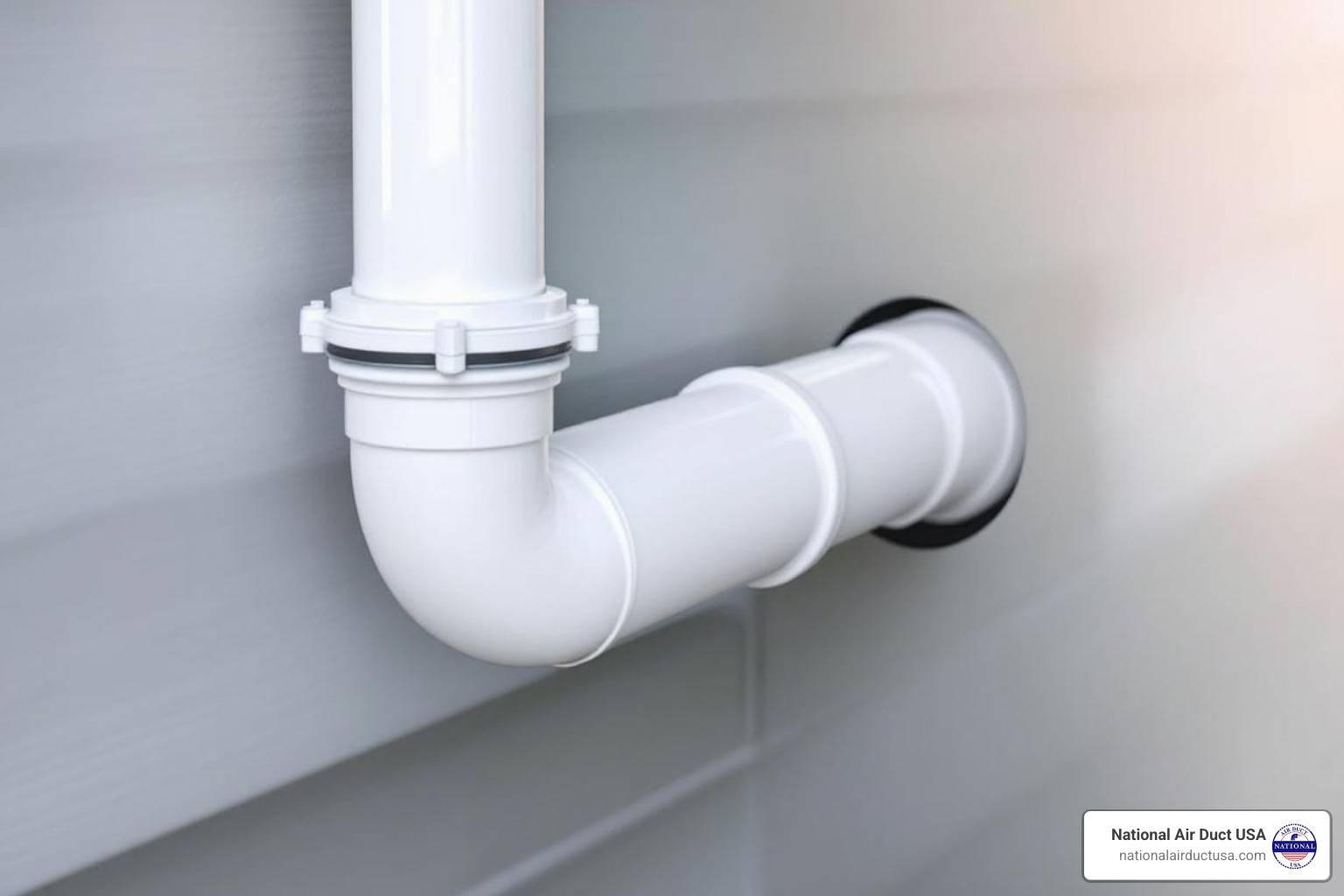
- Locate the drain line (typically a PVC pipe near your outdoor unit)
- Remove the access cap and clear visible debris
- Pour ¼ cup distilled white vinegar into the line
- Wait 30 minutes, then flush with water
- Repeat monthly or at least twice per year
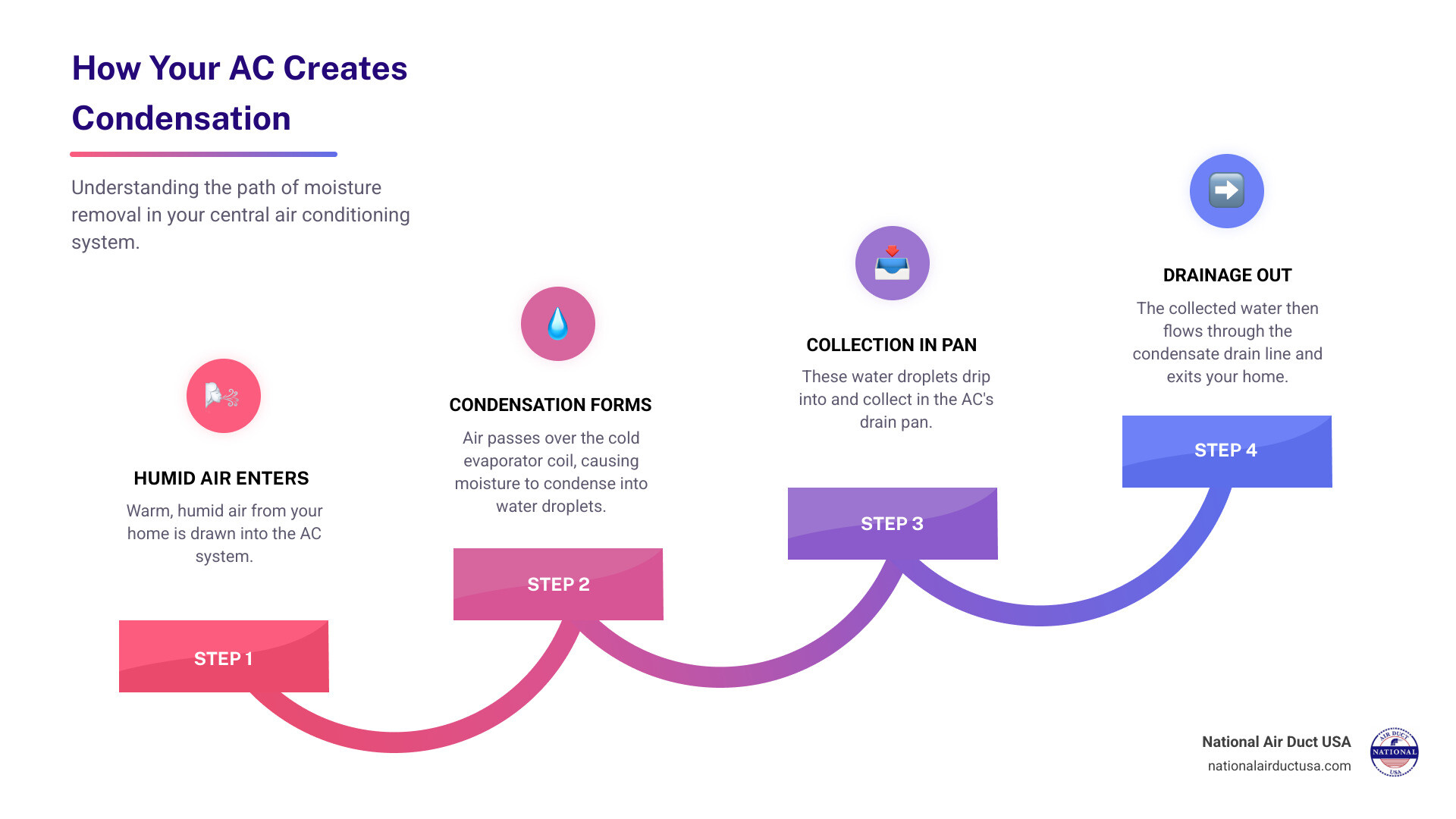
Your central air conditioner does more than just cool your home—it also removes moisture from the air. As warm, humid air passes over the cold evaporator coil, water condenses and drips into a drain pan. This water then flows through a drain line (also called a condensate line) and exits your home.
When this drain line gets clogged, the consequences can be serious. Nearly 20% of HVAC system failures are related to clogged drain lines, and water damage from these clogs can cost homeowners between $2,000 and $5,000 in repairs.
The good news? A clogged drain line is one of the most common HVAC problems—and one of the easiest to prevent. With basic tools and about 30 minutes of your time, you can keep your drain line clear and your system running efficiently.
Whether you’re noticing water pooling around your indoor unit, detecting musty odors, or simply want to avoid costly repairs, this guide will walk you through everything you need to know about maintaining your HVAC drain line.
Why a Clean HVAC Drain Line is Non-Negotiable
A clean HVAC drain line is more than just a convenience; it’s a necessity for the health of your home and the efficiency of your HVAC system. When this small but mighty component fails, it can lead to a cascade of problems that are both costly and inconvenient. As we mentioned, nearly 20% of HVAC system failures stem from clogged drain lines, and the resulting water damage can set homeowners back thousands.
Ignoring the signs of a clogged drain line can feel like playing a game of Russian roulette with your home. The risks range from minor annoyances to significant structural damage, all because a little pipe can’t do its job. Regular hvac drain line cleaning is your best defense against these potential headaches.
If you want to dive a bit deeper into how condensate drains are supposed to work and why they clog, the overview on Condensate drain lines is a helpful general resource.
Signs Your Drain Line is Clogged
So, how do you know if your HVAC drain line is clogged? Your system usually gives you clear warnings before things get too messy. Keeping an eye out for these indicators can save you a lot of trouble:
- Water Pooling Near Indoor Unit: This is often the most obvious sign. If you see puddles of water around your indoor air handler unit in your basement, attic, or utility closet (common spots in Long Island, Westbury NY, Hempstead NY, Garden City NY, Hicksville NY, Freeport NY, Nassau County, and Suffolk County homes), it means the condensate isn’t draining properly and is overflowing the pan.
- Musty or Moldy Odors: A clogged drain line creates a damp, stagnant environment perfect for mold and mildew growth. If you notice a musty smell emanating from your vents when the AC is running, it’s a strong indicator of mold in your system, likely due to a clog.
- AC System Not Cooling: While not directly affecting cooling efficiency, a clogged drain line can trigger a safety switch designed to prevent water damage. If your AC suddenly stops cooling or won’t turn on, a full drain pan might be the culprit.
- AC Unit Shuts Off Unexpectedly: Many modern AC systems include a float switch in the drain pan. When the water level gets too high due to a clog, this switch automatically shuts down the unit to prevent overflow. If your AC is frequently cycling off, check the drain pan.
- High Indoor Humidity: Your AC dehumidifies as it cools. If the drain line is blocked, your system can’t effectively remove moisture from the air. This results in noticeably higher humidity levels inside your home, making it feel clammy and uncomfortable.
Common Causes of Blockages
Understanding what causes these clogs helps us prevent them. The drain line, being a dark and often damp environment, is a prime breeding ground for various types of buildup:
- Algae and Mold Growth: This is the number one culprit. The condensation process creates a constantly wet surface, and airborne spores find their way into the drain pan, leading to slimy, green, or black biological growth that accumulates and blocks the narrow pipe.
- Sludge Buildup: Over time, a combination of dirt, dust, and other debris (like pet dander, common in many homes) mixes with the moisture to form a thick, gooey sludge. This material adheres to the inside of the drain line, gradually restricting flow.
- Dust and Debris: Even with good air filters, fine dust particles can bypass them, settle on the evaporator coil, and then get washed into the drain pan with the condensate. These particles contribute to the sludge and can directly cause blockages.
- Clogged Air Filters: If you don’t change your air filters regularly, they can become overloaded with dust and debris. This not only reduces airflow but also allows more particulates to reach the evaporator coil and, consequently, the drain pan, exacerbating clog formation.
For a more general background on how air conditioning systems handle moisture, you can also review the section on condensate management in Air conditioning.
The High Cost of a Clogged Line
The consequences of neglecting your HVAC drain line can quickly escalate from a minor inconvenience to a major financial burden. A small clog can lead to significant and expensive issues:
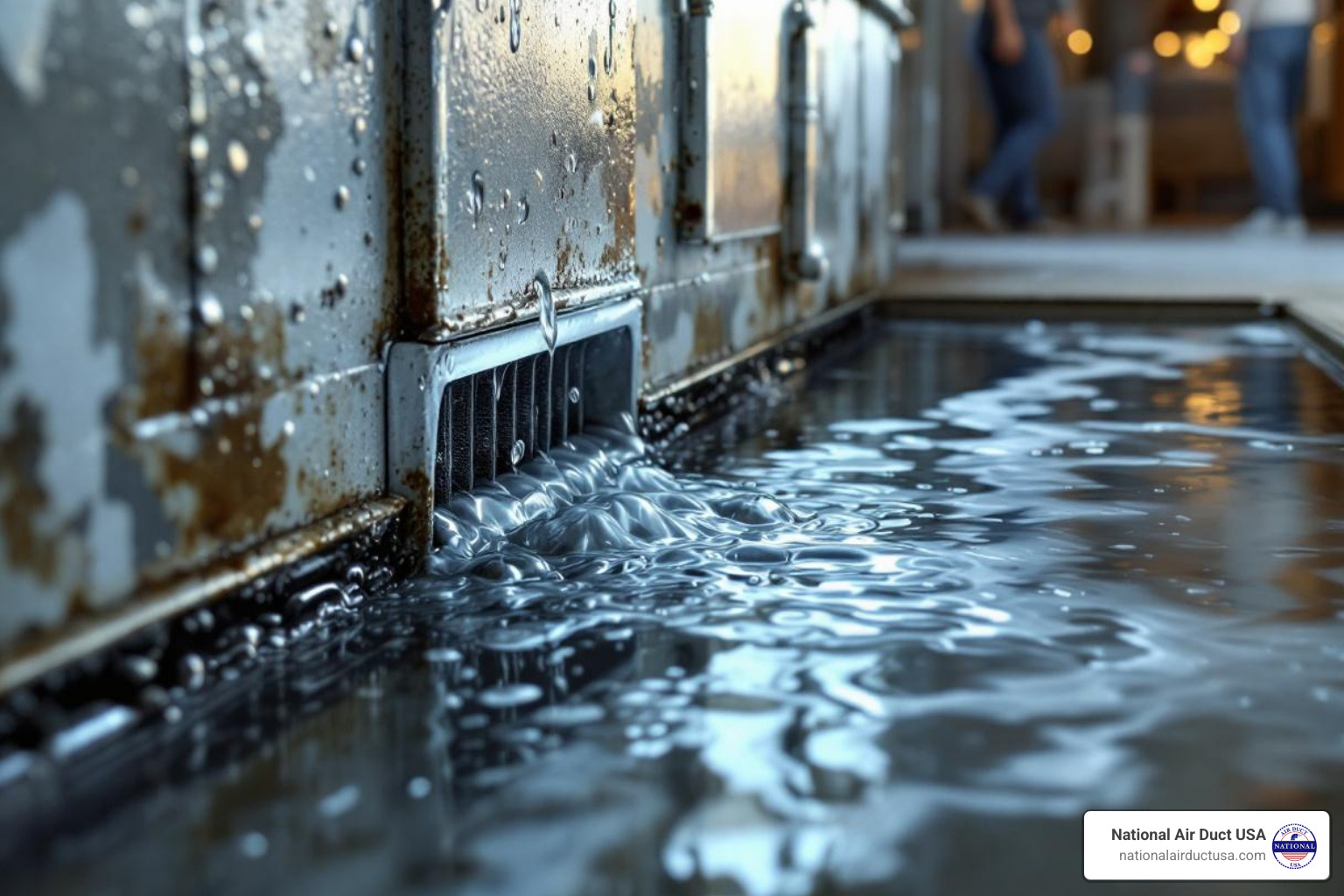
- Water Damage to Floors and Ceilings: When the drain pan overflows, water can seep into your walls, ceilings, and flooring. Repairing water-damaged drywall, wood, or carpets can cost homeowners an average of $2,000 to $5,000, and sometimes much more depending on the extent of the damage. Imagine water stains appearing on your pristine ceilings in Westbury NY or damaged hardwood floors in Freeport NY – not a pretty picture!
- Mold Remediation Costs: Standing water and high humidity create ideal conditions for mold growth. Once mold takes hold, especially in hidden areas like inside walls or ductwork, it requires professional remediation, which can be expensive and pose health risks.
- Reduced System Efficiency: While a clog doesn’t directly reduce cooling efficiency, the resulting system shutdowns or constant struggle with high humidity means your AC works harder to achieve desired temperatures, consuming more energy in the process. Regular maintenance of HVAC systems can improve efficiency by up to 15%.
- Higher Energy Bills: An inefficient system translates directly to higher utility bills. If your AC is constantly battling humidity or shutting off due to a clogged drain, you’ll see that reflected in your monthly energy statement.
- Premature HVAC System Failure: The strain on your system from constant shutdowns, increased humidity, and potential water damage can lead to premature wear and tear on components, shortening the lifespan of your entire HVAC unit. This could mean replacing an expensive system years earlier than expected. For more comprehensive care and information on maintaining your entire HVAC system, check out our insights on HVAC System Cleaning.
DIY HVAC Drain Line Cleaning: A Step-by-Step Guide
The good news is that hvac drain line cleaning is a task many homeowners can tackle themselves. With a few basic tools and a bit of time, you can prevent costly repairs and keep your system running smoothly.
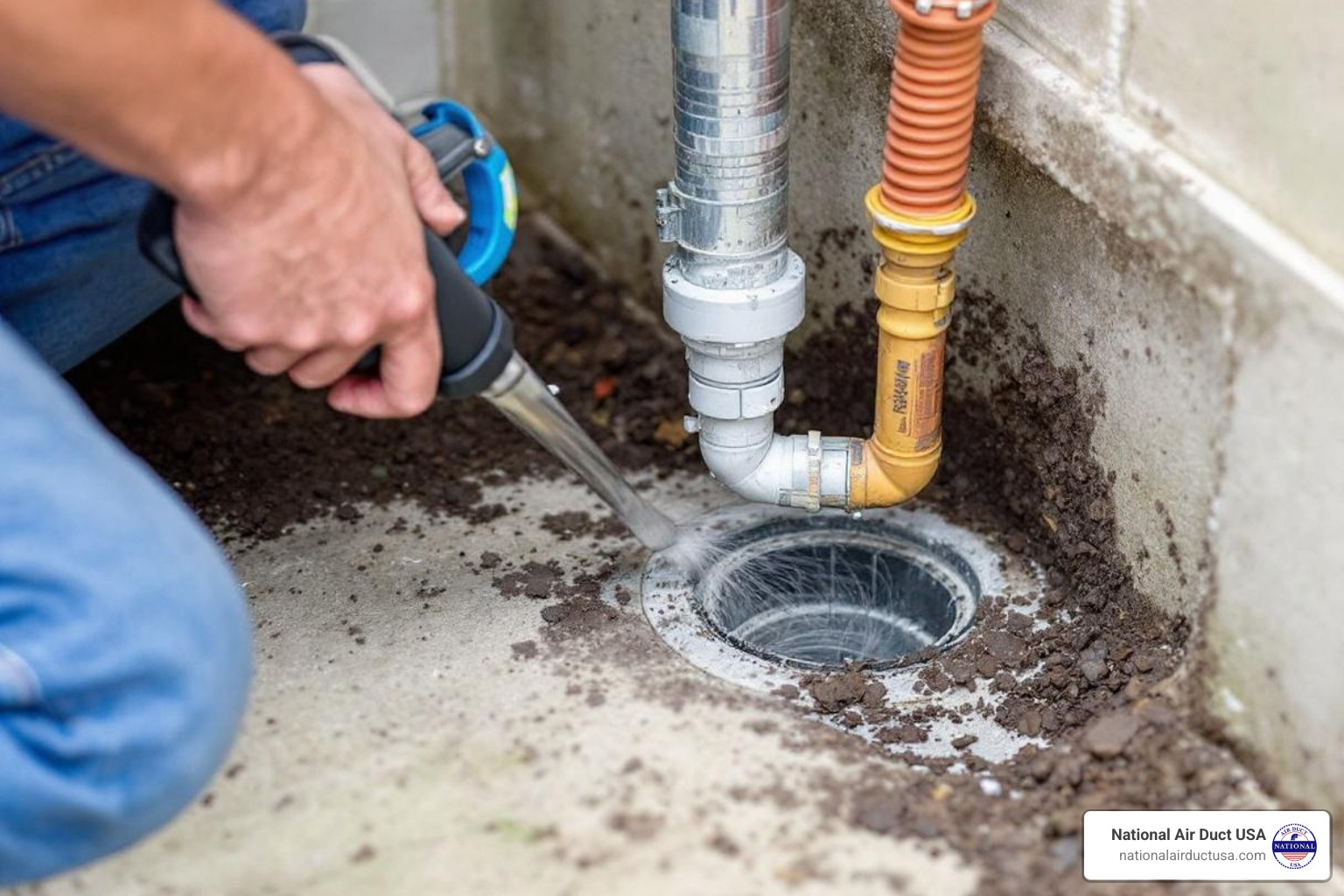
Before we begin, remember safety first! Always turn off the power to your AC unit before performing any maintenance. This prevents accidental activation and potential injury.
Recommended Tools and Solutions for HVAC Drain Line Cleaning
Gathering your supplies beforehand will make the process much smoother. Here’s what we recommend for a successful DIY drain line cleaning:
- Wet/Dry Vacuum: This is invaluable for sucking out stubborn clogs. Ensure it has a hose that can connect securely to your drain line.
- Stiff Wire Brush: Useful for clearing any visible debris near the drain line opening or inside the T-shaped vent.
- Funnel: Helps pour cleaning solutions accurately into the drain line without spills.
- Distilled White Vinegar: Our go-to cleaning solution! Its acidity effectively kills mold, algae, and bacteria that cause clogs. Avoid using bleach, as it can be corrosive to some PVC pipes and harmful to the environment.
- Rags or Towels: For wiping up any spills or excess water.
- Protective Gloves: To protect your hands from debris and cleaning solutions.
The 6-Step Cleaning Process
Let’s get down to business! Follow these steps for effective hvac drain line cleaning:
- Turn off power at thermostat and breaker: This is crucial for your safety. Go to your thermostat and set your AC to “Off.” Then, head to your electrical panel and switch off the breaker that controls your HVAC system. If you’re unsure which one it is, turn off the main breaker. Better safe than sorry!
- Locate the drain line and access cap: Your AC drain line is typically a PVC pipe, often white or clear, usually found near your indoor air handler unit (furnace). It will generally run from the drain pan to either a floor drain or directly outside your home. Look for a T-shaped vent with a cap on top – this is your access point. You might also find a secondary drain pan and line, which acts as a backup in case the primary one clogs.
- Use a wet/dry vac to clear the clog from the outside termination point: If your drain line exits directly outside, locate the end of the pipe. Create a tight seal between the hose of your wet/dry vacuum and the drain line opening (you might need duct tape for this). Turn on the vacuum and let it run for 2-3 minutes. This powerful suction can often pull out the clog from the furthest point, preventing it from being pushed deeper into the system. If your line drains to an indoor floor drain, you can also try this step from the indoor access point.
- Flush the line with a vinegar and water solution: Once any major blockages are cleared, it’s time for a deep clean. Mix one cup of distilled white vinegar with one cup of water. Using your funnel, slowly pour this solution down the T-shaped access point of your drain line. The vinegar will help dissolve any remaining algae, mold, or sludge.
- Let the solution sit for 30 minutes: Give the vinegar time to work its magic. During this period, it will break down the biological growth and loosen any remaining debris.
- Flush with clean water and test drainage: After 30 minutes, slowly pour several cups of clean water down the drain line. This will rinse away the vinegar solution and any loosened debris. Head outside (or to your indoor drain) to ensure water is flowing freely from the pipe. If you see a strong, steady stream, congratulations – you’ve successfully cleaned your HVAC drain line! If the water still drains slowly or not at all, the clog might be more stubborn, and you may need to repeat the vacuuming and vinegar steps, or consider calling a professional.
Proactive Maintenance and Prevention
While DIY hvac drain line cleaning is effective, consistency is key. Regular maintenance is your best friend in preventing future clogs and ensuring your HVAC system runs efficiently year-round in areas like Long Island and Nassau County.
How Often Should You Clean the Line?
The frequency of your drain line cleaning depends on several factors, including your climate and household environment:
- Twice a year recommendation: The Air Conditioning Contractors of America (ACCA) recommends cleaning your HVAC drain line at least twice a year. We find that performing this task at the beginning of the cooling season (spring) and again mid-summer or early fall is a great routine for our local clients.
- Quarterly for humid climates: If you live in a particularly humid area (which Long Island can certainly be in the summer!), or if your AC runs almost constantly, you might need to clean it more often, perhaps every three months.
- Monthly vinegar flush: As a preventative measure between deeper cleans, you can simply pour a quarter cup of distilled white vinegar down the drain line every month. This helps to inhibit algae and mold growth before they can form significant clogs.
- For more insights into maintaining the cleanliness of your entire system, including air ducts, you can visit our page on Air Duct Cleaning.
Preventative Measures to Avoid Future Clogs
Beyond regular cleaning, there are a few simple habits and installations that can significantly reduce the likelihood of drain line clogs:
- Regularly change air filters: This is perhaps the simplest and most effective preventative measure. A clean air filter traps more dust, dirt, and pet dander, preventing these particles from reaching your evaporator coil and, subsequently, your drain pan. We recommend changing filters every 1-3 months, especially if you have pets or allergies.
- Keep the area around the indoor unit clean: Ensure the space around your air handler is free of dust, debris, and clutter. This reduces the amount of airborne particles that can enter your system and contribute to drain line clogs.
- Install a condensate pump or float switch: If your drain line doesn’t have a natural downward slope for gravity drainage, a condensate pump can automatically push the water out. A float switch, as mentioned earlier, is a safety device that shuts off your AC if the drain pan fills up, preventing overflow and water damage. These are excellent investments for peace of mind.
When to Call a Professional
While DIY hvac drain line cleaning is empowering, there are times when it’s best to call in the experts. Knowing when to switch from homeowner hero to professional partner can save you time, stress, and potentially more extensive damage.
Here’s a quick comparison to help you decide:
| Feature | DIY Cleaning | Professional Cleaning |
|---|---|---|
| Cost | $10-$30 (for materials like vinegar, brush, etc.) | $75-$200 (typical range, can vary by complexity and location) |
| Effectiveness | Good for preventative care and minor clogs | Excellent for stubborn, deep, or recurring clogs |
| Time | 30-60 minutes | 1-2 hours (including diagnosis and thorough inspection) |
| Tools | Wet/dry vac, funnel, brush, vinegar | Specialized vacuums, drain guns, snakes, powerful cleansers |
| Warranty | Generally safe, but improper DIY can void | Preserves warranty, done by certified technicians |
You should definitely call a professional if you encounter any of the following situations:
- Recurring clogs: If you’re cleaning your drain line frequently (more than recommended) and clogs keep coming back, it indicates a deeper issue that DIY methods aren’t addressing. There might be a persistent source of growth, a sag in the line, or another underlying problem.
- Signs of extensive water damage: If you notice significant water stains on your ceiling, walls, or flooring, or suspect mold growth due to a prolonged overflow, it’s time to call in professionals. They can assess the extent of the damage and address the root cause.
- Inaccessible drain lines: Some drain lines are located in hard-to-reach areas, or they might be integrated into your home’s structure in a way that makes DIY access difficult or risky. Don’t force it – our technicians are equipped to handle these challenges.
- System requires specialized knowledge: If your HVAC system is older, has complex components, or you’re simply uncomfortable performing the task, a professional can ensure the job is done correctly without damaging your equipment. Our NADCA-certified technicians are well-versed in all types of HVAC systems common in Long Island, Westbury NY, and surrounding areas.
For our clients in Long Island, Westbury NY, Hempstead NY, Garden City NY, Hicksville NY, Freeport NY, Nassau County, and Suffolk County, we’re always ready to provide fast, reliable service with transparent pricing.
Frequently Asked Questions about HVAC Drain Line Cleaning
We often hear similar questions from homeowners regarding their HVAC drain lines. Let’s clear up some common concerns.
Will a clogged drain line cause my AC to stop working?
Yes, absolutely. A clogged AC drain line can definitely cause your air conditioner not to work properly. Here’s why:
- Safety switch function: Most modern AC units are equipped with a safety switch (often a float switch) in the condensate drain pan. If the drain line clogs and the pan fills with water, this switch is triggered, automatically shutting down your AC system to prevent water from overflowing and causing damage. This is a protective measure, but it means your AC will stop cooling.
- Overflowing drain pan: If your system doesn’t have a safety switch, or if the switch malfunctions, the drain pan will eventually overflow. This can lead to significant water damage to your home and potentially to the HVAC unit itself.
- Reduced cooling performance: Even if the system doesn’t shut down completely, a full drain pan can sometimes lead to reduced cooling efficiency because the system isn’t able to manage the condensation properly, making your unit work harder.
How much does it cost to have a professional unclog an AC drain line?
The cost for professional hvac drain line cleaning typically ranges from $75 to $200. However, this can vary based on several factors:
- Complexity of the clog: A simple flush is less expensive than a stubborn clog that requires specialized tools like a power vacuum, drain gun, or plumber’s snake.
- Location: Service costs can differ slightly based on your specific location within Long Island, Hempstead NY, or other service areas.
- Additional services: The price might increase if the technician performs other maintenance tasks, like cleaning the drain pan, inspecting other parts of the system, or installing a float switch.
- Emergency service: After-hours or emergency calls usually incur higher fees.
At National Air Duct USA, we pride ourselves on transparent pricing, so you’ll always know the cost upfront.
Can I use bleach or hot water to clean the drain line?
While some sources might suggest using bleach or hot water, we generally recommend caution and prefer distilled white vinegar for hvac drain line cleaning:
- Distilled vinegar is preferred: Vinegar is a natural disinfectant and mild acid that effectively kills mold, algae, and bacteria without posing risks to your PVC pipes or the environment. It’s safe, readily available, and very effective.
- Bleach risks: While diluted bleach (e.g., 1 part bleach to 10 parts water) can kill biological growth, using it regularly or in high concentrations can be corrosive to some PVC pipes over time, potentially leading to cracks or leaks. It can also release harsh fumes and is not ideal for the environment, especially if it drains into your yard. If you must use bleach, use it sparingly and ensure it’s heavily diluted.
- Hot water effectiveness on minor clogs: Hot water can help loosen minor clogs, especially those consisting of greasy buildup. However, avoid boiling water, as extreme heat can soften or damage PVC pipes. Lukewarm or warm water is generally safe for a quick flush if you suspect a very minor, non-biological clog. For significant algae or mold, vinegar is far more effective.
Keep Your System Running Smoothly
We’ve covered a lot about hvac drain line cleaning, from understanding its purpose and recognizing the signs of a clog to performing DIY maintenance and knowing when to call in the professionals. The key takeaway is simple: a clean drain line is essential for a healthy, efficient, and long-lasting HVAC system.
Regular maintenance, whether it’s a quick monthly vinegar flush or a thorough bi-annual cleaning, can prevent costly water damage, avoid uncomfortable humidity, and keep your energy bills in check. It’s a small investment of time that yields significant returns in comfort and savings.
At National Air Duct USA, we are committed to helping homeowners in Long Island, Westbury NY, Hempstead NY, Garden City NY, Hicksville NY, Freeport NY, Nassau County, and Suffolk County maintain optimal indoor air quality and system performance. We believe in proactive care to prevent those unexpected, budget-draining repairs.
For comprehensive care and professional assistance with your entire HVAC system, explore our Services. Our NADCA-certified technicians are ready to ensure your home remains a haven of clean, comfortable air.