Your Guide to Understanding AC Mold Removal Costs
AC mold removal cost typically ranges from $3,000 to $10,000 for a complete HVAC system, though prices can start as low as $600 for duct-only cleaning or exceed $30,000 for whole-house remediation. The final price depends on five main factors:
- System type: Central air ($6,000-$10,000) usually costs more than furnaces ($3,000-$5,000)
- Infestation size: Charged at about $15-$30 per square foot
- Mold location: Hard-to-reach areas like evaporator coils increase labor
- Geographic region: Labor rates vary significantly by location
- Additional repairs: Damaged drywall, insulation, or flooring add to the total
A musty odor when your AC runs, dark spots around vents, or family members sneezing more indoors than out are all warning signs that mold may have colonized your HVAC system.
Mold in your HVAC is dangerous because it can spread spores throughout your home with every cycle. A small patch near a drain pan can quickly become a whole-house problem if untreated.
This guide explains what drives the cost of professional remediation so you can make informed decisions. You will see how system type, mold location, labor, and repairs affect your final bill, when DIY cleaning is appropriate, what professionals actually do, and how to prevent mold from coming back.
Terms related to AC mold removal cost:
Average AC Mold Removal Cost: A National Overview
When mold infiltrates your HVAC system, it’s a potential health hazard requiring specialized attention. The AC mold removal cost typically ranges from $3,000 to $10,000 for a comprehensive system remediation, reflecting the diverse nature of HVAC systems and infestations. For localized mold in air ducts, the cost can be as low as $600. However, if mold has spread extensively throughout the entire system, expenses could climb past $10,000, reaching up to $30,000 for whole-house remediation.
The complexity of HVAC systems means mold removal isn’t a one-size-fits-all service. A radiant heat system might cost $1,500 to $5,000 to remediate. Furnace and air handler remediation often costs $3,000 to $5,000. Central air conditioners are typically the most expensive, from $6,000 to $10,000, due to intricate coils, drain pans, and extensive ductwork that can harbor mold. The complexity of any system makes thorough cleaning a job for experts.
To give you a clearer picture, here’s a comparison of average mold removal costs by HVAC component:
| HVAC Component | Average Cost Range | Notes |
|---|---|---|
| Air Ducts Only | $600 – $2,000 | For mold confined to the ductwork. |
| Furnace & Air Handler | $3,000 – $5,000 | Involves cleaning core mechanical components. |
| Central Air Conditioner | $6,000 – $10,000 | Most complex due to coils, pans, and extensive ducting. |
| Whole-House Remediation | $10,000 – $30,000+ | For severe cases originating from the HVAC system. |
This overview highlights why a professional assessment is crucial, as a seemingly small issue can indicate a larger problem requiring extensive remediation.
5 Key Factors That Influence Your Final Bill
Understanding the average costs is a good start, but what truly dictates your specific AC mold removal cost? Several key factors come into play, each potentially adding to the complexity and expense of the remediation process. These are carefully assessed by NADCA-certified technicians during an inspection in areas like Long Island, Westbury, and across Nassau and Suffolk Counties.
1. Size and Severity of the Infestation
One of the biggest factors influencing AC mold removal cost is the size and severity of the mold problem. Mold remediation professionals often charge between $15 and $30 per square foot for removal. This applies not just to visible mold, but to the full area that must be contained and treated.
For very small, localized problems (less than 10 square feet), the U.S. Environmental Protection Agency (EPA) suggests homeowners might be able to tackle cleanup themselves, provided they do not have respiratory sensitivities and the mold was not caused by sewage.
However, even a small patch of visible mold can be a sign of a much larger, hidden issue behind walls or deep within your HVAC system. If mold has spread beyond this 10-square-foot threshold, or if it has infiltrated the complex network of your HVAC system, professional intervention is strongly recommended.
If mold spores have spread through your ductwork, they can colonize multiple areas of your home. This turns a localized problem into a widespread one and can increase the overall AC mold removal cost because additional containment, cleaning, and sometimes room-by-room remediation may be required.
2. Location of Mold Within the HVAC System
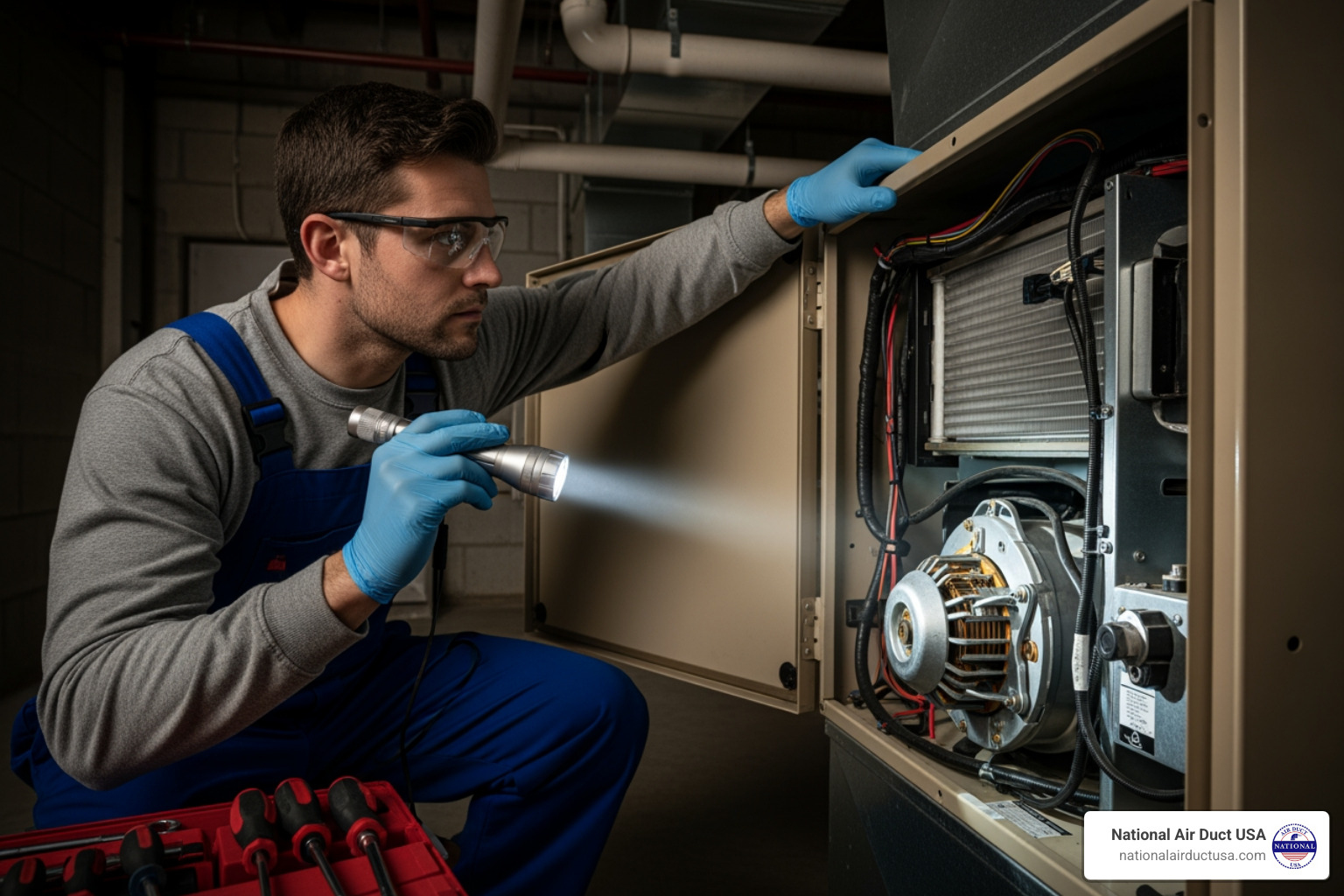
The accessibility of the mold within your HVAC system plays a major role in the final price. Mold growing on an exposed vent or register is usually simpler to address, but mold often hides in dark, damp, and hard-to-reach places, such as:
- Evaporator coils and drain pans: Constant condensation makes these prime breeding grounds. They are often deep within the air handler and require specialized tools to access and clean.
- Blower motor and housing: Mold here can circulate spores throughout your home. Disassembly and detailed cleaning increase labor time.
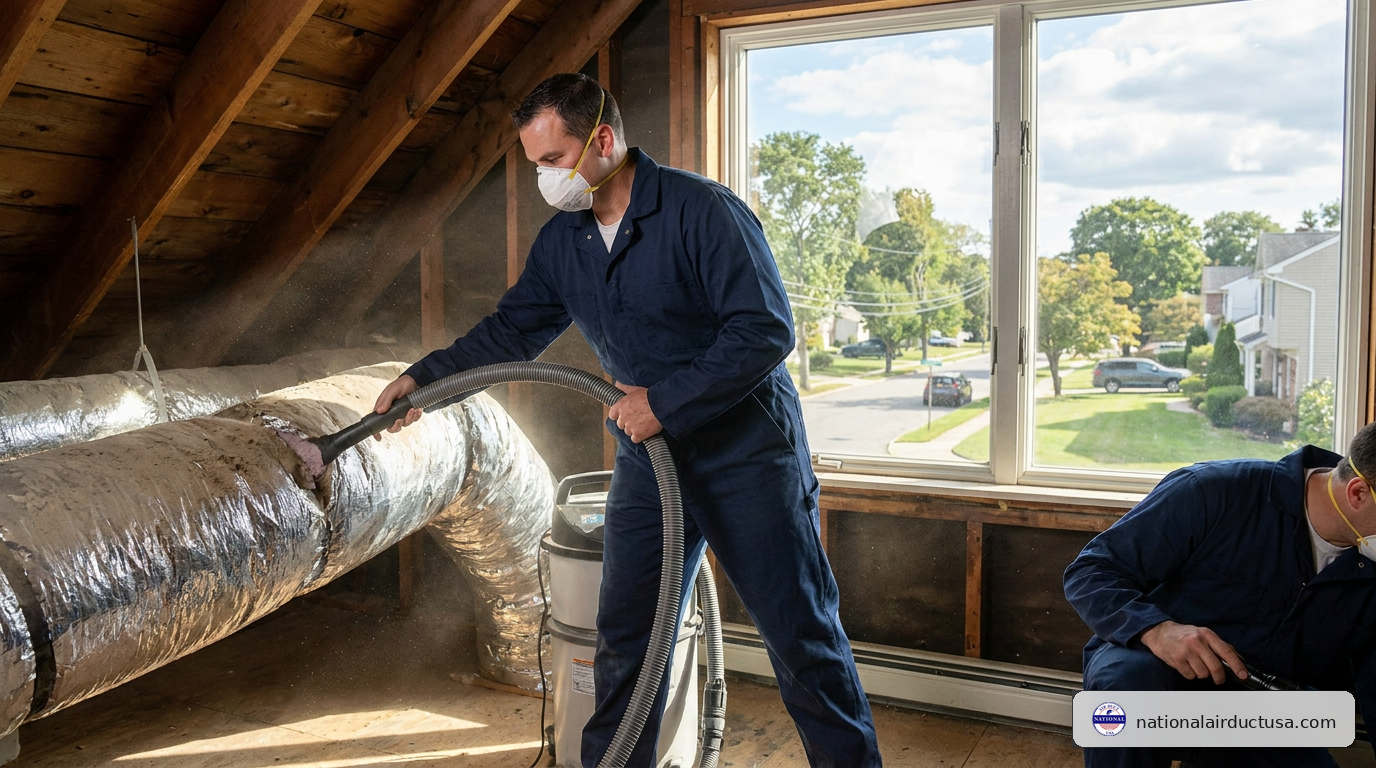
- Ductwork: Ducts can harbor extensive mold and act as highways, spreading spores to every room. Cleaning long or complex duct runs requires specialized brushes and powerful vacuums.
- Vents and registers: Visible mold here can indicate a deeper problem inside the ducts or air handler.
If HVAC components are located in tight attics, basements, or crawl spaces, technicians may need extra time and safety precautions, which also raises labor costs.
3. Type of HVAC System and Its Complexity
Your HVAC system design directly affects AC mold removal cost. Different systems require different levels of labor and access:
- Central air systems: Often the most expensive to remediate ($6,000 to $10,000) due to extensive ductwork, an outdoor compressor, and indoor coils and drain pans where mold thrives.
- Furnaces and air handlers: Typically $3,000 to $5,000 for remediation of core components. Internal parts can harbor significant mold even without large duct networks.
- Radiant heat systems: Usually $1,500 to $5,000 because they generally do not rely on air ducts, limiting spread through the system itself.
- Ductless mini-splits: Mold often grows on the coils and blower wheel within each indoor unit. Cleaning is meticulous because components are delicate and access can be tight.
Older systems, or those with custom or cramped installations, can be more time-consuming to open, clean, and reassemble. For more detailed information on maintaining your system, you can find More info about HVAC System Cleaning on the National Air Duct USA website.
4. Labor and Geographic Location
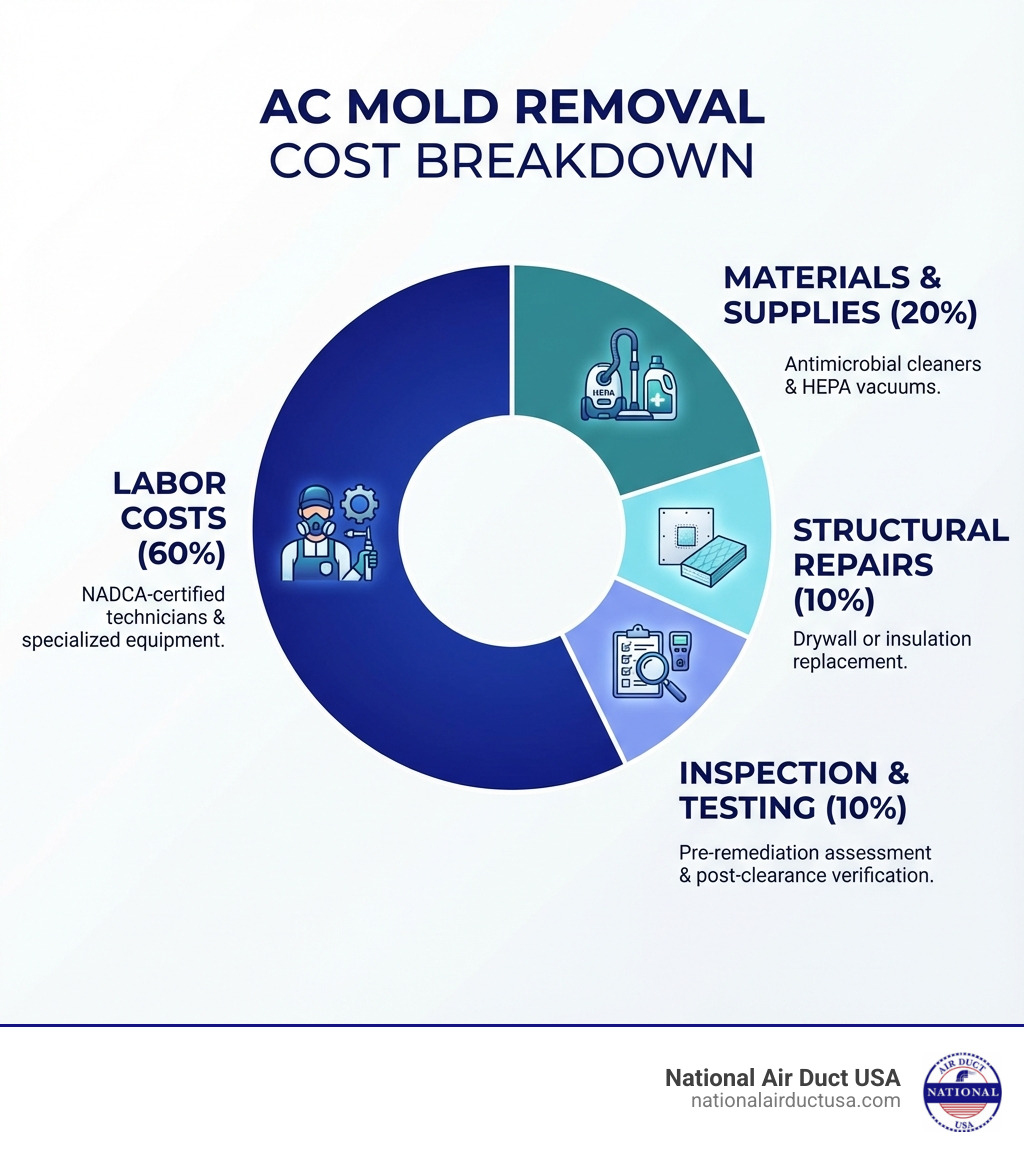
Labor typically accounts for roughly 60% of the overall AC mold removal cost. Mold remediation requires specialized training, equipment, and safety protocols to prevent further contamination and ensure effective removal. NADCA-certified technicians bring this expertise, which is reflected in their rates.
Labor costs often range from about $75 to $120 per hour, depending on local market conditions. In areas like Long Island, Westbury, Hempstead, Garden City, Hicksville, Freeport, Nassau County, and Suffolk County, rates can vary with demand and regional regulations.
Labor charges also include mobilization (getting the crew and equipment to your property) and worksite preparation. Technicians must set up containment barriers, protect unaffected areas, and sometimes run negative air machines to maintain safe, controlled airflow during the project.
5. Additional Services and Necessary Repairs
Mold remediation is not only about removing what you can see. It also involves repairing damage and preventing the mold from returning. These additional services can significantly affect your AC mold removal cost:
- Mold inspection and testing: A detailed inspection is often needed to pinpoint the source and extent of the mold. Mold inspection can cost around $250 to $350. Post-remediation testing may be recommended to confirm success.
- Damage repair: If mold has damaged building materials, they may need to be removed and replaced, such as:
- Drywall (about $1.50 to $3.50 per square foot)
- Insulation (about $1.00 to $4.50 per square foot)
- Subflooring (about $2.20 to $4.75 per square foot)
- Carpeting (about $2 to $8 per square foot)
- Hardwood flooring (about $11 to $25 per square foot)
- Painting (about $1 to $3 per square foot)
- Water damage restoration: Since mold almost always indicates a moisture issue, the underlying cause must be fixed. For example, repairing a roof leak can cost roughly $150 to $1,000 for small areas, or $3,000 to $6,000 for larger problems.
- Waste disposal: Severely contaminated materials often need to be double-bagged and disposed of properly, adding to project costs.
While these services increase the initial bill, they are crucial for a lasting solution and to protect your home’s structure and indoor air quality.
DIY vs. Professional: Weighing the True AC Mold Removal Cost
When you find mold, especially in your HVAC system, doing it yourself may seem appealing. A small, surface-level patch in a bathroom might be a manageable DIY project, but mold in an AC system is far more complex.
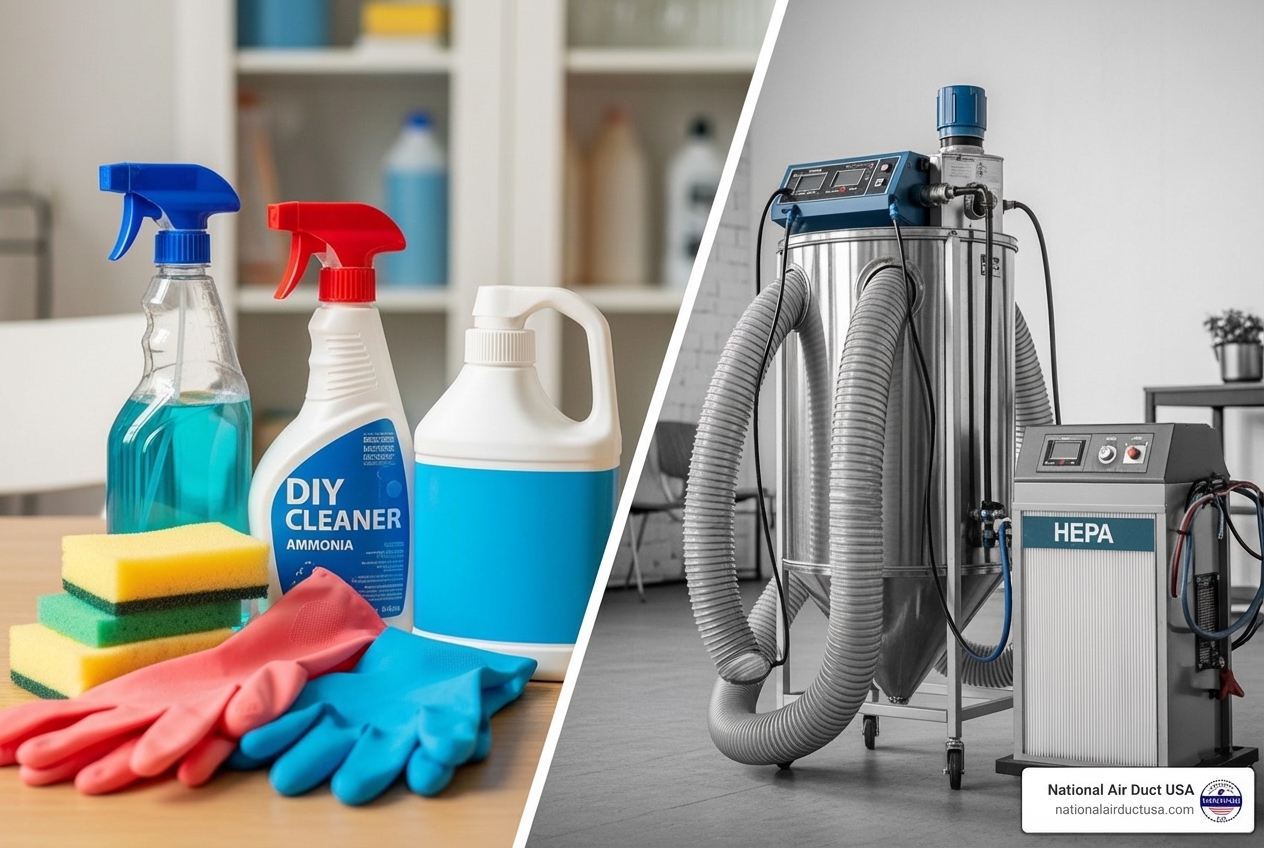
The DIY Approach: Costs and Critical Limitations
For very minor, easily accessible mold (less than 10 square feet), not caused by sewage, and if no one in the household has respiratory sensitivities, the EPA suggests DIY might be an option. Typical DIY costs include:
- Cleaning supplies: Mold removal sprays, detergents, and brushes from home improvement stores.
- Protective gear: N-95 respirators, safety glasses, gloves, and disposable clothing.
- Containment materials: Plastic sheeting and tape to isolate the area.
However, for mold in your AC system, DIY has serious limitations:
- Risk of spreading spores: Without proper containment and negative air machines, disturbing mold can release millions of spores, spreading contamination to other rooms.
- Limited access to components: Standard tools and household products cannot properly clean inside evaporator coils, blower motors, or deep ductwork. You may remove visible mold while leaving active growth hidden.
- High chance of recurrence: If the moisture source is not identified and corrected, and if cleaning is incomplete, mold often returns, leading to repeated costs.
- Health risks: Working in tight HVAC spaces with high spore counts without professional-grade protection can trigger severe allergic or respiratory reactions for some people.
For serious home-repair enthusiasts, detailed DIY guides on mold removal show how much preparation and equipment are involved. For many homeowners, the savings on DIY can be outweighed by the risks of incomplete cleanup and potential health impacts.
When to Call a Professional for AC Mold Removal
Knowing when to bring in a professional is critical to control your AC mold removal cost and protect your indoor air quality. Professional help is strongly recommended when:
- You suspect mold in ducts: Musty odors from vents or visible mold inside ductwork call for expert cleaning tools and methods.
- The infestation is larger than 10 sq. ft.: The EPA suggests using professionals for anything beyond a small patch.
- There are persistent musty odors: A strong, earthy smell, especially when the AC runs, often points to hidden mold within components or walls.
- Allergy or asthma symptoms worsen indoors: Increased sneezing, coughing, congestion, or itchy eyes when the system is running can indicate airborne mold spores.
- Residents have asthma or compromised immunity: For vulnerable occupants, professional containment and remediation help minimize exposure.
- There has been water damage or flooding: Any significant leak or water intrusion creates ideal conditions for mold in and around your HVAC.
When mold has spread throughout your HVAC system, costs can reach or exceed $10,000, but addressing it early usually keeps both damage and expense lower than if you wait.
Long-Term Financials: Insurance, Prevention, and the Cost of Inaction
Addressing mold in your AC system is not only about the immediate AC mold removal cost; it is also about long-term financial protection and a healthier home.
Will Homeowners Insurance Cover AC Mold Removal Cost?
Homeowners insurance usually does not cover mold remediation unless the mold results directly from a “sudden and accidental” event that your policy covers.
For instance, if a pipe suddenly bursts and causes water damage that leads to mold in your HVAC system, your policy might help pay for remediation. By contrast, if mold arises from long-term neglect, such as an undetected slow leak, persistent humidity, or poor maintenance, insurers often consider it preventable and deny coverage.
Policies differ widely. Some include limited mold coverage through riders or endorsements; others exclude it altogether. Review your policy documents carefully and ask your insurer specific questions. For more background, see Why insurance often doesn’t cover mold remediation. Always contact your insurance provider promptly after a covered water event, but be prepared that the AC mold removal cost may be an out-of-pocket expense.
The High Price of Neglect
Putting off mold remediation can turn a manageable issue into a much larger and more expensive problem.
- Structural damage to your home: Mold can damage drywall, insulation, framing, and flooring. What might start as a $3,000-$10,000 AC mold removal cost can grow into a $10,000-$30,000 whole-house remediation if ignored.
- Decreased property value: Active or poorly addressed mold problems can make a home harder to sell and reduce offers.
- Chronic health issues for occupants: Mold spores can worsen allergies, asthma, and other respiratory conditions, potentially leading to ongoing medical visits.
- Higher energy bills: Mold buildup on coils and inside ducts can reduce airflow and efficiency, forcing your system to work harder and use more energy.
- Possible HVAC system replacement: In extreme cases, severely contaminated or damaged equipment may need partial or complete replacement.
Mold does not disappear on its own. Early action usually costs less than dealing with advanced damage later.
Preventing Future Mold Growth After Remediation
After investing in professional cleanup, prevention focuses on controlling moisture and keeping your HVAC system clean:
- Control humidity: Keep indoor humidity between about 30% and 50%. Consider a dehumidifier in damp areas such as basements.
- Change filters regularly: Replace HVAC air filters every 1-3 months, or more often if you have pets or allergies.
- Schedule routine air duct cleaning: Even without visible mold, periodic Air Duct Cleaning (often every 2-3 years) removes dust, debris, and spores that can support growth.
- Fix leaks promptly: Address plumbing, roof, or foundation leaks as soon as you notice them. Mold can start within 24-48 hours after water exposure.
- Ensure proper ventilation: Use exhaust fans in kitchens and bathrooms and make sure moist air is vented outside, not into attics or crawl spaces.
- Consider UV light installation: UV lights installed in your air handler can help reduce mold spores, bacteria, and some viruses on internal surfaces as air passes through.
By following these steps, you help protect your remediation investment and support cleaner, healthier air in your home.
Frequently Asked Questions about AC Mold Removal
Homeowners often have similar questions when mold is found in an AC system. Here are concise answers to some of the most common concerns.
How long does HVAC mold remediation typically take?
The process can take anywhere from one to seven days. A small, contained job focused on a short section of ductwork might be completed in a day, while a severe infestation involving the air handler, evaporator coils, and extensive ducting can take several days to about a week. This timeframe includes setup of containment, detailed cleaning, drying, and any post-remediation verification.
Can I stay in my house during the process?
For most remediation projects, you can remain in your home. Professionals seal off the contaminated areas with plastic sheeting and often use negative air pressure to keep spores from spreading. For whole-house remediation, or if occupants have severe respiratory sensitivities or compromised immune systems, temporary relocation may be recommended for comfort and safety.
What are the signs of mold in my AC system?
Common signs that point to possible mold in your AC or ductwork include:
- Persistent musty odor: A damp or earthy smell, especially noticeable when the system runs.
- Visible spots or growth: Black, green, or white patches around vents, inside the air handler, or on the drip pan.
- Worsening allergy-like symptoms indoors: Sneezing, coughing, congestion, itchy or watery eyes, or shortness of breath that seem worse when you are inside and the AC is on. The EPA offers more detail on mold-related symptoms.
- Moisture issues near HVAC components: Water stains, condensation, or leaks around your unit or ducts.
If you notice one or more of these signs, a professional inspection can confirm whether mold is present and how far it has spread.
Get a Clear Quote for a Healthier Home
Understanding the potential AC mold removal cost is the first step, but an accurate price requires a professional assessment. Factors like accessibility, system type, and the extent of the problem can only be determined through an on-site inspection. National Air Duct USA’s NADCA-certified technicians provide transparent, detailed quotes for residents in Long Island and Westbury, ensuring you know exactly what’s needed to restore your home’s air quality. For a comprehensive evaluation and a plan to make your air clean again, explore our professional Services.