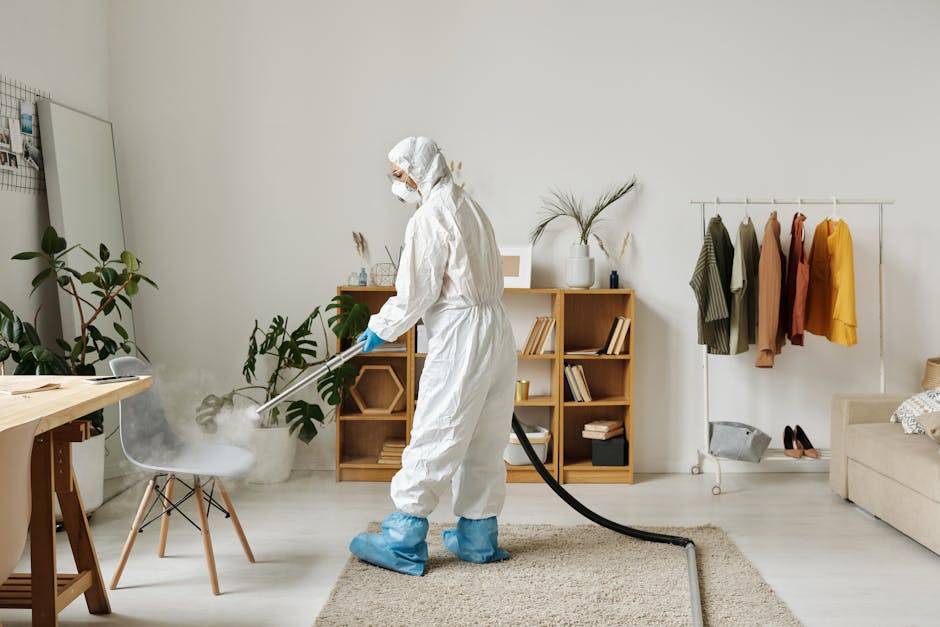
Revolutionizing Your Air: What is an Air Duct Sanitizing Fogger?
An air duct sanitizing fogger is a tool designed to disinfect your home’s HVAC ductwork by dispersing a fine mist of an EPA-certified sanitizing agent. This mist reaches deep into the system to:
- Disinfect: Kill mold, bacteria, and viruses.
- Neutralize Odors: Eliminate smells by targeting odor-causing particles.
- Reach Everywhere: Access areas traditional cleaning can’t.
- Improve Air Quality: Reduce airborne contaminants for healthier air.
- Use Safe Solutions: Employ non-toxic, EPA-approved agents like Thymol, which are safe for pets and children.
For residents of Long Island, poor indoor air quality is a common concern. Dust, allergens, and mold spores can accumulate in your HVAC system, circulating unhealthy air that can trigger allergies and impact health. An air duct sanitizing fogger is an effective strategy to combat these invisible threats. This guide will explore different methods for using these foggers to help you maintain a healthier home environment.
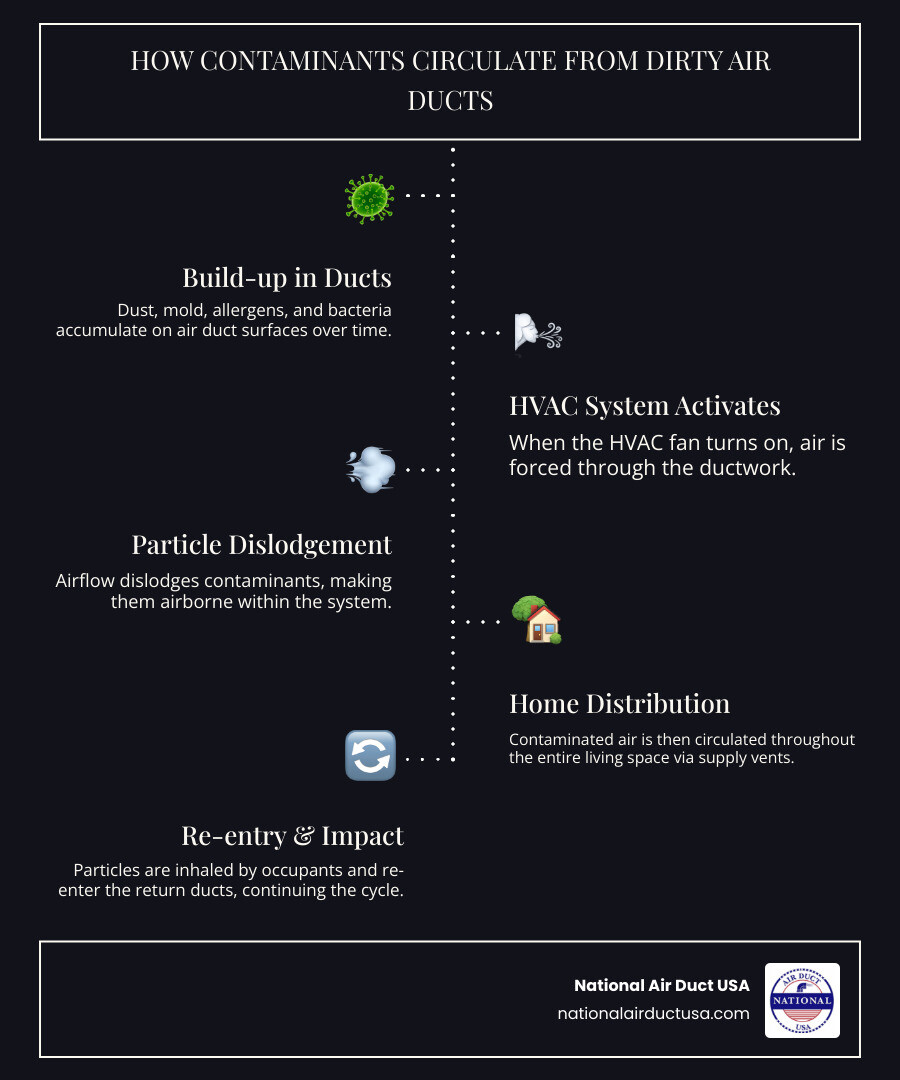
Understanding the Basics: What Fogging Achieves
Duct fogging is a deep sanitization process that gives your home’s air quality a serious upgrade. By introducing an EPA-certified cleaning agent as a fine mist into sealed ductwork, it reaches nooks and crannies that traditional cleaning misses, disinfecting and refreshing your air ducts.
Benefits of Fogging
Clean air ducts are like healthy lungs for your home. Using an air duct sanitizing fogger provides several key benefits:
- Improved Air Quality: Fogging actively removes pollutants like dust, pollen, and pet dander from your ductwork, resulting in cleaner air throughout your Long Island home.
- Allergen Removal: By neutralizing allergens trapped in the ducts, fogging can significantly reduce allergy and asthma symptoms.
- Mold and Mildew Control: The disinfecting agents neutralize mold spores in the dark, damp environment of ductwork, preventing their spread and protecting your health.
- Odor Elimination: Fogging is excellent for eliminating stale, musty smells from pets, cooking, or smoke. The mist binds to odor-causing molecules, removing them at the source for a genuinely fresh scent.
The Science Behind Sanitizing
The process behind an air duct sanitizing fogger is called atomization, where a liquid sanitizer is broken down into a fine mist (2-50 microns). This allows the mist to penetrate deep into surfaces and remain airborne long enough to neutralize contaminants before evaporating without leaving wet residue.
- EPA-Approved Solutions: We prioritize safety by using EPA-certified agents. Thymol, a plant-based disinfectant from the Thyme plant, is EPA-approved against Coronavirus and is safe for homes with pets and children. Another option is Hypochlorous Acid (HOCl), a natural disinfectant that is up to 80 times more powerful than bleach but contains no harsh chemicals and is 100% non-toxic.
- How It Works: The fine mist allows these active ingredients to disrupt the cellular structure of microorganisms like mold, bacteria, and viruses, rendering them harmless. The mist also binds to odor-causing molecules, eliminating smells rather than just masking them.
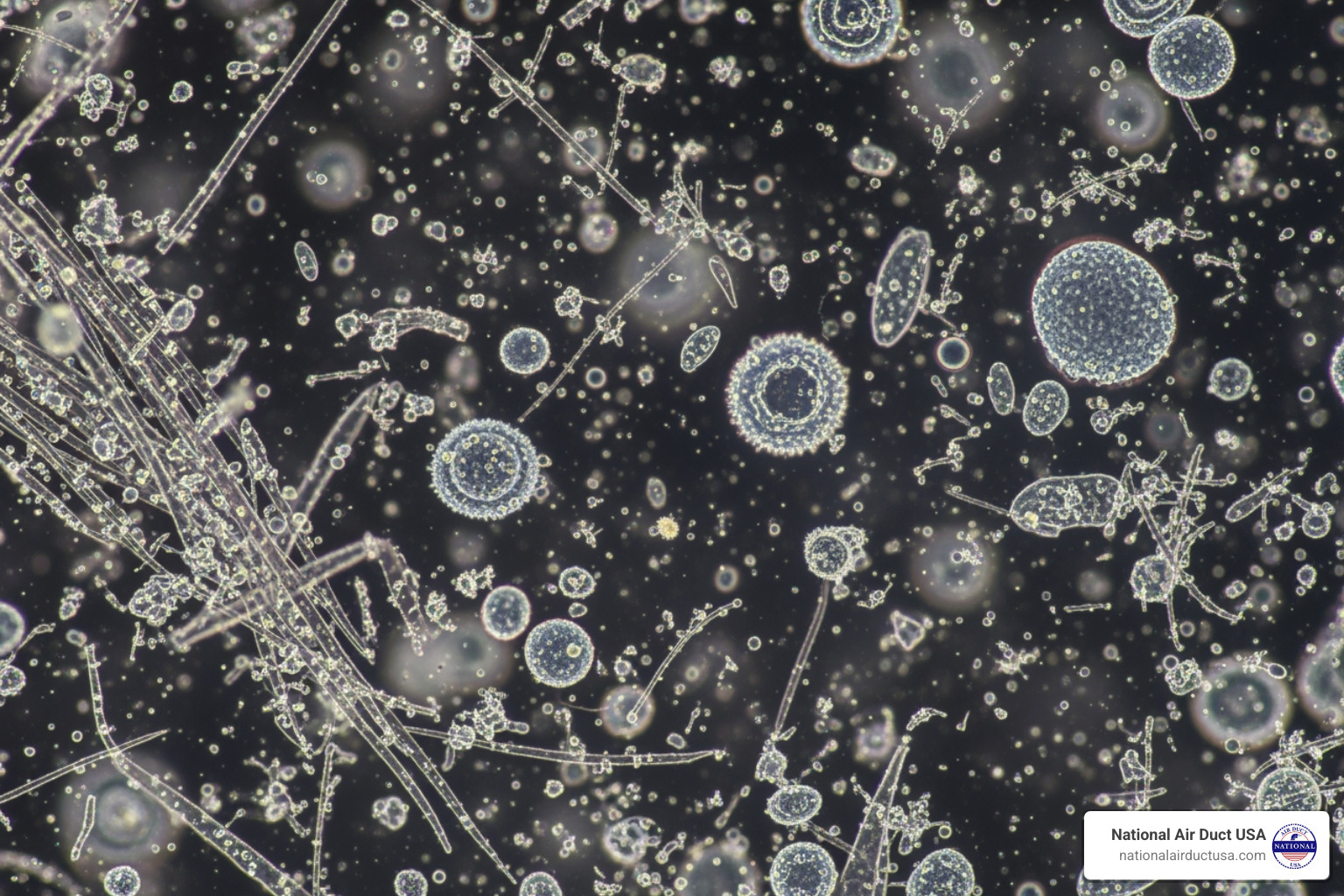
Key Contaminants Targeted by Fogging
Our fogging methods are effective against a wide range of indoor air contaminants common in Nassau and Suffolk County homes, including:
- Mold Spores
- Bacteria and Viruses (including some Coronaviruses with agents like Thymol)
- Pollen and Dust Mites
- Pet Dander
- Smoke Residue
To learn even more about how comprehensive cleaning benefits your home and gets rid of these hidden contaminants, be sure to check out our dedicated page on More info about Air Duct Cleaning services.
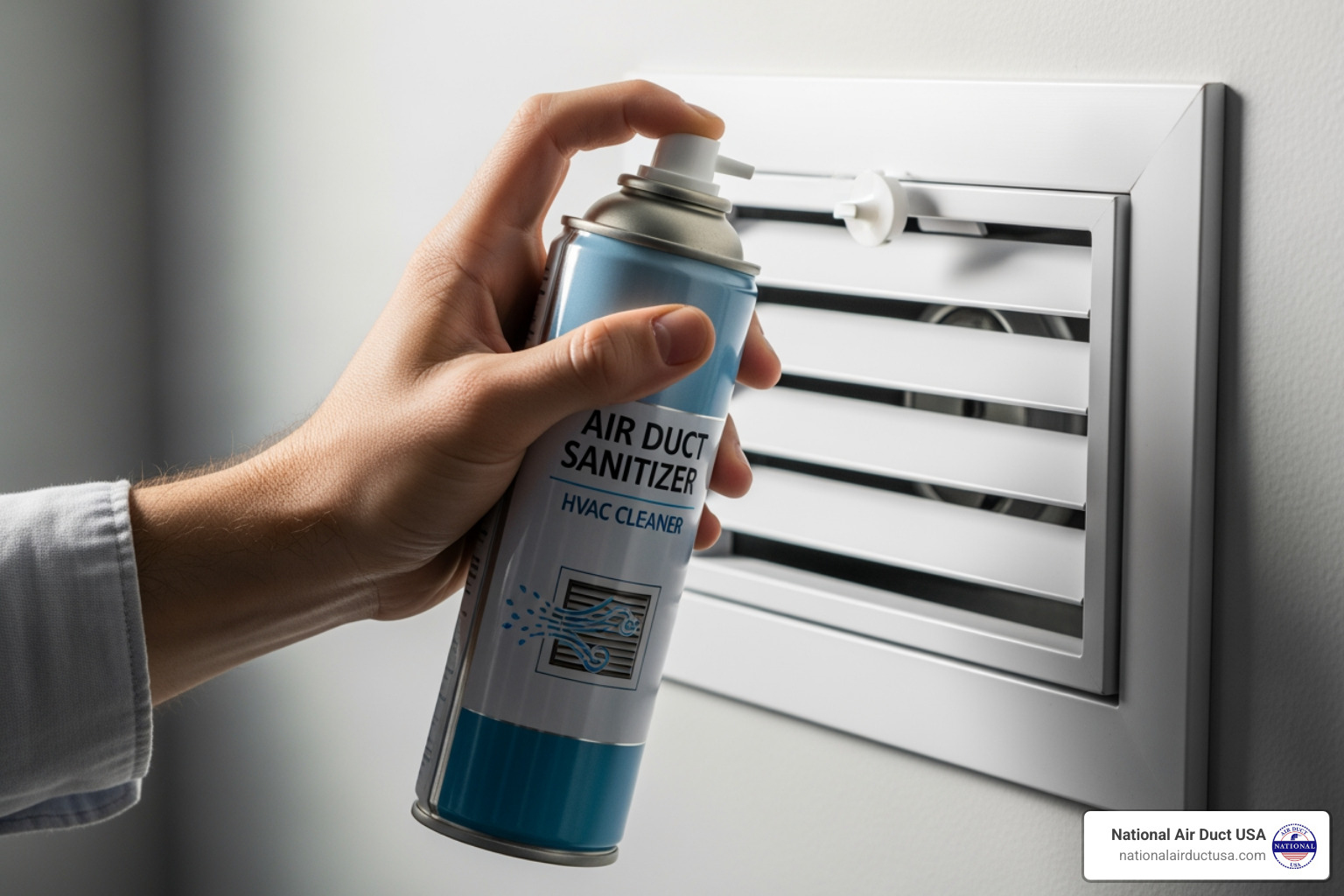
Method 1: The Simple DIY Aerosol Can
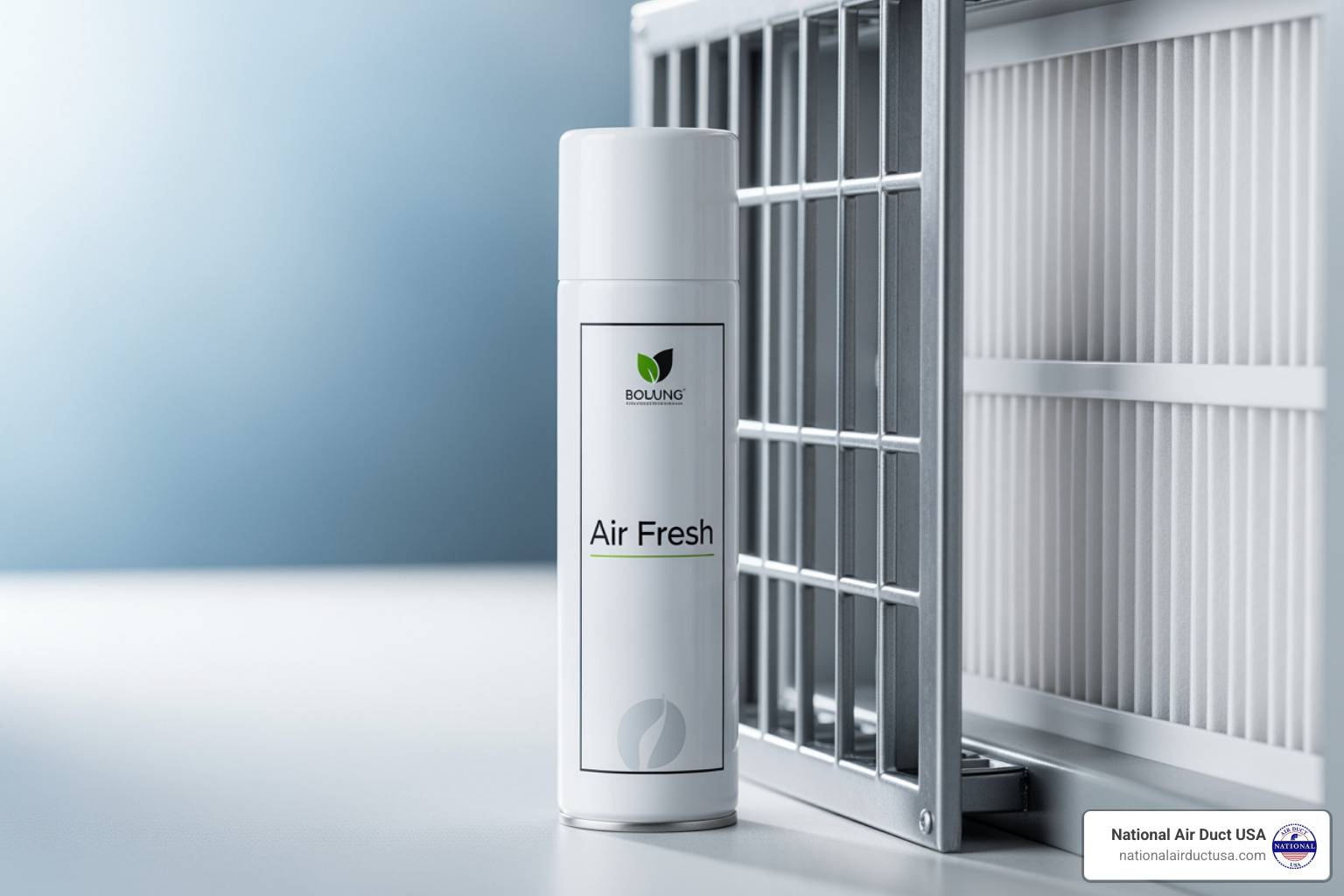
For a quick refresh or to tackle a minor odor, a simple DIY aerosol can air duct sanitizing fogger can be a handy, accessible solution for homeowners in Long Island.
DIY Approach: Aerosol Fogger Cans
These are single-use cans that release a fogging agent to freshen and lightly sanitize your air ducts. Many use natural, EPA-approved ingredients like Thymol.
How to Use
Using an aerosol fogger is straightforward:
- Turn off your HVAC system completely.
- Read the product’s instructions carefully.
- Place the can upright near your main return air vent.
- Push the button to activate the hands-free fogger.
- Immediately turn on the HVAC system’s fan only to circulate the mist.
- Let the fog work for the recommended time (usually 30-60 minutes).
- Afterward, ventilate your home thoroughly by opening windows and doors.
Pros and Cons
Aerosol foggers are cost-effective, easy to use, and offer a quick solution for minor odors. However, they have limitations, including limited duct penetration, often providing only temporary results. The fog may not spread uniformly, leading to coverage issues in larger or more complex duct systems.
Safety First with an aerosol air duct sanitizing fogger
Your family’s safety is the top priority.
- Pet and Child Safety: Choose products that are explicitly labeled as safe for pets and children, such as those with natural, Thymol-based formulas.
- Proper Ventilation: After the treatment, always air out your home to clear any lingering mist.
- Vacate the Premises: It’s a good practice for all occupants, including pets, to leave the house during the fogging and for the recommended period afterward.
- Follow Instructions: Always read and follow the manufacturer’s instructions on the label for usage and safety precautions.
Method 2: Using an Electric ULV Air Duct Sanitizing Fogger
For a more powerful solution than aerosol cans, an electric ULV (Ultra-Low Volume) air duct sanitizing fogger offers deeper penetration and is a reusable tool for homeowners serious about air quality.
ULV (Ultra-Low Volume) Foggers
ULV foggers use high pressure to atomize liquid sanitizers into tiny droplets (5-50 microns). This ultra-fine mist travels further into ductwork and stays suspended longer, effectively reaching hidden mold and bacteria. As reusable equipment, a ULV fogger can be more economical for regular sanitization.
Step-by-Step Guide
To use your ULV air duct sanitizing fogger safely and effectively:
- Preparation: Turn off the HVAC system completely. Cover sensitive items like electronics or artwork near vents. Fill the fogger’s tank with an EPA-approved sanitizing solution according to its instructions.
- Fogging Process: Direct the nozzle into your main return air intake vent and run the fogger for several minutes to treat the central unit. Then, move through your home and fog into each supply vent to ensure the mist reaches all branch ducts.
- Dwell and Ventilate: After fogging, allow the sanitizer a dwell time of 30-60 minutes inside the ducts to neutralize contaminants. Afterward, ensure proper ventilation by opening all windows and doors for several hours.
Key Features to Look For
When investing in a ULV fogger, look for these features:
- Adjustable Nozzle & Particle Size Control: To manage flow rate and create the ideal mist (5-50 microns).
- Tank Capacity: A larger tank (e.g., 1.5 gallons) reduces refills.
- Hose Length: A long, flexible hose helps reach deep into ducts.
- Chemical-Resistant Seals: Viton seals prevent corrosion from sanitizing agents.
- Powerful Motor: Ensures consistent output and durability.
For homeowners across Long Island, a quality ULV fogger offers a middle ground between simple DIY fixes and professional services, giving you more control and deeper cleaning than aerosol cans.
Method 3: Professional Fogging and Targeted Spray Systems
While DIY methods are useful, professional services provide a level of precision and power that home equipment cannot match. At National Air Duct USA, our advanced equipment and trained technicians deliver thorough, lasting results for homes and businesses throughout Long Island.
Professional Services
When you hire professionals for air duct sanitizing fogger treatment, you get a superior approach. Our commercial-grade foggers and targeted spray wands with 360-degree nozzles apply sanitizer directly onto duct walls. This is different from simply filling a room with mist; it’s a direct application that coats the interior surfaces where contaminants live, ensuring a comprehensive clean.
Difference from Passive Fogging
DIY methods rely on passive fogging, where you hope your HVAC fan carries the sanitizer everywhere. This can lead to uneven coverage and overspray on your furniture. Our professional targeted spray systems use compressed air to apply sanitizer directly inside the ducts, guaranteeing complete coverage without contaminating your home. This control is crucial for treating hard-to-reach areas where contaminants accumulate.
| Feature | DIY Fogging (Aerosol/Basic ULV) | Professional Service (Advanced Fogger/Targeted Spray) |
|---|---|---|
| Cost | Low initial cost | Higher initial cost, but long-term value and effectiveness |
| Effectiveness | Moderate, often temporary, uneven coverage | High, thorough, long-lasting sanitization |
| Time | Quick application, longer ventilation needed | Efficient application, expert handling of dwell/ventilation |
| Safety | Relies on user adherence to instructions, potential for overspray | Trained technicians, controlled application, minimized exposure risks |
| Equipment | Basic aerosol cans or consumer-grade ULV machines | Commercial-grade foggers, specialized wands, high-pressure systems |
For more comprehensive information on keeping your entire HVAC system running at peak performance, take a look at our page on More info about HVAC System Cleaning.
Why Professional Application Guarantees Better Results
Choosing National Air Duct USA means investing in expertise and peace of mind.
- NADCA-Certified Technicians: Our team is trained to the highest industry standards for HVAC systems and contamination treatment.
- Thorough System Inspection: We conduct a detailed assessment to identify problem areas and create a custom treatment plan.
- Controlled Application: We often temporarily seal off parts of your HVAC system to concentrate the fogging agent where it’s needed most, ensuring it works effectively without escaping into living spaces.
- Commercial-Grade Equipment: Our powerful foggers and sprayers deliver the ideal particle size and dispersal pattern for uniform coverage in any duct system.
- Guaranteed Complete Coverage: We strategically apply the sanitizer to ensure every inch of your ductwork is treated, even areas with low airflow.
- Avoiding Property Damage: Our professionals take every precaution to protect your home and belongings from residue or damage.
Method 4: Integrating UV-C Light for Continuous Sanitization
While an air duct sanitizing fogger provides a powerful periodic disinfection, UV-C light technology offers a different approach: continuous, chemical-free sanitization. Think of it as 24/7 protection for your HVAC system.
Alternative to Fogging / Complementary Method
UV-C light isn’t a direct replacement for fogging. Fogging is a “shock treatment” that disinfects surfaces after a cleaning, while UV-C light works constantly to prevent the regrowth of mold, bacteria, and viruses on your HVAC coil and in the air stream. Many homeowners in Long Island find that combining a deep clean and fogging with a UV-C light installation provides the ultimate solution for clean air.
UV-C Light Technology: How it Works
UV-C light is a scientifically proven disinfectant. It works by emitting germicidal rays that destroy the DNA and RNA of microorganisms like bacteria, mold, and viruses, rendering them unable to reproduce.
Installed near the evaporator coil or in the return air duct, UV-C lights operate continuously whenever your system runs. As air passes the light, any airborne pathogens are neutralized. This provides constant, chemical-free protection, making it an appealing option for families in Westbury or Garden City who prefer a non-chemical approach to air quality.
UV-C Light vs. a chemical air duct sanitizing fogger
How do these two methods compare?
- UV-C Light: Provides constant, chemical-free protection and is highly effective at preventing mold growth on HVAC coils. However, it has a line-of-sight limitation (it only disinfects what the light touches) and doesn’t remove physical debris. It also requires an initial installation cost.
- Chemical Fogging: Offers a comprehensive “shock” treatment that reaches into crevices and directly neutralizes odors. However, it is a periodic treatment, not a continuous one.
The truth is, these methods work best together. A professional cleaning and fogging removes existing contaminants, while a UV-C light helps maintain that cleanliness over time.
While UV-C light is a powerful tool, it’s most effective when paired with a clean system. For guidance on equipment and maintenance, you can explore Online Equipment Guides (Opens in New Window). And remember, the foundation of healthy air starts with clean ducts. Learn more about More info about Why Regular Air Duct Cleaning is Essential.
Frequently Asked Questions about Air Duct Sanitizing
Homeowners across Long Island often have questions about air duct sanitization. Here are answers to the most common concerns.
Are air duct sanitizing foggers safe for use in homes with pets and children?
Yes, air duct sanitizing foggers are safe when used correctly. The key is choosing products with non-toxic, EPA-approved ingredients like Thymol, a botanical disinfectant that is safe for use around families and pets.
Safety also depends on proper procedure. Always follow the manufacturer’s guidelines, which typically include ensuring proper ventilation after treatment and having people and pets temporarily vacate the area during application. For complete peace of mind, the trained technicians at National Air Duct USA use safe application practices.
How often should air ducts be sanitized using a fogger?
Sanitizing is a powerful supplement to cleaning, not a replacement for it. We recommend sanitizing your air ducts after a professional air duct cleaning, which is typically needed every 3-5 years. Cleaning removes the physical debris, while fogging neutralizes the microscopic contaminants left behind.
You might also use an air duct sanitizing fogger for specific issues, such as after mold growth, a pest infestation, or to eliminate persistent odors from pets or smoke.
Can air duct sanitizing foggers be used for purposes other than air ducts?
Yes, ULV foggers are versatile tools. The fine mist they produce is perfect for disinfecting and deodorizing other enclosed spaces. Common applications include:
- Sanitizing entire rooms in homes or offices.
- Deodorizing vehicle interiors.
- Eliminating stubborn odors in basements or from smoke.
- Assisting with mold remediation by treating affected areas.
Always use the appropriate sanitizing solution for each application and ensure proper ventilation.
Conclusion
We’ve covered the full spectrum of air duct sanitization, from simple DIY cans to professional systems and UV-C light. Each method offers a way to use an air duct sanitizing fogger or similar technology to create a healthier indoor environment by tackling odors, allergens, and invisible contaminants.
The most important takeaway is that sanitizing is a powerful supplement to, not a replacement for, professional air duct cleaning. A fogger works best on surfaces already cleared of heavy dust and debris.
For the most thorough and worry-free solution, trust the experts. The NADCA-certified technicians at National Air Duct USA have the advanced equipment and training to ensure your air ducts in Long Island, Westbury, and across Nassau and Suffolk Counties are not just clean, but deeply sanitized. We are passionate about helping your family breathe easier.
Ready to experience the difference a truly sanitized system can make?
Learn more about our professional Air Duct Cleaning Services and let us help you clear the air!