That Puddle Isn’t Supposed to Be There
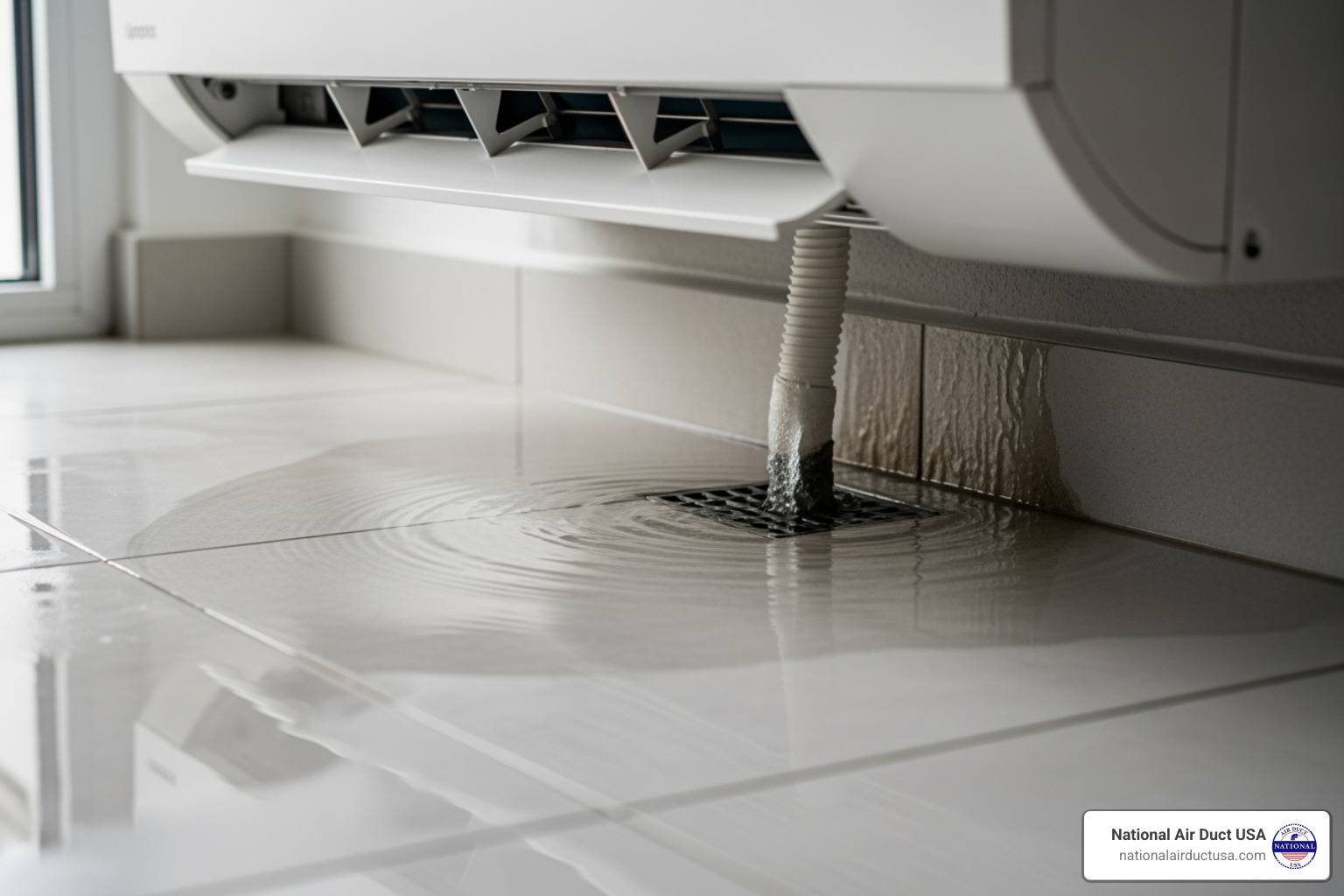
If you see water pooling around your indoor AC unit or your system keeps shutting down, a central air condensate drain clogged with debris is the likely culprit. This is a common AC repair call on Long Island, but the good news is that you can often clear it yourself in about 30 minutes.
Quick Answer: How to Clear a Clogged Condensate Drain
- Turn off power to your AC at the thermostat and breaker.
- Locate the drain line (a white PVC pipe near your indoor unit).
- Use a wet/dry vacuum at the outdoor drain exit to suction out the clog.
- Flush with vinegar (1 cup) through the line’s access point and wait 30 minutes.
- Rinse with water and confirm the line drains freely.
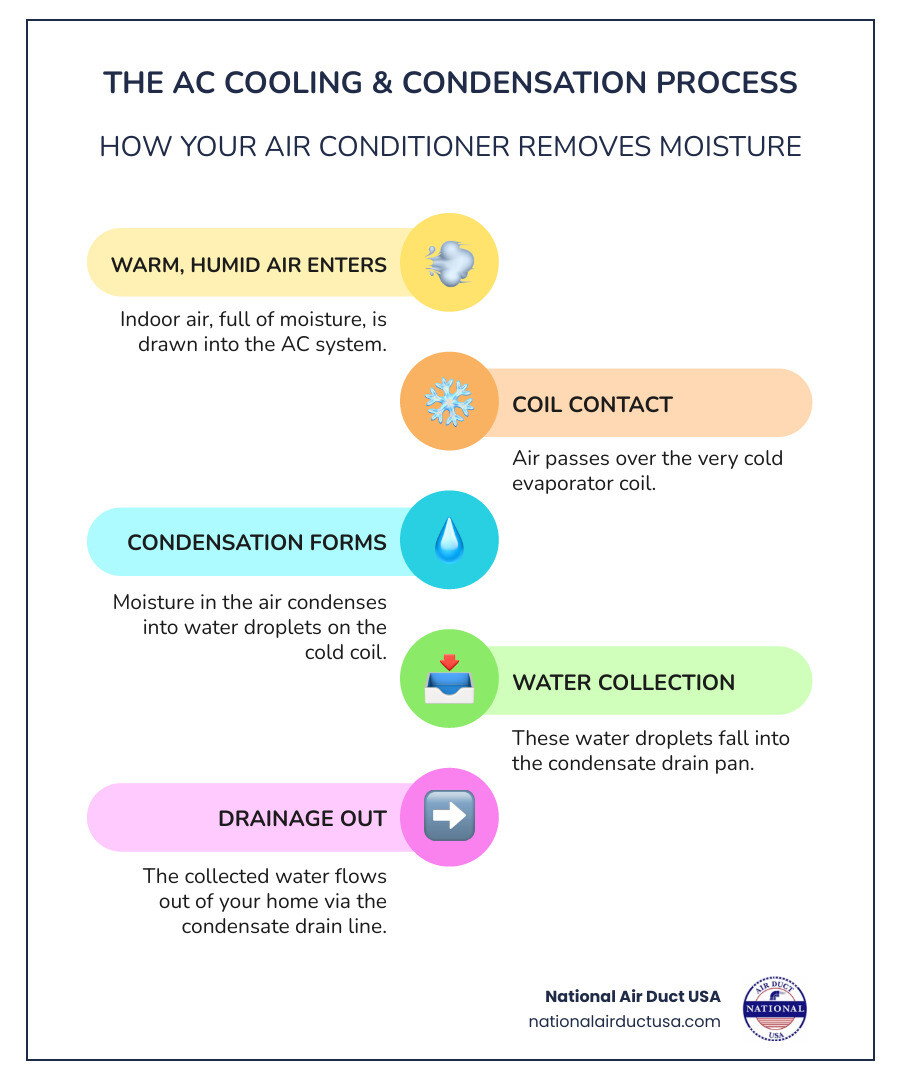
Your AC removes humidity by condensing moisture onto a cold evaporator coil. This water collects in a drain pan and flows out through the condensate drain line. Over time, this damp, dark pipe can get clogged with algae, mold, and sludge. When that happens, water backs up, triggering a safety switch to shut down your system or causing leaks that can damage your home.
This guide will walk you through identifying the problem, clearing the clog, and knowing when to call the professionals at National Air Duct USA.
What is a Condensate Drain Line and Why Does It Clog?
Your air conditioner acts as a dehumidifier, pulling moisture from the air. As warm, humid air passes over the cold evaporator coil, water condenses into droplets. These droplets fall into a drain pan and are channeled away from your home through the condensate drain line—typically a 3/4-inch white PVC pipe. On a humid day, your AC can produce several gallons of water.
This damp, dark pipe is a perfect breeding ground for clogs. The main causes include:
- Algae and Sludge Buildup: The constant moisture allows algae, mold, and bacteria to form a slimy gunk that eventually blocks the pipe. A central air condensate drain clogged with this material is the most common issue.
- Dust and Debris: Even with a good filter, dust and airborne particles get washed from the evaporator coil into the drain line, mixing with the sludge to form a stubborn clog. This is why regular air duct cleaning is so important.
- Improper Installation: If the drain line doesn’t have a consistent downward slope, water can pool in low spots, accelerating algae growth and allowing debris to settle.
Signs You Have a Central Air Condensate Drain Clogged
Your AC will usually give you warning signs before a clog becomes a major problem. Look out for:
- Water Pooling: Puddles or moisture around your indoor air handler are a clear sign of a blockage.
- AC System Shutting Down: Many modern systems have a safety float switch that shuts the unit off when water backs up in the drain pan to prevent an overflow.
- Musty or Moldy Smells: Backed-up water creates a breeding ground for mold and mildew, and the spores can circulate through your vents.
- High Indoor Humidity: If the water can’t drain away, it may re-evaporate into your home, making the air feel sticky and clammy.
- Gurgling Sounds: Bubbling or gurgling noises from your AC unit can indicate that water is struggling to get past a partial blockage.
The Consequences of Ignoring a Clog
Putting off this repair can lead to serious issues. A central air condensate drain clogged with sludge can cause:
- Water Damage: Overflowing water can ruin ceilings, walls, and floors, leading to thousands of dollars in repairs.
- Higher Energy Bills: An AC that is constantly shutting off or struggling to run will operate inefficiently, driving up your utility costs.
- Shortened System Lifespan: Standing water causes rust and corrosion on critical components, which can lead to premature system failure.
- Health Risks: A damp environment promotes the growth of mold and bacteria, which can harm your indoor air quality and trigger respiratory issues.
- Costly Repairs: What starts as a simple clog can escalate into a need for expensive component replacements if left unaddressed.
How to Safely Unclog Your Central Air Condensate Drain Line
Ready to fix that central air condensate drain clogged? This process is straightforward, but safety comes first.
Step 1: Preparation and Safety
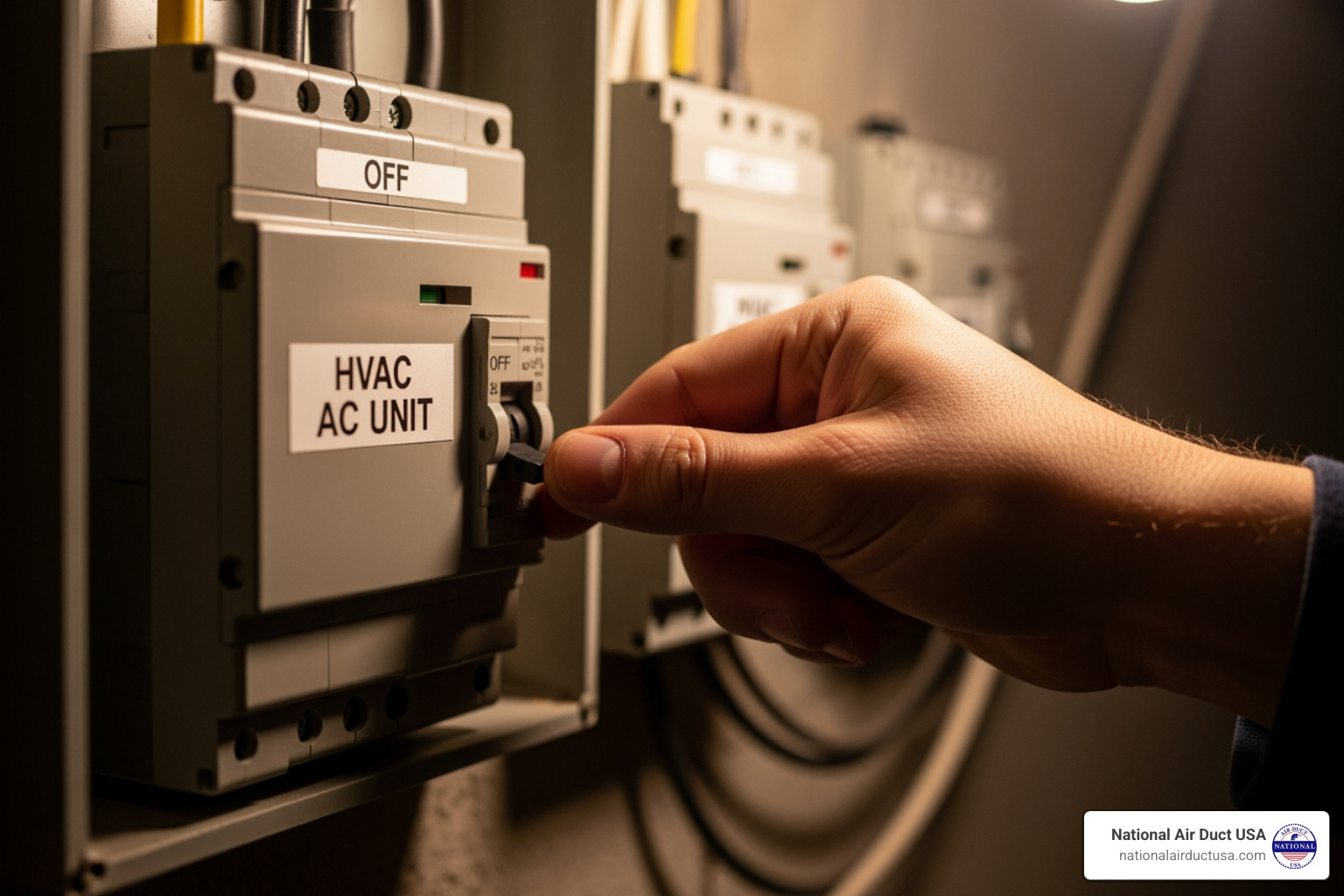
Before you begin, you must turn off all power to your AC system to prevent electrical shock.
- Switch your thermostat from “COOL” to “OFF.”
- Go to your electrical breaker box and flip the breaker for your “AC Unit” or “HVAC” to the “OFF” position.
Now, gather your tools:
- Wet/Dry Vacuum (Shop Vac)
- Rags or old towels
- Distilled white vinegar
- Funnel
- Duct tape
- Gloves and eye protection
Step 2: Locate the Drain Line and Clear the Pan
Find your indoor air handler, which may be in a basement, attic, or utility closet. Look for the shallow primary drain pan directly beneath the evaporator coils. If you see standing water, you’ve confirmed a clog.
Use rags or a wet/dry vac to remove all the water from the pan. Once it’s dry, wipe away any visible slime or mold. Check the opening where the drain line connects to the pan and clear any debris you can see.
Step 3: DIY Steps for a Central Air Condensate Drain Clogged
This is where your wet/dry vacuum does the heavy lifting.
First, locate the outdoor exit of your condensate drain line. It’s usually a small PVC pipe sticking out of an exterior wall near your outdoor compressor.
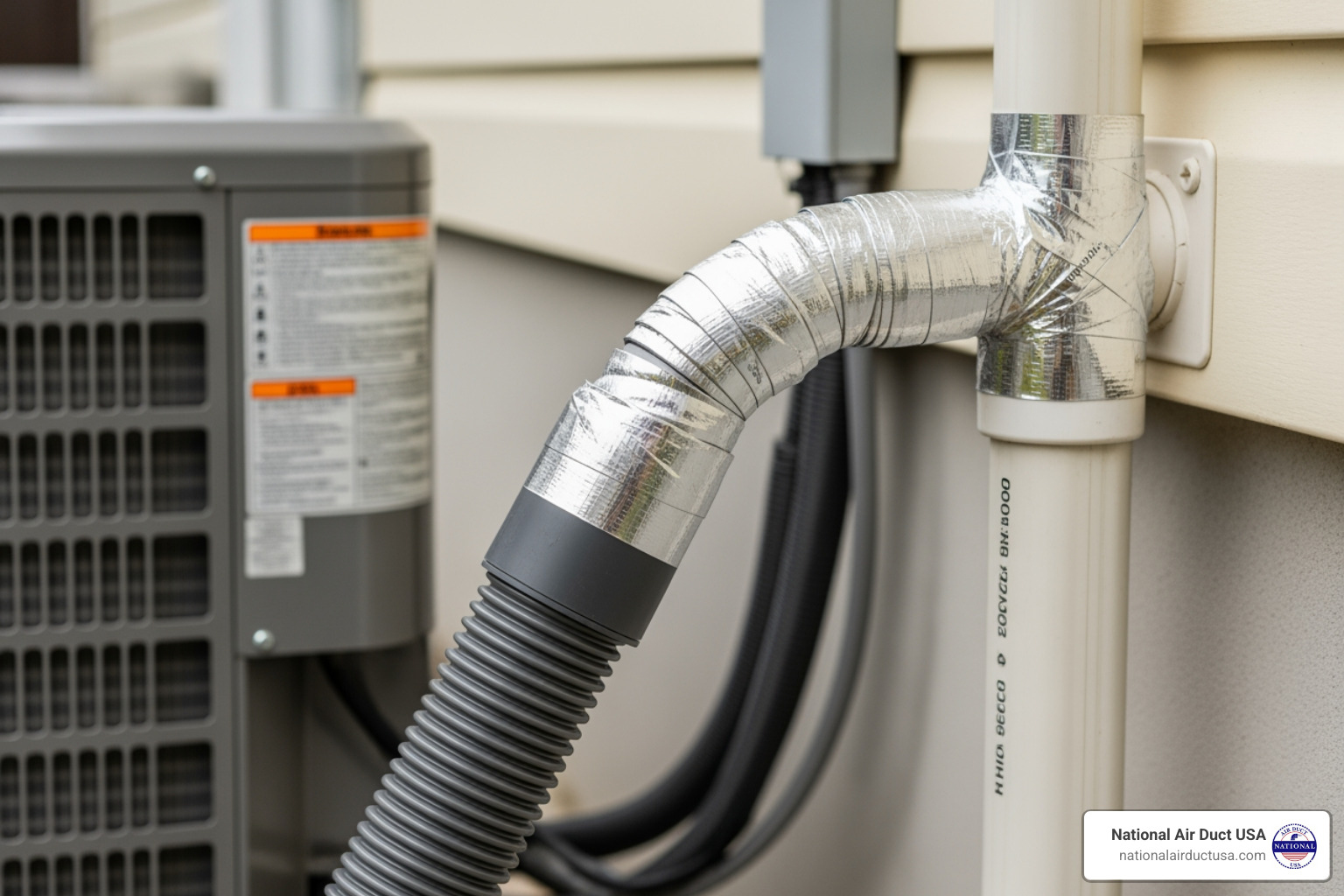
Attach your wet/dry vacuum’s hose to this outdoor pipe. Use duct tape or a thick towel to create an airtight seal between the hose and the pipe. A good seal is critical for strong suction.
Turn on the vacuum and let it run for one to two minutes. You may hear a gurgle as the clog is pulled free. Check the vacuum’s tank for slimy water or debris to confirm you’ve captured the blockage.
Step 4: Flush the Line
After suctioning out the clog, you need to clean the line to prevent a quick recurrence.
Find the T-shaped PVC vent or access tee on the drain line near your indoor unit. Remove the cap. Using a funnel, slowly pour one cup of distilled white vinegar into the line. Vinegar’s acidity safely kills any remaining mold and algae without damaging the PVC.
Let the vinegar sit for at least 30 minutes.
After 30 minutes, flush the line by pouring a gallon of clean water into the same access point. Go outside and check the drain exit to ensure you see a steady stream of water. If it’s flowing freely, the clog is gone.
Finally, replace the cap on the access tee, turn the power back on at the breaker, and set your thermostat back to “COOL.”
Prevention and When to Call a Professional
You’ve cleared the central air condensate drain clogged with debris, but the work isn’t over. Prevention is key, and it’s also important to know when a problem is best left to a professional.
While DIY methods using a vacuum and vinegar are effective for minor clogs, they have limits. Professional HVAC technicians use specialized tools like high-pressure flushers and can diagnose deeper issues, such as improperly pitched lines or damaged components causing recurring clogs. A professional service includes a full system inspection, providing a more comprehensive solution and protecting your system’s warranty.
Best Practices for Preventing Future Clogs
A few simple habits can significantly reduce the chances of another clog in your Long Island home.
- Change Air Filters Regularly: A clean filter stops dust and debris from entering the system and ending up in your drain line. Change filters every 1-3 months. This also improves air quality, as discussed in our guide on Why Regular Air Duct Cleaning is Essential for Every Home in Long Island and Westbury.
- Perform a Monthly Vinegar Flush: Pour one cup of distilled white vinegar down the drain line’s access tee every month during cooling season. This quick task kills algae and bacteria before they can form a clog.
- Schedule Annual HVAC Maintenance: A professional technician can inspect, clean, and test your entire system, catching potential clogs and other issues early.
- Inspect the Outdoor Drain Exit: Periodically check that the end of the drain line outside is clear of grass, leaves, or other obstructions.
- Consider a Float Switch: If your unit doesn’t have one, this safety device can be installed to automatically shut off the AC if water backs up, preventing overflows and water damage.
Proactive maintenance is the best way to ensure your system runs efficiently. You can always Get a Free Quote from us for a comprehensive maintenance plan.
When to Call an HVAC Technician
While DIY is great, some situations require professional expertise. Call us if:
- Your DIY methods fail. If you’ve tried vacuuming and flushing but the clog remains, it may be too severe for household tools.
- You have recurring clogs. This indicates an underlying problem, like an improperly installed line, that needs professional diagnosis.
- You see signs of significant water damage. If water has damaged ceilings, walls, or may have reached electrical components, call a professional immediately for a safe assessment.
- You’re uncomfortable with the process. Your safety is paramount. If you’re not confident, it’s always best to call for help.
- You notice widespread mold. If mold is visible beyond the drain pan on coils or in ductwork, you need professional remediation.
For any of these issues, don’t hesitate to Contact Us. Our NADCA-certified technicians are ready to help homeowners across Nassau and Suffolk County.
Frequently Asked Questions about Clogged Condensate Drains
We hear many of the same questions from homeowners across Nassau and Suffolk County. Here are answers to the most common ones.
How does a clogged drain affect my AC’s lifespan?
A central air condensate drain clogged with debris can significantly shorten your AC’s life. When water backs up, it can trigger the safety switch, causing the system to cycle on and off frequently. This “stop-and-go” operation puts extra wear and tear on components.
More importantly, the standing water causes rust and corrosion on the drain pan and other metal parts inside the air handler. If water overflows, it can damage sensitive electrical components like control boards and blower motors, leading to catastrophic failure. By forcing the system to work harder and exposing it to corrosive moisture, a clogged drain can cut years off your AC’s lifespan.
How much does it cost to have a professional unclog a drain line?
The cost to professionally unclog a drain line varies based on your location on Long Island, the severity of the clog, and whether any underlying issues are finded. A simple, accessible clog is an affordable repair. A deep blockage requiring specialized equipment or the repair of a faulty component will cost more.
However, the cost of clearing a clog is almost always significantly less than repairing major water damage or replacing a corroded evaporator coil. Many HVAC companies, including National Air Duct USA, offer annual maintenance plans that include drain line inspection and cleaning, which is the most cost-effective approach. For a precise estimate, Get a Free Quote.
Can I use bleach instead of vinegar to clean the drain line?
We recommend sticking with distilled white vinegar for DIY maintenance. Vinegar is a mild acid that effectively kills mold and algae without being corrosive to your system’s components. It’s safe for PVC pipes, metal parts, and won’t void most manufacturer warranties.
Bleach is a much harsher chemical. While it kills germs, it can be corrosive to metal parts, rubber gaskets, and the drain pan over time. Many HVAC manufacturers specifically advise against using bleach because it can cause damage and may void your system’s warranty. For safe and effective DIY cleaning, vinegar is the superior choice.
Keep Your System Running Smoothly
A central air condensate drain clogged is a common headache for homeowners in Long Island and Westbury, but it’s a manageable one. You now have the knowledge to identify the signs and, in many cases, fix the problem yourself.
The most important takeaway is that regular maintenance is your best defense. Simple tasks like changing air filters and performing a monthly vinegar flush can prevent most clogs from ever forming, saving you money and ensuring your comfort. For minor blockages, our DIY steps can often resolve the issue quickly.
However, don’t hesitate to call for backup when needed. If a clog is too stubborn, keeps coming back, or you’re just not comfortable with the repair, it’s smart to call in the experts.
At National Air Duct USA, our NADCA-certified technicians are ready to handle any HVAC issue, from simple clogs to complex system diagnostics. We serve Hempstead, Garden City, and all of Nassau and Suffolk County with fast, reliable service. Explore our professional HVAC Services to see how we can help keep your system running efficiently for years to come.