Introduction: Boost Efficiency and Breathe Easier
Central air conditioner cleaning is essential maintenance that improves performance, reduces energy bills, and protects your family’s health. If your AC is clogged with dirt, you’re sacrificing comfort, breathing contaminated air, and watching energy costs climb.
Quick Answer: Central Air Conditioner Cleaning Steps
- Turn off power at the breaker box
- Clean the outdoor condenser unit – remove debris and trim foliage
- Clean the condenser coils – vacuum, straighten fins, apply cleaner, and rinse
- Check the condensate drain line for clogs
- Access and inspect the indoor evaporator coil
- Replace or clean the air filter
- Restore power and test the system
A clean AC unit is not optional. Dirty filters and coils reduce airflow and efficiency, forcing your system to work harder, use more energy, and wear out faster. The good news is that most homeowners can perform basic cleaning themselves.
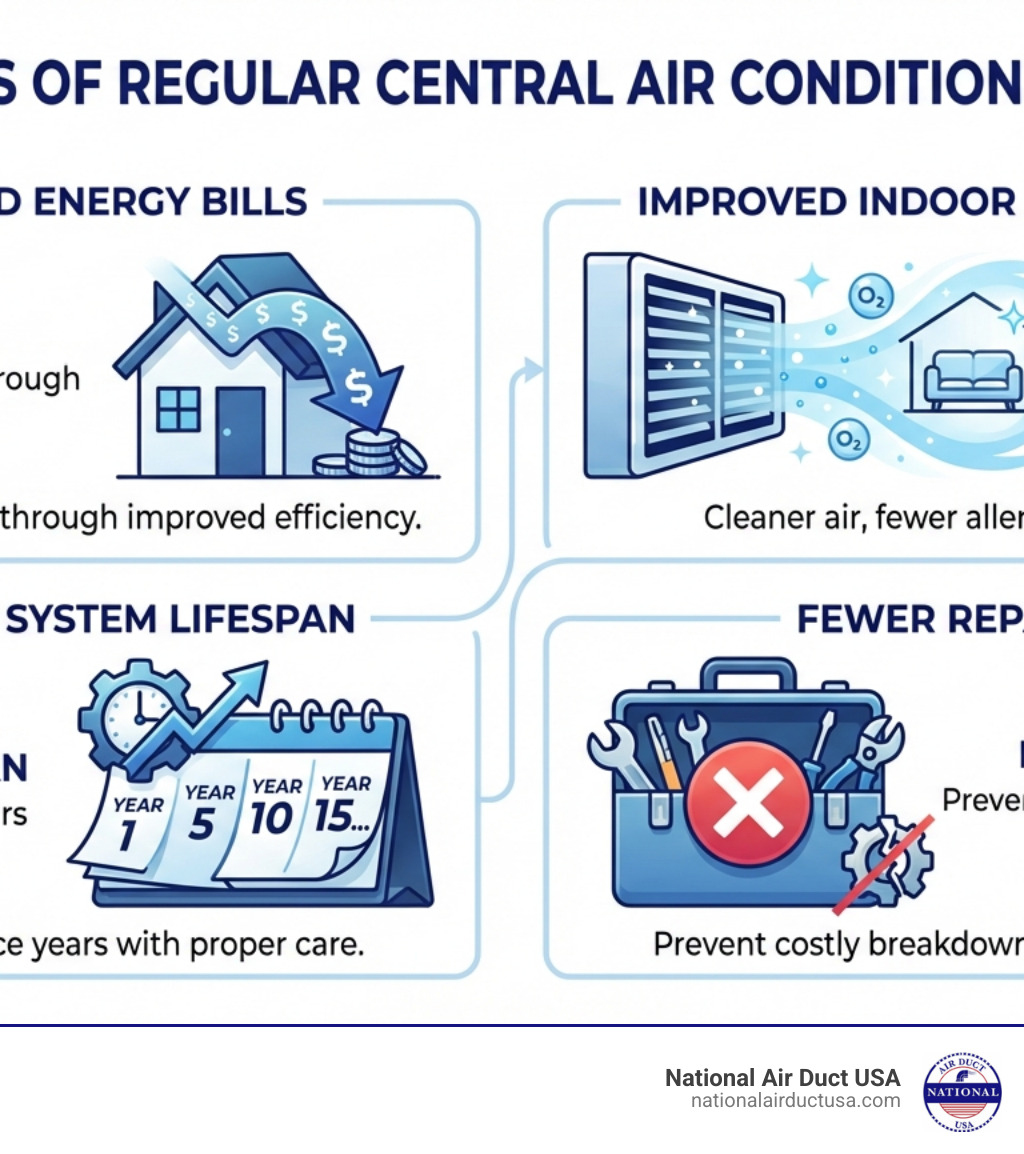
This guide walks you through seven steps to clean your system, improve indoor air quality, and extend your AC’s lifespan. Regular cleaning delivers real benefits: lower utility bills, better air quality, fewer repairs, and a longer-lasting system. For Long Island homeowners, these benefits are even more significant.
Central air conditioner cleaning helpful reading:
Why a Clean AC Unit is Non-Negotiable
A dirty central air conditioner doesn’t just perform poorly—it negatively impacts your wallet, comfort, and family’s health. Think of a clogged filter as forcing your AC to breathe through a straw. This reduced airflow causes dirt to bypass the filter and coat the indoor evaporator coil, preventing it from absorbing heat properly.
This creates a domino effect: your AC runs longer, causing increased energy costs that can raise your utility bill by 15% or more. The outdoor condenser unit also struggles when its coils are dirty, as it can’t release heat effectively. This extra strain leads to premature failure of expensive parts like the compressor and fan motor. Central air conditioner cleaning is crucial protection against costly breakdowns.
The Health Risks of a Dirty Air Conditioner
A dirty AC circulates contaminants throughout your home. A musty odor is often the first sign of mold growth in the dark, damp coils, a common issue in Long Island’s humid climate. When mold spores circulate, they can trigger respiratory issues, coughing, and sneezing. For those with allergies, it can mean constant watery eyes and irritation. For family members with asthma, mold is a known trigger for severe attacks.
Other symptoms of poor indoor air quality include unexplained headaches, fatigue, or irritation of the eyes, nose, and throat. Your AC should make your home comfortable, not unhealthy. For more on identifying mold, see this guide on preventing and treating mold in air conditioners.
How Dirt Impacts Performance and Your Wallet
Dirty coils lead to reduced cooling capacity—your thermostat may say 72 degrees, but the room feels much warmer. The system runs constantly but never reaches a comfortable temperature.
Those higher utility bills are a direct result of this inefficiency. A dirty system works overtime, wasting money. This increased system wear also shortens your AC’s lifespan, potentially forcing a replacement years earlier than expected. Finally, neglect leads to costly repairs, such as water damage from a clogged drain line or a failed compressor. Routine cleaning costs a fraction of an emergency repair.
The bottom line? Central air conditioner cleaning is essential protection for your investment, comfort, and health. Whether you DIY or call the certified technicians at National Air Duct USA, keeping your system clean pays dividends.
Gather Your Tools & Prepare for Cleaning
Proper preparation makes central air conditioner cleaning go smoothly. Before you start, gather the necessary tools to avoid a mid-project trip to the hardware store.
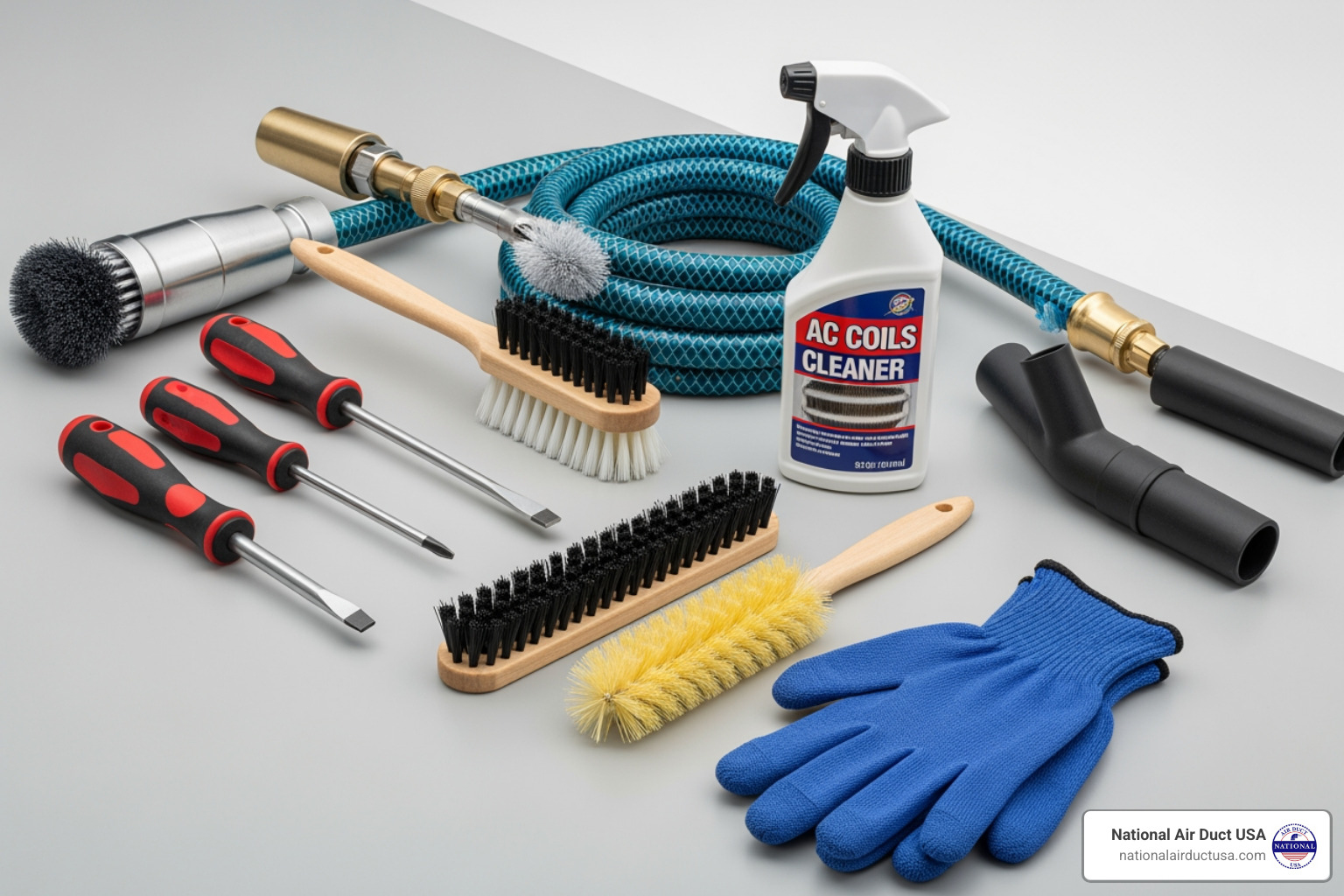
Here’s what you’ll need:
- Safety Gloves: Protect your hands from sharp fins and cleaners.
- Screwdriver Set: To remove access panels.
- Garden Hose with Spray Nozzle: For rinsing coils. Do not use a pressure washer, as it can damage the delicate fins.
- Wet/Dry Vacuum: To remove loose debris and clear drain lines.
- Soft-Bristle Brush: For gently cleaning fins.
- AC Coil Cleaner: A specialized foaming product (non-acidic is best).
- New Air Filter: Have a replacement ready.
- Fin Comb (Optional): To straighten bent condenser fins.
- Stiff Wire or Pipe Cleaners: For clearing the condensate drain line.
Safety First: Before touching any tools, turn off the power to your AC unit completely. Flip the corresponding breaker in your electrical panel and use the outdoor disconnect switch if your unit has one. An AC that starts unexpectedly is extremely dangerous.
If you’d rather leave it to the professionals, the National Air Duct USA team is ready to help with our professional HVAC services.
The 7-Step Guide to Central Air Conditioner Cleaning
Now that you’re prepared, let’s walk through the central air conditioner cleaning process. Follow these steps to restore your system’s efficiency and improve your home’s air quality.
Step 1: Safety First – Turn Off the Power
This is the most critical step. Before starting, you must completely cut power to your AC unit. First, locate your home’s breaker box and flip the circuit breaker labeled for your air conditioner (“AC,” “HVAC,” etc.) to the “off” position. For added safety, find the outdoor disconnect switch (a small box mounted near the condenser unit) and turn it off or pull out the fuse block. Verify the power is off by trying to turn on the AC at the thermostat. If nothing happens, you can proceed.
Step 2: Clean the Outdoor Condenser Unit Exterior
Your outdoor condenser unit is exposed to the elements, collecting leaves, grass clippings, and other debris that restrict airflow. Start by clearing any large debris from around the unit by hand or with a wet/dry vacuum. Ensure there is at least a 2-foot clearance on all sides by trimming back any overgrown bushes or plants. Finally, wipe down the exterior casing with a damp cloth to remove surface dirt.

Step 3: Cleaning the Condenser Coils (The Core of Outdoor Central Air Conditioner Cleaning)
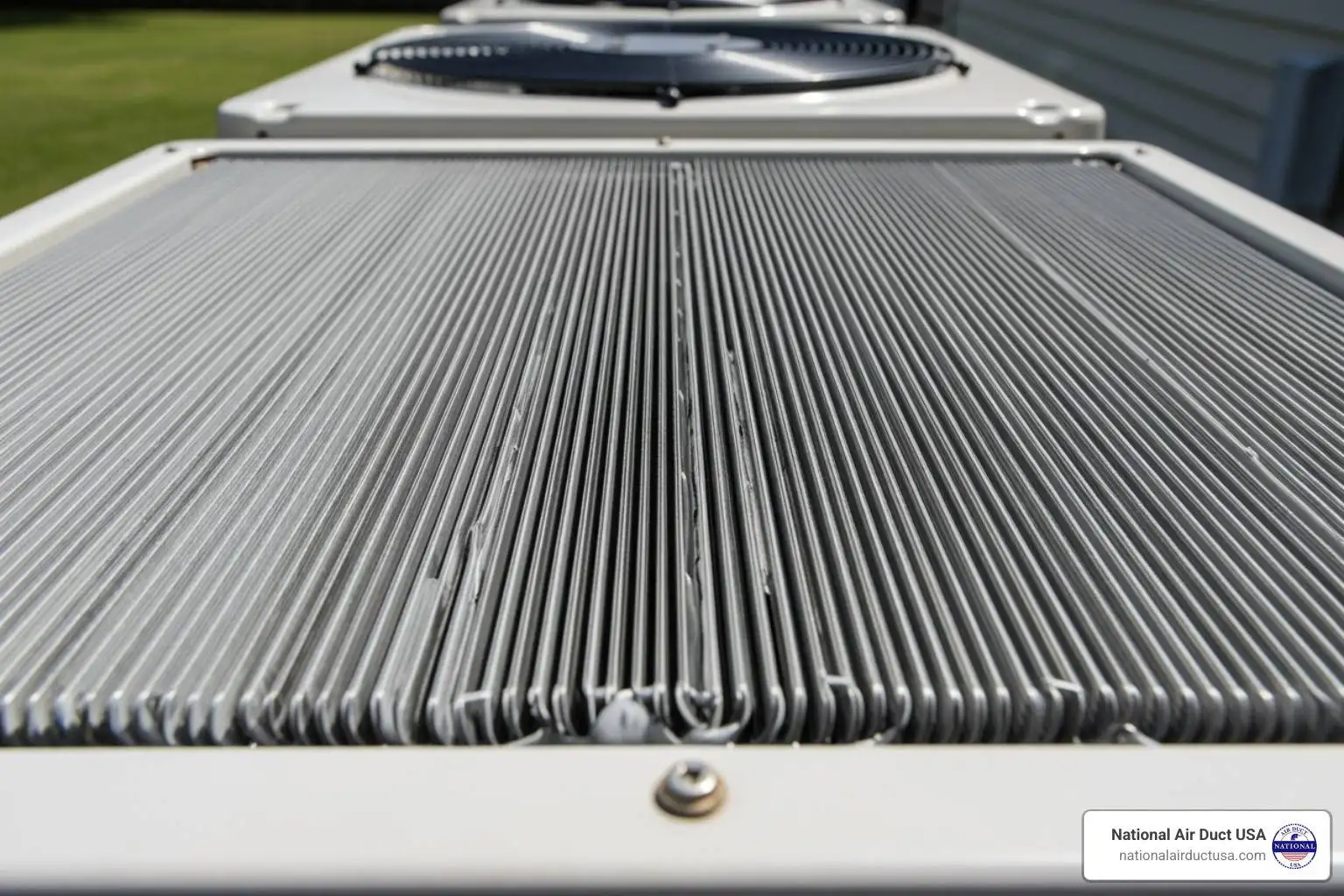
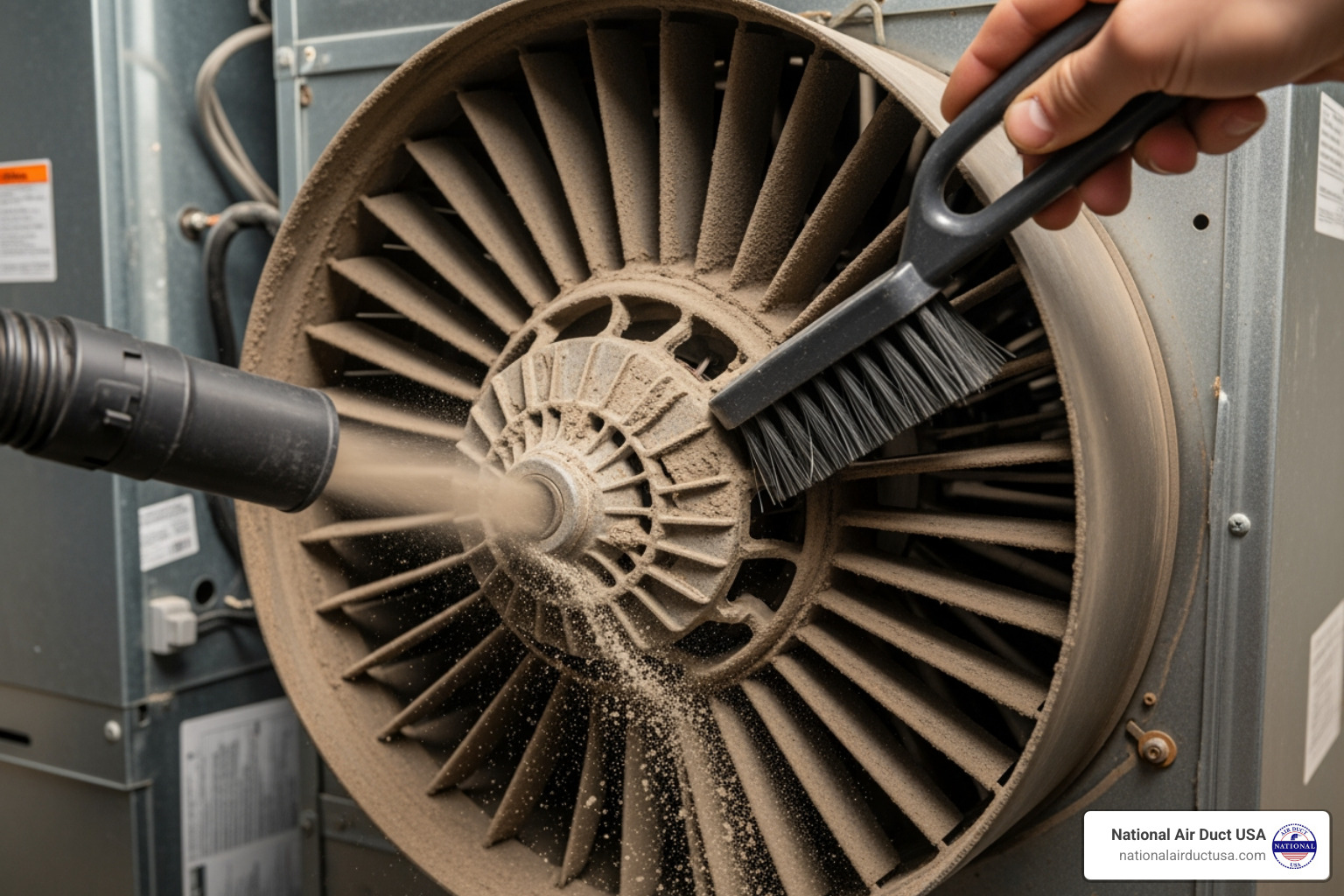
Dirty condenser coils are a primary cause of inefficiency. To clean them, first remove the screws on the top grille of the unit. Carefully lift the fan assembly and set it aside without disconnecting any wires. Use a wet/dry vacuum with a brush attachment to gently remove loose debris from the exterior of the aluminum fins.
If you see any bent fins, carefully straighten them with a fin comb or a dull knife. Next, spray the specialized AC coil cleaner generously on the coils and let it sit for 10-15 minutes, as directed by the product instructions. While it works, wipe down the fan blades. Finally, use your garden hose with a gentle spray nozzle to rinse the coils from the inside out, pushing dirt away from the unit. Continue until the water runs clear. Never use a pressure washer, as it will damage the fins.
Step 4: Check the Condensate Drain Line
Your AC removes humidity from the air, which exits through a condensate drain line. If this line clogs, water can back up and cause damage. Locate the PVC pipe running from your indoor unit to a drain or outside. Check for blockages or standing water. You can often clear minor clogs by gently pushing a stiff wire or pipe cleaner through the line. For tougher clogs, use a wet/dry vacuum to suction the blockage from the outdoor end of the pipe.
Step 5: Access the Indoor Evaporator Coil
The evaporator coil, located inside your indoor air handler, absorbs heat from your home’s air. Its damp environment makes it a prime spot for mold growth. Remove the access panel on your indoor unit to inspect the coil. If you see only light dust, you can gently vacuum it with a soft brush attachment.
However, deep cleaning an evaporator coil is tricky and best left to professionals. The coils are delicate and often hard to reach. If you see significant dirt buildup or any signs of mold, it’s time to call for professional help. Our NADCA-certified technicians at National Air Duct USA have the proper tools to clean these coils safely and effectively.
Step 6: The Easiest Central Air Conditioner Cleaning Task: The Filter
Regularly changing your air filter is the single most impactful maintenance task you can perform. A clean filter improves airflow, efficiency, and air quality. Locate the filter slot at your indoor air handler or in a return air grille in your wall or ceiling. Slide out the old filter and note the airflow direction arrow printed on its frame. Insert the new filter with the arrow pointing toward the air handler. If you have a reusable filter, wash it according to the manufacturer’s instructions and let it dry completely before reinstalling.
Step 7: Final Checks and Power Up
With the cleaning complete, it’s time to reassemble your unit. Securely reattach all access panels, including the condenser’s top grille and fan assembly. Go back to your electrical panel and flip the AC circuit breaker to the “on” position, and restore power at the outdoor disconnect switch. Set your thermostat to “cool” to activate the system. Listen for normal startup sounds and check for cool air flowing from your vents. Congratulations, you’ve completed a thorough central air conditioner cleaning!
Maintenance Schedule: When and How Often to Clean
Central air conditioner cleaning is not a one-time task; it requires a regular schedule to keep your system performing at its best. Here’s a recommended timeline for DIY maintenance:
- Air Filter (Check Monthly): This is your first line of defense. Check your filter every month and plan to replace or clean it every 1-3 months. If you have pets, live in a dusty area, or run your AC constantly during Long Island summers, you may need to replace it more frequently.
- Outdoor Condenser Unit (Annually): Clean the outdoor unit once a year, ideally in late spring before the cooling season begins. This includes clearing debris and cleaning the coils.
- Condensate Drain Line (Annually): Check the drain line for clogs during your annual spring cleaning. Inspect it immediately if you notice any water around your indoor unit.
- Indoor Evaporator Coil (Annually): Inspect the coil once a year. You can vacuum light dust, but if you see significant buildup or mold, it’s time to call a professional.
For best results, schedule an annual professional check-up before summer. A certified technician can perform deep cleaning and spot issues you might miss.
Signs Your Central Air Conditioner Needs Cleaning
Your AC will often tell you when it needs attention. Look out for these common warning signs:
- Reduced Airflow: Weak or low airflow from your vents.
- Uneven Cooling: Some rooms are cold while others are warm.
- Unit Runs Constantly: The system runs for long periods without effectively cooling your home.
- Higher Energy Bills: A sudden, unexplained spike in your electricity costs.
- Musty Odors: A damp, mildew smell when the AC kicks on, indicating possible mold growth.
- Unusual Noises: Grinding or squealing sounds may point to a strained motor.
- Ice on Coils: Ice forming on either the indoor or outdoor coils signals a serious airflow problem or a refrigerant issue.
DIY vs. Professional: When to Call an Expert
While many central air conditioner cleaning tasks are DIY-friendly, it’s crucial to know when to call a professional. Certain issues require specialized training, tools, and certifications to handle safely and effectively.
Call a professional HVAC technician if you encounter:
- Refrigerant Leaks: Handling refrigerant is legally restricted to EPA-certified professionals.
- Electrical Problems: If you notice sparking, frequent breaker trips, or other electrical faults, do not attempt to fix them yourself.
- Deep Coil Cleaning: While you can rinse surface dirt, professionals are needed for heavily caked coils, as they have specialized equipment and cleaners to do the job without causing damage.
- Significant Mold Growth: If you find mold on your evaporator coil or suspect it’s in your ductwork, professional remediation is essential to protect your family’s health.
Sometimes, the best reason to call a pro is for convenience and peace of mind. Even with diligent DIY care, we recommend an annual professional tune-up. For more guidance, the Department of Energy offers helpful information here: Air Conditioner Maintenance.
Benefits of Regular Professional Maintenance
Professional maintenance from a NADCA-certified technician offers benefits beyond what a typical DIY cleaning can achieve:
- Thorough Inspection: We identify potential problems before they become expensive emergencies.
- System Calibration: We ensure your system is calibrated for optimal performance and energy efficiency.
- Refrigerant Level Check: We check for correct refrigerant levels and detect leaks, which can prevent catastrophic compressor damage.
- Duct Leakage Testing: We can identify and seal leaky ducts, which waste energy and compromise air quality, a common issue in homes across Hempstead and Garden City.
- Safety Improvements: We inspect electrical connections, oil motors, and check safety controls.
- Extended Lifespan: Proper professional care helps you get the most out of your investment, preventing premature failure.
Frequently Asked Questions about AC Cleaning
Homeowners often have the same questions about central air conditioner cleaning. Here are clear, concise answers to the most common ones.
What happens if my AC coils are dirty?
Dirty coils can’t transfer heat effectively, forcing your system to work harder. This leads to:
- Reduced Efficiency & Higher Costs: Your AC runs longer, increasing electricity bills by up to 30%.
- Increased Wear and Tear: Constant strain on components like the compressor can cause them to fail prematurely.
- Poor Cooling: Your home won’t feel as comfortable, and you may notice uneven temperatures.
- System Failure: In severe cases, neglect can lead to a complete breakdown requiring expensive repairs or replacement.
Can a moldy AC unit make me sick?
Yes. A moldy AC circulates microscopic mold spores throughout your home. This can cause significant health issues, including:
- Allergy Symptoms: Chronic sneezing, coughing, and watery eyes.
- Asthma Attacks: Mold is a known trigger that can worsen asthma.
- Respiratory Irritation: Even in people without pre-existing conditions, it can cause coughing and shortness of breath.
- Other Symptoms: Headaches, fatigue, and irritation of the eyes, nose, and throat.
If you smell a musty odor, professional mold remediation is essential for your family’s health. Our NADCA-certified technicians can safely remove mold and help prevent its return.
How often should I change my air filter?
The general rule is every 1 to 3 months, but you should check it monthly. Hold the filter up to a light; if you can’t see light through it, it’s time for a change. Replace it more often if:
- You have pets that shed.
- You live in a dusty environment.
- Your AC runs constantly during peak season.
- Someone in your home has allergies or asthma.
A clean filter is the easiest and cheapest way to protect your expensive HVAC system and maintain good air quality.
Keep Your System Running Smoothly
By learning about central air conditioner cleaning, you are now equipped to keep your system running efficiently, improve your home’s air quality, and manage energy costs. Basic tasks like changing filters and cleaning the outdoor unit make a significant difference in your AC’s performance and longevity.
Proactive maintenance is always cheaper than reactive repairs. Staying on top of routine care helps you avoid costly emergencies and the health concerns associated with poor indoor air quality.
While DIY cleaning is beneficial, some jobs are best left to professionals. Deep coil cleaning, mold remediation, and comprehensive system inspections require specialized expertise. At National Air Duct USA, our NADCA-certified technicians are here to help.
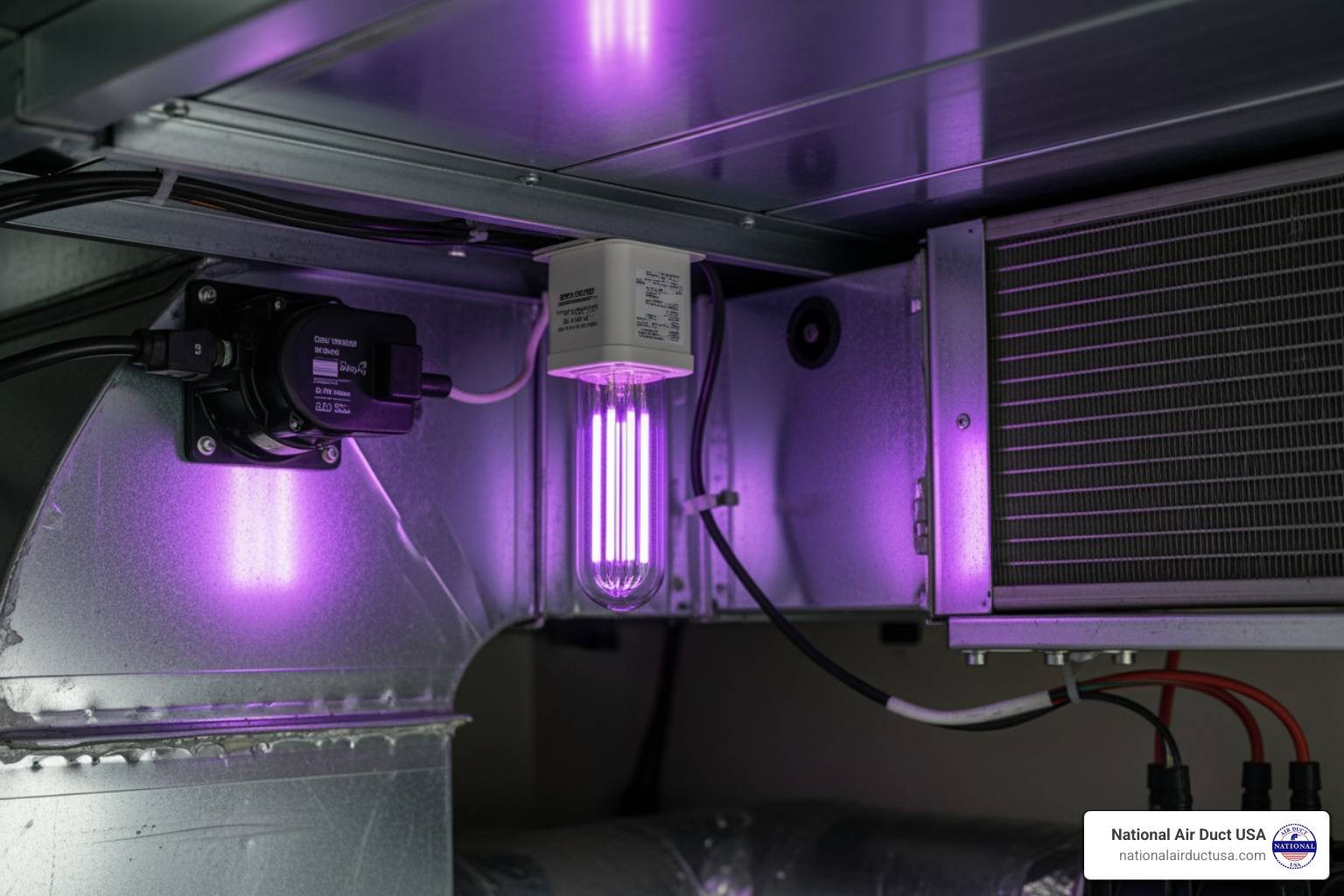
Serving Long Island families in Westbury, Nassau County, Suffolk County, and beyond, we provide transparent pricing and a 100% satisfaction guarantee. Whether you need a professional cleaning, annual maintenance, or UV light installation, think of us as your partners in home comfort.
Your central air conditioner is a vital home system. Combining your DIY efforts with professional support ensures it keeps your home cool and healthy for years to come.