Why a Clean Air Conditioner Is Your Home’s Best Friend
How to clean air conditioner unit maintenance is simpler than most homeowners think, and it directly impacts your energy bills, indoor air quality, and system longevity. Here’s the quick overview:
Basic AC Cleaning Steps:
- Turn off power at the circuit breaker
- Clean or replace filters monthly (vacuum first, then wash with lukewarm water)
- Remove debris from outdoor unit (leaves, twigs, dirt)
- Clean coils with no-rinse coil cleaner or mild detergent
- Straighten bent fins with a fin comb or soft brush
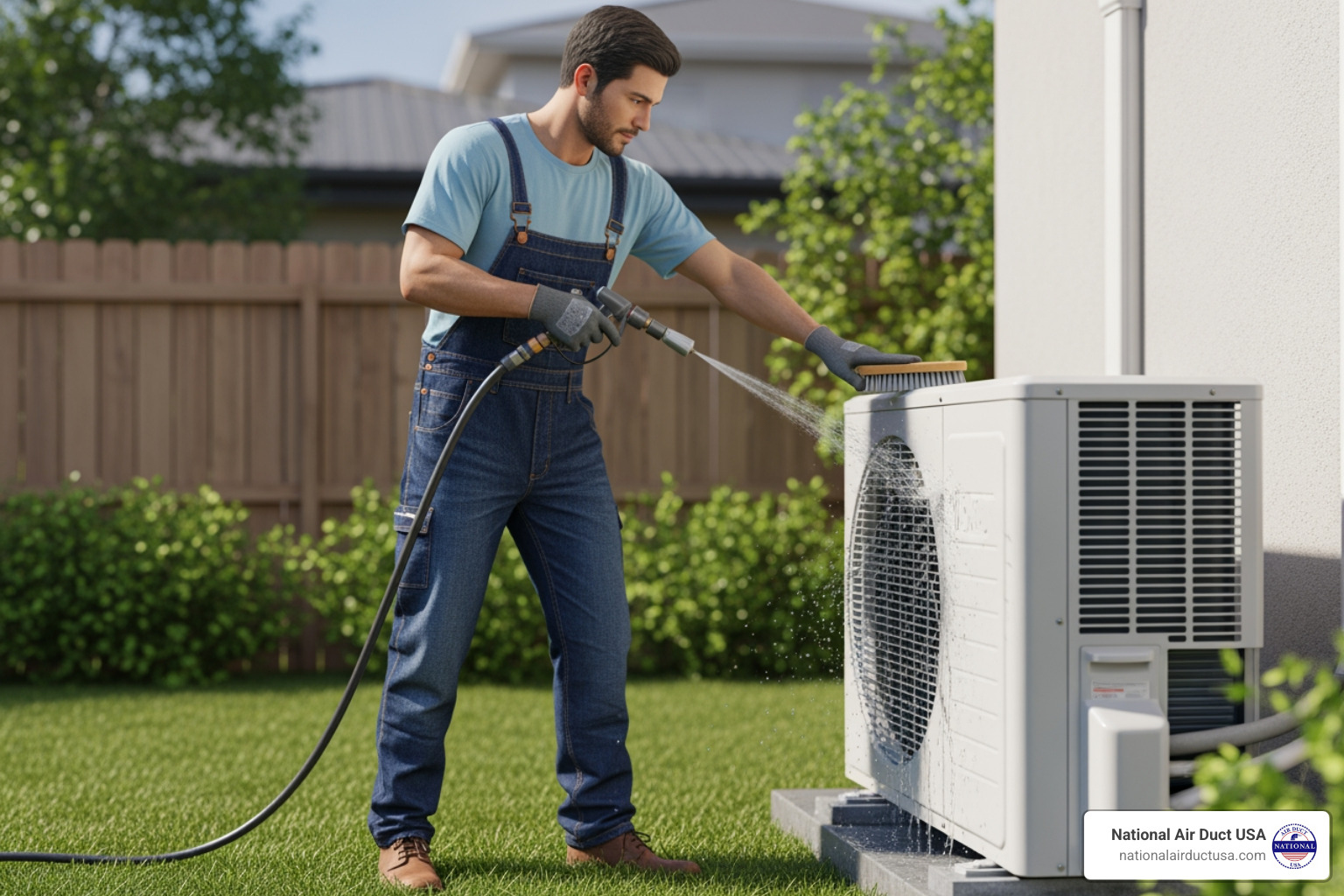
- Rinse gently with garden hose at 45-degree angle
- Dry completely before restoring power
There’s nothing quite as refreshing as stepping into a cool, comfortable home on a hot, humid summer day. But that comfort comes with a hidden cost when your AC unit isn’t properly maintained.
Regular AC cleaning isn’t just about keeping things tidy. It’s about protecting your family’s health, reducing energy costs, and preventing expensive breakdowns. According to the Department of Energy, dirty coils can lead to increased operating temperatures, reduced comfort, decreased cooling efficiency, and higher utility bills.
The moist environment inside your air conditioner creates an ideal breeding ground for mold, which the research identifies as one of the top five environmental threats to indoor air quality. Recent studies even found a correlation between poor indoor air quality and cognitive function—meaning a dirty AC could be affecting your family’s productivity and health in ways you never considered.
The good news? Most AC maintenance tasks are straightforward DIY projects that take just a few hours once or twice a year. Whether you have a window unit, central air system, or wall-mounted mini-split, the basic principles remain the same: keep filters clean, remove debris, maintain clear airflow, and address mold growth promptly.
Find more about how to clean air conditioner unit:
Why Regular Maintenance Matters for Your Home
When we talk about Maintaining Your Air Conditioner, we aren’t just giving you another chore to add to your Saturday list. We are talking about the “lungs” of your home. If those lungs are clogged with dust and pet dander, your entire household feels the strain.
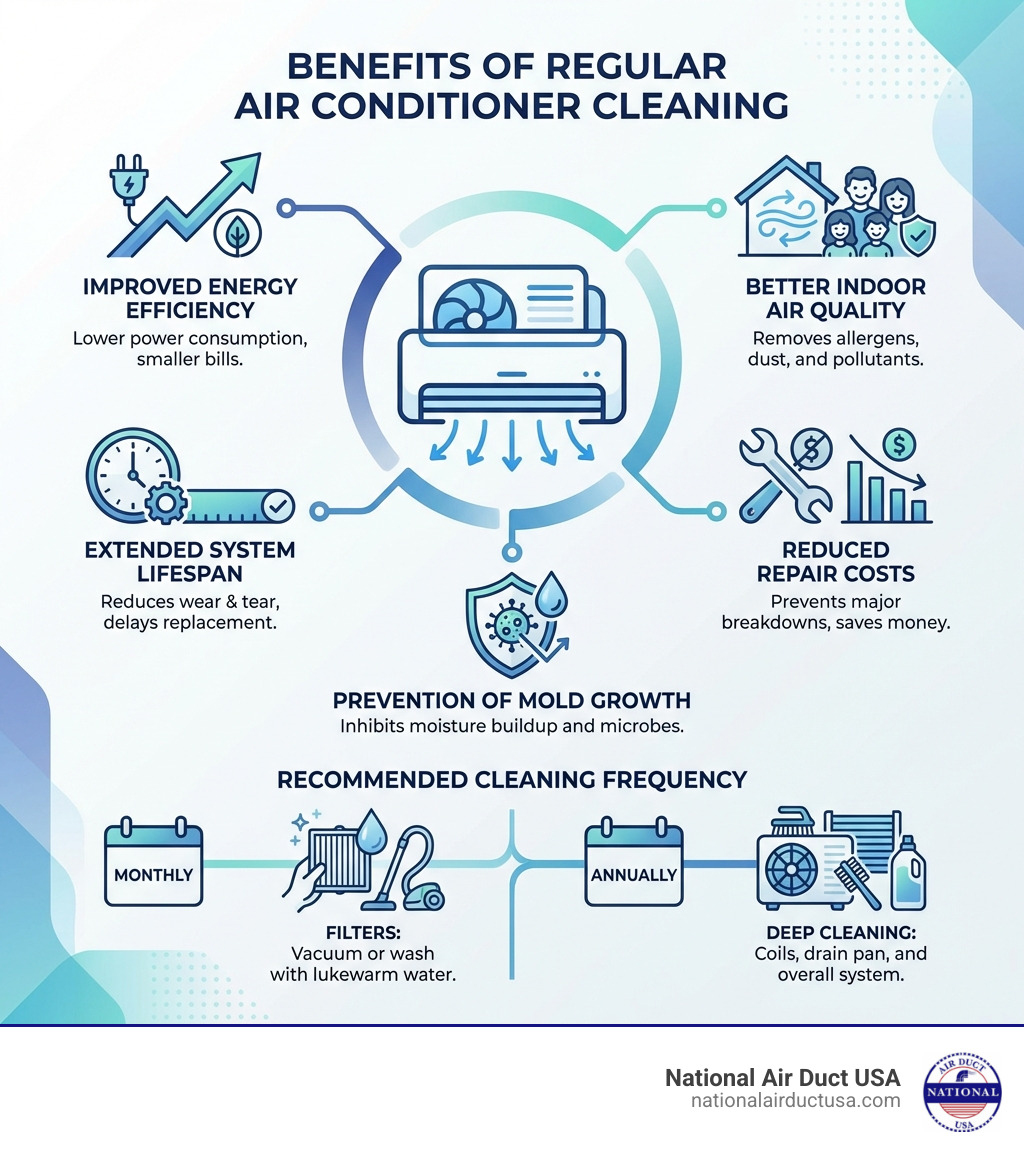
One of the most immediate benefits of learning how to clean air conditioner unit components is the impact on energy efficiency. When filters are clogged and coils are covered in a blanket of dust, your AC has to work overtime to move air and exchange heat. This extra effort translates directly to higher utility costs. In fact, a clean system can significantly reduce energy consumption, saving you money during those Long Island heatwaves.
Beyond the wallet, there is the matter of health. Poor indoor air quality is consistently ranked as one of the top five environmental threats to public health. Having dirty air ducts and AC units can cause respiratory issues, sore throats, allergies, headaches, and fatigue. By focusing on HVAC System Cleaning, you are actively removing allergens like pollen and dust mites from your living space.
Furthermore, a clean AC unit helps prevent mold growth. Condensation is a natural byproduct of the cooling process, but when that moisture meets dust and dirt, it becomes a breeding ground for mold and mildew. This can lead to musty odors and serious health risks. Regular maintenance ensures that moisture drains away properly and that internal surfaces stay clean and dry. Finally, routine care extends the lifespan of your unit, delaying the need for a multi-thousand-dollar replacement.
Essential Tools and Materials for a DIY Clean
Before you roll up your sleeves, you need to gather your “AC first-aid kit.” Most of these items are likely sitting in your garage or under your kitchen sink right now.
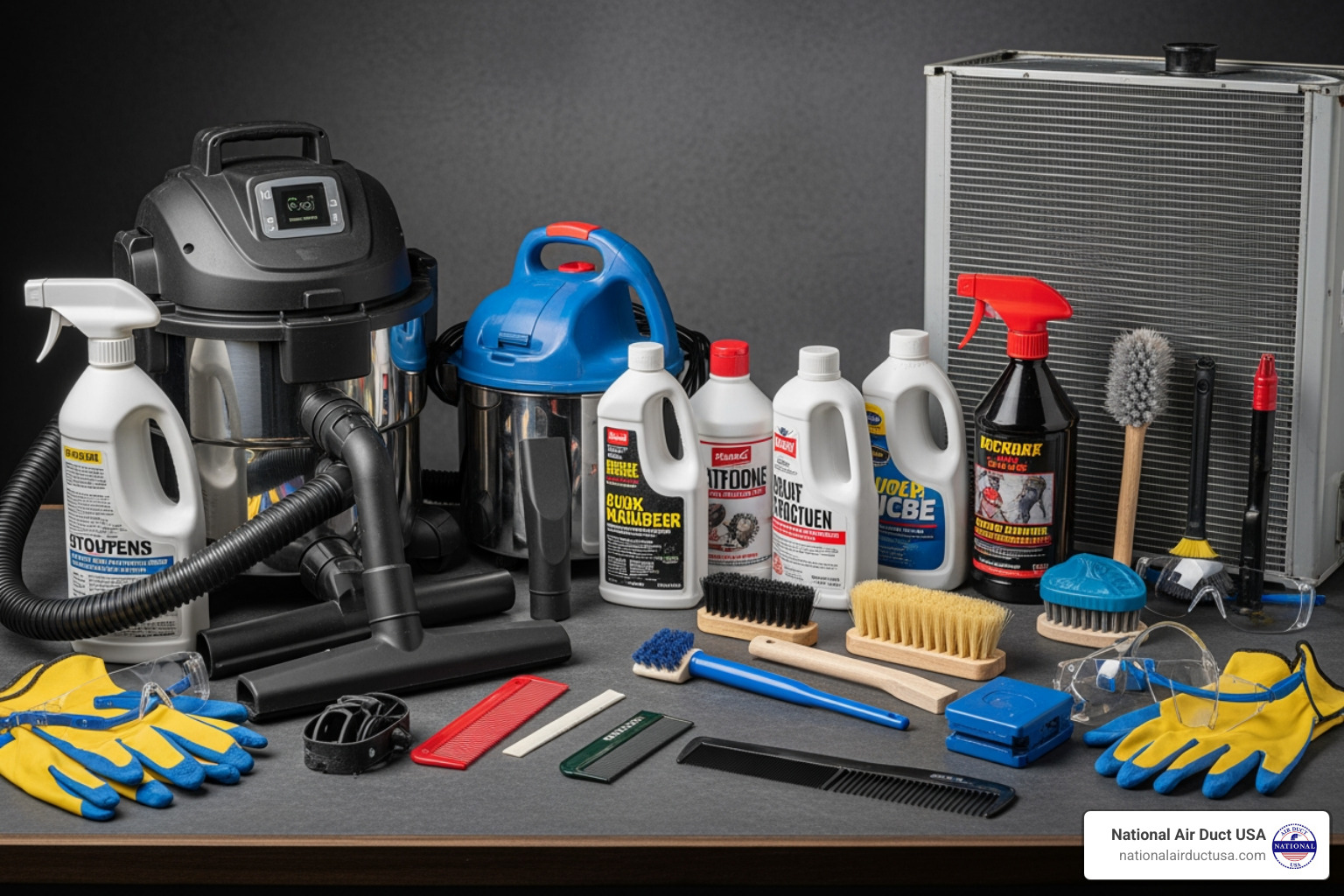
- Screwdriver or Nut Driver: To remove the outer casing or grill.
- Shop Vacuum: With a soft brush attachment for removing loose dust and debris.
- Soft-Bristled Brush: For gently cleaning delicate fins.
- Garden Hose: For rinsing (avoid using a pressure washer!).
- Fin Comb or Knife: To carefully straighten any bent aluminum fins.
- Mild Detergent or 3% Hydrogen Peroxide: For a safe, non-corrosive cleaning solution.
- No-Rinse Coil Cleaner: Specifically for indoor evaporator coils.
- Protective Gear: Gloves and safety goggles (those aluminum fins can be surprisingly sharp!).
How to Clean Air Conditioner Unit: A Step-by-Step Guide
The process of how to clean air conditioner unit systems begins with safety. Before you touch a single screw, you must disconnect the power. For central air systems, this usually involves a shut-off box near the outdoor unit or switching off the dedicated circuit breaker in your electrical panel. For window units, simply unplugging the device is sufficient.
Once the power is safely off, you can begin the physical cleaning. Following a guide on How to Clean an Air Conditioner and Keep Cool All Summer can help keep you on track. Start by removing the exterior casing or the front grill. Use your shop vacuum to remove any large debris like leaves, spider webs, or thick dust bunnies.
After the initial vacuuming, inspect the drain pan. This is where water collects before it flows out of the unit. If you see standing water or slime, you likely have a clog. Use a wet/dry vac or a stiff wire to clear the drain line. For more specific troubleshooting tips, you can always check our FAQ.
| Feature | Window AC Unit | Central Outdoor Condenser |
|---|---|---|
| Power Source | Wall Plug | Circuit Breaker / Disconnect Box |
| Filter Type | Washable Mesh | Disposable Pleated (Internal) |
| Debris Risk | Dust/Pet Hair | Leaves/Twigs/Grass Clippings |
| Coil Location | Internal (Front & Back) | External (Wrapped around unit) |
| Cleaning Frequency | Monthly (Filter) / Seasonal (Deep) | Annual (Deep Clean) |
How to Clean Air Conditioner Unit Filters
The air filter is your unit’s first line of defense. When it’s dirty, airflow is restricted, forcing the unit to consume more energy. Most window and mini-split units use washable mesh filters.
Start by sliding the filter out and using a vacuum to remove loose particles. Then, wash the filter with lukewarm water and a drop of mild detergent. Avoid hot water (above 40°C), as it can warp the mesh. Let the filter air dry completely—usually about two hours—before reinserting it. Reinstalling a damp filter is a recipe for mold growth!
If you have a central air system, you likely have a disposable filter located in the return-air vent or the furnace cabinet. These should be replaced every three months, or monthly if you have pets or smokers in the home. This simple step is a core part of effective Air Duct Cleaning and maintenance.
How to Clean Air Conditioner Unit Coils and Fins
The coils are where the magic (heat exchange) happens. There are two types: evaporator coils (indoors) and condenser coils (outdoors). Dirty coils act like an insulator, preventing the refrigerant from absorbing or releasing heat efficiently.
To clean the coils, you can follow The Best Way to Clean Your AC Unit and Coils!. Use a no-rinse foaming cleaner for indoor coils; the foam will break down the dirt and eventually drip into the drain pan as the unit runs. For outdoor condenser coils, you can use a garden hose to rinse away dirt from the inside out.
The aluminum fins surrounding these coils are very delicate. If they are bent, they block airflow. Use a fin comb to gently straighten them. When brushing the fins, always move in a vertical direction—the same way the fins are oriented—to avoid causing more damage.
Specific Steps for Different AC Types
Not all air conditioners are created equal. Depending on whether you’re in a Hempstead apartment with a window unit or a Garden City home with central air, your approach will vary slightly.
Window Units: These are prone to mold because they sit in the window frame where moisture can accumulate. Use a 3% hydrogen peroxide solution to spray down the interior components. This kills mold spores without corroding the metal, unlike bleach. Also, ensure the unit is tilted slightly outward so condensation drains toward the outside, not into your wall.
Central Air Condensers: The outdoor unit is a magnet for grass clippings and leaves. We recommend maintaining at least a 2-foot clearance around the unit. Trim back any bushes or weeds that might be choking the system. During the off-season, use a breathable cover to keep debris out while preventing moisture buildup.
Wall-Mounted Mini-Splits: These units have specific “louvers” or air vents that need to be wiped down with a damp cloth. The blower wheel inside the unit can also collect significant dust. While you can clean the filters yourself, the blower wheel and deep internal components are often best left to a professional to avoid damaging the motor. For more maintenance insights, visit our Blog.
Common Mistakes and When to Call a Professional
While DIY is great for saving money, some mistakes can be incredibly costly.
- Using a Pressure Washer: This is the #1 mistake. The high pressure will flatten the aluminum fins instantly, effectively ruining the unit’s ability to breathe. Always use a standard garden hose.
- Using Bleach: Bleach is corrosive to the metal and plastic components inside your AC. Stick to mild soap, hydrogen peroxide, or specialized coil cleaners.
- Neglecting the Power: Never attempt to clean a unit that is still powered on. You risk electric shock and damage to the fan motor.
If you notice Could Your Air Conditioner Be Making You Sick? symptoms like persistent musty smells, or if you see ice forming on the coils, it’s time to call in the pros. Severe mold growth, refrigerant leaks (signaled by a hissing sound), or electrical issues require specialized tools and training. At National Air Duct USA, our technicians follow NADCA standards to ensure your system is cleaned safely and thoroughly.
Frequently Asked Questions about AC Cleaning
How often should I clean my air conditioner unit?
At a minimum, you should perform a deep clean once a year, ideally in the spring before the cooling season starts. However, filters should be checked monthly. If you live in a high-dust area or have pets that shed, you may need to clean your filters every two weeks to maintain performance.
Can I use a pressure washer on my outdoor AC unit?
Absolutely not! As mentioned before, the fins are incredibly sensitive. A garden hose at a 45-degree angle provides plenty of pressure to wash away dirt without bending the metal. If the dirt is really stuck on, use a soft brush and sudsy water first.
Why does my air conditioner smell musty?
A musty smell usually indicates mold or mildew growth in the drain pan or on the evaporator coils. This happens when moisture doesn’t drain properly. Cleaning the unit with a 3% hydrogen peroxide solution and ensuring the drain line is clear will usually solve the problem.
Conclusion
Taking the time to learn how to clean air conditioner unit components is one of the best investments you can make for your home. From lowering your monthly bills to ensuring your family breathes clean, healthy air, the benefits are undeniable. Whether you are in Long Island, Westbury, or Suffolk County, a little DIY maintenance goes a long way.
However, we know that life gets busy and some jobs are just too big for a single afternoon. If your system needs a deep, professional scrub, or if you’re concerned about your home’s overall air quality, National Air Duct USA is here to help. Our NADCA-certified technicians specialize in total system efficiency. Check out our full range of Services and get your free quote today to keep your home cool and your air fresh all summer long!

