Why Understanding Dryer Vent Replacement Costs Matters for Your Home
How much does it cost to replace dryer vent systems in your home? This cost impacts your wallet, safety, and peace of mind. Longer drying times, higher energy bills, or a burning smell from your laundry room are all signs your dryer vent may need replacement.
Quick Answer: Dryer Vent Replacement Costs
| Cost Factor | Price Range |
|---|---|
| Standard Replacement | $100 – $300 |
| Labor (per hour) | $20 – $35 |
| Materials/Replacement Kit | $10 – $30 |
| New Installation | $200 – $800 |
| Complex Rerouting | Up to $1,000 |
Approximately 2,900 clothes dryer fires are reported each year in the U.S., resulting in deaths, injuries, and $35 million in property loss. Most of these fires stem from lint buildup in clogged or damaged dryer vents.
A failing vent also drives up energy costs and shortens your dryer’s lifespan, causing clothes to take multiple cycles to dry or the appliance to overheat.
Fortunately, replacing a dryer vent is affordable compared to the potential costs of a fire or appliance damage. The investment pays for itself through improved efficiency and lower utility bills.
This guide breaks down all cost factors, from labor and materials to hidden expenses. You’ll learn what to expect and how to budget for this essential home safety upgrade, whether you DIY or hire a pro.
Handy how much does it cost to replace dryer vent terms:
How Much Does It Cost to Replace a Dryer Vent? A Detailed Breakdown
Dryer vent replacement involves a system of components, and understanding the cost of each part helps create an accurate budget. Material type and installation complexity influence the final price. Let’s explore the specifics so you know what to expect when asking, “how much does it cost to replace dryer vent?”
Labor Costs vs. Material Costs
The total cost is split between labor and materials.
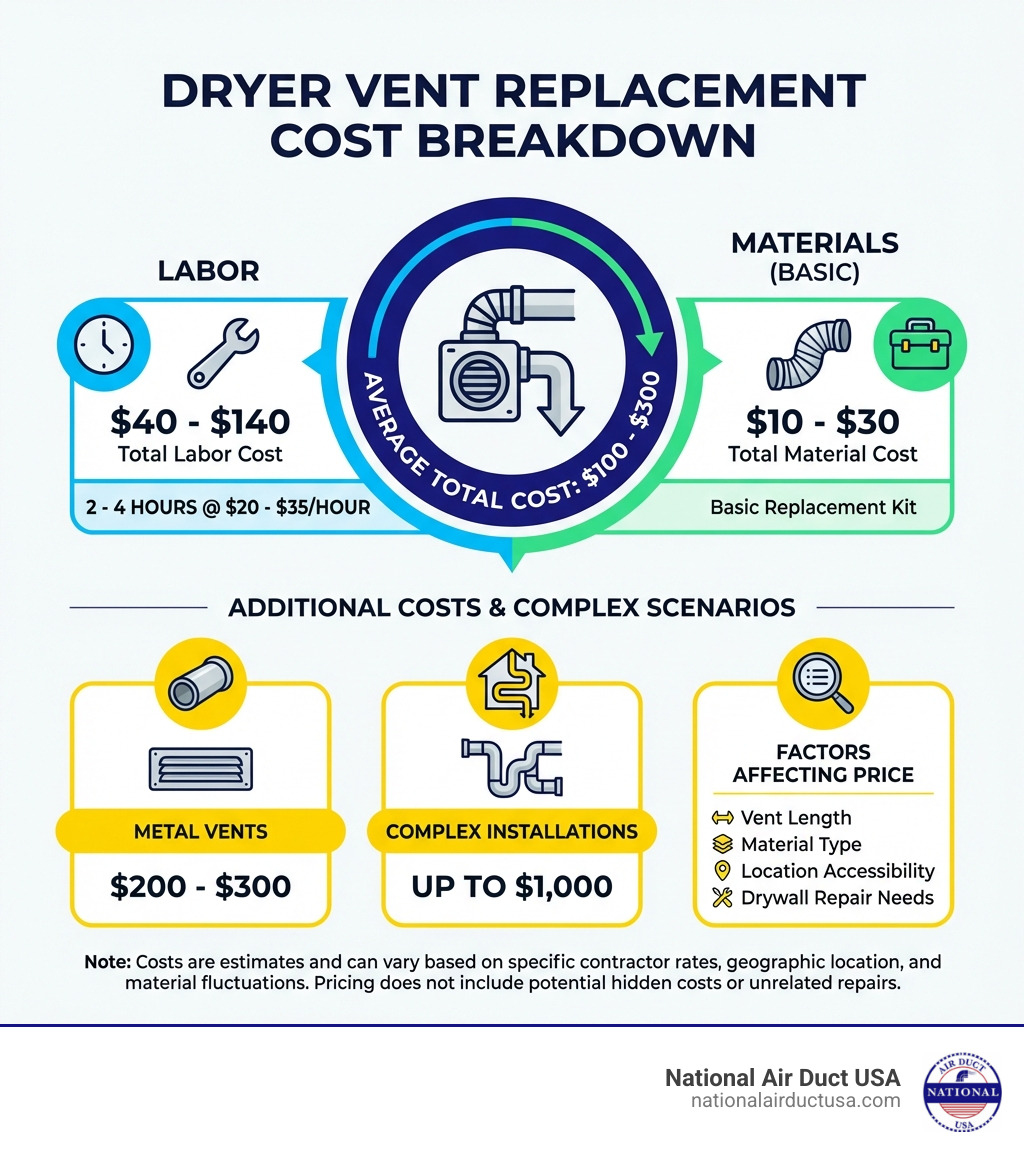
Labor Costs: Labor for dryer vent replacement, often performed by HVAC specialists, ranges from $20 to $35 per hour. A standard 2-4 hour job costs $40 to $140 in labor. Professionals may have a minimum service fee to cover travel, tools, and expertise, ensuring a safe, code-compliant installation.
Material Costs: Materials for a basic replacement are inexpensive. A standard kit costs $10 to $30. The total material cost depends on the ducting type and length.
How much does it cost to replace a dryer vent based on material?
The material of your dryer vent is a critical factor in both cost and safety. Choosing the right material is essential for preventing fire hazards.
Here’s a breakdown of costs by material:
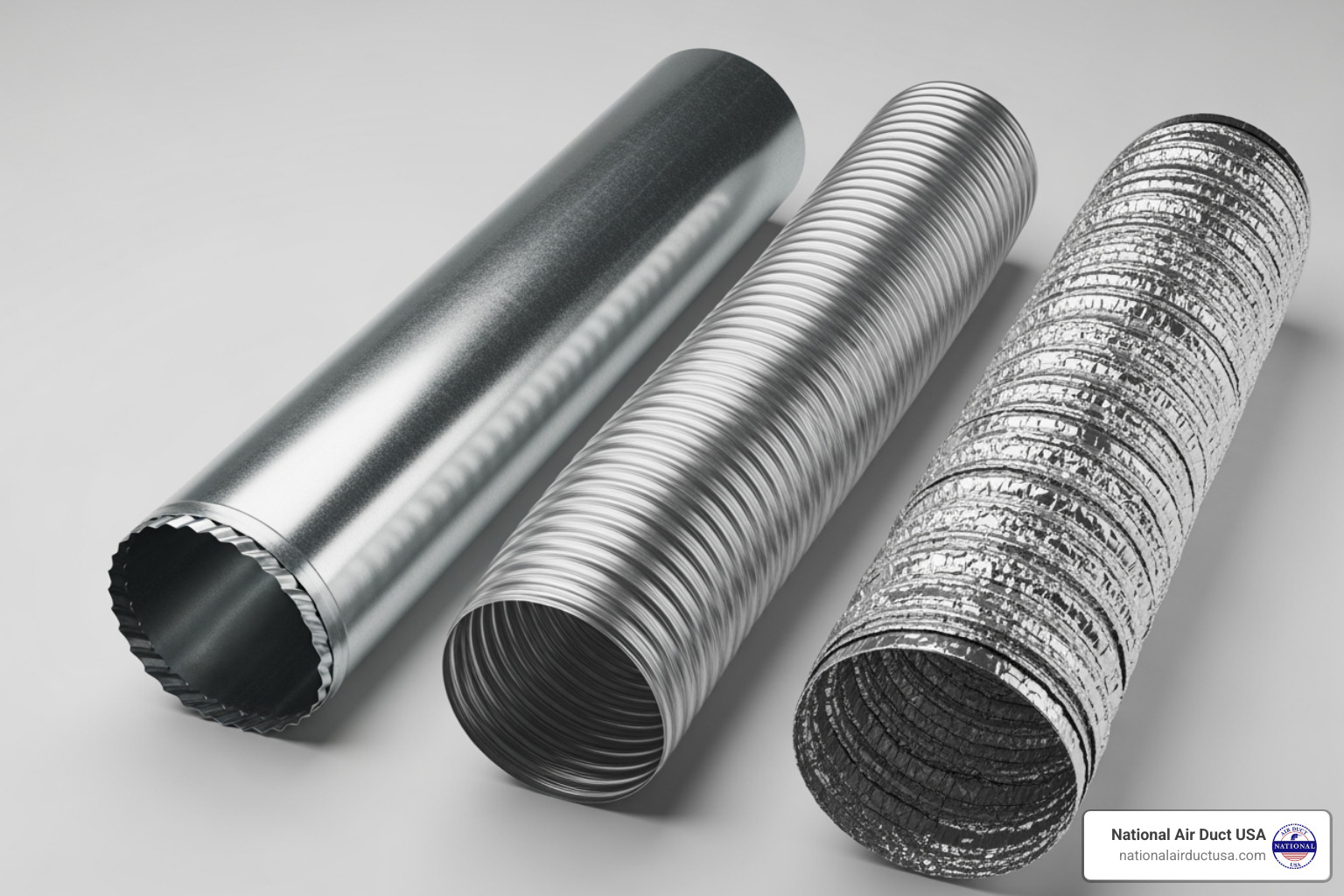
- Metal Vents (Rigid or Semi-Rigid Aluminum/Galvanized Steel): Metal vents are the standard for durability and fire resistance, costing $200 to $300 to install. Rigid types are best for concealed installations, while semi-rigid offers flexibility. Despite a higher upfront cost, they provide superior safety and longevity. For professional installation, consult our experts at Dryer Duct Installation.
- Plastic or PVC Vents: Costing $100 to $200 installed, plastic or PVC vents are a major fire hazard. They are flammable, can melt, and are often prohibited by building codes. We strongly advise against their use.
- Aluminum-Foil Flex Duct: This material can easily crimp and trap lint, increasing fire risk. It is only suitable as a short transition duct, not for the main vent run.
Prioritize safety when choosing materials. Investing in metal ductwork protects your Long Island & Westbury home from fire hazards.
Cost by Dryer Vent Type and Length
The ducting type and its length significantly influence the replacement cost. Shorter, straighter runs are less expensive and more efficient.
- Rigid Ducts: Made of galvanized steel or aluminum, rigid ducts are the most durable, offer the best airflow, and are required by code for concealed installations.
- Semi-Rigid Ducts: Aluminum semi-rigid ducts offer flexibility for gentle curves but should not be crushed.
- Slim Ducts: Also known as skinny ducts, these are designed for tight spaces but can be prone to lint buildup if not installed correctly.
Cost per Linear Foot: Installation costs range from $12.50 to $15 per linear foot, including materials and labor.
Length of the Vent: The total length directly impacts costs.
- An 8-foot hose typically costs between $100 and $120.
- A 12-foot duct might cost $130 to $150.
- A 20-foot duct could be $200 to $220.
- A 35-foot duct could cost $280 to $300.
Building codes recommend a maximum length of 35 feet, reduced by 5 feet for each 90-degree turn and 2.5 feet for each 45-degree turn. This is crucial for proper airflow. For more details, see dryer safety regulations.
Impact of Dryer Location and Accessibility
Dryer location and vent path accessibility significantly impact replacement cost.
- Basement or First Floor: A basement or first-floor dryer with a direct exterior run is the least expensive, as installation is straightforward.
- Second Floor or Higher: Upper-floor dryers often require complex vent paths through ceilings or attics, increasing duct length, labor, and cost.
- Roof Vent Installation: Roof venting is the most expensive option, requiring specialized skills for sealing and flashing to prevent leaks. This is a key factor for homes in Long Island & Westbury.
- Wall Material: Cutting through brick, stucco, or concrete is more expensive ($50-$150 extra per hole) than cutting through drywall.
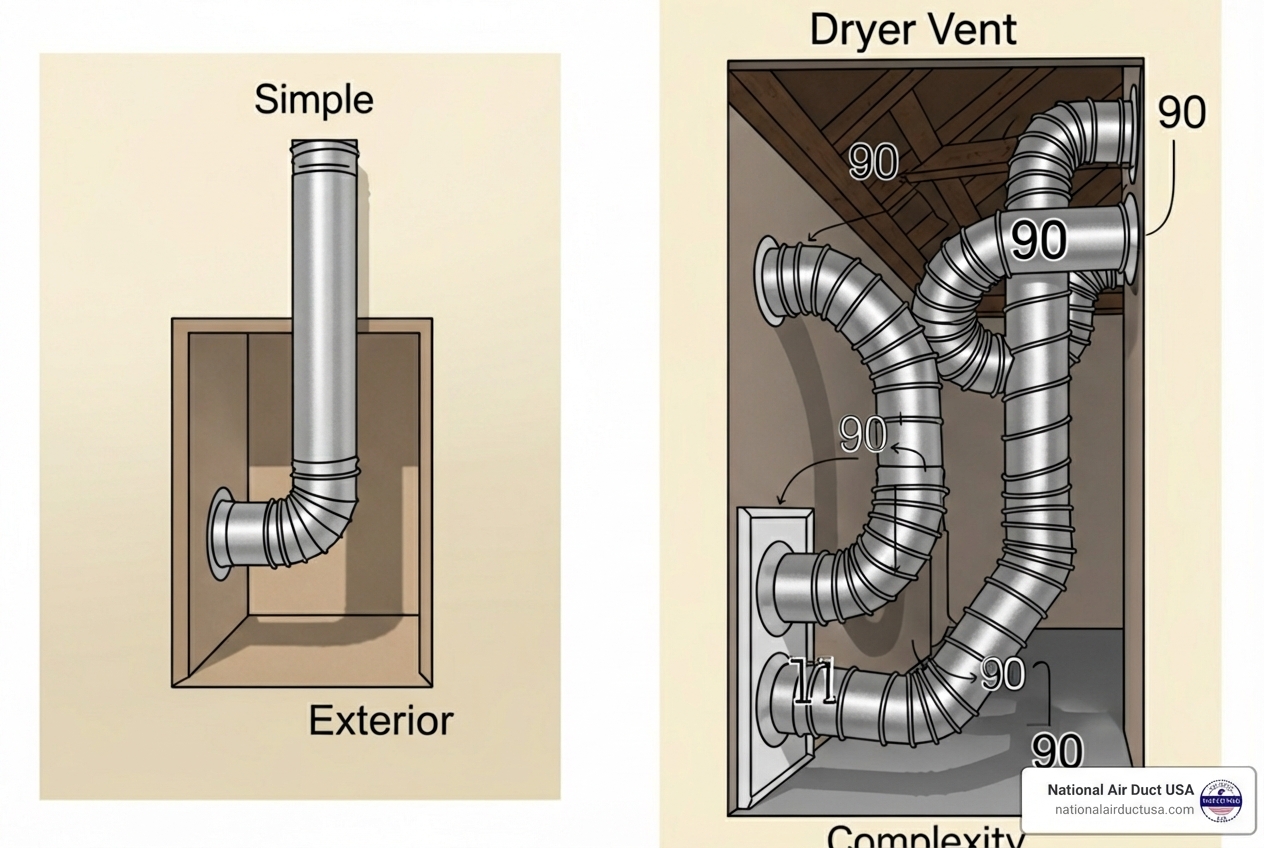
A simple, direct vent path (left) is less costly than a complex, winding one (right).
A complex path with multiple turns or through tight spaces increases labor and cost. We always aim for the shortest, most direct, and safest route.
Additional & Hidden Costs to Consider
Be aware of these other factors that can contribute to the final how much does it cost to replace dryer vent project price.
- Drywall Repair: If walls or ceilings are opened, factor in drywall repair, which averages around $600 but varies with damage and painting needs.
- Vent Cover Replacement: Replacing the exterior vent cover costs $50 to $100 installed. The part alone is $5 to $10.
- Pest Guards: Plastic guards average $7 to $15, while more durable metal guards cost $35 to $40.
- Booster Fans: For long vents or those with many bends, a booster fan ($200-$400 plus installation) may be needed to maintain airflow.
- Vent Rerouting: Inefficient or unsafe vent paths may require rerouting, a complex job that can significantly increase costs.
- Dryer Vent Cleaning: Regular cleaning ($80-$185) is essential for maintenance and can prevent frequent replacements. Learn more at Dryer Vent Cleaning.
These additional costs are important considerations for a complete and safe dryer vent system.
Replacement vs. New Installation: Understanding the Cost Difference
Replacing a vent and installing a new one differ in scope and cost. Understanding this is key for budgeting your project in Long Island & Westbury.
Dryer Vent Replacement Costs
Replacement involves swapping out old ductwork within an established pathway.
- Lower Cost: Replacement is less expensive, averaging $100 to $300, as the basic pathway already exists.
- Uses Existing Pathway: Using the current route means less invasive work and faster completion.
- Less Structural Work: Typically, no new holes are needed, reducing complexity and repair costs.
- Materials and Labor: The cost covers new metal ducting and the labor for removal and installation.
New Dryer Vent Installation Costs
New installation means creating a ventilation pathway where one didn’t exist before.
- Higher Cost: New installations are more expensive, averaging $200 to $800, due to the extensive work involved.
- Requires Cutting New Holes: This process requires cutting new openings through walls, floors, and the home’s exterior.
- Exterior Wall Penetration: Creating a new exterior exit involves cutting through materials and installing a vent hood, adding to costs.
- More Labor-Intensive: This process requires skilled technicians for proper cutting, support, and sealing.
How much does it cost to replace a dryer vent by rerouting?
Inefficient or unsafe vents may need rerouting, which combines aspects of replacement and new installation.
- Complex Projects: Complex rerouting projects, navigating through walls or floors to a new exit, can cost $1,000 or more.
- Minor Exit Change: A minor adjustment to the vent’s path or exit point could cost less than $200.
- Moving Hookups: If part of a larger renovation, moving washer and dryer hookups can add $500 to $2,000.
- Electrical Work: A new electrical outlet for the dryer can add $150 to $350.
- Gas Line Installation: Moving a gas dryer may require a new gas line, costing $150 to $1,000 and requiring a licensed professional.
Rerouting is often a smart investment for long-term efficiency and safety, despite a higher initial cost.
DIY vs. Professional Dryer Vent Replacement
Homeowners in Long Island & Westbury often wonder whether to DIY a dryer vent replacement or hire a professional. Let’s weigh the options.
| Feature | DIY Replacement | Professional Replacement |
|---|---|---|
| Upfront Cost | Low ($15-$30 for a kit, plus basic tools) | Moderate to High ($100-$1,000+, depending on complexity) |
| Time Required | Varies (can be several hours for novices) | Quick (1-4 hours for most jobs) |
| Tools Required | Screwdrivers, clamps, cutting tools, tape measure | Specialized tools, safety gear, diagnostic equipment |
| Risks/Safety | High (fire, CO poisoning, improper venting) | Low (expert knowledge, adherence to codes) |
| Code Compliance | Uncertain (requires knowledge of local building codes) | Guaranteed (professionals ensure compliance) |
| Performance | Potentially suboptimal (kinks, leaks, poor airflow) | Optimal (efficient airflow, proper sealing) |
| Long-Term Savings | Lower initial, but higher risk of future issues | Higher initial, but greater long-term efficiency & safety |
DIY Kit Cost: A basic DIY kit costs $15 to $30 but often contains unsafe aluminum-foil flex ducts. Safer rigid or semi-rigid metal ducts increase the material cost.
Professional Labor Cost: Professional labor runs $20 to $35 per hour. While an added expense, it offers significant advantages.
Code Compliance: Professionals ensure compliance with local building codes in Nassau and Suffolk Counties. An improper DIY installation can lead to code violations, fire hazards, and higher long-term costs.
Fire Safety and Carbon Monoxide Risk: DIY replacement carries significant safety risks. Improper installation can cause lint buildup (a fire hazard) or carbon monoxide backup from gas dryers. Professionals mitigate these risks.
While a simple transition duct replacement may be a feasible DIY project, complex jobs involving wall cuts or long runs should be left to experts. The peace of mind from a safe, code-compliant installation is invaluable. For reliable service, explore More info about our professional services.
The Long-Term Payoff: Benefits of a New Dryer Vent
Investing in a new dryer vent offers tangible benefits for your home’s safety, efficiency, and finances. When considering how much does it cost to replace dryer vent systems, it’s important to also think about the return on that investment.
Increased Energy Efficiency and Cost Savings
A clogged or damaged vent forces your dryer to work harder, draining energy.
A clean dryer vent can significantly reduce your energy consumption.
- Reduced Drying Cycles: A clean vent allows hot, moist air to escape efficiently, so clothes dry faster in fewer cycles.
- Lower Utility Bills: Shorter drying times mean lower energy use and reduced utility bills, which can offset the replacement cost over time.
- Less Wear on Appliance: An efficient vent reduces strain on your dryer’s motor and heating elements, extending its lifespan and preventing costly repairs.
Improved Home Safety
This is the most critical benefit, especially for homes in Nassau and Suffolk Counties.
- Fire Prevention: A properly installed metal vent minimizes the buildup of flammable lint, drastically reducing fire risk compared to improper materials like plastic or foil.
- Carbon Monoxide Poisoning Risk: For gas dryers, a new, sealed vent is crucial for safely expelling carbon monoxide (CO) outside, preventing this deadly gas from backing up into your home.
Don’t compromise on safety. If you’re concerned about your current dryer vent, Get a Free Quote from National Air Duct USA for a professional assessment.
Protection Against Moisture and Mold
A failing dryer vent can introduce unwanted moisture into your home.
- Preventing Moisture Buildup: A leaking or blocked vent can release moist air into your home instead of expelling it outside.
- Mold and Mildew Growth: This excess moisture encourages mold and mildew growth, leading to odors and health issues. A new, sealed vent prevents this.
- Structural Damage: Persistent moisture can also cause structural damage like warped drywall and rotted wood. A proactive replacement protects your home’s integrity.
The cost to replace a dryer vent is a valuable investment in your home’s health, safety, and efficiency.
Frequently Asked Questions about Dryer Vent Replacement
Here are answers to common questions from homeowners in Long Island & Westbury about dryer vents.
What are the signs I need to replace my dryer vent?
Look for these signs that your dryer vent needs replacement:
- Clothes take multiple cycles to dry: Significantly longer drying times suggest a clogged or damaged vent.
- Dryer is hot to the touch: An overheated dryer indicates trapped hot air, which is a fire risk.
- Burning smell: A burning odor is a serious warning sign of lint buildup.
- Visible lint around the exterior vent: Lint around the outside vent opening suggests a blockage.
- Vent hose is crushed or damaged: Kinks, tears, or crushing restrict airflow and require replacement.
Who installs dryer vents?
The following professionals can install or replace dryer vents:
- HVAC Technicians: As HVAC specialists, we are highly qualified for dryer vent work, understanding airflow, ventilation, and code requirements.
- General Contractors: Can oversee the work as part of a larger renovation.
- Handyman Services: May handle simple replacements with no structural changes.
- Roofers for Roof Vents: A roofer may be needed to ensure proper sealing for vents that exit through the roof.
- Plumbers for Gas Line Work: A licensed plumber is required for moving gas dryer lines.
At National Air Duct USA, our NADCA-certified technicians are experts in safe and efficient dryer vent installation.
How often should a dryer vent be replaced?
Related: Air Duct Cleaning Near Me Affordable in Long Island NY: Your Complete 2026 Guide
There’s no strict replacement schedule, but we recommend it when:
- It is damaged: Any crushed, torn, or disconnected ductwork needs immediate replacement.
- It is made of unsafe materials: Vents made of plastic, PVC, or thin aluminum-foil flex duct should be upgraded to rigid or semi-rigid metal for safety.
- It’s consistently clogging: If your vent requires cleaning more than once a year, it may be poorly routed or designed, warranting replacement.
Annual cleaning and maintenance can extend the life of a proper dryer vent.
Secure Your Home and Savings with a Professional Replacement
Replacing your dryer vent is a critical home maintenance task with costs typically ranging from $100 to $300. The final price depends on factors like material, length, and project complexity. While DIY is an option for simple jobs, professional installation ensures safety, efficiency, and compliance with local codes. For residents in Long Island & Westbury, the certified technicians at National Air Duct USA provide expert installation and cleaning to protect your home and optimize your dryer’s performance. Ensure the job is done right by exploring our professional services.