Why Your Dryer Vent Length Matters
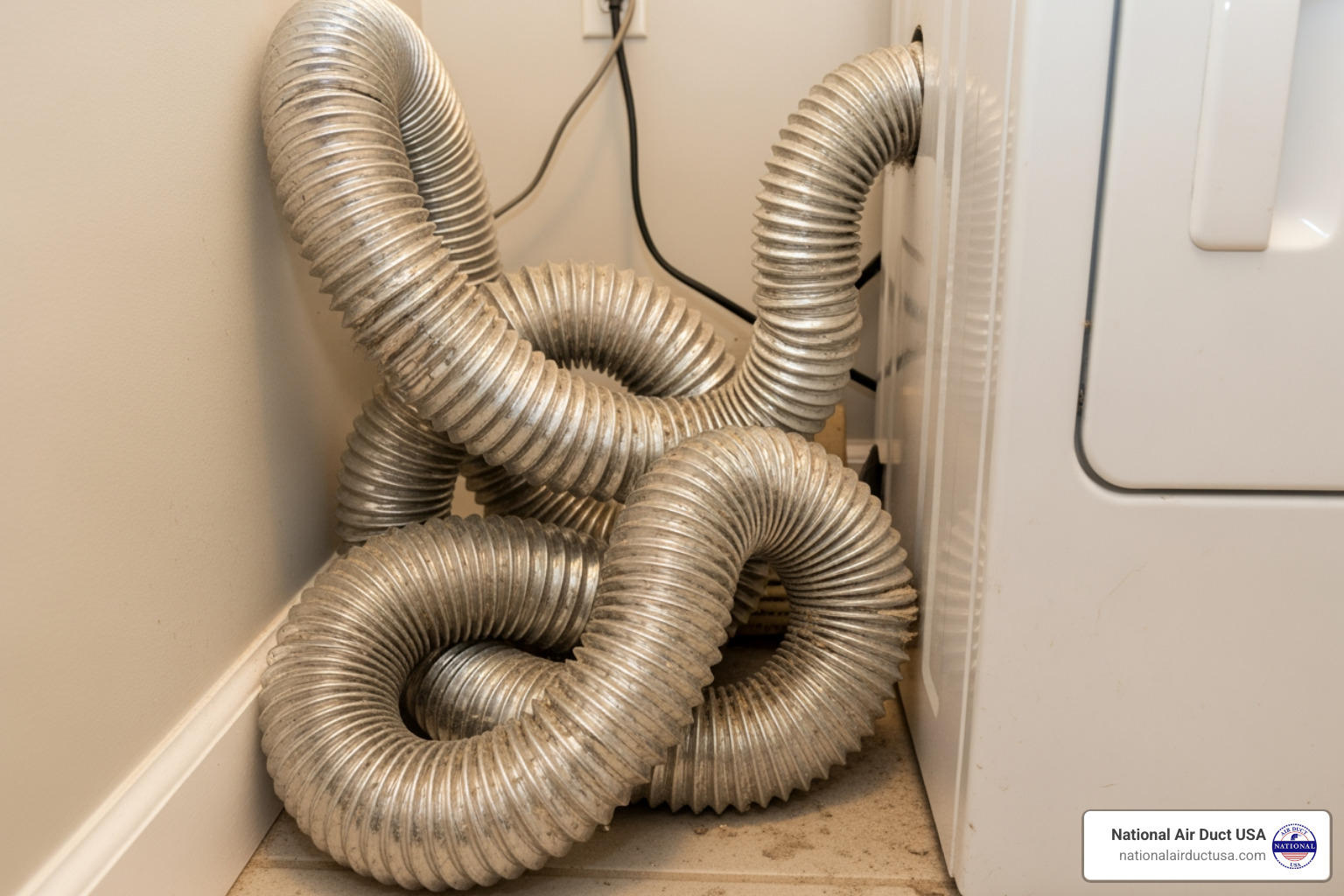
A dryer vent hose too long can cause serious problems for your home and laundry routine. It’s a common issue many homeowners face, often without realizing the hidden dangers and inefficiencies lurking behind their appliance. If your clothes take forever to dry, your laundry room feels unusually humid, or you notice a faint burning smell, the length and condition of your dryer vent might be the culprit. What seems like a minor installation detail is actually a critical component for both safety and performance.
Here’s a quick overview of why your dryer vent length is so crucial:
- Maximum Recommended Length: The International Residential Code (IRC) generally caps the length at 35 feet for a smooth, rigid metal duct. This is the total effective length, not just a straight line measurement.
- Bends Matter: Every turn in the vent path creates resistance and slows down airflow. Each 90-degree bend is equivalent to adding 5 feet of straight pipe. A 45-degree bend is like adding 2.5 feet. These deductions add up quickly and can easily push a seemingly short vent over the safe limit.
- Safety Risk: An excessively long or convoluted vent is a primary cause of dryer fires. The U.S. Fire Administration reports that approximately 13,820 home fires annually are attributed to dryer vent issues. Lint builds up in long vents, and when the dryer overheats from restricted airflow, this highly flammable material can ignite.
- Efficiency Loss: A long vent forces your dryer’s blower to work much harder to expel hot, moist air. This restriction leads to significantly longer drying times, which means higher energy bills and premature wear and tear on your appliance’s heating element and motor.
Understanding these limits isn’t just about following regulations; it’s about protecting your home, saving money, and ensuring your appliances last. For homeowners in Long Island and Westbury, where homes vary in age and layout, ensuring your vent system is up to code is a vital step in home maintenance.
Explore more about dryer vent hose too long:
Why a Dryer Vent Hose Too Long is a Major Problem
We all love the convenience of a modern clothes dryer, but an improperly installed or excessively long dryer vent can turn this household workhorse into a significant hazard. When your dryer vent hose too long, it creates a cascade of issues that impact everything from your monthly energy bill to the fundamental safety of your home in Long Island, Westbury, and surrounding communities.
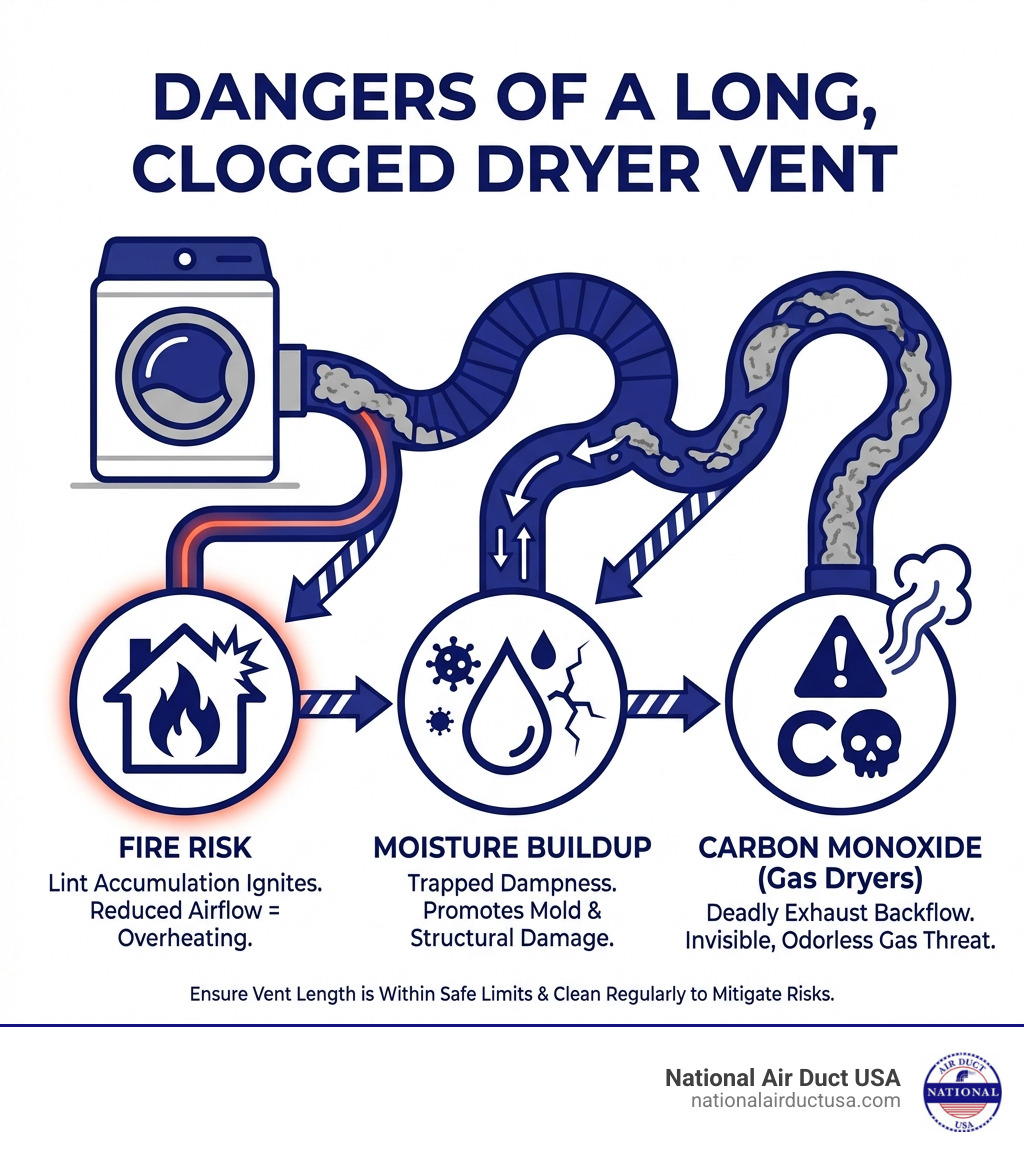
The most critical concern is the heightened risk of fire. Dryer vent-related fires are alarmingly common, causing approximately 13,820 home fires annually in the United States. This staggering statistic underscores the importance of maintaining a safe and efficient dryer vent system. Lint, which is composed of highly flammable fibers from clothing, accumulates far more readily in longer, winding vents. This buildup acts like a blockage, restricting airflow and causing the dryer’s high-limit safety switch to cycle on and off. If this switch fails, the dryer can overheat to the point of igniting the trapped lint, leading to a devastating fire that can spread rapidly through your walls.
Beyond the immediate fire hazard, a dryer vent hose too long leads to a host of other problems:
- Reduced Airflow: The longer the vent and the more bends it contains, the harder the dryer’s fan must work to push hot, moist air and lint out of your home. This creates significant back pressure, forcing the dryer to operate under constant strain.
- Increased Energy Consumption: When airflow is poor, your dryer takes much longer to dry clothes. A load that should take 45 minutes might take 90 minutes or more. This directly translates to longer run times and noticeably higher utility bills. A clean, properly sized vent can cut your dryer’s energy use by a surprising amount.
- Premature Appliance Failure: The continuous strain of pushing air through an obstructed vent overworks the dryer’s motor, bearings, and heating elements. This can lead to costly repairs and ultimately cause the appliance to fail years before its expected lifespan.
- Moisture and Mold Growth: If hot, humid air cannot escape efficiently, it will condense inside the vent ducting or even seep back into your laundry room and surrounding walls. This creates a perfect breeding ground for mold and mildew, which can damage your home’s structure (like drywall and wood) and negatively impact your family’s health by degrading indoor air quality.
- Carbon Monoxide Risk (Gas Dryers): For homes with gas dryers, a blocked or excessively long vent poses a silent and deadly threat: carbon monoxide (CO) poisoning. The products of combustion must be vented completely to the outdoors. If the vent is obstructed, this colorless, odorless gas can back up into your home, leading to serious health risks, including headaches, dizziness, and even death.
Signs Your Dryer Vent is Too Long or Clogged
Your dryer often provides clear signals when its vent system is struggling. We encourage homeowners in Nassau County and Suffolk County to be vigilant for these warning signs, as catching them early can prevent a disaster:
- Clothes Take Multiple Cycles to Dry: This is the most common symptom. If your clothes, especially heavy items like towels and jeans, are still damp after a normal cycle, poor airflow is the likely cause.
- Dryer is Hot to the Touch: The exterior cabinet of the dryer should not be excessively hot. If it is, it’s a sign that heat is building up inside the machine instead of being vented out.
- Burning Smell: A distinct burning smell during operation is a critical red flag that requires immediate attention. This indicates that lint trapped in the vent or inside the dryer cabinet is getting hot enough to scorch, placing you at an immediate risk of fire. Unplug the dryer and have it inspected.
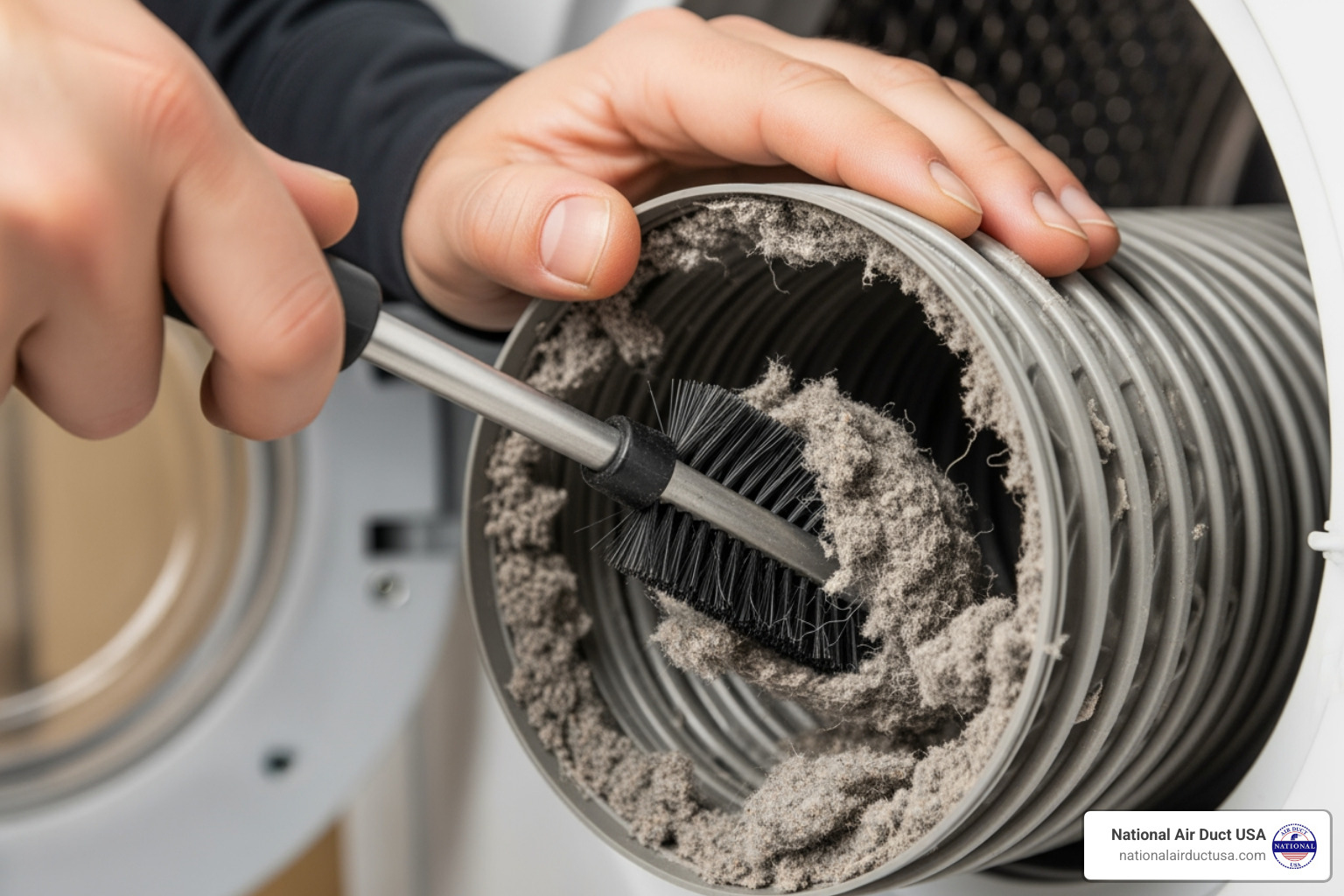
- Excess Lint on Clothes: If your clothes come out of the dryer covered in more lint than usual, it means the lint is not being properly carried out through the vent and may be backing up into the drum.
- Moisture in Laundry Room: Condensation on windows, a stuffy or humid feeling in the air, or visible moisture on the walls near the dryer are all signs that moist air is not being adequately expelled outside.
- Vent Hood Flap Doesn’t Open: Go outside while your dryer is running. The flap on the exterior vent hood should open and you should feel a steady stream of warm air. If it remains closed or only opens slightly, airflow is severely restricted.
The Impact on Energy Efficiency and Drying Time
The relationship between your dryer vent and your energy bill is direct and significant. When your dryer vent hose too long or clogged, it creates restricted airflow, which in turn increases the back pressure on the dryer’s blower motor.
Imagine trying to exhale through a long, coiled garden hose versus a short, wide pipe. The hose requires immense effort. Your dryer faces a similar struggle. This extra effort translates directly into:
- Longer Run Times: Your dryer’s sensors detect that the clothes are still moist, so it continues to run. This can easily double the cycle time, consuming twice the electricity or gas.
- Higher Utility Bills: Those longer run times directly inflate your energy costs. A clean, properly sized vent can save you $100 or more per year in energy costs, depending on your usage and utility rates.
- Unnecessary Wear on Dryer Components: The constant, excessive strain on the motor, belts, and heating elements dramatically reduces their lifespan. This can lead to expensive repairs or force you to buy a new dryer much sooner than you should have to.
Optimizing your dryer vent system isn’t just a safety precaution; it’s a smart financial decision that promotes energy conservation and extends the life of your valuable appliance.
Understanding and Calculating Maximum Safe Vent Length
So, how long can a dryer vent actually be? This isn’t a simple question with a single answer, as the effective length depends on the materials used and the number of turns in the path. The general rule of thumb, as specified by the International Residential Code (IRC Section M1502.4.6), is that the maximum dryer vent length is 35 feet from the dryer connection to the exterior termination. However, this is just the starting point, and every component in the system affects this total.
This 35-foot maximum applies to smooth, rigid metal ducts, which offer the least resistance to airflow. Dryer manufacturers often have their own specific limits listed in the installation manual, which should always be followed. The key is to calculate the equivalent length, which includes deductions for every bend and elbow.
The type of ducting material you use has the most significant influence on both safety and the maximum allowable length. Here’s a comparison of the common types:
| Ducting Type | Safety & Airflow | Durability & Best Use |
|---|---|---|
| Rigid Metal Duct | Excellent: Smooth interior provides the best airflow and minimizes lint buildup. Fire-resistant and meets all building codes. | Excellent: The most durable and safest option. Required for runs concealed within walls or ceilings. The professional standard. |
| Semi-Rigid Metal Duct | Good: Better than flexible foil, but the corrugated interior still creates more friction and traps more lint than rigid duct. Fire-resistant. | Good: Best for transition ducting (connecting the dryer to the wall vent). Flexible enough to steer tight spaces behind the appliance. |
| Flexible Foil/Vinyl Duct | Poor/Dangerous: The deep ridges create extreme airflow resistance and trap large amounts of lint. Many types are not fire-resistant and can be easily crushed, blocking airflow completely. | Not Recommended: Often violates local building codes and is a known fire hazard. Should be replaced with a semi-rigid or rigid metal duct immediately. |