Why Your Miele Dryer’s ‘Clean Out Airways’ Warning Matters
Miele tumble dryer clean out airways messages appear when lint and debris restrict airflow through your dryer’s filter system. Here’s what you need to know right away:
Quick Fix for ‘Clean Out Airways’ Message:
- Clean the door lint filters – Remove both upper and lower filters, clear lint, rinse with water, and dry completely
- Clean the plinth filter – Open the heat exchanger panel, remove filter, rinse thoroughly under running water, squeeze dry
- Vacuum heat exchanger fins – Use a soft brush attachment to gently remove visible lint without applying pressure
- Reinsert all filters – Ensure everything is completely dry and properly seated before closing panels
- Reset the message – Open and close the door while the dryer is on to clear the alert
If you’ve been using your Miele TDA150C or similar model and suddenly see “Clean out airways” flash on the display, you’re not alone. This is one of the most common maintenance alerts Miele dryers trigger—and for good reason.
The message signals that lint buildup is blocking your dryer’s airflow, which can lead to longer drying times, higher energy bills, and even fire hazards. According to research, dryers and washing machines cause up to 15,000 building fires yearly, with failure to clean airways being a top cause.
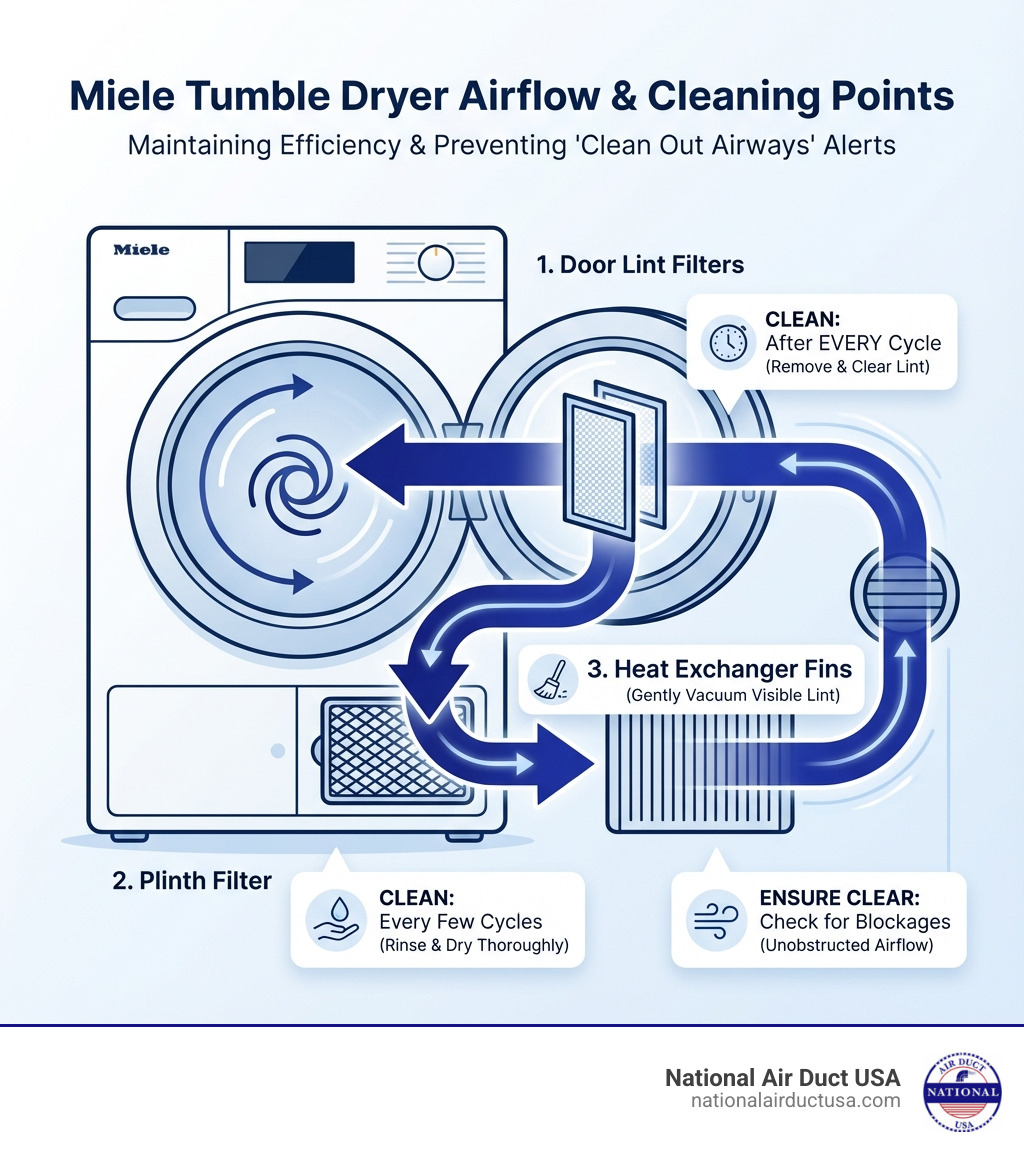
The good news? This is almost always something you can fix yourself in about 20-30 minutes with basic household tools. Your Miele dryer has three critical areas that need regular cleaning: the door lint filters, the plinth filter (located behind a panel at the bottom), and the heat exchanger fins.
In this guide, we’ll walk you through exactly how to clean each component, explain what causes the airways to clog, and help you know when it’s time to call a professional like National Air Duct USA for deeper vent system issues.
Understanding the ‘Clean Out Airways’ Alert
When your Miele tumble dryer displays the “Clean out airways” message, it’s not just a friendly suggestion; it’s a critical alert from your appliance. This message signifies that there’s a significant build-up of lint or fluff within the dryer’s internal filtration system, which is impeding proper airflow. Think of it as your dryer’s way of saying, “I can’t breathe!”
The primary components usually affected are the lint filters in the door opening and the plinth filter located in front of the heat exchanger. When these become soiled, air can’t circulate efficiently, forcing your dryer to work harder and longer to achieve the same results. This impacts not only the performance of your dryer but also its safety and longevity.
What Causes the ‘Clean Out Airways’ Message?
The “Clean out airways” message is almost always a direct result of restricted airflow, stemming from one or more of the following issues:
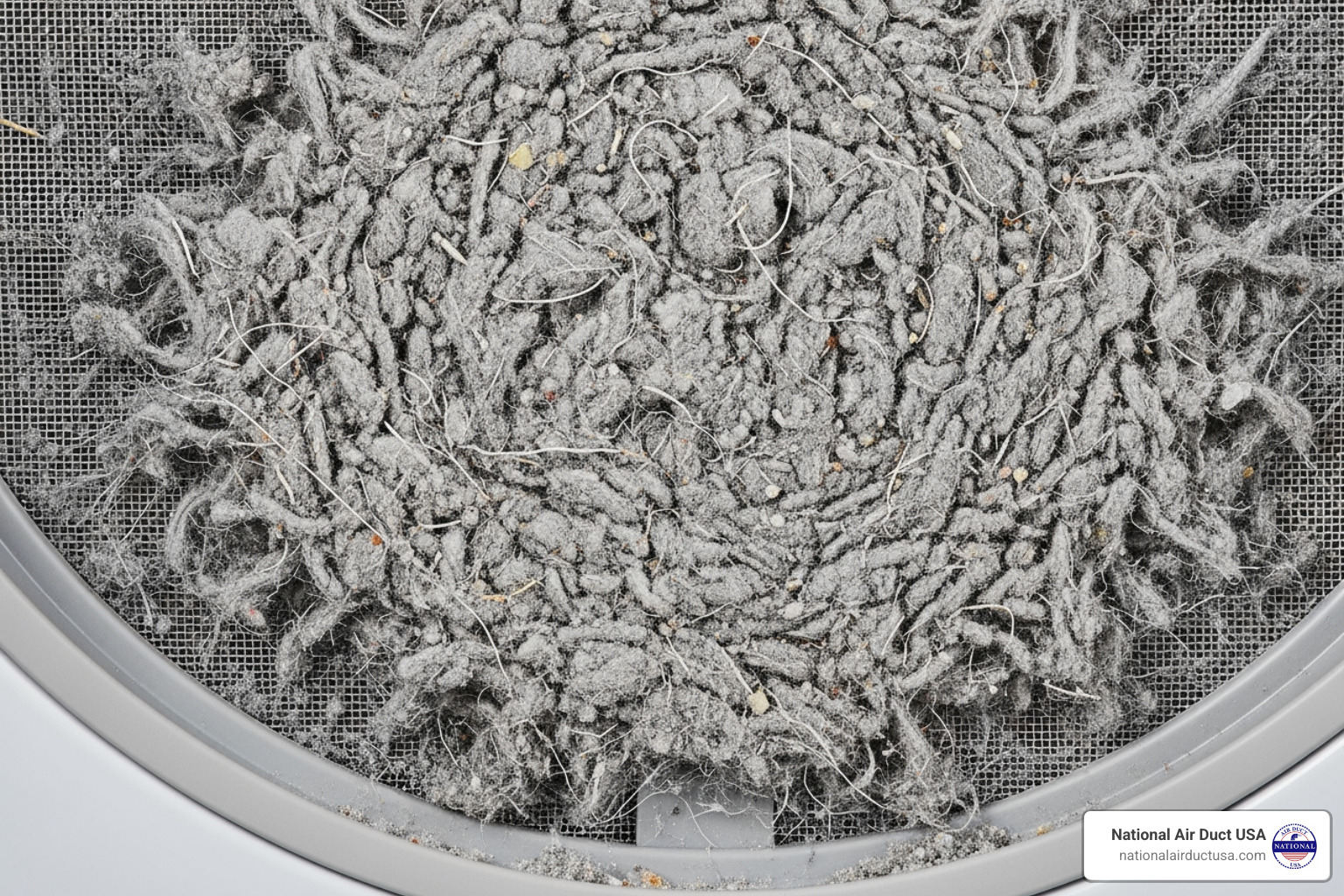
- Lint Buildup: This is the most common culprit. Every time we dry clothes, tiny fibers, or lint, are shed. While the door filters catch most of this, some finer particles can make their way deeper into the system, accumulating in the plinth filter and even on the heat exchanger fins.
- Detergent Residue: Sometimes, especially if we use too much detergent in our washing machines, residues can transfer to laundry and then to the dryer filters. This can cause the plinth filter to become encrusted, making it less permeable to air.
- Soiled Door Filters: These are our first line of defense. If not cleaned after every cycle, they quickly become clogged, leading to immediate airflow restriction and triggering the alert.
- Clogged Plinth Filter: This filter, located at the bottom of your dryer, plays a crucial role in protecting the heat exchanger. Over time, it can accumulate a dense layer of lint, severely reducing airflow.
- Blocked Heat Exchanger Fins: If the plinth filter isn’t cleaned regularly or is damaged, lint can bypass it and settle directly on the delicate cooling fins of the heat exchanger. This is a more serious blockage that can significantly reduce efficiency and potentially damage the appliance.
- External Dryer Vent Issues: While the “Clean out airways” message specifically points to internal issues, a severely clogged external dryer vent can sometimes exacerbate internal airflow problems, though it’s usually indicated by other symptoms first.
Understanding these causes is the first step in effectively performing a miele tumble dryer clean out airways. For more detailed insights into why this message appears, you can refer to Miele’s official support page: Information Clean out airways /end of programme .
The Consequences of Ignoring the Warning
Ignoring the “Clean out airways” message is like ignoring a check engine light in your car – it might seem fine for a bit, but serious problems are brewing. The consequences can range from minor annoyances to significant safety hazards:
- Appliance Inefficiency and Higher Utility Bills: When airflow is restricted, your dryer has to work much harder and longer to dry clothes. This translates directly to increased energy consumption and, inevitably, higher electricity bills. You might notice your drying cycles taking an eternity, or clothes still feeling damp after a full cycle.
- Overheating and Potential Dryer Damage: Reduced airflow means heat gets trapped inside the appliance. This can cause components to overheat, leading to premature wear and tear or even permanent damage to sensitive parts like the heat exchanger. If the plinth filter is blocked or worn, the heat exchanger can become blocked, potentially causing damage.
- Increased Fire Hazard: This is perhaps the most critical consequence. Lint is highly flammable. When it accumulates in the dryer’s airways and comes into contact with the heating element or other hot components, it creates a serious risk of fire. According to industry statistics, failure to clean dryer vents and airways is a leading cause of household fires.
- Musty Smells and Poor Drying Quality: Restricted airflow also means that moisture isn’t effectively vented out of the dryer. This can lead to a humid environment inside the drum, resulting in clothes that smell musty or damp even after a long drying cycle.
By taking the time to address the “Clean out airways” message promptly, we not only ensure our clothes are dried efficiently but, more importantly, we protect our homes and families from potential hazards.
Your Step-by-Step Guide to Miele Tumble Dryer Clean Out Airways
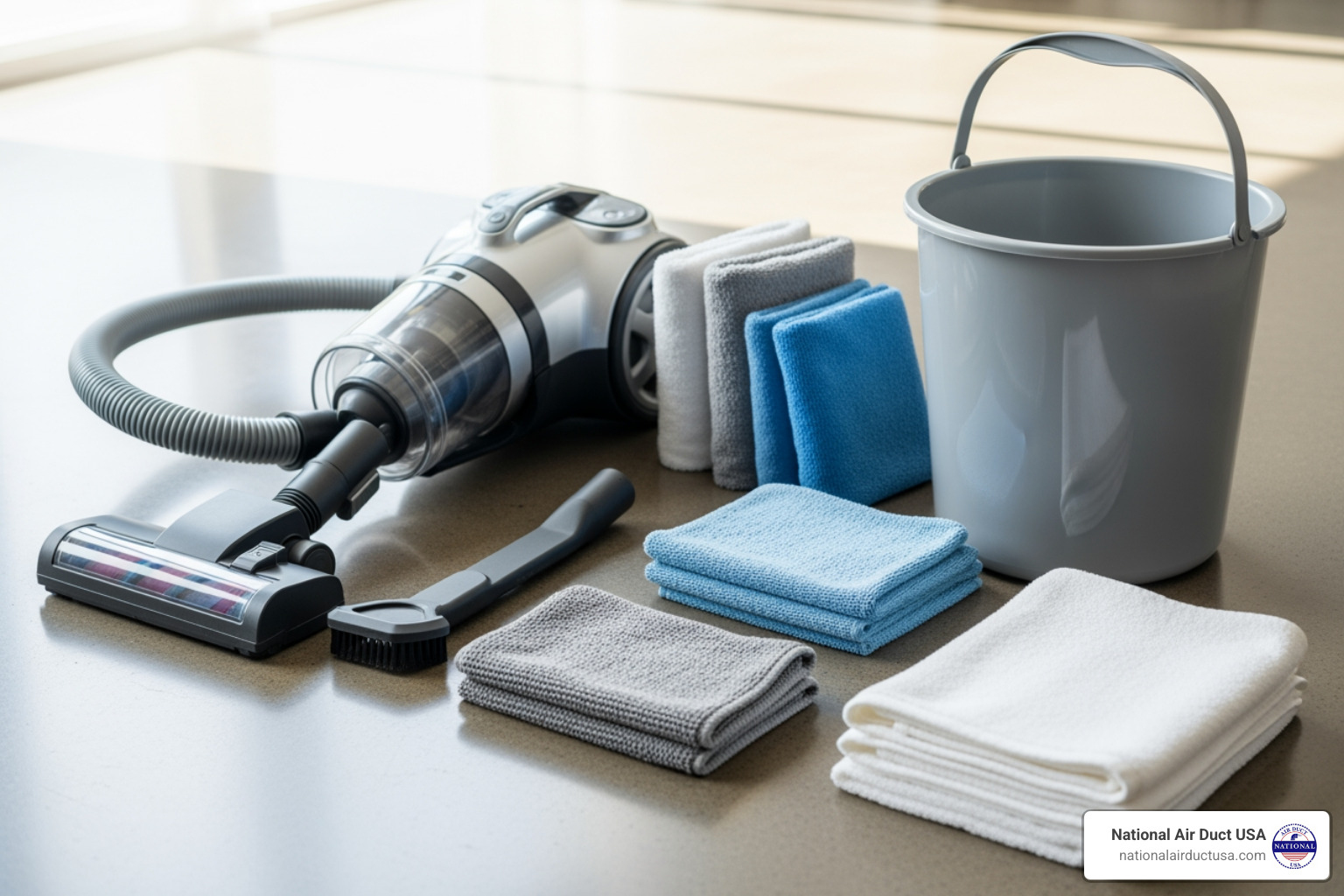
Tackling the “Clean out airways” message on your Miele tumble dryer doesn’t require a professional, at least not initially. With a few simple tools and some careful attention, we can restore our dryer’s efficiency and ensure its safe operation. Here’s what we’ll need:
Tools Needed:
- Vacuum cleaner with crevice and soft dusting brush attachments
- Soft cloths or sponges
- Bucket or bowl
- Warm running water
- Mild cleaning solution (optional, for encrusted filters)
- Two hand towels (for drying the plinth filter)
Step 1: Cleaning the Door Lint Filters
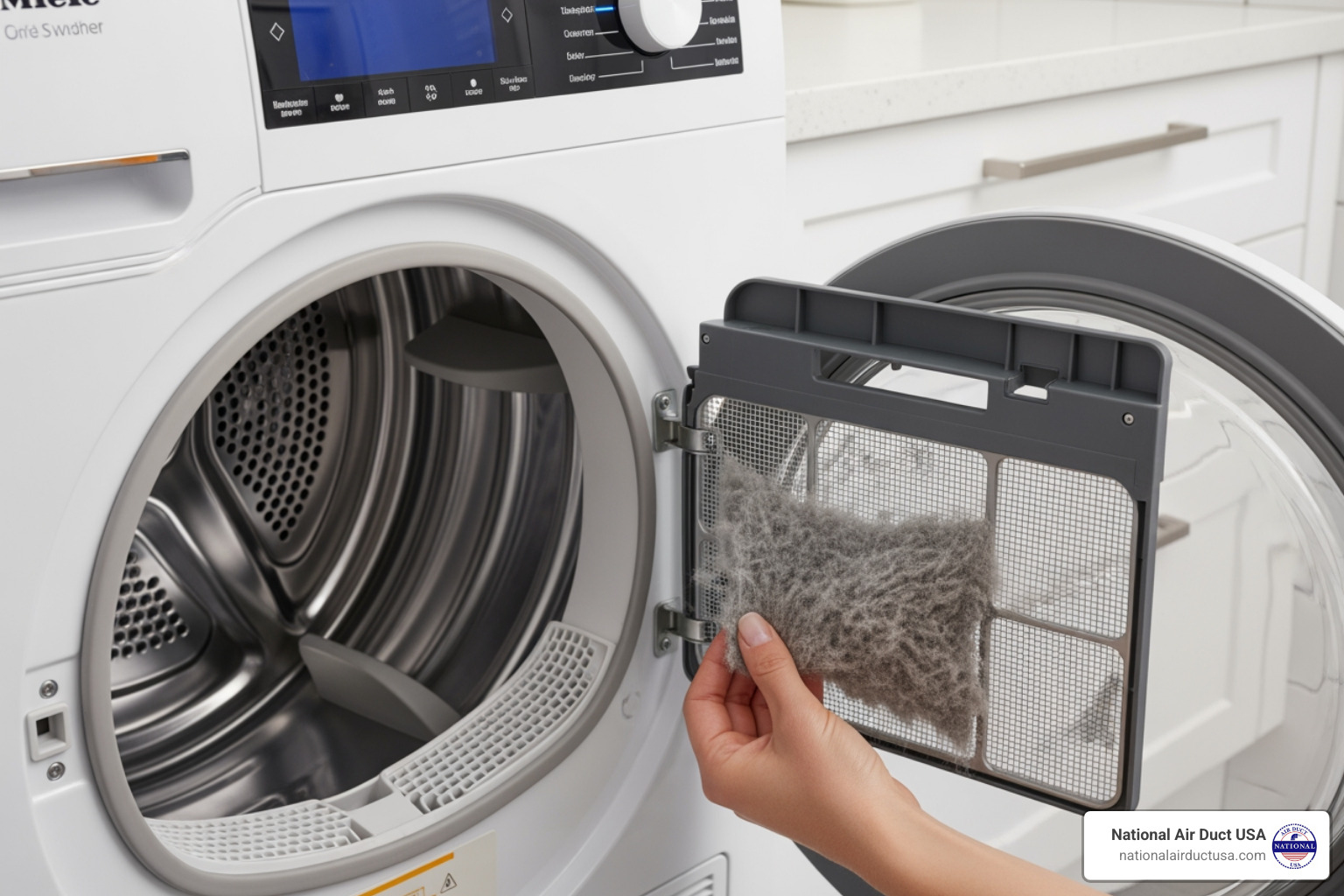
The door lint filters are your dryer’s first line of defense against lint buildup. They are designed to be cleaned after every drying cycle, but sometimes a deeper clean is needed, especially when the “Clean out airways” message appears.
- Open the Dryer Door: Start by opening the tumble dryer door.
- Remove the Filters: Miele dryers typically have a two-part filter system.
- Gently pull the upper lint filter forwards and out of its housing.
- For the lower lint filter, you’ll usually need to turn a yellow rotary control until it clicks, then pull the filter forwards to remove it.
- Remove Visible Lint: By hand, carefully peel away any accumulated lint from both filters. You might be surprised how much there is! Also, remove any lint from the perforated laundry deflector inside the door opening.
- Vacuum Airflow Openings: Use your vacuum cleaner with a long crevice nozzle to remove any visible fluff from the upper airflow openings inside the door frame. Be careful not to damage any internal components.
- Rinse with Water: For a thorough clean, take the filters to a sink. Wipe the smooth plastic surfaces with a damp cloth. Then, rinse the filter surfaces under warm running water. Gently shake them to dislodge any remaining debris.
- Dry Completely: This step is crucial. Ensure both filters are completely dry before reinserting them. Wet filters can cause operational faults. You can gently blot them with a towel or let them air dry.
- Reinsert Filters Correctly:
- Push the lower lint filter in completely until it clicks and the yellow rotary control locks it into place.
- Push the upper lint filter all the way in.
- Close the Dryer Door: Once both filters are clean and dry, close the dryer door.
Cleaning these filters regularly is key to preventing the “Clean out airways” message from appearing in the first place.
Step 2: How to Clean the Plinth Filter for your Miele Tumble Dryer Clean Out Airways
The plinth filter, sometimes referred to as the heat exchanger filter, is a vital component located at the bottom of your Miele dryer. It protects the heat exchanger from lint and requires a more thorough cleaning than the door filters. This is a crucial step in any miele tumble dryer clean out airways procedure.
- Access the Heat Exchanger Panel: Locate the heat exchanger access panel at the bottom left of your dryer (for most models). Press the round, indented area on the panel to release it and swing it open.
- Remove the Plinth Filter: You’ll see a handle. Pull the plinth filter out by this handle. Then, carefully pull the handle itself out of the filter.
- Clean Under Running Water: Take the plinth filter to a sink. Clean it carefully and thoroughly under running water. We recommend running a water jet vertically over the front of the filter to help dislodge residues. Squeeze the filter several times while rinsing.
- Loosen Encrusted Residue (Optional, but recommended): Place the plinth filter flat in a bowl or bucket to collect the cleaning water. Gently press down on the filter with the back of your hand. This helps to loosen any underlying residue that might not come off with just running water. Continue rinsing until all visible residue is removed.
- Microplastic Prevention: As we clean, tiny microplastic fibers from our clothes can be washed away. To prevent these from entering our wastewater system, we recommend pouring the contents of the bowl or bucket through a fine filter (like a coffee filter) before disposing of the water. Dispose of the collected fluff with household waste, not down the drain.
- Dry Thoroughly: This is another critical step. Carefully squeeze all water out of the plinth filter. If it’s still damp, you can place it between two hand towels on a flat surface and press down gently with a flat hand to absorb more moisture. The filter must not be dripping wet when reinserted, as this can cause operational faults.
- Clean the Handle: Use a damp cloth to remove any fluff from the plinth filter handle.
- Reassemble and Reinsert: Fit the plinth filter back onto the handle, ensuring it’s the correct way round (the “Miele” logo should be the correct way up). Push the plinth filter in completely until you feel the right-hand guide pin push in. This ensures it’s properly seated.
- Close the Access Panel: Securely close the heat exchanger access panel.
What if the plinth filter appears encrusted or deformed?
- Encrusted Filter Solution: If your plinth filter has white encrustations (often caused by excessive detergent use), you can wash it separately in your washing machine. Use a maximum temperature of 105°F (40°C) and a spin speed of 600 rpm, but do not use any detergent.
- Deformed Filter Replacement: If the plinth filter is deformed, damaged, or torn, it will no longer sit flush and effectively protect the heat exchanger. In this case, it needs to be replaced. You can usually order a new one from the Miele online shop or contact Miele customer service. Operating the dryer with a damaged plinth filter can lead to lint entering and damaging the heat exchanger.
Following these detailed steps for the plinth filter is essential for resolving the “Clean out airways” message. For additional guidance, you can consult resources like the manual for the Miele T 8822 C Dryer: Clean Out Airways for Miele T 8822 C Dryer – How to Manage Fluff Accumulation .
Step 3: Safely Cleaning the Heat Exchanger Cooling Fins
The heat exchanger is the heart of your Miele tumble dryer’s heating system. Its delicate cooling fins can become caked with lint if the plinth filter isn’t doing its job or if lint bypasses it. Cleaning these fins is crucial but requires care.
- Assess for Lint: With the heat exchanger access panel open and the plinth filter removed, carefully look for any visible fluff on the heat exchanger cooling fins.
- Use a Vacuum with Brush Attachment: This is where our vacuum’s soft dusting brush attachment comes in handy. It allows us to remove lint without direct contact.
- Gentle Application, No Pressure: Lightly pass the dusting brush over the heat exchanger cooling fins. The key here is to apply no pressure whatsoever. We want to gently coax the lint off, not push it further in or bend the fins.
- Preventing Fin Damage and Injury: The cooling fins are often sharp and delicate. Touching them directly with your hands can cause injury. Furthermore, bending or damaging these fins can severely impair your dryer’s performance and lead to costly repairs. Use only the vacuum brush and maintain a light touch.
Once you’ve carefully cleaned the fins, you can proceed with reinserting the plinth filter and closing the access panel as described in Step 2.
Troubleshooting Persistent Airway Issues
Even after diligently cleaning the door lint filters, the plinth filter, and the heat exchanger fins, you might find that the “Clean out airways” message stubbornly persists. Don’t despair! This indicates that the problem might be a bit deeper, requiring further investigation or professional assistance.
What to Do if the ‘Clean Out Airways’ Message Persists
If the message doesn’t clear after your thorough cleaning, here are the next steps to consider:
- Reset the Indicator: After cleaning, ensure you’ve properly reset the message. For most Miele models, this involves simply opening and closing the dryer door while the appliance is switched on, and then sometimes touching the “OK” sensor control. Check your specific model’s manual for the exact procedure.
- Check for Deeper Clogs: Sometimes, lint can accumulate in areas not easily accessible without some disassembly. This could include the internal ducting behind the heat exchanger or other internal airflow pathways. While more complex, some users on forums have reported success by carefully disassembling parts of the dryer to vacuum out hidden fluff. However, this carries a risk and should only be attempted if you’re comfortable with appliance repair.
- Potential Sensor Fault: The “Clean out airways” message is triggered by sensors that detect airflow restriction. If all physical blockages are clear, a faulty sensor could be sending an incorrect signal. Forum discussions often point to temperature sensors (on the heater or in the duct under the filter) as potential culprits if the dryer stops mid-cycle shortly after starting. Replacing a sensor is a more advanced repair.
- Adjusting Indicator Sensitivity: Some Miele models allow you to adjust the sensitivity of the “Clean out airways” indicator. This means you can program it to trigger at a lighter or heavier build-up of fluff. While this won’t fix an underlying blockage, it might prevent overly frequent alerts if your dryer is particularly sensitive. Consult your dryer’s operating instructions for programming options.
- External Dryer Vent Check: While the message is about internal airways, a severely blocked external dryer vent can impact the overall airflow of your appliance. Ensure your external vent flap opens freely when the dryer is running. For more information on maintaining your external dryer vent, you can read our guide on More info about Dryer Duct Installation.
When to Call a Professional for your Miele Tumble Dryer Clean Out Airways
While we encourage DIY maintenance, there are times when professional help is essential. Knowing when to call in the experts can save you time, frustration, and potential damage to your valuable Miele appliance.
You should definitely consider booking a technician or a professional dryer vent cleaning service like National Air Duct USA if:
- The Message Persists: You’ve followed all the cleaning steps carefully, perhaps even multiple times, and the “Clean out airways” message still appears. This suggests a deeper, inaccessible blockage or a component malfunction (like a faulty sensor) that requires specialized tools and expertise.
- Signs of Major Blockage: You notice a burning smell during operation, even after cleaning. This is a critical indicator of a serious lint buildup that poses a fire hazard.
- No Airflow Outside: If you check your external dryer vent while the dryer is running and feel little to no air escaping, it indicates a significant blockage in your dryer vent ductwork. This is beyond the scope of internal dryer cleaning.
- Excessive Drying Times: Your clothes are taking an inordinate amount of time to dry, or multiple cycles are needed for a single load.
- The Dryer is Overheating: The top of your dryer feels excessively hot to the touch, or the laundry feels unusually hot when removed.
- You’re Uncomfortable with Disassembly: If the troubleshooting steps require you to disassemble parts of the dryer that you’re not confident in tackling, it’s always best to leave it to a certified technician.
For residents in Long Island, Westbury NY, Hempstead NY, Garden City NY, Hicksville NY, Freeport NY, Nassau County, and Suffolk County, our NADCA-certified technicians at National Air Duct USA specialize in professional dryer vent cleaning. We have the advanced tools and expertise to tackle even the most stubborn blockages, ensuring your dryer operates safely and efficiently. For more information on professional services, visit our page on More info about Dryer Vent Cleaning or learn more about choosing a reliable More info about Dryer Vent Cleaning Company.
Frequently Asked Questions about Miele Dryer Maintenance
We often get questions about Miele dryer maintenance, especially concerning the “Clean out airways” message. Here are answers to some of the most common inquiries.
How often should I clean the plinth filter?
While Miele’s “Clean out airways” message is designed to alert you when cleaning is needed, proactive maintenance is always best. We recommend cleaning the plinth filter after every 30-50 drying cycles, or approximately once a month for average household use. If you dry a lot of lint-heavy items (towels, fleece, pet blankets), or use your dryer frequently, you might need to clean it more often. Regularly checking it will help you gauge the appropriate frequency for your specific usage.
What happens if I put a wet filter back into the dryer?
This is a common mistake, and Miele is very clear about the consequences: reinserting a wet filter, especially the plinth filter, can cause operational faults, error messages, or even interrupt your drying program. The dampness can interfere with sensors or create a humid environment that hinders efficient drying. Always ensure all filters are completely dry before placing them back into the dryer. If you accidentally reinsert a wet filter and encounter issues, remove it, squeeze out any remaining water, and allow it to air dry thoroughly before reinserting.
Can I use my Miele dryer without the plinth filter?
Absolutely not. Operating your Miele tumble dryer without the plinth filter correctly installed, or with a damaged one, is highly discouraged. The plinth filter serves as a critical barrier, protecting the delicate heat exchanger from lint and debris. Without it, lint can quickly accumulate on the heat exchanger’s cooling fins, leading to:
- Significant damage to the heat exchanger, which is an expensive component to repair or replace.
- Severe reduction in drying efficiency, as the heat exchanger cannot function properly.
- Operational faults or safety cut-offs, as the dryer’s sensors will detect improper functioning or overheating.
- Miele dryers are designed with safety features that often prevent them from operating if the plinth filter is not correctly installed and the access panel is securely closed.
Always ensure the plinth filter is in place, undamaged, and properly secured before running your dryer.
Conclusion
The “Clean out airways” message on your Miele tumble dryer is a vital reminder that regular maintenance is key to keeping your appliance running efficiently and safely. By understanding what this message signifies and following our step-by-step guide to clean the door lint filters, the plinth filter, and the heat exchanger fins, you can resolve most issues yourself.
Prioritizing a miele tumble dryer clean out airways routine not only improves your dryer’s efficiency and prolongs its lifespan but, most importantly, improves the safety of your home by preventing potential fire hazards. A clean dryer is a happy dryer – and a safer home.
However, if you’ve done all you can and the message persists, or if you suspect deeper issues with your dryer’s external vent system, don’t hesitate to reach out to the professionals. For comprehensive dryer vent cleaning and other HVAC services in Long Island, Westbury NY, Hempstead NY, Garden City NY, Hicksville NY, Freeport NY, Nassau County, and Suffolk County, National Air Duct USA is here to help. Our NADCA-certified technicians are equipped to ensure your entire system is clean, safe, and efficient.
For more information about our services and how we can help you maintain a healthier home, visit our services page: More info about our services.