
Why Fresh Air Matters in Your Home
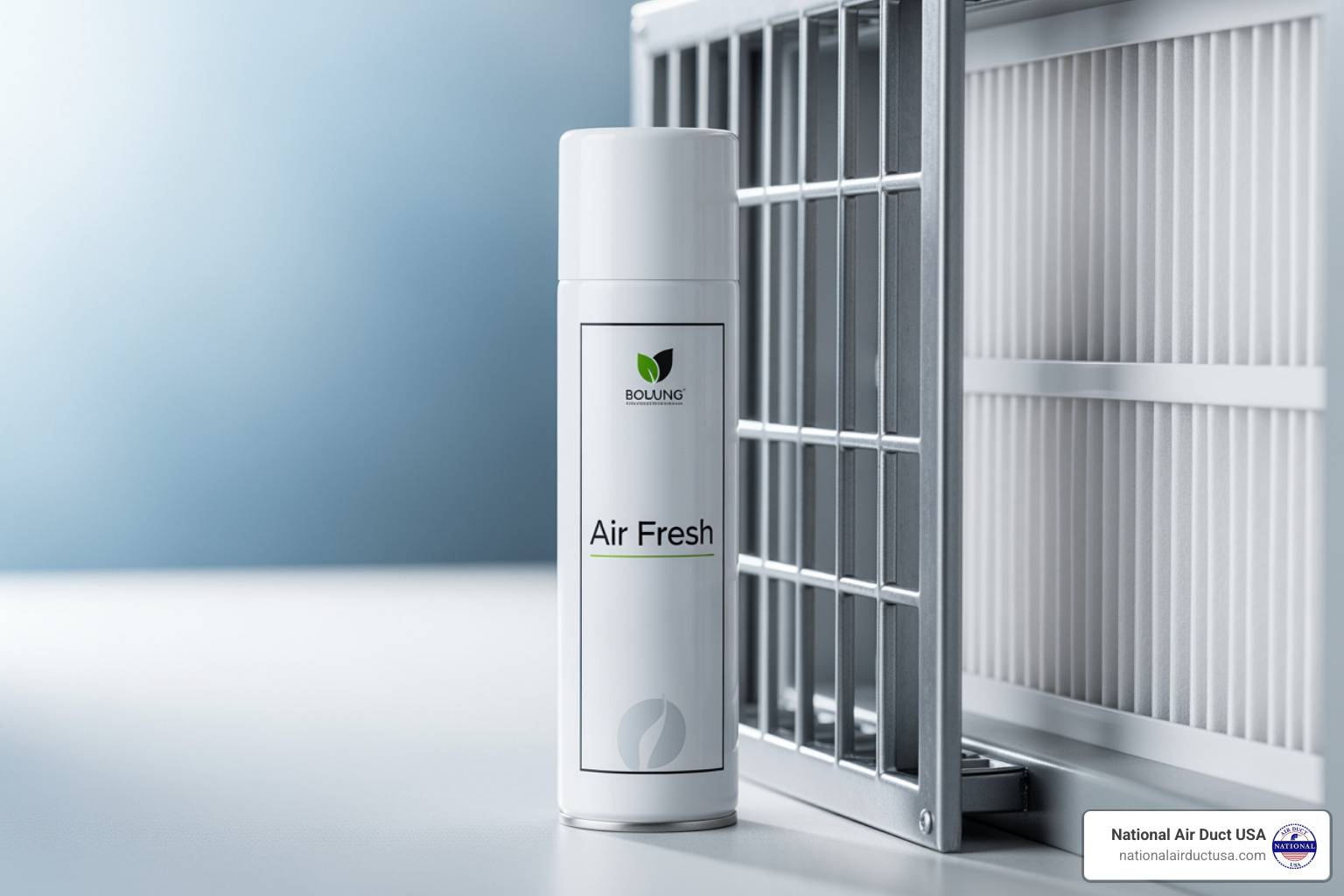
An air duct freshener is a product designed to eliminate or mask odors circulating through your HVAC system, available in several forms:
Common Types:
- Filter-attached fresheners – Clip onto your air filter, lasting 30 days
- Foggers – Spray treatment that penetrates ductwork (often thymol-based)
- Vent clips – Attach directly to individual vents for localized freshening
- Gel fresheners – Passive odor blockers placed near ducts
Key Consideration: Most air duct fresheners are temporary solutions that mask odors rather than eliminate their source. For persistent smells from mold, pet dander, or accumulated debris, professional duct cleaning addresses the root cause.
You’ve noticed it. That musty smell when the heat kicks on. The stale air that greets you when you walk in the door. Maybe it’s pet odors cycling through every room, or a lingering mustiness you can’t quite place.
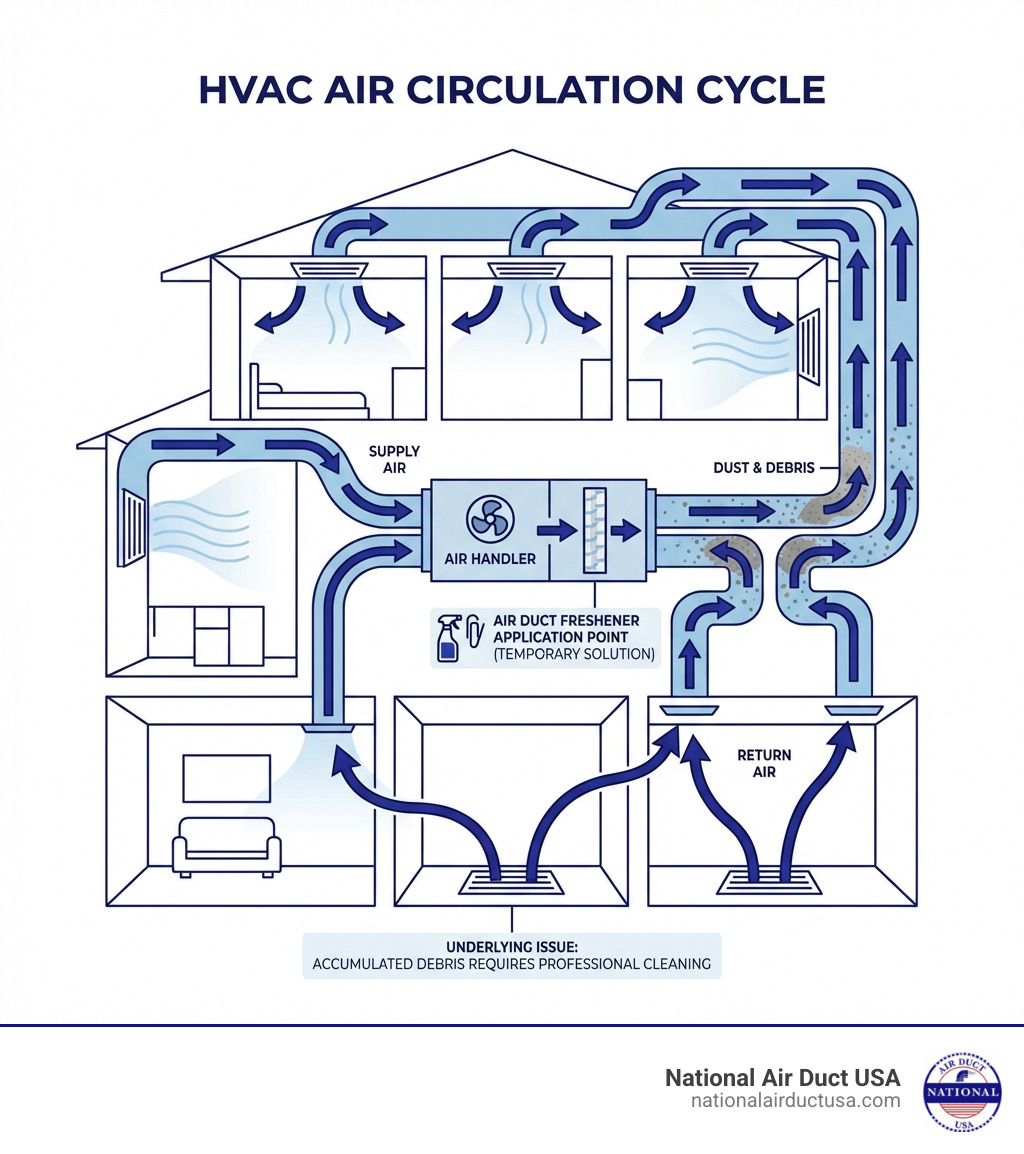
Here’s the thing: your HVAC system is the lungs of your home. It breathes air in, pushes it through miles of ductwork, and sends it back out through every vent. Whatever’s living in those ducts—dust, mold spores, pet dander, debris—gets distributed to every room, multiple times per hour.
The global air freshener market was valued at $16.5 billion in 2022, with the HVAC segment growing as more homeowners become aware of indoor air quality issues. But not all solutions are created equal. Some mask odors temporarily. Others use EPA-approved ingredients like thymol to actually sanitize surfaces. And many homeowners don’t realize that freshening products can’t replace addressing the underlying problem.
This guide cuts through the marketing noise. We’ll show you what actually works, what’s safe for your family and pets, and when a product is just putting perfume on a bigger issue. Because fresh air isn’t just about pleasant smells—it’s about the health of everyone breathing it.
Relevant articles related to air duct freshener:
Why Your Vents Smell and How to Address It
Ever wonder why your home, despite your best cleaning efforts, still has that “something” in the air? Often, the culprit is your air ducts. These hidden pathways are perfect breeding grounds for all sorts of unwelcome guests that contribute to unpleasant odors circulating throughout your Long Island, Westbury, or Nassau County home.
Odor sources:
- Mold and mildew: This is a big one. When moisture combines with organic matter (like dust and dirt) in your ducts, mold and mildew can flourish. You’ll often notice a distinct musty or earthy smell. A warm location with high water vapor content is particularly prone to mold buildup within the ducts, and this can be a common issue in our humid climate. If water is dripping from your vents, it’s a sign of condensation that can lead to mold if left untreated.
- Pet dander: Our furry friends shed, and their dander, along with pet hair, can accumulate in the ductwork, leading to persistent pet odors.
- Dust and debris: Beyond just making surfaces dirty, the dust in your ducts is a mix of dead human skin cells, dust mites, pollen, fibers, and even insect debris. This cocktail can create a stale, heavy smell.
- Tobacco smoke: If anyone in your home smokes, the residue can cling to duct surfaces, resulting in a pervasive stale smoke odor that’s notoriously hard to get rid of.
- Stagnant air: When your HVAC system isn’t running, air can become trapped in the ducts, leading to a general stale smell, especially if there’s any moisture or debris present.
- Cooking odors: Strong cooking smells can also become trapped and recirculated.
How odors spread:
Your HVAC system is designed to circulate air. This means that any odor-causing particles or gases present in your ductwork are efficiently distributed to every room in your home. The air vents are one of the main distributors of germs and odors throughout an entire building. This is why a smell originating in one part of the duct system can quickly become a whole-house problem.
Importance of addressing the source:
While an air duct freshener can offer temporary relief, it’s crucial to understand that these products primarily mask smells. They don’t remove the mold, pet dander, or other contaminants causing the odor. For a truly fresh and healthy home, you need to address the root cause. This often means thoroughly cleaning your air ducts and HVAC system.
Benefits of clean ducts:
When we clean your air ducts, we’re not just removing odors; we’re removing the physical contaminants that cause them. This leads to:
- Improved home ambiance: Your home will smell genuinely fresh, not just perfumed.
- Better indoor air quality: Removing allergens, mold spores, and dust means you and your family in Hempstead or Garden City are breathing cleaner air. This can significantly help with allergy and asthma relief.
- Improved HVAC efficiency: Clean ducts allow your system to run more efficiently, potentially lowering utility costs.
Learn more about how we can help improve your home’s air quality with our services: More info about HVAC System Cleaning
The Ultimate Guide to Freshening Your Air Ducts
Choosing the right way to freshen your air ducts can feel overwhelming with so many options available. When we talk about freshening, we’re looking at various factors to ensure you pick the best approach for your Nassau County home.
Consider:
- Scent preference: Do you prefer a subtle, clean scent or something more noticeable? Some products offer a range of fragrances, from linen to vanilla.
- Home size: A larger home, especially one over 3,000 sq. ft., might require more robust solutions or multiple applications of a product to achieve whole-house freshness.
- Odor intensity: A mild, stale odor can be tackled with simpler fresheners, but persistent, strong smells like mold or heavy pet odors often require a deeper intervention.
- Ingredient safety: This is paramount, especially for households with children, pets, or individuals with respiratory sensitivities. We always prioritize options that are safe for your family.
Here’s a comparison of common methods for freshening your air ducts:
| Method | Duration of Effect | Application | Best Use Case |
|---|---|---|---|
| Professional Cleaning | Long-term (years) | Specialized equipment by technicians | Eliminating source of persistent odors, mold, contaminants |
| Filter Maintenance | 1-3 months | DIY filter changes, filter-attached fresheners | Mild odors, general maintenance, scent distribution |
| Safe Home Remedies | Short-term (days) | DIY placement of natural absorbers/diffusers | Minor, temporary odors, localized freshening |
Safe Ways to Freshen Air Ducts
When it comes to keeping your air ducts smelling fresh in Freeport or Hicksville, safety is always our top concern. We want solutions that work without introducing harmful chemicals into your living space.
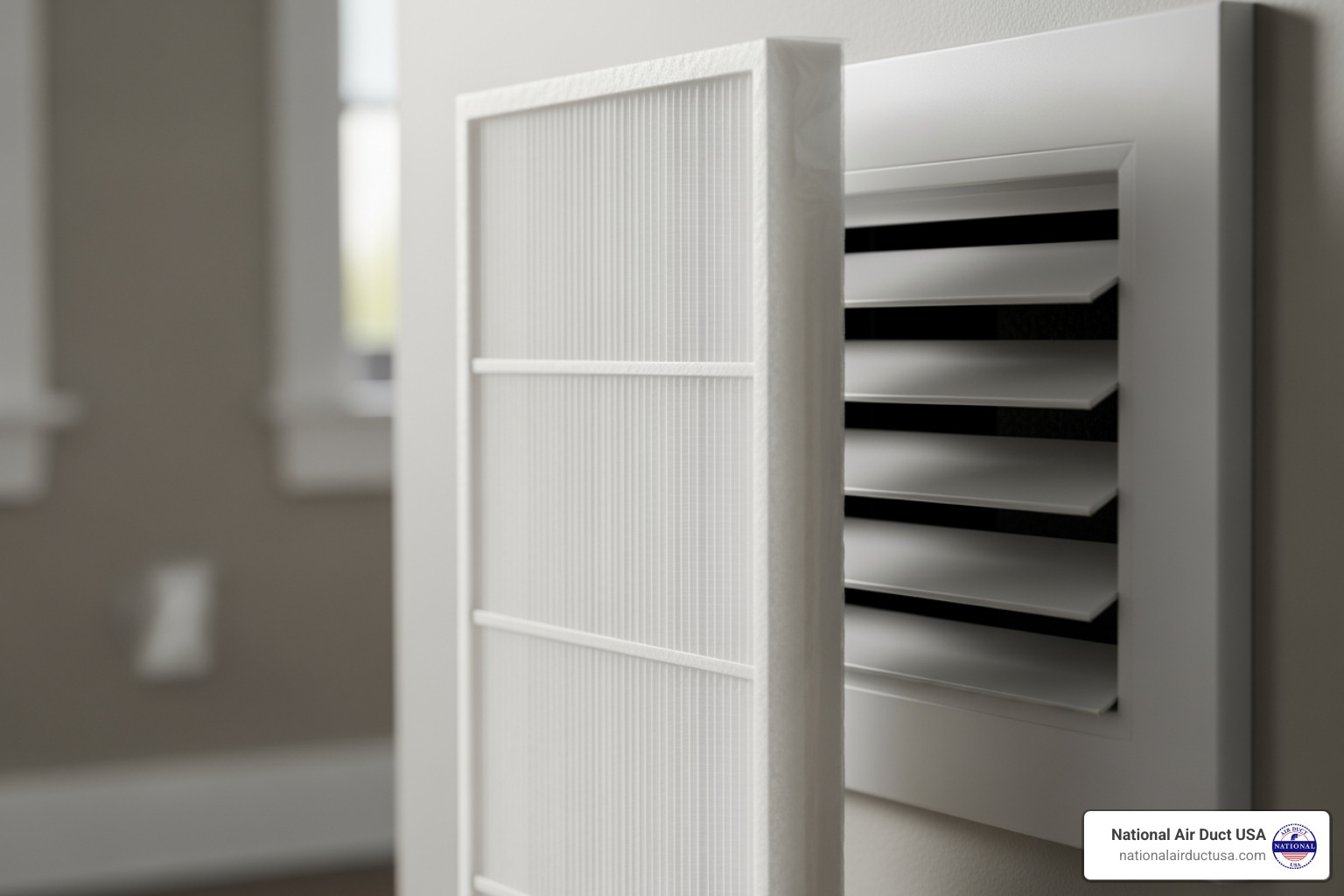
Regular filter changes: This is the simplest and most effective first step. Your HVAC filter traps dust, dander, and other airborne particles. A dirty filter restricts airflow and can harbor odor-causing contaminants. Replacing your air filter every 1-3 months (or more frequently if you have pets or allergies) is crucial for both air quality and system efficiency. Some whole-house air duct fresheners are designed to attach directly to your 1″ to 5″ air filters, releasing scent as air passes through. These can last up to 30 days and are a convenient way to distribute a pleasant fragrance throughout your home.
Using safe, natural home remedies: For minor odors, you can often turn to household items:
- Baking soda near vents: Place open containers of baking soda discreetly near return air vents. Baking soda is a natural odor absorber.
- Essential oils with caution: You can put a few drops of essential oil (like lemon or tea tree oil) onto a clean, new HVAC filter. The scent will be distributed throughout your home. However, use caution: never apply oils directly to ductwork, and ensure the essential oil is safe for diffusion and won’t harm your HVAC system components. Always check for any potential allergic reactions in your household.
- Activated charcoal: Similar to baking soda, activated charcoal is excellent at absorbing odors without adding any scent. Place sachets near vents or in return air ducts.
Ensuring air filter compatibility: If you’re using a filter-attached air duct freshener, make sure it’s compatible with your specific filter size and type. Always follow the product instructions carefully.
Avoiding harsh chemicals: Many commercial air fresheners contain volatile organic compounds (VOCs) and other chemicals that can be irritants, especially for sensitive individuals. We recommend steering clear of strong chemical sprays that claim to “clean” your ducts without professional intervention. These can leave residues that attract more dust or even damage your ductwork over time. When considering products, look for those with natural, EPA-approved ingredients.
DIY considerations: While DIY methods can offer temporary relief, it’s important to understand their limitations. They are best for minor, superficial odors. For deep-seated issues like mold, extensive pet odors, or accumulated debris, DIY methods are simply not enough.
Addressing Specific Odors in Your Air Ducts
Different odors require different strategies. Understanding the source is key to choosing the right air duct freshener or treatment.
- Pet odors: If you have pets, their dander and hair can build up in your ducts. While filter-attached fresheners can help mask the smell, a thorough professional air duct cleaning is often necessary to remove the dander and truly eliminate the odor at its source.
- Musty smells from mold: A musty odor is a strong indicator of mold growth. Mold cannot be “freshened away.” Using an air duct freshener on mold will only mask the smell temporarily and allow the mold to continue growing, potentially spreading spores and posing health risks. If you suspect mold (black, brown, or yellow particles in vents, persistent musty smell), you need professional mold remediation and air duct cleaning. EPA-approved ingredients like Thymol are known to kill mold, but applying such treatments requires specific methods, like fogging, to reach all affected areas.
- Smoke elimination: Tobacco smoke permeates everything, including your ductwork. This is one of the toughest odors to eliminate. Professional cleaning, often combined with specialized deodorizing treatments, is usually the only way to achieve lasting results.
- General staleness: For everyday staleness, regular filter changes combined with a filter-attached air duct freshener or natural remedies can be quite effective.
Choosing the right approach for your home:
The best approach depends on the severity and source of the odor. For minor, occasional smells, DIY methods or filter-compatible freshening options can work. However, for persistent, strong, or suspicious odors (especially mold), professional help is not just recommended, it’s essential.
When to consider professional help:
If odors return quickly after using an air duct freshener, if you see visible mold, or if family members experience unexplained allergy-like symptoms, it’s time to call in the experts. Our team at National Air Duct USA can inspect your system and provide a comprehensive solution.
Safe and Effective Application: A Step-by-Step Guide
Using an air duct freshener correctly is just as important as choosing the right one. Improper application can reduce effectiveness or even pose safety risks. Here’s how we recommend safely applying fresheners or remedies in your Long Island home:
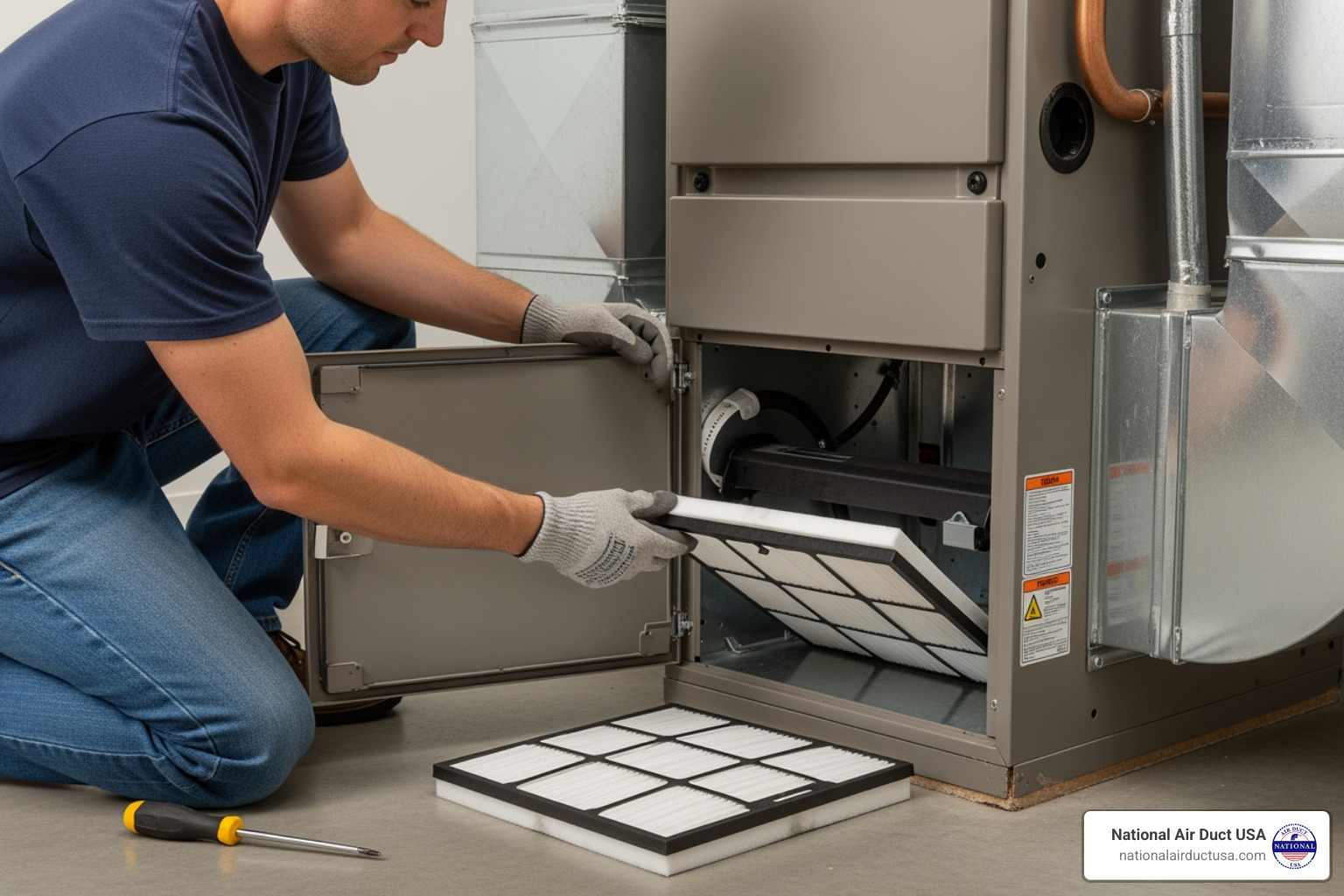
- Reading instructions: This might sound obvious, but it’s critical. Every product is different. Whether it’s a filter-attached freshener, a gel, or a fogger, the manufacturer’s instructions provide specific guidance on placement, dosage, and safety.
- Turning off HVAC system: Before installing filter-attached fresheners or applying any sprays or gels near vents, always turn off your HVAC system at the thermostat. This prevents the product from being immediately drawn into the system before it can be properly placed or settled.
- Proper placement:
- Filter-attached fresheners: These typically clip onto the furnace filter. Ensure they are securely attached and don’t impede airflow.
- Gel fresheners: Place these near return air vents where air is drawn into the system, or in strategic locations that aren’t directly in the airflow path but where the scent can be picked up.
- Foggers: For products like DIY foggers (e.g., thymol-based ones), instructions often involve placing the can in the return air plenum or near a return vent, activating it, and allowing the HVAC fan to distribute the mist. Ensure the area is clear of obstructions and follow ventilation guidelines.
- Ventilation needs: Some products, especially foggers, may require specific ventilation during or after application. For example, after using some vent and duct cleaners, it’s recommended to ventilate the area for 5-10 minutes with windows open and the fan on high.
- Safety precautions:
- Keep out of reach of children and pets: Always store and apply products safely.
- Natural ingredients: We appreciate products that use natural ingredients. Thymol, for example, derived from the thyme plant, is an EPA-approved ingredient known for its anti-microbial, anti-fungal, and anti-viral properties. It’s often proven to be safe for humans and pets, with no need to evacuate premises during use for some fogger products.
- Essential oils: If using essential oils, ensure they are high-quality and used sparingly. Some pets, especially cats, can be sensitive to certain essential oils.
- Chemical concerns: Be wary of products with strong, artificial fragrances or harsh chemicals. These can exacerbate allergies or respiratory issues for sensitive individuals. Always check the ingredient list.
- How often to refresh:
- Filter-attached fresheners: These typically last up to 30 days. Mark your calendar for replacement to maintain consistent freshness.
- Gels and other passive fresheners: Their longevity varies, but usually, they need to be replaced when the scent diminishes or the gel evaporates.
- Foggers/sprays: The effect of these can last from a few days to a few weeks, depending on the product and the underlying odor issue.
An air duct freshener is a short-term solution. If you find yourself constantly battling odors, it’s a sign that the root cause needs to be addressed professionally.
Air Duct Freshening vs. Professional Cleaning: What’s the Real Difference?
It’s easy to confuse the two, but understanding the fundamental difference between using an air duct freshener and investing in professional air duct cleaning is crucial for the long-term health and comfort of your home in Westbury or Suffolk County.
Temporary solutions and masking underlying issues:
Most air duct fresheners are designed to introduce a pleasant scent into your airflow or absorb existing odors. They provide a temporary fix, essentially putting a band-aid on a deeper problem. If the source of the odor is mold, bacteria, pet dander, or significant dust accumulation, a freshener will only mask the smell. The contaminants remain, continuing to affect your indoor air quality and potentially your health. This is like spraying air freshener in a room with a dirty diaper – it might smell better for a moment, but the problem is still there.
Air purifiers and particle filtration:
It’s also important to differentiate between an air duct freshener and an air purifier. An air purifier, especially one with HEPA filtration, actively captures airborne particles like dust, pollen, and pet dander. Some air purifiers also incorporate odor elimination features. While effective for filtering the air in a room, they don’t clean the inside of your ductwork. A Febreze air purifier, for example, is designed to capture airborne particles and odors in a room and add a fresh scent, circulating the air up to 5 times per hour. This complements, but does not replace, clean ducts.
Long-term solutions and removing the source:
Professional air duct cleaning, on the other hand, is a comprehensive process that physically removes contaminants from your entire duct system. Our NADCA-certified technicians use specialized equipment, including high-powered vacuums and rotary brushes, to agitate and extract years of accumulated dust, debris, mold, and allergens. This process addresses the root cause of odors, rather than just covering them up.
Health benefits of clean ducts:
The benefits of professional cleaning extend far beyond just a fresh smell:
- Eliminates potential mold growth: We remove the conditions that allow mold to thrive, protecting your home and health.
- Reduces allergens: By removing dust mites, pollen, and pet dander, we significantly reduce triggers for allergies and asthma. Many doctors recommend air duct cleaning for allergy sufferers.
- Improves indoor air quality (IAQ): Poor IAQ is a significant environmental threat, impacting health and productivity. Clean ducts mean cleaner air for your family.
- Improves HVAC efficiency: Removing buildup allows your system to run more efficiently, potentially saving you money on energy bills.
While an air duct freshener can be a nice touch for a generally clean home, it’s no substitute for the deep, thorough cleaning provided by professionals. For a truly healthy and odor-free home in Long Island or Westbury, consider our services: Air Duct Cleaning and understand Why Regular Air Duct Cleaning is Essential for Every Home in Long Island and Westbury.
Frequently Asked Questions about Freshening Your Air Ducts
We hear a lot of questions from homeowners in Nassau and Suffolk Counties about keeping their air ducts fresh. Here are some of the most common ones:
Are home remedies or air duct freshening methods safe for pets and children?
This is a critical question, and the answer depends heavily on the specific method and ingredients.
- Toxicological review: Reputable manufacturers of air duct fresheners will conduct toxicological reviews to ensure their products are safe for use around humans and pets. Always look for this information on product labels.
- Natural vs. chemical ingredients: Products utilizing natural ingredients like Thymol are often proven to be safe for humans and pets, with some even stating no need to evacuate the premises during use. However, some essential oils, while natural, can be toxic to pets (especially cats) if ingested or if exposure is too high. Artificial fragrances and harsh chemicals found in some conventional air fresheners can be irritants for sensitive individuals, children, and pets.
- Proper ventilation: Regardless of the product, adequate ventilation during and after application is crucial. If using a fogger or spray, ensure the area is well-ventilated as per instructions.
- Following directions: Always, always follow the manufacturer’s instructions for any air duct freshener or remedy. This includes recommended placement, application amount, and safety warnings. When in doubt, err on the side of caution.
Can a freshening method get rid of mold in my air ducts?
No, an air duct freshener cannot get rid of mold in your air ducts.
- Masking vs. removing: Fresheners are designed to mask odors or introduce a pleasant scent. They do not kill or remove mold. If you have mold, a freshener will merely cover the musty smell temporarily while the mold continues to grow and potentially spread spores throughout your home.
- Mold remediation: Mold requires specialized remediation. This involves identifying the source of moisture, physically removing the mold, and then often applying an EPA-approved antimicrobial treatment. For example, some products containing chlorine dioxide are EPA registered for application in HVACR systems to control microbial growth. Thymol, as mentioned, is an EPA-approved ingredient to kill mold on hard surfaces, but its application in ducts needs to be done correctly, often via professional fogging, to be effective.
- Signs of mold: If you notice a persistent musty odor, visible black, brown, or yellow particles in your vents, or if family members experience unexplained respiratory issues, these are strong signs of mold.
- When to call a professional: If you suspect mold in your air ducts, it is vital to contact a professional air duct cleaning and mold remediation service like National Air Duct USA. We have the expertise and equipment to safely and effectively remove mold, protecting your home and health.
How long does a freshening effect last?
The longevity of a freshening effect varies widely depending on several factors:
- Method type:
- Filter-attached fresheners: These typically last up to 30 days, as they are designed for continuous release with airflow.
- Gel fresheners: These can last anywhere from a few weeks to a couple of months, depending on the product and environmental conditions.
- Foggers/sprays: The immediate effect can be strong but may diminish within days or weeks, especially if the underlying odor source is still present.
- Home remedies (e.g., baking soda, essential oils): These are generally very short-lived, lasting from a few days to a week at most, and need frequent reapplication.
- HVAC fan settings: For filter-attached or vent-based fresheners, setting your HVAC system fan to “on” (rather than “auto”) can help continuously circulate the fragrance, potentially making it more noticeable but also possibly using up the product faster.
- Home size: Larger homes (over 3,000 sq. ft.) or homes with many competing scents may require more fresheners or more frequent application to maintain a noticeable effect.
- Scent longevity factors: Factors like humidity, the intensity of the original odor, and even how quickly your nose adapts to a scent can influence how long you perceive the freshening effect to last.
Remember that an air duct freshener provides a temporary sensory experience. For lasting freshness and a truly healthy indoor environment, addressing the root causes of odors through professional air duct cleaning is the most effective approach.
Conclusion
We’ve journeyed through air duct fresheners, uncovering their benefits, types, and proper usage. We’ve seen how they can offer a pleasant aroma and temporary relief from minor odors, contributing to a more inviting atmosphere in your Long Island or Westbury home. The global air freshener market’s growth, projected to reach $26.9 billion by 2030, clearly shows a strong consumer desire for fresh-smelling spaces.
However, a crucial takeaway is the distinction between temporary masking and permanent solution. While an air duct freshener can be a useful tool for maintaining day-to-day freshness, it is not a cure for underlying issues like mold, extensive pet dander, or years of accumulated dust and debris within your HVAC system. These deeper problems require a more robust, professional intervention.
For a truly deep clean and lasting freshness, professional services are the best solution. Our NADCA-certified technicians at National Air Duct USA are equipped to thoroughly clean your air ducts, removing the source of odors and contaminants, improving your indoor air quality, and enhancing your HVAC system’s efficiency. Don’t just mask the problem; eliminate it for a healthier, happier home.
Ready to experience the difference of genuinely clean air?
Explore our professional cleaning services