Your HVAC System’s Hidden Problem: Why Blower Motor Cleaning Matters
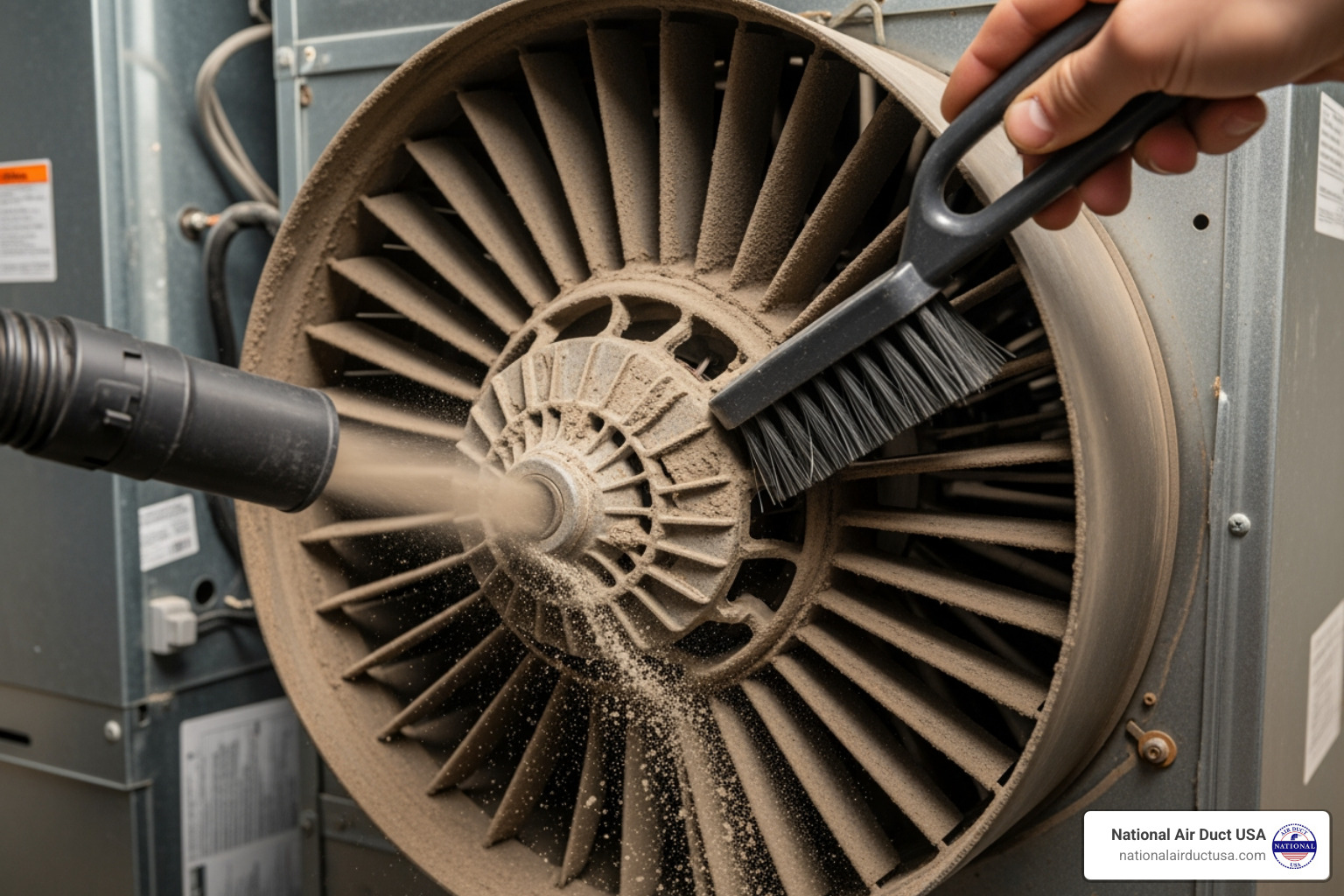
Blower motor cleaning is the process of removing dust, debris, and buildup from your HVAC system’s blower motor and fan blades to restore airflow, reduce energy use, and improve indoor air quality.
Quick answer — here’s what blower motor cleaning involves:
- Turn off power at the circuit breaker
- Remove the access panel to reach the blower assembly
- Vacuum and brush loose dust from the motor housing and fan blades
- Wipe down blades with a damp cloth and mild detergent
- Inspect and lubricate bearings if applicable
- Reassemble and test the system
Most homeowners should clean their blower motor at least once a year — more often if you have pets, allergies, or live in a dusty environment.
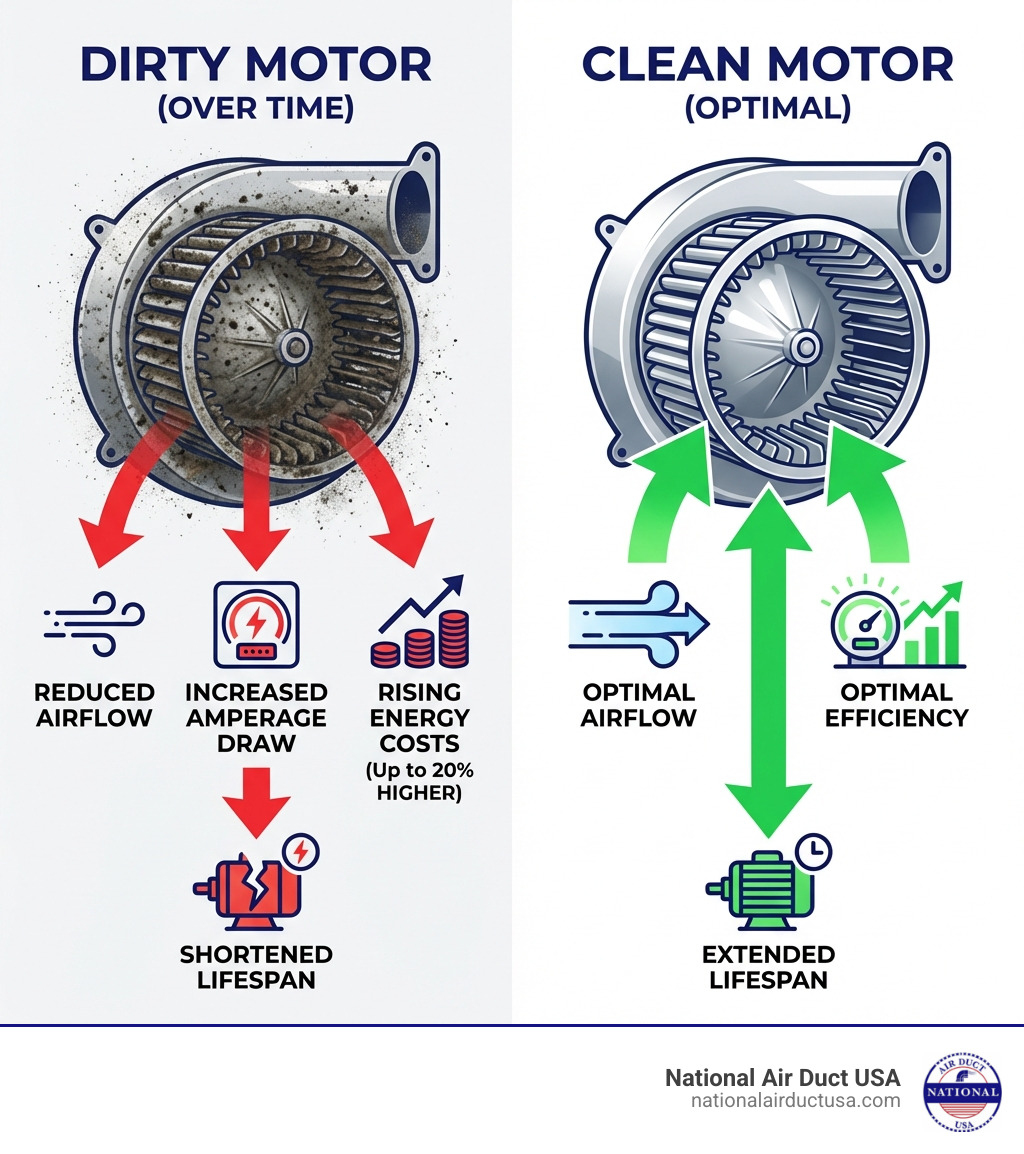
Think about this: a standard 1,000 CFM blower running throughout the day moves roughly 54 tons of air through your home. Every bit of that air passes over your blower motor’s fan blades. Over time, dust and debris stick to those blades, forcing the motor to work harder, draw more power, and push less air.
The result? Higher energy bills. Weaker airflow. Shorter system life.
According to industry data, even a modest amount of dust buildup can reduce your furnace’s efficiency by up to 20% — and dirty fan blades alone can increase motor operating costs by the same amount. For Long Island homeowners already dealing with seasonal allergens and rising utility costs, that’s a problem worth taking seriously.
The good news is that regular blower motor maintenance is one of the most impactful — and often overlooked — things you can do for your HVAC system.
Blower motor cleaning terms to learn:
Why Blower Motor Cleaning is Essential for Your Home
At National Air Duct USA, we often tell our clients in Westbury and Garden City that the blower motor is the “beating heart” of their HVAC system. If the heart is struggling to pump, the whole body suffers. When we perform a professional HVAC System Cleaning, the blower motor is a primary focus for several critical reasons.
Energy Efficiency and Cost Savings
The most immediate impact of a dirty blower motor is on your wallet. Dirt on the fan blades (often called the “squirrel cage”) changes the aerodynamics of the blades. This forces the motor to draw more amperage to move the same amount of air. Research shows that dirty fan blades can cause a 20% increase in motor operating costs. By keeping these blades clean, you ensure the motor runs at its intended specifications, keeping your monthly utility bills in check.
System Longevity and Heat Exchanger Health
A dirty blower doesn’t just waste electricity; it physically strains your furnace or air handler. When airflow is restricted by dust buildup, the heat exchanger in your furnace can run significantly hotter than it was designed to. This excessive heat causes the metal to expand and contract more violently, leading to cracks in the heat exchanger—a “death sentence” for a furnace that can also lead to dangerous carbon monoxide leaks. Regular blower motor cleaning prevents this overheating and extends the overall lifespan of your equipment.
Indoor Air Quality (IAQ)
Your HVAC system is essentially a giant lung for your home. If the blower motor and its housing are coated in dust, pet dander, and fungal spores, those contaminants are being blasted into your living spaces every time the heat or AC kicks on. Since indoor air can be 2 to 5 times more polluted than outdoor air, maintaining a clean blower assembly is a vital step in reducing respiratory triggers for families in Nassau and Suffolk County.
| Feature | Clean Blower Motor | Dirty Blower Motor |
|---|---|---|
| Energy Consumption | Standard (Baseline) | Up to 20% Higher |
| Airflow Volume | Maximum CFM | Restricted/Weak |
| Motor Temperature | Cool/Normal | Overheating Risk |
| Noise Level | Quiet Hum | Rattling, Whistling, or Humming |
| Component Stress | Low | High (Bearings & Capacitors) |
Signs Your HVAC System Needs Immediate Attention
How do you know if your motor is crying out for help? While some dust is normal, certain “red flags” indicate that your system is struggling. If you live in Freeport or Hicksville and notice these symptoms, it’s time to look into Air Duct Cleaning and motor maintenance.
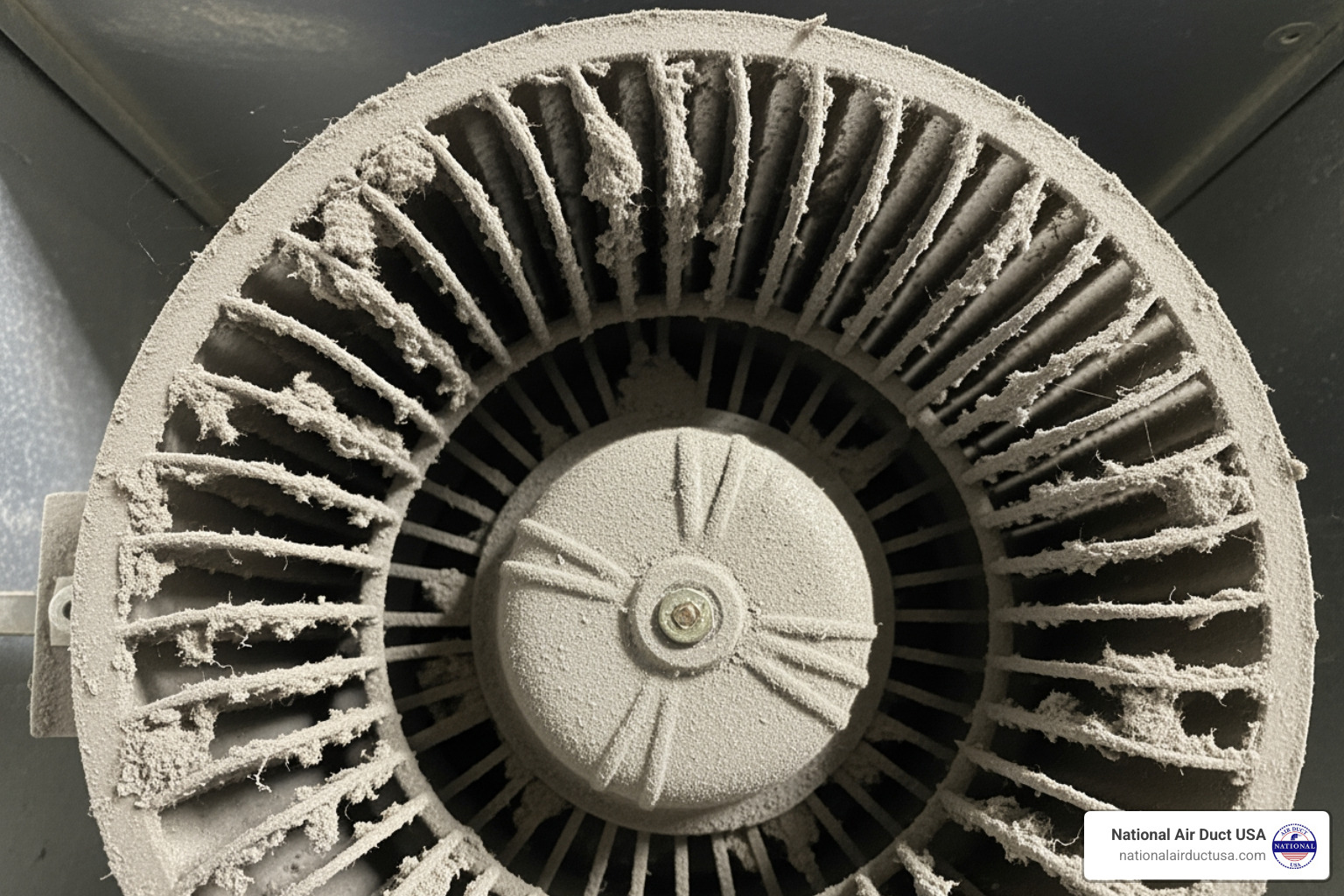
- Weak Airflow from Vents: If you hold your hand up to a register and the breeze feels more like a whisper than a gust, the blower blades are likely “cupping” dirt, which reduces their ability to grab and push air.
- Unusual Noises: A healthy motor should have a consistent, low hum. If you hear rattling (loose debris), screeching (bearing issues), or a heavy humming sound (electrical strain), the motor is working under duress.
- Rising Energy Bills: If your usage habits haven’t changed but your bills are climbing, your motor might be drawing extra amperage to fight through the grime.
- Frequent Cycling: Does your furnace turn on and off every few minutes? This is called “short cycling.” It often happens because the system is overheating due to poor airflow from a dirty blower.
- Excessive Dust in the Home: If you find yourself dusting your coffee table every two days, your blower motor might be acting as a dust distributor rather than a circulator.
Step-by-Step Guide to DIY Maintenance
If you are a handy homeowner in Westbury or Hempstead, you might feel comfortable performing basic maintenance. However, we must emphasize that blower motor cleaning involves electrical components and delicate balancing. Always proceed with caution.
Safety Precautions
- Shut Off Power: This is non-negotiable. Turn off the system at the thermostat, then shut off the power at the furnace switch AND the main circuit breaker.
- Wear PPE: Use safety goggles and a N95 mask. You’ll be dislodging years of accumulated dust and allergens.
- Capacitor Warning: Even with the power off, the start capacitor can hold a dangerous electrical charge. Do not touch the terminals.
Tools and Materials for Blower Motor Cleaning
To do the job right, you’ll need:
- Screwdriver set or nut drivers (for the access panel and motor mounts)
- A soft-bristled brush (a clean paintbrush works well)
- A vacuum with a long hose and brush attachment
- Microfiber cloths
- Mild detergent and water
- Compressed air (use sparingly to avoid blowing dust deeper into the motor)
The Process of Accessing and Cleaning the Blower Assembly
- Access the Compartment: Open the blower compartment door. You may need to remove several screws to get the panel off.
- Label Your Wires: Before disconnecting anything, take a high-quality photo of the wiring. This is the #1 mistake DIYers make—forgetting where the wires go during reassembly!
- Remove the Assembly: Most blowers slide out on a track once two or three retaining screws are removed. Be careful; these assemblies are surprisingly heavy.
- Clean the “Squirrel Cage”: Use your vacuum and brush to remove the heavy stuff. For bonded dirt, a damp cloth with mild detergent is best. Ensure every single blade is clean, as even a small amount of weight imbalance can cause the motor to vibrate and fail.
- Clean the Motor Housing: Wipe down the exterior of the motor. Use a vacuum to clear the cooling vents on the motor itself. If these vents are clogged, the motor will overheat.
- Inspection: Check the belt (if you have an older belt-drive system) for cracks. It should have about an inch of “give.”
- Reassemble: Slide the assembly back in, secure the screws, and reconnect the wires exactly as they were.
For more information on what to expect during a professional visit, check out our FAQ page.
Professional vs. DIY: When to Call the Experts
While a basic surface vacuuming is possible for many, a deep blower motor cleaning often requires full disassembly. This is where things get tricky.
Technical Complexity and Risks
The blower wheel is balanced at the factory. If you accidentally bend a blade or leave a clump of dirt on one side, you create an imbalance. This leads to vibration that can destroy the motor bearings in a matter of weeks. Furthermore, professional technicians check the amperage draw and capacitor health using specialized meters to ensure the motor isn’t just clean, but electrically sound.
Carbon Monoxide Safety
When we service a system in Garden City or Long Island, we don’t just clean; we inspect. A professional can spot signs of a cracked heat exchanger that a homeowner might miss. Since a dirty blower is a leading cause of heat exchanger failure, having a NADCA-certified pro handle the cleaning provides an extra layer of safety for your family.
Warranty Protection
Many modern HVAC manufacturers require proof of professional maintenance to honor equipment warranties. DIY cleaning, especially if it leads to accidental damage or wiring errors, could void your coverage.
Our Services include comprehensive cleaning that goes beyond what a standard shop-vac can reach. We use high-pressure compressed air and HEPA-filtered vacuums to ensure no dust is recirculated into your home.
Frequently Asked Questions about Blower Motor Maintenance
How often should I schedule blower motor cleaning?
Generally, we recommend an annual inspection. If you live in a particularly dusty area of Long Island or have multiple shedding pets, you might need it every six months. Timing it for the late summer or early fall is ideal, so your system is ready for the heavy workload of the New York winter. You can learn more About Us and our seasonal approach to maintenance.
Can a dirty blower motor increase my electricity bill?
Absolutely. As mentioned earlier, dirt increases the “drag” on the fan blades. The motor has to work harder to maintain its RPMs, which increases its amperage draw. A dirty motor can easily spike your cooling or heating costs by 20%. If you’re tired of high bills, Contact us for a system evaluation.
What is the difference between single-speed and variable-speed motors?
- Single-Speed Motors: These are either 100% on or 100% off. They are simpler but less efficient.
- Variable-Speed (ECM) Motors: These are much smarter. They can adjust their speed based on the home’s needs. Interestingly, an ECM motor will actually speed up to overcome the resistance of a dirty filter or dirty blades, which can lead to it burning itself out if maintenance is neglected.
Conclusion
Your HVAC system is a significant investment in your home’s comfort and safety. Don’t let a simple layer of dust compromise its efficiency or your family’s health. Blower motor cleaning is a small maintenance task that yields massive rewards: lower bills, better air, and a furnace that lasts for decades rather than years.
At National Air Duct USA, we are proud to serve our neighbors across Long Island, Westbury, and Nassau County. Our NADCA-certified technicians have the tools and expertise to ensure your “HVAC heart” is beating strong.
Ready to breathe easier? Read more about Why Regular Air Duct Cleaning is Essential for Every Home in Long Island and Westbury or reach out to us today to schedule your Professional HVAC Services. We’re here to help you keep your home clean, efficient, and comfortable all year round!