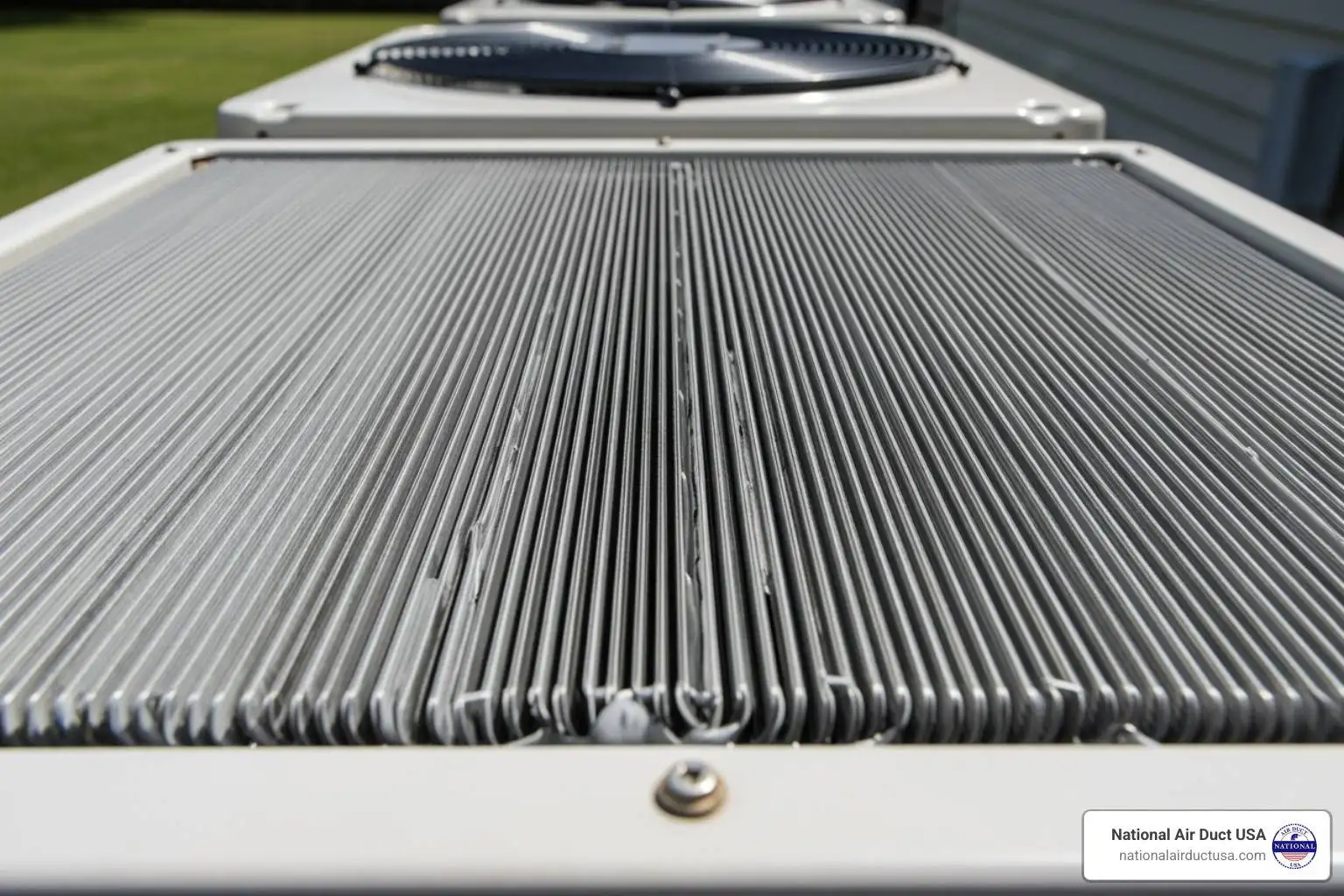
Why Clean HVAC Condenser Coils Are Critical for Your System
To clean HVAC condenser coils, follow these essential steps:
- Turn off power at the breaker and disconnect switch
- Remove the outer casing to access the coils
- Brush away loose debris with a soft brush
- Apply coil cleaner (foaming or non-foaming) and let it dwell 5-10 minutes
- Rinse thoroughly from inside out with a garden hose at low pressure
- Straighten bent fins with a fin comb
- Reassemble and restore power
Quick Answer: Clean your condenser coils at least once per year, preferably in spring before peak cooling season. Dirty coils can increase energy consumption by up to 37% and reduce cooling capacity by 30%.
As heat waves continue to break records across the country, your air conditioner is working harder than ever to keep your home comfortable. But there’s a hidden problem that could be quietly draining your wallet and shortening your AC’s lifespan: dirty condenser coils.
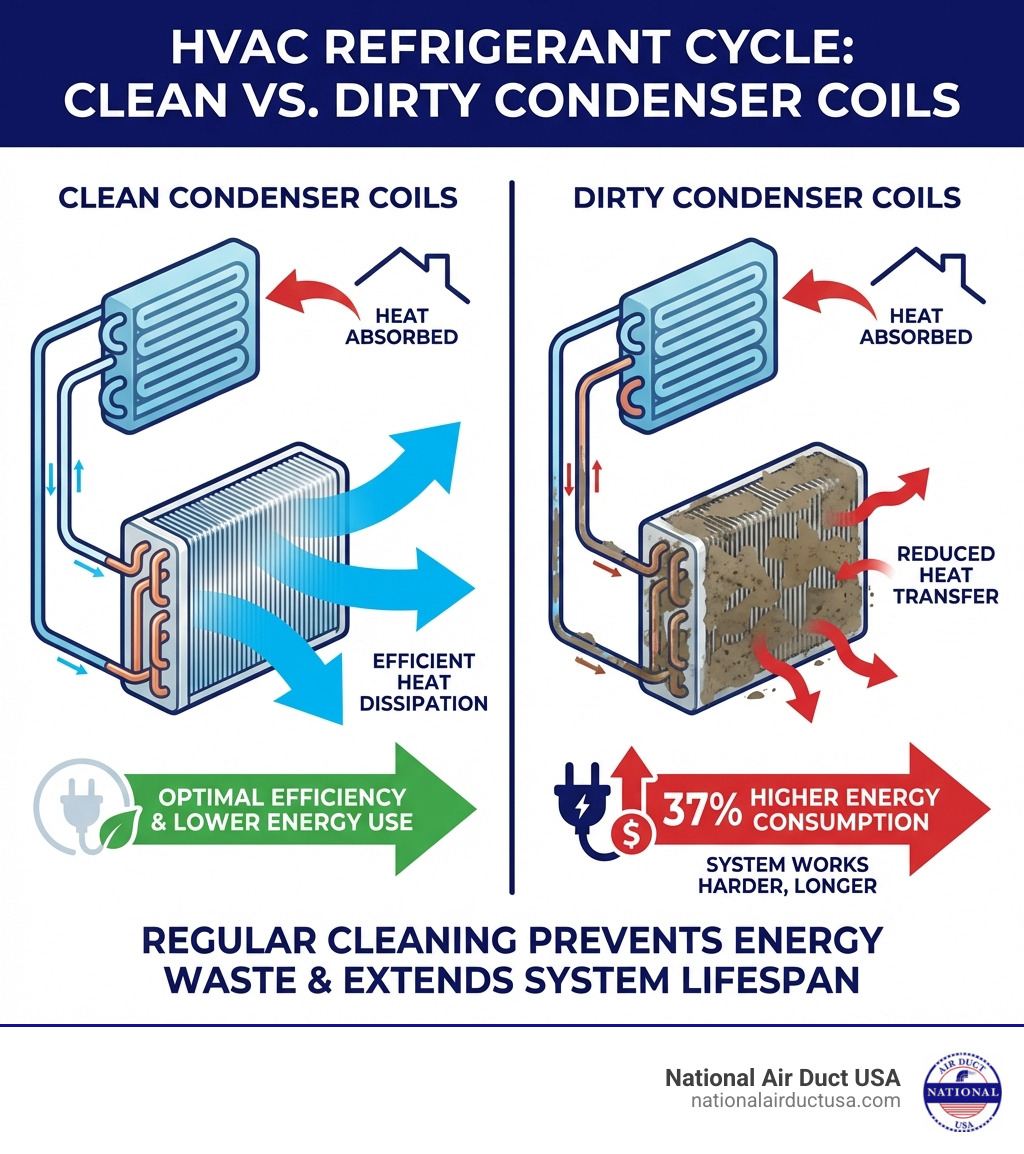
Your condenser coils are the outdoor component responsible for releasing the heat absorbed from inside your home. When these aluminum fins become clogged with dirt, dust, pollen, and debris, they can’t transfer heat efficiently. The result? Your system runs longer, works harder, and costs significantly more to operate.
The numbers tell a stark story. Research shows that systems operating with dirty coils can use up to 37% more energy than those with clean coils. One homeowner discovered a thick layer of dirt on their condenser after just three years and saw an immediate 35% reduction in wattage usage after cleaning.
Most Long Island homeowners never think about their condenser coils until something goes wrong. But by then, you’ve already paid hundreds in unnecessary energy costs and put serious strain on your compressor—one of the most expensive components to replace.
The good news? Cleaning your condenser coils is one of the most cost-effective maintenance tasks you can perform. Whether you tackle it yourself or hire professionals like National Air Duct USA, this simple preventive step can dramatically improve your system’s efficiency, lower your energy bills, and extend your AC’s lifespan by years.
Know your clean hvac condenser coils terms:
Why You Must Clean HVAC Condenser Coils Regularly
When we talk about the heart of your home’s cooling system, we are usually referring to the condenser unit sitting outside your house in Westbury or Hempstead. This unit contains the condenser coils—a network of copper tubing surrounded by thousands of thin aluminum fins. Its job is simple but vital: it acts like a car radiator, releasing the heat that was pulled from your indoor air into the great outdoors.
However, because this unit lives outside, it is constantly battling the elements. Dust, grass clippings from the lawnmower, spider webs, and pollen act like a thermal blanket. This “blanket” impedes heat transfer, forcing the refrigerant to stay hotter and under higher pressure.
The Real Cost of Neglect
If you don’t clean HVAC condenser coils, the consequences are more than just a dusty unit. According to the U.S. Department of Energy, a dirty system can lead to a 37% energy consumption increase. In Long Island, where electricity rates aren’t exactly cheap, that is a significant chunk of change every month.
Furthermore, dirty coils are the primary “killer” of compressors. When heat can’t escape, the compressor has to work at much higher temperatures and pressures. This leads to lubricant breakdown, acid formation, and eventually, a total system “burnout.” Replacing a compressor can cost thousands, whereas a professional HVAC system cleaning is a fraction of that cost.
| Performance Metric | Clean Coils | Dirty Coils | Impact |
|---|---|---|---|
| Energy Usage | Baseline | Up to 37% Higher | Increased utility bills |
| Cooling Capacity | 100% | Reduced by 30% | Home stays warmer |
| Wattage Draw | ~2,000W | ~2,700W+ | Higher electrical load |
| System Lifespan | 15-20 Years | 10-12 Years | Premature replacement |
Signs Your System Needs Attention
How do you know if it’s time to clean HVAC condenser coils? Sometimes the signs are obvious, like a thick layer of “fuzz” on the unit, but often the symptoms are more subtle.
- Skyrocketing Utility Bills: If your electric bill is significantly higher than it was last July, but your habits haven’t changed, your coils are likely the culprit.
- Reduced Airflow and Comfort: Is the air coming out of your vents barely cool? When coils are dirty, the heat exchange process fails, meaning the air inside never gets as cold as it should.
- Constant Cycling: Does your AC turn on and off every few minutes? Or does it run for hours without ever reaching the temperature on the thermostat? This “short cycling” or constant running is a sign of a struggling system.
- Ice Buildup: It seems counterintuitive, but dirty coils can actually cause the system to freeze up. This happens because the refrigerant cycle is disrupted, leading to temperatures dropping below freezing in the indoor evaporator coil.
- Unusual Noises: A struggling compressor often makes a louder-than-normal humming or straining sound as it tries to push refrigerant through a high-pressure environment.
When to Clean HVAC Condenser Coils for Best Results
For most homes in Nassau and Suffolk County, an annual cleaning is the gold standard. We recommend scheduling this in the spring, just before the humidity of a Long Island summer hits.
However, you might need to clean more often if:
- You have a high-shedding dog that spends time near the unit.
- Your unit is located near a dryer vent (lint is a major coil-clogger!).
- You live in a high-dust area or near a construction site.
- It is “Cottonwood season”—those fluffy white seeds are notorious for turning AC units into felt-covered boxes.
Regular maintenance ensures your system is always ready for the heat. You can learn more about our full range of HVAC services here.
Essential Tools and Safety Precautions
Before you start your DIY maintenance journey, you need the right gear. Working on an HVAC unit involves both electricity and delicate components, so safety is paramount.
The “Must-Have” Kit:
- Safety Gear: Goggles (coil cleaner can be caustic) and work gloves (those aluminum fins are sharp!).
- Tools: A screwdriver or nut driver to remove the unit’s cage.
- Cleaning Supplies: A soft-bristle brush (or a shop vac with a brush attachment) and a garden hose with a standard spray nozzle.
- Fin Comb: A specialized tool to straighten bent aluminum fins.
- Chemicals: A dedicated AC coil cleaner.
Safety First: Never attempt to clean your unit without first turning off the power. You should shut it off at the thermostat first, then go outside and pull the “disconnect” (the small box mounted on the wall near the unit). For extra safety, flip the breaker in your main electrical panel as well. For more detailed safety info, check out these tips for safe handling of coil cleaners.
Choosing the Right Clean HVAC Condenser Coils Solution
Not all cleaners are created equal. When you shop for a solution to clean HVAC condenser coils, you’ll generally find two types:
- Foaming Cleaners: These are the most popular for outdoor units. The foam expands into the spaces between the fins, pushing dirt and grime from the inside out. They offer excellent “dwell time,” meaning they stay in contact with the dirt longer to break it down.
- Non-Foaming Agents: These are often gentler and easier to rinse but may require more physical brushing for heavy buildup.
- Self-Rinsing vs. Manual Rinse: Most condenser coil cleaners must be rinsed with a hose. “Self-rinsing” cleaners are typically designed for indoor evaporator coils, where the natural condensation of the unit washes the cleaner away. Always rinse your outdoor unit unless the product specifically says otherwise for condensers.
We recommend a pH-neutral, non-acidic foaming cleaner. Acidic cleaners can actually eat away at the aluminum over time if not rinsed perfectly.
Step-by-Step Guide to Cleaning Your Coils
Ready to get to work? Follow this guide to ensure a thorough, safe clean.
Step 1: Power Down As mentioned, safety is key. Disconnect the power at the service box and the breaker.
Step 2: Clear the Area Remove any tall grass, weeds, or debris within two feet of the unit. This ensures proper airflow once the unit is back on.
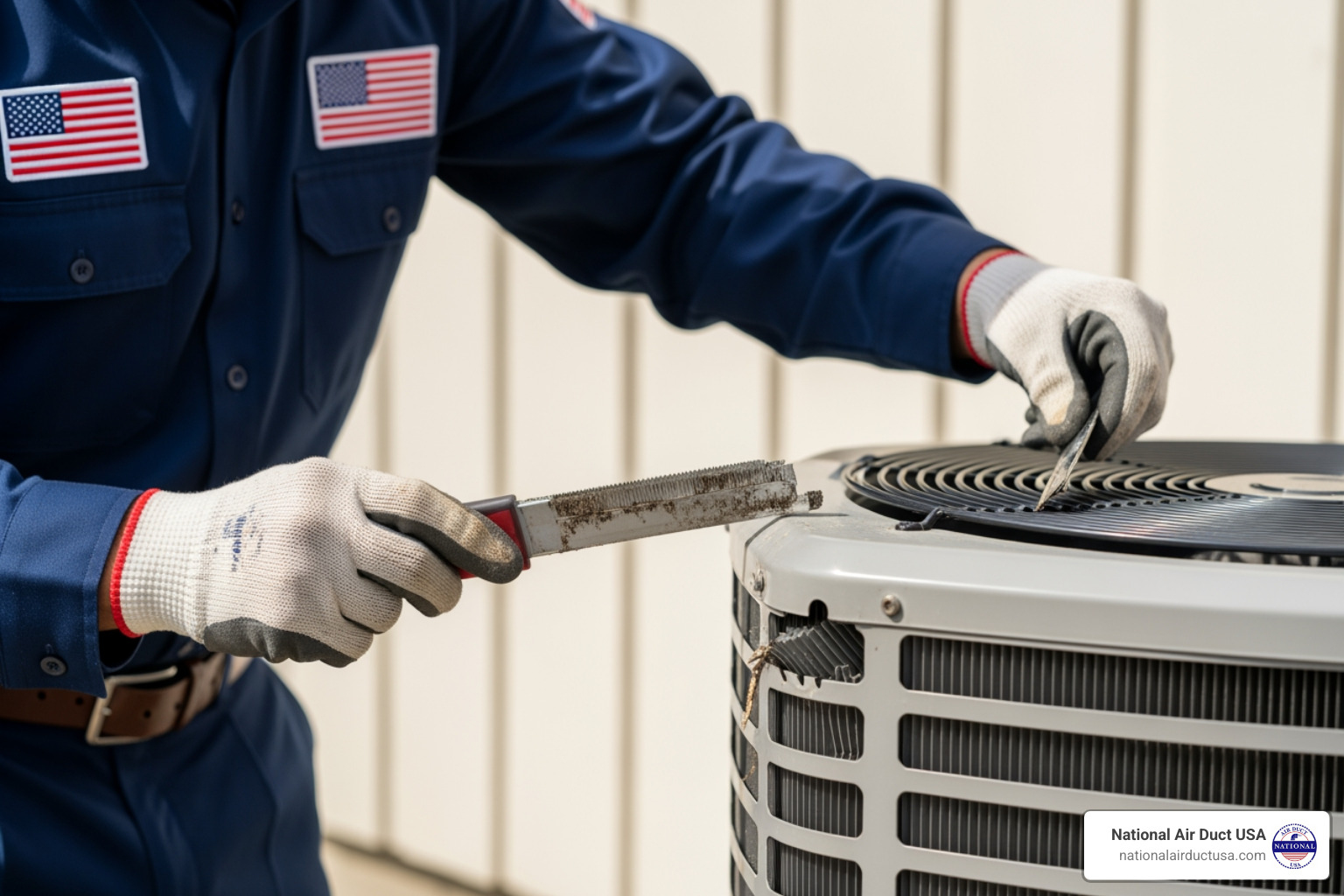
Step 3: Remove the Casing Use your screwdriver to remove the outer panels or the protective grille. This gives you direct access to the “fins” (the thin metal slats). Be careful not to tug on any wires connected to the fan motor.
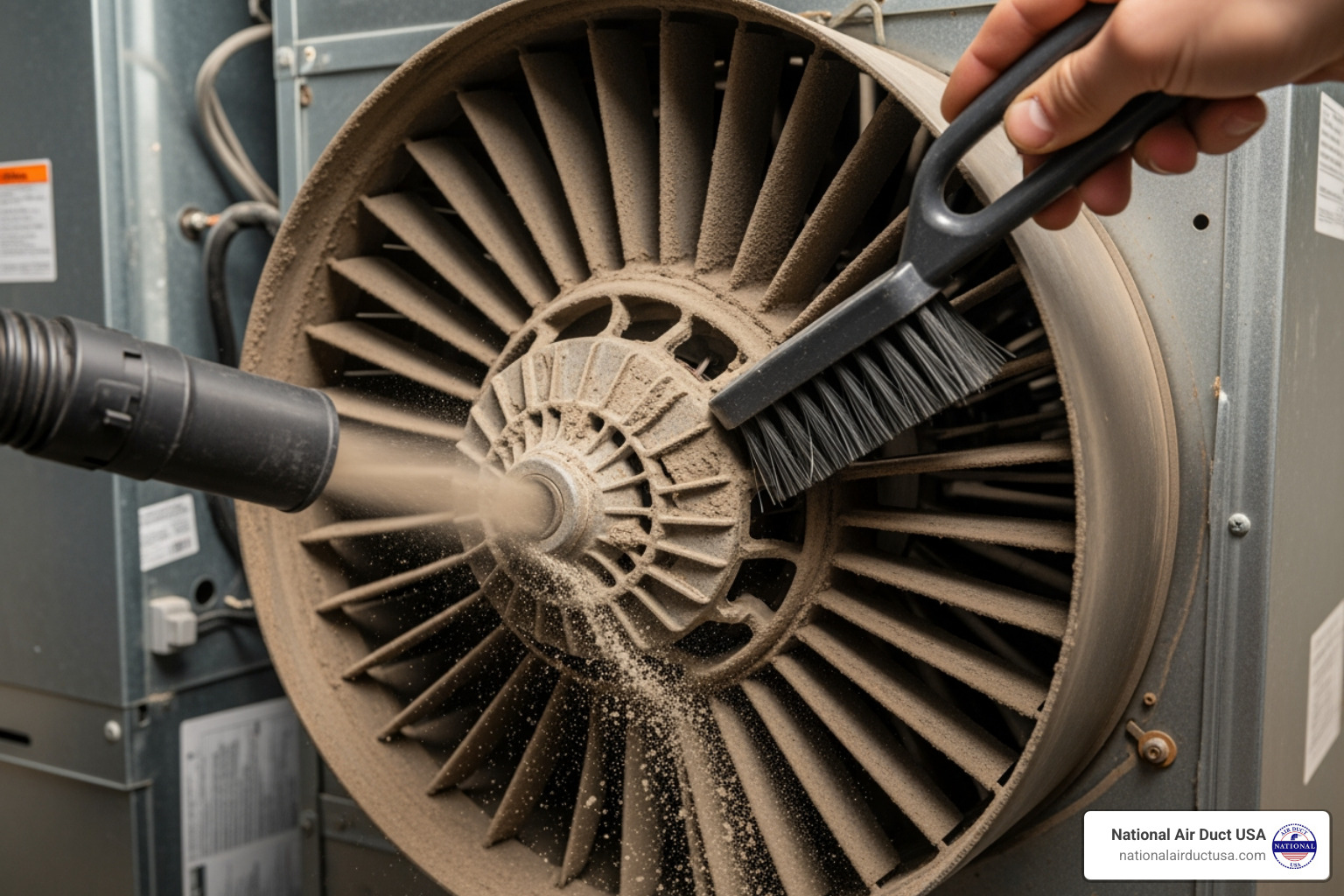
Step 4: Dry Brush Before getting anything wet, use your soft brush or shop vac to remove the “heavy” stuff—leaves, cobwebs, and matted dust. Always brush in the direction of the fins (usually vertically) to avoid bending them.
Step 5: Apply the Cleaner Spray your chosen coil cleaner onto the coils. Start from the bottom and work your way up to prevent streaks. Let it “dwell” for about 5 to 10 minutes (check the label). You’ll likely see the foam turn brown as it pulls out the deep-seated grime.
Step 6: The Inside-Out Rinse This is the “secret” to a professional-grade clean. If possible, spray the water from the inside of the unit outward. This pushes the dirt back the way it came in, rather than shoving it deeper into the coils. Use a gentle stream; never use a pressure washer!
Step 7: Straighten the Fins Inspect the unit for any “smashed” or bent fins. Use your fin comb to gently pull them back into alignment. Straight fins are essential for proper airflow.
Step 8: Reassemble and Test Put the panels back on, restore the power, and turn the AC on at the thermostat. You should feel significantly warmer air being blown out of the top of the unit—that’s the heat successfully leaving your home!
If you run into trouble or have more questions, our Frequently Asked Questions page is a great resource.
Frequently Asked Questions about AC Maintenance
Can I use a pressure washer on my AC coils?
Absolutely not! This is the fastest way to ruin your AC unit. The aluminum fins on your condenser are incredibly fragile—about the thickness of a soda can. A pressure washer will flatten these fins instantly, completely blocking airflow and requiring an expensive professional to comb them out (or a total coil replacement). Stick to a standard garden hose with a gentle spray.
How much money does cleaning coils actually save?
While every home is different, the data is clear. Cleaning your coils can result in a 35% reduction in wattage usage. For a typical Long Island home running the AC heavily in July and August, this could translate to $30–$60 in savings per month. Over the course of a few years, the maintenance pays for itself many times over.
When should I call a professional for coil cleaning?
While many homeowners enjoy the DIY route, there are times when it’s best to call in the pros at National Air Duct USA:
- Deep Clogs: If you haven’t cleaned your unit in 5+ years, the dirt might be “impacted” deep inside the coil layers where a garden hose can’t reach.
- Electrical Concerns: If you see frayed wires or aren’t comfortable working around the high-voltage disconnect.
- Warranty Protection: Many manufacturers require professional maintenance to keep your warranty valid.
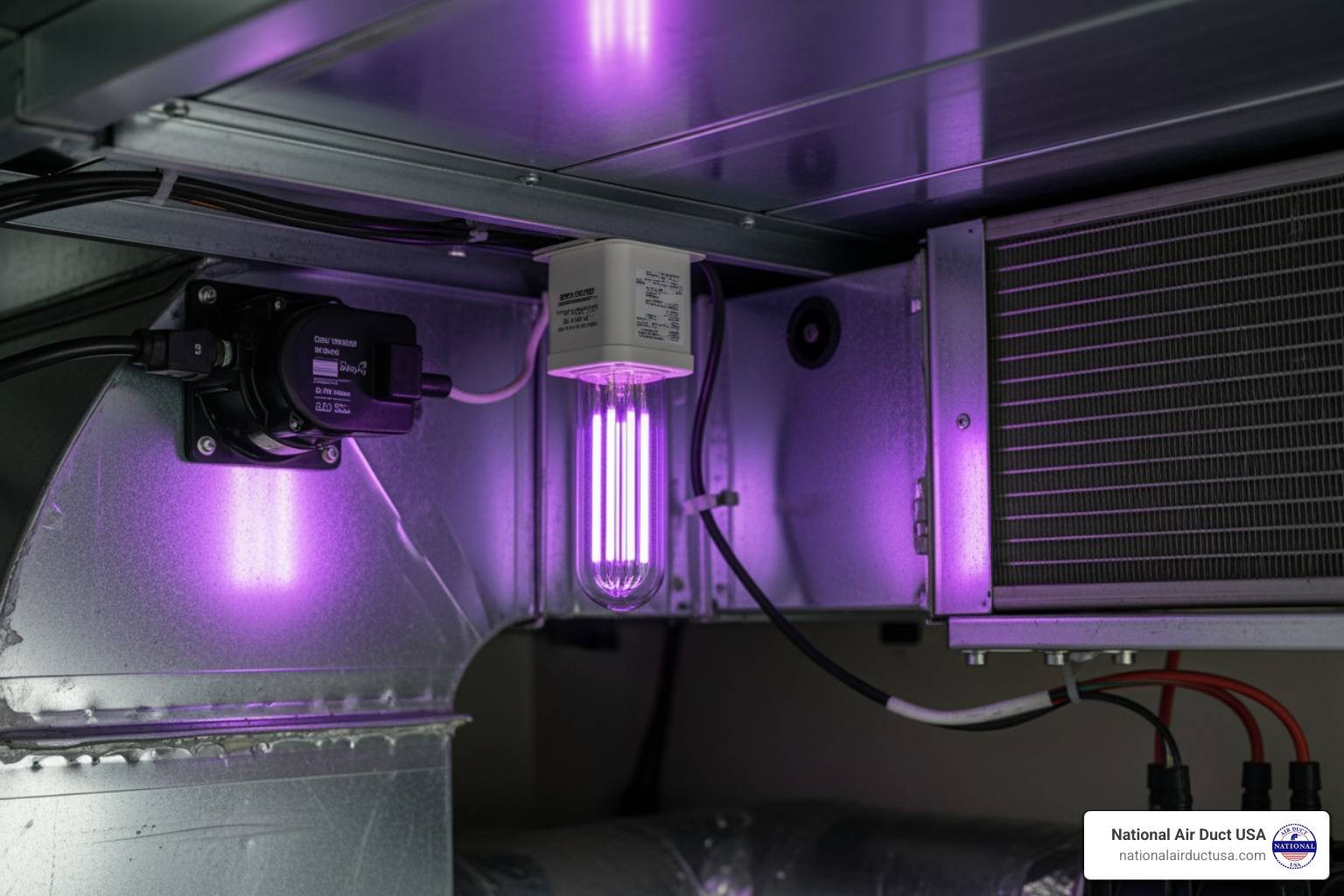
- Comprehensive Care: A professional doesn’t just clean the coils; they check refrigerant levels, inspect the fan motor, and can even perform a UV light installation to keep your indoor air quality pristine.
Conclusion
Taking the time to clean HVAC condenser coils is one of the smartest things you can do for your home’s comfort and your bank account. In our local communities—from Garden City to Hicksville and throughout Nassau County—we’ve seen how a little preventive maintenance can save homeowners from the “mid-summer meltdown” of a failed AC unit.
Clean coils mean lower bills, a cooler home, and a system that will last for years to come. If you’d rather spend your weekend at the beach than scrubbing your AC unit, National Air Duct USA is here to help. Our NADCA-certified technicians provide the deep, professional cleaning your system needs to stay at peak performance.
Don’t wait for the next heat wave to find out your system is struggling. Get a Free Quote today and let us help you breathe easier and save more!