Why UV Light HVAC Installation Is Essential for Your Indoor Air Quality
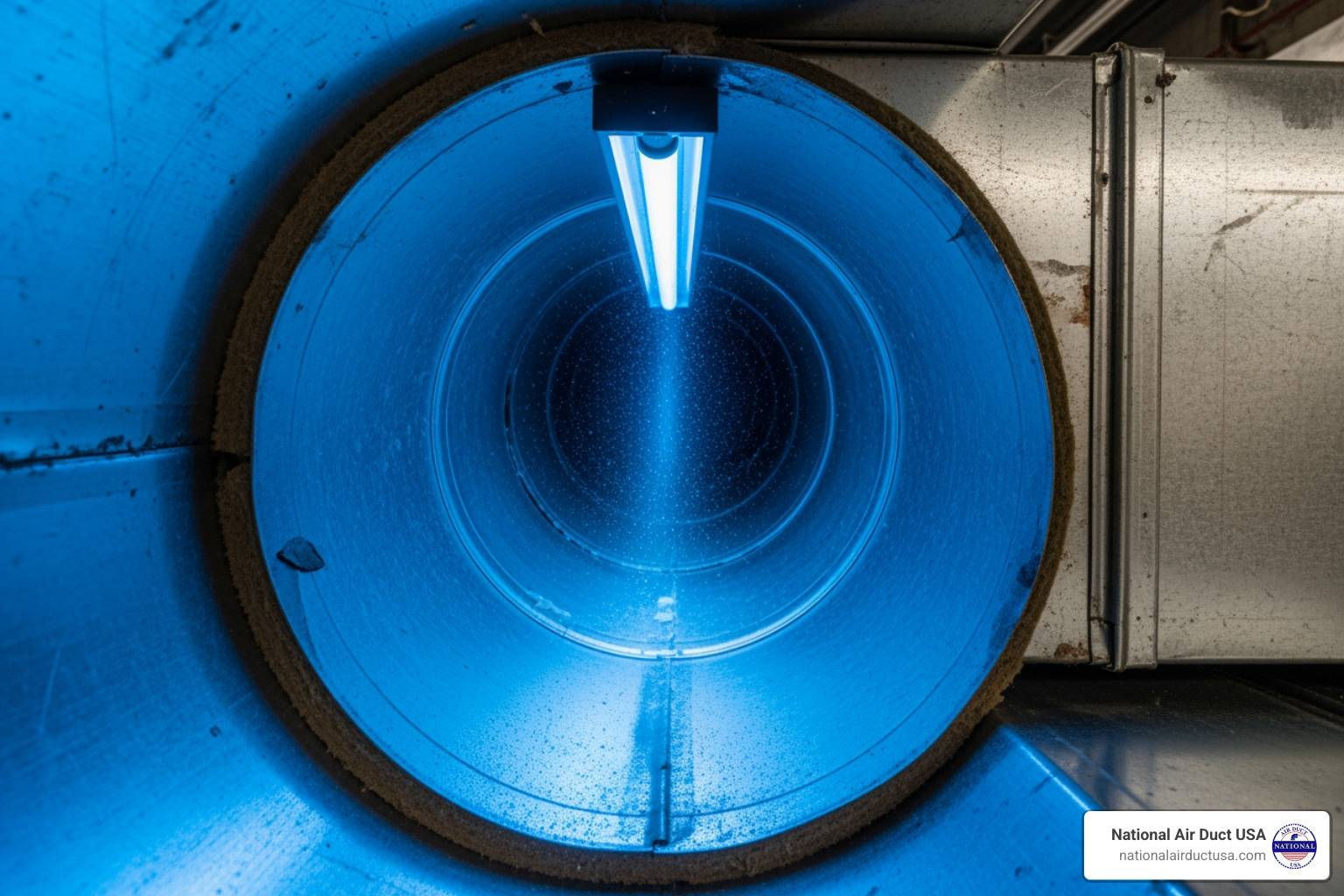
UV light HVAC installation is a proven method to improve your home’s air quality by neutralizing up to 90% of harmful microorganisms like mold, bacteria, and viruses. For homeowners concerned about allergens, musty odors, or family health, a UV light system can make a significant difference.
Quick Answer: What You Need to Know About UV Light HVAC Installation
- What it does: UV-C light kills mold, bacteria, and viruses by disrupting their DNA
- Where it goes: Near your evaporator coil or inside return air ducts
- Installation time: 1-2 hours for a professional, 2-4 hours for DIY
- Cost: $500-$1,700 for parts and professional installation
- Maintenance: Replace bulbs every 12-24 months
- Energy savings: Can reduce HVAC energy use by 10-25%
Your HVAC system circulates air that may contain dust, pollen, and microscopic pathogens. While filters catch larger particles, microorganisms can settle on your damp evaporator coils, creating a breeding ground for mold and bacteria. A germicidal UV lamp installed in your HVAC system works continuously to neutralize these airborne contaminants before they spread.
This chemical-free solution protects your family’s health and your HVAC system’s efficiency. With a renewed focus on indoor air quality, more homeowners are using UV lights to create a cleaner living environment. The installation is straightforward, but safety precautions are critical due to the powerful nature of UV-C radiation.
Understanding UV Light Technology and Its Benefits
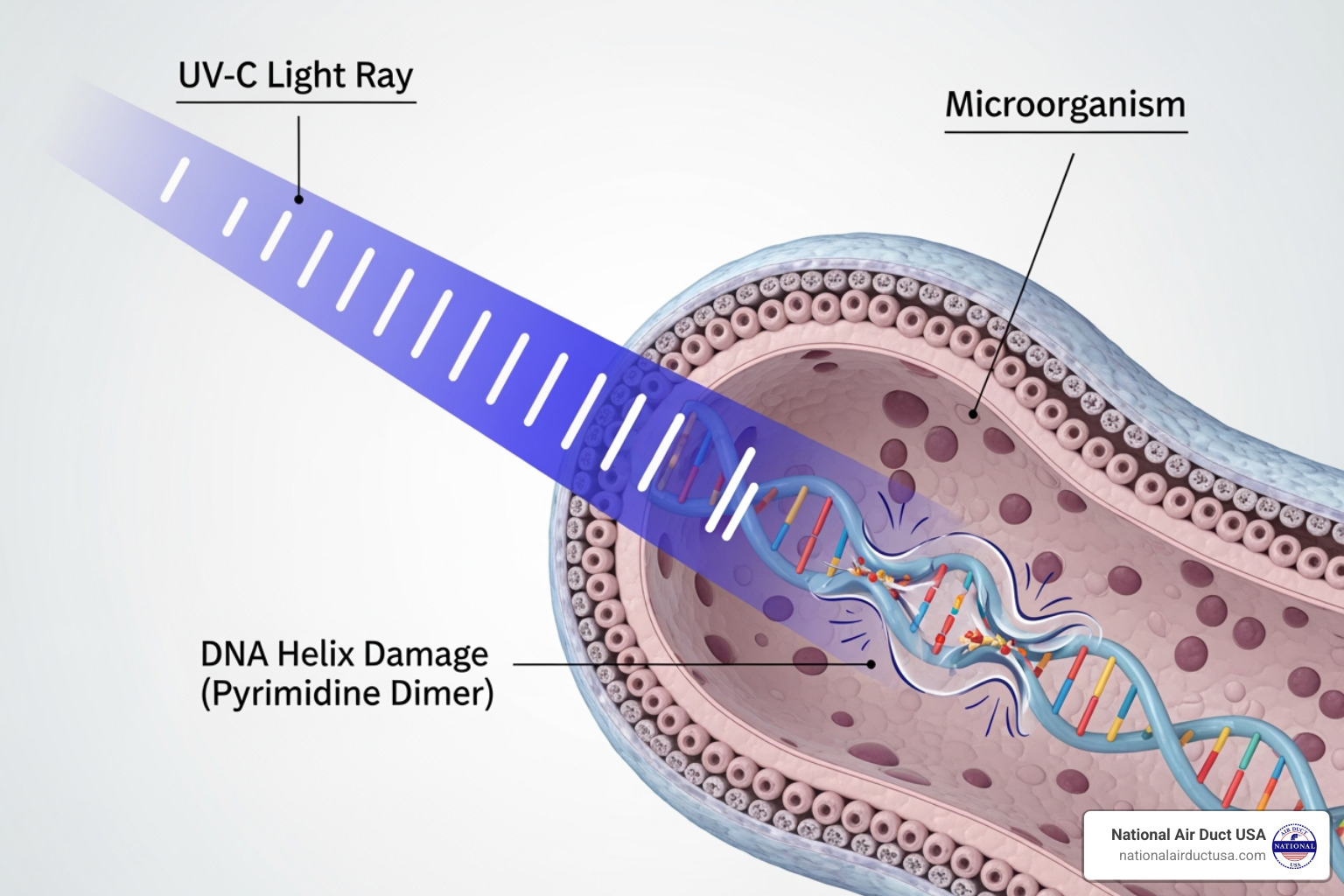
A UV light HVAC installation uses a specific type of ultraviolet radiation called UV-C light. This powerful, germicidal light is far stronger than the UV rays from the sun and is highly effective at purifying your home’s air.
How UV-C Light Purifies Your Air
UV-C light operates at a wavelength that is destructive to microorganisms. When bacteria, viruses, or mold spores are exposed to this light, it penetrates their cell walls and attacks their genetic material—their DNA and RNA. This damage scrambles their genetic instructions, preventing them from reproducing and rendering them harmless. This process, called ultraviolet germicidal irradiation, works silently and continuously without chemicals.
This technology has been used for decades in hospitals, laboratories, and water treatment facilities to maintain sterile environments. Now, you can bring that same disinfection power into your home’s HVAC system.
Key Benefits for Your Home and Health
A UV light HVAC installation offers significant benefits for families in Long Island and Westbury:
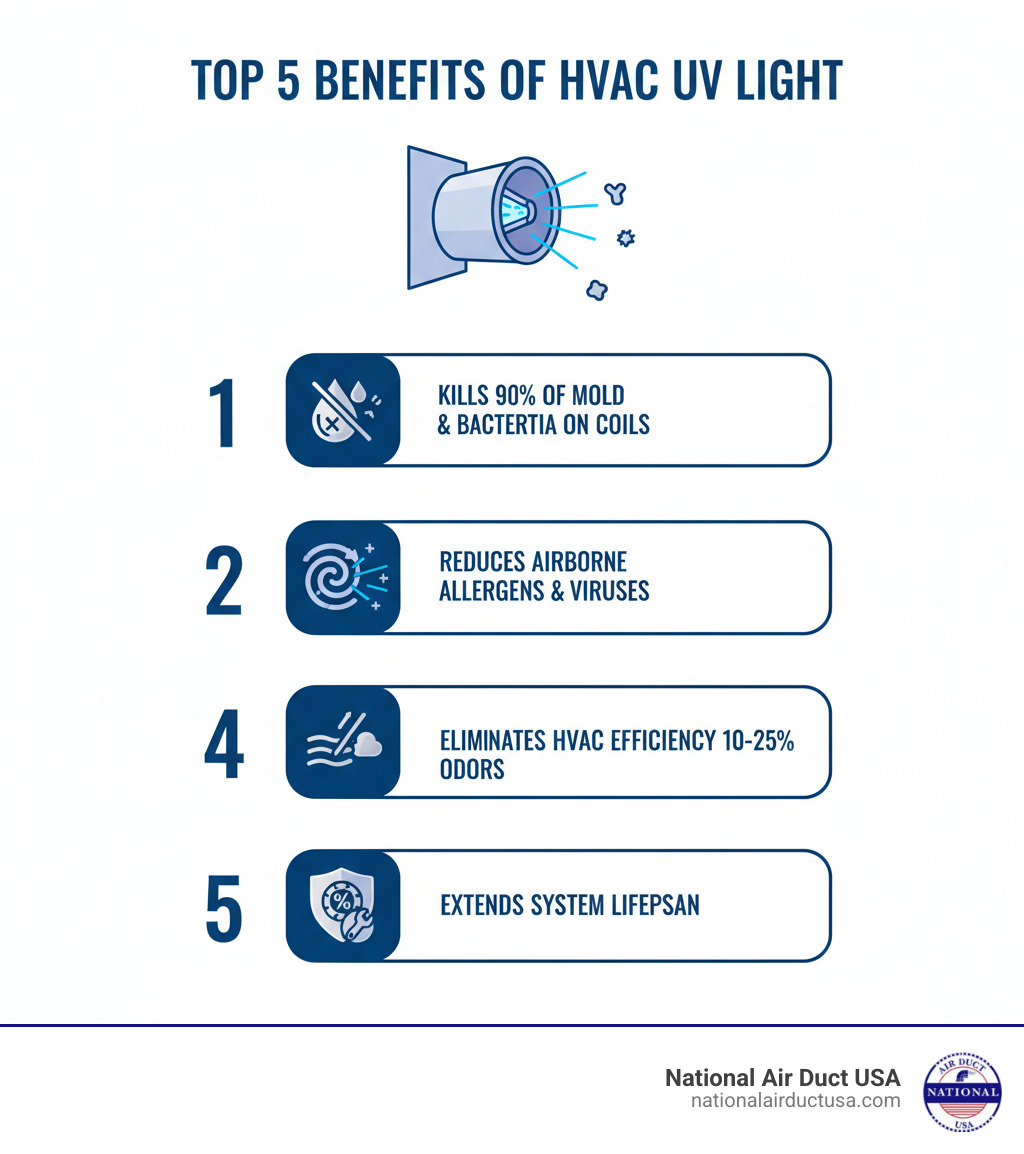
- Improved Air Quality: By neutralizing up to 90% of airborne microorganisms, UV lights dramatically reduce bacteria, viruses, and mold spores. This is especially beneficial for individuals with allergies, asthma, or compromised immune systems.
- Mold and Mildew Prevention: A UV light positioned near the cold, wet evaporator coil provides continuous sterilization, preventing mold and mildew from growing and spreading through your ductwork.
- Odor Reduction: Musty smells from an HVAC system are often caused by microbial growth. UV lights eliminate these sources, providing natural odor reduction without air fresheners.
- Improved HVAC Efficiency: Mold and biological buildup on your evaporator coil act as an insulator, forcing your system to work harder. A clean, UV-sterilized coil can improve HVAC efficiency by 10-25%, leading to energy savings and a longer system lifespan. This complements regular HVAC System Cleaning services.
- Allergen Control: Reducing mold spores and certain bacteria can lead to fewer allergy symptoms like sniffles and sneezes for many homeowners.
Coil Sterilization vs. Air Sterilization Lights
When planning a UV light HVAC installation, you’ll choose between two main types of systems:
Coil sterilization UV lights are installed near the evaporator coil and drain pan. They run 24/7 to prevent mold, mildew, and biofilm from growing on the coil, which is key to maintaining HVAC efficiency.
Air sterilization UV lights are installed in the return air duct to treat the air itself as it circulates. They target airborne pathogens and allergens, typically operating whenever the blower fan is running.
| Feature | Coil Sterilization UV Lights | Air Sterilization UV Lights |
|---|---|---|
| Placement | Installed close to the evaporator coil and drain pan. | Installed in the return air duct, often upstream of the coil. |
| Target | Primarily target microbial growth on the coil and surfaces. | Primarily target airborne microorganisms in the circulating air. |
| Operation Time | Typically runs 24/7, continuously sterilizing surfaces. | Operates when the HVAC blower fan is running, treating air as it passes. |
| Primary Benefit | Prevents mold/biofilm buildup, maintains coil cleanliness, improves HVAC efficiency. | Reduces airborne pathogens, allergens, and odors throughout the home. |
Your choice depends on your goals. If system efficiency and coil mold are your main concerns, choose coil sterilization. If airborne allergens and pathogens are the priority, air sterilization is better. For the most comprehensive protection, installing both types is an effective solution.
Preparing for Your UV Light HVAC Installation
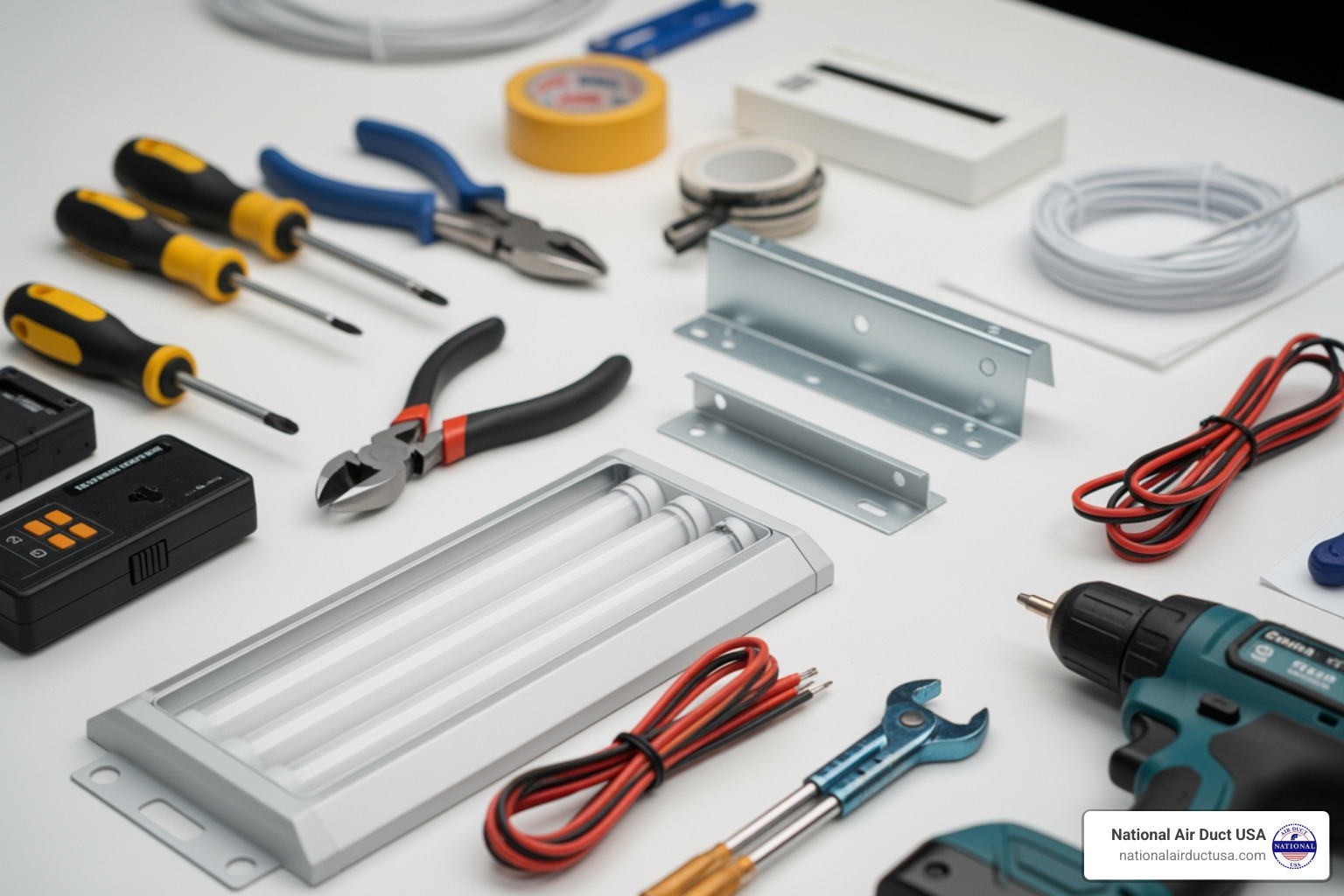
Proper preparation is key to a successful UV light HVAC installation. This involves choosing the right location, gathering your tools, and understanding all safety precautions before you begin.
Choosing the Optimal Placement
The placement of your UV light determines its effectiveness. The goal is to maximize the light’s exposure to either the evaporator coil or the airflow.
For coil sterilization, the location depends on your coil’s shape. With an A-frame coil, the best spot is typically centered above the coil on the downstream (exit) side. For N-frame coils, position the light above or below the coil, focusing on the area near the drip pan where mold often grows.
For air sterilization, the unit should be mounted in the return air duct. This allows it to treat airborne contaminants as they are pulled back into the HVAC system.
Important: UV light can degrade materials like plastic ductwork, rubber gaskets, and wire insulation. Position the lamp so it does not shine directly on these components. If unavoidable, shield them with aluminum foil tape. For more detailed guidance, consult expert advice on placement for various HVAC setups.
Gathering Your Tools and Materials
Have the following ready before you start your uv light hvac installation:
- Drill and Hole Saw Kit: To cut the opening in your ductwork. A quality kit like the Milwaukee hole saw kit will have the necessary sizes.
- Screwdriver: For securing mounting plates and brackets.
- Wire Strippers: For hardwired connections.
- Foil Tape: To seal air leaks and protect UV-sensitive components.
- UV Light Kit: Includes the lamp, power supply (ballast), mounting hardware, and drilling template.
- Safety Gear (Non-Negotiable): UV-blocking safety glasses and gloves. Gloves also prevent skin oils from damaging the UV bulb.
Crucial Safety Precautions Before You Start
Working with electricity and UV light requires strict adherence to safety rules.
- Turn Off All Power: Before starting, shut off the power to your HVAC system at the circuit breaker. Use a voltage tester to confirm the power is off. This is the most important step to prevent electric shock.
- Protect Your Eyes and Skin: Direct exposure to UV-C light can cause severe eye and skin damage. According to the CDC, the dangers of ultraviolet radiation are significant. Always wear UV-protective eyewear and gloves. Never look directly at an operating UV lamp.
- Protect HVAC Components: As mentioned, UV-C light can degrade plastics, rubber, and wire insulation. Ensure the lamp is positioned away from these materials or shield them with foil tape.
- Avoid Ozone Production: Some UV lamps generate ozone, a respiratory irritant. Ensure your lamp operates at the 254-nanometer (nm) wavelength, which does not produce ozone. Check the product specifications before buying.
- Handle with Care: UV lamps contain a small amount of mercury. Handle them carefully to avoid breakage and dispose of old bulbs according to local environmental regulations.
If you are uncertain about any of these steps, contact a professional. At National Air Duct USA, we follow these protocols on every installation in Hempstead, Garden City, and across Long Island for your safety.
A Step-by-Step Guide to Installing Your HVAC UV Light
With your tools and safety gear ready, you can begin the UV light HVAC installation process.
Step 1: Mark and Drill the Opening
First, pinpoint the installation spot. Tape the paper template from your UV light kit onto the ductwork or air handler cabinet. Drill a small pilot hole in the center of the marked circle to guide the hole saw.
Attach the correct size hole saw to your drill, as indicated by the template. If you need a refresher, this video on how to use a hole saw is helpful. Apply steady pressure to cut a clean opening. Afterward, use a file or sandpaper to smooth any sharp metal burrs around the hole.
Step 2: Mount the UV Lamp
Put on your gloves before handling the lamp to prevent skin oils from contaminating the bulb. If the power cable is separate, connect it to the lamp housing now.
Secure the kit’s mounting plate or bracket around the hole you drilled, ensuring it sits flush against the ductwork. Carefully guide the UV lamp through the opening and lock it into the mounting hardware with the provided fasteners. The lamp should feel secure and not wiggle.
Step 3: Install and Wire the Power Supply
Ensure the power to your HVAC system is still off at the breaker.
Mount the power supply (ballast) inside your air handler’s control panel, away from moisture and direct UV exposure. Fasten it securely with the included screws.
For wiring, follow the manufacturer’s diagrams precisely. Many UV lights connect to the HVAC system’s 24V transformer. If your unit requires a 120V connection or hardwiring and you are not experienced with electrical work, stop and call a professional.
For optimal coil sterilization, it’s best to wire the unit for constant power operation so it runs 24/7. Avoid wiring it to the blower relay, which only activates the light when the fan is on. Secure all wiring neatly with zip ties.
Step 4: Final Checks and Testing
Apply the included UV warning labels to the outside of the ductwork near the lamp and on the air handler’s access panel. If your kit includes a safety sight glass, drill a small hole as indicated and press it into place. This allows you to check if the lamp is working without direct exposure.
Restore power at the circuit breaker. Look through the sight glass to verify the lamp’s blue glow. Check the power supply’s LED indicator (blue usually means it’s working). If the lamp isn’t on, turn off the power and re-check your wiring and bulb connection. Finally, use foil tape to seal any light leaks around the installation point.
When to Hire a Professional for UV Light HVAC Installation
While a DIY installation is possible, hiring a professional is the safest and most effective option in many cases, especially for residents in Long Island and Westbury.
Consider hiring a pro if you encounter:
- Complex Wiring: Hardwiring to a 120V circuit or integrating with advanced HVAC controls requires an expert to ensure safety and code compliance.
- Lack of Tools or Comfort: If you don’t have the right tools or are hesitant to cut into your HVAC system, a technician can do the job cleanly and efficiently.
- Unfamiliarity with HVAC Systems: A professional can easily identify the correct placement on your specific system, avoiding costly mistakes.
- Safety Concerns: The risks from electricity and UV-C radiation are significant. Professionals are trained to manage these hazards.
- Warranty Compliance: Many UV light and HVAC manufacturers require professional installation to keep warranties valid.
For homeowners in Nassau and Suffolk County, our professional UV Light Installation services guarantee optimal placement, correct wiring, and peace of mind.
Maintenance, Costs, and Long-Term Care
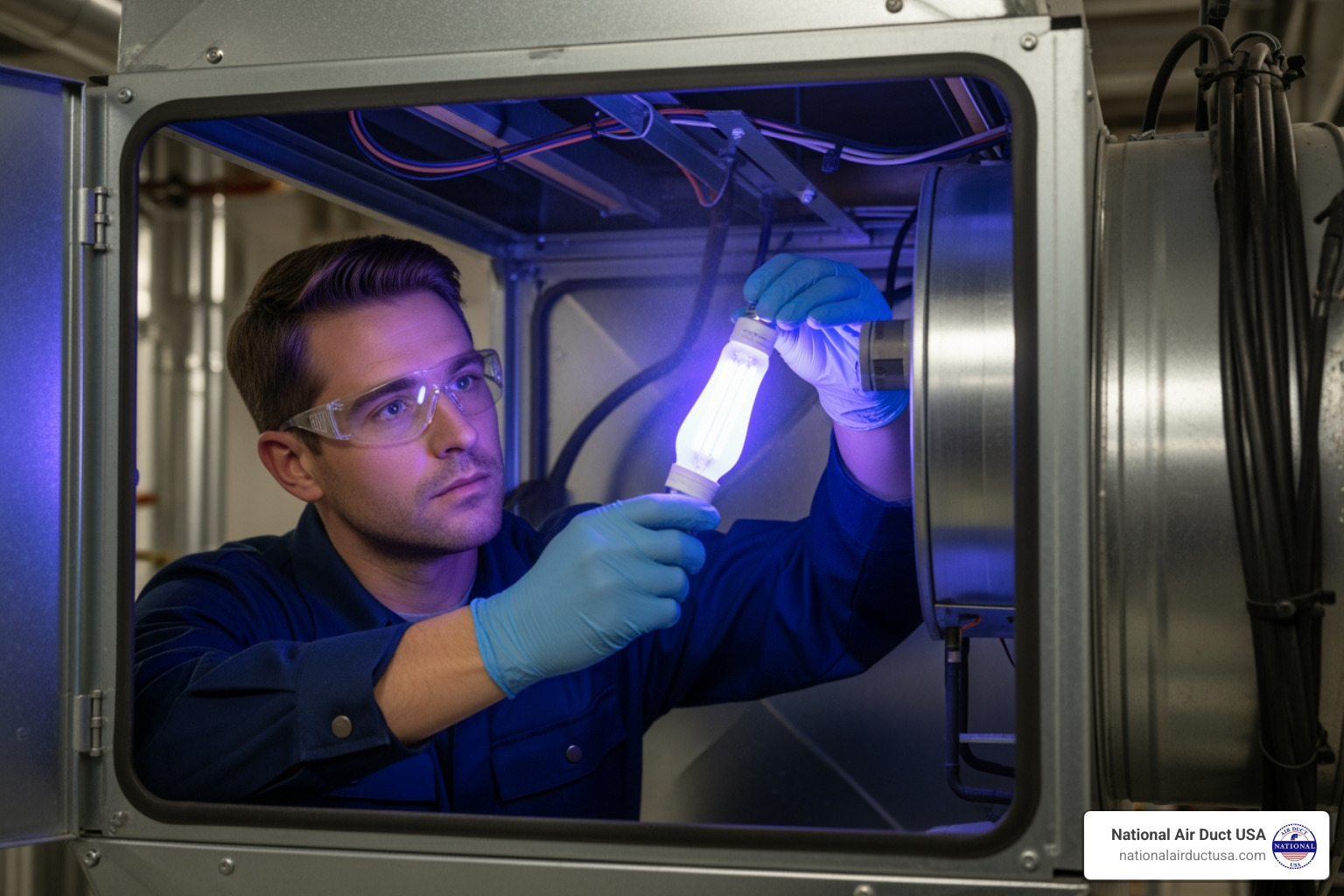
After your UV light HVAC installation, ongoing attention is needed to ensure it performs effectively. Fortunately, maintenance is simple and the long-term benefits are significant.
UV Bulb Lifespan and Replacement Schedule
A glowing UV bulb is not necessarily an effective one. The germicidal UV-C energy diminishes over time, even while the bulb still emits visible blue light.
Most UV bulbs must be replaced every 12 to 24 months, though some high-end models last longer. Always follow the manufacturer’s replacement schedule to ensure your air remains purified. When you install a new bulb, write the installation date on a sticker near the unit and set a calendar reminder for its replacement.
Cleaning and Upkeep
Beyond bulb replacement, your UV light HVAC installation requires minimal cleaning.
Every 3 to 6 months, turn off the power to your HVAC system. Wearing gloves, gently wipe the UV bulb with an alcohol wipe or a soft cloth with rubbing alcohol. This removes dust that can block the germicidal light. At the same time, inspect the wiring and power supply for any signs of damage or wear.
Associated Costs of a UV Light System
Understanding the full cost helps in planning for your system.
- Initial Investment: A complete UV light HVAC installation, including the unit and professional labor, typically costs between $500 and $1,700 for homeowners in the Long Island area. The price varies based on the type of system and complexity.
- Ongoing Costs: The main recurring expense is bulb replacement, which usually starts around $200. This cost ensures continuous air purification and protection for your family’s health.
- Energy Consumption & Savings: The UV light itself uses very little electricity, costing only a few dollars per month. More importantly, by keeping the evaporator coils clean, a UV light helps your HVAC system run more efficiently. This can decrease overall energy use by 10 to 25%, and the savings often offset the cost of bulb replacement over time.
Homeowners in Nassau and Suffolk County find that a UV light HVAC installation is a valuable investment in their family’s health, comfort, and their home’s efficiency.
Frequently Asked Questions about HVAC UV Lights
We hear many questions from our customers in Garden City, Freeport, and across Nassau County about UV light HVAC installation. Here are answers to the most common ones.
Can UV light really kill mold and viruses in my HVAC system?
Yes. UV-C light is proven to be highly effective at neutralizing microorganisms like mold, bacteria, and viruses by damaging their DNA and RNA, which stops them from reproducing.
However, UV light works on a line-of-sight basis, so it only kills contaminants directly exposed to its rays. It is most effective as a preventative tool to keep surfaces and air clean. If you have significant existing mold, we recommend a professional Air Duct Cleaning first. Then, a UV light HVAC installation will help keep the system clean long-term.
How long does a UV light bulb last in an HVAC system?
Most UV bulbs need to be replaced every 12 to 24 months. Some models may last up to 36 months. It’s critical to follow the manufacturer’s schedule, as the bulb’s germ-killing effectiveness fades over time, even if it still lights up. Regular replacement is essential for maintaining air quality.
Is professional installation for an HVAC UV light necessary?
While some experienced DIYers can perform the installation, we strongly recommend professional service for most homeowners. Here’s why:
- Safety: Professionals are trained to handle the electrical wiring and avoid dangerous exposure to UV-C radiation.
- Correct Wiring: Improper wiring can damage your HVAC system, void warranties, or create a fire hazard.
- Optimal Placement: An expert knows the best location to install the light for maximum effectiveness in your specific HVAC unit.
- Warranty Protection: Many manufacturers require professional installation to keep the product and system warranties valid.
For residents across Long Island, our NADCA-certified technicians at UV Light Installation provide safe, efficient, and guaranteed service.
Conclusion
A UV light HVAC installation is a powerful step toward creating a healthier home. By neutralizing mold, bacteria, and viruses, it cleans the air you breathe while also improving your HVAC system’s efficiency and longevity. A clean evaporator coil means lower energy bills and a system that works better, longer.
However, the installation process involves electrical work and exposure to powerful UV-C radiation, which demands careful attention to safety. A mistake can damage your equipment, void warranties, or cause injury.
This is why homeowners across Long Island, from Westbury to Hempstead, trust the NADCA-certified professionals at National Air Duct USA. We ensure your UV light HVAC installation is performed safely and correctly for maximum effectiveness. You get the peace of mind that comes with expert service, proper placement, and full warranty compliance.
Ready to breathe cleaner air and improve your HVAC performance? Our team is here to help. Explore all our HVAC services and let us transform your home’s air quality today.