Why Your HVAC Filter Deserves More Attention
A clean hvac filter is a simple but crucial task for protecting your home’s air quality and HVAC system, yet it’s often overlooked until energy bills spike or allergies flare up.
Quick Answer: How to Clean Your HVAC Filter
- Turn off your HVAC system at the thermostat and circuit breaker.
- Locate and remove the filter from the return air duct or air handler.
- Inspect for damage – if torn or excessively dirty, replace it.
- For reusable filters only: Vacuum with a brush attachment, then gently rinse with warm water (optionally with a 1:1 vinegar-water solution).
- Let it air dry completely for at least 24 hours.
- Reinstall with arrows pointing toward the airflow direction.
- Restore power and enjoy cleaner air.
Important: Most filters are disposable and should be replaced, not cleaned. Only filters marked as “washable” or “reusable” can be safely cleaned with water.
A clogged filter forces your system to work harder, circulating dust, pet dander, and pollen throughout your home. According to the World Health Organization, more than 1.6 million people die each year because of indoor air pollution—a sobering reminder that indoor air quality is critical.
Fortunately, filter maintenance is easy, inexpensive, and offers immediate benefits: cleaner air for your family, lower energy bills, and a longer-lasting HVAC system.
This guide covers everything you need to know about HVAC filter maintenance, from understanding filter types to mastering the cleaning process.
Why a Clean Filter is Non-Negotiable for Your Home
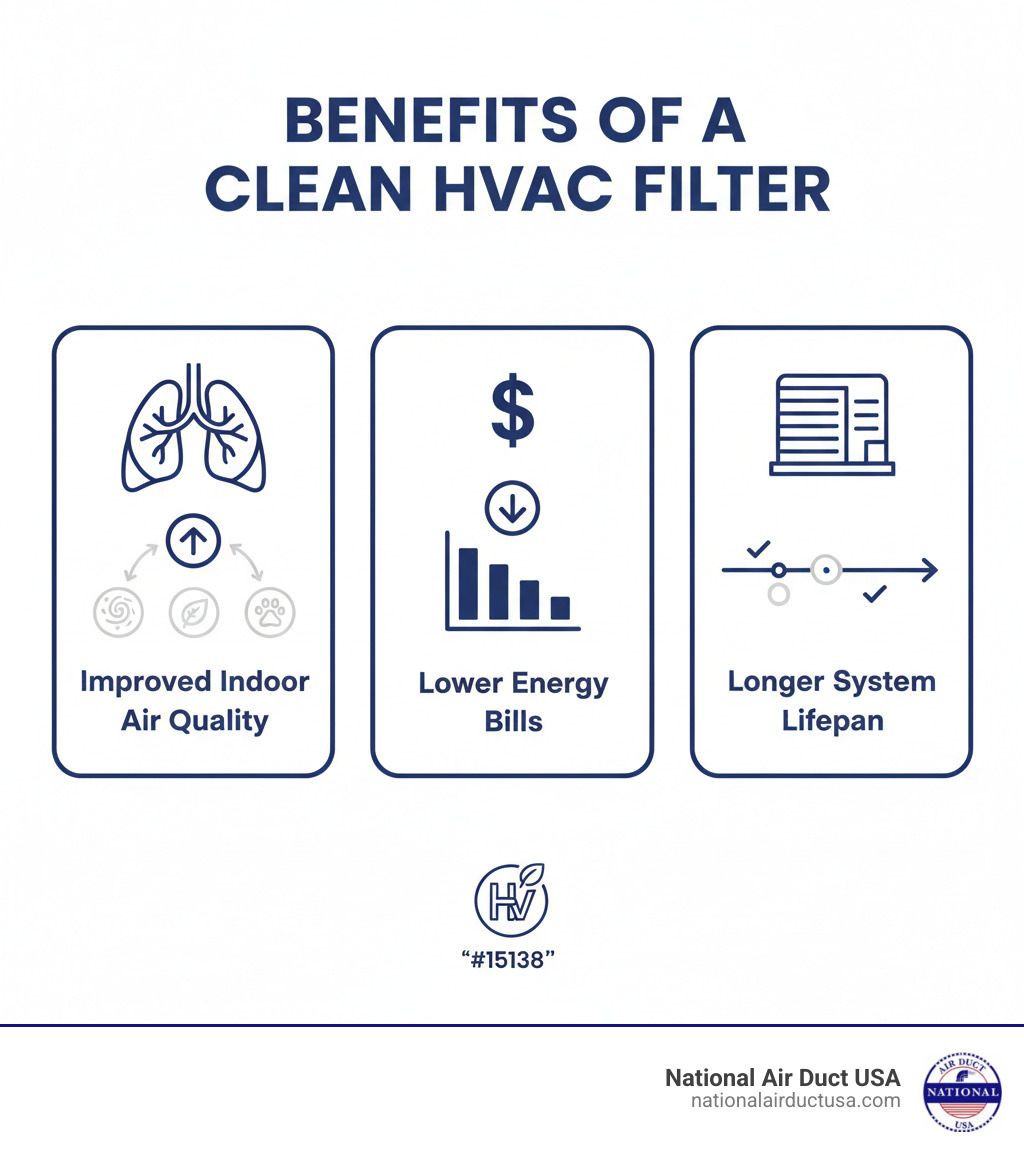
A clean hvac filter does more than trap dust—it protects your family’s health and saves you money. As air cycles through your HVAC system, the filter’s condition makes all the difference.
A clean filter acts as a gatekeeper, stopping contaminants from circulating. A clogged one becomes a distribution network for dust, bacteria, and allergens. The importance of indoor air quality (IAQ) can’t be overstated, especially in areas like Nassau and Suffolk Counties where seasonal allergens are common.
A dirty filter forces your system to work harder, much like trying to breathe through a pillow. This strain increases energy bills and shortens your system’s lifespan. Regular maintenance improves efficiency and helps avoid costly repairs. For more info about our services that keep your air clean and system running smoothly, we’re here to help.
The Impact on Your Health and Wallet
Dirty filters can become breeding grounds for bacteria and mold, which are then circulated throughout your home. This can worsen respiratory issues, allergies, and asthma, particularly for children and pets. If you’ve noticed more sneezing or coughing, a dirty filter could be the culprit.
The financial impact is also significant. A clogged filter restricts airflow, forcing your system to run longer and work harder to maintain the desired temperature. This leads to higher utility bills and premature wear on components. Regular filter changes protect your investment, extend your HVAC system’s lifespan, and prevent expensive repairs.
Consequences of a Neglected Filter
Ignoring a dirty filter can lead to serious problems.
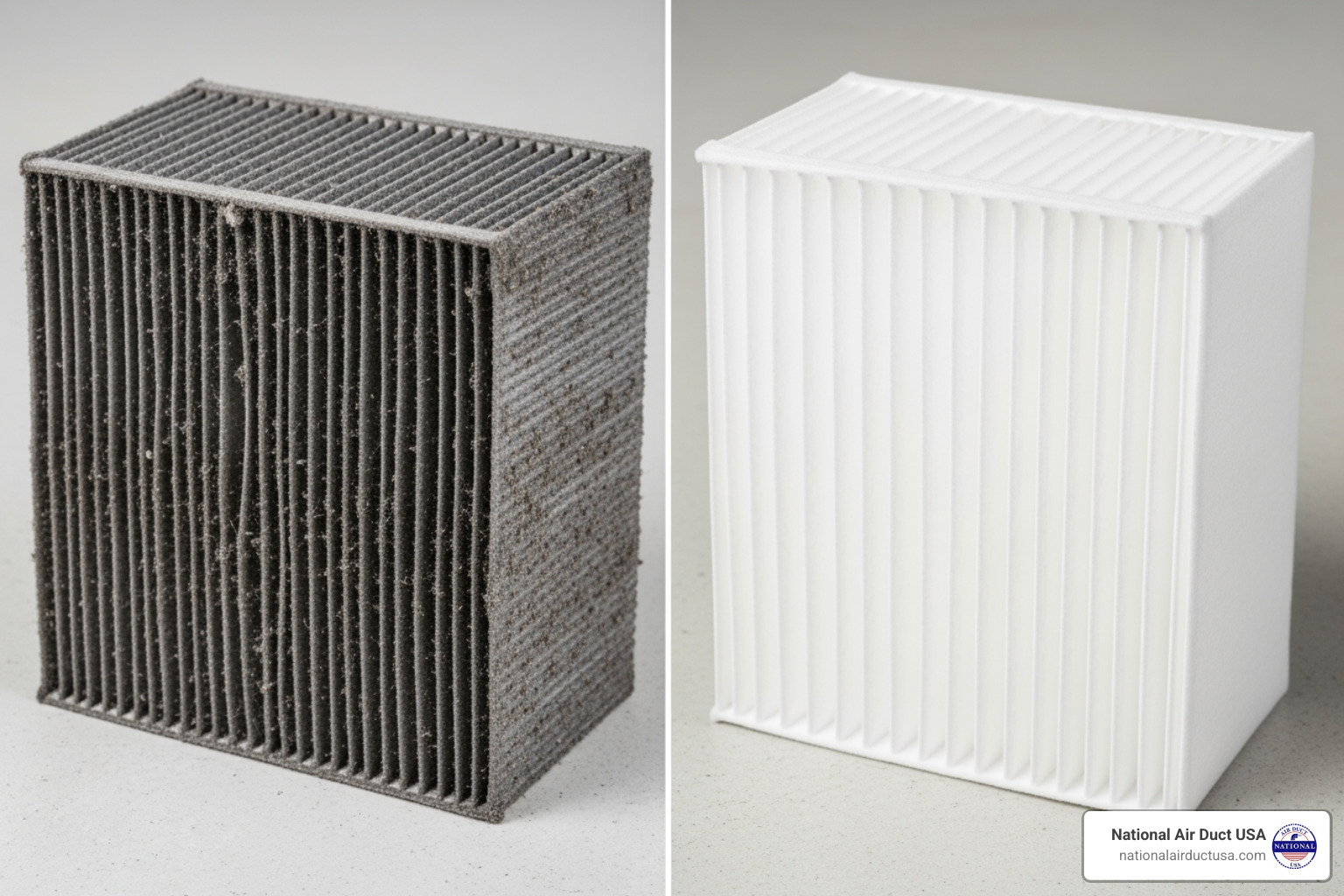
Severely restricted airflow can cause evaporator coils to freeze, leading to system failure and potential damage to the compressor—one of the most expensive parts to replace. A clogged filter can also allow dust to bypass it, accumulating on internal components like the blower motor and coils, causing them to wear out faster.
Other consequences include poor air circulation, uneven temperatures throughout your home, and persistent musty odors from mold and bacteria growth. These major issues are completely preventable with regular filter maintenance.
Know Your Filter: Types and Replacement Schedules
Understanding your filter type is key to proper maintenance. Some are disposable, while others can be cleaned and reused. Using the right filter and changing it on schedule is essential for system performance and clean air.
Common options include:
- Disposable Fiberglass Filters (MERV 1-4): The most basic and inexpensive option, they capture large particles and should be replaced monthly.
- Pleated Filters (MERV 5-13): A popular choice offering a good balance of filtration and cost. They trap smaller particles like pollen and pet dander and typically last 60-90 days.
- Washable/Reusable Filters (MERV 4-10): These have a higher upfront cost but can last for years with monthly cleaning, saving money over time.
- HEPA Filters (MERV 17-20): Offering maximum filtration (99.97% of particles), they are ideal for severe allergies but require a compatible HVAC system due to high airflow resistance.
- Media Filters (4-5 inches thick): These offer superior filtration and can last up to six months, but require a special housing.
Here’s a quick reference for typical maintenance schedules by filter type:
| Filter Type | Typical MERV Range | Key Benefits | Important Considerations | Maintenance Schedule |
|---|---|---|---|---|
| Disposable Fiberglass | 1-4 | Very inexpensive, widely available | Minimal filtration, only catches large particles | Replace every 30 days |
| Pleated | 5-13 | Good balance of cost and filtration, captures most common allergens | More expensive than fiberglass | Replace every 60-90 days |
| Washable/Reusable | 4-10 | One-time purchase saves money long-term, environmentally friendly | Higher upfront cost, requires regular cleaning effort | Clean monthly |
| Electrostatic | 8-10 | Self-charging fibers attract particles, reusable | Must be cleaned properly to maintain charge | Clean monthly |
| HEPA | 17-20 | Maximum filtration for allergies and respiratory issues | May restrict airflow, not compatible with all systems, expensive | Replace every 6-12 months |
Many modern smart thermostats now include filter maintenance reminders that track usage and alert you when it’s time for a change or cleaning.
Understanding MERV Ratings
MERV, or Minimum Efficiency Reporting Value, rates a filter’s ability to capture airborne particles on a scale of 1-20. Higher numbers mean finer filtration. For more details, see the EPA’s guide on what is a MERV rating?.
- MERV 1-4: Captures large particles like dust and carpet fibers.
- MERV 5-8: Traps smaller particles like mold spores and pet dander. This range is a good balance for most homes.
- MERV 9-12: Offers superior filtration, capturing particles like auto emissions. Excellent for homes in Garden City NY or Hempstead NY with allergy sufferers.
- MERV 13-20: Provides hospital-grade filtration, capturing smoke, viruses, and microscopic allergens down to 0.3 microns.
It’s crucial to balance filtration and airflow. A high-MERV filter can restrict airflow and strain systems not designed for it. For homes with pets or allergies, a MERV 8-11 filter is often the best choice, providing excellent filtration without overworking the system. If you’re unsure, our team can help. You can also read our blog for more tips.
How Often Should You Change or Clean Your Filter?
While manufacturers provide guidelines, your replacement schedule for a clean hvac filter depends on your specific environment. Check your filter monthly and change it if it’s visibly dirty, regardless of the recommended lifespan. Consider more frequent changes if you have:
- Pets: Fur and dander clog filters quickly.
- Smoking in the home: Smoke particles rapidly reduce filter effectiveness.
- Allergy sufferers: A cleaner filter provides significant relief, especially during high pollen seasons in Suffolk County.
- Local pollution or construction: More outdoor contaminants mean more work for your filter.
- High HVAC usage: During peak summer and winter months, your system runs more, collecting debris faster.
- Recent construction or renovation: Check your filter immediately after any major work.
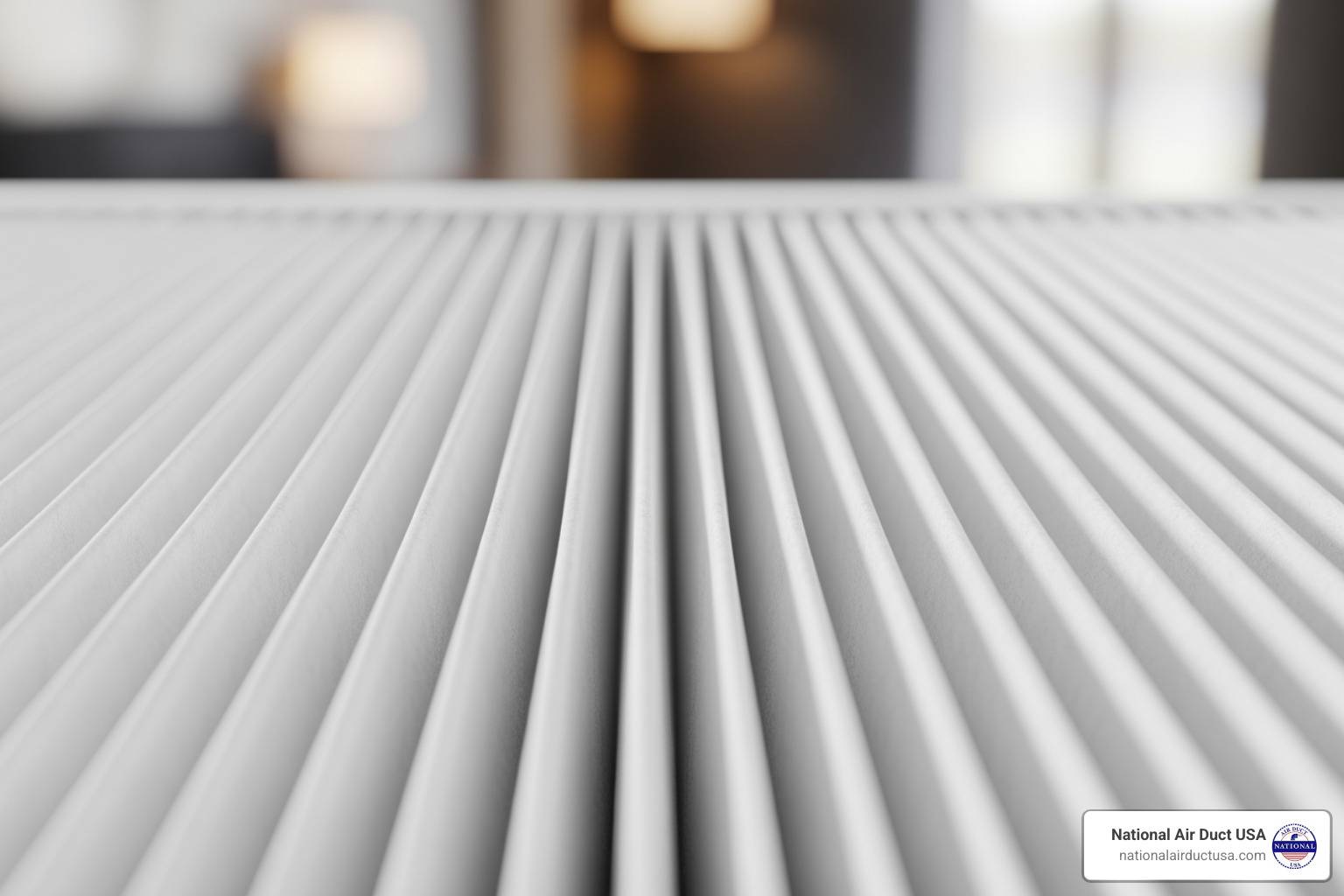
A visual inspection is your best tool. If a filter looks gray and clogged, it’s time for a new one.
How to Clean an HVAC Filter: A Step-by-Step Guide
Cleaning a reusable HVAC filter is simple with the right steps. This guide ensures you can do it safely and effectively to maintain a clean hvac filter.
Important reminder: This guide is only for filters marked as “washable” or “reusable.” If your filter is disposable, skip the cleaning and just replace it with a new one.
Step 1: Power Down and Locate the Filter
First, ensure your safety by turning off the HVAC system.
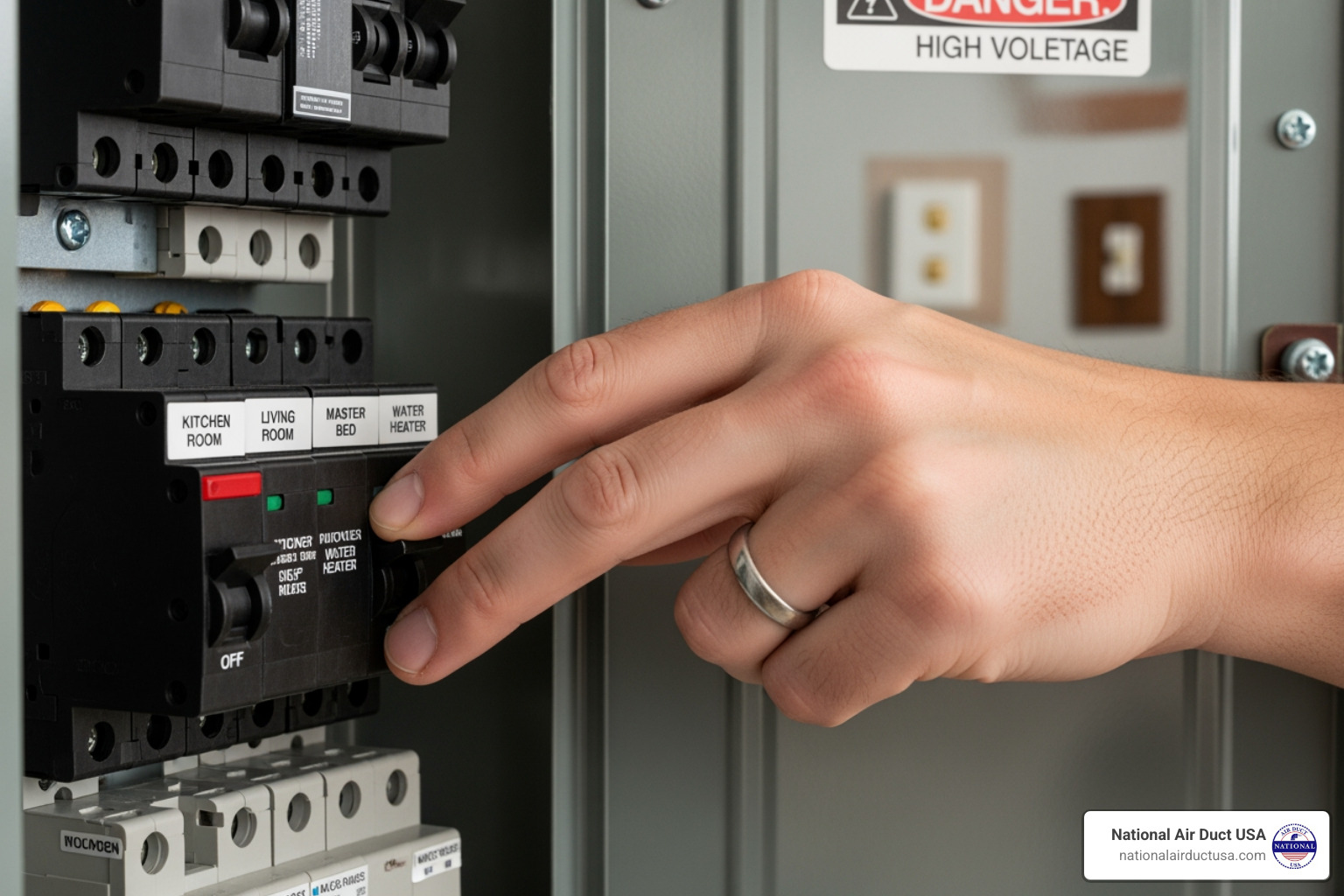
Set your thermostat to “off,” then go to your electrical panel and flip the circuit breaker for your HVAC unit to the “off” position. This completely cuts the power.
Next, locate your filter. It’s typically in the return air duct (a large grille on a wall or ceiling) or in a slot on the side or bottom of your furnace or air handler. If you can’t find it, your system’s user manual will show the exact location.
Step 2: Remove and Inspect the Filter
Carefully remove the filter from its slot.
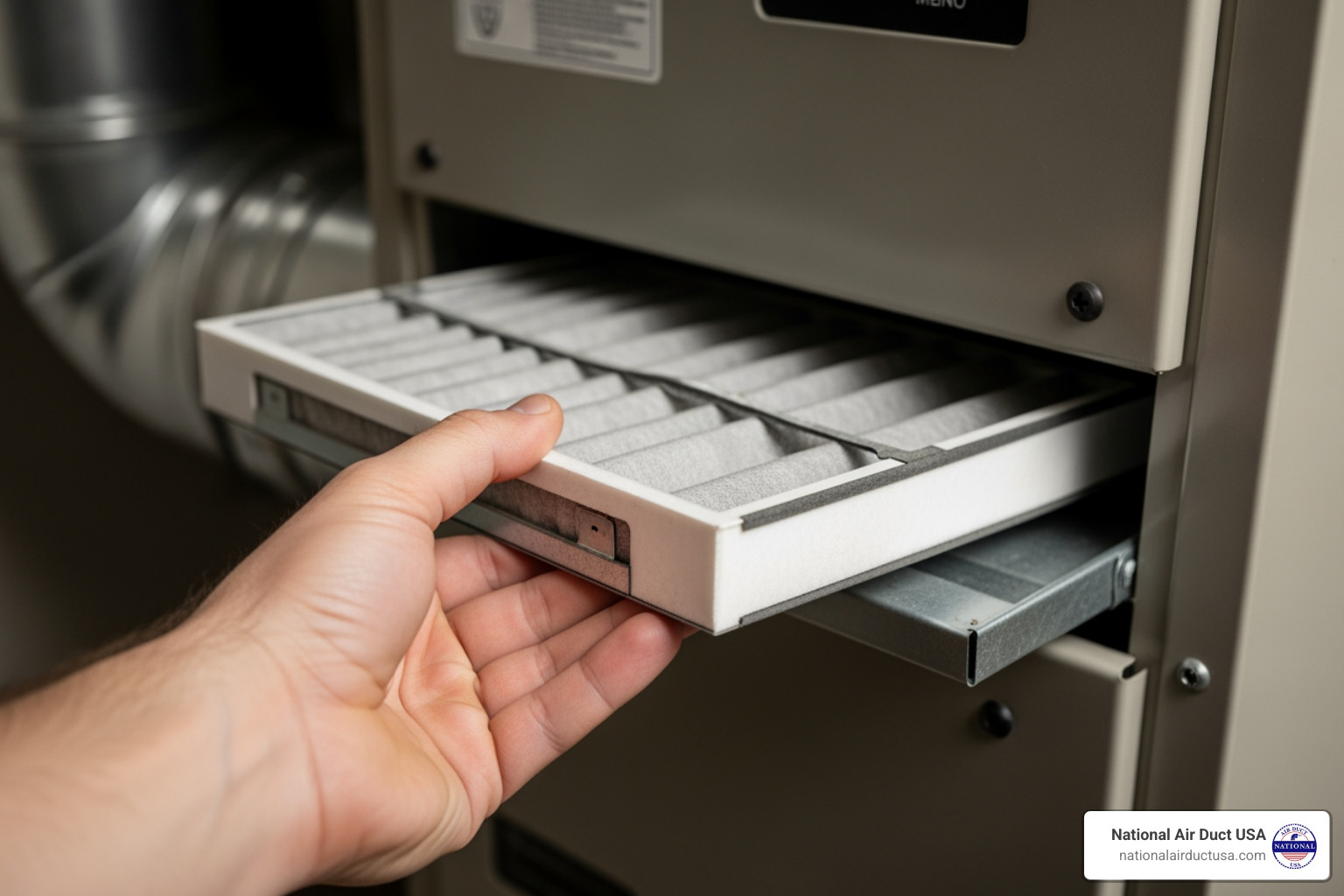
Note the arrow on the filter’s frame indicating airflow direction; you’ll need this for reinstallation. Inspect the filter for any tears, holes, or damage. If it’s damaged, it must be replaced, not cleaned, as even small tears let debris bypass the filter.
Assess the level of dirt buildup. A thick layer of dust means it was overdue for cleaning. This is common in homes across Nassau County and Suffolk County due to seasonal allergens.
Step 3: The Cleaning Process for a Reusable Filter
This process is only for washable or reusable filters. Never wash a disposable filter.
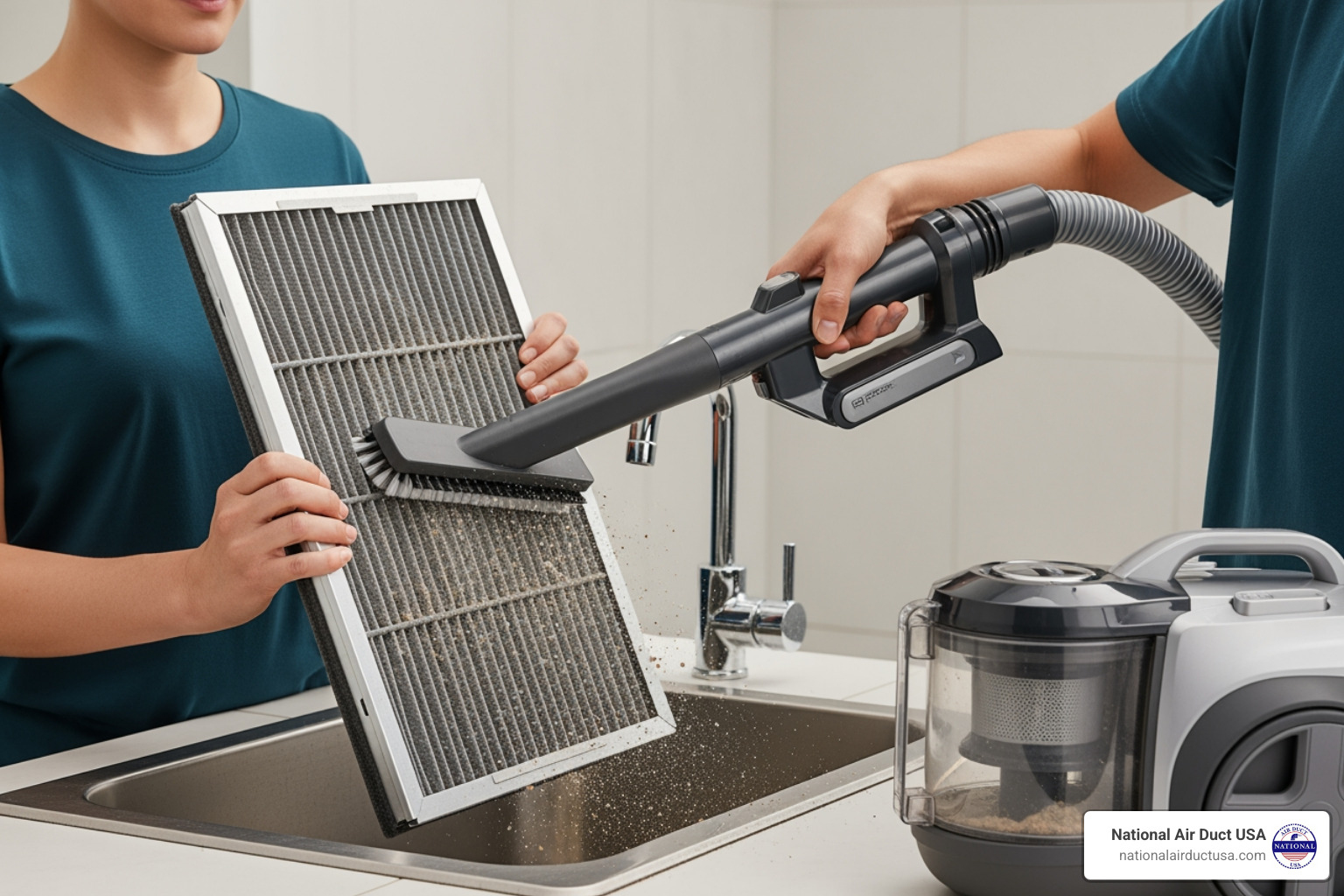
Take the filter outside and use a vacuum with a soft brush attachment to remove loose dust and debris from both sides.
Next, rinse the filter with lukewarm water. Use a hose or faucet to spray water in the opposite direction of the airflow arrow, pushing dirt out. For heavy grime, soak the filter for an hour in a solution of equal parts white vinegar and water. This mixture acts as a gentle disinfectant and breaks down buildup.
Use a soft brush to gently scrub any stubborn spots, being careful not to damage the filter material. Finish with a final rinse until the water pressure runs clear.
Step 4: Dry and Reinstall
This final step is critical. Shake off excess water and let the filter air dry completely. This can take up to 24 hours. Reinstalling a damp filter can cause mold and mildew to grow in your HVAC system, a serious health hazard we’ve seen in homes from Hempstead NY to Garden City NY.
Once bone dry, slide the clean hvac filter back into its slot, ensuring the airflow arrows point in the correct airflow direction (toward the furnace or air handler). Close any access panels, restore power at the circuit breaker, and reset your thermostat. You’re done!
For comprehensive HVAC care beyond filter maintenance, including professional duct cleaning and system optimization, explore more info about our services.
Frequently Asked Questions about HVAC Filter Maintenance
Here are answers to some common questions we receive from homeowners across Long Island about filter maintenance.
Can I run my HVAC system without a filter?
No. Running your system without a filter is highly discouraged. The filter is your system’s first line of defense, protecting sensitive internal components from dust and debris. Without it, this gunk coats the blower motor and evaporator coils, leading to reduced efficiency, higher energy bills, and expensive repairs like a burned-out motor or frozen coils. If you must run the system without a filter, do so only for the briefest possible time before installing a new one.
What happens if I wash a disposable filter?
This is not recommended. Disposable filters are made of paper or fiberglass not meant to withstand water. Washing them can damage the delicate filter media, reducing its effectiveness. Worse, it’s nearly impossible to dry them completely, creating a breeding ground for mold and mildew that can be blown through your home. A washed disposable filter can also restrict airflow, straining your system and potentially voiding its warranty. Always replace disposable filters.
When should I call a professional for help?
While filter maintenance is a great DIY task, you should contact a certified technician in certain situations. Call a professional if:
- You are unsure of your filter type or cannot locate it.
- You notice visible mold on the filter or around vents, or a persistent musty smell. This may indicate a larger issue requiring professional assessment and remediation, like our air duct cleaning services.
- Your system performs poorly even after installing a clean hvac filter. Issues like weak airflow or high energy bills could signal problems beyond the filter.
- You notice water dripping from your ducts, which can lead to mold and property damage.
Your ductwork also accumulates debris over time. If it’s been several years or you’ve recently renovated, professional duct cleaning can significantly improve air quality.
Don’t hesitate to contact us with any concerns. As NADCA-certified technicians serving Westbury NY, Hempstead NY, and Garden City NY, we’re here to help you prevent problems and breathe easier.
Breathe Easy with Consistent Maintenance
By understanding the importance of a clean hvac filter and how to maintain it, you are taking a significant step toward a healthier home. This simple task makes a real difference for homeowners across Nassau County, Suffolk County, and Long Island.
Consistent filter maintenance provides significant benefits. Your family breathes cleaner air, free from dust and allergens that can aggravate asthma. Your energy bills drop because your system runs more efficiently. And your system lasts longer, as you reduce strain on critical components and avoid costly repairs.
This proactive home care pays you back in comfort, health, and real savings. It’s a minimal effort for a substantial reward.
At National Air Duct USA, we’re passionate about helping you achieve the cleanest indoor air possible. Whether you need professional air duct cleaning, HVAC services, or just friendly advice, our NADCA-certified technicians are here for you in Westbury NY and beyond, bringing expertise and a commitment to your home’s air quality.
Ready to take your home’s air quality to the next level? Get a free quote for our HVAC services today and find what truly clean air feels like. Your lungs—and your wallet—will thank you.