
Why Your Home’s Air Might Be Dirtier Than You Think
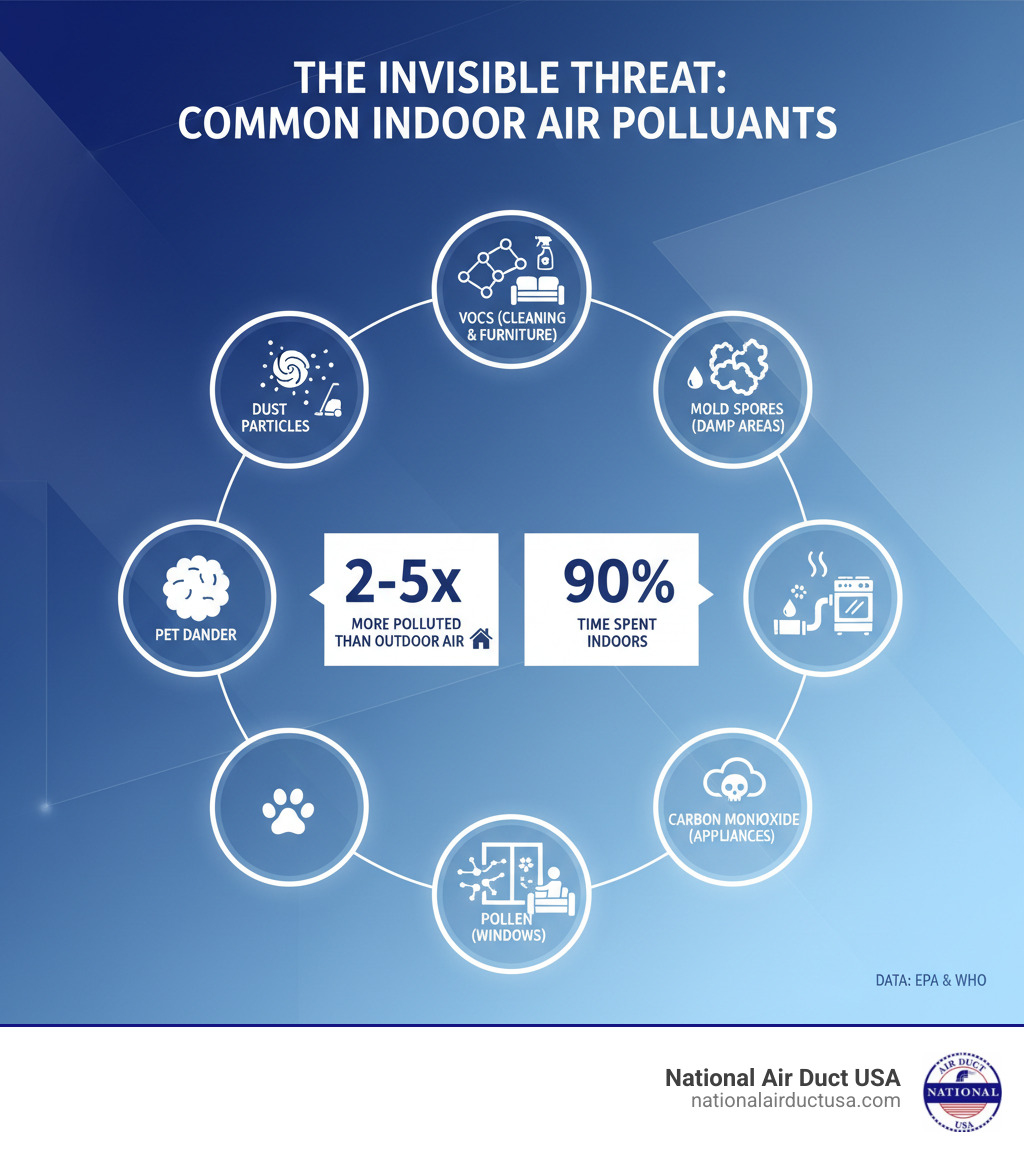
HVAC air quality solutions are strategies designed to remove pollutants, allergens, and pathogens from your indoor air. Research shows that indoor air is frequently 2-5 times more polluted than outdoor air, and the average person spends over 90% of their time indoors. For Long Island homeowners, this can mean exposure to dust mites, mold spores, pet dander, and volatile organic compounds (VOCs) that trigger asthma, cause respiratory issues, and impact overall health.
Key HVAC Air Quality Solutions at a Glance:
- High-Efficiency Filters: MERV 13+ filters trap dust, pollen, and virus-sized particles.
- Whole-Home Air Purifiers: Integrated systems that clean air throughout your entire house.
- UV-C Germicidal Lamps: Kill mold, bacteria, and viruses on HVAC coils.
- Ventilation Systems: Energy Recovery Ventilators (ERVs) bring in fresh air efficiently.
- Humidity Control: Whole-home systems to maintain optimal moisture levels.
- Professional Air Duct Cleaning: Removes accumulated contaminants from ductwork.
Improving your indoor air quality requires a layered approach that combines several proven strategies. This guide will walk you through practical, science-backed solutions—from optimizing ventilation and filtration to advanced purification technologies—to help you create genuinely healthier air in your home.
Understanding the Threats: Common Indoor Pollutants and Their Risks
The air inside your Long Island home could be making you sick. That persistent cough, morning headaches, or worsening allergies might be linked to your indoor air quality. Understanding what’s floating around is the first step toward fixing it, as these pollutants can trigger allergies, worsen asthma, and contribute to long-term respiratory issues. Scientific research on residential ventilation rates highlights the significant connection between indoor air and our health. Fortunately, HVAC air quality solutions can target these specific threats.

The Invisible Invaders: Dust, Allergens, and Mold
Your home may be hosting millions of microscopic troublemakers. Dust mites thrive in bedding and carpets, feeding on dead skin cells, and their waste is a potent allergen. If you have pets, pet dander—tiny flakes of skin, saliva, and urine proteins—floats through the air and settles everywhere. Pollen hitches a ride indoors on clothes and pets, causing seasonal allergy symptoms inside.
Mold and mildew love Long Island’s humid summers, growing in any area with moisture and poor ventilation, like bathrooms, basements, or inside your HVAC system. Watch for musty odors or condensation on windows, as airborne mold spores can trigger everything from sneezing to asthma attacks.
Chemical Culprits: Volatile Organic Compounds (VOCs) and Other Gases
Invisible gases can be just as harmful as particles. Volatile Organic Compounds (VOCs) are emitted from everyday products like new furniture, fresh paint, cleaning supplies, and air fresheners. Short-term exposure can cause headaches and nausea, while long-term exposure may damage the liver, kidneys, and central nervous system.
Radon is a naturally occurring radioactive gas that seeps into homes through foundation cracks. It is colorless, odorless, and the leading cause of lung cancer among non-smokers. Specialized testing is the only way to detect it.
Carbon monoxide (CO) is an invisible killer produced by the incomplete burning of fuel in furnaces, water heaters, or fireplaces. High levels can be fatal, while even low-level exposure causes headaches and fatigue.
How to Assess Your Home’s Air Quality
Pay attention to your body. Do symptoms like coughing, sneezing, or watery eyes improve when you leave the house? This is a major red flag. Persistent stuffiness or unexplained headaches also point to poor indoor air quality. Your home may also provide clues, such as musty odors or condensation on windows.
Smart air monitors offer real data on your home’s air, tracking PM2.5 (fine particulate matter), VOC levels, and CO2 concentrations. Modern air monitors help you understand what’s in your air and when pollutant levels spike. High CO2 levels, in particular, indicate poor ventilation, meaning other pollutants are also building up.
For a comprehensive analysis, professional IAQ testing is invaluable. Experts can identify specific pollutants and their concentrations, creating a clear roadmap for improvement. At National Air Duct USA, our professional services include thorough assessments to help homeowners understand what they’re breathing. The EPA provides detailed guidance on this topic, but knowing your enemy is always the first step.
Core Strategies: Mastering Ventilation and Filtration
Improving your home’s air quality isn’t just about removing pollutants—it’s about preventing them from building up. Both the EPA and ASHRAE recommend a layered approach: source control (eliminating pollutants), ventilation (diluting them), and air cleaning (capturing what’s left). Think of it as a comprehensive defense strategy. The EPA provides detailed information on improving indoor air quality that homeowners can reference.
Optimizing Ventilation to Dilute Pollutants
Ventilation is the simple process of bringing fresh outdoor air in while pushing stale indoor air out. It’s crucial for preventing pollutants like cooking odors, VOCs, and airborne viruses from reaching harmful concentrations. Natural ventilation—opening windows and doors—is the easiest method when weather permits.
For year-round consistency, mechanical ventilation is key. Your kitchen and bathroom exhaust fans remove moisture and pollutants at the source. For a whole-house solution, Energy Recovery Ventilators (ERVs) are highly efficient. They bring in fresh air while exhausting stale air, transferring heat and humidity in the process to save energy. The U.S. Department of Energy provides a comprehensive guide to whole-house ventilation systems.
Upgrading Your Filtration Game
Not all HVAC filters are created equal. The MERV rating (Minimum Efficiency Reporting Value) measures a filter’s effectiveness on a scale from 1 to 20. For most Long Island homes, we recommend MERV 13 filters, which capture dust, pollen, pet dander, mold spores, and even many bacteria and virus-sized particles. ASHRAE specifically recommends MERV 13 for effective pathogen filtration.
HEPA filters are even more effective, capturing 99.97% of particles at 0.3 microns, but are typically too restrictive for standard residential HVAC systems. Electronic air cleaners use an electrostatic charge to capture particles and can be integrated with your existing system. No matter the type, a filter is useless if it’s dirty. Check your filter monthly and replace it every 1-3 months to maintain air quality and system efficiency.
The Whole-Home vs. Portable Purifier Debate
When adding purification to your HVAC air quality solutions, you can choose between integrated whole-home systems or standalone portable units.
Whole-home air purifiers install directly into your ductwork, cleaning all the air that circulates through your house. This provides consistent, quiet, and comprehensive purification. Portable air purifiers clean the air in a single room, offering flexibility but limited coverage.
| Feature | Whole-Home Air Purifiers | Portable Air Purifiers |
|---|---|---|
| Integration | Integrated into existing HVAC ductwork | Standalone units, plug into outlets |
| Coverage | Cleans air throughout the entire house | Cleans air only in the room where it’s located |
| Consistency | Continuous, consistent air cleaning in all connected rooms | Targeted, flexible, can be moved between rooms |
| Cost | Generally higher initial investment | Lower initial cost per unit |
| Maintenance | Typically less frequent filter changes, professional installation | More frequent filter changes, user-friendly maintenance |
| Noise | Often quieter as components are in HVAC system | Can be noticeable, especially on higher settings |
| Effectiveness | Comprehensive, impacts overall IAQ | Highly effective for specific rooms or localized issues |
The best choice depends on your needs, but for total home protection, an integrated system is superior.
Balancing Humidity for Better Air
Humidity plays a significant role in air quality. During dry Long Island winters, low humidity causes dry skin and irritated sinuses. Whole-home humidifiers add moisture to the air, making your home feel more comfortable and even warmer at lower temperatures.
Conversely, humid summers create a breeding ground for mold, mildew, and dust mites. Whole-home dehumidifiers remove excess moisture, preventing allergen growth and making your home feel cooler. The ideal indoor humidity level is between 40% and 60%, a range that optimizes comfort, discourages pests, and can even reduce the survival of airborne viruses.
Advanced HVAC Air Quality Solutions: Purification Technologies
Beyond traditional filtration, advanced purification technologies offer powerful ways to eliminate stubborn indoor air pollutants. These cutting-edge HVAC air quality solutions work with your existing system to actively neutralize contaminants that filters alone can’t touch.

These technologies represent the next frontier in indoor air quality. While they require an upfront investment, they deliver tangible health benefits and can improve HVAC efficiency, often justifying the cost with long-term savings.
A Comprehensive Look at HVAC Air Quality Solutions: UV-C Germicidal Lamps
Used for decades in hospitals, ultraviolet-C (UV-C) light is a proven sterilization technology now available for your home. UV-C light works by destroying the DNA and RNA of microorganisms, rendering bacteria, viruses, and mold spores unable to reproduce or infect.
A key application is killing mold on coils. The cool, damp evaporator coils in your HVAC system are a prime spot for mold growth, which restricts airflow and spreads spores. A UV-C lamp installed near the coils keeps them sterile. The benefits extend to the airstream, where UV-C lamps also inactivate viruses and bacteria as they circulate through your system.
An added bonus is improved system efficiency. Clean coils transfer heat more effectively, reducing strain on your HVAC system and lowering energy bills. Because UV-C radiation can harm skin and eyes, lamps are always installed safely inside sealed ductwork by a professional. Our NADCA-certified technicians are trained to install these systems safely and effectively. You can learn more about UV technology from the International Ultraviolet Association.
Next-Generation Air Cleaning: Ionization and PCO
Other advanced systems actively break down pollutants at a molecular level.
Bi-polar ionization releases positive and negative ions that attach to airborne particles like dust and pollen, making them larger and easier for your filter to catch. These ions also neutralize odors, VOCs, and some viruses and bacteria.
Photocatalytic Oxidation (PCO) combines UV light with a titanium dioxide-coated filter. This creates a reaction that produces hydroxyl radicals, which break down VOCs, odors, and other gaseous pollutants into harmless water vapor and carbon dioxide.
These technologies are especially valuable for tackling VOCs and odors from cleaning products, new furniture, or pets—pollutants that traditional filters miss. However, it’s crucial to use professional-grade systems that have been vetted for safety and meet industry standards, as advised by ASHRAE. Our experienced team at National Air Duct USA can assess your home’s needs and recommend a professional-grade system that is both safe and effective.
The Foundation of Clean Air: Professional HVAC Maintenance
You can install the most advanced air purification system, but if your HVAC system isn’t properly maintained, you’re building on a shaky foundation. Your heating and cooling system is the engine that powers your home’s air quality, and it needs regular care to perform at its best.
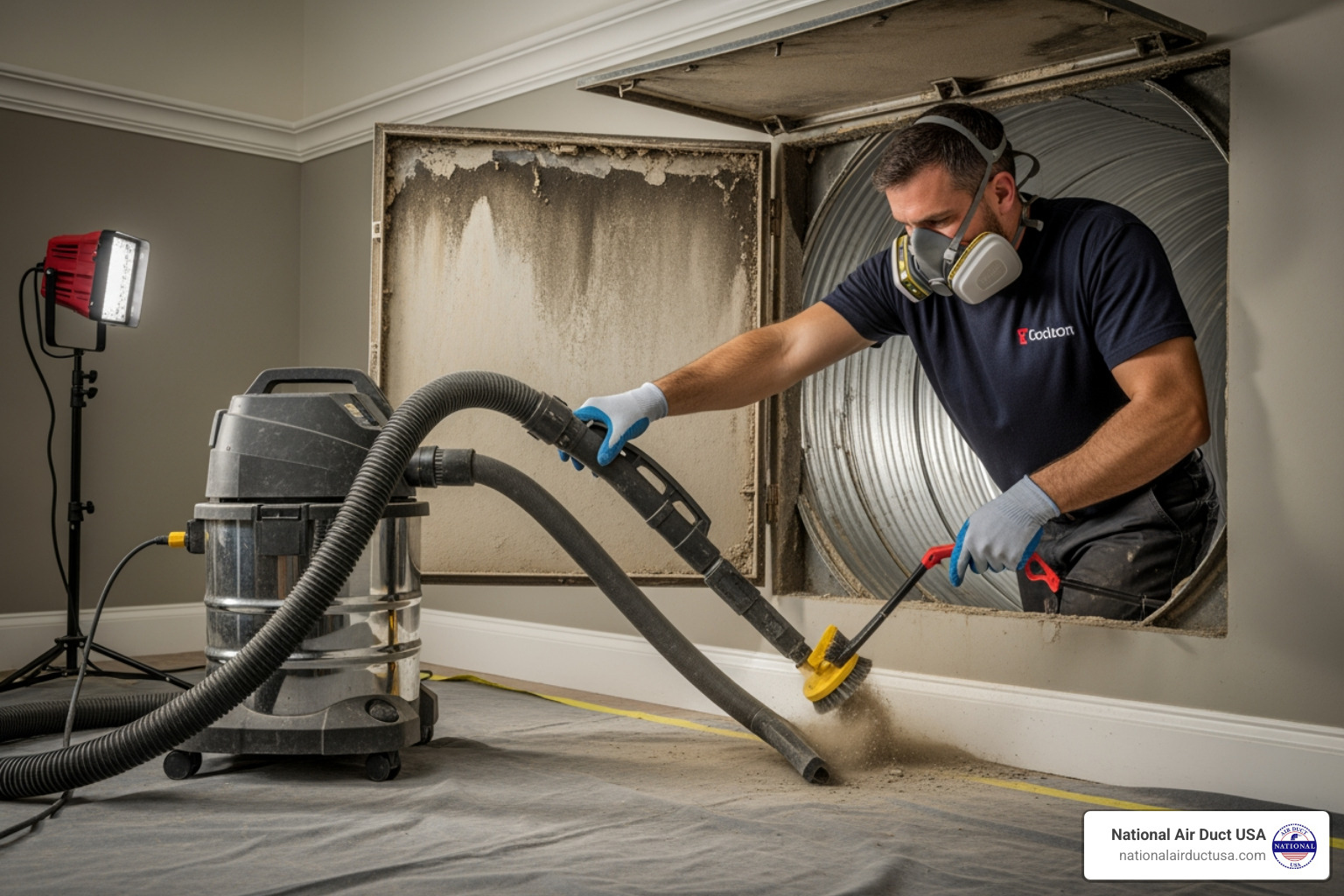
Regular maintenance, particularly professional air duct and dryer vent cleaning, is essential for system longevity, energy savings, and your family’s health. At National Air Duct USA, we serve Westbury, Hempstead, Garden City, and throughout Nassau and Suffolk Counties with comprehensive HVAC air quality solutions that start with a clean system. Learn more about our full range of services.
Why Professional Air Duct Cleaning is a Must
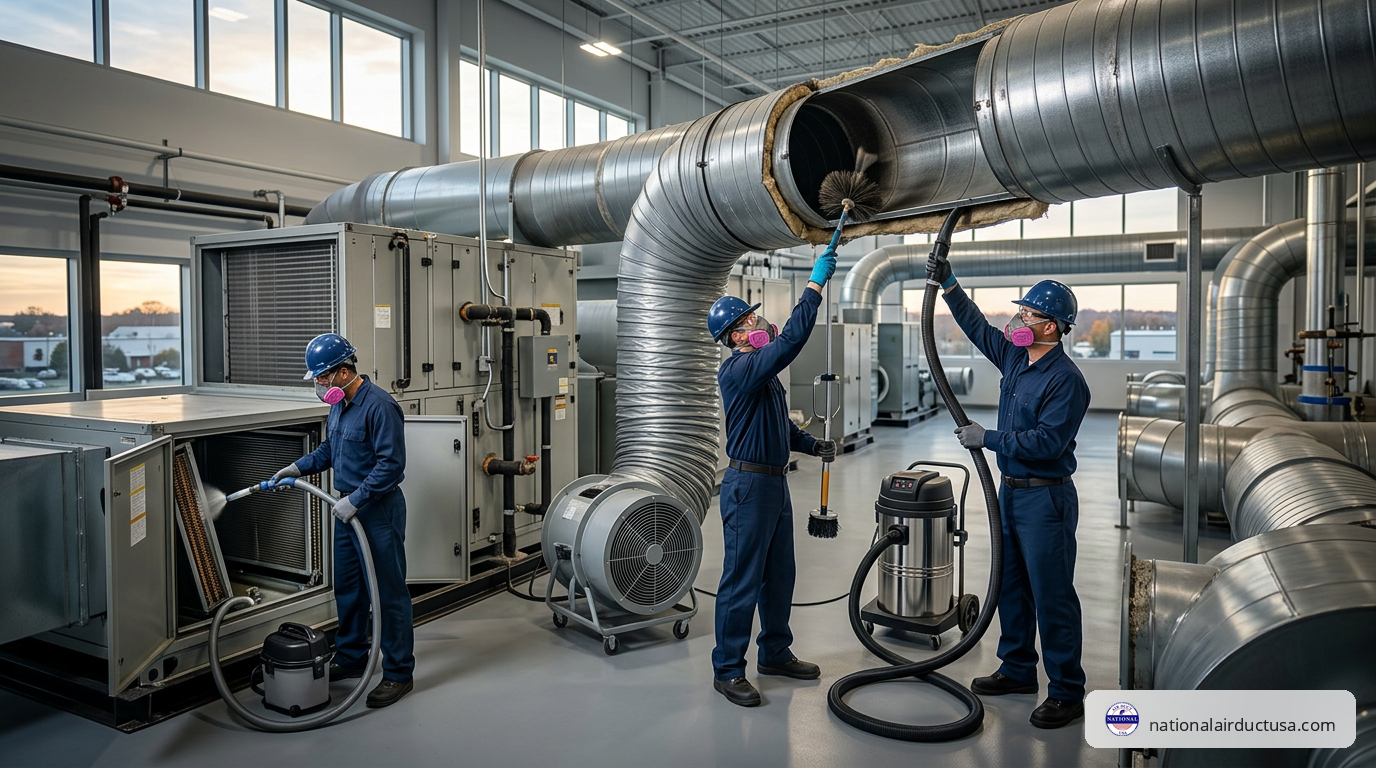
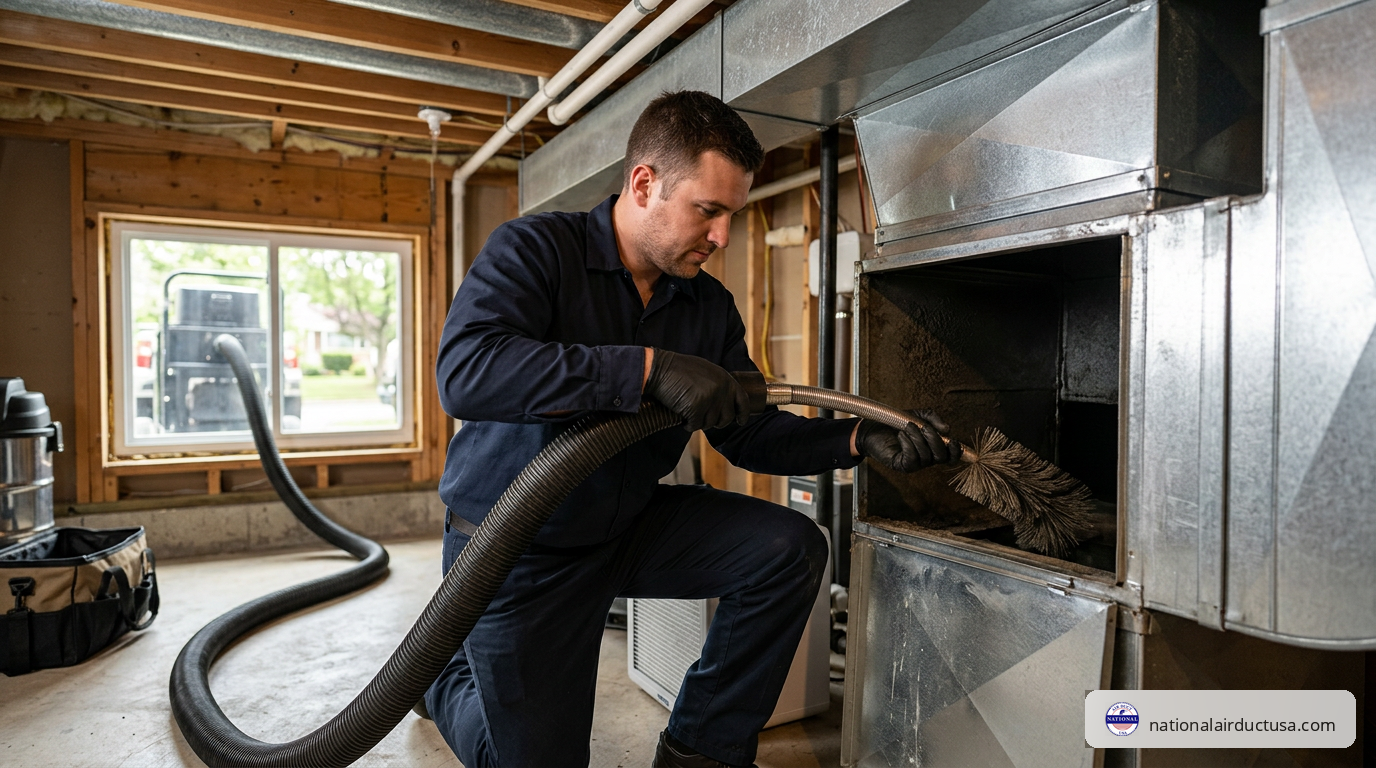
Your air ducts are your home’s respiratory system. Over time, they accumulate dust, dirt, pet dander, pollen, and mold spores. When your HVAC system runs, it circulates these pollutants throughout your home, triggering allergies and asthma.
Signs you need a cleaning include visible dust from vents, a home that gets dusty quickly, or a musty odor when the system runs. Recent renovations or pets that shed are also reasons to consider a cleaning. Clogged ducts also force your system to work harder, leading to higher energy bills and premature wear. Our NADCA-certified technicians use state-of-the-art equipment and EPA-approved sanitization methods to thoroughly clean your ductwork, dramatically reducing airborne contaminants. Here’s why we believe regular air duct cleaning is essential for every home in Long Island and Westbury.
The Overlooked Danger: Dryer Vent Cleaning
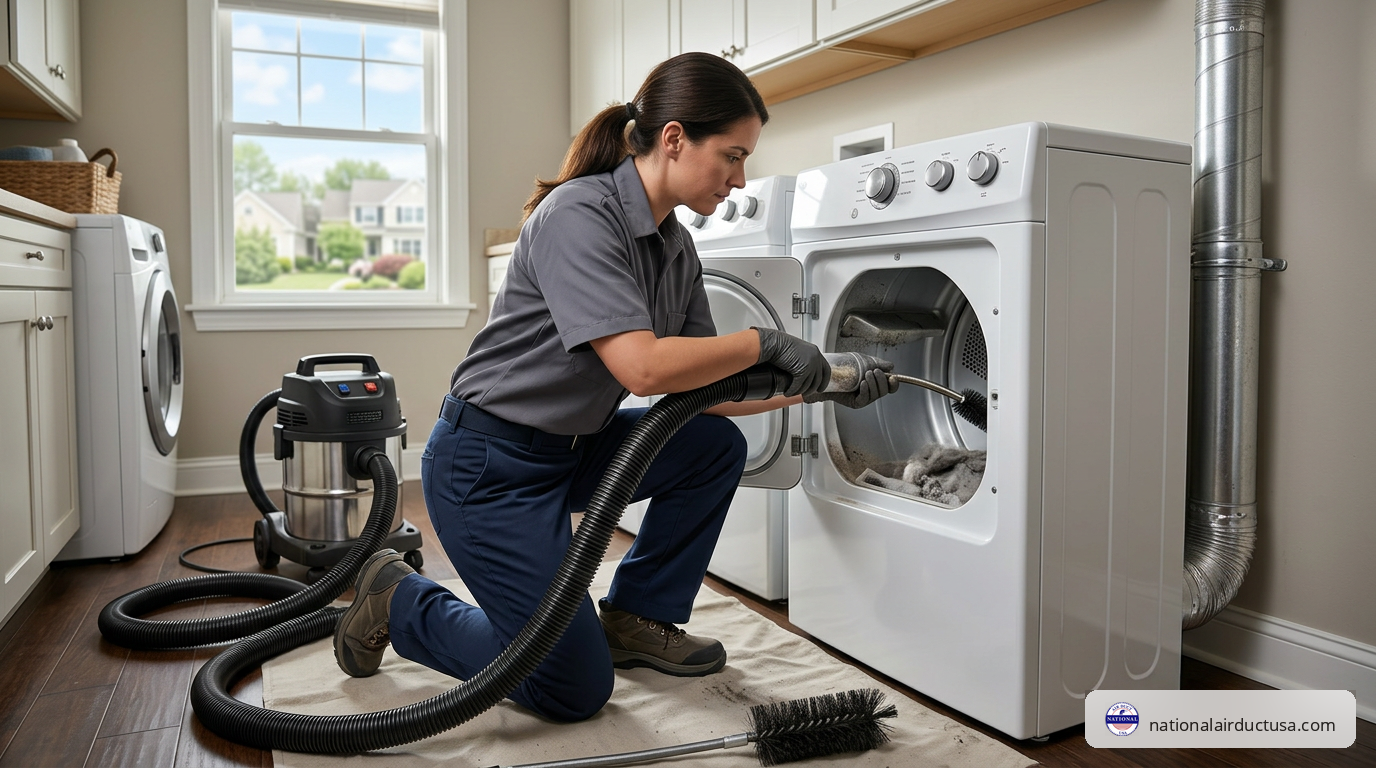
Dryer vent cleaning is a forgotten maintenance task with serious consequences. Clothing dryers cause over 15,000 fires in U.S. homes annually, many due to lint buildup. Lint is highly flammable, and as it accumulates in the vent, it creates a severe fire hazard.
For gas dryers, a clogged vent also poses a risk of carbon monoxide poisoning if exhaust gases back up into your home. A clean vent also means improved dryer efficiency—your clothes dry faster, using less energy and extending the life of your appliance. Finally, a blocked vent can release moisture and lint back into your home, increasing humidity and airborne particles.
Our professional dryer vent cleaning services ensure your dryer operates safely and efficiently, protecting your family from fire and CO risks while contributing to better indoor air quality.
Frequently Asked Questions about Improving Indoor Air Quality
As you consider the best HVAC air quality solutions for your Long Island home, you likely have questions. Here are answers to some of the most common ones we hear.
Are whole-home air filtration systems worth the investment?
Yes, for most families. A whole-home system provides consistent, comprehensive air cleaning that a portable unit can’t match. It reduces allergens, dust, and pathogens in every room, which is a significant benefit for anyone with allergies, asthma, or other respiratory concerns. While the initial cost is higher than a portable unit, the value comes from protecting the air quality throughout your entire home.
How often should I have my air ducts cleaned?
The general recommendation is every 3 to 5 years. However, you should consider more frequent cleanings if you:
- Have pets that shed
- Have smokers in the household
- Recently completed home renovations
- Have family members with significant allergies or asthma
Our NADCA-certified technicians can help you determine the right schedule for your home. Learn more about why regular air duct cleaning is essential for every home in Long Island and Westbury.
What is the single most effective upgrade for better IAQ?
While a layered approach is always best, the single most impactful first step is installing a MERV 13 air filter. It’s a cost-effective upgrade that significantly improves your system’s ability to capture smaller airborne particles like dust, pollen, mold spores, and even some bacteria and viruses. Most modern HVAC systems can handle a MERV 13 filter without modification, providing an immediate and noticeable improvement in air quality. Once you’ve upgraded your filter, you can explore other HVAC air quality solutions to build a more comprehensive defense system. Contact National Air Duct USA for a free quote on improving your home’s air quality.
Conclusion: Take Control of Your Home’s Air Today
Creating healthier air in your Long Island home is about building layers of protection that work together. A complete strategy combines optimized ventilation, improved filtration, targeted purification, and consistent professional maintenance. When these HVAC air quality solutions work in harmony, the change in your home’s air can be remarkable.
From installing a MERV 13 filter to investing in a whole-home air purifier, every improvement brings you closer to the clean, healthy air your family deserves.
At National Air Duct USA, we help families throughout Long Island, Westbury, Hempstead, Garden City, and all of Nassau and Suffolk Counties breathe easier. Our NADCA-certified technicians specialize in professional air duct cleaning, dryer vent cleaning, and UV light installation—the foundational services for excellent indoor air quality. We understand the unique challenges of our local climate and know how to address them effectively.
Your home’s air doesn’t have to be a source of concern. With the right knowledge and partner, you can create an indoor environment that supports your family’s health and well-being.
Ready to transform your home’s air quality? Get a free quote for your personalized IAQ solution today. Let’s work together to create the healthier home you deserve.