Why Your AC Coil Drain Pan Matters More Than You Think
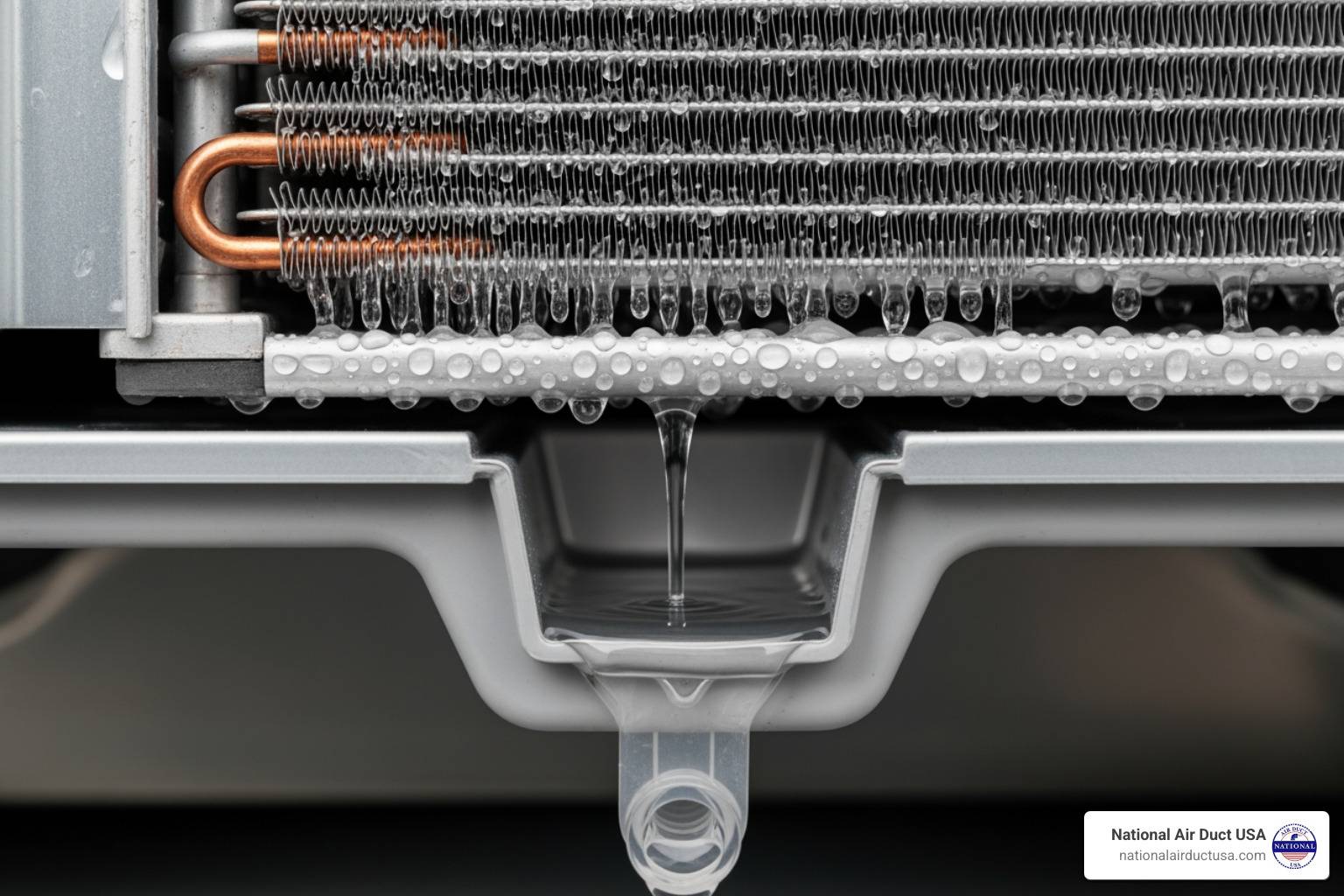
An AC coil drain pan is a shallow tray beneath your air conditioner’s evaporator coil that collects condensation. This moisture—up to 20 gallons per day—must be channeled away through a drain line. If the pan fails, water can overflow, leading to serious water damage, mold growth, and system shutdowns.
Key facts about AC coil drain pans:
- Location: Under the evaporator coil in your indoor unit or air handler.
- Materials: Typically durable plastic (5-10 year lifespan) or galvanized steel.
- Types: A primary pan attached to the coil and an optional secondary pan for backup protection.
- Common Problems: Cracks, rust, clogs, and corrosion.
- Warning Signs: Water pooling, ceiling stains, musty odors, or unexpected AC shutdowns.
If you’ve noticed water near your HVAC unit or a musty smell from your vents, the drain pan is a likely culprit. Modern plastic pans last 5-10 years but can fail from clogs or cracks. A leaking drain pan can damage equipment and sub-floors, making it a critical component of your HVAC system.
For homeowners in Long Island and Westbury, where summer humidity is high, a functional drain pan is essential for preventing costly repairs and maintaining good indoor air quality.
Understanding the AC Coil Drain Pan: Function and Location
Your AC coil drain pan is a quiet guardian, collecting the moisture your air conditioner removes from the air. During humid Long Island summers, your system can produce 5 to 20 gallons of condensation daily. This water collects in the drain pan and is funneled away from your home.
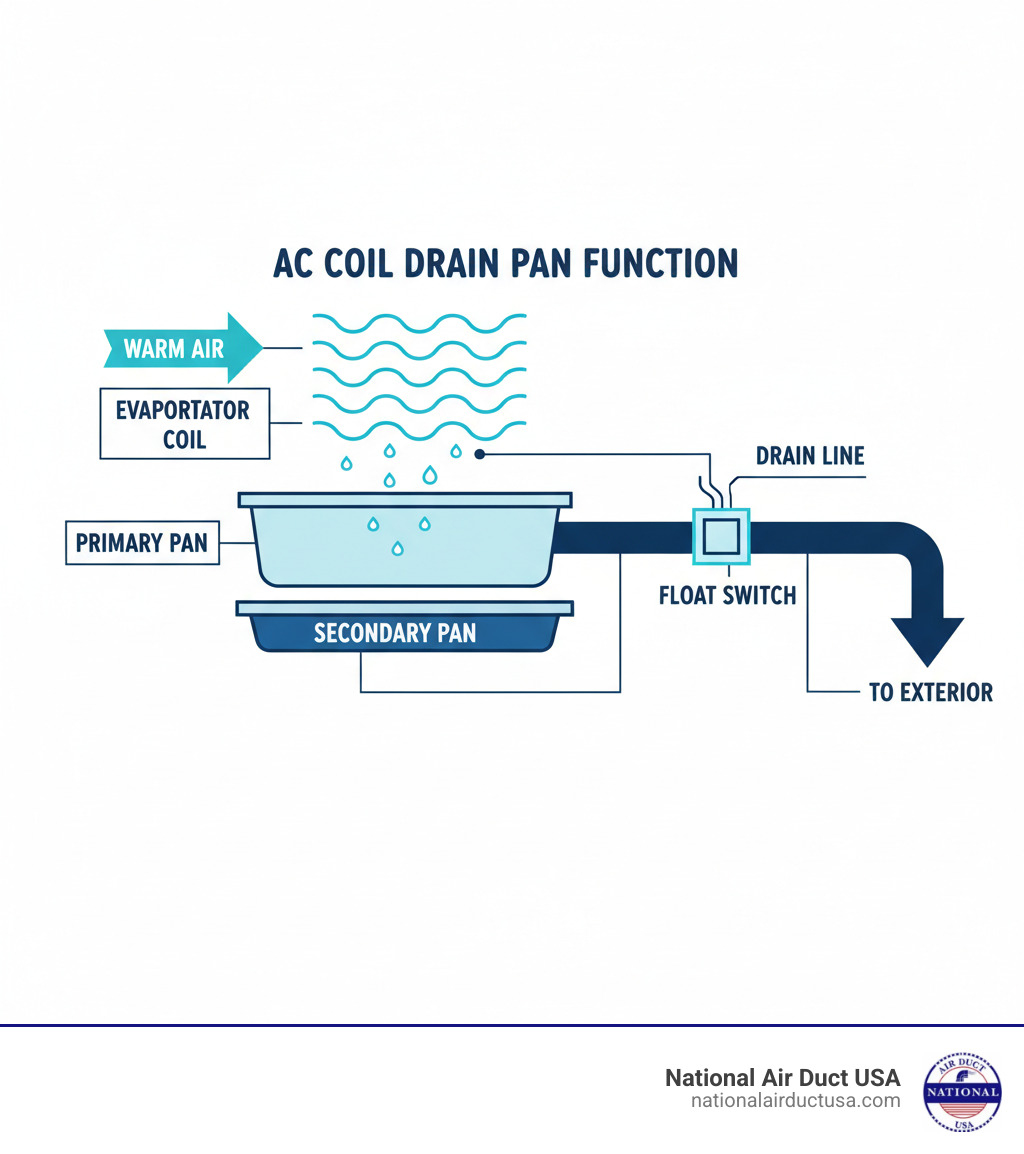
The process begins at the evaporator coil, the cold component inside your air handler. As warm air passes over the coil, moisture condenses into water droplets. Gravity pulls these droplets down into the AC coil drain pan positioned directly underneath. The pan then directs this water into the condensate drain line, which carries it safely outside.
How an AC Coil Drain Pan Works
Think of a cold glass on a hot day—water droplets form on the outside. Your AC works the same way. As warm air passes over the cold evaporator coil, moisture condenses into liquid water. These droplets drip into the AC coil drain pan below.
The pan is sloped to guide water toward an outlet connected to the condensate drain line, typically a ¾ inch PVC pipe. This system uses gravity drainage to carry water out of your home, protecting your equipment from water damage.
Locating the Drain Pan in Different HVAC Systems
The drain pan’s location depends on your HVAC system type.
- Central Air Systems: In most Long Island homes, the primary drain pan is inside the air handler or furnace cabinet, directly under the evaporator coil.
- Packaged Units: The drain pan is integrated into the single outdoor cabinet, beneath the coil.
- Mini-Split Systems: The pan is built into the indoor wall-mounted unit, behind the front cover.
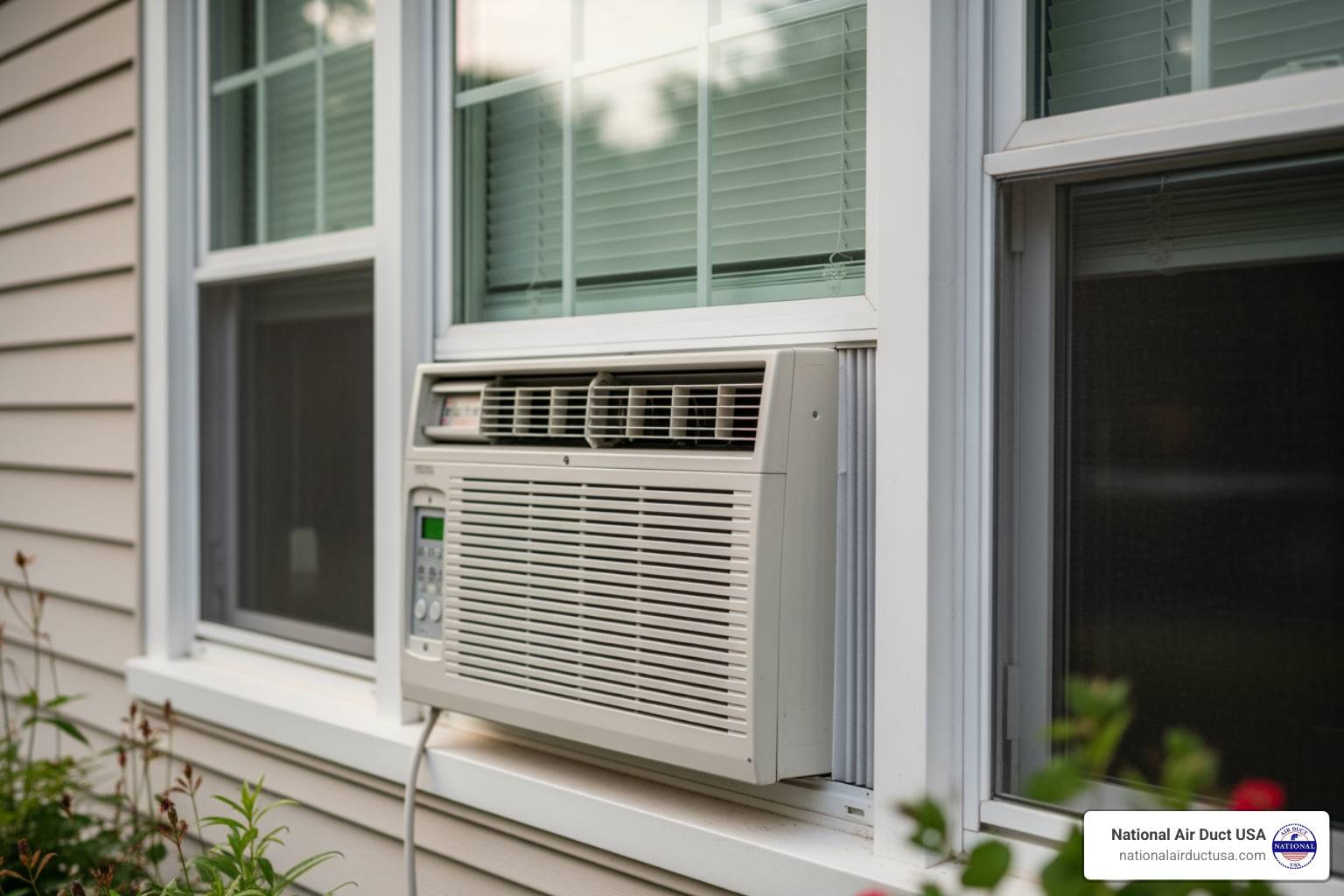
- Window Units: A small pan drains water directly out the back of the unit.
System orientation also matters. A vertical furnace has the coil and pan on top or below it. A horizontal furnace, often found in attics or crawl spaces, has the coil and pan positioned alongside it. These horizontal setups typically require a secondary drain pan underneath the entire unit as an extra layer of protection against leaks.

Signs of Trouble: Diagnosing a Faulty Drain Pan
When your AC coil drain pan fails, it often leads to water damage, mold growth, or a complete system shutdown. An overflowing pan can release 5 to 20 gallons of water a day, causing significant damage to your home’s structure. Building codes even require secondary drain pans in certain installations to mitigate this risk. Understanding the potential health risks of mold from water damage underscores the importance of a functional drain system.
Fortunately, your AC provides clear warning signs when its drainage system has a problem.
Common Symptoms of a Damaged or Clogged AC Coil Drain Pan
- Water Pooling: This is the most obvious red flag. Puddles near your indoor air handler mean the pan is likely overflowing or leaking and needs immediate attention.
- Ceiling Stains or Wall Discoloration: For units in attics or closets, brown rings on the ceiling below are a telltale sign of an overflow. Even a small amount of water can warp floors and stain drywall.
- Musty Odors: Stagnant water in a clogged drain pan breeds mold and bacteria. A mildewy smell from your vents indicates microbial growth in your system, which harms your indoor air quality.
- Unexpected AC Shutdowns: Many modern systems have a safety device that shuts the unit off when the drain pan fills too high. This is frustrating, but it protects your home from a major water leak.
- Visible Damage: If you can see your drain pan, look for rust, cracks, or corrosion. Older metal pans rust, while plastic pans can become brittle and crack. Any visible damage means the pan is compromised.
The Role of Safety Devices: Float Switches and Alarms
To prevent a minor clog from becoming a major flood, most modern HVAC systems include a float switch. This simple device is your first line of defense against overflows.
A float switch sits in the drain pan or drain line and monitors the water level. If a clog causes water to rise, a float lifts and triggers a switch. This water-level detection system then cuts power to the AC unit, stopping condensation production and preventing further overflow.
This overflow prevention mechanism is a critical safety feature. If your AC suddenly quits on a hot Westbury afternoon, a tripped float switch is a likely cause. While inconvenient, it means the switch just saved you from potentially thousands of dollars in water damage repairs.
DIY Inspection and Maintenance for Your AC Drain Pan
Basic inspection and maintenance of your AC coil drain pan are manageable for most homeowners. However, safety first: always turn off power to your HVAC unit at both the thermostat and the circuit breaker before you begin. A clean drain pan works with clean ducts for better air quality, which is why regular air duct cleaning is essential for every home in Long Island and Westbury.
Step-by-Step Inspection Guide
- Power Down: After running the AC for 30 minutes to produce condensation, turn off the power at the thermostat and breaker.
- Locate and Inspect: Find your indoor unit (in a closet, basement, or attic). Use a flashlight to check for water pooling around the base.
- Access the Pan: Carefully remove the access panel to the evaporator coil. The primary AC coil drain pan is directly underneath.
- Check for Water and Damage: A healthy pan should be draining, not holding standing water. Inspect the pan material for cracks, rust, or corrosion. Check the drain line connection for slime or debris buildup.
- Trace the Drain Line: Follow the condensate line indoors and outdoors, looking for kinks, blockages, or leaks. Ensure it slopes downward for proper gravity drainage.

How to Clean the Pan and Unclog the Drain Line
If you find standing water, it’s time to clean. Use a wet/dry vacuum or towels to remove the water. Then, wipe the pan with warm, soapy water to clear out slime and debris.
For a deeper clean, spray the pan with a 50/50 solution of white vinegar and water and let it sit for 30 minutes to kill mold and bacteria. Rinse with clean water and dry the pan.
To clear the drain line, find the PVC cleanout tee (a pipe with a removable cap). Unscrew the cap and pour a gallon of water down the line. If it backs up, you have a clog. Use a wet/dry vacuum at the outdoor end of the drain line to suck the blockage out. Create a tight seal with the hose and run the vacuum for a minute. Pour more water down the cleanout to confirm it’s clear.
To prevent future clogs, add condensate drain pan tablets to the pan. These algaecide tablets dissolve slowly to prevent slime buildup. We recommend this cleaning routine annually before the cooling season begins.
The Ultimate Buyer’s Guide to a New AC Coil Drain Pan
If your AC coil drain pan is cracked, rusted through, or constantly leaking, it’s time for a replacement. While a small crack might be temporarily patched with sealant, this is a short-term fix. For significant damage, replacement is the only reliable solution.
Plastic condensate drain pans typically last 5 to 10 years, while older metal pans are prone to corrosion. When shopping for a replacement for your Long Island home, consider the material, whether you need a secondary pan, and local building code requirements.
Choosing the Right Material: Plastic vs. Metal
The pan’s material directly impacts its lifespan and maintenance needs.
- Plastic Pans: This is the modern standard. Plastic is rust-proof and has a smooth surface that resists algae and bacteria buildup. However, repeated heating and cooling cycles can make the plastic brittle over time, leading to cracks.
- Metal Pans: Older systems often used galvanized steel pans. While sturdy, they are susceptible to rust and corrosion when exposed to constant moisture. Modern galvanized steel offers better corrosion resistance, but plastic remains a more popular choice for its rust-proof properties. For more details on material properties, the Corrosion-resistant drain pan guide is a useful resource.
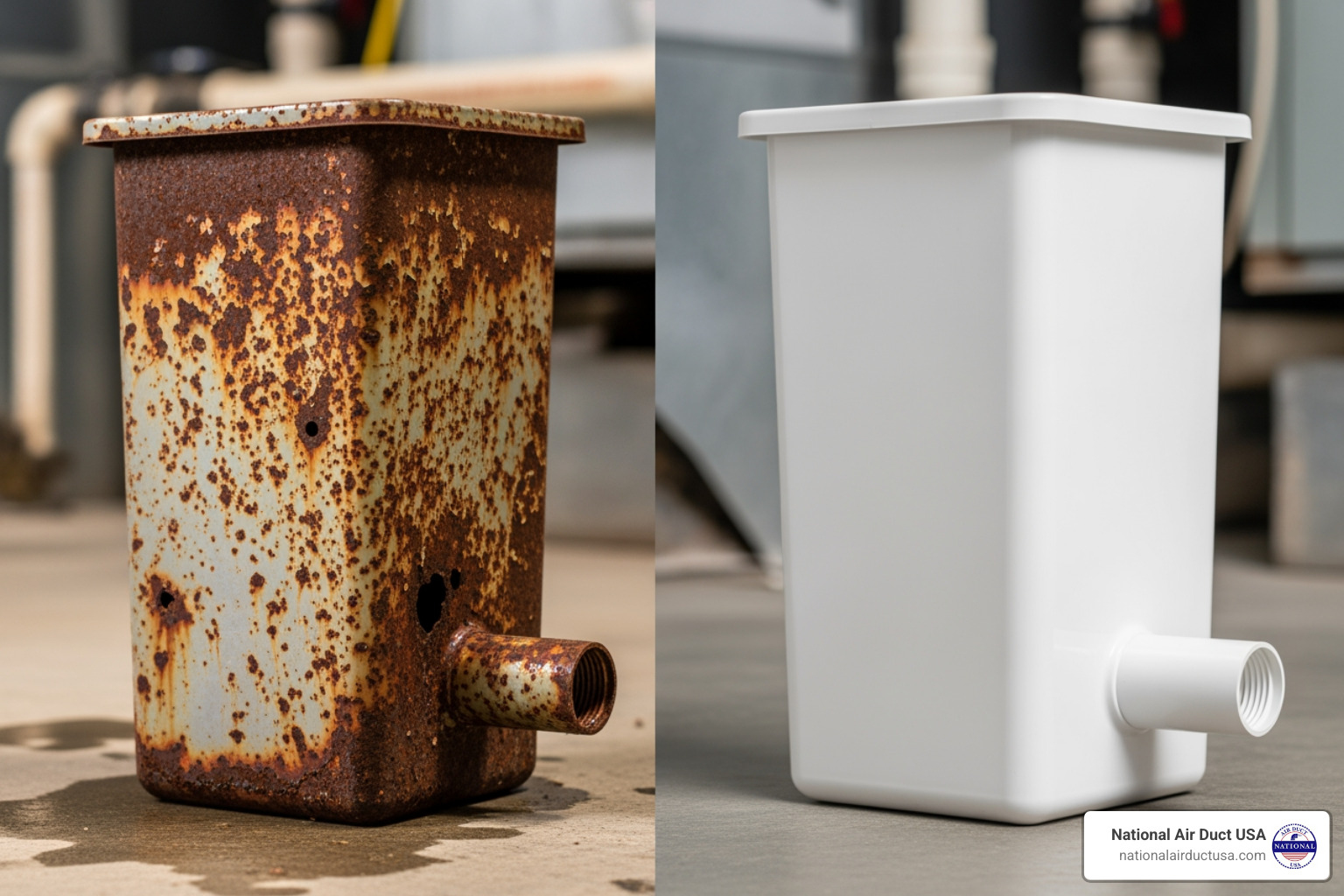
For most homeowners, replacing an old pan with a quality plastic model is the most practical choice. If upgrading from a rusty metal pan, a modern plastic or high-grade galvanized steel pan is a smart investment.
Primary vs. Secondary Drain Pans: Do You Need Both?
Understanding the two types of pans is key to protecting your home from water damage.
- The primary pan sits directly under the evaporator coil, catching all condensation and funneling it to the drain line.
- A secondary drain pan is a backup pan installed underneath the entire air handler. Its only job is to catch water if the primary pan or drain line fails.
According to the International Residential Code (IRC), a secondary pan is required if an overflow could damage the building. This is especially critical for attic installations and horizontal furnace configurations, which are common in Long Island and Westbury. In these setups, an overflow can quickly cause water to seep through ceilings and cause expensive structural damage.
So, do you need both? If your HVAC system is in an attic, above a finished living space, or anywhere an overflow would cause damage, the answer is yes. The small cost of adding a secondary pan is minimal compared to the potential cost of water damage repairs.
Frequently Asked Questions about AC Coil Drain Pans
Here are answers to the most common questions we hear from Long Island and Westbury homeowners about the AC coil drain pan.
How often should I clean my AC drain pan?
We recommend cleaning your drain pan and line at least once a year, ideally before the summer cooling season begins. If you have high humidity or have experienced past clogs, cleaning it every few months is a good idea to prevent the buildup of slime and algae that cause overflows. For professional maintenance of your entire system, explore our Services.
Can a clogged drain pan stop my AC from working?
Yes. Many modern AC units have a float switch in the drain pan. If the pan fills with water due to a clog, the switch is triggered and automatically shuts down your AC unit. This safety feature prevents the pan from overflowing and causing major water damage to your home, equipment, and ceilings. If your AC stops working unexpectedly, a tripped float switch is a very common cause.
What is the average cost to replace an AC drain pan?
The cost to replace an AC coil drain pan varies based on several factors:
- System Accessibility: A pan in an easily accessible basement unit will cost less to replace than one in a cramped attic.
- Pan vs. Coil Replacement: In many systems, the pan is integrated with the evaporator coil. If the pan is damaged, the entire coil assembly may need to be replaced, which is a more complex and costly job involving refrigerant lines.
- Labor Costs: Professional labor is the largest part of the cost. This is not a simple DIY job, as mishandling refrigerant lines can lead to expensive leaks. This is a task for certified technicians.
For an accurate estimate for your home in Long Island or Westbury, it’s best to have a professional assess the situation. We provide clear, upfront pricing with no obligation. Get a Free Quote to learn more.
Conclusion
Your AC coil drain pan is a small but essential component protecting your home from water damage. It quietly manages up to 20 gallons of condensation daily during humid Long Island and Westbury summers. When it fails, the consequences can be severe.
Fortunately, you now have the knowledge to prevent problems. Regular inspection and cleaning are your best defense against overflows, mold, and unexpected AC shutdowns. Taking a few minutes each year to check for standing water, cracks, or rust can save you thousands in repairs.
When it’s time for a replacement, you understand the differences between materials and the critical importance of a secondary pan, especially for attic installations. You know that a musty smell or ceiling stain is a call to action.
However, some jobs require professional expertise. If you’re facing a complex replacement, especially one involving the evaporator coil and its refrigerant lines, trust the certified experts. At National Air Duct USA, our NADCA-certified technicians provide transparent pricing and a 100% satisfaction guarantee for every job in Long Island and Westbury.
Your HVAC system is a major investment. To keep it running efficiently and ensure your home’s air is healthy, explore our professional Services. If you’re ready for an inspection or need a replacement, Get a Free Quote today and let us protect your home.