Why Professional Air Purifiers Matter for Your Business
Professional air purifiers are commercial-grade systems designed to clean the air in large, high-traffic spaces — far beyond what a typical home unit can handle.
Quick comparison: Top professional air purifier brands covered in this guide
| Brand | Best For | Key Technology | Coverage |
|---|---|---|---|
| IDEAL | Offices & clinics | Multi-stage HEPA + carbon | Up to 1,000+ sq ft |
| Fellowes | Open-plan workspaces | True HEPA + activated carbon | Mid-to-large rooms |
| Field Controls | HVAC integration | Whole-system air treatment | Whole building |
Here’s why this matters: Americans spend roughly 90% of their lives indoors. In a workplace, that means your employees are breathing the same recirculated air — hour after hour, day after day.
Poor indoor air quality is no small problem. The U.S. Centers for Disease Control has linked it to an estimated $60 billion in lost workplace productivity every year. And since events like the COVID-19 pandemic and widespread wildfire smoke, the stakes have become healthcare priorities that are impossible to ignore.
The challenge? The air purifier market is full of misleading claims. Manufacturers overstate room coverage, inflate CADR numbers, and cite lab reports that don’t hold up. Choosing the wrong system — especially for a commercial or industrial space — means wasted money and air that still isn’t clean.
This guide cuts through the noise. We look at three trusted professional-grade brands — IDEAL, Fellowes, and Field Controls — to help Long Island business owners and property managers find the right fit.
Key Differences Between Residential and Professional-Grade Units
When we talk about Professional air purifiers, we aren’t just talking about a bigger version of the plastic unit you might keep in your bedroom. There are fundamental engineering differences that dictate how these machines perform in a business environment.
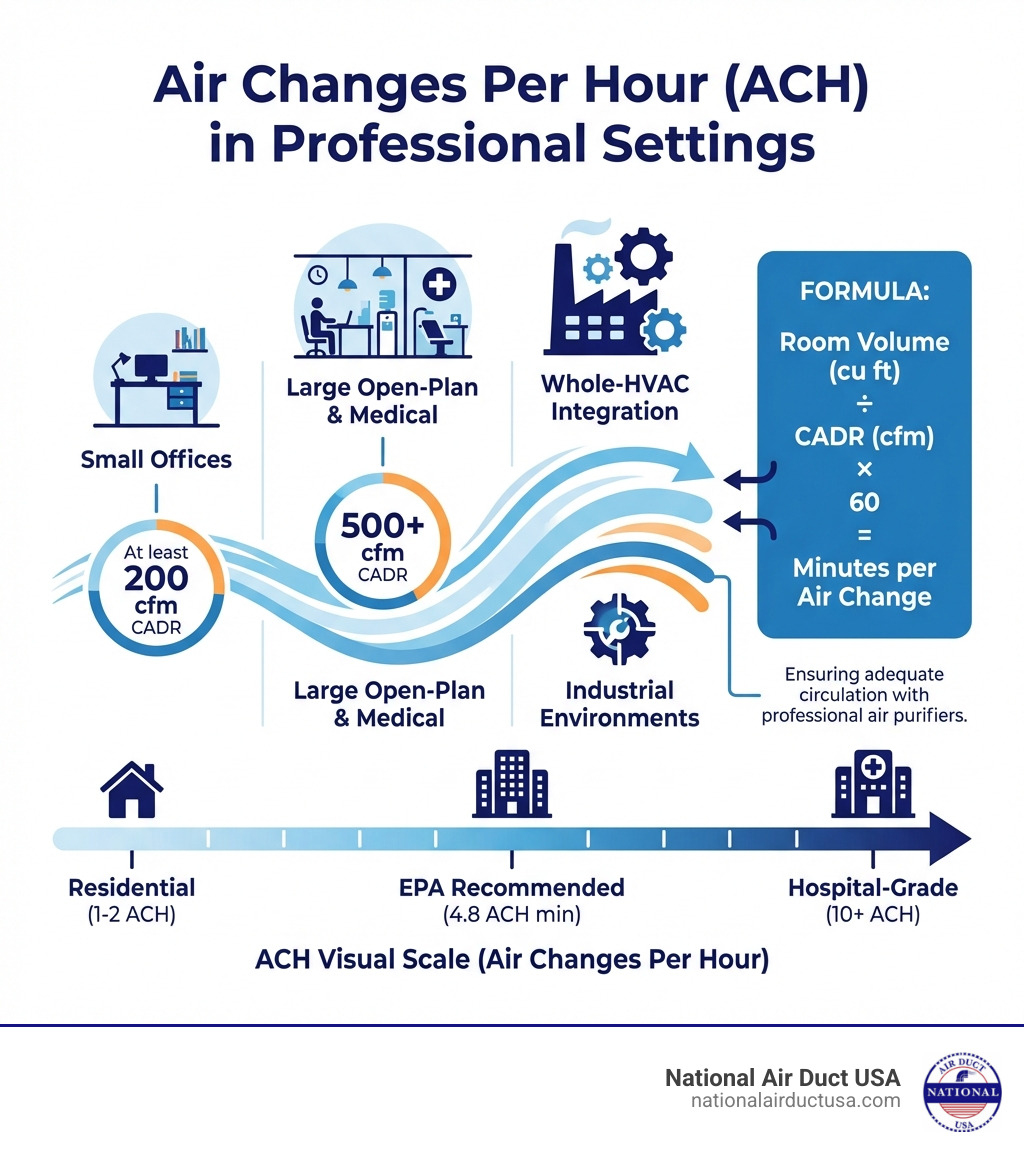
Residential units are often designed for aesthetics and occasional use. In contrast, professional units are built for 24/7 operation in demanding environments. They utilize industrial-grade fans and heavy-duty motors that can move a much higher volume of air without burning out. While a home unit might struggle to reach a Clean Air Delivery Rate (CADR) of 150 cfm, we recommend a 200 cfm minimum for even small professional spaces to ensure adequate circulation.
| Feature | Residential Air Purifier | Professional Air Purifier |
|---|---|---|
| Construction | Primarily Plastic | Premium Steel or Heavy-Duty Composite |
| CADR Rating | Usually <200 cfm | 250 to 1,000+ cfm |
| Filter Life | 3 – 6 Months | 6 – 18 Months (High Capacity) |
| Airflow Volume | Low (Quiet but weak) | High (Optimized for large spaces) |
| Durability | Light-duty home use | 24/7 Industrial/Commercial use |
| Smart Monitoring | Basic App | Real-time sensors & BMS integration |
The durability factor is huge. Many professional units, like those from IDEAL, feature robust steel construction. This isn’t just for show; it dampens vibration and noise, allowing the unit to move massive amounts of air while remaining quieter than a standard household dishwasher. Furthermore, scientific research on the impact of indoor air pollution highlights that consistent, high-volume filtration is necessary to actually reduce cellular responses to particulate matter (PM), something small residential units often fail to achieve in larger rooms.
Essential Technologies in Professional air purifiers
To achieve true “professional” status, a system must go beyond a simple mesh filter. We look for a multi-stage approach that addresses both particles and gasses.
- HEPA Filtration: This is the gold standard. A True HEPA filter is rated to capture at least 99.97% of particles as small as 0.3 microns. This includes dust, pollen, mold spores, and even many bacteria and viruses. Some high-end professional units even capture particles down to 0.1 microns.
- Pelleted Activated Carbon: This is where many residential units fail. They use a thin “carbon-impregnated” fabric. Professional systems use actual pellets or granules of activated carbon (sometimes up to 15 lbs of it!). This is essential for VOC removal, neutralizing odors, smoke, and chemical vapors that filters alone can’t touch.
- UVC Light: Often integrated into brands like Field Controls, UVC technology works by attacking the DNA and RNA of microorganisms. By destroying the genetic core of germs, it inactivates them, preventing reproduction. This is a vital secondary defense in medical and high-traffic settings.
For businesses in Westbury or Nassau County, ensuring your HVAC system cleaning is up to date is equally important, as a professional air purifier works best when the primary air handling system isn’t already clogged with debris.
Selecting the Right Professional air purifiers for Your Industry
Not every business has the same “air profile.” A dental clinic in Garden City has very different needs than a tech office in Hicksville.
- Dental & Medical Clinics: These environments require high ACH (Air Changes Per Hour) to mitigate aerosols. Systems with germ-inactivating technologies and HEPA filters are non-negotiable here.
- Pharmaceutical & Biotech: These facilities must adhere to strict FDA regulations and EPA standards. Advanced filtration is required to remove chemical vapors and maintain sterile conditions.
- Offices & Classrooms: The focus here is often on productivity and CO2 reduction. High-traffic areas need “whisper-quiet” operation (ideally between 37dB and 58dB) so employees can focus while the air is being scrubbed.
- Open-Plan Layouts: Large spaces need units with a high CADR, like the Coway Airmega ProX or IDEAL models, which can handle 1,000+ square feet effectively.

Health and Safety Mitigation in the Workplace
Investing in Professional air purifiers isn’t just about “smelling fresh”—it’s a critical health intervention. Air pollution, even indoors, is a potent oxidant. According to scientific research on oxidative stress and air quality, particulate matter and VOCs can induce oxidative stress in the human body.
This stress triggers immune system responses, leading to inflammation of the airways and even cardiovascular issues. By removing fine dust, soot, and allergens, you are directly protecting your team’s respiratory health.
Furthermore, the role of these units in virus protection cannot be overstated. High-quality professional units have demonstrated effectiveness against viruses similar to SARS-CoV-2 (the virus that causes COVID-19) and the murine coronavirus. By maintaining 4.8 to 5 air changes per hour, you significantly reduce the “viral load” in a shared space, which can lead to fewer sick days and a more resilient workforce.
Certifications and Standards for Professional air purifiers
When you’re shopping for your Long Island business, don’t just take the salesperson’s word for it. Look for these specific certifications:
- AHAM Verified: This means the Clean Air Delivery Rate (CADR) has been independently tested.
- CARB Compliance: Essential for safety, ensuring the unit does not emit harmful levels of ozone.
- Energy Star: Professional units run 24/7; Energy Star ratings ensure your utility bill doesn’t skyrocket.
- MERV 15 / H13 HEPA: Look for “True HEPA” or H13/H14 grades. Be wary of “HEPA-type” or “HEPA-like,” which are marketing terms that don’t meet the 99.97% efficiency standard.
- FDA Medical Device Standards: For surgical or high-hygiene environments, some units are specifically cleared by the FDA for medical use.
Maintenance and Long-Term Costs of Professional air purifiers
One of the biggest surprises for new owners of Professional air purifiers is the maintenance schedule. While the initial investment is higher, the long-term ROI is often better than buying multiple cheap units.
Professional units are designed for easy service. Most require filter replacements at 6-to-12-month intervals, though carbon filters may need more frequent attention if your environment has high VOC levels (like a hair salon or print shop).
Long-term cost considerations:
- Energy Consumption: A high-efficiency unit might use only as much power as a lightbulb on low settings, but it adds up over 5 years.
- Filter Costs: Professional filters are larger and more expensive than home filters, but they last significantly longer and capture more “debris per dollar.”
- System Efficiency: Integrating air purification can actually extend the life of your main HVAC system by reducing the dust load on your coils and blowers.
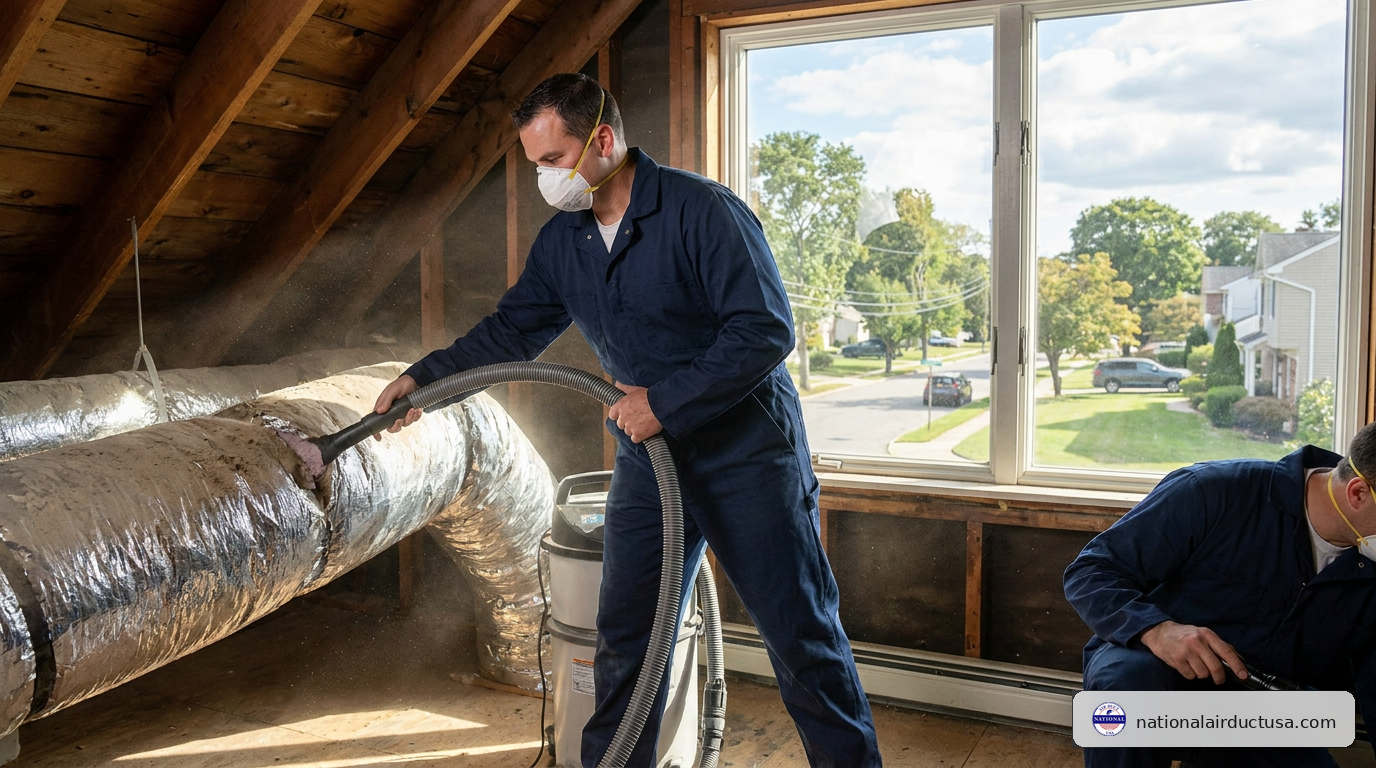
If you are unsure about the state of your current air quality, we often recommend a professional air duct cleaning as a baseline. Cleaning the “lungs” of your building ensures that your new air purifiers aren’t working overtime just to clean up the dust coming out of your own vents.
Frequently Asked Questions about Professional Air Purification
How many air changes per hour (ACH) are required for offices?
For an air purifier to be truly effective in a professional setting, the EPA and industry experts recommend a minimum of 4.8 ACH. This means all the air in the room is filtered roughly every 12 minutes. In higher-risk environments, like dental offices, we often aim for 6 to 10 ACH.
What is the difference between pelleted carbon and impregnated fabric?
Pelleted carbon consists of small, porous “rocks” of carbon that provide a massive surface area for gas molecules to stick to. Impregnated fabric is just a standard filter sprayed with a thin layer of carbon dust. For professional odor and chemical removal, pelleted carbon is significantly more effective and lasts much longer.
Can professional air purifiers be integrated into existing HVAC systems?
Yes! Brands like Field Controls specialize in this. Instead of a standalone “box” in the room, purification technologies like high-MERV filters and UVC lamps are installed directly into your ductwork. This provides whole-building treatment without taking up floor space.
Conclusion
Choosing between brands like IDEAL, Fellowes, and Field Controls comes down to your specific space and goals. IDEAL offers incredible German engineering for high-traffic offices; Fellowes provides versatile, smart-sensing units for open workspaces; and Field Controls is the leader for those looking to upgrade their entire building’s air through HVAC integration.
At National Air Duct USA, we believe that clean air is the foundation of a healthy business. Whether you are in Hempstead, Freeport, or anywhere across Nassau and Suffolk County, our NADCA-certified technicians are here to help. We don’t just stop at selling you a unit; we specialize in the professional installation of UV lights and comprehensive services that ensure your entire air system is running at peak efficiency.
Don’t let poor air quality drain your team’s productivity. Investing in Professional air purifiers is an investment in your people and your bottom line. We’ve seen how a clean system leads to 100% satisfaction and a healthier workplace for everyone.