Can Dirty Air Ducts Cause Health Problems in New York? A Comprehensive 2026 Expert Guide
Quick Answer
Dirty air ducts can contribute to health problems in New York, particularly when they contain mold, moisture, pests, or allergens rather than just light household dust. While the EPA states that dust alone hasn’t been proven to cause health issues, contaminated ducts with biological growth can distribute harmful particles throughout your home, potentially triggering respiratory symptoms, allergies, and asthma flare-ups, especially in NYC’s dense, older building stock.
Understanding Indoor Air Quality in New York
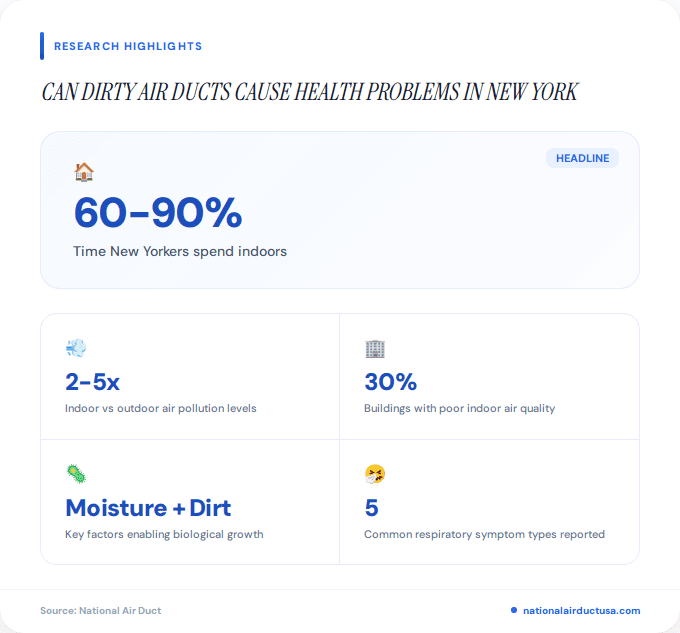
Most New Yorkers spend between 60% to 90% of their time indoors, making the quality of air inside homes and apartments critically important. Yet few residents consider what’s circulating through their HVAC systems until symptoms appear.
The question of whether dirty air ducts can cause health problems in New York has gained urgency as urban density increases and building systems age. According to EPA research on indoor air quality, the concern isn’t simple dust accumulation, but rather what biological contaminants can grow when moisture and dirt combine in ductwork.
In a city where pre-war brownstones share neighborhoods with modern high-rises, and where shared ventilation systems connect dozens of apartments, understanding the relationship between air duct condition and respiratory health is essential. Indoor air pollutants can reach 2 to 5 times higher concentrations than outdoor air, making contaminated duct systems a legitimate health concern for vulnerable populations.
What Does the Scientific Evidence Say About Dirty Air Ducts and Health?
The scientific evidence presents a nuanced picture. The EPA’s position on air duct cleaning states that light household dust in ducts has not been conclusively shown to increase particle levels in homes or cause health problems.
However, the EPA makes a critical distinction: when moisture and dirt are present in ductwork, biological contaminants such as mold can grow and be distributed throughout living spaces. This growth creates a fundamentally different health scenario than dust alone.
Research indicates that the health impact depends entirely on what is in the ducts and whether those contaminants are actively entering your breathing space. A duct system containing only light dust poses minimal risk, while one harboring mold spores, pest droppings, or decomposing organic matter presents legitimate health concerns.
The World Health Organization estimates that approximately 30% of new and remodeled buildings worldwide may have poor indoor air quality, though this statistic reflects broader building quality issues beyond ductwork alone.
What Health Symptoms Can Dirty Air Ducts Cause?
When air ducts contain biological contaminants or significant allergen loads, occupants may experience a range of respiratory and systemic symptoms. Industry observations and clinical reports on air quality and health have documented several common manifestations.
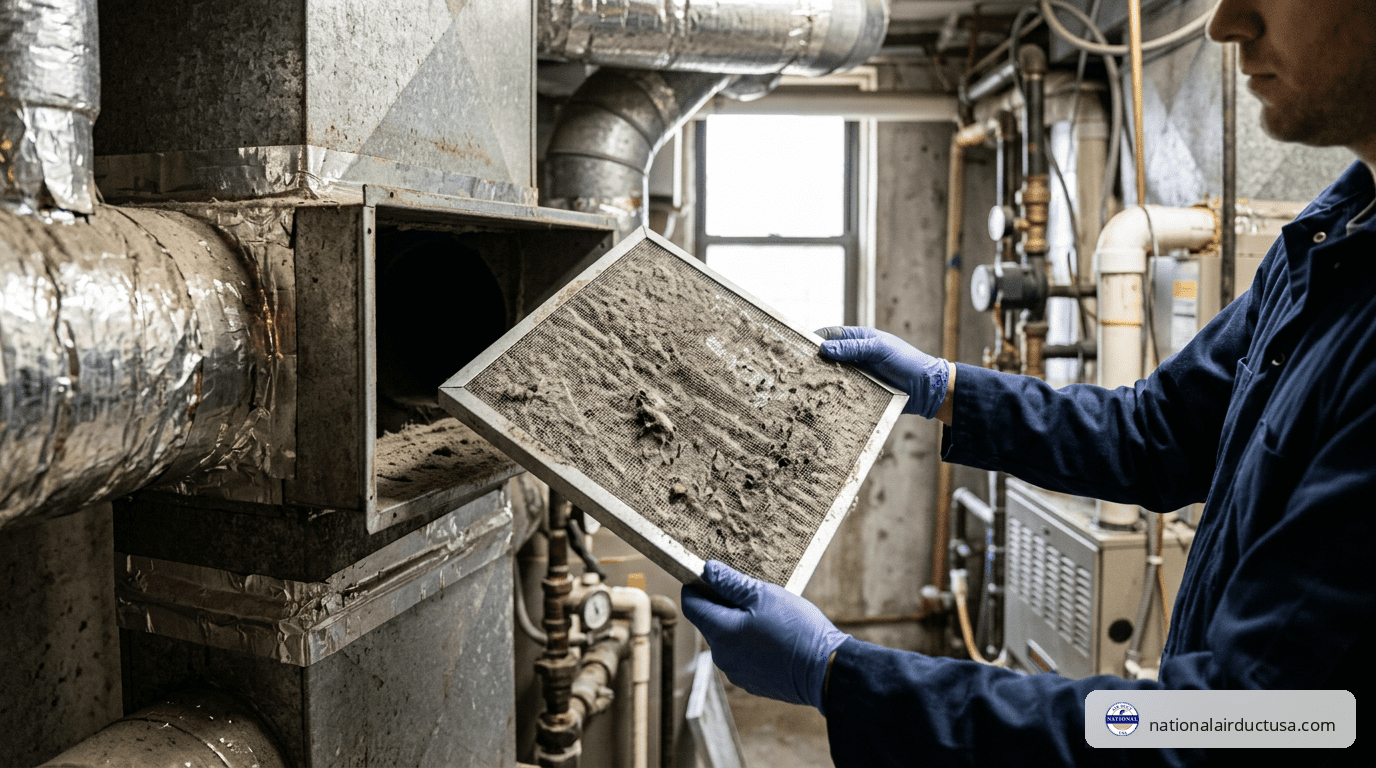
The most frequently reported symptoms include persistent coughing, sneezing, sore throat, nasal congestion, and sinus pressure. These respiratory irritations often worsen when the HVAC system is actively running, a clear indicator that the ventilation system is distributing irritants.
People with pre-existing conditions face amplified risks. Asthma sufferers may experience more frequent attacks or difficulty controlling symptoms. Those with allergies often report intensified reactions to dust mites, mold spores, and other airborne allergens that accumulate in ductwork.
| Symptom Category | Common Manifestations | Typical Timing |
|---|---|---|
| Respiratory | Coughing, wheezing, shortness of breath | When HVAC runs |
| Allergic | Sneezing, congestion, itchy eyes | Continuous while home |
| Systemic | Fatigue, headaches, difficulty concentrating | After prolonged exposure |
Systemic symptoms often prove more subtle but equally disruptive. Persistent headaches, unusual fatigue, and difficulty concentrating can result from prolonged exposure to poor indoor air quality. These symptoms typically improve when spending time away from the affected environment.
Why Are Air Duct Issues Particularly Concerning in New York?
New York presents unique environmental factors that make air duct contamination a more pressing concern than in many other regions. The city’s dense housing stock, aging infrastructure, and climate patterns create conditions where ductwork problems can have outsized health impacts.
Manhattan, Brooklyn, and Queens contain thousands of pre-war buildings with decades-old ventilation systems that may have never received professional cleaning. These older systems often lack modern filtration and may have accumulated years of contaminants.
According to industry guidance for New York property management, apartment building risers and shared duct systems should be cleaned at least every five years, with central air systems in individual apartments requiring attention every two years at minimum.
The city’s extreme seasonal temperature swings create additional challenges. Heavy heating in winter and air conditioning in summer produce condensation within ductwork. When combined with dust and organic material, this moisture creates ideal conditions for mold and bacterial growth.
Shared ventilation systems in apartment buildings present another unique risk. Contaminants from one unit can potentially circulate to others, making individual maintenance efforts less effective without building-wide attention to duct hygiene.
Urban pollution adds another layer of complexity. While professional air duct cleaning services can remove interior contamination, New York’s outdoor air quality means that effective filtration becomes even more critical for preventing new accumulation.
What Contaminants Accumulate in Air Ducts?
Understanding what actually accumulates in ductwork helps clarify the health risks. Air ducts can harbor a diverse range of contaminants, each with different health implications and requiring different mitigation approaches.
Biological contaminants represent the most concerning category. Mold spores thrive in damp ductwork, and some species produce mycotoxins that can cause respiratory distress, allergic reactions, and in severe cases, neurological symptoms. Bacteria can also proliferate in humid conditions, particularly in systems that have experienced water intrusion.
Dust mites, while microscopic, produce allergenic proteins in their waste products that trigger reactions in sensitive individuals. These creatures thrive in the warm, dust-rich environment of neglected ductwork.
Pest-related contamination poses significant health risks in urban environments. Rodent droppings, insect remains, and their associated pathogens can accumulate in accessible ductwork. In New York buildings, where pest pressure is constant, this contamination is particularly common.
Risk Level: High for respiratory issues
Common in: Moisture-damaged systems
Risk Level: Moderate to high for allergies
Common in: All residential systems
Risk Level: High for pathogens
Common in: Older NYC buildings
Risk Level: Low to moderate
Common in: Recently renovated spaces
Construction debris and renovation dust can also accumulate, particularly in buildings undergoing frequent updates. These particles may include drywall dust, paint particles, and fiberglass fibers, all of which can irritate respiratory systems.
Chemical contaminants include cleaning product residues, pesticide particles, and volatile organic compounds (VOCs) from building materials. While these don’t typically accumulate to dangerous levels in ductwork alone, they can contribute to overall indoor air quality problems.
Who Is Most Vulnerable to Air Duct Contamination?
While contaminated air ducts can affect anyone, certain populations face significantly elevated risks. Identifying vulnerable groups helps prioritize remediation efforts and protective measures.
Children are particularly susceptible due to their higher respiratory rates relative to body size and developing immune systems. They breathe more air per pound of body weight than adults, increasing their exposure to airborne contaminants. In New York apartments where children spend significant time indoors, this exposure becomes especially concerning.
Older adults often have compromised respiratory function and weakened immune responses, making them more susceptible to infections and less able to clear inhaled particles efficiently. This vulnerability increases with age-related conditions like COPD or reduced lung capacity.
Asthma sufferers represent a high-risk group, as contaminated ducts can trigger attacks and complicate disease management. With asthma rates in some New York neighborhoods exceeding national averages, duct contamination may contribute to the burden of respiratory disease in urban populations.
Individuals with compromised immune systems, whether from medical conditions or treatments, face increased risk of infections from biological contaminants. Mold and bacterial exposure that might cause minor irritation in healthy individuals can lead to serious infections in immunocompromised people.
People with existing allergies experience amplified symptoms when exposed to duct-distributed allergens. Those sensitive to mold, dust mites, or pet dander may find their allergies impossible to control without addressing ductwork contamination.
When Should You Actually Clean Your Air Ducts?
The EPA recommends cleaning air ducts only when necessary rather than on a fixed schedule, but specific conditions clearly warrant professional attention. Understanding these indicators helps homeowners make informed decisions about when cleaning provides genuine health benefits.
Visible mold growth inside ducts or on HVAC components represents the clearest indication for immediate cleaning. Mold can appear as dark spots, fuzzy growth, or discoloration on duct surfaces. If you observe this, professional remediation is essential.
Evidence of pest infestation, including droppings, nesting materials, or dead insects in vents or visible ductwork, requires thorough cleaning and pest control measures. In New York’s dense urban environment, this scenario is unfortunately common.
Excessive dust release from vents when the system operates suggests significant accumulation within ducts. If cleaning or dusting surfaces provides only temporary relief, or if visible dust plumes emerge from supply registers, duct cleaning may be warranted.
Following water damage or flooding, duct cleaning becomes essential. Water intrusion creates ideal conditions for rapid mold growth, and contaminated ducts can spread mold spores throughout the home even after visible water damage is remediated.
For guidance on maintenance schedules specific to New York conditions, you can review recommendations for how often air ducts should be cleaned in the region.
Recent renovation or construction work often warrants duct cleaning, as construction dust can accumulate heavily in systems. If proper precautions weren’t taken to seal ducts during work, cleaning removes accumulated debris before it circulates through living spaces.
How Can You Prevent Air Duct Contamination?
Prevention proves far more effective and economical than remediation. Several straightforward practices can significantly reduce contaminant accumulation and minimize health risks associated with ductwork.
Moisture control stands as the single most important preventive measure. The EPA emphasizes this as the most effective strategy for preventing biological growth in ductwork. Fix leaks promptly, ensure proper drainage around HVAC units, and address any condensation issues immediately.
Regular filter replacement maintains the first line of defense against particulate accumulation. High-quality filters should be replaced every 1-3 months depending on usage, indoor air quality, and household factors like pets or smoking. Upgrading to HEPA-rated filters provides enhanced protection.
Controlling source contaminants reduces what enters ductwork initially. This includes proper ventilation when using cleaning products, prompt attention to water spills, regular pest control, and minimizing indoor smoking or burning of materials.
Professional HVAC maintenance ensures systems operate efficiently and identifies problems early. Annual inspections can detect moisture issues, failing components, or early signs of contamination before they become serious health hazards.
Just as dryer vent cleaning prevents fire hazards, air duct maintenance prevents health hazards. Both represent essential components of building safety in New York homes.
What Should Professional Air Duct Cleaning Include?
Understanding what constitutes proper professional cleaning helps homeowners evaluate service providers and ensure thorough remediation. Not all duct cleaning services deliver the same quality or comprehensiveness.
Legitimate professional cleaning should include inspection of the entire HVAC system, including supply and return ducts, registers, diffusers, heat exchangers, cooling coils, condensate drain pans, and the air handling unit housing. Surface-level cleaning of visible ducts provides minimal benefit.
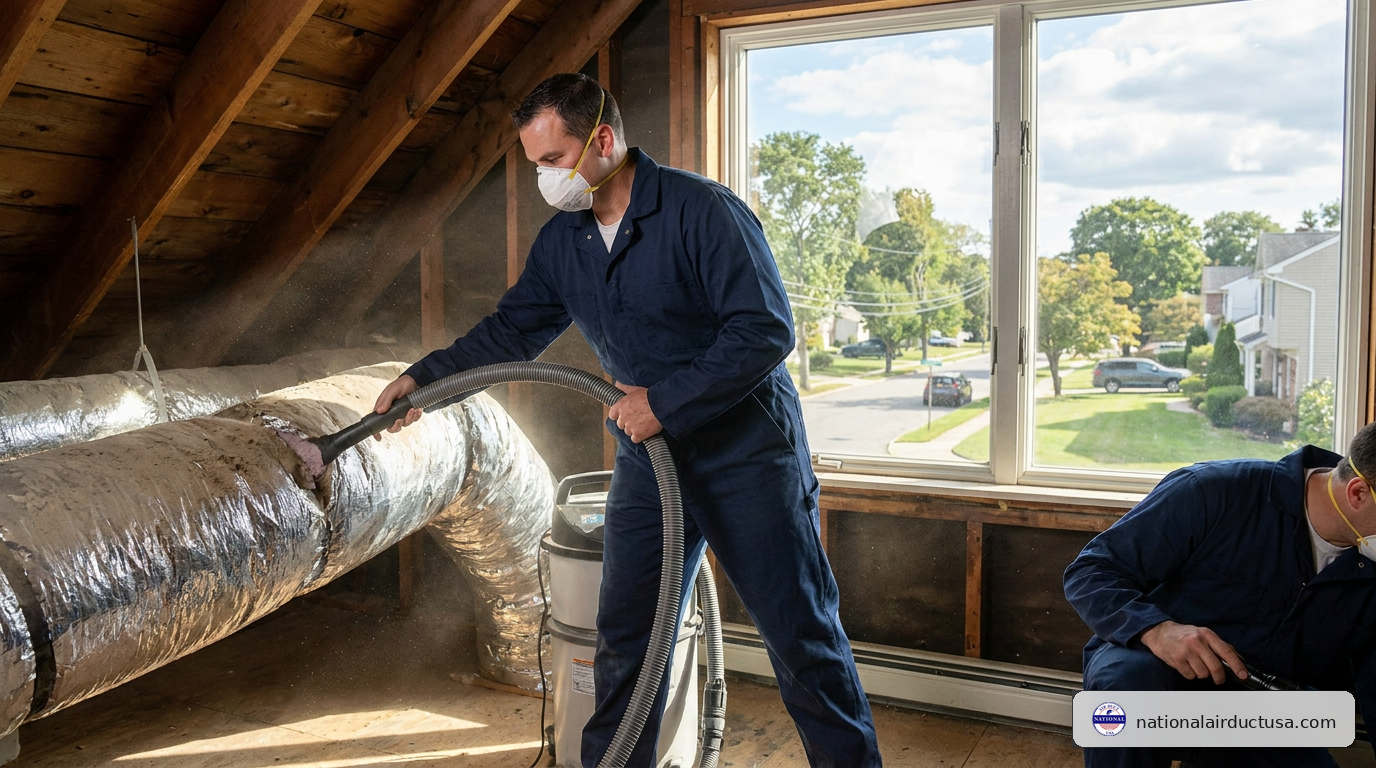
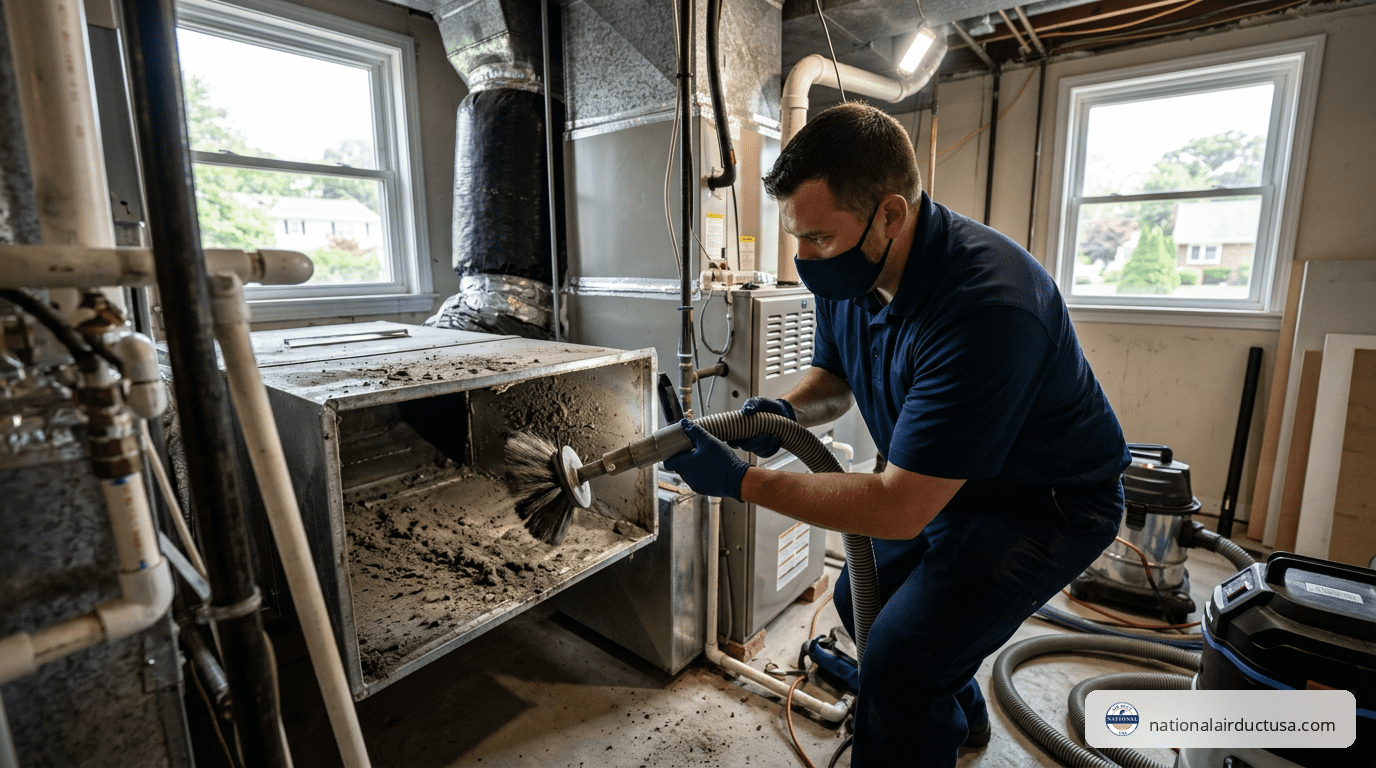
Proper cleaning uses source removal methods, physically dislodging and removing contaminants rather than simply disturbing them. This typically involves specialized brushes, air whips, and high-powered vacuum systems with HEPA filtration to capture removed particles.
Pricing for air duct cleaning in New York varies widely, typically ranging from $450 to $2,500 or more depending on system size, accessibility, contamination severity, and building type. Single-family homes generally cost less than multi-unit buildings with complex shared systems. Pricing depends on your specific situation, square footage, number of vents, and extent of contamination, so requesting a custom quote ensures accurate assessment.
Professional services should also address underlying problems. If mold is present, identifying and correcting the moisture source is essential. If pest contamination exists, coordinating with pest control prevents recurrence.
To see the tangible difference professional cleaning makes, review before and after results from Long Island air duct cleaning projects.
Key Takeaways
- Contamination type matters more than dust alone: Light household dust in air ducts hasn’t been proven harmful, but moisture-damaged systems harboring mold, pests, or biological contaminants pose legitimate health risks.
- Indoor air quality significantly impacts health in New York: With residents spending 60% to 90% of time indoors and indoor pollutants reaching 2 to 5 times outdoor levels, ductwork condition affects daily exposure to contaminants.
- Vulnerable populations face elevated risks: Children, older adults, asthma sufferers, immunocompromised individuals, and allergy-prone people experience amplified health effects from contaminated ducts.
- New York’s building stock presents unique challenges: Aging infrastructure, shared ventilation systems, extreme seasonal temperature swings, and urban pest pressure make regular duct maintenance especially important in NYC.
- Moisture control is the most effective prevention: The EPA emphasizes preventing water intrusion and controlling humidity as the primary strategy for avoiding biological growth in ductwork.
- Professional cleaning should be condition-driven: Rather than routine scheduling, focus on cleaning when specific problems appear such as visible mold, pest evidence, water damage, or excessive dust release from vents.
- Quality varies significantly among service providers: Proper duct cleaning requires specialized equipment, comprehensive system access, and source removal methods, not just surface-level treatment of visible components.
People Also Ask
Can dirty air ducts make you sick?
Dirty air ducts can contribute to illness when they contain mold, moisture, pest droppings, or significant allergen loads rather than just light dust. These contaminants can trigger respiratory symptoms, allergic reactions, and asthma flare-ups, particularly in vulnerable populations.
How do I know if my air ducts need cleaning?
Key signs include visible mold growth inside ducts, evidence of pest infestation, excessive dust release from vents, musty odors when the HVAC runs, or recent water damage. If household members experience unexplained respiratory symptoms that improve when away from home, contaminated ducts may be contributing.
Does air duct cleaning really improve health?
Air duct cleaning can improve health when ducts contain actual contaminants like mold or pest droppings, but won’t provide benefits if only light dust is present. The EPA states that evidence doesn’t show routine cleaning provides health benefits, but targeted cleaning when specific problems exist can reduce exposure to harmful biological contaminants.
What are the symptoms of mold in air ducts?
Mold in air ducts can cause persistent coughing, wheezing, nasal congestion, throat irritation, eye irritation, skin rashes, headaches, and fatigue. Symptoms typically worsen when the HVAC system operates and may improve when spending time away from the affected environment.
How often should air ducts be cleaned in NYC apartments?
Industry guidance for New York suggests apartment building risers should be cleaned at least every five years, while central air systems in individual apartments should receive attention every two years at minimum. However, condition-based cleaning when specific problems appear is more important than fixed schedules.
Can dirty air ducts cause breathing problems?
Yes, contaminated air ducts can cause breathing problems by distributing mold spores, allergens, bacteria, and particulate matter throughout your living space. These contaminants can trigger asthma attacks, worsen existing respiratory conditions, and cause new respiratory symptoms in previously healthy individuals.
Frequently Asked Questions
Is air duct cleaning worth it for health reasons?+
Air duct cleaning is worth it for health reasons when ducts contain mold, pest contamination, or significant biological growth, but not necessarily for routine maintenance of ducts with only light dust. The value depends on your specific situation and whether actual contaminants are present that could impact respiratory health.
What happens if you never clean your air ducts?+
If you never clean air ducts, contaminants can accumulate over years, potentially including mold growth in moisture-damaged systems, pest infestations, and allergen buildup. In New York’s older buildings with decades of neglect, this can create significant indoor air quality problems and contribute to respiratory symptoms in occupants.
Can air duct cleaning make allergies worse temporarily?+
Improper air duct cleaning that disturbs contaminants without fully removing them can temporarily worsen allergies by releasing particles into living spaces. This is why professional cleaning should use proper containment, HEPA-filtered vacuum systems, and source removal methods rather than simply agitating dust within ducts.
How long does it take to notice health improvements after duct cleaning?+
Most people notice health improvements within 2 to 4 weeks after professional duct cleaning if contaminated ducts were contributing to symptoms. Immediate relief is uncommon as the body needs time to recover from exposure, and residual particles take time to fully clear from the home environment.
Do air purifiers help if air ducts are dirty?+
Air purifiers can help reduce airborne particles even if ducts are dirty, but they don’t address the source of contamination. While portable HEPA air purifiers provide supplementary filtration, they work best in conjunction with addressing duct contamination rather than as a substitute for proper remediation.
Should I clean air ducts before or after moving into a NYC apartment?+
Cleaning air ducts before moving into a New York apartment is ideal, especially in older buildings where maintenance history is unknown. This ensures you start with clean air quality and aren’t exposed to previous occupants’ contaminants, though landlord cooperation may be required for apartment units.
Can dirty air ducts cause headaches and fatigue?+
Yes, dirty air ducts containing mold or chemical contaminants can cause headaches, fatigue, and difficulty concentrating through prolonged exposure to poor indoor air quality. These systemic symptoms often improve when away from the affected environment and can resolve after proper duct cleaning and remediation.
Take Control of Your Indoor Air Quality Today
If you’re experiencing unexplained respiratory symptoms, worsening allergies, or simply want peace of mind about your home’s air quality in New York, professional assessment is the first step. Understanding whether your air ducts harbor contaminants requires expert inspection beyond what’s visible from supply registers.
At National Air Duct, our New York-based team specializes in comprehensive HVAC system inspection, identifying moisture issues, biological contamination, and other factors affecting indoor air quality. We use industry-leading equipment and source removal methods to thoroughly remediate contaminated systems.
Related: What Are the Drawbacks of Duct Cleaning in New York?
Related: Dryer Vent Cleaning Average Cost in Long Island NY: Complete 2026 Pricing Guide
Related: Can Dirty Air Ducts Cause Allergies in New York? The 2026 Scientific Answer
Related: Air Duct Cleaning Removes Dust Mites in Long Island NY: The Complete 2026 Guide
Don’t let contaminated ductwork compromise your family’s health. Contact us today for a professional assessment and custom quote tailored to your specific building, system configuration, and contamination concerns.