Can Dirty Air Ducts Cause Allergies in New York? The 2026 Scientific Answer
Quick Answer
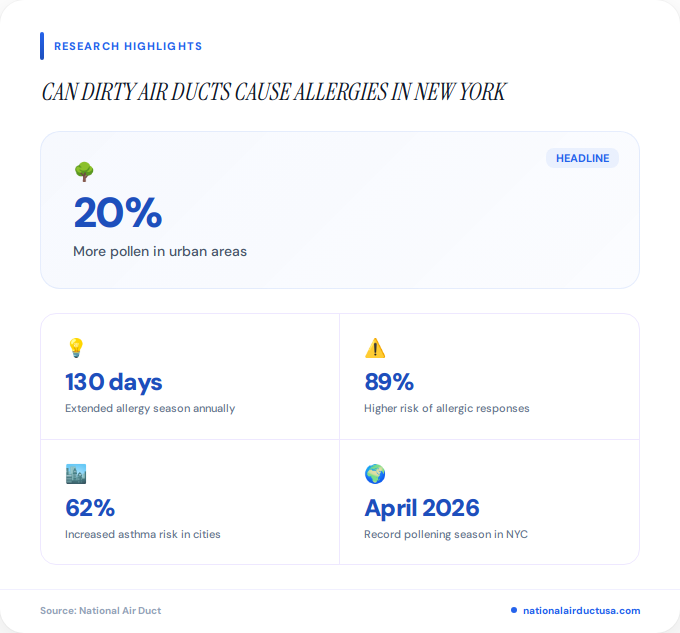
Yes, dirty air ducts can cause or significantly worsen allergies in New York by continuously circulating accumulated dust, mold spores, pet dander, and pollen throughout your home. With NYC’s record-breaking 2026 “Pollening” season and urban heat islands producing 20% more pollen than rural areas, contaminated ductwork compounds allergy symptoms by distributing these allergens every time your HVAC system runs.
If you’ve been sneezing, coughing, or experiencing persistent respiratory symptoms in your New York home, your air ducts might be the hidden culprit. While most residents focus on outdoor pollen counts during allergy season, the reality is that contaminated HVAC ductwork can circulate allergens through your living spaces 24/7, creating a constant exposure cycle that outdoor allergens alone cannot match.
The connection between dirty air ducts and allergies in New York is particularly concerning given the city’s unique environmental challenges. Between the urban heat island effect, light pollution extending allergy seasons, and the unprecedented “Pollening” of April 2026, New York residents face compounding factors that make indoor air quality management more critical than ever.
What Makes New York’s Allergy Season Particularly Challenging in 2026?
New York experienced its most aggressive allergy season in recorded history during April 2026, a period locals dubbed “The Pollening.” According to recent data, the unseasonably warm winter of 2025 to 2026 caused multiple tree species to release pollen simultaneously, creating a pollen overlap phenomenon that intensified immune responses across the metropolitan area.
The urban heat island effect unique to New York City creates conditions where concrete and asphalt trap heat, causing urban trees like oaks, maples, and birches to produce up to 20% more pollen than their rural counterparts. This concentrated pollen production means that even neighborhoods in Manhattan, Brooklyn, and Queens with limited green space experience significant outdoor allergen exposure.
Perhaps most surprising is the impact of light pollution on allergy duration. Research shows that living in light-polluted urban areas like New York is associated with a 62% higher risk of asthma and an 89% higher risk of allergic responses. The excess artificial light extends the allergy season by up to 130 days annually, creating a nearly year-round challenge for sensitive individuals.
How Do Dirty Air Ducts Spread Allergens Throughout Your Home?
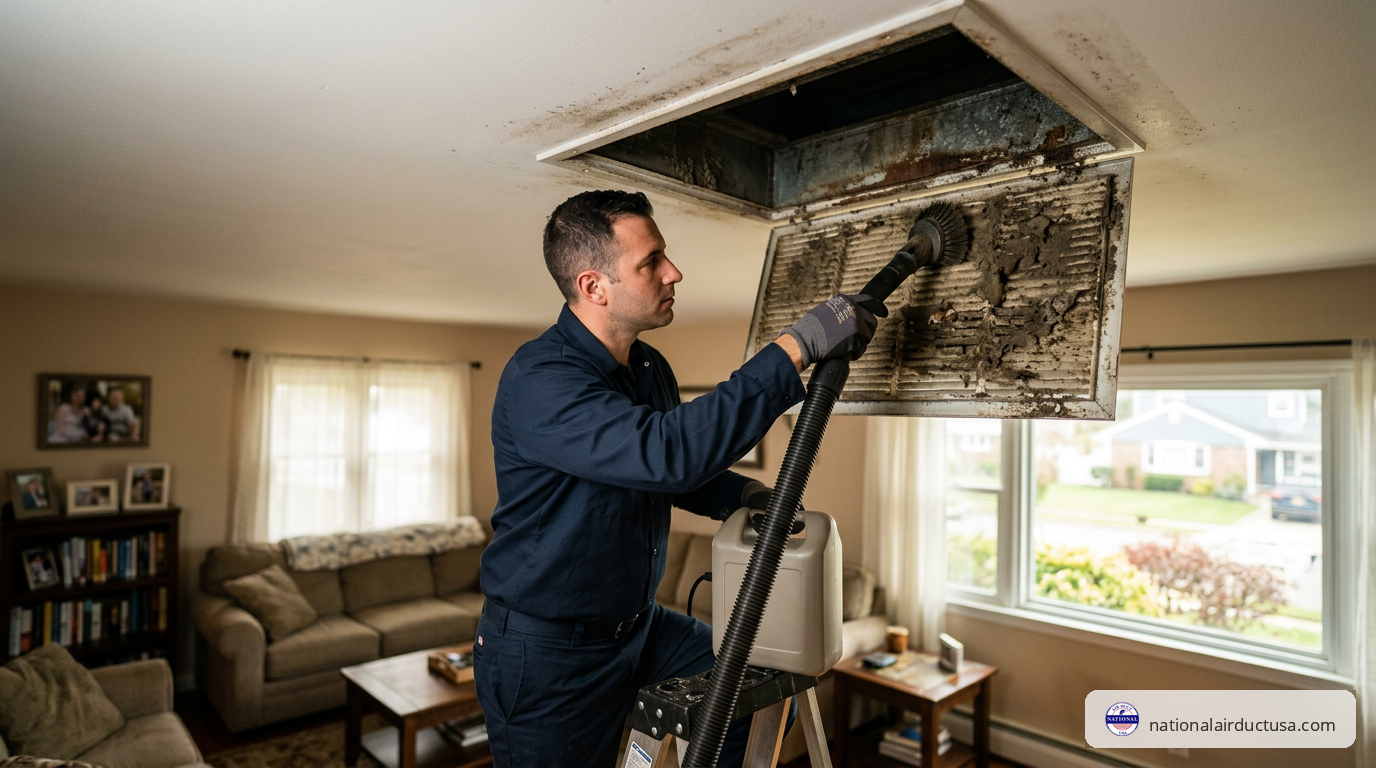
Your HVAC system acts as the respiratory system of your home, and when ductwork becomes contaminated, it functions like lungs filled with irritants. Every time your heating or cooling system cycles on, it pushes air through ducts that may contain accumulated dust, mold spores, pet dander, pollen, and other allergens. These particles then disperse into every room connected to the system.
Environmental Protection Agency research confirms that contaminated ductwork is a major contributor to poor indoor air quality, leading to aggravated allergies, worsened asthma, headaches, and chronic sinus problems. The circulation pattern creates a continuous exposure cycle that makes it nearly impossible to find relief, even when outdoor pollen counts drop.
In New York homes, the problem intensifies due to several factors. The high-density housing means HVAC systems often work harder and run longer than in less populated areas. Buildings in neighborhoods like the Upper West Side, Astoria, and Park Slope may have older ductwork systems that have accumulated decades of contaminants without proper maintenance.
HVAC experts consistently emphasize that if ducts are dirty, your heating and cooling system continuously cycles allergens through the house, making it harder to control symptoms even with regular surface cleaning and air filtration efforts. The ductwork essentially becomes a reservoir and distribution system for allergens.
What Are the Warning Signs Your Air Ducts Are Causing Allergy Problems?
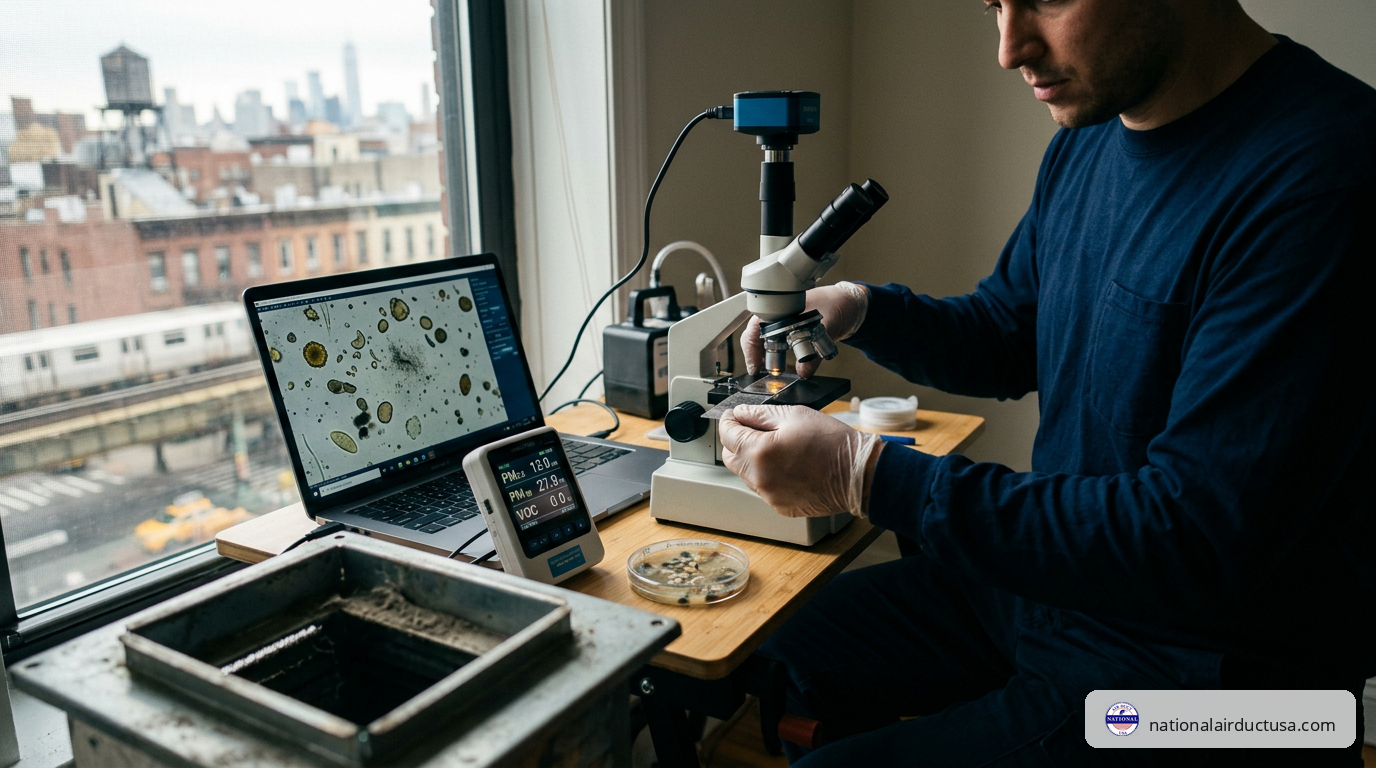
Recognizing whether your air ducts are contributing to allergy symptoms requires attention to specific patterns and indicators. Health professionals identify several key warning signs that contaminated ductwork may be affecting your indoor air quality.
Persistent symptoms that worsen indoors represent the primary red flag. If you notice your sneezing, congestion, itchy eyes, or respiratory discomfort increases when you’re home but improves when you leave, your ductwork likely contains allergen reservoirs. This pattern is particularly telling if symptoms intensify immediately after your HVAC system turns on.
| Warning Sign | What It Indicates | Action Needed |
|---|---|---|
| Visible dust around vents | Excessive particulate circulation | Immediate inspection |
| Musty odors when HVAC runs | Mold or mildew growth | Professional cleaning required |
| Symptoms worse after system use | Active allergen distribution | Duct cleaning assessment |
Additional warning signs include unexplained increases in dust accumulation on surfaces, inconsistent airflow between rooms, and family members experiencing different symptom severity in different areas of the home. These patterns suggest that contamination may be concentrated in specific duct sections serving particular rooms.
For comprehensive guidance on identifying when cleaning is necessary, review our article on signs your air ducts need cleaning in New York, which provides detailed diagnostic criteria specific to the region’s environmental conditions.
Why Do Some People Experience Worse Allergies After Duct Cleaning?
One of the most confusing aspects of air duct cleaning is the temporary symptom spike some individuals experience immediately following professional service. This phenomenon, while counterintuitive, has a logical explanation rooted in the cleaning process itself.
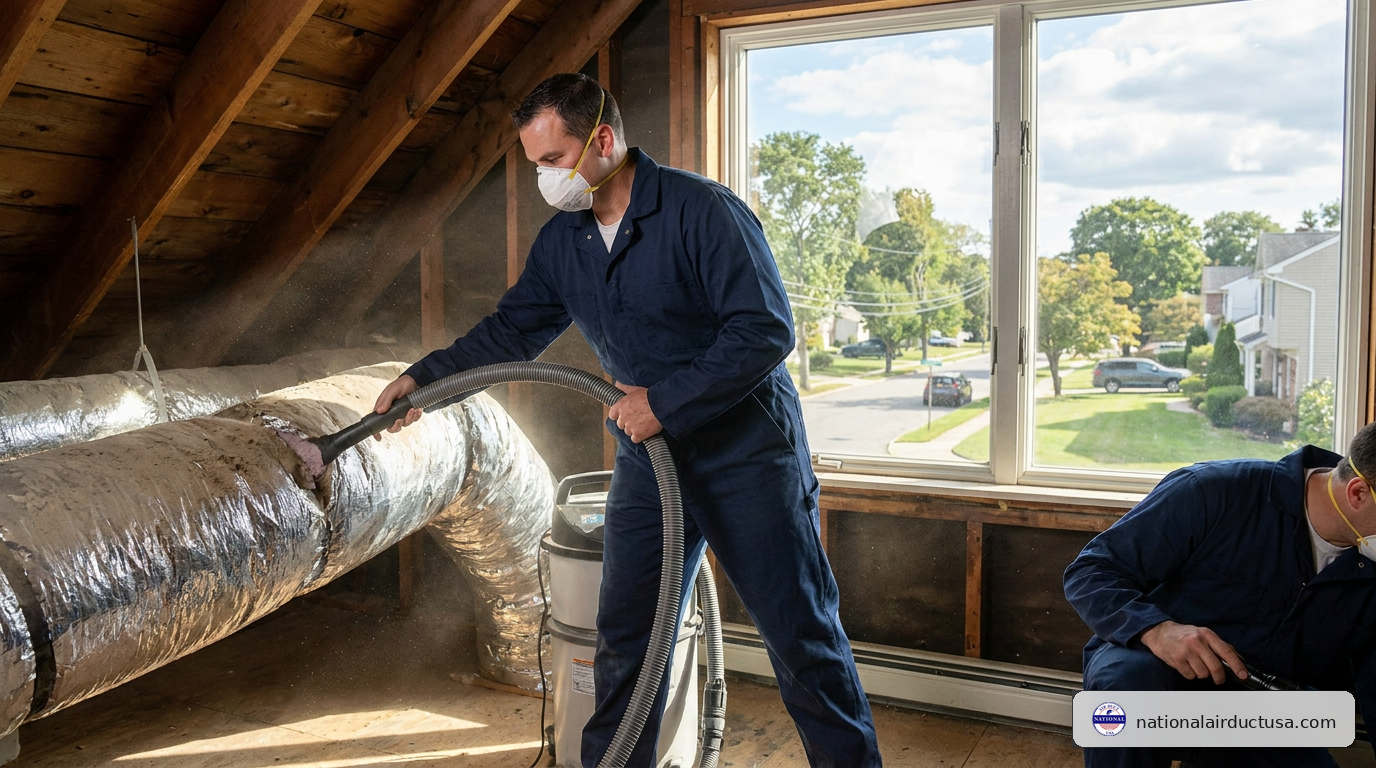
During professional duct cleaning, powerful equipment dislodges years of accumulated dust, mold spores, and allergens from duct surfaces. While industry-standard practices include containment and filtration systems, some particles inevitably become temporarily airborne before being captured. This stirring-up effect can release allergens into living spaces, causing a short-term increase in exposure.
The temporary nature of this discomfort is crucial to understand. Most individuals experience symptom relief within 48 to 72 hours after cleaning as disturbed particles settle and are removed through normal air filtration. The key is distinguishing between temporary post-cleaning discomfort and ongoing symptoms that might indicate incomplete cleaning or other issues.
Symptoms: Temporary increase
Cause: Particle disturbance
Action: Use HEPA filters
Symptoms: Gradual improvement
Cause: Particle settlement
Action: Clean surfaces
Symptoms: Significant relief
Cause: Clean air circulation
Action: Maintain system
To minimize temporary discomfort, professionals recommend running HEPA air purifiers during and immediately after cleaning, wiping down surfaces in rooms connected to the ductwork, and maintaining good ventilation by opening windows when weather permits. These steps help capture and remove any lingering airborne particles more quickly.
What Are the Long-Term Benefits of Professional Duct Cleaning for Allergies?
When performed correctly by qualified professionals, air duct cleaning provides substantial long-term benefits for allergy sufferers in New York. The primary advantage is the elimination of the continuous allergen circulation cycle that contaminated ducts create. With clean ductwork, your HVAC system distributes filtered air rather than recycling accumulated irritants.
Research indicates that properly cleaned and maintained duct systems can reduce indoor allergen levels by 40% to 60% compared to neglected systems. This reduction translates to measurable improvements in respiratory symptoms, sleep quality, and overall quality of life for sensitive individuals. The benefit is particularly significant in New York, where professional duct cleaning services address both the standard allergen accumulation and the region-specific challenges of high pollen production and extended allergy seasons.
Beyond allergen removal, professional cleaning addresses mold growth, which thrives in the dark, sometimes damp environment of ductwork. Mold spores are particularly problematic allergens because they can cause severe reactions and are resilient enough to survive in various conditions. Eliminating mold reservoirs from ducts prevents continuous spore distribution throughout your living spaces.
The industry standard recommends inspecting ductwork every 3 to 5 years and maintaining HVAC systems twice annually to prevent allergen and mold buildup. This proactive approach is more effective than reactive cleaning after problems develop. For detailed maintenance schedules tailored to New York conditions, consult our guide on how often you should clean air ducts.
How Much Does Professional Air Duct Cleaning Cost in New York?
The investment in professional air duct cleaning in New York varies significantly based on multiple factors including system size, contamination level, accessibility, and the specific services required. Pricing typically ranges from $300 to $1,500+ for residential properties, with commercial systems requiring substantially higher investments.
Several factors influence where your specific project falls within this range. Homes with extensive ductwork systems, multiple stories, or hard-to-access ducts require more time and specialized equipment, increasing costs. Properties with severe contamination, visible mold growth, or pest infestations need additional remediation services beyond standard cleaning.
Premium service providers offer comprehensive packages that include not just cleaning but also sanitization, seal inspection, and post-service verification. These thorough approaches provide superior long-term value by addressing the root causes of contamination and preventing rapid re-accumulation. When evaluating pricing, consider that the cheapest option may cut corners on containment procedures, potentially worsening short-term allergen exposure.
For New York residents seeking professional services, pricing varies based on your specific project scope, property characteristics, and the level of contamination present. We encourage you to contact us for a custom quote that reflects your unique situation and ensures you receive comprehensive service appropriate for your needs.
If you’re interested in related services, our guides on dryer vent cleaning costs and commercial air duct cleaning provide detailed pricing information for those additional services.
How Can You Prevent Allergen Buildup in Your Ductwork?
Prevention is always more effective and economical than remediation when it comes to duct contamination. Several proactive strategies can significantly reduce allergen accumulation and extend the time between necessary professional cleanings.
Regular filter replacement represents the single most important preventive measure. High-quality HEPA filters capture 99.97% of particles as small as 0.3 microns, preventing them from entering your ductwork in the first place. In New York’s high-allergen environment, consider replacing filters every 30 to 60 days during peak pollen seasons rather than following the standard 90-day schedule.
Sealing duct leaks prevents outdoor allergens from infiltrating your system through gaps and cracks. Many New York homes have ductwork running through attics, basements, or crawl spaces where dust and pollen can enter through unsealed connections. Professional duct sealing not only improves allergen control but also enhances energy efficiency by preventing conditioned air loss.
| Prevention Strategy | Frequency | Impact Level |
|---|---|---|
| HEPA filter replacement | Every 30-60 days | Very high |
| Professional HVAC maintenance | Twice yearly | High |
| Duct inspection | Every 3-5 years | Medium-high |
Maintaining proper humidity levels between 30% and 50% prevents mold growth in ductwork while remaining comfortable for occupants. In New York’s humid summers, dehumidifiers help control moisture levels, while winter heating can dry air excessively, requiring humidification to prevent respiratory irritation.
Finally, addressing indoor allergen sources reduces the amount of contamination entering your ductwork. Regular vacuuming with HEPA-equipped cleaners, washing bedding weekly in hot water, and controlling pet dander through grooming and restricted access to certain rooms all contribute to cleaner duct systems over time.
People Also Ask
Can duct cleaning help with allergies in the long term?
Yes, when performed correctly and paired with ongoing HVAC maintenance, professional duct cleaning reduces allergen buildup by 40% to 60% and significantly improves indoor air quality. The benefits persist for several years when combined with regular filter changes and preventive maintenance.
Do dirty ducts cause allergies or just worsen them?
Dirty ducts typically worsen existing allergies rather than creating new sensitivities, though prolonged exposure to mold spores from contaminated systems can trigger new allergic responses in previously non-sensitive individuals. The constant circulation of allergens makes symptoms more severe and persistent than outdoor exposure alone.
How do I know if mold is growing in my air ducts?
Visible mold around vents, musty odors when the HVAC runs, and unexplained allergy symptoms that worsen indoors indicate potential mold growth. Professional inspection with camera equipment can definitively identify mold presence in inaccessible duct sections.
Are there specific times of year when duct cleaning is most beneficial in New York?
Late summer or early fall, before heating season begins, is ideal for duct cleaning in New York. This timing removes accumulated pollen and allergens from the spring and summer seasons before you seal your home for winter and rely heavily on your HVAC system.
Can I clean my air ducts myself to save money?
While you can clean visible vent covers and accessible duct openings, professional equipment is necessary for thorough cleaning of the entire system. DIY attempts often stir up allergens without proper containment, potentially worsening symptoms and leaving deep contamination untouched.
How does New York’s climate affect air duct contamination?
New York’s humid summers promote mold growth in ductwork, while the extended heating season circulates accumulated allergens continuously. The urban heat island effect and high pollen production also mean more outdoor allergens infiltrate homes and HVAC systems compared to rural areas.
Frequently Asked Questions
How often should New York residents have their air ducts professionally cleaned?+
Industry standards recommend professional duct inspection every 3 to 5 years for most homes, with cleaning performed as needed based on contamination levels. New York residents with severe allergies, pets, or recent renovations may benefit from more frequent service every 2 to 3 years.
What should I look for when choosing a duct cleaning company in New York?+
Prioritize companies with NADCA certification, verified insurance, and transparent pricing structures. Request before-and-after documentation, ensure they use negative pressure containment systems, and verify they follow EPA guidelines for safe cleaning practices.
Can air duct cleaning eliminate allergy symptoms completely?+
While duct cleaning significantly reduces indoor allergen circulation and improves symptoms for most people, it cannot eliminate allergies entirely. Outdoor allergens, other indoor sources, and individual sensitivities mean duct cleaning should be part of a comprehensive allergy management strategy rather than a standalone solution.
How long does professional air duct cleaning take?+
A thorough professional cleaning typically requires 3 to 5 hours for an average-sized home, though larger properties or heavily contaminated systems may take longer. The process includes setup, cleaning all supply and return ducts, and post-service verification.
Will duct cleaning improve my energy efficiency?+
Yes, removing buildup from ductwork improves airflow efficiency, reducing the workload on your HVAC system. Combined with duct sealing to eliminate leaks, professional cleaning can reduce heating and cooling costs by 15% to 25% while simultaneously improving air quality.
Are chemical treatments necessary during duct cleaning?+
Chemical biocides and sanitizers are optional and should only be used when specific contamination issues like mold growth are present. For standard allergen removal, mechanical cleaning with proper containment is sufficient and avoids introducing potentially irritating chemicals into your air system.
Should I have my entire HVAC system serviced along with duct cleaning?+
Yes, comprehensive service that includes cleaning the air handler, coils, blower motor, and drip pans provides maximum benefit. Contamination in these components can quickly re-contaminate cleaned ducts, so addressing the entire system ensures lasting results and optimal air quality improvement.
Key Takeaways
- Dirty air ducts definitively worsen allergies in New York by continuously circulating accumulated allergens including dust, mold spores, pet dander, and pollen throughout your home
- New York’s 2026 allergy season is unprecedented, with urban heat islands producing 20% more pollen and light pollution extending allergy seasons by up to 130 days annually
- Temporary symptom increases after cleaning are normal and typically resolve within 48 to 72 hours as disturbed particles settle and are removed
- Professional cleaning provides 40% to 60% allergen reduction when performed correctly and maintained with regular filter changes and HVAC service
- Prevention through HEPA filters and regular maintenance is more cost-effective than reactive cleaning after severe contamination develops
- Duct sealing prevents external allergens from infiltrating your HVAC system through gaps in ductwork running through unconditioned spaces
- Professional service investment ranges from $300 to $1,500+ depending on system size, contamination level, and comprehensive service scope
If you’ve been struggling with persistent allergy symptoms in your New York home despite managing outdoor exposure and using air purifiers, your ductwork deserves professional attention. The combination of the region’s intense 2026 allergy season and potential years of accumulated contamination in your HVAC system creates a perfect storm for respiratory discomfort.
Professional air duct cleaning addresses the root cause of continuous indoor allergen circulation, providing relief that surface cleaning and filtration alone cannot achieve. When combined with proper maintenance, filter management, and preventive strategies, clean ductwork transforms your home from an allergen reservoir into a healthy refuge from New York’s challenging outdoor environment.
Related: Does Air Duct Cleaning Improve Air Quality in New York?
Don’t let contaminated ductwork compromise your comfort and health any longer. Contact our experienced team for a comprehensive assessment of your system and a customized solution that addresses your specific needs. With professional service and ongoing maintenance, you can breathe easier and enjoy your home year-round, regardless of what New York’s allergy seasons bring.