Commercial Kitchen Hood Cleaning Services in Long Island NY: The Complete 2026 Fire Safety and Compliance Guide
Quick Answer
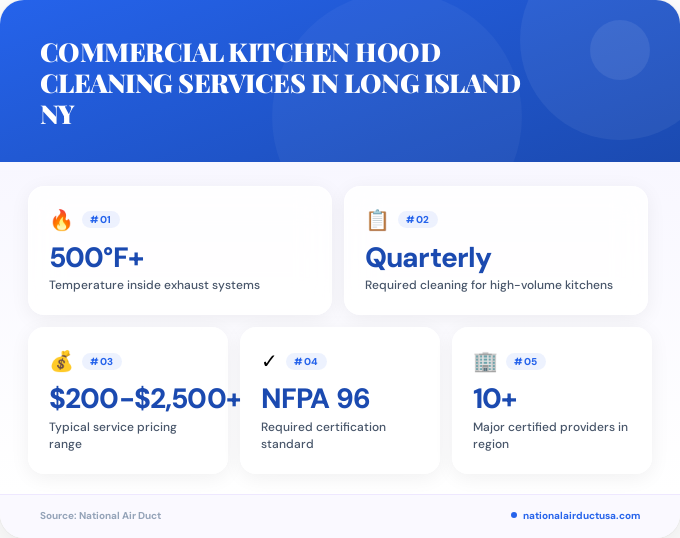
Commercial kitchen hood cleaning services in Long Island NY are NFPA 96-certified providers who remove grease accumulation down to bare metal from exhaust systems to prevent fires. These services are required quarterly for high-volume operations, semiannually for moderate-volume restaurants, and annually for low-volume facilities, with pricing typically ranging from $200 to $2,500+ depending on system size, duct length, and cleaning frequency requirements.
Every year, commercial kitchen fires cause millions of dollars in damage across New York State, and grease accumulation in exhaust systems remains the number one preventable cause. For restaurant owners and facility managers in Long Island, commercial kitchen hood cleaning services represent far more than routine maintenance: they are your primary defense against catastrophic fires, costly insurance claims, and health code violations that can shut down operations.
The unique demands of Long Island’s thriving food service industry across Nassau County, Suffolk County, and coastal communities like Massapequa and Hempstead require specialized expertise. With over 10 major certified providers operating in the region and strict NFPA 96 compliance requirements becoming the industry standard, understanding what separates exceptional hood cleaning services from basic offerings has never been more critical.
This comprehensive guide examines everything Long Island restaurant operators need to know about commercial kitchen hood cleaning services in Long Island NY, from mandatory cleaning schedules and “bare metal” standards to pricing structures and provider selection criteria that protect both your investment and your patrons.
What Are Commercial Kitchen Hood Cleaning Services in Long Island NY?
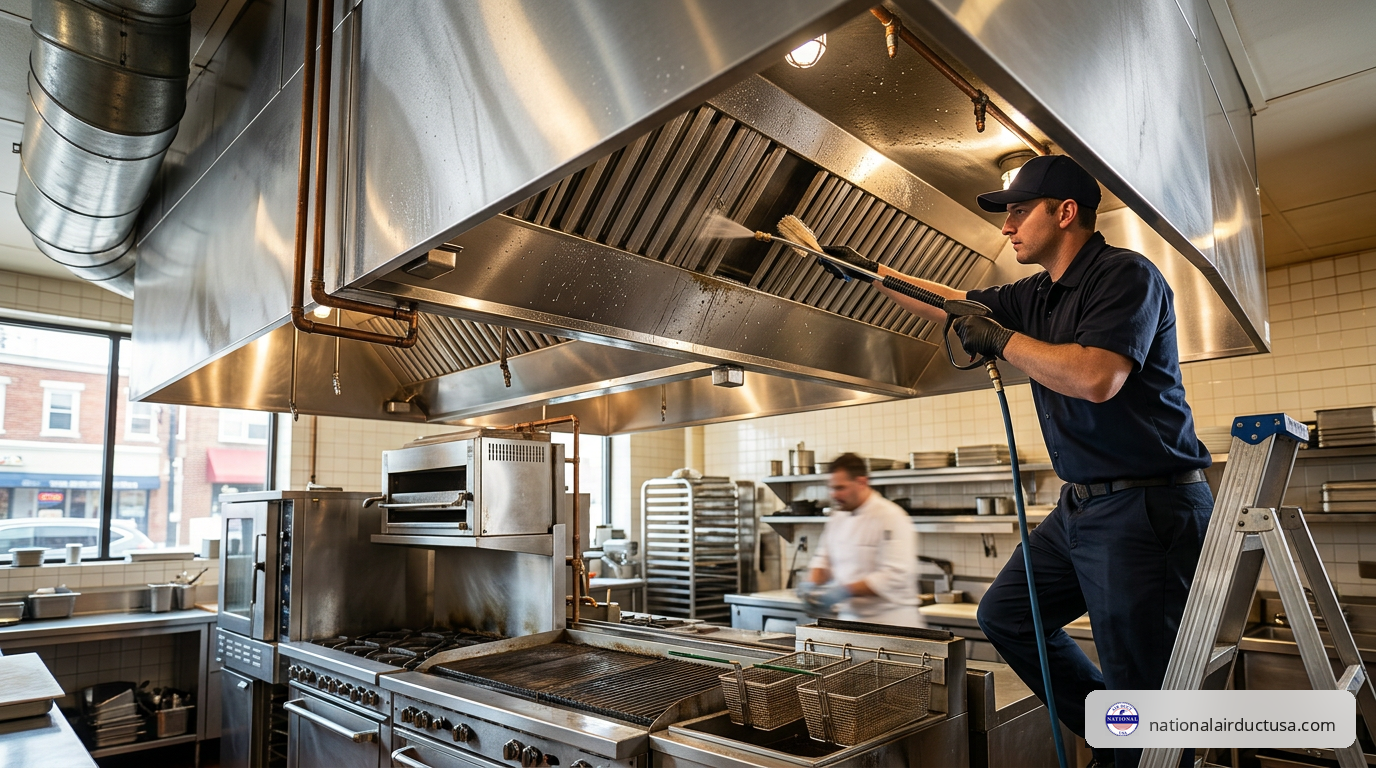
Commercial kitchen hood cleaning services in Long Island NY are specialized fire prevention operations that systematically remove grease, carbon, and flammable residue from exhaust hoods, filters, ductwork, and fans in restaurant and institutional kitchens. Unlike basic surface cleaning, professional hood cleaning requires trained technicians who disassemble components, access hidden duct sections, and restore systems to bare metal visibility.
These services operate under strict regulatory frameworks established by the National Fire Protection Association’s NFPA 96 standard, which governs ventilation control and fire protection for commercial cooking operations. In Long Island, providers must navigate both state fire codes and local municipal requirements that vary between Nassau and Suffolk counties.
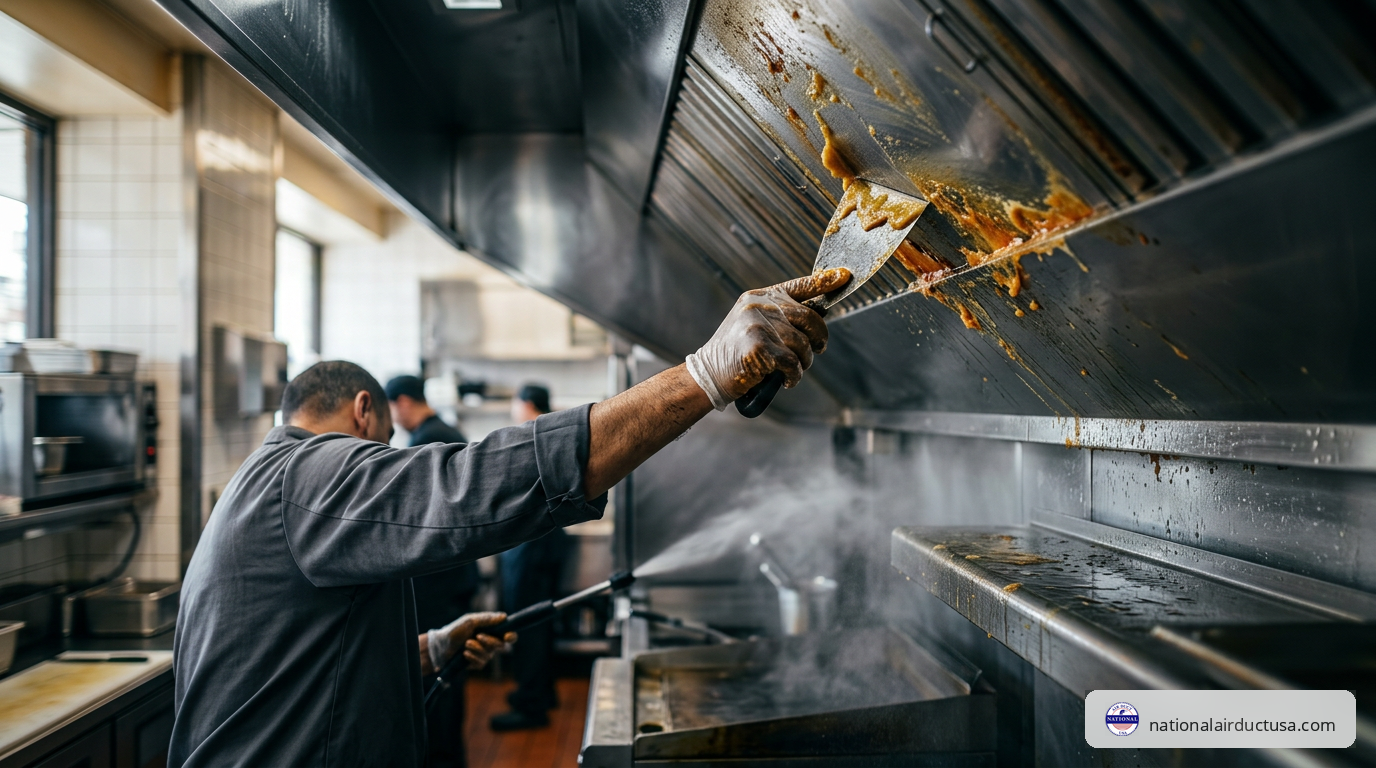
The core distinction between professional hood cleaning and routine maintenance lies in thoroughness. NFPA 96-certified technicians must achieve complete grease removal, meaning no visible residue remains on metal surfaces after cleaning. This “bare metal” standard isn’t cosmetic but functional: even thin grease films can ignite during normal kitchen operations, with temperatures inside exhaust systems regularly exceeding 500 degrees Fahrenheit during peak service.
Why Is Commercial Kitchen Hood Cleaning Critical for Long Island Restaurants?
The fire risk posed by uncleaned exhaust systems cannot be overstated. Grease accumulation in ducts is the leading cause of commercial kitchen fires in New York, with incidents often resulting in complete structural loss, extended business interruption, and liability exposure that exceeds standard insurance coverage.
Beyond fire prevention, Long Island restaurants face unique operational pressures. The region’s dense restaurant concentration in areas like Hempstead, Island Park, and the Hamptons means insurance underwriters scrutinize fire safety protocols more rigorously. Facilities without documented cleaning records face premium increases of 15 to 40 percent, while establishments with violations may find coverage difficult to obtain at any price.
Health code compliance adds another layer of necessity. New York State Department of Health inspections specifically examine exhaust system cleanliness, with violations ranging from point deductions to immediate closure orders. For Long Island establishments serving the summer tourism surge, a single failed inspection during peak season can cost hundreds of thousands in lost revenue.
The coastal humidity characteristic of Long Island’s climate accelerates grease polymerization, the chemical process by which grease hardens into difficult-to-remove deposits. This environmental factor means Long Island kitchens often require more frequent attention than inland facilities, making proactive scheduling essential rather than optional.
How Often Should Commercial Kitchens Schedule Hood Cleaning in Long Island?
NFPA 96 establishes minimum cleaning frequencies based on cooking volume, fuel type, and operational hours. These aren’t recommendations but enforceable requirements that insurance companies and fire marshals verify during inspections.
| Operation Type | Cleaning Frequency | Examples |
|---|---|---|
| High-Volume Systems | Quarterly (Every 3 Months) | 24-hour diners, charbroiler operations, wok cooking, fast-food chains |
| Moderate-Volume Systems | Semiannually (Every 6 Months) | Standard full-service restaurants, hotels, catering facilities |
| Low-Volume Systems | Annually (Every 12 Months) | Churches, seasonal clubs, senior centers, day camps |
Long Island providers like HOODZ of Nassau County emphasize that these intervals represent minimums. Facilities using solid fuel (wood, charcoal) require monthly cleaning regardless of volume, while establishments experiencing visible grease dripping or smoky exhaust need immediate attention even if recently serviced.
Smart operators implement quarterly inspections even for moderate-volume systems, allowing technicians to assess accumulation rates and adjust schedules proactively. This approach prevents the emergency situations that force reactive cleanings at premium rates, typically 30 to 50 percent higher than scheduled service pricing.
Seasonal businesses common along Long Island’s south shore face unique scheduling challenges. Restaurants operating primarily during summer months should schedule deep cleanings before and after the season, with interim inspections during peak operation to ensure systems haven’t exceeded safe accumulation levels.
What Does a Professional Hood Cleaning Service Include?
Comprehensive hood cleaning encompasses far more than the visible hood canopy. Professional services in Long Island systematically address every component where grease can accumulate and ignite.
The process begins with protection preparation. Technicians cover cooking equipment, floors, and prep surfaces with waterproof barriers before introducing cleaning agents and high-pressure water systems that can generate substantial runoff.
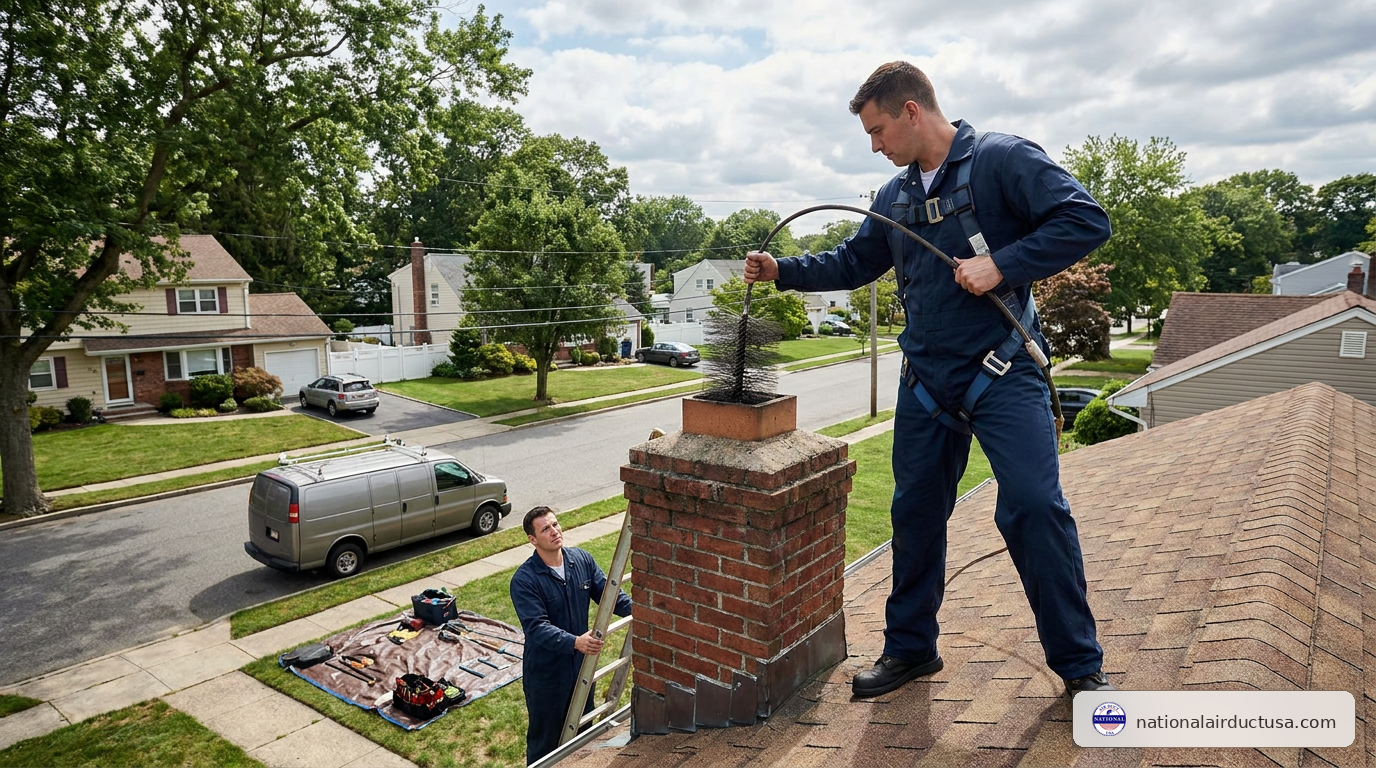
Component disassembly follows. Hood filters, grease traps, access panels, and fan assemblies are removed for individual cleaning or replacement. Leading providers like Done Right HFS emphasize that ductwork access is critical, often requiring roof access to clean vertical duct runs and exhaust fan housings where the heaviest grease deposits concentrate.
The actual cleaning employs commercial-grade hot water power washers producing 180-degree temperatures at 3,000+ PSI, combined with specially formulated degreasers that emulsify polymerized grease without damaging metal surfaces. Technicians work methodically from hood interior through ducts to rooftop exhaust fans, verifying bare metal visibility at each stage.
Post-cleaning documentation provides crucial legal protection. Reputable Long Island providers affix dated certification stickers inside cleaned hoods and supply detailed service reports documenting work performed, areas accessed, and any deficiencies requiring attention. These records become essential evidence during insurance claims and regulatory inspections.
Quality providers also conduct functional testing after reassembly, verifying that exhaust airflow meets design specifications and that fire suppression system nozzles weren’t obstructed during cleaning. This comprehensive approach distinguishes professional services from budget providers who focus solely on visible surfaces.
What Certifications and Standards Should Long Island Hood Cleaners Meet?
The commercial kitchen exhaust cleaning industry operates under multiple oversight frameworks, with NFPA 96 certification representing the foundational standard that Long Island restaurant operators should verify before engaging any provider.
NFPA 96 certification confirms technicians have completed formal training in fire prevention standards, proper cleaning techniques, and documentation requirements. Over 90 percent of reputable Long Island providers now market this certification explicitly, recognizing that insurance companies and property managers increasingly require proof of NFPA-compliant service.
For facilities in New York City’s five boroughs, FDNY approval adds another layer of validation. While Long Island falls outside FDNY jurisdiction, many regional providers maintain FDNY approval status to serve clients with locations across the metropolitan area. This dual certification demonstrates commitment to the industry’s highest standards.
Insurance underwriting requirements have evolved significantly in recent years. Most commercial kitchen policies now mandate that hood cleaning be performed by licensed, insured providers carrying minimum $2 million general liability coverage. This protects property owners if cleaning operations cause water damage, equipment damage, or other incidents.
Long Island’s network of established providers includes companies like KC Exhaust, which has served Nassau and Suffolk counties for decades, building reputations through consistent compliance and responsive service. When evaluating providers, verify not just certification claims but also longevity in the local market and verifiable references from similar facilities.
Additional credentials worth noting include International Kitchen Exhaust Cleaning Association (IKECA) membership and manufacturer-specific training certifications for specialized equipment. While not mandatory, these affiliations indicate providers who invest in ongoing education and industry best practices.
How Much Do Commercial Kitchen Hood Cleaning Services Cost in Long Island NY?
Pricing for commercial kitchen hood cleaning services in Long Island NY varies dramatically based on system complexity, accessibility, and cleaning frequency requirements. Expect investment ranges from $200 to $2,500+ per service, with costs heavily dependent on your specific operational profile.
Small operations with simple hood-only systems and short duct runs typically fall at the lower end, particularly when establishing regular quarterly service agreements. Mid-sized restaurants with multiple hood stations, longer duct runs requiring roof access, and moderate grease loads generally invest $600 to $1,400 per cleaning.
Large facilities, institutional kitchens, and high-volume operations with extensive ductwork, multiple exhaust fans, and complex rooftop configurations often require $1,500 to $3,500+ per comprehensive cleaning. These premium-tier services may involve multiple technicians working simultaneously to minimize operational disruption.
Several factors drive pricing variations beyond basic system size. Duct length and configuration significantly impact labor requirements, with horizontal runs easier to clean than vertical shafts extending multiple stories. Rooftop accessibility matters: buildings requiring special lift equipment or challenging access conditions command premium rates.
Cleaning frequency affects per-service costs through volume discounting. Facilities committing to quarterly maintenance contracts typically receive 15 to 25 percent lower per-service rates compared to one-time cleanings, as providers can schedule efficiently and systems require less intensive labor when maintained regularly.
Grease accumulation severity directly impacts pricing. Systems that have been neglected for extended periods or never properly cleaned to bare metal may require initial “recovery cleanings” costing significantly more than maintenance cleanings, sometimes double or triple standard rates for the extensive labor and specialized stripping agents required.
Geographic factors also influence costs. Providers serving the Hamptons and eastern Suffolk County often charge 10 to 20 percent premiums reflecting longer travel times, while Nassau County facilities benefit from higher provider density and competitive pricing.
When evaluating proposals, the lowest bid rarely represents the best value. Budget providers may limit work to visible hood surfaces, skip ductwork access, or fail to provide proper documentation, exposing you to fire risk and insurance complications that far exceed any short-term savings. Just as with commercial HVAC duct cleaning services, hood cleaning requires thoroughness that only certified professionals deliver.
How to Choose the Right Hood Cleaning Provider in Long Island
Selecting the right commercial kitchen hood cleaning provider in Long Island requires evaluating capabilities beyond price quotations. Start by verifying NFPA 96 certification, current licensing, and adequate insurance coverage. Request certificates of insurance naming your facility as additional insured, protecting against liability during service.
Examine provider longevity and market presence. Established companies with 5+ years serving Long Island demonstrate operational stability and accumulated expertise in local building configurations. Check online reviews across multiple platforms, looking for patterns in responsiveness, thoroughness, and professionalism rather than isolated complaints.
Request detailed scope-of-work documentation before engaging services. Quality providers supply written proposals specifying exactly what components will be cleaned, what access points will be used, and what documentation you’ll receive. Vague proposals suggesting “complete hood cleaning” without specifics should raise concerns.
Scheduling flexibility matters significantly for restaurant operations. The best providers offer overnight and early-morning service windows that minimize disruption to your business hours. Ask about typical service duration for systems comparable to yours, as rushed work often indicates corner-cutting.
Technology adoption provides valuable indicators of provider sophistication. Companies using digital documentation systems, photo evidence of pre- and post-cleaning conditions, and electronic service records demonstrate operational maturity. These tools become crucial during insurance claims or fire investigations.
Emergency response capabilities separate exceptional providers from basic services. Kitchen exhaust systems don’t respect business hours, and situations requiring immediate attention arise unexpectedly. Verify that your provider offers 24/7 emergency service, even if at premium rates, ensuring you’re not stranded during crises.
Consider providers who offer integrated services beyond hood cleaning. Companies providing PTAC unit maintenance, fire suppression system inspections, and comprehensive facility cleaning allow you to consolidate vendors and improve accountability across related systems.
Major Hood Cleaning Providers Serving Nassau and Suffolk Counties
Long Island’s commercial kitchen exhaust cleaning market features over 10 established providers with significant local presence, each offering varying service models and specializations.
Long Island Hood Cleaning operates as a comprehensive fire safety organization serving both Nassau and Suffolk counties. Beyond exhaust system cleaning, they provide fire safety inspections, private investigations, and integrated maintenance programs. Their dual expertise in cleaning and fire prevention engineering positions them as consultative partners rather than transactional service providers.
HOODZ of Nassau County brings decades of experience to the region, with operations dating to 1972. Based in Island Park and serving Hempstead and surrounding communities, they’ve built reputation through consistent compliance and responsive scheduling. Their franchise affiliation provides access to national training resources while maintaining local market knowledge.
2 Friends Hood Cleaning & Fire Safety Corp holds FDNY approval and operates from Lake Grove, positioning them strategically to serve central Suffolk County. Their FDNY certification, while not required for Long Island operations, signals commitment to meeting the metropolitan area’s most rigorous standards.
KC Exhaust specializes in kitchen exhaust cleaning throughout Long Island and the broader New York region. Their focused expertise in exhaust systems, rather than general facility maintenance, allows deep technical knowledge and specialized equipment investments that multi-service providers may lack.
Several national chains including American Hood & Exhaust serve Long Island through regional operations. While lacking the hyperlocal presence of independent providers, these organizations offer consistency across multi-location restaurant groups and established quality control protocols.
When engaging any provider, verify their specific service area. Some companies list “Long Island” coverage but primarily serve Nassau County, creating potential issues for Suffolk County establishments. Similarly, understand response times: a provider based in western Nassau County may struggle to deliver prompt emergency service to Montauk locations.
At National Air Duct, we understand that commercial facilities require coordinated environmental system maintenance. While we specialize in commercial HVAC and air quality services, we work alongside certified hood cleaning providers to ensure your facility maintains comprehensive fire safety and air quality protocols. Our integrated approach helps Long Island commercial operators develop maintenance schedules that address all critical systems efficiently.
Key Takeaways
- Commercial kitchen hood cleaning is legally mandated fire prevention, not optional maintenance, with specific NFPA 96 frequency requirements based on cooking volume and fuel type.
- Bare metal visibility represents the enforceable standard for hood cleaning in Long Island, requiring complete grease removal from hoods, ducts, and exhaust fans to eliminate fire risk.
- Cleaning frequency ranges from quarterly for high-volume operations to annually for low-volume facilities, with Nassau and Suffolk County restaurants facing strict compliance verification through insurance and health inspections.
- Pricing varies from $200 to $2,500+ per service depending on system complexity, duct length, accessibility, and cleaning frequency, with contract agreements typically reducing per-service costs by 15 to 25 percent.
- NFPA 96 certification, adequate insurance coverage, and documented service records are non-negotiable requirements when selecting providers, as these protections become critical during insurance claims and fire investigations.
- Long Island’s coastal humidity accelerates grease polymerization, often requiring more aggressive cleaning schedules than inland facilities and making proactive maintenance especially important.
- Budget providers who skip ductwork access or fail to achieve bare metal standards expose facilities to catastrophic fire risk, insurance complications, and health code violations that far exceed any short-term cost savings.
People Also Ask
What is the NFPA 96 standard for hood cleaning?
NFPA 96 is the National Fire Protection Association’s standard for ventilation control and fire protection in commercial cooking operations. It requires exhaust systems be cleaned to bare metal visibility, eliminating all grease residue, and establishes mandatory cleaning frequencies based on cooking volume, fuel type, and operational hours to prevent kitchen fires.
How do I know if my hood cleaning was done properly?
Proper hood cleaning leaves all metal surfaces visibly clean with no grease residue, includes a dated certification sticker affixed inside the hood, and provides detailed documentation showing what areas were accessed and cleaned. You should be able to see bare metal throughout the hood interior, and the provider should supply photos of ductwork and rooftop components proving complete system access.
Can I clean my commercial kitchen hood myself?
While you can clean visible hood surfaces as daily maintenance, comprehensive hood cleaning legally requires certified professionals with specialized equipment to access ductwork, achieve bare metal standards, and provide documentation that satisfies insurance and regulatory requirements. Attempting DIY deep cleaning exposes you to liability risks, insurance claim denials, and potential code violations.
What happens if I don’t clean my hood system regularly?
Neglecting hood cleaning dramatically increases fire risk, violates health codes and insurance policy requirements, and can result in immediate closure orders during inspections. Accumulated grease ignites easily, causing fires that often result in total loss, while insurance companies can deny claims for fires in systems without documented maintenance, leaving you personally liable for damages potentially exceeding millions of dollars.
How long does commercial hood cleaning take?
Professional hood cleaning typically requires 3 to 8 hours depending on system size and complexity. Small single-hood operations may be completed in 2 to 3 hours, while large multi-station kitchens with extensive ductwork often need 6 to 10 hours. Most Long Island providers offer overnight and early-morning service windows to minimize disruption to business operations.
Does hood cleaning include the exhaust fan on the roof?
Yes, comprehensive hood cleaning must include rooftop exhaust fans and fan housings, as these areas accumulate heavy grease deposits that present significant fire risk. NFPA 96 specifically requires cleaning the entire exhaust system from hood to termination point, and any provider who doesn’t access roof components is performing incomplete service that fails compliance standards.
Frequently Asked Questions
Do Long Island restaurants need special permits for hood cleaning?+
No special permits are required for the cleaning service itself, but the provider must be licensed and insured to operate in New York. Your restaurant must maintain documented proof of regular cleaning to satisfy health department inspections, fire marshal reviews, and insurance policy requirements, so always retain service records and certification stickers.
Will my insurance company accept any hood cleaning provider?+
Most insurance policies require that hood cleaning be performed by NFPA 96-certified providers carrying adequate liability coverage. Always verify your provider’s certifications and insurance status, and ensure you receive proper documentation after each service. Using uncertified providers can void your insurance coverage even if the cleaning appears thorough.
Can hood cleaning be scheduled during business hours?+
While technically possible, hood cleaning during business hours is impractical for most restaurants as it requires shutting down cooking operations, creates noise and disruption, and involves water runoff that can’t occur safely in active kitchens. Most Long Island providers offer overnight, early-morning, or day-after-closure scheduling to avoid operational interference.
What’s the difference between hood cleaning and filter replacement?+
Filter replacement or cleaning is daily/weekly maintenance that prevents grease from entering ductwork but doesn’t address grease that has already accumulated in ducts, fans, and hood interiors. Professional hood cleaning accesses these hidden areas, removes hardened deposits, and achieves the bare metal standard that filter maintenance alone cannot accomplish, making both necessary for comprehensive fire prevention.
Do seasonal restaurants still need regular hood cleaning?+
Yes, seasonal operations must maintain compliance with NFPA 96 frequency requirements based on their active volume during operating months. Long Island’s seasonal restaurants should schedule pre-season deep cleaning before opening, and post-season cleaning before extended closure periods. Grease doesn’t disappear during closure and can actually harden, making reopening cleaning more difficult and expensive.
How do I prepare my kitchen for hood cleaning service?+
Remove all items from under and around hood areas, ensure roof access is clear and available, shut down all cooking equipment, and coordinate with your provider regarding any special access requirements. Quality providers handle most preparation including equipment protection, but you should secure any valuable items and ensure staff knows the kitchen will be offline during the service window.
What other maintenance should I schedule alongside hood cleaning?+
Related: Does Air Duct Cleaning Improve Air Quality in New York?
Related: Air Duct Cleaning Removes Dust Mites in Long Island NY: The Complete 2026 Guide
Related: Dryer Air Duct Cleaning Cost in Long Island NY: Complete 2026 Pricing Guide
Related: How to Prepare for Duct Cleaning in New York: The Complete 2026 Homeowner Checklist
Coordinate hood cleaning with fire suppression system inspections, as both systems work together for kitchen fire protection. Many Long Island restaurants also schedule dryer vent cleaning and general ventilation maintenance during the same service window to maximize downtime efficiency. This integrated approach reduces total disruption and often yields package pricing discounts from providers offering multiple services.