
Why Your AC Might Be Making You Sick
Air conditioner mold spray is a targeted solution designed to eliminate and prevent mold growth on the coils, drip pans, and internal components of your air conditioning system. These EPA-registered antimicrobial products kill existing mold spores, prevent regrowth, and eliminate the musty odors that indicate a mold problem.
Quick Answer: Top Types of Air Conditioner Mold Sprays
| Type | Best For | Key Benefit |
|---|---|---|
| EPA-Registered Antimicrobial Sprays | Killing mold and preventing regrowth | Creates long-lasting protective barrier (up to 3 months) |
| Foaming Coil Cleaners | Cleaning evaporator coils and fins | No-rinse formula, improves AC efficiency |
| Natural/Botanical Solutions | Light maintenance and prevention | Safe for homes with pets and children |
| Chlorine Dioxide Sprays | Occupied spaces, ductwork | Safe for use while people are present |
Do you catch a musty, basement-like smell near your AC? Have you noticed black spots on the vents? Or are family members sneezing more, with stuffy noses or headaches that seem to vanish when they leave the house?
According to HVAC experts, mold in air conditioners is a common problem that affects indoor air quality and health. Your AC creates the perfect breeding ground: moisture from condensation on cooling coils, darkness inside the unit, and dust that provides food for mold spores. When your system runs, it circulates these spores throughout your home.
The good news is that you can fight back. Modern air conditioner mold sprays offer effective solutions, from powerful EPA-registered treatments to eco-friendly alternatives. This guide will help you choose the right product for your home.

The Unwanted Guest: Why Mold Thrives in Your Air Conditioner
Mold is a fungus that thrives on moist organic matter, releasing spores that harm indoor air quality. Your air conditioner, designed to keep you cool, can unfortunately create the perfect damp, dark environment for mold to grow. When mold takes root in your AC, it turns your cooling system into a spore-spreading machine, leading to unpleasant odors and health concerns. Understanding the cause is the first step to eliminating it.

What Causes Mold in an AC Unit?
The conditions inside your air conditioner are often a mold paradise. Here’s why this unwanted guest makes itself at home:
- Moisture from Cooling Coils: As your AC cools the air, moisture condenses on the cold evaporator coils, creating a constantly damp and dark environment ideal for mold.
- Poor Ventilation: Stagnant air in the unit or ductwork allows humid pockets to form where moisture doesn’t evaporate, encouraging mold growth.
- Stagnant Water: A clogged condensate drain pan can become a pool of stagnant water, a prime location for mold, mildew, and bacteria.
- Dust and Organic Debris: Dust, dirt, and pet dander accumulate on coils and filters, providing a food source for mold.
- Dirty Filters: Clogged air filters trap moisture and organic matter, creating another mold breeding ground.
- High Humidity: If your home’s humidity is high, or your AC isn’t dehumidifying effectively, it makes it easier for mold to thrive.
Health Risks Associated with AC Mold
Beyond the musty smells, mold in your air conditioner poses significant health risks. When your AC unit runs, it circulates mold spores directly into your breathing air, turning your home into a potential allergen and irritant factory.
Here are the key health risks associated with AC mold:
- Allergic Reactions: The most common response. Exposure can trigger sneezing, itchy eyes, runny or stuffy nose, and headaches.
- Respiratory Issues: Spores can irritate the respiratory system, causing coughing, wheezing, and shortness of breath. It can significantly aggravate asthma.
- Headaches and Dizziness: General discomfort, including persistent headaches and fatigue, can result from mold exposure.
- “Sick Building Syndrome”: In severe cases, mold can contribute to a range of symptoms linked to time spent in a building, with no specific illness identified.
- Mycotoxins: Some molds produce toxic compounds called mycotoxins. According to the U.S. Environmental Protection Agency (EPA), exposure to mold can cause a variety of health issues.
- Skin Irritation: Airborne exposure or direct contact can cause rashes or itchy skin.
Mold in AC can be harmful, causing respiratory issues, allergic reactions, and aggravating asthma symptoms. Promptly addressing mold is crucial for maintaining good indoor air quality and protecting the health of your family and employees.
Your Guide to Choosing an Air Conditioner Mold Spray
Choosing the right air conditioner mold spray can feel overwhelming. From powerful antimicrobials to gentle, eco-friendly options, each type offers unique benefits. This section will help you steer the options, focusing on the features that matter most for effective AC mold control.
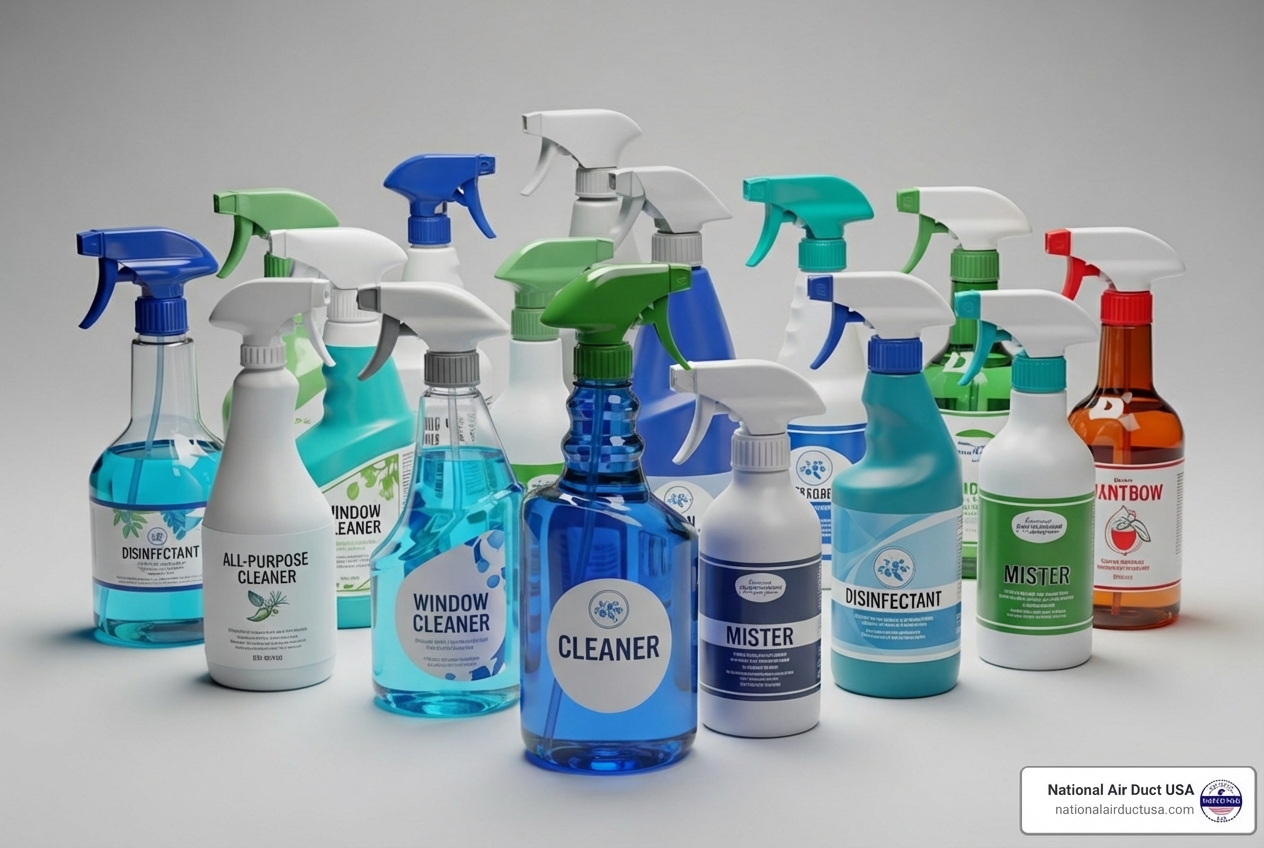
When selecting a product, consider the severity of your mold problem, the type of AC unit you have, and your personal preferences regarding chemical use.
EPA-Registered Antimicrobial & Fungistatic Sprays
These are heavy-duty solutions for serious mold and long-term prevention. Regulated by the EPA, they meet strict standards for effectiveness.
- How They Work: These products, like those in the PermaSafe line, often work in two steps: destroying existing mold and then creating a durable antimicrobial barrier that inhibits regrowth for months. Others, like Concrobium Mold Control, work by crushing mold spores as they dry, leaving an invisible barrier.
- Key Benefits:
- Kills & Prevents: Eliminates existing mold and provides a long-lasting barrier against regrowth.
- Safe for Occupied Spaces: Many are rated for use in occupied spaces when applied as directed. Look for EPA ‘Category IV’ toxicity ratings, the lowest possible.
- Deodorizes: Eliminates musty smells by killing odor-causing bacteria.
- Surface Safe: Formulated to not damage HVAC system surfaces.
Foaming & No-Rinse Coil Cleaners
These are specifically formulated for the grime and mold on AC evaporator and condenser coils, improving efficiency.
- How They Work: An aerosol foam expands deep into the coil fins, encapsulating and lifting dirt, dust, and mold. Many are “no-rinse” formulas, as the AC’s natural condensation rinses the cleaner and debris away.
- Key Benefits:
- Targeted Cleaning: Designed specifically for coils and fins.
- Improves Efficiency: Clean coils restore heat transfer, helping your AC run more efficiently.
- Ease of Use: The no-rinse feature simplifies DIY cleaning.
Key Features of a Quality Air Conditioner Mold Spray
When evaluating air conditioner mold spray options, understanding key features can help you make an informed decision.
| Feature | Antimicrobial Sprays | Foaming Coil Cleaners | Natural Alternatives |
|---|---|---|---|
| Primary Purpose | Kill existing mold, prevent regrowth, deodorize | Clean coils, improve efficiency, remove mold food source | Light mold removal, prevention, deodorizing, eco-friendly |
| Active Ingredients | Quaternary ammonium compounds, chlorine dioxide, proprietary blends | Surfactants, detergents, degreasers | Vinegar (acetic acid), botanical extracts (e.g., peppermint, thyme) |
| Best For | Moderate to severe mold, long-term prevention, ductwork, occupied spaces | Dirty coils, improving AC performance, hard-to-reach fins | Minor mold, regular maintenance, sensitive individuals, pets |
| Rinse Required? | Often no-rinse, air-dry | Often no-rinse (condensation rinses) | Typically no-rinse (air-dry or wipe) |
| Deodorizing Properties | Excellent (kills odor-causing bacteria) | Good (removes odor sources) | Good (neutralizes odors) |
| Surface Compatibility | Wide range (coils, pans, ducts, mini-splits) | Coils, fins (safe for metal) | Various surfaces, check specific product for AC components |
| Safety Rating | EPA-registered (check specific product for Category) | Generally safe for AC components, read warnings | Generally safe, non-toxic |
Here are some additional considerations:
- Kills vs. Inhibits Growth: For comprehensive control, look for products that both kill existing mold and inhibit future growth.
- Deodorizing Properties: Quality sprays eliminate musty odors by killing the source.
- Surface Compatibility: Ensure the product is safe for all materials in your AC system (metal, plastic, rubber).
- Safety Rating: Check for EPA registration. Category IV products are the least toxic and often require less personal protective equipment (PPE).
Natural & Eco-Friendly Alternatives
For those preferring fewer chemicals or for minor mold, natural options can be effective.
- Vinegar and Water Solution: A 50/50 solution of white vinegar and water is a mild acid that can kill many types of mold.
- Botanical Disinfectants: Products using thyme or peppermint oil offer disinfectant properties without harsh chemicals. Look for EPA-registered botanical options approved for HVAC use.
- Bleach-Free Formulas: Commercial bleach-free sprays are safer for AC components than corrosive bleach.
- DIY Solutions: For light maintenance, a mix of detergent, baking soda, and water can clean surface-level mold.
A Step-by-Step Guide to Using AC Mold Sprays
Using an air conditioner mold spray effectively requires proper preparation and application. Whether you’re tackling a window unit, a mini-split, or your central air system, a methodical approach yields the best results.
Essential Safety Precautions Before You Start
Before you begin, safety is your top priority. Mold can be a health hazard, and cleaning chemicals require respect.
- Turn Off Power: This is non-negotiable. Disconnect power to the AC unit at the breaker box to prevent electrical shock.
- Wear Protective Gear: Use chemical-resistant gloves, an N95 mask or respirator, and safety goggles to protect yourself from mold spores and chemical fumes.
- Ensure Good Ventilation: Open windows and doors to circulate fresh air and disperse fumes.
- Read the Product Label: Carefully follow the manufacturer’s instructions for application, dwell times, and safety.
- Protect Surrounding Surfaces: Use drop cloths to cover floors and furniture near your work area.
How to Apply Your Air Conditioner Mold Spray for Best Results
Once you’ve taken safety precautions, you’re ready to apply the spray.
- Access Coils and Pans: Remove the necessary covers or panels on your window unit, mini-split, or central air handler to expose the evaporator coils and drain pan.
- Pre-Clean (If Needed): For heavy buildup, use a coil cleaner to remove loose dirt and debris before applying the mold spray.
- Apply the Spray: Spray a thin, even layer of the air conditioner mold spray over all affected surfaces (coils, fins, drain pan). For foaming cleaners, spray directly onto the coil and let the foam expand.
- Allow Dwell Time: Let the product sit for the manufacturer-recommended time (often 10-20 minutes) to allow the active ingredients to work. Do not wipe or rinse during this time.
- Wipe or Air Dry: Follow product instructions. Many no-rinse formulas are designed to air dry, leaving a protective barrier. Foaming cleaners are typically rinsed away by the AC’s condensation. Natural solutions may require gentle scrubbing and wiping.
- Reassemble and Test: Once dry, reassemble the unit, restore power, and run the AC.
How Often to Apply: The frequency depends on the product. EPA-registered sprays can offer protection for months (e.g., every 3 months for HVAC systems). Regular cleaning of filters (monthly) and checking the drain pan are also key for prevention.
The importance of regular HVAC system cleaning cannot be overstated. An air conditioner mold spray is a powerful tool, but it works best as part of a comprehensive maintenance strategy.
Proactive Protection: How to Prevent Future AC Mold
Using an air conditioner mold spray eliminates existing mold, but prevention is key to long-term success. For residents in Long Island and Westbury, where humidity is a factor, these steps are crucial.
Here’s how to keep mold from becoming an unwelcome guest again:
- Regular Maintenance: Consistently clean and maintain your air conditioner.
- Change Air Filters Regularly: Replace filters monthly during peak seasons. This restricts a food source for mold and improves airflow.
- Control Indoor Humidity: Keep indoor humidity below 60% (ideally 30-50%) using a dehumidifier and proper home ventilation.
- Ensure Proper Drainage: Check that the AC’s condensate drain line is clear and draining properly to prevent standing water in the drain pan.
- Schedule Professional Cleanings: An annual professional cleaning is vital. A technician can clean inaccessible parts of your system, including ductwork.
- Consider UV Light Installation: UV light systems installed within the HVAC unit can kill mold, bacteria, and viruses as air circulates.
Here’s a simple AC maintenance checklist for homeowners:
- Monthly:
- Check and replace air filters.
- Visually inspect around AC vents for any signs of moisture or mold.
- Seasonally (Spring/Fall):
- Inspect and clean the condensate drain pan and line.
- Use an air conditioner mold spray on accessible parts as a preventative step.
- Annually:
- Schedule a professional HVAC system cleaning and inspection with NADCA-certified technicians.
- Consider professional air duct cleaning to remove accumulated dust, debris, and any hidden mold.
By consistently following these proactive steps, we can significantly reduce the chances of mold growing in your air conditioner, ensuring cleaner air and a healthier environment for your family.
Frequently Asked Questions about AC Mold Control
We often get questions from homeowners in Nassau, Suffolk, and across Long Island about dealing with mold in their air conditioning systems. Here are some of the most common inquiries and our expert answers.
Can I just spray bleach in my air conditioner?
We strongly advise against using bleach in your air conditioner. Here’s why:
- Corrosive: Bleach can damage the metal coils and fins in your AC, leading to costly repairs.
- Ineffective on Porous Surfaces: It may not kill mold at the root, allowing it to regrow.
- Hazardous Fumes: Bleach releases strong fumes that are harmful to inhale and can be circulated through your home.
- Residue: It can leave a residue that attracts more dirt and moisture.
Professional, EPA-registered air conditioner mold spray products are formulated to be non-corrosive and are far safer and more effective for HVAC systems.
What does mold in an air conditioner smell like?
The smell of mold in an air conditioner is quite distinctive and often one of the first indicators of a problem. It typically smells:
- Musty: This is the most common descriptor, akin to the smell of old, damp clothes or a wet towel left too long.
- Damp or Earthy: Some people describe it as a wet, soil-like, or earthy odor, similar to what you might smell in a damp basement or after heavy rain.
- Stale: It can also have a stale, stagnant quality, especially if the AC unit hasn’t been used for a while or if the mold is particularly widespread.
The smell is often strongest when the AC first turns on after being off for some time, as the system begins to circulate the mold-laden air. If you notice any of these odors emanating from your vents, it’s a clear sign that mold or mildew might be present.
How often should I clean my AC to prevent mold?
A consistent cleaning schedule is key to preventing mold.
- Clean/Change Air Filters: Monthly during peak seasons.
- Check Drain Pan: Seasonally (spring and fall).
- Use an Air Conditioner Mold Spray: Apply preventatively to accessible parts every 3-6 months. Some antimicrobial barriers last up to 3 months on systems and longer in ducts.
- Schedule Professional Cleaning: We recommend an annual professional air duct cleaning to thoroughly clean the entire system and prevent mold growth.
When DIY Isn’t Enough: Time to Call the Professionals
While an air conditioner mold spray is great for minor issues and maintenance, some situations require professional help. Mold can hide deep within your HVAC system where sprays can’t reach.
Call a professional if you notice:
- Widespread or Recurring Mold: If mold covers a large area or returns quickly after cleaning.
- Persistent Musty Odors: A lingering smell suggests a hidden mold source.
- Mold in Ductwork: Air ducts require specialized tools for safe and effective cleaning. Attempting a DIY cleaning can spread spores throughout your home.
- Ongoing Health Symptoms: If allergy or respiratory issues persist despite cleaning.
For a complete solution in Long Island, Westbury, and surrounding Nassau or Suffolk County areas, trust National Air Duct USA. Our NADCA-certified technicians specialize in professional HVAC system cleaning and mold remediation. We use advanced tools to eliminate mold at the source, ensuring your family breathes clean, healthy air.
Don’t let mold compromise your health. When in doubt, professional help is the safest and most effective choice.
Get a Free Quote today for a complete system evaluation, or explore our Services to learn more.