Introduction: Why Your AC Needs More Than Just a Filter Change
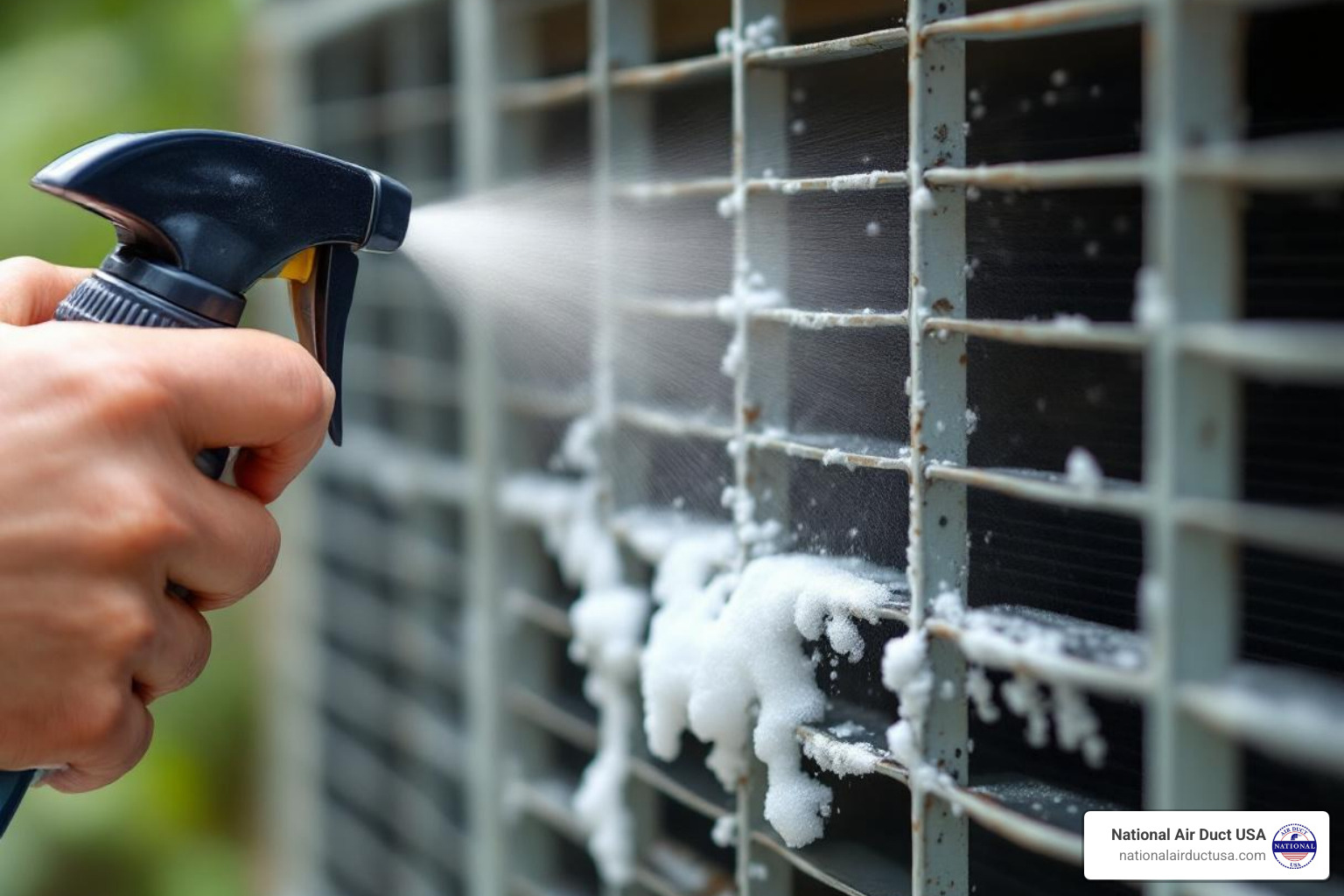
Air conditioner foaming coil cleaner is a specialized spray that expands into foam to penetrate and clean the delicate fins of your AC coils, dissolving dirt, grease, and grime that block airflow and reduce efficiency.
Quick Answer: How to Clean AC Coils with Foaming Cleaner
- Turn off power to your AC unit at the breaker.
- Remove debris around the unit and brush off loose dirt.
- Spray foaming cleaner evenly across the coils.
- Let it work for 5-10 minutes as the foam penetrates and lifts contaminants.
- Rinse or let drain — most formulas are self-rinsing through normal condensation.
There’s nothing like a cool home on a sweltering Long Island summer day. But if your AC is working harder than it should, the hidden culprit is often dirty coils. Over time, your air conditioner’s coils accumulate dust, pollen, and grime, which acts like a blanket, blocking heat transfer and forcing your system to run longer.
The result? Higher energy bills, reduced cooling, and potential system failure. According to the U.S. Department of Energy, cleaning dirty coils can improve your air conditioner’s efficiency by 5% to 15%.
Foaming coil cleaner offers a simple DIY solution. The foam clings to surfaces and expands into tight spaces, dissolving grime that then rinses away naturally. This guide will show you how to use it safely and effectively, and help you know when to call professionals like National Air Duct USA for a deeper clean.
Air conditioner foaming coil cleaner vocab explained:
What is Foaming Coil Cleaner and How Does It Work?
Imagine trying to clean a radiator with a regular spray; most of the liquid would just run off. That’s the problem air conditioner foaming coil cleaner solves for your AC’s tightly packed fins.
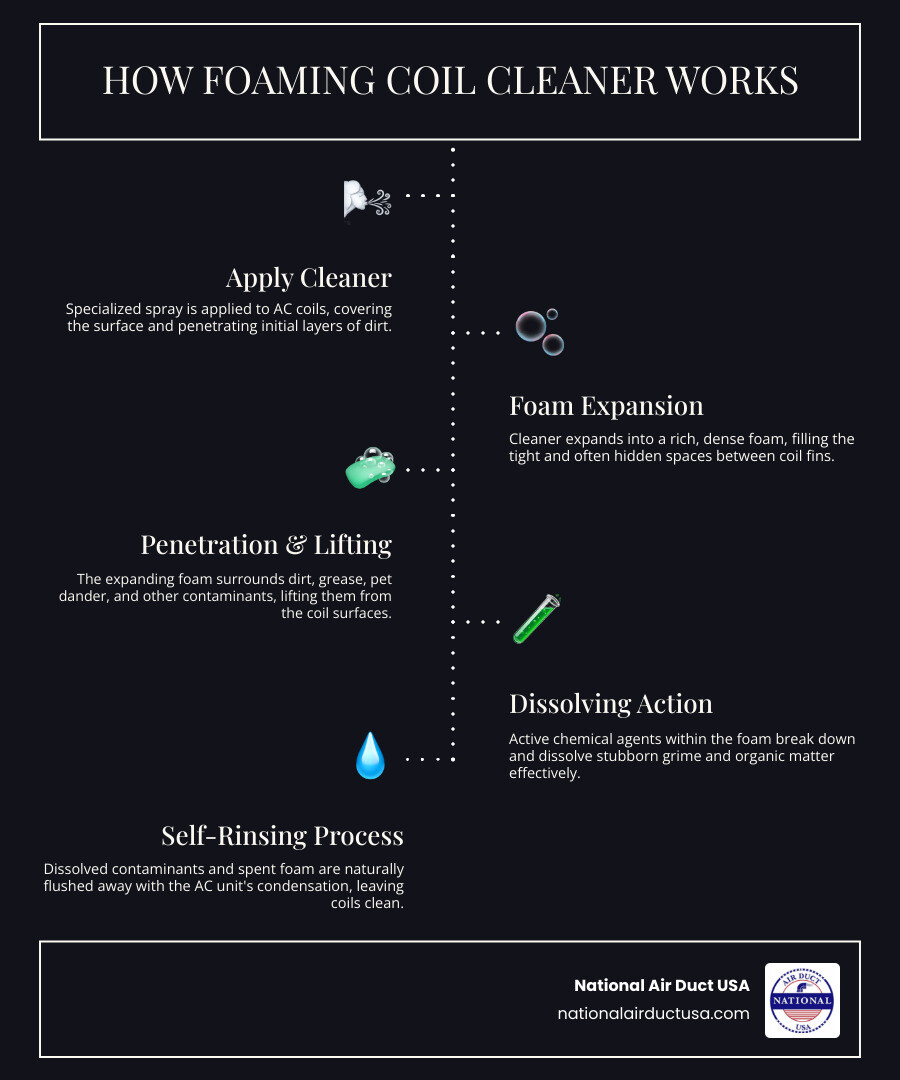
At its core, a foaming coil cleaner is an aerosol solution with surfactants and dissolving agents. When sprayed, it expands into a thick, clinging foam. This action is key to its effectiveness:
- Clings to Surfaces: The foam adheres to the vertical coil fins, maximizing the time the cleaning agents have to work on dirt and grime.
- Penetrates Deeply: As the foam expands, it pushes into the narrow spaces between the fins, reaching areas that are otherwise difficult to clean.
- Dissolves and Lifts Contaminants: The chemical agents break down stubborn buildup like dust, grease, and mildew. The foam then encapsulates these particles, lifting them from the metal surface.
- Self-Rinses Away: Many modern foaming cleaners are “self-rinsing.” This means the natural condensation from your indoor AC unit (or rain on the outdoor unit) will wash away the foam and the dirt it has captured. This makes the process incredibly convenient, though you should always check the product’s specific instructions.
The secret lies in surfactants, which reduce the surface tension of the liquid. This allows the cleaner to spread more effectively, emulsify oils, and lift dirt away. For indoor coils, this process uses the AC’s own condensation to flush the dirt and cleaner into the drain pan, making it a brilliant and simple maintenance solution.
Key Benefits of a Clean AC System
Using air conditioner foaming coil cleaner provides a cascade of benefits for your home, wallet, and health. We’ve seen the difference a clean system makes for homeowners across Long Island, Westbury, and beyond.

Boost Energy Efficiency and Lower Bills
Dirty coils act as an insulator, forcing your AC to work harder and longer to cool your home. This means higher electricity consumption.
- Proven Efficiency Gains: The U.S. Department of Energy states that cleaning dirty coils can improve your AC’s efficiency by 5% to 15%. This translates directly to lower monthly utility bills.
- Reduced System Strain: A clean system runs more smoothly and with less effort, reducing wear and tear on critical components.
- Faster, More Effective Cooling: With clean coils, your AC can cool your home more quickly and maintain a consistent temperature.
Improve Indoor Air Quality
Dirty, damp evaporator coils are a breeding ground for mold, mildew, and bacteria, which can be circulated throughout your home in Hempstead or Garden City.
- Mold and Mildew Prevention: A air conditioner foaming coil cleaner eliminates the organic matter that mold and mildew feed on, preventing their growth and the spread of spores.
- Removing Allergens: Coils trap dust, pet dander, and pollen. Cleaning them removes these irritants, leading to healthier air, which is especially important for those with allergies or asthma.
- Fresher Smelling Air: Eliminating microbial growth and grime on your coils gets rid of the source of musty odors, leaving your home’s air smelling fresh.
For a comprehensive approach to home air quality, clean coils work hand-in-hand with clean ductwork. Why Regular Air Duct Cleaning is Essential for Every Home in Long Island and Westbury digs deeper into this vital connection.
Extend Your AC’s Lifespan
Regular coil cleaning is a small investment that protects your larger investment in an HVAC system.
- Reduced Wear and Tear: A system that runs efficiently experiences less stress on its compressor, fan motor, and other parts, leading to a longer operational life.
- Preventing System Failure: Overheating or freezing up, both caused by dirty coils, can lead to catastrophic mechanical failures. Regular cleaning is preventative maintenance against expensive repairs.
- Cost-Effectiveness: The cost of a can of air conditioner foaming coil cleaner is minimal compared to a major repair or a full system replacement. As noted by experts like Carrier, regular maintenance is the most cost-effective approach.
For more on maintaining your entire HVAC system, visit our HVAC System Cleaning page.
How to Use Air Conditioner Foaming Coil Cleaner: A Step-by-Step Guide
Using air conditioner foaming coil cleaner is a straightforward DIY task, but following safety precautions is paramount. Here’s how to clean your indoor and outdoor units.
Safety First: Essential Precautions
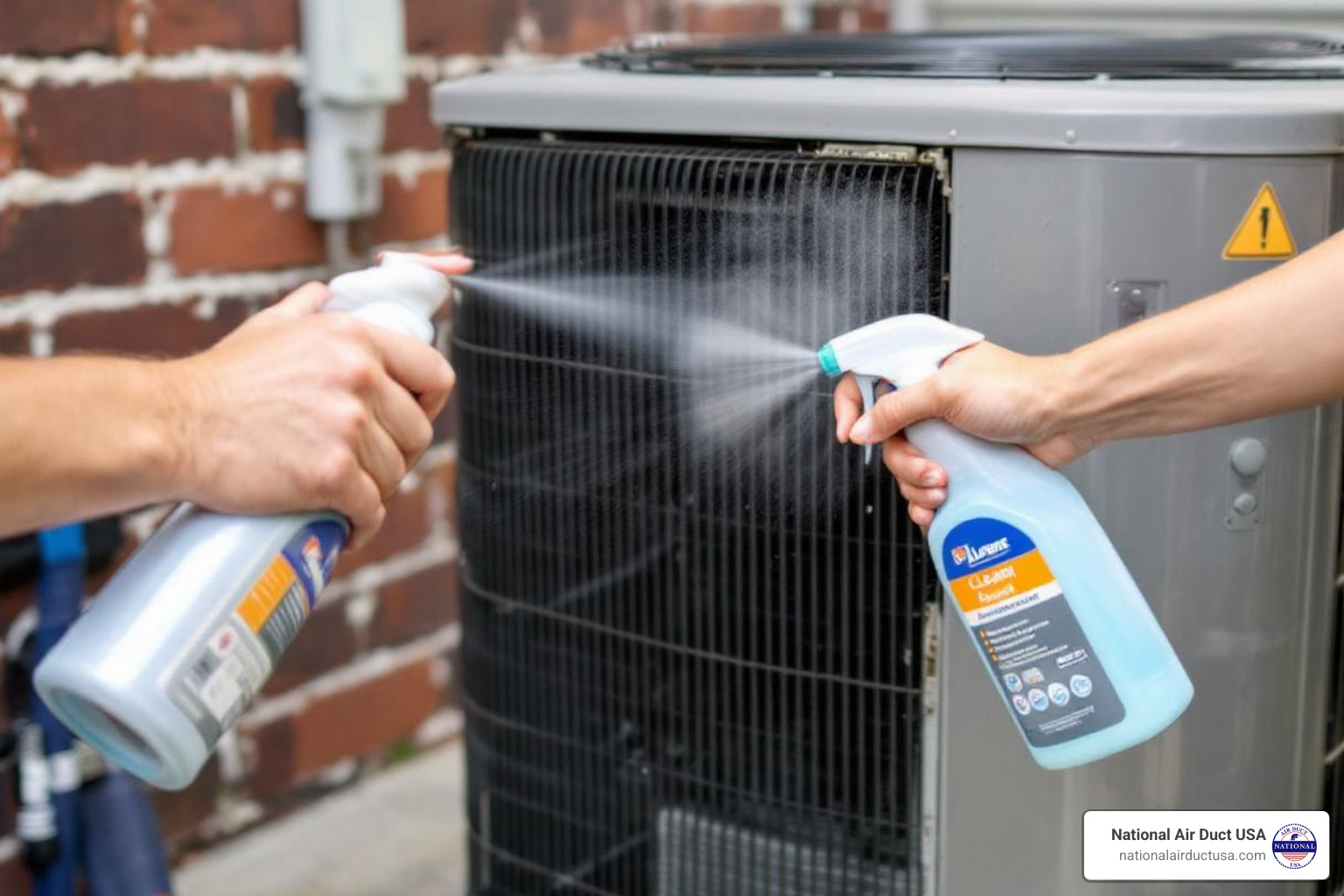
- Turn Off Power: This is non-negotiable. Turn off the power at the thermostat AND the breaker box before starting.
- Protective Gear: Wear safety goggles and gloves to protect yourself from chemicals and debris.
- Ventilation: If cleaning indoor coils, open windows to ensure good airflow.
- Read Instructions: Always follow the manufacturer’s directions for application, dwell time, and rinsing.
- Chemical Warnings: Be aware of any product-specific warnings. Some cleaners contain chemicals that require special handling. Check labels and resources like www.P65Warnings.ca.gov for more information.
How to Clean Indoor Evaporator Coils
The evaporator coil is inside your air handler. You may need to remove a service panel to access it.
- Access the Coil: After turning off the power, locate and open the access panel to the evaporator coil (often A-shaped).
- Remove Loose Debris: Use a soft brush or a vacuum with a brush attachment to gently remove loose dust and lint. Brush with the direction of the fins to avoid bending them.
- Apply Foam: Shake the can of air conditioner foaming coil cleaner well. Spray evenly across the coil surface from about a foot away.
- Wait: Let the foam work for 5-10 minutes (or as directed on the can). You will see it expand and then start to dissolve.
- Self-Rinse: For most no-rinse formulas, you can now reassemble the unit, restore power, and turn on the AC. The natural condensation will rinse the cleaner and dirt into the drain pan.
- When to Call a Pro: If coils are hard to access, heavily caked with grime, or show significant mold, it’s best to call National Air Duct USA for a professional cleaning to avoid causing damage.
How to Clean Outdoor Condenser Coils
The condenser coil is in your outdoor AC unit.
- Power Off & Clear Area: Turn off the power at the breaker. Clear away leaves, grass, and debris from around the unit to ensure good airflow.
- Brush Fins: Gently brush off loose dirt and cobwebs from the exterior fins with a soft brush.
- Apply Cleaner: Spray the air conditioner foaming coil cleaner onto the fins. For best results, if you can safely remove the top fan assembly (with power off!), spray from the inside out to push dirt away from the unit.
- Rinse (If Required): After the recommended dwell time, rinse the coils with a garden hose on a gentle setting. Avoid high pressure, which can damage the fins. Rinse from the inside out if possible.
Tools Needed:
- Air conditioner foaming coil cleaner
- Soft brush or fin comb
- Gloves and safety glasses
- Garden hose with a spray nozzle (if rinsing is required)
When to Clean and What to Look For
Knowing when your AC coils need attention is key to maintaining an efficient system. Your air conditioner will give you clues that it’s struggling. Ignoring them can lead to bigger problems and higher costs for homeowners in places like Freeport, NY.
Signs Your AC Coils are Crying for a Clean
- Reduced Airflow: Weak airflow from your vents is a classic sign of blocked coils.
- Poor Cooling Performance: If the AC runs constantly but the house won’t get cool, dirty coils are likely hindering heat exchange.
- Unit Freezing Up: Ice on your indoor coil indicates a severe airflow problem, often from dirt buildup, which can damage the compressor.
- Higher Energy Bills: A sudden spike in your electricity bill can mean your AC is working overtime to compensate for dirty, inefficient coils.
- Musty or Dirty Odors: Unpleasant smells from your vents often point to mold or mildew growth on the damp evaporator coil.
- Visible Dirt or Mold: If you can see a layer of grime or fuzz on the coils, it’s time to clean them.
If you’re experiencing poor air quality or odors, it might be time for a full system check. Learn more on our Air Duct Cleaning page.
How Often Should I Use an Air Conditioner Foaming Coil Cleaner?
As a rule of thumb, inspect coils annually and clean as needed. A yearly cleaning before summer is a good practice for most homes.
- High-Pollen or Dusty Environments: You may need to clean every 6 months.
- Homes with Pets: Pet hair and dander can clog coils quickly; inspect and clean more frequently.
- After Construction: Dust from renovations can clog coils, so a post-project cleaning is wise.
- Visual Inspection: A quick look at your coils every few months is the best way to know when they need cleaning.
Foaming Cleaner vs. Professional Cleaning: What’s the Difference?
While air conditioner foaming coil cleaner is great for maintenance, it’s important to know its limits.
| Feature | DIY Foaming Coil Cleaner | Professional AC Coil Cleaning |
|---|---|---|
| Best For | Routine maintenance, light to moderate dirt, easily accessible coils. | Deep cleaning, heavy buildup, mold remediation, hard-to-reach coils. |
| Effectiveness | Good for surface-level and moderately embedded grime. | Highly effective; uses stronger chemicals and specialized tools for a comprehensive clean. |
| Cost | Low (cost of a can of cleaner). | Higher initial cost, but can prevent expensive repairs. |
| Safety | Requires following instructions and using protective gear. | Professionals are trained to handle equipment and chemicals safely, protecting you and your system. |
In short, DIY cleaning is excellent for upkeep. However, for heavily soiled units, inaccessible coils, or if you’re uncomfortable with the process, calling a professional like National Air Duct USA ensures the job is done safely and thoroughly.
What is Foaming Coil Cleaner and How Does It Work?
Imagine your AC struggling on a hot Westbury, NY day. The problem could be as simple as a dirty coil, and air conditioner foaming coil cleaner is the solution. It’s a specialized aerosol designed to clean the tightly packed fins of your AC’s evaporator and condenser coils where regular cleaners can’t reach.
Here’s the process:
- Application: The cleaner is sprayed directly onto the coils.
- Foaming Action: It immediately expands into a thick foam that clings to surfaces, ensuring the cleaning agents have time to work.
- Chemical Breakdown: Powerful surfactants in the foam dissolve and loosen stubborn buildup like dust, grease, and mold.
- Lifting and Rinsing: The foam encapsulates the grime, lifting it from the coil. Many products, like Zep Foaming Coil Cleaner, are “self-rinsing.” The natural condensation from your indoor unit (or rain on an outdoor unit) washes the foam and dirt away into the condensate drain, making the process simple.
This clever design ensures a deep clean, restoring your AC’s performance and efficiency in your Hempstead or Garden City home.
The Science of the Foam
The effectiveness of air conditioner foaming coil cleaner comes from its chemistry, particularly its surfactants. These compounds reduce the liquid’s surface tension, allowing it to spread and penetrate deep between the coil fins. The foam’s expansion physically pushes the cleaner into every nook and cranny. As it works, it emulsifies oils and lifts dirt, holding them in suspension until the self-rinsing process, powered by your AC’s own condensation, carries them away. This integration of chemistry and your AC’s natural function makes for an efficient and easy cleaning process.
Key Benefits of a Clean AC System
Keeping your AC coils clean with air conditioner foaming coil cleaner offers a range of benefits for your home, budget, and health. Homeowners across Long Island and Westbury see a real difference after a proper cleaning.
Boost Energy Efficiency and Lower Bills
Dirty coils act as an insulator, forcing your AC to run longer and harder to cool your home. This directly impacts your wallet.
- Improved Energy Efficiency: According to the U.S. Department of Energy, cleaning dirty coils can boost your AC’s efficiency by 5% to 15%. This means lower utility bills during hot Long Island summers.
- Reduced System Strain: A clean system operates more smoothly, reducing wear on the compressor and other key parts, which in turn lowers electricity costs.
- Faster, More Effective Cooling: With clean coils, your AC can achieve and maintain your desired temperature in Hicksville or Freeport more quickly.
Improve Indoor Air Quality
The air in your home is only as clean as your HVAC system. Dirty coils can become a source of indoor air pollution.
- Mold and Mildew Prevention: The damp environment of an evaporator coil is a perfect breeding ground for mold. A air conditioner foaming coil cleaner helps eliminate this growth, preventing harmful spores from circulating in your home. The CDC has linked poor indoor air quality from such issues to significant health costs.
- Removing Allergens and Dust: Coils trap dust, pet dander, pollen, and other allergens. Cleaning them removes these irritants, providing relief for allergy and asthma sufferers.
- Fresher Smelling Air: Musty odors from your vents are often a sign of grime and microbial growth on the coils. A thorough cleaning eliminates these odor sources for fresher air.
Clean coils are one part of the equation. Learn more about the importance of Why Regular Air Duct Cleaning is Essential for Every Home in Long Island and Westbury.
Extend Your AC’s Lifespan
Regular maintenance, including coil cleaning, is the best way to protect your air conditioning investment.
- Reduced Wear and Tear: By alleviating the strain on your system, you reduce premature wear on the compressor, fan motor, and other components.
- Preventing System Failure: Dirty coils can cause the system to overheat or freeze, leading to serious mechanical failures. Cleaning is a simple preventative measure.
- Lower Operating Temperatures: Clean coils transfer heat more effectively, allowing the entire system to run cooler and with less stress.
- Cost-Effectiveness: A can of air conditioner foaming coil cleaner and a little time is far cheaper than an emergency repair or a full system replacement. A small investment in maintenance saves thousands in the long run.
For more on comprehensive system care, visit our HVAC System Cleaning page.
How to Use Air Conditioner Foaming Coil Cleaner: A Step-by-Step Guide
Using air conditioner foaming coil cleaner is a manageable DIY project for most homeowners in Nassau or Suffolk County. Following these steps ensures a safe and effective cleaning for both your indoor and outdoor units.
Safety First: Essential Precautions
- Turn Off Power: The most critical step. Shut off power at the thermostat and the circuit breaker to prevent electrical shock.
- Protective Gear: Always wear safety goggles and chemical-resistant gloves. A mask is also recommended, especially for indoor work or heavy dust.
- Ventilation: Ensure good airflow when cleaning indoor coils by opening windows or doors.
- Read the Label: Different brands have slightly different instructions. Always read the directions for application time and rinsing requirements.
- Chemical Warnings: Check the product label for any specific warnings, such as those required by the State of California. For more information, you can visit resources like www.P65Warnings.ca.gov.
How to Clean Indoor Evaporator Coils
The evaporator coil is located inside your air handler or furnace cabinet.
- Locate and Access Coils: With the power off, find the service panel for your evaporator coil. You may need a screwdriver to open it. The coil is often shaped like an “A” or a slab.
- Initial Cleaning: Use a soft brush or a vacuum’s brush attachment to gently remove loose dust and debris. Always move the brush in the same direction as the fins to avoid bending them.
- Apply Foaming Cleaner: Shake the can well. Holding it about a foot away, spray the air conditioner foaming coil cleaner evenly over the coil surfaces. The foam will expand to fill the gaps.
- Let it Work: Allow the foam to sit and dissolve the grime for 5-10 minutes, as per the product’s instructions.
- Self-Rinse: For no-rinse formulas, you can now reassemble the unit. When you turn the AC back on, condensation will naturally wash the cleaner and dirt into the condensate drain.
- Know When to Call a Pro: If the coil is extremely dirty, has significant mold, or is difficult to access, call National Air Duct USA. We have the tools to clean it thoroughly without risking damage.
How to Clean Outdoor Condenser Coils
The condenser coil is the part of your AC that sits outside.
- Power Off and Clear Debris: After shutting off the breaker, clear away any leaves, grass, or other obstructions from around the unit for at least two feet.
- Brush the Fins: Gently brush away loose dirt from the exterior fins with a soft coil brush.
- Apply the Cleaner: Spray the air conditioner foaming coil cleaner all over the fins. If you can safely access the interior of the coil (by removing the top grille, with power off), spraying from the inside out is most effective.
- Rinse if Necessary: Check the can’s instructions. Many outdoor cleaners require a gentle rinse with a garden hose. Use a low-pressure spray to avoid damaging the delicate fins.
Tools needed:
- Air conditioner foaming coil cleaner
- Soft brush or fin comb
- Gloves and safety glasses
- Garden hose with a spray nozzle (if rinsing is required)
- Screwdriver (for removing access panels, if necessary)
When to Clean and What to Look For
Knowing when your AC coils need cleaning is key to maintaining a healthy, efficient system. Your air conditioner will show signs of struggle long before it fails. Paying attention to these clues can save you from costly repairs and high energy bills in your Freeport, NY home.
Signs Your AC Coils are Crying for a Clean
- Reduced Airflow: If the air from your vents feels weak, it’s a sign that dirty coils are blocking the flow.
- Poor Cooling Performance: Is your AC running constantly but your Westbury home is still warm? Dirty coils can’t transfer heat effectively.
- Unit Freezing Up: A block of ice on your indoor coil is a serious red flag for restricted airflow caused by dirt, which can destroy your compressor.
- Higher Energy Bills: An unexplained increase in your electricity costs often means your AC is working overtime to compensate for dirty coils.
- Musty or Dirty Odors: That stale, moldy smell from your vents is a strong indicator of microbial growth on your damp evaporator coil.
- Visible Dirt or Mold: The most obvious sign. If you can see a layer of grime, dust, or mold on the coils, it’s time for a clean.
If you notice these issues, a full system check may be in order. Learn more on our Air Duct Cleaning page.
How Often Should I Use an Air Conditioner Foaming Coil Cleaner?
The frequency of cleaning depends on your environment, but a yearly cleaning before the cooling season is a good baseline for all homes in Nassau and Suffolk County.
- High-Pollen or Dusty Areas: Consider cleaning every 6 months if you live near construction or have heavy foliage.
- Homes with Pets: Pet dander clogs indoor coils quickly. Inspect them often and clean as needed.
- After Construction: Always clean your coils after a home renovation to remove fine dust particles.
- Visual Inspection: The best rule is to look at your coils periodically. If they look dirty, clean them.
Foaming Cleaner vs. Professional Cleaning: What’s the Difference?
While air conditioner foaming coil cleaner is an excellent tool for DIY maintenance, it’s important to understand when to call in the professionals.
| Feature | DIY Foaming Coil Cleaner | Professional AC Coil Cleaning |
|---|---|---|
| Best For | Routine maintenance, light to moderate dirt, easily accessible coils. | Deep cleaning, heavy buildup, mold remediation, hard-to-reach coils. |
| Effectiveness | Good for surface-level and moderately embedded grime. | Highly effective; uses stronger, professional-grade chemicals and equipment for a comprehensive clean. |
| Cost | Low (cost of a can of cleaner). | Higher initial cost, but prevents expensive repairs and can improve efficiency more significantly. |
| Time & Effort | Requires 30-60 minutes of your time and effort. | No effort required from the homeowner; handled by trained technicians. |
| Safety & Risk | Generally safe, but risk of damaging delicate fins or improper chemical handling. | Professionals are trained to work safely, protecting both you and your expensive HVAC system. |
In summary, using a foaming cleaner is a great part of your regular AC maintenance. However, for a truly deep clean, especially for impacted indoor coils or if you’re unsure, a professional service is the superior choice. It guarantees a thorough and safe result, maximizing your system’s efficiency and lifespan.