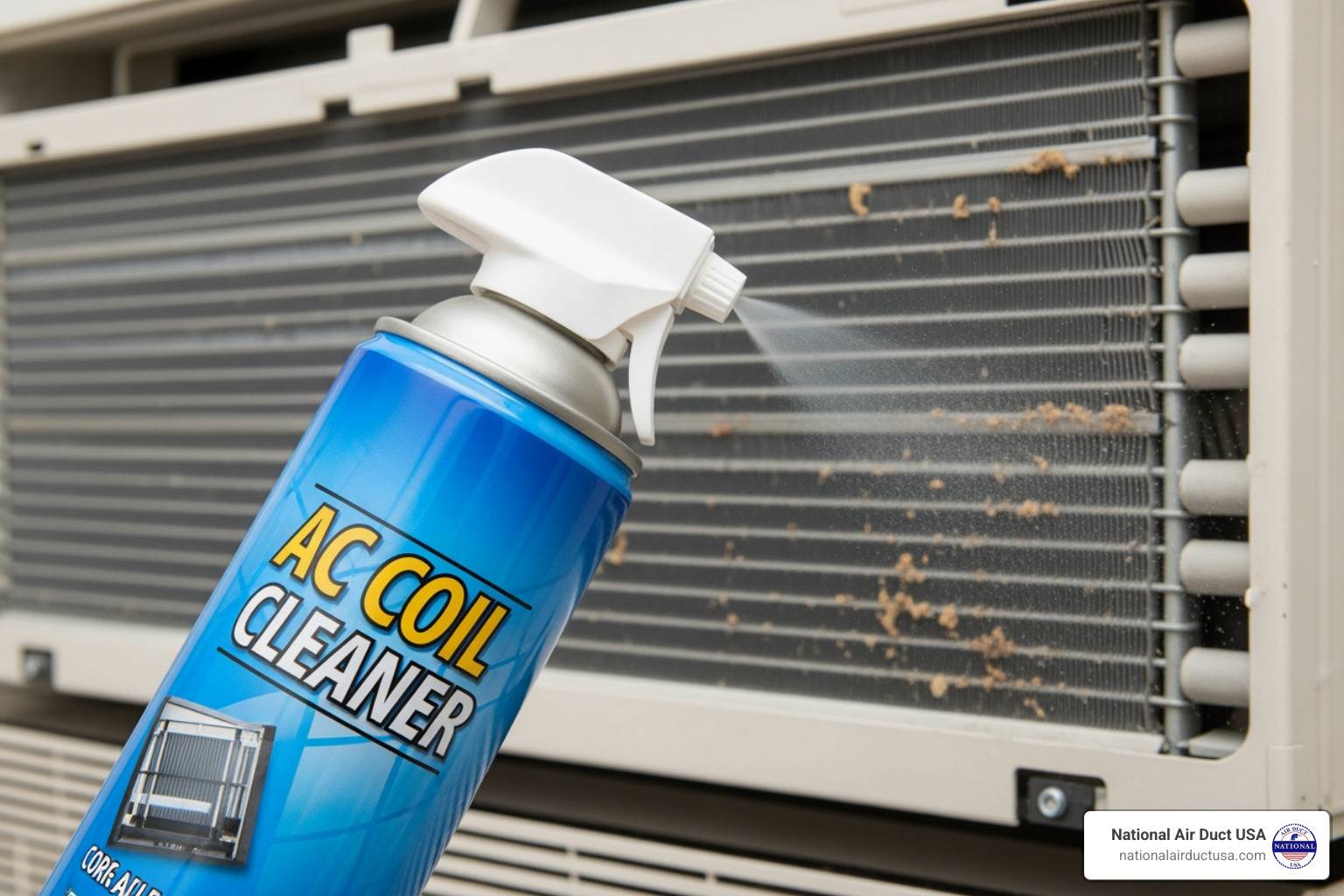
Why Your Window AC Needs a Coil Cleaner
A window ac coil cleaner is a solution that removes dirt, grease, and grime from your AC’s coils to improve efficiency and air quality.
Quick Answer: What You Need to Know About Window AC Coil Cleaners
- What it is: A solution to dissolve buildup on AC coils
- Why you need it: Restores cooling, lowers energy bills, prevents mold
- Types available: Foaming (no-rinse), non-foaming spray, biodegradable
- How often: At least once yearly before summer
- Safety: Unplug unit, wear gloves/goggles, ensure ventilation
If your window AC blows warm air, struggles to cool, or smells musty, dirty coils are the likely culprit. Over time, coils collect dust, pollen, and mold—especially in Long Island’s humid air. This buildup forces your AC to work harder, use more electricity, and deliver less cooling power.
Cleaning them is one of the most effective DIY maintenance tasks. A good coil cleaner can restore efficiency, lower energy bills, and improve your home’s air quality by removing allergens and preventing mold. The process is fast, typically taking under 30 minutes with minimal tools.
Why Cleaning Your AC Coils is Non-Negotiable
When your AC fails on a hot Long Island day, dirty coils are often the silent troublemaker. Ignoring them impacts your wallet, your health, and the AC unit’s lifespan.
Think of your AC coils as the heart of the cooling system. When coated in dust, pollen, and grime, they can’t work properly. The buildup acts like a thick winter coat wrapped around your coils—great for staying warm, terrible for cooling your home.
This strain leads to accelerated wear and tear, risking expensive compressor failure. Worse, grimy coils are a breeding ground for mold and mildew, circulating musty odors and harmful spores into your air.
Regular cleaning with a quality window ac coil cleaner prevents these issues. It’s a simple DIY task that leads to lower energy bills, better air quality, and a longer lifespan for your unit.
Just as clean air ducts are vital for home air quality, spotless AC coils are essential for healthy cooling. For ultimate protection against airborne contaminants, consider our UV Light Installation services, which are excellent at preventing mold and bacteria growth.
The Telltale Signs Your Coils Need Cleaning
Your AC will tell you when it needs help. Look for these warning signs to prevent bigger problems:
Visible dust and grime: A fuzzy layer of dust or buildup on the coil fins is a clear sign they need cleaning.
Poor cooling performance: If the unit runs constantly but the room stays warm, dirty coils are likely sabotaging its efforts.
Unit blowing warm air: This happens when grime blocks the essential heat transfer process, preventing the coils from absorbing indoor heat or releasing it outside.
Strange noises: An increase in operational noise often means the unit is straining against restricted airflow from clogged coils.
A musty or mildew smell: This distinctive odor indicates mold growth on the coils or in the drip pan, which is then pumped into your living space.
Increased energy consumption: A spike in your electricity bill without a change in usage is a classic sign that your unit is working harder to overcome dirty coils.
Health and Efficiency: The Twin Benefits of Clean Coils
Cleaning your window AC coils is an investment in your budget and your family’s well-being.
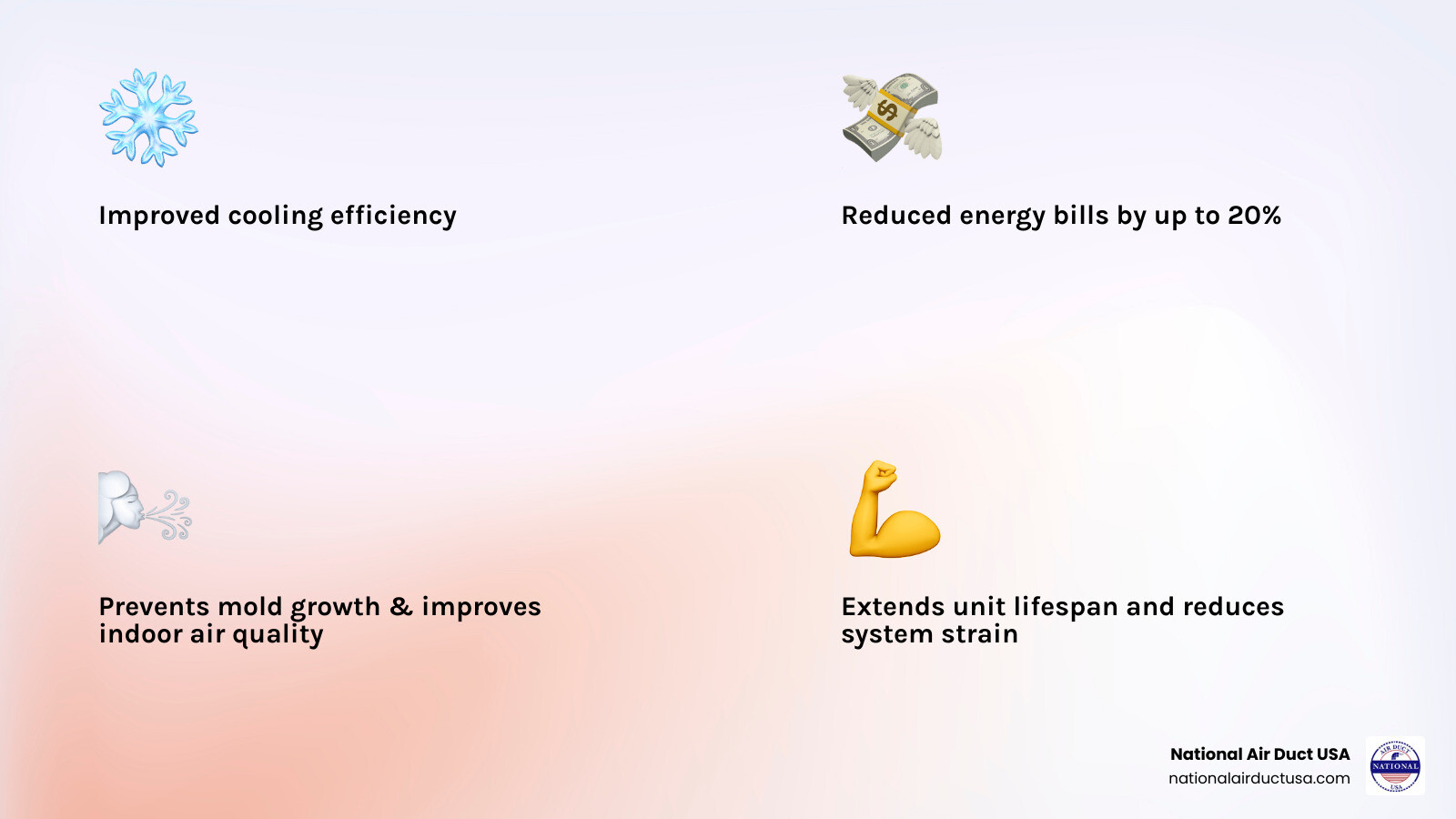
Lowering energy bills is an immediate perk. By removing the insulating layer of grime with a window ac coil cleaner, you restore efficiency and can reduce energy consumption by up to 20%.
Improving your indoor air quality is even more crucial, especially for those with allergies or asthma. Clean coils mean the air circulating in your room is fresh, not contaminated with dust, pollen, and other allergens that were trapped on the fins.
Preventing mold growth is another key advantage in Long Island’s humid climate. Regular cleaning removes the organic matter that mold feeds on, stopping it before it can spread spores throughout your home.
Extending your unit’s lifespan is a long-term benefit. An efficient AC experiences less stress on its compressor and fan motor, preventing premature wear and tear and helping your unit last for many more summers.
Clean coils lead to better overall system performance. Your AC can cool your space effectively and consistently, providing the comfort you rely on.
Choosing the Right Window AC Coil Cleaner
Now that you know why clean coils are critical, let’s pick the right window ac coil cleaner. While DIY solutions exist, commercial cleaners are specifically designed to cut through the greasy buildup on AC coils.
When shopping, consider safety, environmental impact, and the type of coil you’re cleaning (indoor evaporator vs. outdoor condenser). Let’s break down the most common options.
| Feature | Foaming Coil Cleaner | Non-Foaming Coil Cleaner (Spray/Liquid) |
|---|---|---|
| Action | Expands into a thick foam, clinging to surfaces. | Sprays as a liquid, coating surfaces. |
| Rinsing | Often “no-rinse” or “self-rinsing” with condensation. | May require rinsing with water, especially for heavy dirt. |
| Coverage | Excellent, as foam expands into crevices. | Good, but may drip more easily. |
| Mess Factor | Minimal mess due to clinging action, self-rinsing. | Can be messier if rinsing is required indoors. |
| Effectiveness | Strong degreasing action, lifts stubborn grime. | Effective, especially with agitation for tough spots. |
| Application | Aerosol can, sprays upside down. | Trigger spray bottle or pour-on. |
Foaming vs. Non-Foaming: What’s the Difference?
The main choice is between foaming and non-foaming cleaners. They both work, but in different ways.
Foaming cleaners are ideal for window AC maintenance. When sprayed, they expand into a thick foam that clings to every fin, allowing the cleaning agents to dissolve stubborn grime. Many are no-rinse formulas; the AC’s natural condensation rinses the cleaner and dirt away into the drip pan. This self-rinsing action makes them perfect for indoor use, eliminating mess.
Non-foaming sprays go on as a liquid. They are effective but tend to drip more and often require a manual rinse, which can be messy indoors. They are a good option for outdoor condenser units that can be easily rinsed with a hose.
For DIY window AC cleaning, most pros recommend a foaming, self-rinsing cleaner for its convenience and effectiveness.
What to Look for in a Window AC Coil Cleaner
Not all cleaners are the same. Here’s what to look for:
- Alkaline-based: Choose alkaline cleaners for home use. They are effective on grease and safer for you and your aluminum coils than harsh acidic cleaners.
- Fume-free formulas: Look for products labeled “low-odor” or “fume-free,” especially when cleaning indoors.
- Biodegradable options: These cleaners break down naturally, making them a more environmentally friendly choice.
- No-rinse convenience: This feature is a game-changer for window units, as it uses the AC’s own condensation to do the rinsing for you.
- Suitable for indoor use: If cleaning evaporator coils, ensure the product is safe for enclosed spaces.
- Compatibility with aluminum fins: The cleaner must state it is safe for aluminum to prevent corrosion. If it doesn’t, choose another product.
Can I Use a Homemade Solution?
While tempting, homemade solutions like vinegar and water are not recommended for deep coil cleaning. They are fine for light dust on filters but lack the degreasing power to break down the oily, baked-on grime found on coils.
Commercial coil cleaners contain specialized agents formulated for this exact purpose. Furthermore, DIY solutions carry risks: vinegar is acidic and can corrode delicate aluminum fins over time, while soap residue can attract more dirt if not rinsed perfectly.
For effective and safe results that restore your AC’s performance, invest in a proper window ac coil cleaner. It’s the right tool for the job.
Your Step-by-Step Guide to Cleaning Window AC Coils
Cleaning your AC coils is a straightforward, 30-minute DIY job that significantly boosts efficiency. You don’t need to be a pro, but following the steps and safety precautions is key to getting it right. For more extensive jobs, remember our full range of HVAC System Cleaning services.
Essential Tools and Safety First
Gather your tools before you begin to make the process smooth and safe.
Here’s what you’ll need:
- Your chosen window ac coil cleaner (foaming, no-rinse is recommended)
- Vacuum with a soft brush attachment
- Soft-bristle brush
- Fin comb
- Clean cloths or paper towels
- Gloves, safety goggles, and a face mask
- Screwdriver
- Tarp or old towels
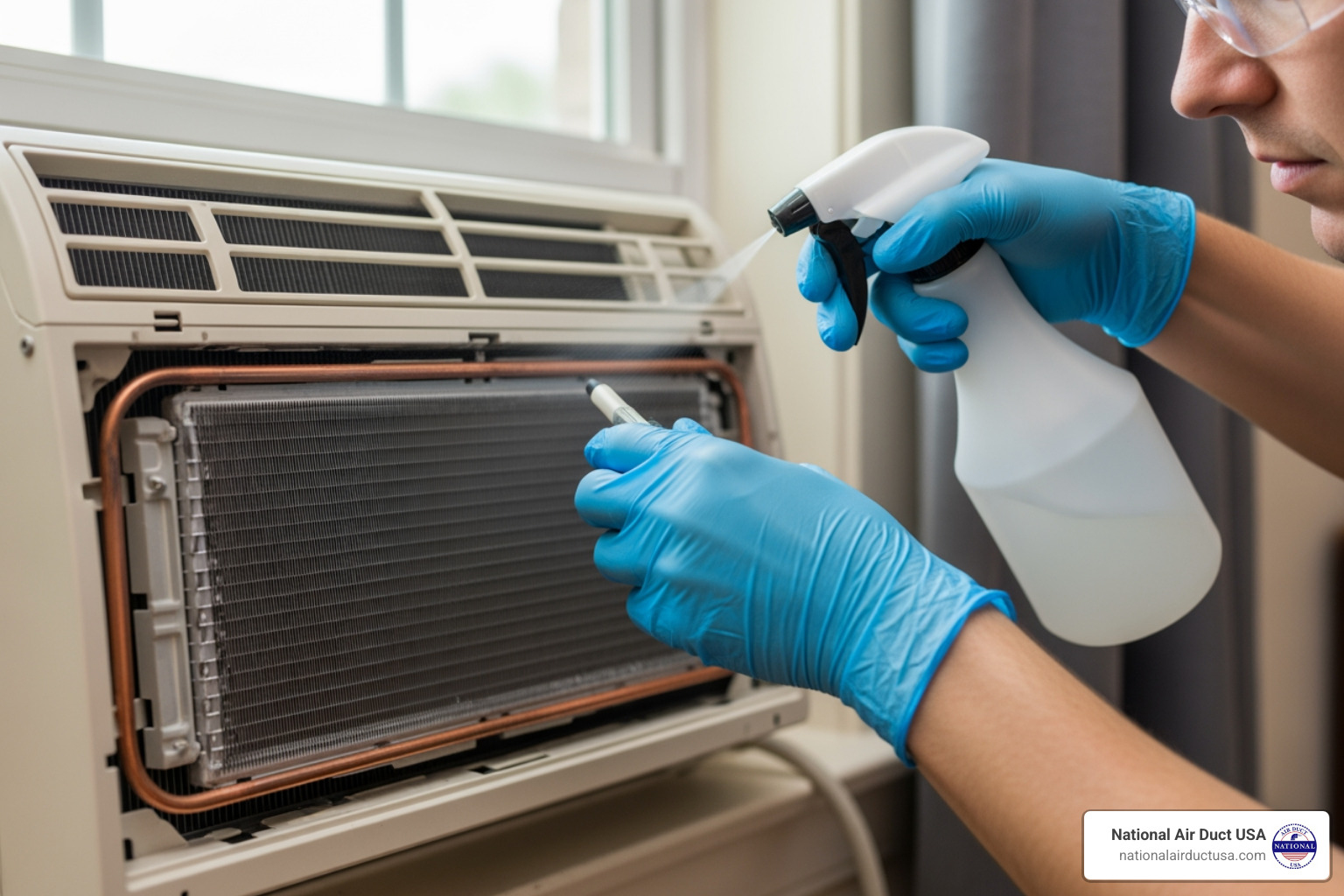
Safety is non-negotiable. Always unplug the unit before starting. Work in a well-ventilated area and wear your protective gear (gloves, goggles, and mask) to shield yourself from dust and chemicals. Lay down a tarp to protect your floor from drips and debris.
Step-by-Step: Using a Foaming Window AC Coil Cleaner
With your gear on and the area prepped, you’re ready to clean.
- Remove the front grille and filter. Most grilles snap off or are held by a few screws. Slide out the air filter and wash it with soapy water. Let it air dry completely while you work.
- Vacuum away loose debris. Gently use a soft brush attachment to vacuum dust and hair from the evaporator coils (indoors) and condenser coils (outdoors, if accessible). This allows the cleaner to attack the tougher grime.
- Access the coils. You may need to remove part of the unit’s casing (usually a few screws) to get clear access to the evaporator coils.
- Apply the foaming coil cleaner. Shake the can and spray evenly from 6-12 inches away, fully saturating the coils. The foam will expand to fill the gaps between the fins.
- Let the foam work. Wait for the time specified on the product label (usually 5-10 minutes) as it dissolves the grime. You’ll see the foam lift dirt from the surfaces.
- Let it self-rinse. For no-rinse formulas, you can now reassemble the unit. The AC’s natural condensation will rinse the cleaner and dirt into the drain pan. For heavy buildup, you can gently wipe accessible areas with a damp cloth after the foam has worked.
After cleaning, ensure all components are dry before reassembling and plugging the unit back in.
Straightening Bent Fins for Optimal Airflow
While cleaning, inspect the delicate aluminum fins for any that are bent or crushed. This is common and can severely obstruct airflow, reducing efficiency.
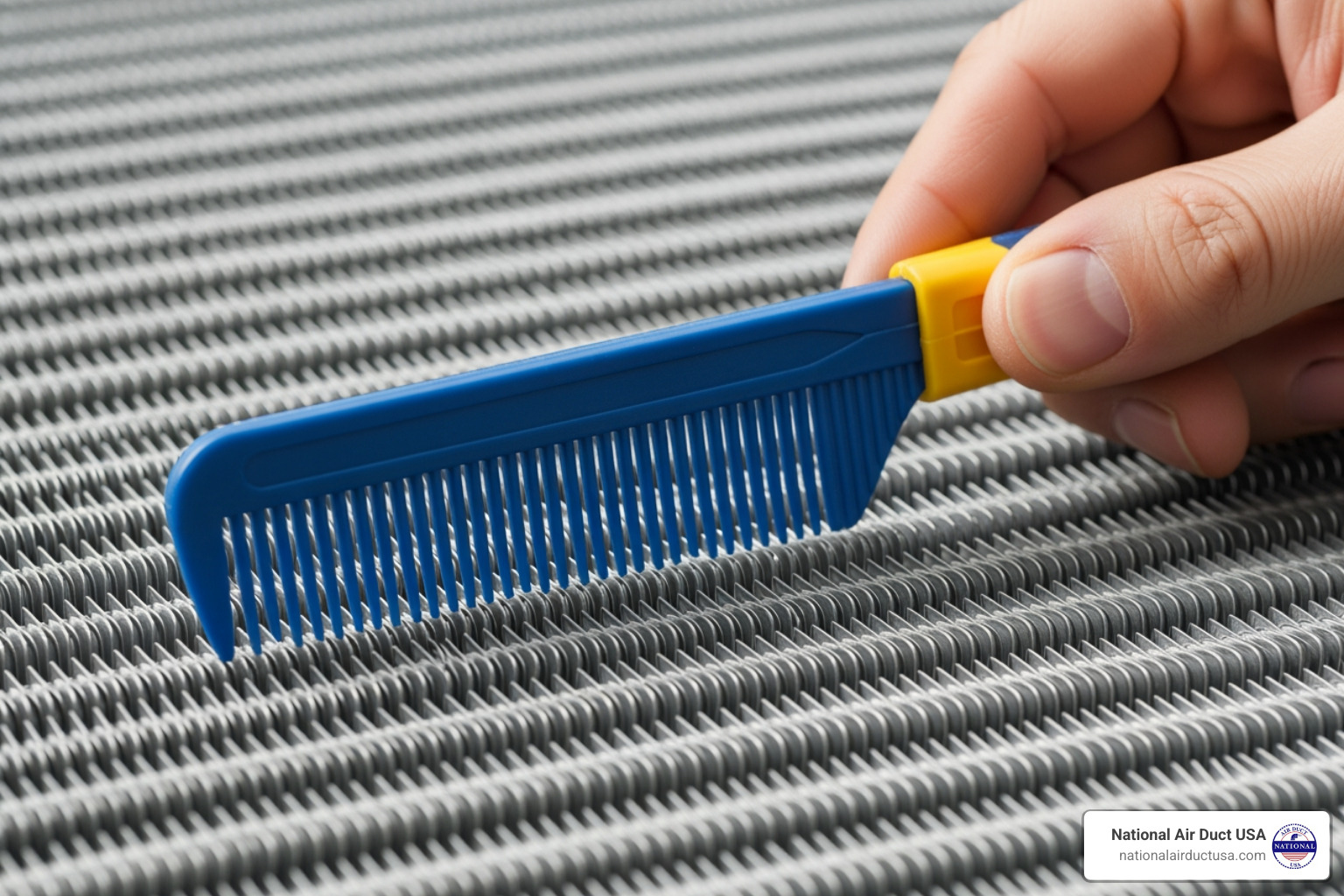
This is where a fin comb is essential. This simple tool is designed to gently straighten fins without causing more damage. We recommend using a useful fin comb tool that can be adjusted for different fin spacings.
To use it, match the comb to your fin spacing and carefully slide it through the damaged sections. Use a gentle, slow motion. Do not force it. Restoring proper airflow allows your clean coils to work at peak performance and lets your window ac coil cleaner work more effectively in the future.
Frequently Asked Questions about Cleaning Window AC Coils
We hear the same questions from homeowners across Long Island, from Westbury to Hempstead. Here are the answers to the most common queries about coil cleaning.
How often should I clean my window AC coils?
Clean your window AC coils at least once a year, ideally before summer starts. This pre-season maintenance sets your unit up for success.
During heavy use, clean or replace the air filter monthly. A clean filter is your first line of defense against dirt reaching the coils.
In dusty areas or homes with pets, inspect the coils twice a year. If you see buildup, don’t wait—clean them with your window ac coil cleaner right away. Consistent maintenance is key.
What happens if I never clean my AC coils?
Ignoring your AC coils is like never changing your car’s oil—it will eventually lead to serious problems:
- Higher Energy Bills: Dirty coils act as insulation, forcing your unit to work harder and consume more power to cool your home.
- System Breakdown: Constant strain can cause the compressor to overheat and fail. This is one of the most expensive repairs and is often preventable.
- Poor Air Quality: Coils become a breeding ground for mold, mildew, and allergens. Every time the AC runs, these contaminants are circulated into your home, which can cause health issues.
- Shorter Lifespan: An overworked unit will wear out and fail prematurely, forcing you to buy a replacement sooner.
For homeowners in Freeport, Hicksville, and beyond who want to address air quality throughout their home, our comprehensive Air Duct Cleaning services are the next step.
Can I just hose down my window AC unit?
Hosing down your unit is only safe if you remove it from the window and take it outside. First, unplug the unit completely. Use a garden hose on a gentle, low-pressure setting to rinse the outdoor-facing condenser coils, avoiding all electrical parts. Let it dry completely in a covered area before reinstalling.
Never hose down a unit while it’s still in the window. This can cause significant water damage to your home and create a serious electrical hazard.
A no-rinse foaming window ac coil cleaner is a much safer and more effective option for indoor cleaning. It uses the AC’s own condensation to rinse away grime without the mess or risk. While a hose can remove loose debris, it lacks the degreasing power of a specialized cleaner to dissolve the stubborn, oily buildup that truly harms performance.
Conclusion
By using a window ac coil cleaner, you’re making a smart investment in your home’s comfort and your wallet. This simple, 30-minute task restores cooling power, improves air quality, and can lower energy bills by up to 20%. For homeowners across Long Island, that’s a significant impact. Regular cleaning extends your unit’s life and ensures your family breathes cleaner air.
However, some issues require a professional. Call a technician for:
- Severe or recurring mold growth.
- Any electrical problems, like buzzing or burning smells.
- Poor cooling that persists after a thorough cleaning.
At National Air Duct USA, we’re committed to improving your home’s overall air quality. Our NADCA-certified technicians provide comprehensive air duct cleaning, HVAC maintenance, and UV light installation across Long Island and Nassau County. We guarantee our work with transparent pricing and fast, reliable service.
While you can handle your window AC coils, we’re here for all your larger HVAC needs. Get a free quote for our services and let us help you create a healthier, more comfortable home.