What Are the Drawbacks of Duct Cleaning in New York?
Quick Answer
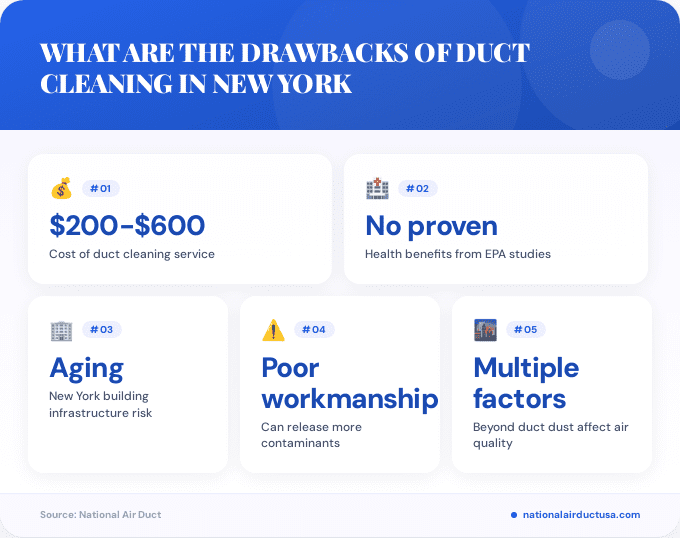
The main drawbacks of duct cleaning in New York include no proven health benefits, potential damage to aging ductwork in older buildings, risk of releasing more contaminants into your home if done improperly, and significant costs ($200 to $600 or more) for a service that may be unnecessary. The EPA states duct cleaning has never been shown to prevent health problems, and New York’s older building infrastructure makes these risks particularly relevant.
If you’re a New York homeowner considering duct cleaning, you might be surprised to learn that the service carries more potential drawbacks than benefits in many situations. While advertisements promise cleaner air and health improvements, the EPA’s official guidance states that duct cleaning has never been proven to prevent health problems or meaningfully improve indoor air quality for most homes.
Understanding what are the drawbacks of duct cleaning in New York becomes especially important given the city’s unique characteristics: dense urban pollution, aging building infrastructure, high humidity levels, and a market where service quality varies dramatically. The reality is that poor workmanship, unnecessary cleaning, and unrealistic health expectations create more problems than dirty ducts themselves in many New York homes.
This comprehensive guide examines the evidence-based risks and limitations of duct cleaning, with specific focus on how New York’s environment and building stock amplify these concerns. Whether you live in Manhattan’s pre-war buildings, Brooklyn’s historic brownstones, or Queens’ diverse housing stock, you need to understand both sides before making this investment.
What Are the Health Benefit Limitations of Duct Cleaning?
The most significant drawback of duct cleaning in New York centers on what it doesn’t deliver: proven health benefits. Many homeowners pursue air duct cleaning hoping to alleviate allergies, asthma, or respiratory issues, but the scientific evidence supporting these expectations remains surprisingly weak.
According to the EPA, studies do not conclusively demonstrate that particle levels in homes increase because ducts are dirty, nor do they show that cleaning ducts will prevent health problems. This creates a fundamental expectation gap where homeowners pay for anticipated health improvements that may never materialize.
The National Institutes of Health’s Department of Occupational Health and Safety emphasizes that routine duct cleaning is not necessary for most buildings and that the connection between duct dust and health symptoms has not been established through research. This is particularly relevant for New York residents who may be dealing with multiple indoor air quality factors beyond duct cleanliness.
In densely populated areas of New York, outdoor pollution, building materials, cooking emissions, and other sources often contribute more significantly to indoor air quality problems than duct dust. Homeowners who invest in duct cleaning expecting dramatic health improvements may be disappointed when their symptoms persist because the real culprits remain unaddressed.
Can Duct Cleaning Actually Worsen Indoor Air Quality?
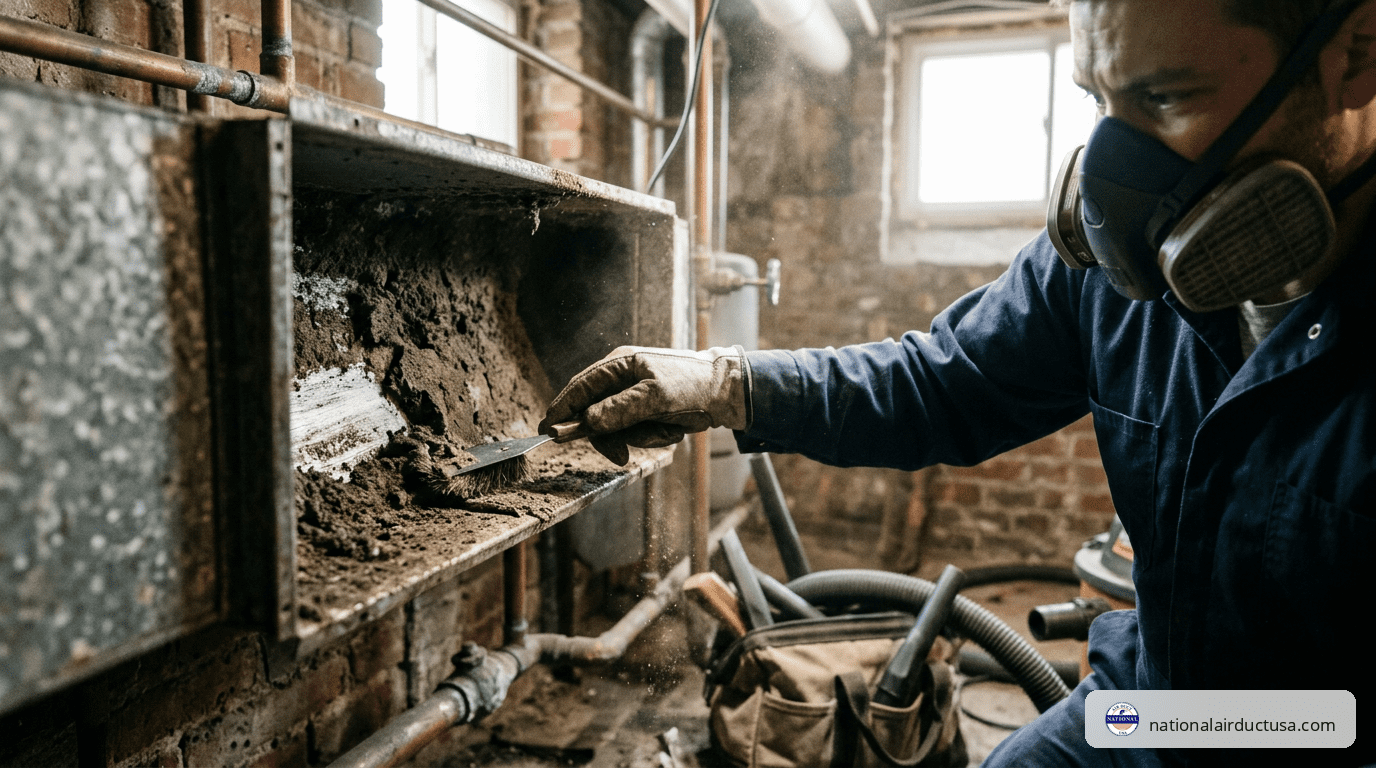
Paradoxically, one of the most serious drawbacks of duct cleaning is that it can actually make your indoor air quality worse if performed incorrectly. This happens when service providers use inadequate vacuum collection systems or improper techniques that release more dust and contaminants into your living space than if the ducts had been left untouched.
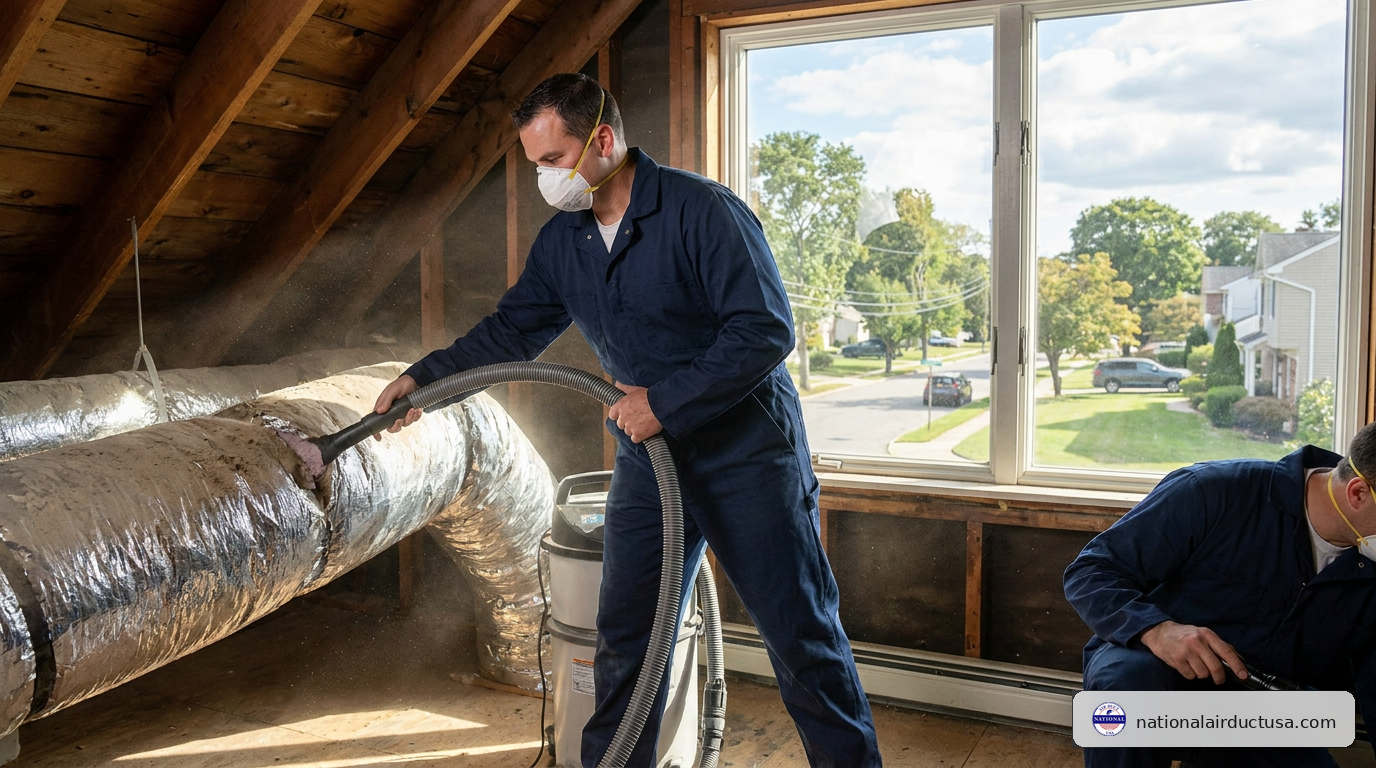
The EPA specifically warns that if the service provider fails to follow proper procedures, duct cleaning can cause indoor air problems. When aggressive brushing or air-whipping tools dislodge years of accumulated dust, pollen, pet dander, and other particles, these contaminants must be captured by powerful HEPA-filtered vacuum systems. If the vacuum isn’t sufficient or isn’t properly connected, all that disturbed material gets blown throughout your home.
| Contaminant Release Risk | Why It Matters in NYC | Potential Impact |
|---|---|---|
| Dust and particulates | Older buildings accumulate decades of dust | Respiratory irritation, allergy flare-ups |
| Mold spores | NYC humidity encourages hidden growth | Widespread contamination, health risks |
| Pest debris | Urban environment increases pest presence | Allergens, unpleasant odors |
New York’s dense urban environment compounds this risk. Professional duct cleaning in NYC requires specialized equipment and expertise precisely because of the unique challenges posed by older buildings, complex duct configurations, and accumulated urban pollutants. When inexperienced or underequipped providers attempt the work, they may disturb contaminants without proper containment.
Additionally, if biocides or chemical treatments are applied incorrectly during cleaning, residual chemicals can off-gas into your home for weeks afterward. The EPA notes that these products have not been thoroughly researched for use in ductwork and their long-term effects on residents are unknown.
What Damage Can Improper Duct Cleaning Cause?
Physical damage to your HVAC system represents another significant drawback, particularly when duct cleaning is performed by inexperienced technicians using improper methods. This damage can range from minor issues to catastrophic system failures requiring thousands of dollars in repairs.
Aggressive mechanical cleaning tools like rotating brushes, if used incorrectly, can punch holes in flexible ductwork, dislodge duct connections, damage internal insulation, or even break components of your heating and cooling system. In New York’s older buildings, where duct systems may already have compromised joints, sagging sections, or aging materials, this risk increases substantially.
When ductwork is damaged during cleaning, the results can be severe. Holes or disconnected sections allow conditioned air to escape into walls, attics, or crawl spaces where it does no good. According to research, poorly sealed ducts can waste up to 30% of heating and cooling energy, driving up utility costs significantly. For New York homeowners already facing high energy prices, this represents a major financial penalty.
| Type of Damage | Common Cause |
|---|---|
| Punctured flexible ductwork | Aggressive rotary brushes on thin materials |
| Disconnected duct segments | Excessive vibration from equipment |
| Damaged insulation | Improper tool selection or technique |
| Bent or crushed sheet metal | Heavy equipment pressure on aging ducts |
| Damaged registers and grilles | Careless removal or reinstallation |
Fiberglass duct board and internal insulation present special challenges. If these materials are damaged or become wet during the cleaning process, they can release particles into the air and may support mold growth afterward. Professional HVAC service providers understand which duct materials can tolerate which cleaning methods, but inexperienced operators may not make these distinctions.
Why Are These Drawbacks More Serious in New York?
New York’s unique characteristics amplify every potential drawback of duct cleaning, making what might be minor issues elsewhere into significant problems in the five boroughs and surrounding areas. The combination of aging infrastructure, environmental factors, and building density creates a perfect storm of risk factors.
First, New York’s building stock includes countless pre-war structures with HVAC systems that were retrofitted into buildings designed before central air conditioning existed. These ducts often run through challenging paths, feature non-standard configurations, and may already have existing problems like loose joints, sagging sections, or collapsed areas. When cleaning is attempted on these fragile systems, the risk of causing damage increases substantially.
Second, New York’s coastal climate brings high humidity, particularly during summer months. This moisture can infiltrate duct systems and create conditions favorable for mold growth. If duct cleaning is performed without addressing the underlying moisture problem, or if the cleaning itself introduces water that isn’t properly dried, mold issues can worsen rather than improve. Professional ductwork service for New York properties must account for these moisture challenges to avoid creating new problems.
Risk: Fragile existing ductwork
Concern: Limited access points
Risk: Unconventional duct paths
Concern: Preservation requirements
Risk: Variable duct quality
Concern: Diverse system types
Risk: Complex duct networks
Concern: Access difficulties
Third, the dense urban environment means greater accumulation of outdoor pollutants in duct systems, but also means that outdoor air quality contributes significantly to indoor air problems. Cleaning ducts won’t address pollution entering through windows, ventilation systems, or infiltration from neighboring units in multi-family buildings, a common scenario throughout New York.
Finally, New York’s competitive service market includes providers ranging from highly qualified to completely inexperienced. The low barrier to entry means that fly-by-night operators can offer cut-rate duct cleaning without proper equipment, training, or insurance. These providers are more likely to cause the very problems this article describes.
What Are the Financial Drawbacks of Duct Cleaning?
The financial drawbacks of duct cleaning extend beyond the initial service cost, particularly when the cleaning proves unnecessary or causes damage requiring additional repairs. In the New York metro area, pricing varies widely based on the scope of work, system complexity, building age, and provider quality.
Professional duct cleaning in New York typically ranges from $200 to $600 or higher, with premium services for larger homes or complex systems reaching $500 to $1,000 or more. However, these numbers represent only the upfront expense. If your ducts are relatively clean to begin with, you’ve essentially paid for a service that provides minimal tangible benefit.
Research on air duct cleaning costs shows significant regional variation, with urban areas like New York commanding premium prices due to higher operating costs, difficult building access, and competitive market conditions. Yet higher price doesn’t guarantee better results or protect against the drawbacks outlined in this article.
The hidden financial costs become apparent when problems arise. If improper cleaning damages your ductwork, repair costs can range from several hundred dollars for minor fixes to several thousand for extensive duct replacement. If the cleaning causes system damage that reduces energy efficiency, you’ll pay the penalty in higher utility bills for years to come. The 30% energy waste from damaged or poorly sealed ducts translates to hundreds of dollars annually for typical New York households.
Furthermore, if mold problems worsen due to moisture introduced during cleaning or contaminants spread through improper technique, remediation costs can be substantial. Professional mold remediation often costs $1,500 to $5,000 or significantly more depending on the extent of contamination, representing a financial burden far exceeding the original cleaning cost.
For homeowners considering whether the investment is worthwhile, it’s important to recognize that duct cleaning is not a routine maintenance item like changing air filters. Unless you have specific, documented problems such as visible mold growth, vermin infestation, or substantial debris blocking airflow, the service may represent poor value for your money.
How Can Aggressive Sales Tactics Make Things Worse?
One of the most concerning drawbacks in the New York duct cleaning market involves aggressive sales tactics and outright scams that prey on homeowners’ concerns about health and air quality. These practices not only waste money but can lead to unnecessary services or even deliberately created problems.
Common deceptive tactics include bait-and-switch pricing where a low advertised rate (sometimes as low as $99) turns into a much higher bill once the technician arrives and claims to find urgent problems. Some operators use fake air quality tests, showing homeowners alarming results that justify expensive treatments. Others deliberately loosen duct connections or create minor damage, then offer to fix the problems they created for additional fees.
The “free inspection” approach is another red flag. Some companies offer free duct inspections, then use high-pressure sales tactics to convince homeowners they need immediate cleaning, often exaggerating health risks or making unfounded claims about allergies, energy savings, or system damage. These tactics exploit homeowners’ fears and lack of technical knowledge about HVAC systems.
Particularly problematic are door-to-door solicitors or unsolicited phone calls claiming to offer special discounts or time-limited offers. Legitimate, established HVAC companies rarely use these marketing approaches. Companies that cannot provide proof of proper licensing, insurance, and NADCA (National Air Duct Cleaners Association) certification should raise immediate concerns.
The financial and practical drawbacks multiply when homeowners fall victim to these tactics. Not only do they overpay for unnecessary services, but the work itself may be performed poorly or not at all, creating the very problems this article has outlined: damaged ductwork, released contaminants, worsened air quality, and no real benefit.
For New York homeowners, due diligence becomes essential. Check company reviews, verify credentials, get multiple quotes, and never feel pressured to authorize work immediately. If someone claims you need urgent duct cleaning for health reasons, remember the EPA’s position that routine cleaning has not been proven to provide health benefits.
Key Takeaways
- No proven health benefits: The EPA states that duct cleaning has never been shown to prevent health problems, and studies don’t conclusively link duct dust to increased particle levels in homes or respiratory issues.
- Risk of air quality deterioration: Improper cleaning with inadequate vacuum systems can release more contaminants into your living space than if ducts were left alone, potentially worsening allergies and respiratory irritation.
- Potential HVAC system damage: Aggressive cleaning methods can puncture flexible ductwork, disconnect duct segments, damage insulation, or harm system components, leading to repair costs and up to 30% energy waste from leaks.
- New York-specific amplified risks: Older building stock, pre-war construction, high humidity, complex duct configurations, and aging infrastructure make New York properties particularly vulnerable to cleaning-related damage.
- Significant financial investment with uncertain returns: Professional cleaning ranges from $200 to $600 or more in New York, representing poor value if your ducts are already reasonably clean or if the service causes problems requiring additional repairs.
- Aggressive sales tactics and scams: The market includes unscrupulous operators using bait-and-switch pricing, fake air quality tests, high-pressure tactics, and unfounded health claims to sell unnecessary services.
- Limited scenarios where cleaning is justified: Duct cleaning may be warranted only in specific situations like visible mold growth, vermin infestation, substantial debris blocking airflow, or after major renovations, not as routine maintenance.
People Also Ask
Is duct cleaning worth it in New York?
Duct cleaning in New York is worth it only in specific situations like visible mold growth, pest infestation, or substantial debris accumulation. For most homes with no documented problems, the service provides limited value given the lack of proven health benefits and the risks of improper work damaging aging duct systems common in older New York buildings.
Can duct cleaning make your house dirtier?
Yes, duct cleaning can make your house dirtier if the service provider uses inadequate vacuum equipment or improper techniques. When cleaning dislodges dust, mold spores, and other contaminants without proper containment, these particles get distributed throughout your home rather than captured, potentially worsening indoor air quality temporarily or even long-term.
How often should ducts be cleaned in NYC?
According to the EPA and NADCA, ducts should only be cleaned when there’s a specific problem, not on a routine schedule. Most New York homes never need duct cleaning unless they experience visible mold, pest infestation, excessive debris, or undergo major renovation. Claims that ducts need cleaning every 2-5 years are not supported by research and often come from companies selling services.
What are the signs of a duct cleaning scam?
Red flags include extremely low advertised prices (under $100), unsolicited door-to-door sales, high-pressure tactics, claims that dirty ducts cause serious health problems, inability to provide licensing and insurance proof, and refusal to give written estimates. Legitimate companies provide transparent pricing, credentials, and don’t use fear-based sales tactics about health risks.
Does duct cleaning help with allergies?
There is no conclusive scientific evidence that duct cleaning relieves allergy symptoms or improves respiratory health for most people. The EPA states that the link between duct dust and health problems has not been established through research. Allergies are typically better addressed through regular filter changes, proper ventilation, humidity control, and eliminating other indoor allergen sources.
Can duct cleaning damage my HVAC system?
Yes, improper duct cleaning can damage your HVAC system by puncturing flexible ducts, disconnecting duct segments, damaging insulation, or harming system components. This risk is particularly high in New York’s older buildings where duct systems may already have compromised joints or aging materials. Damage can result in air leaks that waste up to 30% of heating and cooling energy.
Frequently Asked Questions
What does the EPA say about duct cleaning?+
The EPA states that duct cleaning has never been shown to prevent health problems and that studies do not conclusively demonstrate that particle levels in homes increase because ducts are dirty. They recommend cleaning only when there’s visible mold, pest infestation, or ducts are clogged with debris, not as routine maintenance.
Why is duct cleaning riskier in older New York buildings?+
Older New York buildings often have HVAC systems retrofitted into pre-war structures with aging ductwork that may already have loose joints, sagging sections, or compromised materials. These fragile systems are more vulnerable to damage during cleaning, and the complex configurations common in historic buildings increase the difficulty of proper cleaning without causing harm.
How much does duct cleaning typically cost in New York?+
Professional duct cleaning in New York typically ranges from $200 to $600 or more, with pricing varying based on home size, system complexity, building age, accessibility, and provider qualifications. Premium services for larger or more complex systems can reach $500 to $1,000 or higher. Be wary of extremely low advertised prices, which often signal scams or bait-and-switch tactics.
When is duct cleaning actually necessary?+
Duct cleaning is necessary only in specific situations: visible mold growth inside ducts or on HVAC components, vermin infestation or substantial pest debris, ducts clogged with excessive dust or debris restricting airflow, or following major renovation that introduced construction debris into the system. Routine preventive cleaning is not recommended by the EPA or industry experts.
What should I look for in a duct cleaning company?+
Look for NADCA certification, proper state licensing and insurance, transparent written estimates, willingness to show you the problem before cleaning, use of HEPA-filtered vacuum equipment, and positive reviews from verified customers. Avoid companies using high-pressure sales tactics, making unfounded health claims, or offering prices that seem too good to be true.
Are there alternatives to duct cleaning for better air quality?+
Yes, more effective alternatives include changing HVAC filters regularly (every 1-3 months), using high-efficiency filters, controlling humidity levels (30-50%), improving ventilation, eliminating indoor pollution sources, and having your HVAC system professionally maintained annually. These approaches typically provide better air quality improvement at lower cost and risk than duct cleaning.
Can I inspect my own ducts to see if they need cleaning?+
Related: Can Dirty Air Ducts Cause Health Problems in New York? A Comprehensive 2026 Expert Guide
Related: Can Dirty Air Ducts Cause Allergies in New York? The 2026 Scientific Answer
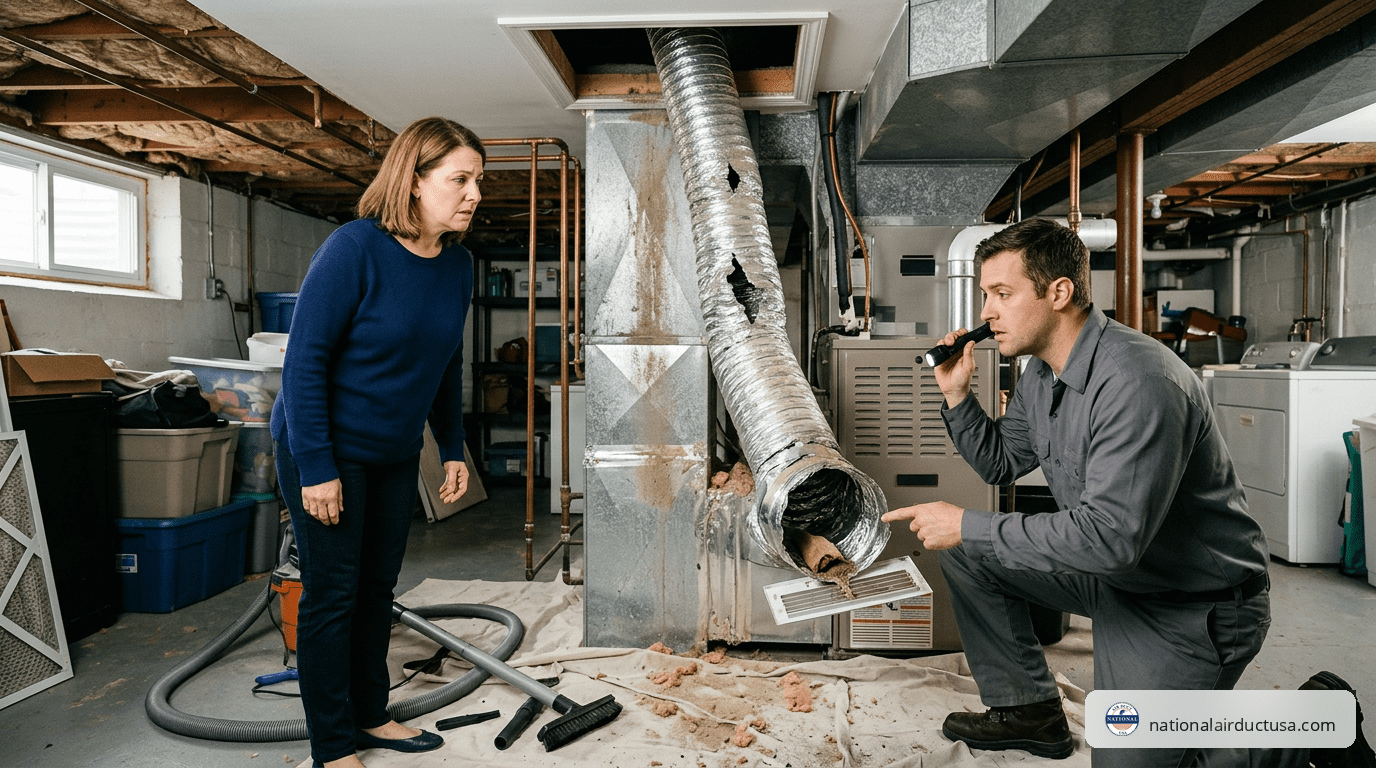
You can perform a basic inspection by removing vent covers and using a flashlight to look for visible mold, excessive dust buildup, pest droppings, or debris blocking airflow. However, most of your duct system is hidden behind walls and ceilings, making comprehensive assessment difficult. If you see concerning issues during your inspection, consult a qualified HVAC professional rather than assuming full duct cleaning is necessary.