Air Duct Cleaning for Allergies and Asthma in New York: Your Complete 2026 Guide
Quick Answer
Air duct cleaning for allergies and asthma in New York can reduce household allergens like dust, pet dander, and mold, particularly in aging buildings and polluted urban environments, though EPA and NIH research shows no conclusive proof it prevents health problems. NYC residents with visible contamination, respiratory symptoms, or high-risk households (pets, smokers, allergies) may benefit most from professional cleaning every 2-3 years.
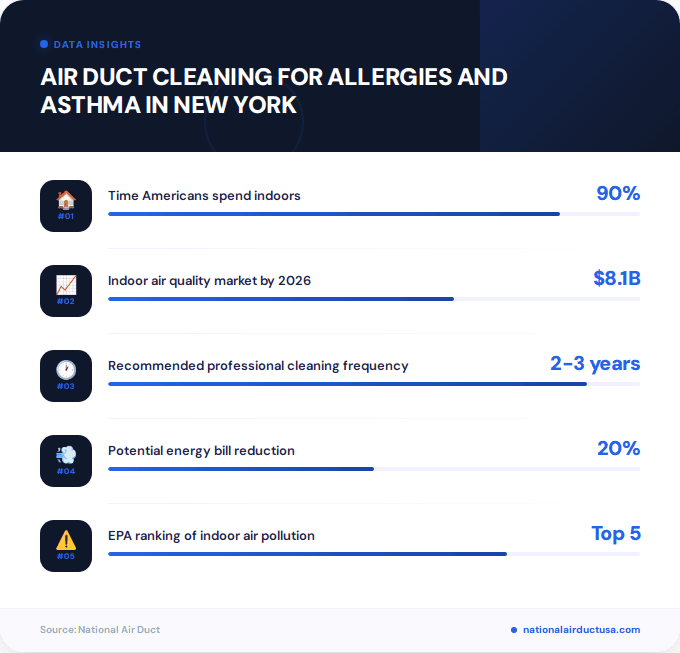
If you’re one of the millions of New Yorkers battling seasonal allergies or asthma, you’ve likely wondered whether the dust hiding in your ductwork is making your symptoms worse. With Americans spending 90% of their time indoors and the EPA ranking indoor air pollution among the top 5 environmental health risks, the air quality inside your Manhattan apartment or Long Island home deserves serious attention.
The air duct cleaning industry is experiencing unprecedented growth, with the global indoor air quality monitoring market projected to exceed $8.1 billion by 2026. The air duct cleaning service market itself was valued at $3.77 million in 2025 and is expected to reach $6.31 million by 2033, reflecting heightened awareness of respiratory health and post-pandemic concerns about airborne contaminants.
But does air duct cleaning for allergies and asthma in New York actually deliver on its promises? The answer is more nuanced than many homeowners expect, particularly in a city where aging infrastructure, outdoor pollution, and dense population create unique indoor air quality challenges.
What Is Air Duct Cleaning and How Does It Work?
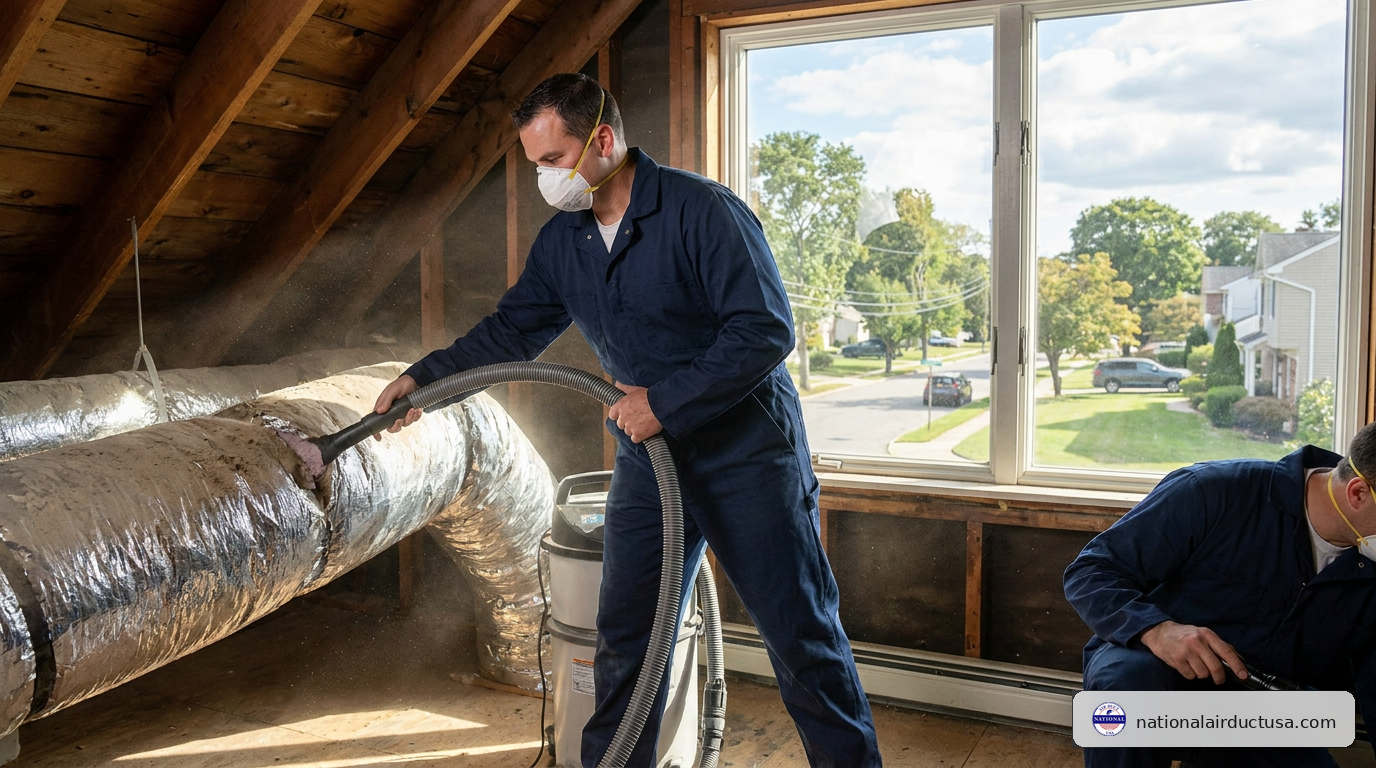
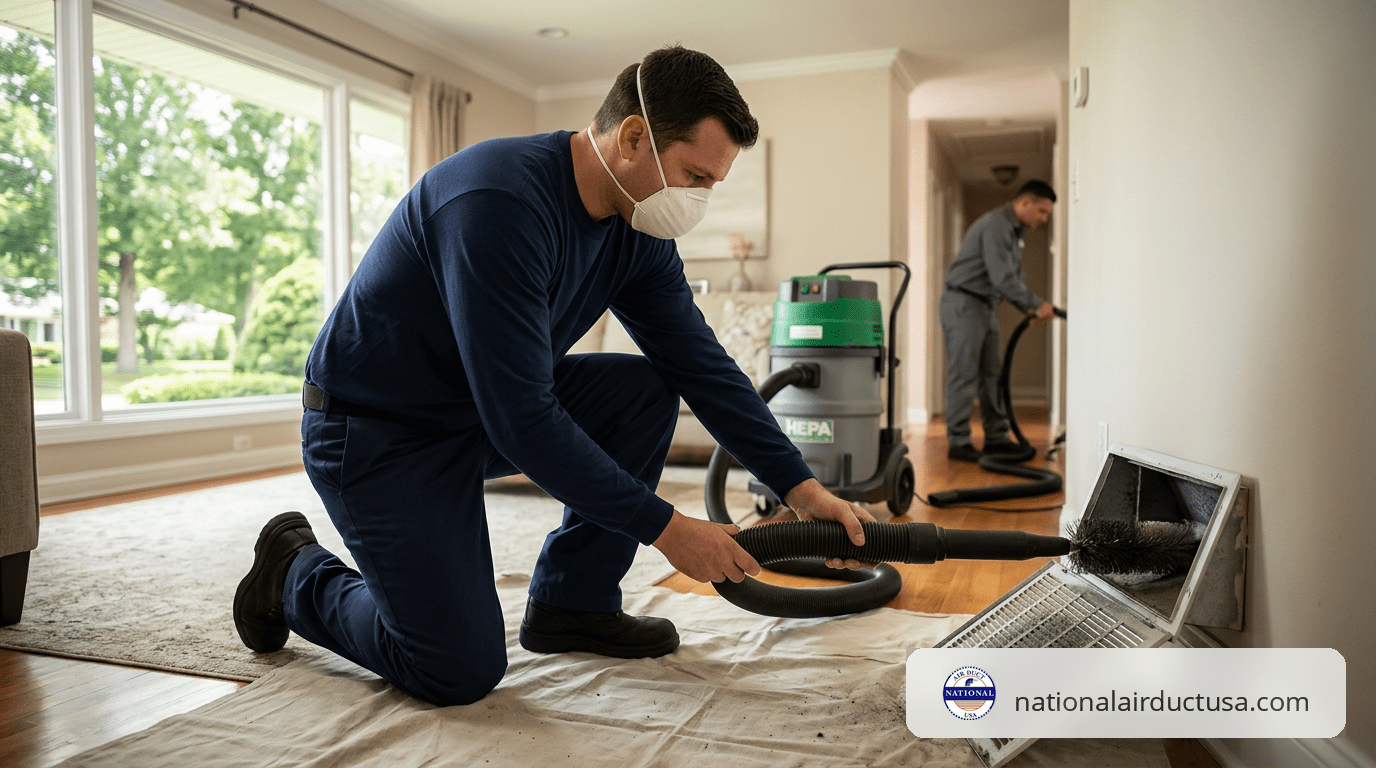
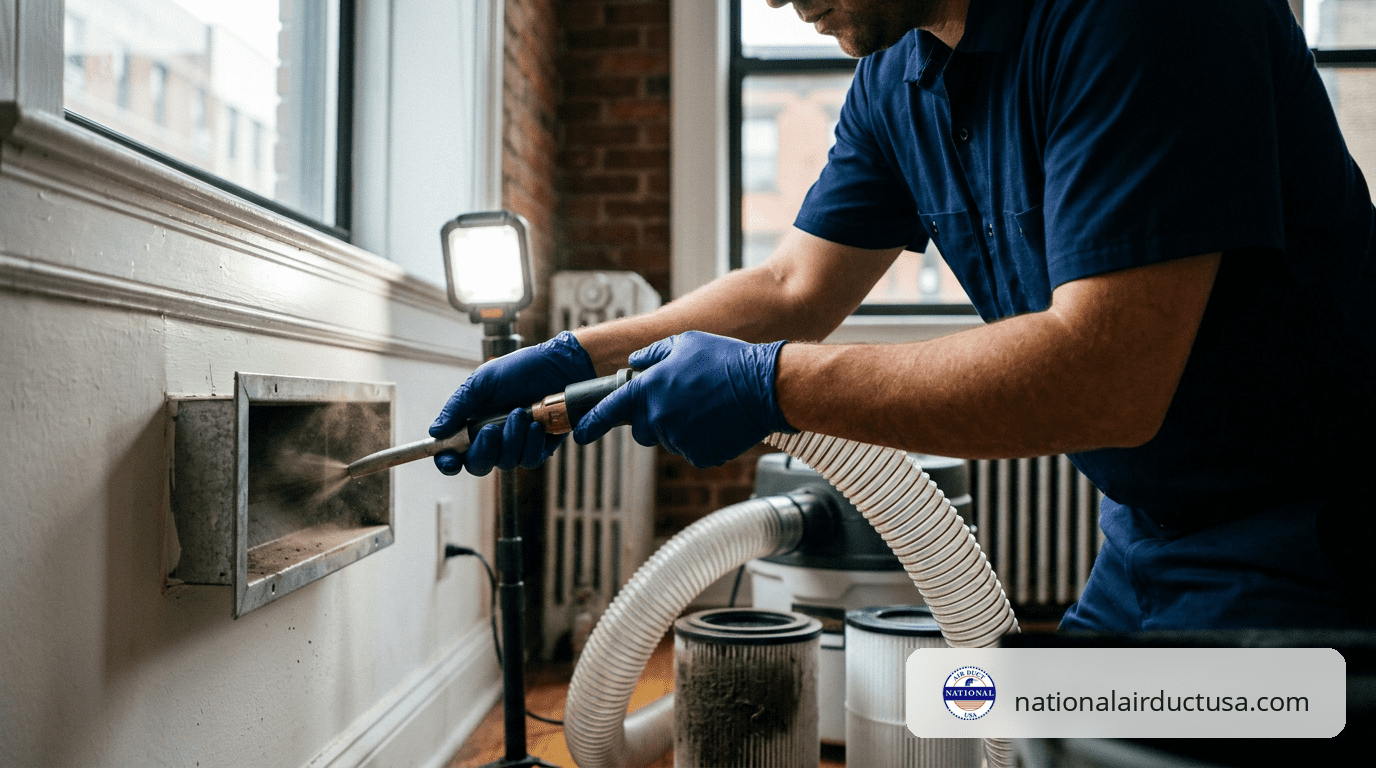
Air duct cleaning involves the removal of dust, debris, allergens, and contaminants from your HVAC system’s ductwork, registers, grilles, and diffusers. Professional technicians use specialized equipment including high-powered vacuums, rotary brushes, and compressed air tools to dislodge and extract accumulated particles.
The process typically begins with a thorough inspection using cameras to identify contamination levels and problem areas. Technicians then create negative pressure within the duct system using powerful collection devices, preventing dislodged contaminants from entering your living spaces. Agitation devices break loose stuck-on debris, which is then vacuumed out of the system.
According to the EPA’s guidance on air duct cleaning, a complete cleaning should address the entire HVAC system, including supply and return air ducts, registers, grilles, heat exchangers, cooling coils, drip pans, fan motors, and the air handling unit housing.
How Effective Is Air Duct Cleaning for Allergies and Asthma?
The scientific evidence on air duct cleaning’s effectiveness for allergies and asthma presents a complex picture. While industry advocates point to significant benefits, government health agencies maintain a more cautious stance based on available research.
According to NIH research spanning over 20 years, studies show variable indoor air quality benefits from duct cleaning. Interestingly, some studies found that contaminant levels were sometimes higher immediately after cleaning, though this typically normalized over time.
The National Air Duct Cleaners Association (NADCA) presents a different perspective, reporting that regular duct cleaning can reduce allergens and potentially lower energy bills by up to 20%. Companies with decades of experience, like IAC Indoor Air Care serving Long Island and NYC for over 30 years, assert that cleaning every 3-5 years significantly reduces allergies, asthma triggers, mold, and odors.
The EPA’s position acknowledges that duct cleaning may be justified if there is visible mold growth, substantial visible debris, or evidence of vermin infestation. However, they note that much of the dirt in air ducts adheres to duct surfaces and doesn’t necessarily enter living spaces. For comprehensive benefits, at National Air Duct, we focus on complete system cleaning rather than ducts alone.
Who Benefits Most from Air Duct Cleaning?
Research and practical experience suggest certain households see more meaningful improvements:
- Homes with pets: Animal dander circulates continuously through HVAC systems, particularly problematic for allergy and asthma sufferers
- Residents with diagnosed respiratory conditions: Asthma and allergy patients may experience symptom reduction when allergen exposure decreases
- Households with smokers: Tobacco residue accumulates in ductwork and re-circulates throughout the home
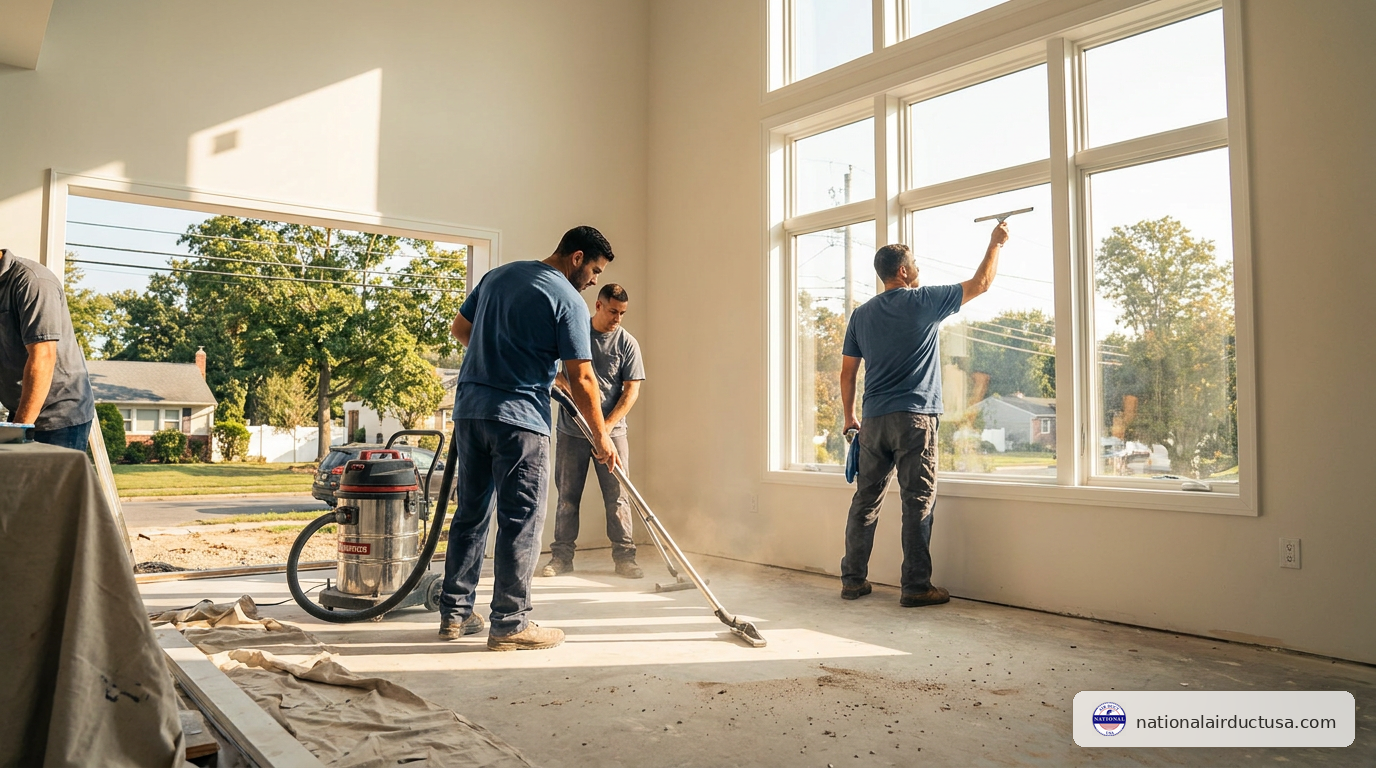
- Post-construction or renovation: Construction dust and debris infiltrate duct systems extensively
- Visible mold or musty odors: Indicators of biological growth that requires professional remediation
- Recently purchased older homes: Previous occupants’ allergens and contaminants may still be present
Why New York Residents Face Unique Indoor Air Quality Challenges
New York presents distinctive indoor air quality challenges that make air duct cleaning for allergies and asthma in New York particularly relevant compared to national averages. The city’s dense urban environment, aging building stock, and high outdoor pollution levels create a perfect storm for indoor contaminants.
According to local experts at IAC Indoor Air Care, Long Island and NYC residents face elevated pollen counts, construction dust from constant development, and outdoor pollution that infiltrates buildings. Many NYC buildings were constructed decades ago with HVAC systems that have never been professionally cleaned.
The combination of sealed building envelopes (for energy efficiency) and limited natural ventilation in many apartments means that once contaminants enter ductwork, they recirculate continuously. This is compounded by New York’s humid summers, which create ideal conditions for mold growth in cooling coils and drip pans.
| NYC-Specific Challenge | Impact on Indoor Air Quality | Cleaning Recommendation |
|---|---|---|
| Pre-war buildings | Decades of accumulated dust, possible asbestos or lead dust | Immediate inspection, professional testing |
| High outdoor pollution | Particulate matter, diesel exhaust infiltration | Every 2-3 years with upgraded filtration |
| Constant construction | Dust, debris, volatile organic compounds | Within 6 months post-renovation |
| Humid summers | Mold growth in cooling components | Pre-summer inspection and cleaning |
For those interested in comprehensive building system maintenance, understanding how different systems interact is valuable. Just as proper maintenance matters for HVAC systems, similar principles apply to other home components, as discussed in resources about standard specifications for building systems.
When Should You Schedule Air Duct Cleaning in New York?
Timing your air duct cleaning strategically can maximize benefits for allergy and asthma management. According to HVAC industry recommendations for 2026, seasonal considerations matter significantly for New York residents.
The optimal time for air duct cleaning for allergies and asthma in New York is typically late winter to early spring (February through April). This timing allows you to remove accumulated winter dust and prepare your system before high pollen season arrives in late spring. Alternatively, mid-summer cleaning (July through August) addresses mold growth from cooling system condensation and prepares for fall allergens.
| Home Type (NYC-Relevant) | Recommended Frequency |
|---|---|
| Standard residential | Every 3-5 years |
| With smokers/pets/allergies/asthma | Every 2-3 years (annually for heavy pet shedding) |
| New construction/renovation | Within 1 year of completion |
| Vacation home/low usage | Every 5-7 years |
Warning Signs You Need Immediate Cleaning
Certain symptoms indicate your ductwork requires professional attention regardless of your last cleaning date:
- Visible mold growth in ducts or on other HVAC components
- Musty or moldy odors when the system operates
- Excessive dust accumulation on surfaces shortly after cleaning
- Visible debris, pet hair, or insect parts coming from registers
- Recent pest infestation or evidence of rodent droppings
- Unexplained worsening of allergy or asthma symptoms
- Black dust residue around supply vents (possible mold)
What Does Professional Air Duct Cleaning Include?
A comprehensive professional air duct cleaning service should address your entire HVAC system, not just the visible ductwork. Understanding what you’re paying for helps you evaluate providers and ensure you receive thorough service.
Reputable companies following NADCA standards perform a visual inspection before beginning work, often using camera equipment to document contamination levels. This inspection identifies specific problem areas, potential damage to ductwork, and helps establish realistic expectations for the cleaning process.
The actual cleaning process involves creating negative pressure throughout the duct system using truck-mounted or portable vacuum collection devices equipped with HEPA filtration. Technicians then use rotating brushes, compressed air tools, and agitation devices to dislodge contaminants from all surfaces.
Complete Service Components
- Supply and return air ducts: All accessible ductwork throughout the system
- Registers and grilles: Cleaned or replaced if damaged
- Heat exchanger: Inspected and cleaned (furnace systems)
- Cooling coils: Cleaned to prevent mold growth and improve efficiency
- Drip pans: Cleaned and treated to prevent biological growth
- Fan motor and blower assembly: Cleaned to improve airflow
- Air handling unit housing: Interior surfaces cleaned
According to industry trends highlighted by Rotobrush’s 2026 clean air initiatives, contractors increasingly offer value-added services including UV light installation for biological control, upgraded filtration systems, and air purification technologies. These services represent high-margin upsells but can provide legitimate benefits for allergy and asthma sufferers.
For more insights on working with home service professionals and understanding project scope, homeowners often benefit from resources like those explaining professional service distinctions in other industries.
How Much Does Air Duct Cleaning Cost in New York?
Air duct cleaning costs in New York vary significantly based on system size, accessibility, contamination level, building type, and service scope. Pricing ranges from $300 to $1,500 or more for residential properties, with larger homes, commercial buildings, or severely contaminated systems commanding premium rates.
Manhattan apartments with limited access and small duct systems might fall toward the lower end of the range, while Long Island single-family homes with extensive ductwork, multiple zones, or special requirements (mold remediation, sanitization) can exceed $2,000. The wide pricing variation reflects differences in equipment quality, technician training, service thoroughness, and company reputation.
Premium providers investing in advanced equipment, NADCA certification, and comprehensive training typically charge 30-50% more than budget competitors, but deliver superior results with documented before-and-after verification. At National Air Duct, we emphasize value and craftsmanship over low-cost alternatives that may provide superficial cleaning without addressing underlying contamination.
Factors Affecting Your Quote
Several variables influence the final cost of air duct cleaning services:
- System size: More ductwork requires more time and materials
- Accessibility: Difficult-to-reach ducts increase labor requirements
- Contamination level: Heavy buildup or mold requires additional treatment
- Property type: Multi-story homes cost more than single-level apartments
- Additional services: Sanitization, deodorization, UV lights add to base cost
- Duct repair: Damaged or leaking ducts may require sealing or replacement
- Emergency service: Urgent requests typically carry premium pricing
Pricing varies based on your specific project requirements, building configuration, and desired service level. We encourage you to contact qualified providers for custom quotes that reflect your unique situation rather than relying on generic estimates that may not apply to New York’s diverse housing stock.
How to Choose a Qualified Air Duct Cleaning Provider
Selecting a reputable air duct cleaning company in New York requires careful vetting, as the industry includes both highly qualified professionals and unscrupulous operators making exaggerated claims. Your choice significantly impacts both results and value.
NADCA certification represents the industry gold standard, requiring companies to demonstrate proper equipment, trained technicians, and adherence to established cleaning standards. Look for providers displaying current NADCA membership and asking about specific certifications held by technicians who will perform your service.
According to NYC air duct cleaning experts, New York’s unique building codes and environmental conditions require providers familiar with local requirements, particularly for older buildings that may contain asbestos or other hazardous materials requiring special handling protocols.
Essential Qualifications and Questions
When evaluating providers, verify these credentials and ask these critical questions:
- Active NADCA certification with verifiable membership number
- Proof of insurance (general liability and workers’ compensation)
- References from recent clients with similar properties
- Detailed written estimate specifying all included services
- Before-and-after documentation process (photos or video)
- Equipment type (truck-mounted systems typically superior to portable units)
- Guarantee or warranty on services performed
- Transparent pricing without hidden fees or aggressive upselling
Red flags include companies that cold-call claiming your ducts need immediate cleaning, those refusing to provide written estimates, or technicians who diagnose expensive mold problems without proper testing. Similar caution applies across home service industries, as detailed in guides about selecting qualified professionals for technical work.
How to Maximize Indoor Air Quality Beyond Duct Cleaning
While professional air duct cleaning addresses one important component of indoor air quality, comprehensive allergy and asthma management requires a multi-faceted approach. Even the most thorough duct cleaning provides temporary benefits if other contamination sources aren’t controlled.
The EPA notes that most indoor air pollution comes from sources other than ductwork, including cooking, outdoor air infiltration, building materials, furnishings, and occupant activities. Addressing these sources alongside duct maintenance creates the most effective strategy for respiratory health.
Complementary Indoor Air Quality Strategies
- Upgrade air filters: Replace standard 1-inch filters with high-efficiency MERV 11-13 filters or HEPA alternatives
- Maintain regular filter changes: Every 1-3 months depending on household factors
- Control humidity: Maintain 30-50% relative humidity to prevent mold growth
- Use kitchen and bathroom exhaust fans: Vent moisture and contaminants outdoors
- Regular vacuuming with HEPA filters: Removes allergens before they enter ductwork
- Minimize pet dander exposure: Groom pets regularly and restrict bedroom access
- Address water damage immediately: Prevent mold establishment within 24-48 hours
- Consider air purifiers: Standalone HEPA units for bedrooms or high-use areas
For comprehensive approaches to home improvement and maintenance, resources covering topics like systematic project planning demonstrate how coordinated efforts yield better results than isolated interventions.
Professional duct cleaning provides maximum benefit when combined with ongoing maintenance and source control. This integrated approach addresses both existing contamination and prevents future accumulation, creating sustainable improvements in indoor air quality for New York residents managing allergies and asthma.
Key Takeaways
- Scientific evidence is mixed: While industry experts report benefits, EPA and NIH research shows no conclusive proof that duct cleaning prevents health problems, though it may help in specific circumstances
- New York presents unique challenges: Aging buildings, high outdoor pollution, and constant construction make air duct cleaning more relevant for NYC and Long Island residents than national averages suggest
- Target high-risk households: Homes with pets, smokers, allergies/asthma, recent renovation, or visible contamination benefit most from professional cleaning every 2-3 years
- Timing matters: Schedule cleaning in late winter/early spring or mid-summer to prepare for high allergen seasons and maximize respiratory benefits
- Choose providers carefully: Verify NADCA certification, insurance, and references; avoid extremely low-priced services that likely use bait-and-switch tactics
- Expect wide pricing variation: Legitimate services range from $300 to $1,500+ depending on system size, contamination level, and service scope, with premium providers delivering superior documented results
- Combine with other strategies: Maximum allergy and asthma benefits require comprehensive indoor air quality management including upgraded filtration, humidity control, and regular maintenance beyond duct cleaning alone
People Also Ask
Can air duct cleaning make allergies worse?
Temporarily, yes. NIH research shows contaminant levels sometimes spike immediately after cleaning as dislodged particles circulate before being fully removed. This typically resolves within days, and symptoms should improve long-term if cleaning was performed properly with adequate negative pressure and HEPA filtration.
How long does air duct cleaning take in a typical New York apartment?
Most NYC apartments require 2-4 hours for complete professional cleaning depending on system size and accessibility. Larger homes or those with extensive contamination may require 4-8 hours, while small studio apartments might be completed in 1-2 hours.
Is air duct cleaning worth it for new buildings in NYC?
Yes, especially within the first year after construction. New buildings accumulate significant construction dust, drywall particles, and debris during finishing work that often enters duct systems. Cleaning removes these irritants before they circulate for years, particularly beneficial for residents with respiratory sensitivities.
Can I clean air ducts myself to save money?
DIY cleaning is not recommended for thorough results. Consumer-grade equipment lacks the power to create proper negative pressure and remove deeply adhered contaminants. Professional truck-mounted vacuums and specialized agitation tools are necessary for effective cleaning, and improper techniques can damage ductwork or release more contaminants into living spaces.
Does air duct cleaning reduce energy bills?
Potentially, though not always dramatically. NADCA reports cleaning can improve efficiency by up to 20% if heavy buildup restricted airflow, but the EPA notes that most duct dirt doesn’t significantly impede system performance. You’re more likely to see energy savings from sealing duct leaks and upgrading insulation than from cleaning alone.
How can I tell if my air ducts are actually dirty?
Remove a register cover and visually inspect with a flashlight, looking for visible dust buildup, debris, or discoloration. Other indicators include musty odors when the system runs, excessive dust on surfaces shortly after cleaning your home, visible debris blowing from vents, or unexplained respiratory symptoms that worsen when HVAC operates.
Frequently Asked Questions
Does insurance cover air duct cleaning for medical reasons in New York?+
Standard homeowners or renters insurance typically does not cover routine air duct cleaning, even when performed for allergy or asthma management. However, if a covered event like fire or water damage necessitates cleaning, insurance may pay for remediation. Some HSA or FSA accounts may allow reimbursement with a physician’s letter documenting medical necessity, though this varies by plan and should be verified beforehand.
What’s the difference between air duct cleaning and dryer vent cleaning?+
Air duct cleaning addresses your HVAC system’s heating and cooling ducts that circulate conditioned air throughout your home, focusing on allergen and contaminant removal. Dryer vent cleaning removes lint buildup from the exhaust system that vents your clothes dryer outdoors, primarily a fire safety concern rather than an indoor air quality issue. Both services are important but serve different purposes and require different equipment.
Should I have my air ducts cleaned before or after getting a new HVAC system?+
If you’re replacing your HVAC system but keeping existing ductwork, have ducts cleaned immediately after new equipment installation. This prevents contamination from old equipment and construction debris from circulating through your new system. If installing entirely new ductwork, post-construction cleaning within the first year removes installation debris but isn’t as urgent as when reusing old ducts.
Are chemical treatments or sanitizers necessary after air duct cleaning?+
The EPA states that routine chemical treatment is not necessary if cleaning is performed properly and moisture problems are corrected. However, if mold was present or for households with severe allergies, EPA-registered antimicrobial treatments may provide additional protection. Always ensure any chemicals used are approved for HVAC systems and applied according to manufacturer guidelines, as some treatments can release irritating odors or particles.
How do I maintain clean air ducts between professional cleanings?+
Change air filters every 1-3 months using MERV 11-13 rated filters, vacuum registers and return grilles monthly, control indoor humidity between 30-50%, address water leaks immediately, groom pets regularly to reduce dander, and schedule annual HVAC maintenance that includes inspection of ductwork. These practices significantly extend the time between professional cleanings while maintaining better indoor air quality.
Can air duct cleaning help with COVID-19 or other airborne viruses?+
Air duct cleaning removes accumulated dust and debris but does not disinfect surfaces against viruses. While cleaner ducts may marginally improve overall air quality, virus protection requires proper ventilation, MERV 13+ filtration or HEPA air purifiers, and potentially UV-C light systems installed in the HVAC unit. Cleaning alone should not be considered a COVID-19 or viral infection prevention measure.
What should I do to prepare my New York home for air duct cleaning?+
Clear access to all registers, grilles, and the HVAC unit by moving furniture and stored items. Ensure technicians have parking access (critical in NYC) and a clear path for equipment. Cover or remove valuable items near work areas, secure pets in a separate room, and plan to be home during service. For comprehensive details on preparing your home, our guide on the benefits of professional air duct cleaning in Long Island NY provides additional preparation recommendations.