Residential Duct Cleaning Process Explained in New York: The Complete 2026 Guide
Quick Answer
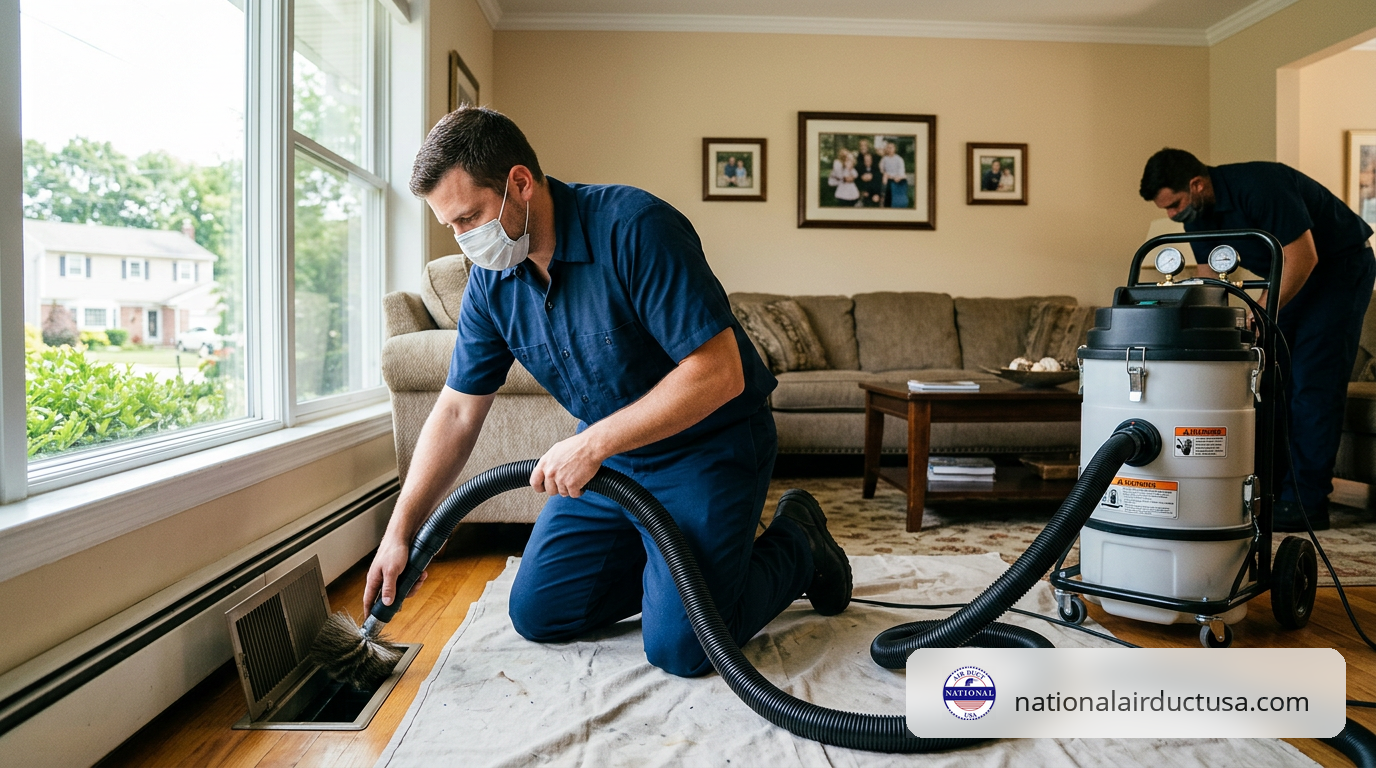
The professional residential duct cleaning process in New York follows NADCA’s ACR Standard and involves a systematic 3-5 hour procedure using HEPA vacuums, rotary brushes, and inspection cameras to remove dust, debris, mold, and contaminants from supply/return ducts, registers, and trunk lines. The six-step process includes initial camera inspection, mechanical agitation, HEPA vacuum extraction, component cleaning, optional sanitizing treatments, and final verification with before/after documentation.
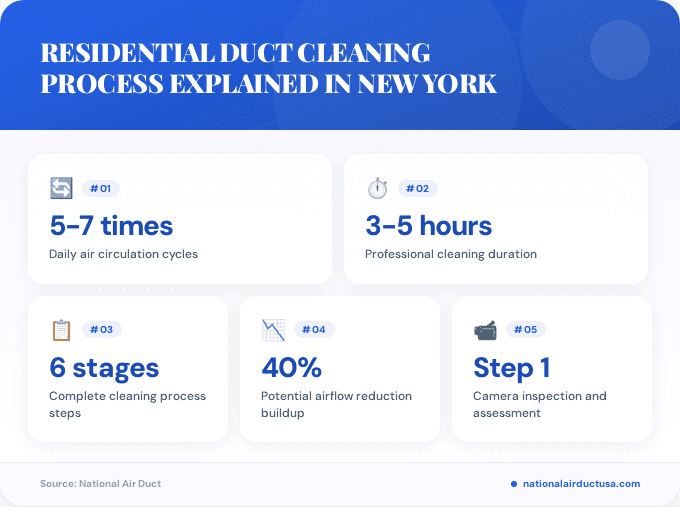
Did you know that your HVAC system circulates air through your New York home 5 to 7 times per day, and every cycle carries dust, allergens, and contaminants that accumulate in your ductwork? For residents of Manhattan high-rises, Brooklyn brownstones, and Queens apartments, understanding the residential duct cleaning process explained in New York has become essential for maintaining healthy indoor air quality in one of the nation’s most densely populated urban environments.
The complexity of New York’s diverse housing stock, from pre-war buildings with aging HVAC systems to modern constructions with sophisticated ventilation, demands a thorough understanding of professional duct cleaning procedures. This comprehensive guide walks you through every stage of the process, backed by NADCA’s updated 2025 ACR Standard and real-world insights from certified technicians serving the five boroughs.
What Is Residential Duct Cleaning and Why Does It Matter in New York?
Residential duct cleaning is the systematic removal of dust, debris, mold, pet dander, and other contaminants from your home’s heating and cooling system ductwork. According to the Environmental Protection Agency, while ducts get dirty over time, cleaning is most beneficial when there’s visible mold growth, pest infestations, or substantial dust buildup.
In New York’s unique urban environment, ductwork faces accelerated contamination from construction dust, vehicle emissions, and higher population density. Manhattan apartments often contend with older buildings where decades of accumulated debris can restrict airflow by up to 40%, forcing HVAC systems to work harder and increasing energy costs.
Professional duct cleaning goes far beyond what homeowners can accomplish with standard vacuum cleaners. The process requires specialized equipment capable of accessing hidden sections of ductwork that span vertical shafts in high-rises or snake through narrow crawl spaces in Brooklyn row houses.
What Are the Step-by-Step Stages of the Residential Duct Cleaning Process?
The residential duct cleaning process explained in New York follows a proven six-stage methodology that ensures comprehensive cleaning while protecting your home and HVAC system.
Stage 1: Initial Inspection and System Assessment
Professional technicians begin with a thorough visual and technological inspection of your entire HVAC system. This critical first step involves examining accessible ductwork, registers, and grilles to identify the extent of contamination and locate optimal access points.
Modern New York professionals use borescope cameras and digital inspection scopes to explore hidden sections of ductwork that aren’t visible to the naked eye. These cameras capture high-resolution images and video of the interior duct surfaces, documenting conditions like mold growth, pest activity, or construction debris that may have entered the system.
During this phase, technicians also assess your system’s layout, noting the configuration of supply and return ducts, the location of trunk lines, and any unique architectural challenges common in New York buildings. In pre-war apartments, for example, they might encounter original galvanized steel ductwork that requires special handling to avoid damage.
Stage 2: Preparation and Containment
Before any mechanical cleaning begins, technicians establish negative pressure containment to prevent dust and debris from entering your living spaces. They seal off registers and grilles using specialized covers, creating isolated zones within the duct system.
This preparation phase is particularly important in New York apartments where residents often cannot leave during the service. Proper containment ensures that families can remain in unaffected rooms while work progresses in other areas of the home.
Stage 3: Mechanical Agitation and Debris Dislodging
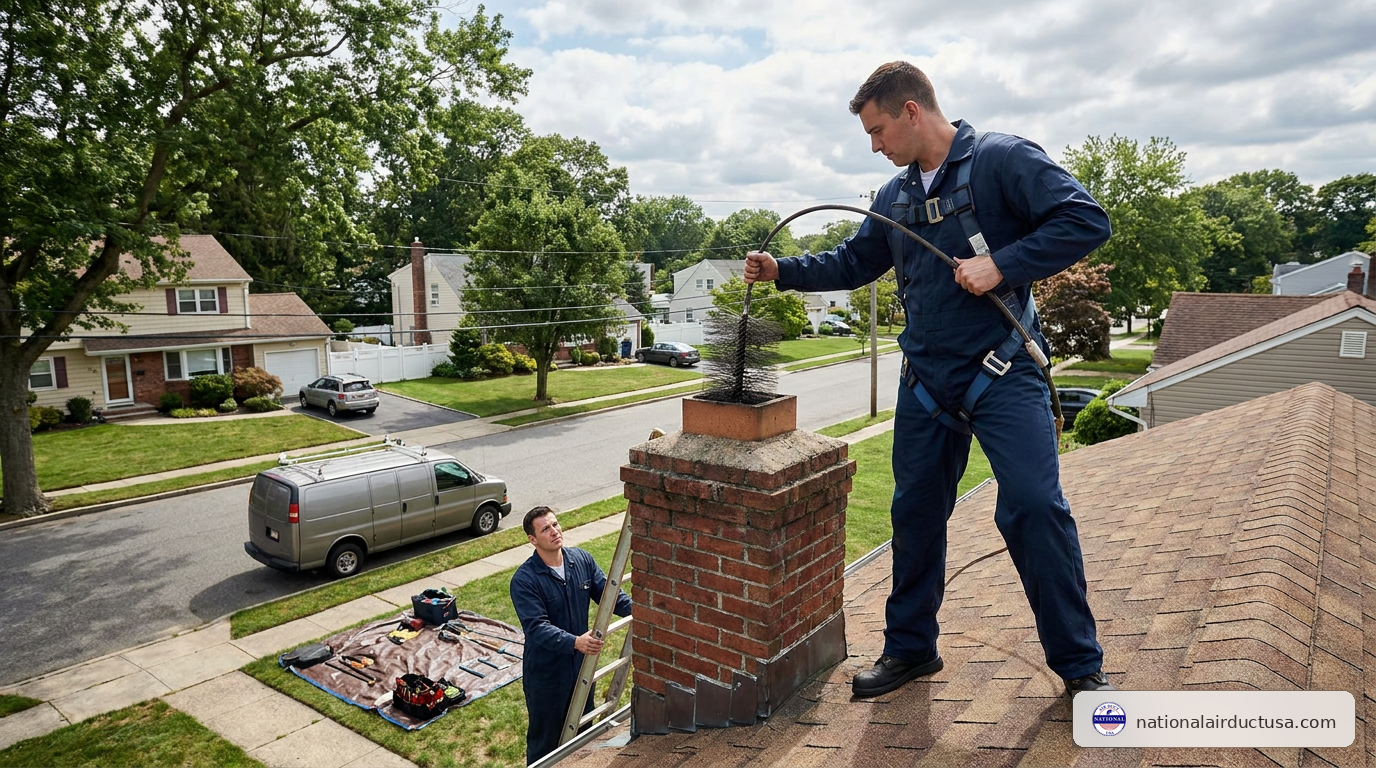
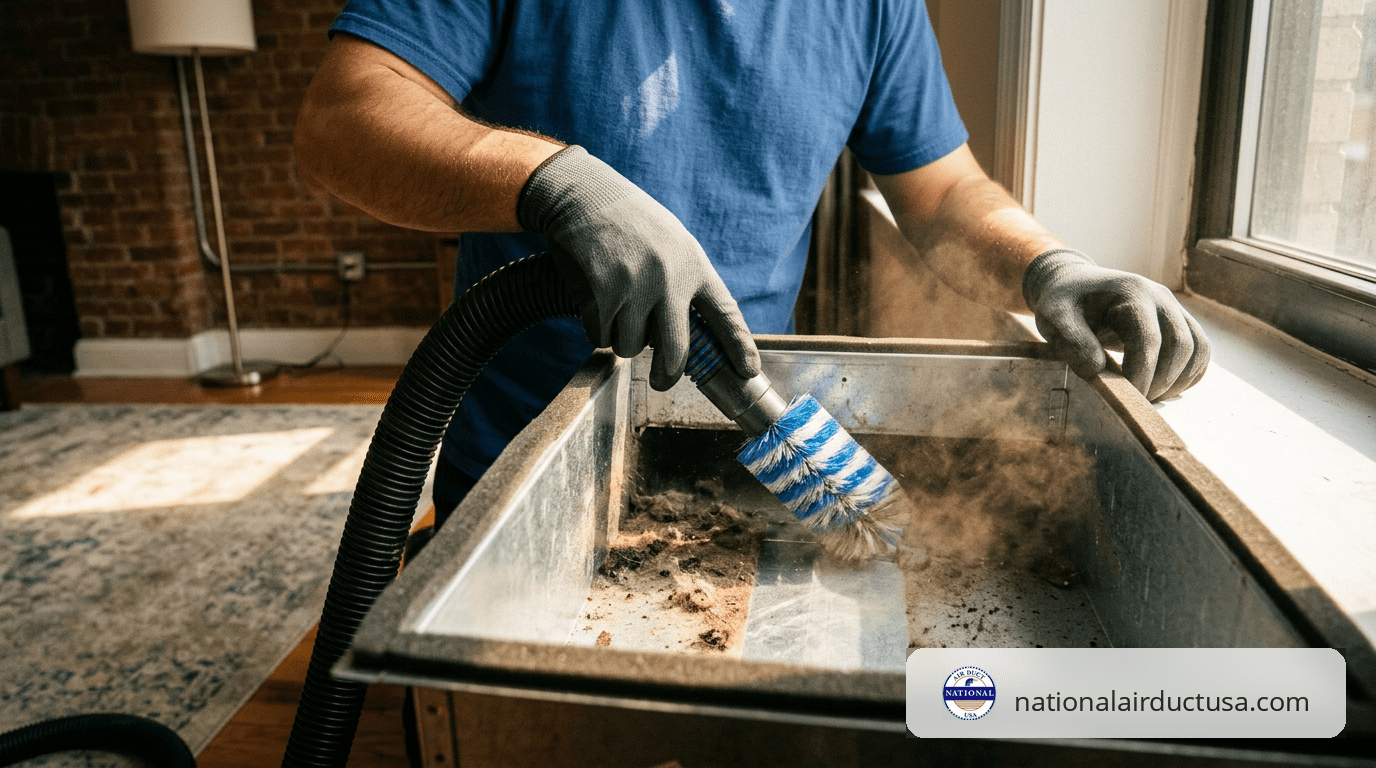
The core cleaning process uses multiple agitation tools to physically dislodge accumulated contaminants from duct surfaces. Professional duct cleaning services employ rotary brushes, compressed air whips, and pneumatic tools that systematically scrub the interior of supply and return ducts.
Rotary brushes attach to flexible shafts that navigate the twists and turns of ductwork, spinning at controlled speeds to break loose caked-on dust without damaging duct linings. Air whips use concentrated bursts of compressed air to dislodge debris in hard-to-reach areas, particularly effective for flexible ducting common in New York HVAC renovations.
Technicians work methodically through each section of the system, ensuring complete coverage from the main trunk lines down to individual branch ducts serving each room. The process requires both technical skill and familiarity with New York’s diverse architectural styles.
Stage 4: HEPA Vacuum Extraction
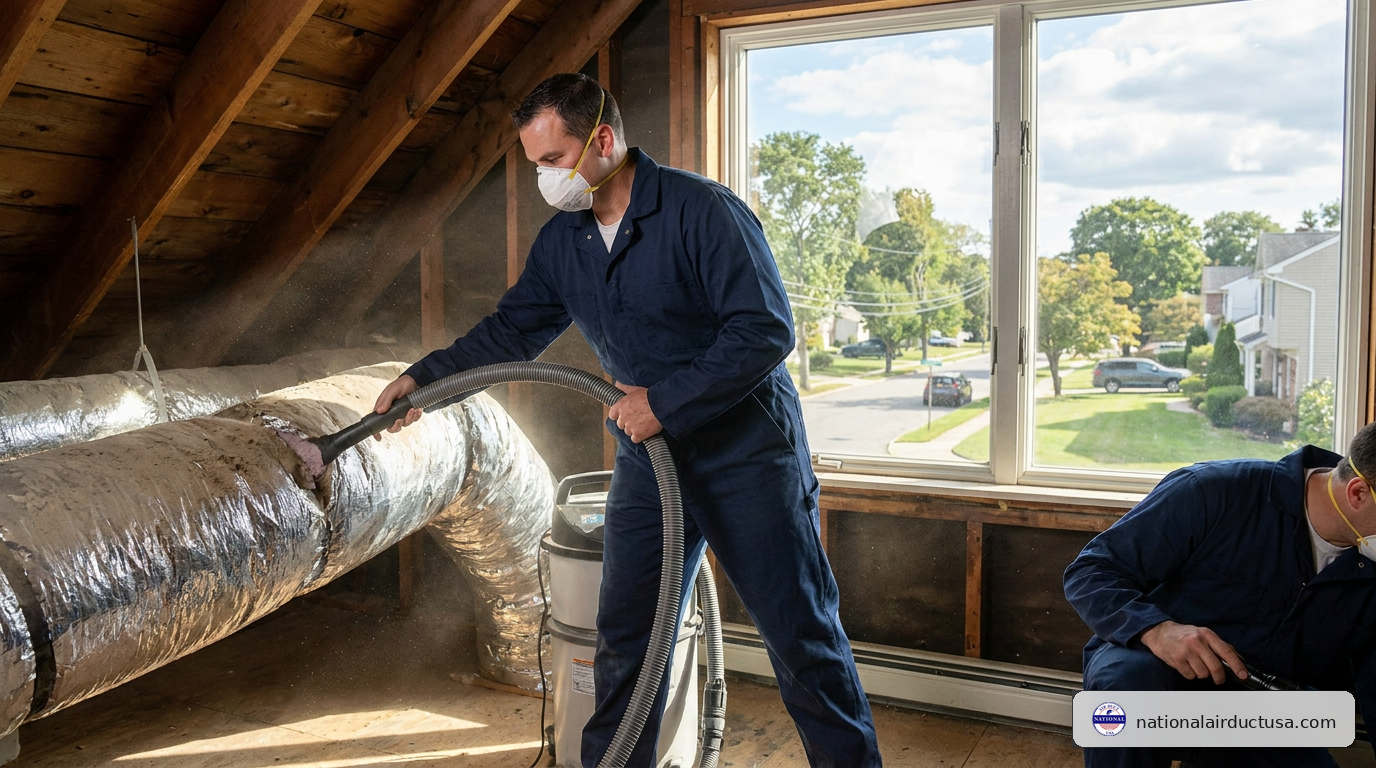
As agitation tools dislodge contaminants, powerful vacuum systems capture and remove the debris. This is where the residential duct cleaning process in New York truly differentiates professional service from DIY attempts. Certified providers use either truck-mounted or portable HEPA-filtered vacuum systems capable of generating negative pressure exceeding 3,000 cubic feet per minute.
These industrial vacuums create suction that pulls dislodged particles through the ductwork and into collection systems, preventing re-contamination. HEPA filters trap particles as small as 0.3 microns, including mold spores, pollen, and fine dust that would otherwise recirculate through your home.
Truck-mounted systems exhaust outside the building, making them ideal for ground-floor apartments and townhouses. Portable units with multi-stage filtration work better for high-rise buildings where external venting isn’t practical. Both systems comply with NADCA standards for complete particulate capture.
Stage 5: Component Cleaning and Filter Replacement
Comprehensive duct cleaning extends beyond the ductwork itself to include all system components that contact air. Technicians remove, clean, or replace grilles, registers, diffusers, and air filters as part of the standard process.
This stage often reveals surprising accumulations. Register grilles in New York homes frequently show years of paint buildup from multiple renovations, while diffusers in bedrooms may be clogged with dust and pet hair. Each component receives individual attention, with metal parts cleaned using appropriate solutions and damaged pieces flagged for replacement.
Fresh air filters are typically installed as the final step of component service, giving your HVAC system a clean start after the duct cleaning is complete.
Stage 6: Optional Sanitizing and Final Verification
Many New York providers offer optional antimicrobial treatments following the mechanical cleaning. These EPA-registered sanitizers target any remaining bacteria, mold spores, or odor-causing microorganisms that survived the cleaning process.
The final verification phase uses the same camera technology from the initial inspection to document the results. Professional services provide before-and-after photos and videos, giving you visual proof of the cleaning’s effectiveness and creating a baseline for future service intervals.
| Cleaning Stage | Primary Tools | Typical Duration |
|---|---|---|
| Initial Inspection | Cameras, Borescopes | 30-45 minutes |
| Preparation | Sealing Materials | 15-30 minutes |
| Mechanical Agitation | Rotary Brushes, Air Whips | 1-2 hours |
| HEPA Vacuum Extraction | Truck/Portable Vacuums | 1-2 hours |
| Component Cleaning | Hand Tools, Brushes | 30-60 minutes |
| Final Verification | Cameras, Documentation | 15-30 minutes |
What Equipment and Technology Do New York Professionals Use?
The effectiveness of the residential duct cleaning process in New York depends heavily on the quality and sophistication of equipment used. NADCA-certified providers invest in specialized tools that far exceed consumer-grade alternatives.
Modern truck-mounted vacuum systems generate suction power measured in thousands of cubic feet per minute while maintaining HEPA filtration standards. These units typically cost $40,000 to $80,000+, representing a significant investment that signals a company’s commitment to professional-grade service.
Advanced inspection cameras have revolutionized the industry since 2020. High-definition borescopes with LED lighting can navigate ductwork as small as 3 inches in diameter, transmitting real-time video to tablets or monitors. This technology proves particularly valuable in New York’s older buildings where original ductwork may contain unexpected obstructions or damage.
Rotary brush systems come in various sizes to match different duct dimensions, from small 4-inch brushes for branch lines to large 16-inch models for main trunk lines. Quality brushes use materials that clean effectively without scratching or damaging duct linings, a crucial consideration for preserving system integrity.
How Long Does the Residential Duct Cleaning Process Take?
For typical New York apartments and homes, professional duct cleaning requires 3 to 5 hours to complete properly. This timeframe reflects adherence to NADCA standards and ensures thorough cleaning of the entire system, not just accessible portions.
Smaller apartments in Manhattan or Queens with straightforward duct configurations may fall toward the lower end of this range. A 700-square-foot one-bedroom apartment with a simple layout might be completed in closer to 3 hours, while a 2,000-square-foot three-bedroom with multiple HVAC zones could require the full 5 hours or more.
Several factors influence duration beyond square footage. Older buildings with complex ductwork, systems that haven’t been cleaned in many years, or homes with extensive contamination all require additional time for proper service. According to New York duct cleaning specialists, rushed jobs that claim to clean an entire system in under 2 hours likely skip critical steps or focus only on main trunk lines.
When Should New York Homeowners Schedule Duct Cleaning?
Unlike some maintenance tasks that follow rigid schedules, duct cleaning should be condition-based rather than time-based. Industry experts emphasize that modern HVAC filters reduce buildup significantly, making annual cleaning unnecessary and potentially wasteful for most homes.
The recommended interval for New York residences is typically every 3 to 5 years, though several conditions warrant earlier service. Visible mold growth anywhere in the HVAC system requires immediate attention, as spores can rapidly colonize ductwork and circulate throughout your home.
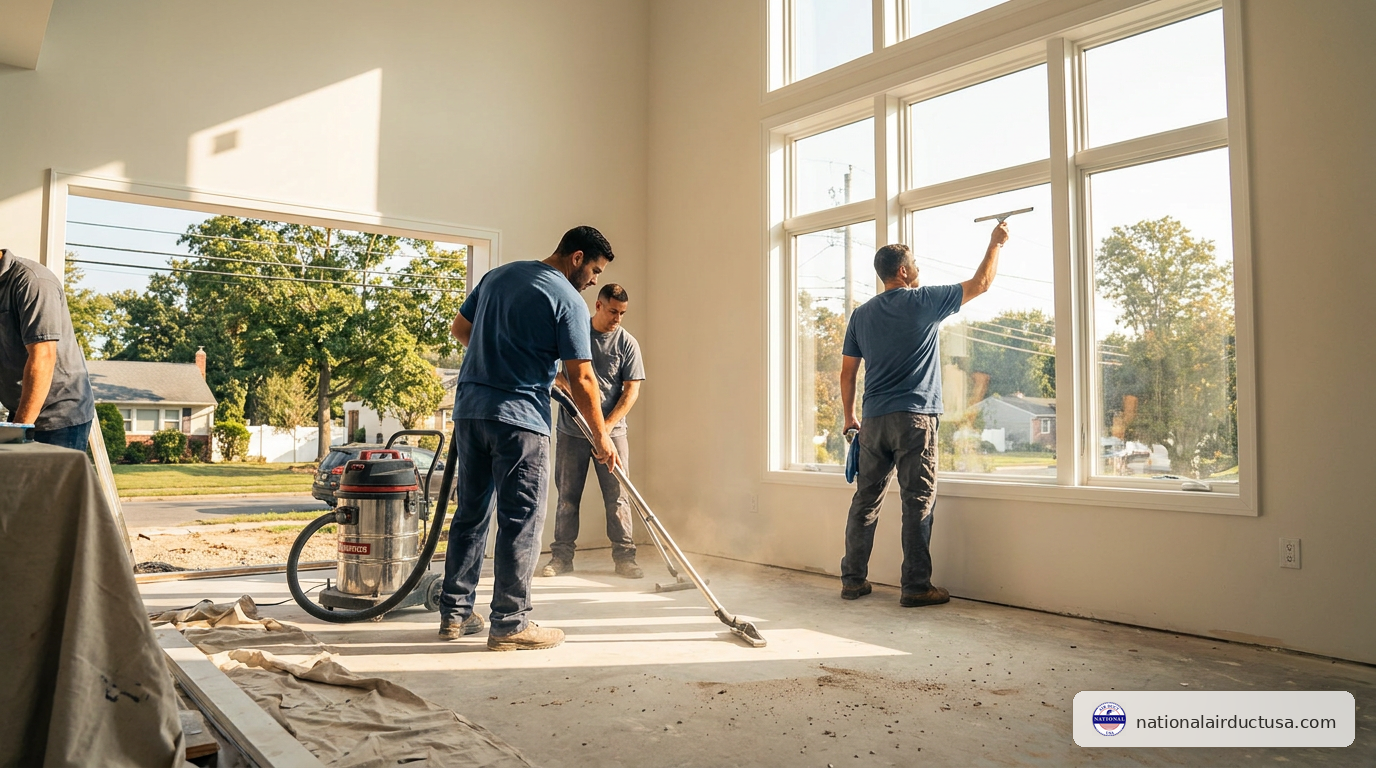
Recent renovations or construction work create substantial dust that invariably enters duct systems. If you’ve completed a kitchen remodel, bathroom renovation, or any significant interior work, scheduling duct cleaning within 30 to 60 days of project completion helps remove construction debris before it becomes embedded in system components.
New York homeowners with allergies or respiratory conditions may benefit from more frequent cleaning, particularly if symptoms worsen when the HVAC system runs. Pet owners in apartments also face accelerated accumulation of dander and hair, potentially justifying cleaning every 3 years instead of 5.
Evidence of pest infestation, whether rodents or insects, demands immediate duct cleaning following pest control treatment. Droppings, nesting materials, and deceased pests can harbor bacteria and create odors that permeate your entire home through the ventilation system.
What Should You Expect During the Cleaning Process?
Understanding what happens during professional duct cleaning helps New York homeowners prepare appropriately and know what constitutes proper service. The experience differs significantly from typical home maintenance visits due to the specialized equipment and access requirements.
Expect notable noise throughout the process. HEPA vacuum systems generate sound levels similar to commercial shop vacuums, while rotary brushes and air whips create intermittent mechanical sounds as they work through ductwork. Most New York residents find the noise comparable to construction or renovation work, manageable but definitely present.
Technicians will move throughout your home, accessing each room with a duct register or return vent. In apartments, this means they’ll need clear pathways and access to closets, bathrooms, and other spaces where vents are located. Removing furniture or obstacles before the appointment streamlines the process and may reduce overall service time.
The HVAC system will be shut off during active cleaning to prevent the blower from interfering with the vacuum extraction process. Plan accordingly if you’re scheduling service during extreme weather, though most professional jobs complete quickly enough that interior temperature changes remain minimal in well-insulated buildings.
You can typically remain home during duct cleaning, provided you’re comfortable with noise and technician movement through the residence. Many New York professionals work efficiently in occupied spaces, using containment techniques that allow families to use unaffected rooms during the service.
Post-cleaning benefits often manifest within 24 to 48 hours. Homeowners report improved airflow from registers, reduced dust accumulation on surfaces, and sometimes quieter HVAC operation as systems no longer strain against restricted airflow. These tangible improvements confirm the value of professional service.
What Factors Affect Residential Duct Cleaning Costs in New York?
Pricing for the residential duct cleaning process in New York varies considerably based on multiple factors, making it difficult to quote a single average cost. Expect professional service to range from $300 to $1,200+ depending on your specific situation, with premium providers at the higher end offering more comprehensive service and advanced technology.
System size represents the primary cost driver. A small one-bedroom apartment with minimal ductwork costs substantially less than a multi-story townhouse with separate HVAC zones for different floors. Square footage directly correlates with linear feet of ductwork, which determines labor time and materials required.
Accessibility challenges common in New York buildings can increase costs. High-rise apartments requiring equipment transport via elevators, buildings without truck access for mounted vacuum systems, or pre-war constructions with unusual duct configurations all add complexity that professional providers factor into pricing.
The level of contamination affects both time and effort required. Systems that haven’t been cleaned in 10+ years or those with significant mold growth demand more intensive work than regularly maintained ductwork with light dust accumulation. Some providers charge additional fees for heavy contamination or required remediation.
Premium services include features like advanced camera documentation, antimicrobial treatments, dryer vent cleaning, and extended warranties. While these add to upfront costs, they provide value through enhanced results and peace of mind. At National Air Duct, we emphasize that pricing varies based on your specific project requirements, and we encourage homeowners to request custom quotes that reflect their unique needs.
Quality and certification matter significantly. NADCA-certified technicians with proper insurance and modern equipment cost more than unlicensed operators using consumer-grade tools, but the difference in results justifies the investment. Professional service protects your HVAC system while delivering measurable improvements in air quality and system performance.
How Do NADCA Standards Impact the Cleaning Process?
The National Air Duct Cleaners Association (NADCA) establishes industry standards that define professional duct cleaning procedures. The organization’s ACR Standard, updated in 2025, provides detailed specifications for equipment, techniques, and verification methods that certified providers must follow.
NADCA certification requires technicians to complete comprehensive training covering HVAC systems, cleaning methodologies, safety protocols, and customer service. This education ensures they understand not just how to operate equipment but why specific procedures matter for protecting system integrity and indoor air quality.
The ACR Standard mandates source removal as the only acceptable cleaning method. This means physically removing contaminants from the system rather than relying on chemical treatments or fragrance sprays that mask odors without addressing underlying issues. Proper source removal uses mechanical agitation combined with HEPA vacuum extraction, exactly as described in the six-stage process above.
Verification requirements built into NADCA standards protect consumers from superficial cleaning. Certified providers must document pre- and post-cleaning conditions, typically through photographic or video evidence. This accountability measure ensures that companies deliver the comprehensive service they promise rather than quick surface cleaning of visible components.
According to HVAC industry analysis, NADCA compliance remains the gold standard for residential duct cleaning in 2026, with technological innovations enhancing rather than replacing core methodology. New York homeowners selecting certified providers benefit from these industry-leading standards and the accountability they create.
Key Takeaways
- The residential duct cleaning process in New York follows a systematic six-stage methodology including inspection, preparation, mechanical agitation, HEPA vacuum extraction, component cleaning, and final verification.
- Professional service requires 3 to 5 hours for typical apartments and homes, with duration varying based on system size, accessibility, and contamination levels.
- NADCA-certified providers use specialized equipment including truck-mounted or portable HEPA vacuums, rotary brushes, air whips, and high-definition inspection cameras that far exceed consumer-grade alternatives.
- Cleaning frequency should be condition-based, typically every 3 to 5 years, triggered by visible mold, pest activity, renovations, or allergy concerns rather than arbitrary annual schedules.
- Costs range from $300 to $1,200+ depending on system size, building accessibility, contamination levels, and service comprehensiveness, with premium providers offering superior technology and documentation.
- Post-cleaning benefits include improved airflow, reduced surface dust accumulation, and quieter HVAC operation, with noticeable results typically appearing within 24 to 48 hours.
- New York’s unique housing stock requires adaptable approaches for pre-war buildings, high-rise apartments, and modern constructions, making local expertise valuable for optimal results.
People Also Ask
Is duct cleaning necessary every year in New York?
No, annual duct cleaning is unnecessary for most New York homes and represents over-servicing. Industry experts recommend cleaning every 3 to 5 years based on actual conditions rather than arbitrary schedules, as modern HVAC filters significantly reduce dust accumulation between services.
Can I stay home during duct cleaning?
Yes, most New York residents can remain home during professional duct cleaning. Technicians use containment techniques that allow families to occupy unaffected rooms, though you should expect noise from vacuum systems and movement throughout the residence as technicians access all vent locations.
What’s the difference between duct cleaning and HVAC maintenance?
HVAC maintenance focuses on mechanical components like the furnace, air conditioner, and blower motor, while duct cleaning specifically addresses the network of air distribution channels throughout your home. Both services are important but serve different purposes, with duct cleaning targeting indoor air quality rather than equipment performance.
How do I know if my ducts actually need cleaning?
Visual inspection of registers and return vents provides initial evidence, with visible dust buildup, mold growth, pest droppings, or musty odors indicating the need for professional service. Camera inspection by certified technicians definitively confirms interior duct conditions before committing to full cleaning.
Will duct cleaning reduce my energy bills?
Duct cleaning can improve HVAC efficiency if significant buildup was restricting airflow, potentially reducing energy consumption by helping systems operate as designed. However, energy savings alone rarely justify the service cost, making improved indoor air quality and system longevity the primary benefits for most New York homeowners.
Are there any risks to duct cleaning?
When performed by NADCA-certified professionals using proper techniques, duct cleaning poses minimal risk. Potential issues arise only with unqualified providers who damage ductwork, disturb asbestos in older buildings, or use inappropriate chemical treatments, highlighting the importance of selecting certified, insured technicians.
Frequently Asked Questions
What equipment should professional duct cleaners bring to my New York home?+
Professional duct cleaners should arrive with truck-mounted or portable HEPA vacuum systems, rotary brushes of various sizes, air whips or compressed air tools, inspection cameras or borescopes, containment materials for sealing registers, and documentation equipment for before/after verification. The absence of HEPA filtration or inspection cameras signals sub-standard service that likely won’t deliver comprehensive results.
How do I verify a company follows NADCA standards?+
Request the company’s NADCA certification number and verify it directly on NADCA’s website member directory. Certified companies should provide detailed written estimates explaining their process, use source removal methods with HEPA vacuum extraction, and offer before/after documentation of cleaning results rather than vague promises about improved air quality.
Should dryer vents be cleaned at the same time as ductwork?+
Yes, combining dryer vent cleaning with duct cleaning is efficient since technicians are already on-site with appropriate equipment. Dryer vents accumulate lint that poses fire hazards and reduces appliance efficiency, making annual cleaning advisable even when HVAC ducts don’t require service. Many New York providers offer package pricing for combined services.
What happens if mold is discovered during duct cleaning?+
Discovering mold requires identifying and addressing the moisture source before cleaning can effectively resolve the issue. Professional technicians should stop work, document the mold location and extent, and recommend remediation specialists if growth is extensive. Simple surface mold on accessible components can often be cleaned during the standard process, but hidden or widespread contamination demands specialized treatment beyond basic duct cleaning.
Do high-rise apartments require different duct cleaning approaches?+
Yes, high-rise apartments often require portable HEPA vacuum systems instead of truck-mounted units due to access limitations and building height. Technicians must also navigate building protocols for equipment transport, coordinate with doormen or building management, and sometimes work within restricted time windows established by co-op or condo boards, all of which experienced New York providers handle routinely.
Can duct cleaning help with pet odors in my apartment?+
Professional duct cleaning removes accumulated pet dander, hair, and associated odors trapped in ductwork, often significantly reducing pet smells when the HVAC system runs. However, cleaning addresses only duct-related odors and won’t eliminate smells originating from carpets, furniture, or other sources. Combining duct cleaning with optional antimicrobial treatments provides the most comprehensive odor reduction for pet owners.
How soon after moving into a new apartment should I schedule duct cleaning?+
Consider scheduling duct inspection within the first month of occupancy, particularly in New York’s rental market where turnover is high and previous tenant habits are unknown. If inspection reveals significant contamination, proceed with cleaning before your belongings fully accumulate dust and allergens. New construction or recently renovated apartments often benefit from immediate cleaning to remove construction debris before it circulates through your living space.