Air Duct Leaking Water in Long Island NY: Causes, Solutions, and Expert Repair Guide
Quick Answer
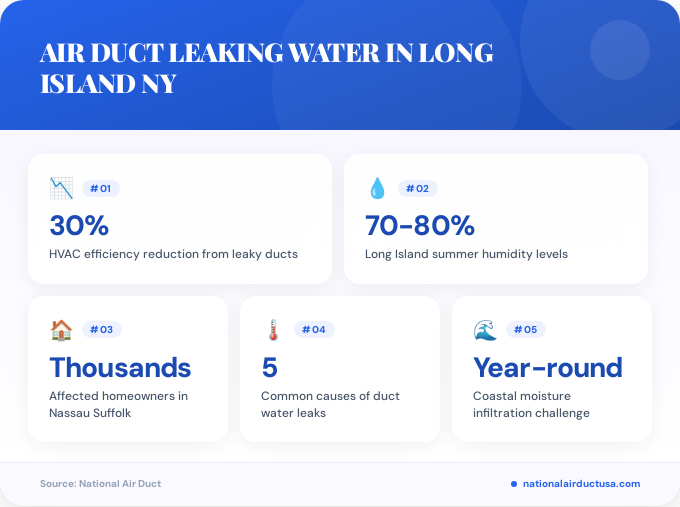
Air duct leaking water in Long Island NY typically occurs when cold air inside ducts meets warm, humid coastal air, creating condensation on poorly insulated or leaky ductwork. These leaks can reduce HVAC efficiency by up to 30% while promoting mold growth, requiring professional sealing and insulation to prevent costly damage and health risks in Nassau and Suffolk County homes.
Have you noticed water stains around your air vents or dampness near your HVAC system? If you’re experiencing air duct leaking water in Long Island NY, you’re facing a common but serious issue that affects thousands of homeowners across Nassau and Suffolk Counties each year. According to the U.S. Department of Energy, leaky ducts can reduce your HVAC system’s efficiency by up to 30%, leading to higher utility bills and compromised indoor air quality.
Long Island’s unique coastal climate, with its humid summers and temperature fluctuations, creates the perfect conditions for ductwork condensation and water accumulation. When your air conditioning system runs during those sticky summer months, the cold air traveling through your ducts meets the warm, moisture-laden air that infiltrates through gaps and poor insulation, creating water droplets that can drip into your living spaces and promote dangerous mold growth.
Why Do Air Ducts Leak Water in Long Island Homes?
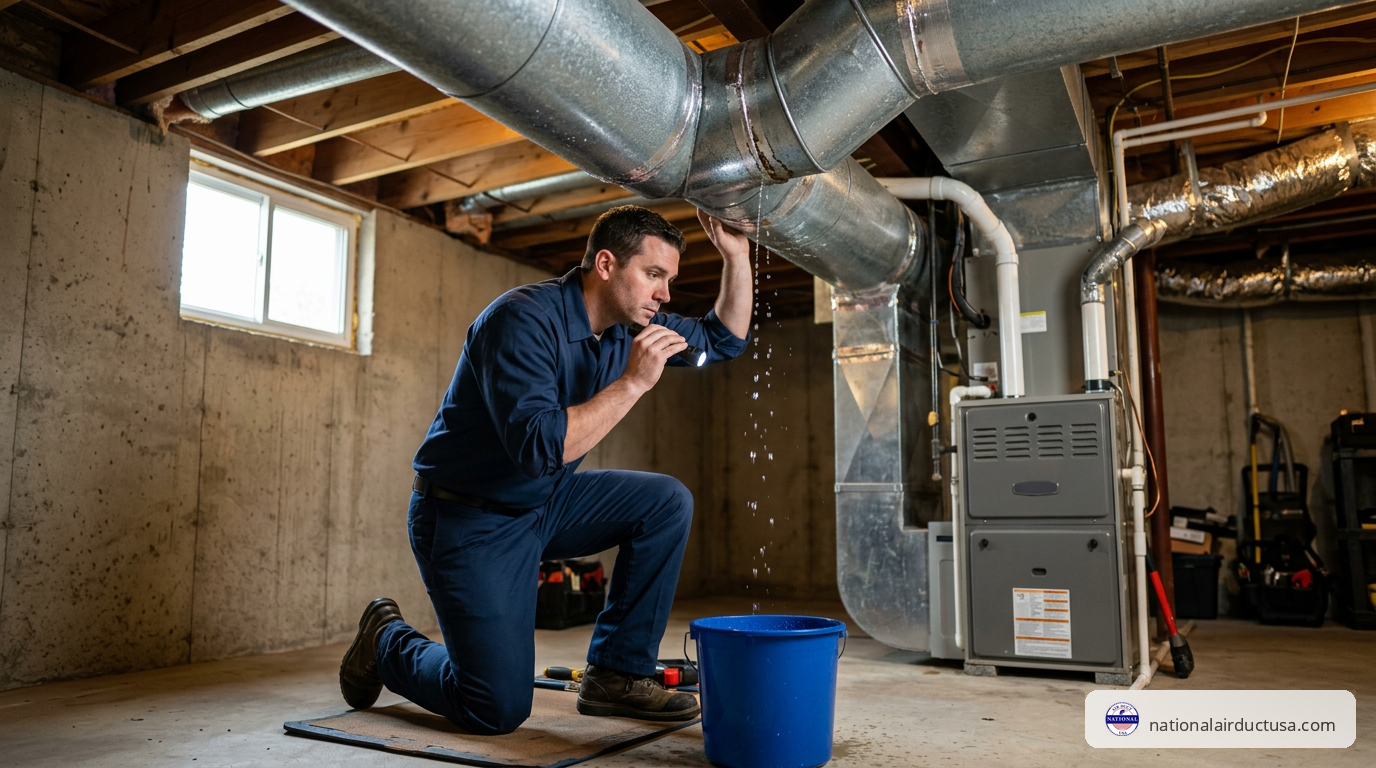
Air duct leaking water in Long Island NY stems from several interconnected causes, with condensation being the primary culprit. When your air conditioning system cools air and sends it through ductwork, any uninsulated or poorly sealed sections become contact points where temperature differences create moisture accumulation.
The most common causes include:
- Poor duct insulation: Uninsulated or under-insulated ducts allow exterior warm air to contact cold metal surfaces, creating condensation that pools and eventually leaks.
- Leaky joints and seals: Gaps at duct connections allow humid air infiltration, which condenses when it meets cold surfaces inside the ductwork.
- Improper installation: Ducts installed without adequate slope for drainage can trap water, leading to overflow and leaks.
- Oversized AC units: Systems that cool too quickly without proper dehumidification cycles create excessive moisture in the air.
- Blocked condensate drains: When the main AC drain line clogs, water can back up into the ductwork system.
Local HVAC experts emphasize that leaky ducts are the primary suspects for ventilation inconsistencies and moisture problems in Long Island homes, particularly those built before modern energy efficiency standards were implemented.
How Does Long Island’s Climate Contribute to Duct Condensation?
Long Island’s coastal location creates unique challenges for HVAC systems that inland properties don’t face. The region experiences high humidity levels throughout the summer months, often reaching 70-80% relative humidity during July and August. This moisture-saturated air constantly seeks cooler surfaces to condense upon.
Temperature swings between day and night in coastal areas like Massapequa, Huntington, and the Hamptons exacerbate the problem. When your AC runs during a hot afternoon and then outdoor temperatures drop in the evening, the ductwork experiences repeated heating and cooling cycles that stress seals and promote condensation formation.
The proximity to the Atlantic Ocean also means homes in Nassau and Suffolk Counties deal with salt air, which can corrode ductwork connections over time, creating new gaps where humid air infiltrates. This is particularly problematic for homeowners in waterfront communities where exposure to marine conditions accelerates duct deterioration.
What Are the Health and Safety Risks of Leaking Ducts?
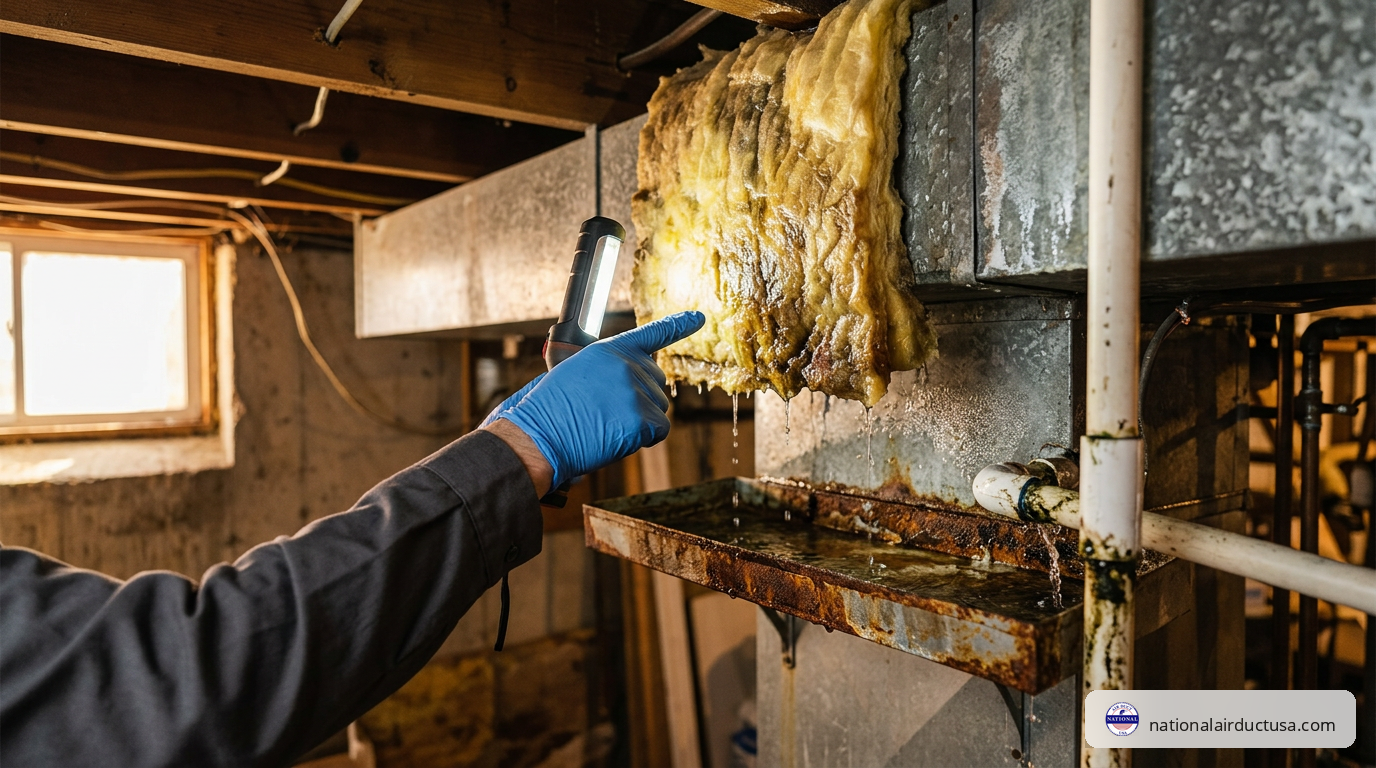
Water accumulation in your ductwork isn’t just an efficiency problem; it poses serious health risks to your family. When moisture persists in dark, enclosed spaces like air ducts, mold and mildew growth begins within 24-48 hours. These biological contaminants then circulate throughout your home every time your HVAC system runs.
The health implications include:
- Respiratory problems: Mold spores trigger asthma attacks, allergic reactions, and chronic respiratory irritation, especially dangerous for children and elderly residents.
- Indoor air quality degradation: Damp ducts attract dust mites, bacteria, and other allergens that compromise the air you breathe daily.
- Structural damage: Persistent leaks can damage ceiling materials, insulation, and wooden framing, leading to costly repairs beyond just the ductwork.
- Pest attraction: Moisture draws insects and rodents seeking water sources, introducing new contamination pathways.
According to medical research on indoor air quality, prolonged exposure to mold-contaminated air significantly increases respiratory disease risk, making prompt attention to duct leaks essential for maintaining healthy indoor air quality in Long Island homes.
How Can You Detect Water Leaks in Your Air Ducts?
Early detection of air duct leaking water in Long Island NY can prevent extensive damage and costly repairs. Homeowners should watch for these warning signs:
| Warning Sign | What It Indicates |
|---|---|
| Water stains around vents | Active condensation dripping from ductwork |
| Musty odors when AC runs | Mold or mildew growth inside ducts |
| Visible water pooling near registers | Severe leak or blocked condensate drain |
| Increased humidity in certain rooms | Humid air infiltrating through duct gaps |
| Higher utility bills | System working harder due to efficiency loss |
Professional detection methods include thermal imaging cameras that identify temperature differences indicating poor insulation, pressure testing to locate leaks, and video inspection of ductwork interiors. Many Long Island air duct specialists offer comprehensive inspection services that combine these techniques for thorough leak identification.
Don’t confuse normal condensation on AC components with duct leaks. Your air handler and refrigerant lines naturally produce some moisture, which should drain through designated condensate lines. However, water appearing at vents or on ductwork surfaces indicates a system problem requiring professional attention.
What Professional Solutions Fix Air Duct Water Leaks?
Addressing air duct leaking water in Long Island NY requires professional expertise to ensure lasting solutions. DIY approaches often mask symptoms without resolving underlying causes, leading to recurring problems and potentially greater damage.
Professional repair services typically include:
Duct Sealing: Technicians use specialized mastic sealants or metal-backed tape to close gaps at joints and connections. Professional-grade materials withstand temperature fluctuations and humidity far better than consumer products. Expert duct sealing services focus on creating airtight connections that prevent humid air infiltration.
Insulation Upgrades: Adding or replacing duct insulation prevents temperature differentials that cause condensation. In Long Island’s climate, professionals recommend R-6 to R-8 insulation values for optimal performance, particularly for ducts running through unconditioned spaces like attics or crawlspaces.
Ductwork Replacement: When ducts suffer extensive corrosion, physical damage, or improper installation, complete replacement may be more cost-effective than piecemeal repairs. Modern ductwork features better sealing mechanisms and insulation integration.
System Rebalancing: Professionals assess airflow patterns and adjust dampers to ensure even distribution, reducing stress on specific duct sections that might accumulate excess condensation.
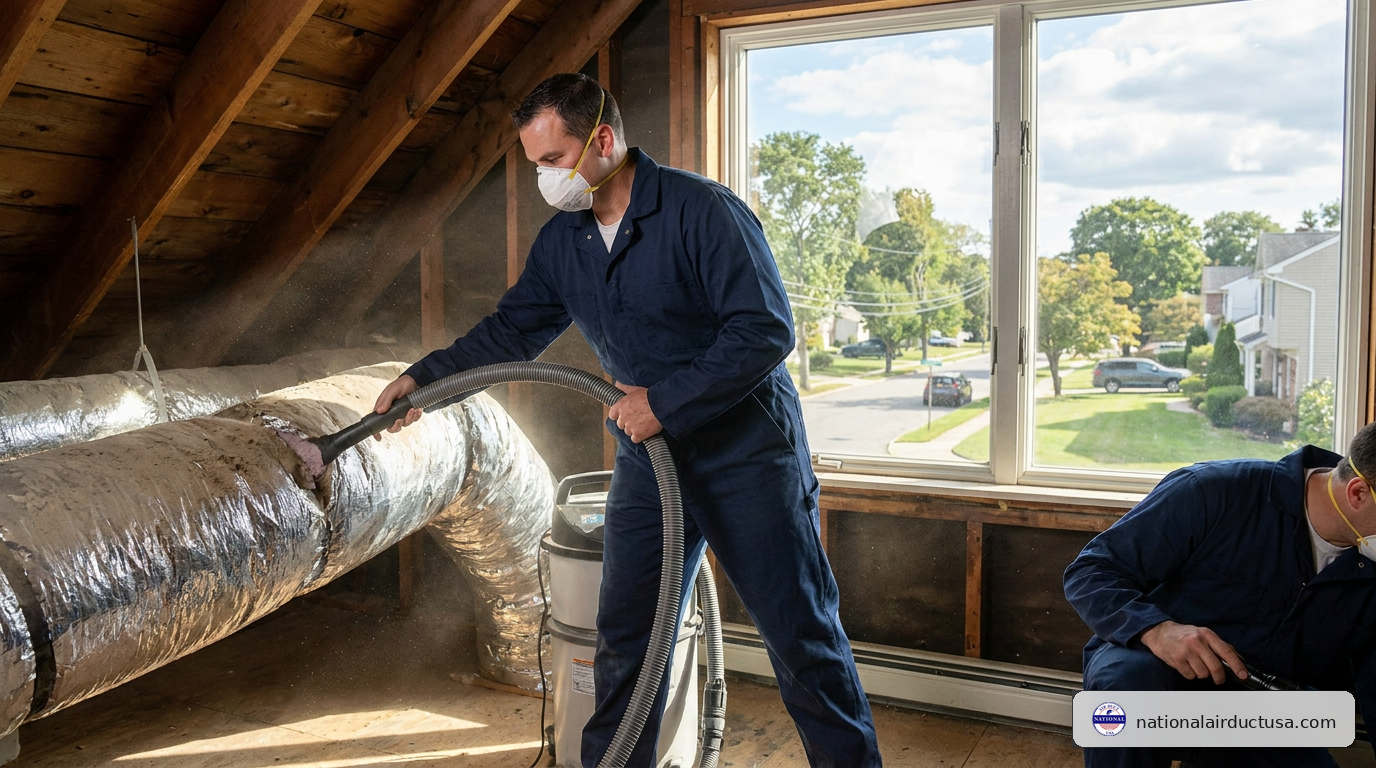
Comprehensive Cleaning: Before sealing, professional air duct cleaning removes existing mold, debris, and contaminants, creating a clean foundation for repairs and preventing future air quality issues.
How Much Does Air Duct Repair Cost in Nassau and Suffolk Counties?
Pricing for air duct leak repair varies significantly based on project scope, ductwork accessibility, extent of damage, and material quality. In Long Island’s competitive HVAC market, homeowners should expect investment ranges that reflect the complexity of professional work.
Typical cost factors include:
- Inspection and assessment: $200 to $600, depending on home size and diagnostic techniques used
- Minor seal repairs: $500 to $2,000 for addressing a few accessible leak points
- Comprehensive duct sealing: $1,500 to $5,000+ for whole-system treatment including insulation upgrades
- Partial ductwork replacement: $2,000 to $8,000 depending on sections replaced and material choices
- Complete system replacement: $5,000 to $15,000+ for full ductwork overhaul in larger homes
Pricing varies based on your specific project requirements, home layout, and quality expectations. Premium services often include warranties, follow-up inspections, and complementary maintenance that provide long-term value beyond initial cost. For accurate estimates tailored to your situation, contact qualified professionals who can assess your unique needs.
Many Long Island homeowners discover that addressing duct leaks pays for itself through reduced energy bills. With potential efficiency losses of 30%, a typical household spending $200 monthly on cooling could save $60 per month after professional sealing, recovering repair costs within one to two cooling seasons.
How Can Long Island Homeowners Prevent Duct Water Leaks?
Preventive maintenance offers the most cost-effective approach to managing air duct leaking water in Long Island NY. Regular attention to your HVAC system prevents minor issues from escalating into expensive repairs.
Key prevention strategies include:
Annual Professional Inspections: Schedule comprehensive HVAC evaluations before cooling season begins. Technicians can identify developing problems like deteriorating seals, insulation gaps, or drainage issues before they cause water damage.
Regular Filter Changes: Replace air filters every 1-3 months to maintain proper airflow and reduce system strain that can exacerbate condensation issues. Restricted airflow forces systems to run longer, increasing condensation opportunities.
Humidity Control: Use whole-home dehumidifiers during humid months to reduce moisture levels throughout your living space. Maintaining indoor humidity between 30-50% reduces condensation risk on cold duct surfaces.
Condensate Line Maintenance: Have professionals clear your AC condensate drain annually to prevent backups that can overflow into ductwork. This simple maintenance prevents one of the most common water leak sources.
Attic and Crawlspace Ventilation: Ensure spaces containing ductwork have adequate ventilation to reduce ambient humidity. Poor ventilation in these areas creates moisture-rich environments that promote condensation.
For homes experiencing recurring issues, consider upgrading to a variable-speed HVAC system with enhanced dehumidification capabilities. These systems provide better moisture control during Long Island’s humid summers while improving overall comfort and efficiency.
Homeowners should also understand how often air ducts need professional attention in Long Island’s climate, as regular cleaning prevents moisture-related contaminant buildup that exacerbates leak problems.
People Also Ask
Why is water dripping from my air vents during AC use?
Water dripping from vents during AC operation indicates condensation forming on cold duct surfaces when humid air infiltrates through leaks or gaps. This occurs when poorly insulated or unsealed ducts allow warm, moisture-laden air to contact cold metal, creating water droplets that accumulate and eventually drip from registers.
How do I know if my ducts are leaking water or just sweating?
Duct sweating (condensation on the exterior) appears as moisture on the outside of ductwork, while water leaks produce dripping or pooling from specific points, typically at joints or damaged sections. Sweating indicates insulation problems, whereas leaks suggest structural gaps, both requiring professional assessment to determine appropriate solutions.
Can duct leaks cause mold in my Long Island home?
Yes, duct leaks create ideal conditions for mold growth by providing persistent moisture in dark, enclosed spaces. Mold can develop within 24-48 hours of water exposure and spreads throughout your home via the HVAC system, making prompt leak repair essential for preventing health risks and maintaining indoor air quality.
What’s the cost of duct repair in Nassau and Suffolk Counties?
Duct repair costs in Long Island range from $500 to $15,000+ depending on damage extent, accessibility, and whether you need minor sealing or complete replacement. Pricing varies based on your specific project requirements, home size, and material choices, with comprehensive solutions providing better long-term value than temporary fixes.
Should I clean ducts before sealing leaks?
Yes, professional duct cleaning before sealing removes mold, debris, and contaminants that accumulated due to moisture problems, creating a clean foundation for repairs. This sequence ensures you’re not sealing contaminants inside your system and allows technicians to better inspect duct interiors for hidden damage.
How much energy do leaky ducts waste in Long Island homes?
According to the U.S. Department of Energy, leaky ducts can reduce HVAC efficiency by up to 30%, translating to hundreds of dollars in wasted energy annually for typical Long Island households. Professional sealing typically recovers its cost through energy savings within one to two years while improving home comfort.
Frequently Asked Questions
Is air duct water leakage covered by homeowners insurance?+
Coverage depends on your specific policy and the leak’s cause. Sudden, accidental damage may be covered, while gradual deterioration from poor maintenance typically isn’t. Review your policy or consult your insurance agent, and document all damage with photos for potential claims.
Can I seal duct leaks myself with tape from hardware stores?+
While temporary fixes using metal-backed foil tape may help minor accessible leaks, professional sealing with mastic compounds provides superior, long-lasting results. DIY repairs often fail in Long Island’s humid conditions and may void HVAC warranties if improper materials damage system components.
How long does professional duct sealing last in Long Island homes?+
Professional duct sealing typically lasts 10-15 years when properly executed with quality materials. Longevity depends on installation quality, material choices, and ongoing maintenance. Regular HVAC inspections help identify any developing issues before they compromise the sealed system.
Will duct sealing improve my home’s air conditioning performance?+
Yes, sealing duct leaks significantly improves AC performance by ensuring cooled air reaches living spaces rather than escaping into unconditioned areas. Homeowners typically notice more consistent temperatures, reduced runtime, lower energy bills, and improved humidity control after professional duct sealing.
What’s the difference between duct cleaning and duct sealing?+
Duct cleaning removes accumulated contaminants, dust, and debris from ductwork interiors to improve air quality, while duct sealing closes gaps and leaks to prevent air loss and moisture infiltration. Most professionals recommend cleaning before sealing to address both contamination and efficiency issues comprehensively.
Are newer Long Island homes immune to duct water leak problems?+
While newer homes benefit from updated building codes requiring better duct sealing and insulation, they’re not immune to water leak issues. Poor installation, settling foundations, and Long Island’s coastal humidity can still create condensation problems, making proper maintenance essential regardless of home age.
How quickly should I address water leaking from my air ducts?+
Address duct water leaks immediately upon detection, as delays allow mold growth, structural damage, and worsening efficiency problems. Contact professional HVAC technicians within 24-48 hours of discovering leaks to prevent minor issues from escalating into costly repairs and health hazards.
Key Takeaways
- Air duct leaking water in Long Island NY primarily results from condensation when cold duct surfaces meet humid coastal air, exacerbated by poor insulation and leaky seals.
- Leaky ducts reduce HVAC efficiency by up to 30% according to the U.S. Department of Energy, significantly increasing cooling costs for Nassau and Suffolk County homeowners.
- Water accumulation in ductwork promotes rapid mold growth within 24-48 hours, creating serious health risks including respiratory problems and allergic reactions.
- Professional solutions including duct sealing, insulation upgrades, and system rebalancing provide lasting fixes superior to DIY approaches in Long Island’s challenging climate.
- Prevention through annual inspections, humidity control, and regular maintenance offers the most cost-effective approach to avoiding expensive duct leak repairs.
- Repair costs range from $500 to $15,000+ depending on project scope, with investments typically recovering through energy savings within one to two years.
- Early detection through warning signs like water stains, musty odors, and increased utility bills enables homeowners to address problems before they cause extensive damage.
Protect Your Long Island Home from Duct Water Damage
Air duct leaking water in Long Island NY represents more than a minor inconvenience. It signals underlying efficiency problems, poses health risks through mold growth, and threatens structural damage if left unaddressed. The unique combination of coastal humidity, temperature fluctuations, and aging ductwork in many Nassau and Suffolk County homes creates perfect conditions for these issues.
Professional intervention provides the most reliable path to resolution, combining comprehensive assessment, expert repairs, and preventive strategies tailored to Long Island’s climate challenges. While costs may initially seem significant, the long-term savings through improved efficiency, prevented health problems, and avoided structural damage far outweigh repair investments.
Don’t wait for minor leaks to become major problems. If you’ve noticed any warning signs of duct water issues, contact qualified HVAC professionals who understand Long Island’s specific challenges. Regular maintenance, prompt repairs, and quality professional service ensure your home remains comfortable, efficient, and healthy for years to come.
For comprehensive solutions to your ductwork concerns, explore our complete guide to air duct cleaning services in New York and discover the benefits of professional duct maintenance for your Long Island home.