Quick Answer
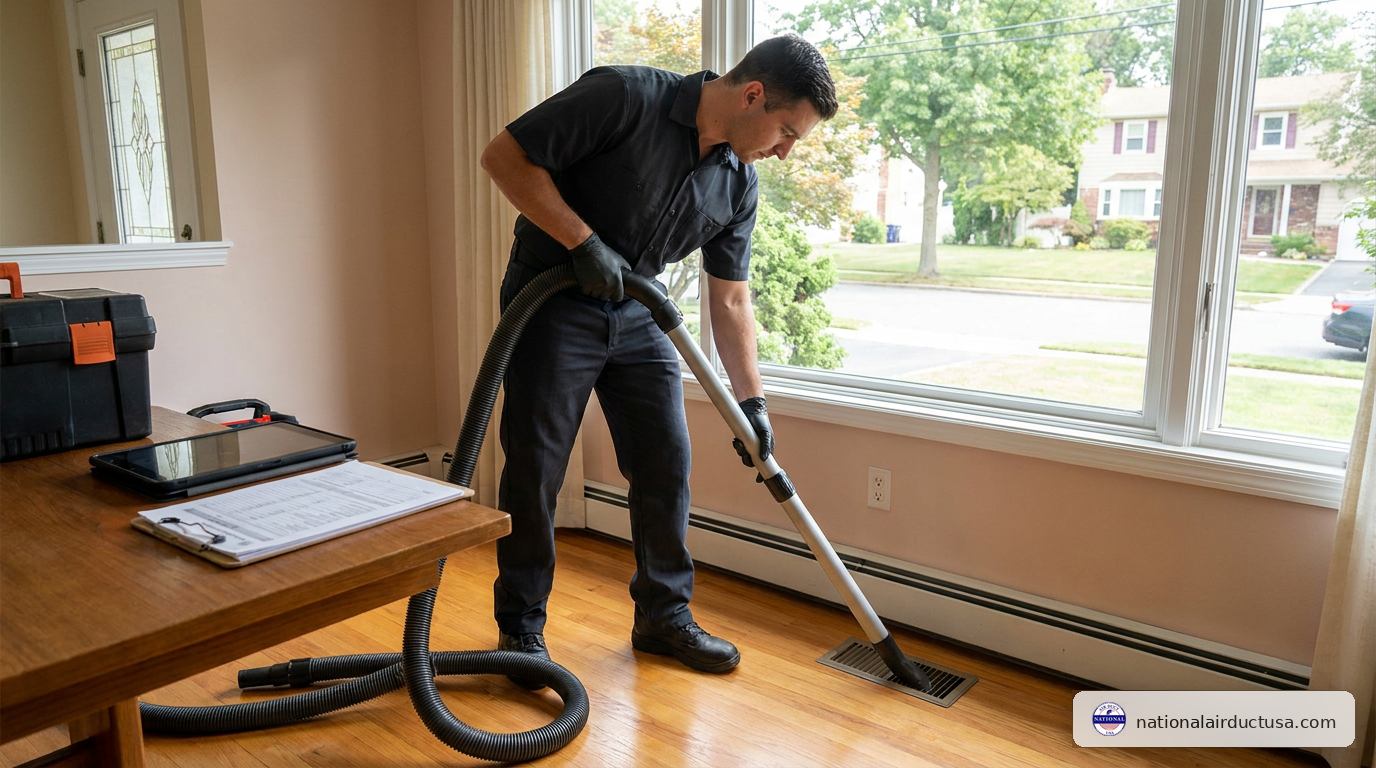
Air duct cleaning cost in Long Island, NY depends on home size, number of vents, duct accessibility, system age, and the level of dust, debris, or mold contamination found during inspection. Pricing varies based on your specific project, so the most accurate way to know what you’ll pay is a free, written, on-site quote rather than a flat number quoted over the phone. Homes with crawlspace duct systems, older construction, or visible mold typically require more labor and specialized equipment, which shifts the price higher than a straightforward ranch-style home with a newer HVAC setup.
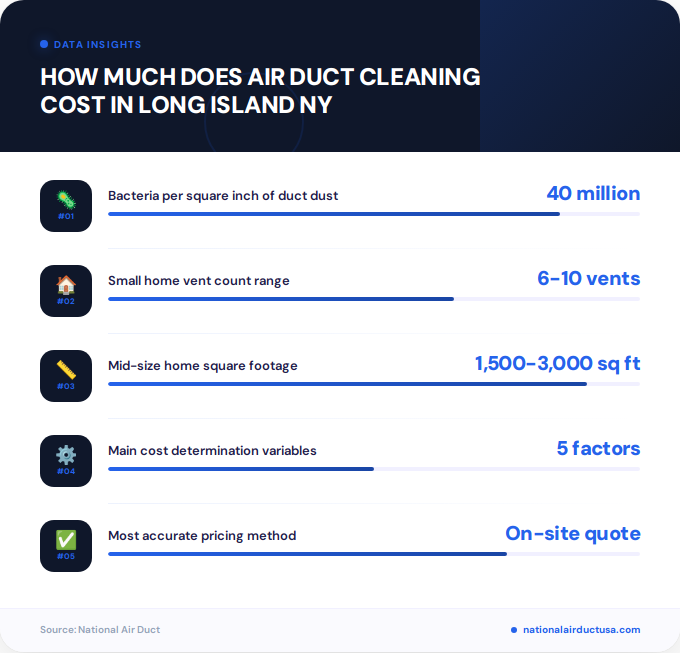
Nearly 40 million bacteria can live in just one square inch of dust inside an average air duct, according to indoor air quality researchers, yet most Long Island homeowners have never had their ductwork professionally inspected. If you’re wondering how much does air duct cleaning cost in Long Island, NY, you’re asking the right question at the right time, because pricing in this market swings widely based on factors most people never consider until they’re staring at a quote.
This guide breaks down exactly what drives air duct cleaning costs across Nassau and Suffolk counties, from Garden City to Huntington, so you can evaluate quotes intelligently and avoid both overpaying and underpaying for a job that matters to your family’s health.
What Determines Air Duct Cleaning Cost on Long Island?
Air duct cleaning pricing is never one-size-fits-all. Professional technicians evaluate several variables during an inspection before quoting a job, and understanding these cost drivers helps you make sense of why two neighboring homes might receive very different numbers.
- Total square footage and number of vents: More ductwork and registers mean more labor and equipment time.
- System accessibility: Crawlspaces, finished basements, and tight attic runs in older Long Island homes take longer to service than open, newly built layouts.
- Duct material and age: Flexible ductwork, older sheet metal, and systems that haven’t been serviced in a decade often need more intensive cleaning.
- Contamination level: Visible mold, rodent activity, or heavy dust buildup requires specialized treatment beyond standard vacuuming.
- Additional services requested: Dryer vent cleaning, sanitizing treatments, and coil cleaning are typically priced separately from core duct cleaning.
Because of these variables, pricing varies based on your specific project. A reputable company will never quote a firm number without first inspecting your system or reviewing details about your home.
How Does Home Size Affect the Price?
Square footage is one of the clearest cost drivers in air duct cleaning. A compact Cape Cod-style home in Levittown with eight to ten vents simply requires less time, labor, and equipment than a sprawling colonial in Oyster Bay with 20-plus registers and multiple HVAC zones.
Multi-zone systems, which are common in larger Long Island homes built with separate heating and cooling for upstairs and downstairs, often mean technicians are essentially cleaning two or three independent duct systems under one roof. This naturally increases labor time and equipment setup, which is reflected in the final quote.
| Home Size Category | Typical Vent Count | Relative Labor Time |
|---|---|---|
| Small (under 1,500 sq ft) | 6-10 vents | Lowest |
| Mid-size (1,500-3,000 sq ft) | 10-16 vents | Moderate |
| Large (3,000+ sq ft, multi-zone) | 18-30+ vents | Highest |
If you’re unsure which category your home falls into or want a tailored breakdown, our duct cleaning near me resource for Long Island homeowners walks through how local technicians assess different housing types across the Island.
Why Does Duct Contamination Change the Quote?
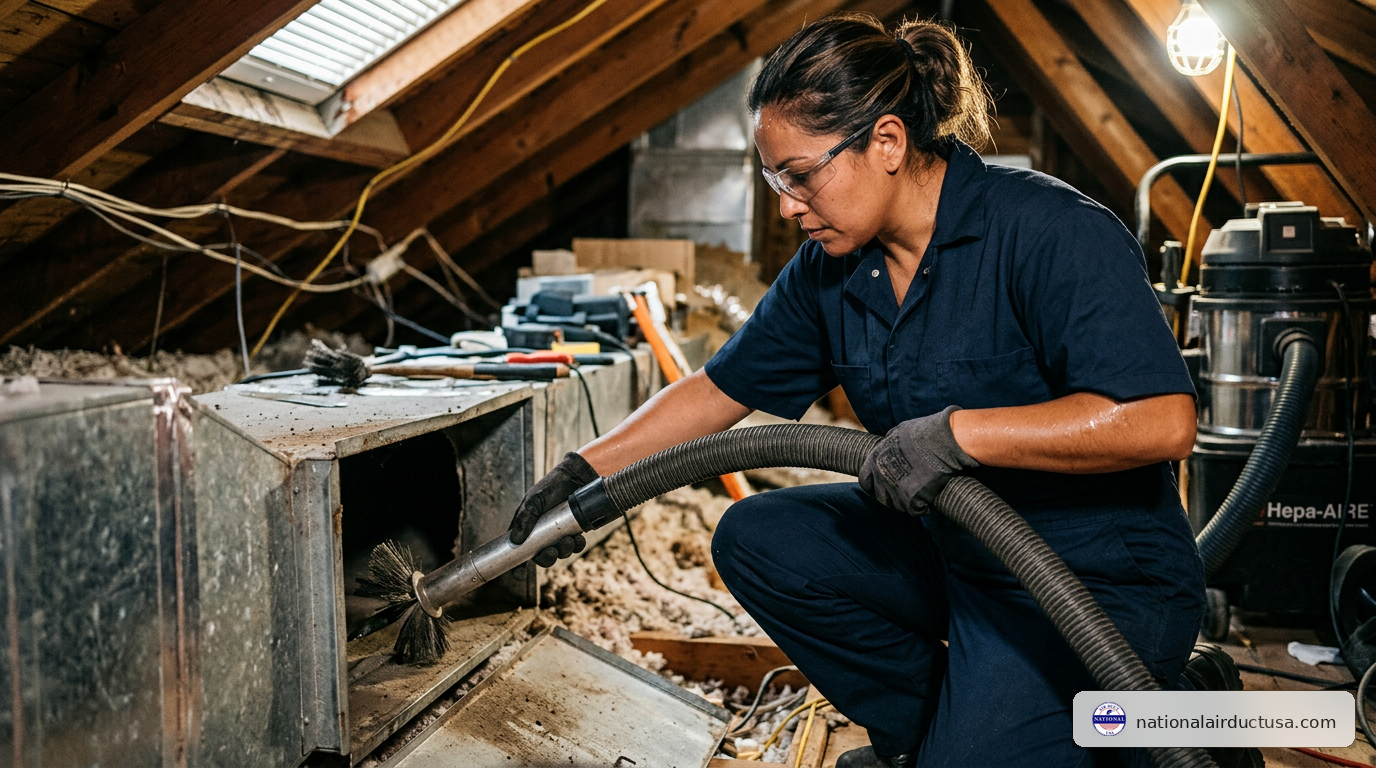
Contamination level is arguably the single biggest wildcard in any air duct cleaning quote. A system that’s been changed regularly and has minimal dust buildup is a fairly quick job. A system with visible mold growth, years of accumulated debris, or evidence of pest activity is a different project entirely.
Mold is a particularly important factor on Long Island given the region’s humid summers and coastal moisture exposure. If your inspection reveals mold, you’ll want to read our dedicated guide on how to safely remove mold in air ducts before assuming a standard cleaning will solve the problem.
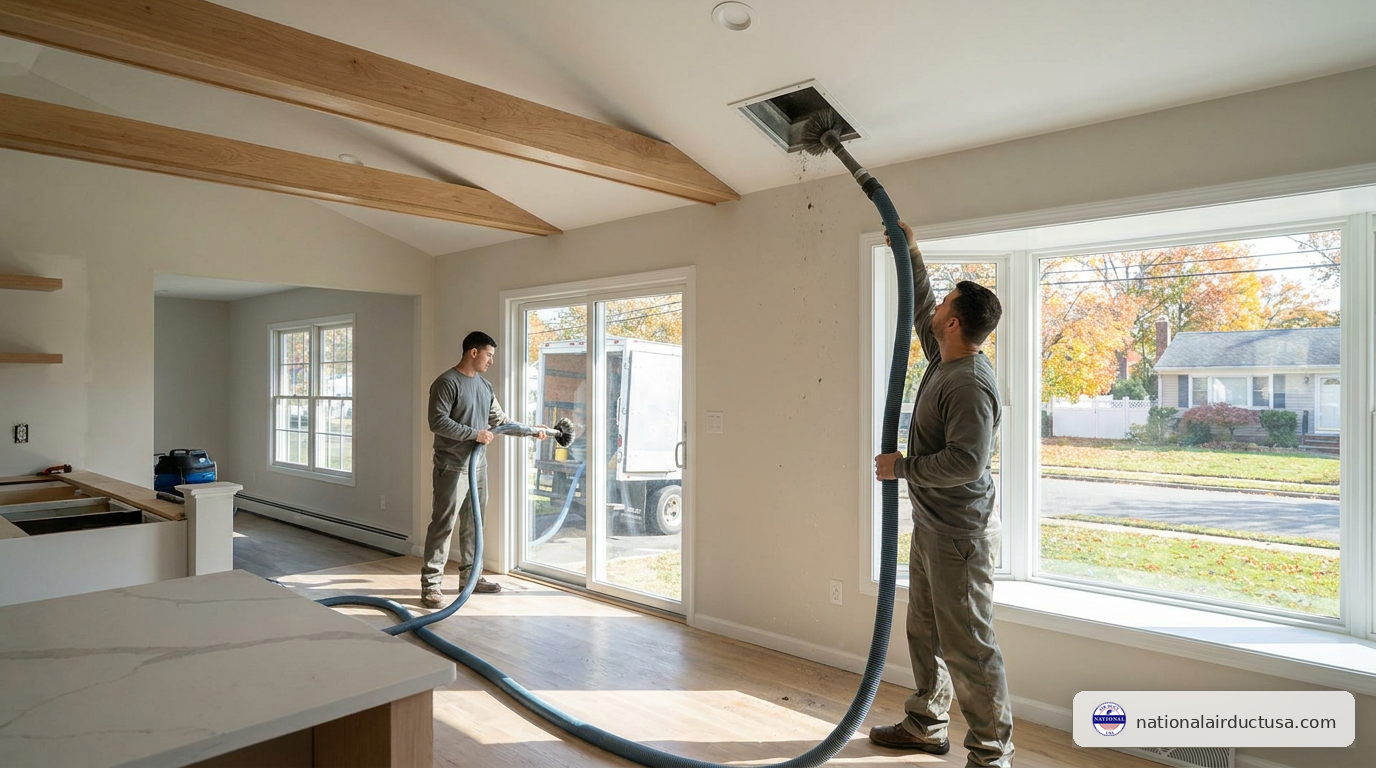
Homes that recently underwent renovation or new construction often carry heavy drywall dust, sawdust, and insulation particles in their ductwork. If that applies to you, our piece on air duct cleaning after construction explains why these jobs typically require extra passes with specialized vacuum equipment.
What’s Actually Included in a Professional Cleaning?
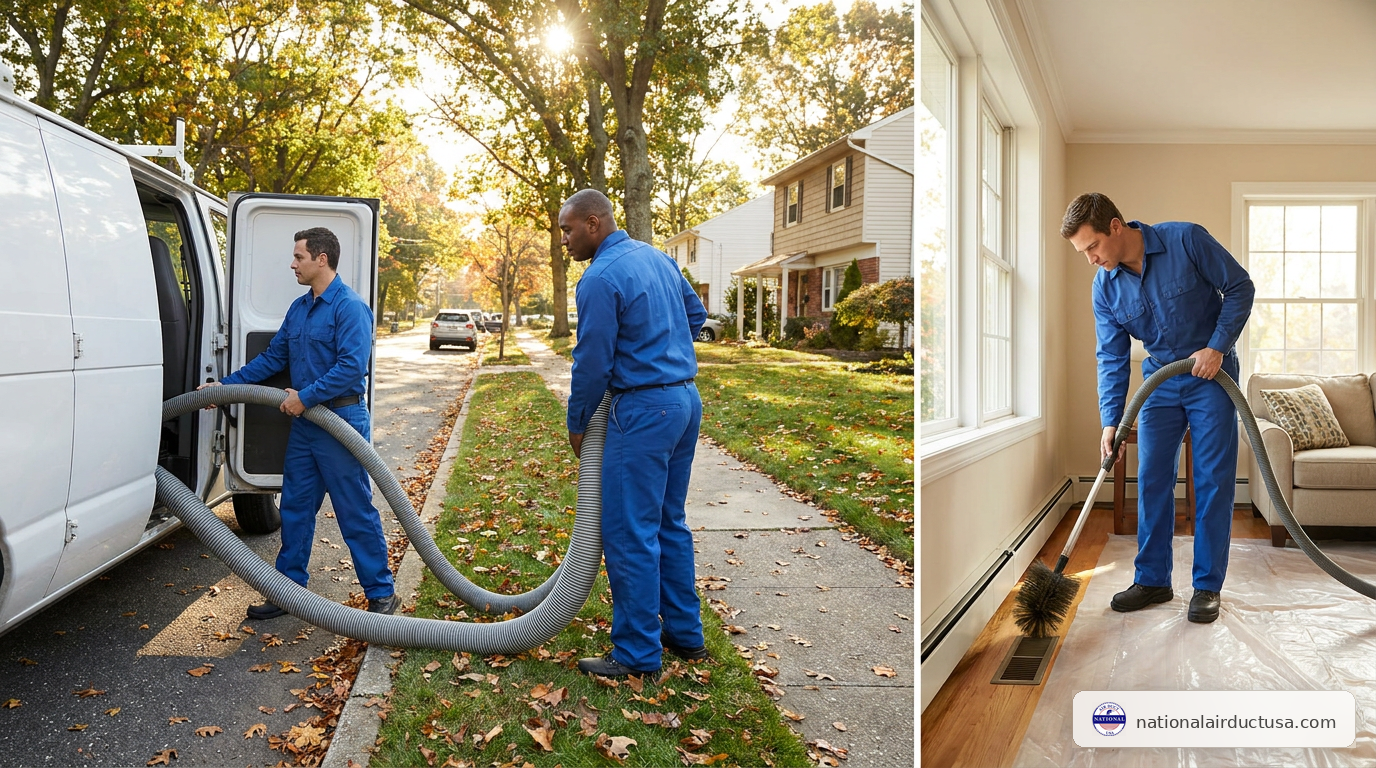
Understanding what you’re paying for helps you compare quotes apples-to-apples. A thorough, professional air duct cleaning service generally includes several distinct steps, not just a quick vacuum pass through the main trunk line.
- Initial inspection: Technicians use cameras or visual tools to assess contamination level and duct condition.
- Negative pressure containment: A high-powered vacuum system creates suction so dislodged debris doesn’t blow into your living space.
- Agitation of duct walls: Brushes, air whips, or compressed air tools knock loose dust, debris, and allergens from duct interiors.
- Register and grille cleaning: Every vent cover is cleaned individually, not just the main lines.
- Final inspection: A post-cleaning walkthrough confirms the system is clear.
Dryer vent cleaning is a separate but equally important service, especially since clogged dryer vents are a leading cause of residential fires. If your dryer takes longer than usual to dry clothes, it’s worth bundling this into your service, and our dryer duct cleaning Long Island page explains why this often gets overlooked during standard HVAC maintenance.
What Pricing Red Flags Should Long Island Homeowners Watch For?
The air duct cleaning industry has a reputation problem, largely because of rock-bottom advertised deals that balloon once a technician is inside your home. Knowing the warning signs protects you from unnecessary upselling.
- Suspiciously low advertised flat rates that don’t account for home size or vent count at all.
- High-pressure upsells for sanitizing chemicals or treatments immediately upon arrival, before any real inspection.
- No written estimate before work begins, leaving you without a clear scope of what’s covered.
- Vague answers about equipment type or whether they use negative air pressure containment systems.
- No licensing or insurance information provided when asked directly.
A trustworthy provider will walk you through their inspection findings and explain exactly why your quote reflects your home’s specific needs. For a deeper look at how to vet providers and estimates, see our homeowner checklist for getting an accurate cost estimate.
Is Professional Duct Cleaning Worth the Investment?
The value of duct cleaning extends well beyond a cleaner-smelling home. The EPA has noted that indoor air can be two to five times more polluted than outdoor air, and in some cases up to 100 times more polluted, largely due to trapped dust, pet dander, pollen, and mold spores circulating through HVAC systems.
Helps asthma/allergy sufferers: Yes
Removes mold spores: Yes, when done correctly
Reduces HVAC strain: Yes
May lower energy costs: Often
Reduces dust accumulation: Yes
Supports resale/inspection reports: Yes
Premium providers invest in truck-mounted vacuum systems, HEPA filtration, and trained technicians who follow NADCA (National Air Duct Cleaners Association) standards. That craftsmanship and equipment investment is part of what you’re paying for, and it’s the difference between a surface-level vacuum job and a cleaning that actually improves your home’s air quality long-term. Learn more about how this fits into broader Long Island air quality concerns tied to coastal humidity and seasonal pollen.
How Do Long Island’s Climate and Housing Stock Affect Pricing?
Long Island’s housing stock presents unique challenges that influence duct cleaning scope. Many homes in towns like Massapequa, Babylon, and Huntington were built decades ago with ductwork that’s never been professionally serviced, meaning first-time cleanings often reveal more buildup than homeowners expect.
The region’s humid summers and damp, chilly winters also create ideal conditions for mold growth in ductwork, particularly in homes with basements or crawlspaces near the water table. Coastal communities from Long Beach to Port Jefferson deal with higher ambient humidity that can work its way into HVAC systems over time.
If you live in or near Westbury or elsewhere in Nassau County, local housing patterns and system age play directly into your quote. Our detailed Nassau County process, cost, and results guide breaks down what homeowners in that area can typically expect during an inspection.
How Can You Get an Accurate, Fair Quote?
The most reliable way to know your real cost is a free, written, on-site estimate rather than a number quoted sight unseen. A legitimate technician should inspect your attic, basement, or crawlspace ductwork, check vent count, and assess visible contamination before providing a figure.
It also helps to prepare your home beforehand so the inspection and cleaning go smoothly. Our step-by-step preparation guide covers what to clear out, what questions to ask, and how to make the most of your appointment.
For homeowners who want the full picture before committing, our comprehensive air duct cleaning guide for Long Island covers everything from scheduling frequency to what licensed pros look for during inspections, including seasonal timing explained in our best time to clean air ducts article.
Key Takeaways
- Air duct cleaning cost depends on home size, vent count, system accessibility, and contamination level, not a flat industry-wide rate.
- Larger, multi-zone homes with more vents require more labor time and typically cost more than compact single-zone homes.
- Mold, pest activity, and post-construction debris significantly increase job scope and should always be addressed, not skipped.
- A professional cleaning includes inspection, containment, agitation, register cleaning, and final verification, not just a quick vacuum pass.
- Be wary of flat-rate advertising and high-pressure upsells; a written, on-site quote is the only reliable way to know your true cost.
- Long Island’s humid climate and aging housing stock make first-time inspections especially important for uncovering hidden issues.
- Investing in quality equipment and NADCA-trained technicians pays off in better air quality and system performance long-term.
People Also Ask
Is air duct cleaning worth the money?
For most homeowners, yes, especially if ducts haven’t been serviced in several years or there are allergy, asthma, or mold concerns. The value comes from improved air quality, better HVAC efficiency, and catching hidden issues like mold or pest activity early.
How often should air ducts be cleaned on Long Island?
Most industry guidelines recommend every three to five years for typical homes, though homes with pets, smokers, recent renovations, or allergy sufferers may benefit from more frequent service. Our guide on cleaning frequency breaks this down further.
What factors increase the cost of duct cleaning the most?
Mold contamination, hard-to-access ductwork in crawlspaces or tight attics, and large multi-zone systems with many vents tend to increase cost the most. Additional services like dryer vent cleaning or sanitizing treatments are typically priced separately as well.
Can I clean my own air ducts instead of hiring a pro?
DIY cleaning with a household vacuum can remove dust from visible vent openings but cannot reach deep into the duct system or safely remediate mold. Professional equipment with negative air pressure containment is necessary to clean the full system without spreading debris throughout your home.
Does homeowners insurance ever cover duct cleaning?
Typically no, routine duct cleaning is considered general maintenance and isn’t covered. However, if contamination resulted from a covered event like water damage or a specific peril, it’s worth checking with your insurer.
Frequently Asked Questions
How much does air duct cleaning cost in Long Island, NY?+
Cost depends on home size, vent count, duct accessibility, and contamination level found during inspection. Because pricing varies based on your specific project, the best way to get an accurate number is a free, written, on-site quote rather than a phone estimate.
Why do duct cleaning quotes vary so much between companies?+
Quotes vary because companies use different equipment, follow different inspection standards, and assess contamination differently. Some advertised low flat rates exclude extra charges that appear once technicians are on-site, so always ask for a detailed written breakdown.
Does dryer vent cleaning cost extra on top of duct cleaning?+
Yes, dryer vent cleaning is typically a separate service from HVAC duct cleaning since it involves different equipment and access points. Many homeowners bundle both services together during the same appointment for convenience.
What’s included in a standard inspection before pricing?+
A standard inspection includes a visual or camera assessment of duct interiors, a count of vents and registers, evaluation of accessibility, and a check for mold, pests, or heavy debris. This inspection is what allows a technician to provide an accurate, written quote.
Are older Long Island homes more expensive to clean?+
Often yes, because older homes may have ductwork that’s never been professionally serviced, less accessible crawlspaces, and more accumulated debris or moisture-related issues. These factors can increase labor time compared to newer, more accessible systems.
How do I know if I’m getting a fair price?+
Compare written, itemized quotes from licensed and insured providers who conduct an actual inspection before pricing. Be cautious of extremely low advertised rates that don’t account for your home’s size or condition, as these often lead to upsells once work begins.
If you’re ready to find out exactly what your home needs, reach out for a free, written quote or learn more about our team and approach on our about us page. You can also start with our homepage to explore all the services we offer across Long Island.