Quick Answer
Air duct cleaning mold removal in Long Island, NY is appropriate when ducts show visible mold, water-damaged insulation, or heavy debris, not on a fixed yearly schedule. Homeowners can handle basic prevention like humidity control and filter changes, but EPA guidance and New York’s Article 32 licensing law require trained, licensed professionals for actual mold assessment and remediation work inside HVAC systems.
Roughly half of Long Island’s housing stock sits within a few miles of the coastline, where humidity, salt air, and seasonal storms create near-perfect conditions for mold to grow inside HVAC systems. Yet most homeowners don’t realize that air duct cleaning mold removal in Long Island NY is not something you schedule like a car oil change. It’s a response to a specific, visible problem, not a routine maintenance task. This guide walks through exactly what you can check yourself, what absolutely requires a licensed professional, and why skipping that line can make the problem worse.
Why Does Mold in Long Island HVAC Systems Happen So Often?
Long Island’s humid summers, coastal storm exposure, and older housing stock in towns like Massapequa, Huntington, Babylon, and Hempstead create repeated opportunities for moisture to enter ductwork. Condensation on cooling coils, leaky attic ducts, crawl-space humidity, and storm-related roof or foundation leaks are the most common culprits.
The EPA’s updated guidance is direct on this point: ducts should generally be cleaned only when a specific contamination problem exists, not on a fixed annual schedule, according to the EPA’s own guidance on residential duct cleaning. That means a visible mold colony, water-damaged insulation, pest infestation, or heavy debris buildup are the real triggers, not the calendar.
If you’ve already noticed musty odors or visible discoloration around vents, it helps to first understand the common signs of mold in air ducts before deciding on next steps.
What Can a Long Island Homeowner Check Before Calling a Pro?
There’s a meaningful amount of inspection and prevention work homeowners can safely do themselves. This is the checklist to work through first.
- Inspect visible vents and registers. Remove covers and look for black, green, or gray staining, or a musty smell when the system runs.
- Check indoor humidity. Use a basic hygrometer; indoor relative humidity above 60% consistently supports mold growth.
- Look for water stains near supply and return ducts in attics, basements, and crawl spaces, especially after heavy rain or nor’easters.
- Change HVAC filters on schedule and confirm your system has proper filtration (MERV 8 or higher where your equipment allows).
- Check your dryer vent separately. Lint-clogged dryer ducts trap moisture and are a distinct fire and mold risk; see this dryer vent cleaning guide for Long Island homeowners for the full checklist.
- Note any recent leaks, roof repairs, sump pump failures, or flooding events tied to coastal storms.
- Do not spray bleach or over-the-counter mold killers into ductwork. This can push spores further into the system and damage components without solving the underlying problem.
If any of these checks reveal visible mold larger than a small patch, water-damaged insulation, or a persistent musty smell, stop here. That’s the line where DIY ends and professional assessment begins.
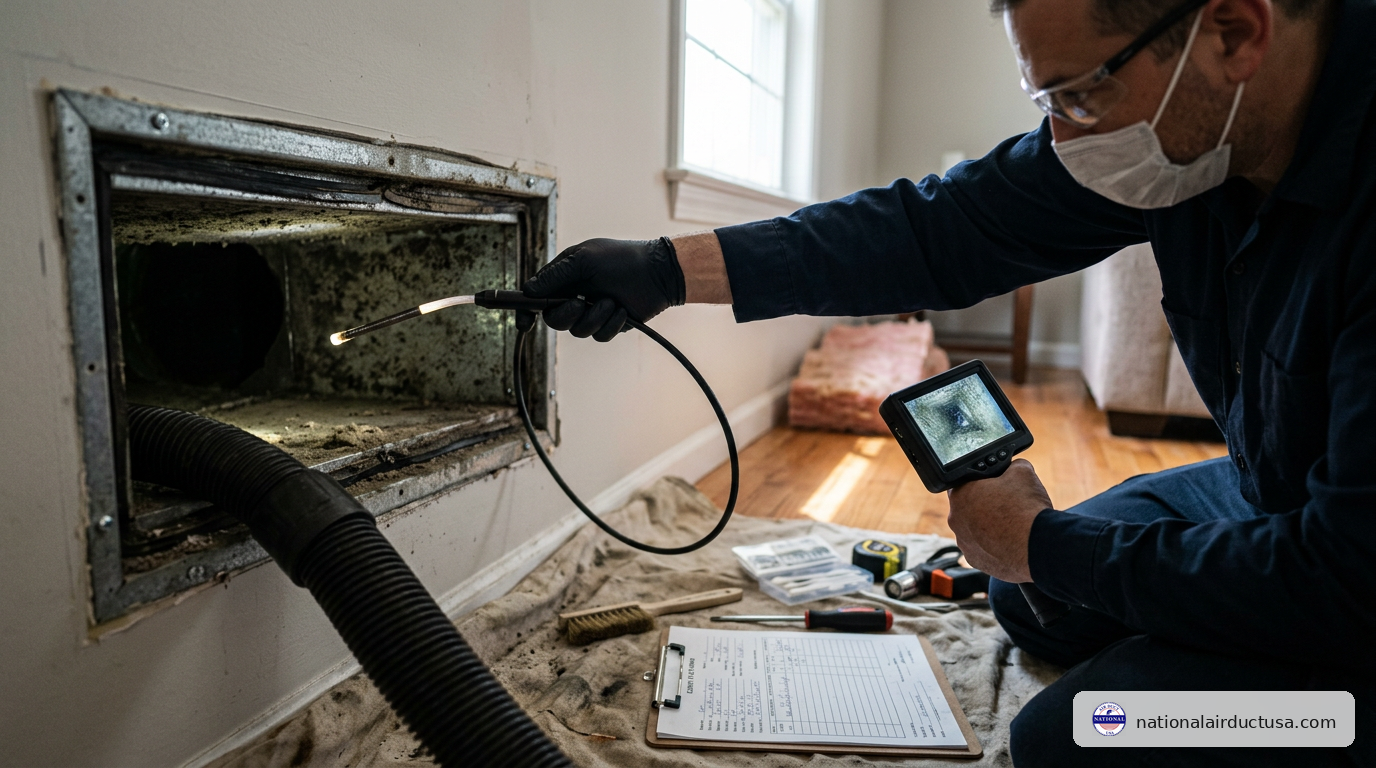
What Does a Professional Mold Remediation Process Look Like?
Once contamination is confirmed, a proper project follows a sequence, not a single visit. Skipping steps is the most common reason mold returns within a year.
- Shut down the HVAC system immediately. EPA guidance specifically recommends halting operation when contamination is known or suspected, because running the system distributes spores throughout the building.
- Identify and fix the moisture source first. This might mean a roof leak, failed condensate drain, foundation seepage, or crawl-space humidity, before any duct work begins.
- Bring in a licensed assessor to document the extent of contamination, often with a written scope of work.
- Use a separate licensed remediation contractor for the physical cleanup, consistent with New York’s requirement to separate assessment and remediation roles on larger projects.
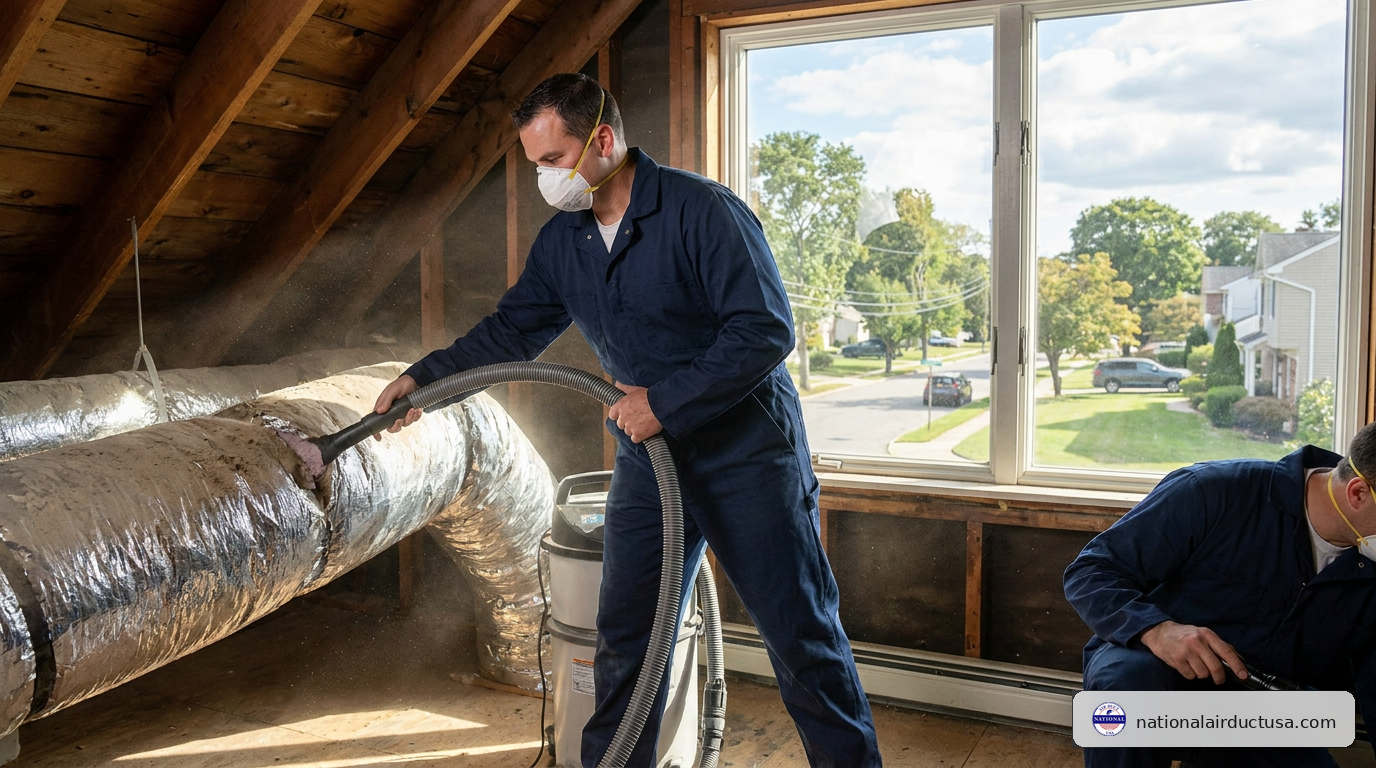
- Establish containment around the work area to prevent spore migration into living spaces during cleaning.
- Remove and replace water-damaged insulation or duct liner rather than attempting to clean it in place.
- Perform post-remediation verification, whether visual inspection or clearance testing, before reconnecting and restarting the system.
For a full walkthrough of what a reputable duct cleaning visit actually includes step by step, this Long Island air duct cleaning guide breaks down the process in more detail, and homeowners dealing specifically with AC coil or evaporator mold should review aircon mold removal best practices as well.
Who Is Legally Allowed to Perform Mold Remediation in New York?
This is where many Long Island homeowners get caught off guard. New York State requires licensing for anyone who advertises or performs covered mold assessment, remediation, or abatement work, under Article 32 of the New York Labor Law. The state’s Department of Labor maintains an active mold program with license lookup and compliance details that homeowners can check before hiring anyone.
New York City applies an additional threshold: city guidance uses more than 10 square feet as the trigger requiring licensed assessment and remediation workers in buildings with 10 or more apartments or qualifying large nonresidential structures, according to NYC Health Department mold guidance. Nassau and Suffolk County projects fall under the statewide Article 32 rules rather than NYC-specific filing requirements, but the licensing obligation itself still applies island-wide.
| Factor | Requirement or Guidance |
|---|---|
| Routine duct cleaning | Not recommended by EPA absent a specific contamination issue |
| Mold remediation professionals | Must be licensed under NY Labor Law Article 32 |
| NYC large-building threshold | More than 10 sq ft requires licensed workers |
| Long Island (Nassau/Suffolk) jurisdiction | Governed by statewide Article 32 rules |
| Contaminated insulation | Remove and replace, not surface-clean |
How Much Does Air Duct Mold Removal Cost in Long Island?
Pricing for air duct mold removal in Long Island varies widely, often ranging from $450 to $7,500+ for residential jobs, depending on the extent of contamination, number of duct runs affected, whether insulation replacement is needed, and whether the moisture source repair is bundled into the project. Larger whole-house jobs involving attic ductwork, crawl spaces, and coil replacement can run higher.
Rather than quoting a single number, it’s worth understanding what drives cost: square footage of contamination, accessibility of ducts (crawl space versus open basement), the type of insulation involved, and whether containment and post-clearance testing are included. For a deeper cost breakdown specific to AC-related mold issues, see this AC mold removal cost guide. Pricing always varies based on your specific project, so a written, itemized quote after an on-site inspection is the only reliable way to budget.
Homeowners researching comparable regional pricing can also review case studies from firms like PuroClean’s mold removal service documentation for the New York metro area, which illustrates how scope and square footage drive final cost.
How Can You Prevent Mold From Coming Back?
Prevention is almost entirely a homeowner responsibility once remediation is complete. The goal is controlling moisture, not just cleaning ducts.
- Keep indoor humidity below 50% year-round using a dehumidifier in basements and crawl spaces.
- Service your HVAC system annually, including condensate drain lines, which clog easily on Long Island’s humid summer days.
- Seal attic and crawl-space duct joints to stop conditioned air from meeting humid, unconditioned air and condensing.
- Address roof and foundation leaks immediately, especially after nor’easters or heavy coastal storms common from late summer through fall.
- Monitor indoor air quality with a combination of humidity control and proper ventilation; this indoor air quality improvement guide for Long Island homes covers additional steps.
- Schedule periodic inspections, not routine cleanings, so a professional can catch early signs before mold spreads.
Research from the NIH Division of Occupational Health’s HVAC duct cleaning fact sheet reinforces that cleaning alone, without fixing the moisture source, typically results in recontamination within months.
Key Takeaways
- Air duct mold removal should be triggered by visible contamination or water damage, not a fixed schedule.
- Homeowners can inspect vents, monitor humidity, and change filters themselves, but physical mold remediation requires a licensed New York professional under Article 32.
- Moldy insulation should be removed and replaced, never just sprayed or wiped.
- Shut down your HVAC system as soon as contamination is suspected to avoid spreading spores.
- Pricing for Long Island projects varies widely based on scope, accessibility, and whether moisture repairs are included.
- Fixing the underlying moisture source is more important long-term than the duct cleaning itself.
- Always verify a contractor’s New York mold license before signing a contract.
People Also Ask
Can you clean mold out of air ducts yourself?
Minor surface dust can be wiped from accessible vent covers, but actual mold growth inside ductwork or insulation requires licensed remediation in New York. DIY bleach or spray treatments can spread spores further into the system and are not a recognized solution.
How do I know if my Long Island home’s ducts have mold?
Common signs include a persistent musty odor when the HVAC system runs, visible black or green staining around vents, recent water damage nearby, or unexplained allergy-like symptoms that improve when away from home.
Does homeowners insurance cover duct mold removal?
It depends on the cause; sudden water damage from a burst pipe is often covered, while gradual mold growth from long-term humidity or neglect typically is not. Check your specific policy language and document the moisture source with photos before filing a claim.
Is duct cleaning necessary every year on Long Island?
No. EPA guidance does not recommend routine annual duct cleaning; it should be done when there’s visible contamination, pests, heavy debris, or water damage, regardless of how long it’s been since the last cleaning.
Frequently Asked Questions
What makes Long Island homes especially prone to duct mold?+
High coastal humidity, older housing stock with uninsulated attic ductwork, and frequent storm-related water intrusion combine to create recurring moisture problems in HVAC systems across Nassau and Suffolk counties.
Do I need a licensed contractor for any amount of duct mold?+
New York State requires licensing under Article 32 for anyone advertising or performing covered mold assessment and remediation work, regardless of project size, though larger jobs in qualifying buildings face additional documentation requirements.
Should I replace duct insulation instead of cleaning it?+
Yes, in most cases. Moldy or water-damaged fiberglass duct liner should be removed and replaced rather than surface-cleaned, since mold grows into the porous material and cannot be fully reached by cleaning alone.
Can I keep running my HVAC system while mold is being assessed?+
No. EPA guidance recommends shutting down the system as soon as contamination is known or suspected, since continued operation can spread mold spores throughout the home via the ductwork.
How long does professional duct mold remediation take?+
Smaller, localized jobs can often be completed in a single day, while whole-house remediation involving insulation replacement and moisture source repair may take several days to a week depending on scope and drying time.
Where can I find a reliable duct cleaning provider near me on Long Island?+
Look for licensed, insured providers with documented mold remediation experience specific to Nassau and Suffolk counties; this guide to finding duct cleaning near you on Long Island outlines what credentials and reviews to check first.
Mold in your HVAC system isn’t a problem that resolves itself, and treating it like routine maintenance can leave the real moisture source untouched. If you’ve spotted staining, smelled something musty, or dealt with recent water intrusion, the safest next step is a professional inspection rather than a DIY spray fix. National Air Duct serves homeowners across Nassau and Suffolk counties with licensed assessment and remediation support, and you can reach out for a custom quote based on your home’s specific situation. For background on broader air quality concerns tied to dirty ductwork, this guide on whether dirty air ducts can make you sick and this Long Island air quality resource are worth reading alongside this checklist.
Further reading: Post-Construction Deep Cleaning Services in Long Island NY: 2026 Cost Guide
Further reading: Boiler Chimney Cleaning in Long Island NY: Your October Fire Safety Checklist