Signs Your Air Ducts Need Cleaning in New York: 2026 Expert Guide
Quick Answer
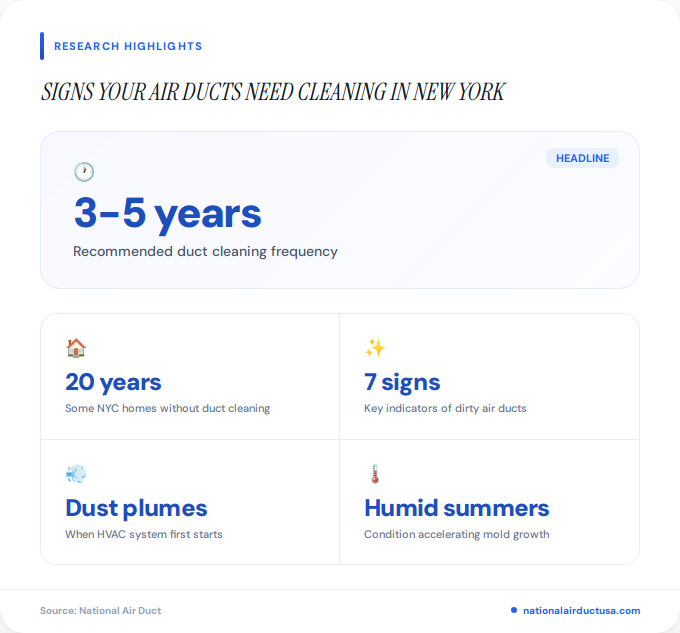
Signs your air ducts need cleaning in New York include excessive dust around vents, unusual odors from HVAC systems, visible mold growth, pest evidence, reduced airflow, worsened allergy symptoms, and rising energy bills. New York’s high urban pollution, allergens, and aging building infrastructure accelerate duct contamination, making these indicators particularly critical for city residents to monitor every 3-5 years.
Did you know that some New York homes haven’t had their air ducts cleaned in over 20 years? This shocking reality means families are breathing contaminated air daily, circulating dust, allergens, and potentially harmful pollutants through their living spaces. In a city where outdoor air quality is already challenged by urban density and traffic emissions, neglecting your HVAC system compounds indoor air quality problems significantly.
Understanding the signs your air ducts need cleaning in New York isn’t just about maintenance. It’s about protecting your family’s health and ensuring your heating and cooling systems operate efficiently in one of the country’s most demanding climates. With New York’s humid summers, harsh winters, and aging building infrastructure, duct contamination happens faster than in many other regions.
This comprehensive guide examines every critical indicator that your air ducts require professional attention, backed by the latest industry standards and expert recommendations specifically relevant to New York residents.
What Does Excessive Dust Around Vents Tell You?
One of the most obvious signs your air ducts need cleaning in New York is the constant reappearance of dust around your vent registers. If you notice dust accumulating on furniture and surfaces within days of cleaning, your HVAC system is likely circulating contaminated air throughout your home.
This problem is particularly pronounced in high-traffic New York apartments and older buildings where external pollutants infiltrate ductwork more easily. According to industry experts, dust around vents often contains a mixture of pollen, pet dander, and outdoor pollutants that are trapped in the ductwork and redistributed every time your system runs.
Pay special attention to visible dust plumes when your HVAC first starts up. This indicates significant accumulation within the ducts themselves, requiring immediate professional assessment from services like those available at National Air Duct USA.
Why Do Unusual Odors Signal Dirty Ducts?
Musty, stale, or burning smells emanating from your vents are serious warning signs that shouldn’t be ignored. These odors typically indicate mold growth, mildew, bacteria, or decomposing organic matter within your ductwork.
New York’s humid summers create ideal conditions for mold proliferation inside air ducts, especially when condensation accumulates in poorly insulated systems. The EPA specifically flags visible mold growth as a primary trigger requiring immediate duct cleaning intervention.
Burning odors may suggest dust accumulation on heating elements or even electrical issues. Regardless of the smell’s origin, unusual odors warrant immediate professional inspection to identify and resolve the underlying cause.
How Do Air Ducts Affect Your Health?
Worsening allergy symptoms, unexplained coughing, sneezing fits, or asthma flare-ups when you’re indoors often point directly to contaminated air ducts. New York’s existing pollution levels amplify these health effects for sensitive individuals, children, and elderly residents.
When your HVAC system circulates air laden with allergens, dust mites, pet dander, and mold spores, sensitive household members experience immediate reactions. Studies show that indoor air quality can be significantly worse than outdoor air when ductwork hasn’t been properly maintained.
If multiple family members develop similar symptoms that improve when they leave home, your air ducts likely require immediate attention. This pattern is a telltale sign of systemic indoor air quality problems originating from your HVAC system.
What Does Visible Mold Growth Mean?
Discovering visible mold on or around your air vents represents a critical health hazard requiring immediate professional intervention. Mold growth in ductwork poses serious respiratory risks and indicates excessive moisture problems within your HVAC system.
New York’s climate creates conditions where mold can thrive, particularly in basement-level ducts or systems with inadequate insulation. According to HVAC professionals, even small patches of visible mold suggest much larger contamination within the ductwork itself.
Never attempt DIY mold removal from air ducts. Professional cleaning services use specialized equipment and EPA-approved antimicrobial treatments to eliminate mold safely without spreading spores throughout your home. Proper remediation also addresses the moisture source to prevent recurrence.
Why Are Pest Infestations a Red Flag?
Evidence of rodent droppings, insect nests, or pest debris in your ductwork is alarmingly common in older New York buildings. These infestations create serious health hazards through contamination and require comprehensive duct cleaning and sealing.
Rodents are attracted to the warmth and shelter that ductwork provides, especially during harsh New York winters. Their nesting materials, droppings, and decomposed remains circulate throughout your home every time the HVAC system operates, creating significant health risks.
Professional duct cleaning services identify entry points, remove all contamination, and recommend sealing measures to prevent future infestations. This is particularly critical in multi-unit buildings where pest problems can migrate between apartments through shared ductwork.
How Does Reduced Airflow Indicate Duct Problems?
Noticing weak airflow from certain vents or inconsistent heating and cooling between rooms signals potential blockages in your ductwork. Reduced airflow forces your HVAC system to work harder, increasing wear and energy consumption.
According to DUCTZ specialists, debris accumulation, collapsed duct sections, or disconnected joints commonly cause airflow problems. In New York’s older buildings, settling and structural shifts can damage ductwork over time, creating gaps and leaks that compromise system efficiency.
Test each vent in your home by feeling the air pressure. Significant variations between rooms indicate distribution problems requiring professional diagnosis and potential duct cleaning or repair.
Why Do Energy Bills Rise With Dirty Ducts?
Unexplained increases in your utility bills, particularly when weather patterns remain consistent, often trace back to HVAC inefficiency caused by dirty ductwork. Contaminated ducts force systems to run longer cycles to achieve desired temperatures.
When dust, debris, and obstructions restrict airflow, your heating and cooling equipment works harder to circulate conditioned air. This increased runtime directly translates to higher energy consumption. Some homeowners see bills soar by 15-30% without realizing duct contamination is the culprit.
Compare your current bills to previous years at similar times. Significant increases without corresponding weather extremes or rate changes suggest HVAC efficiency problems, potentially from neglected duct maintenance. While pricing for professional duct cleaning varies widely based on system size, complexity, and contamination levels (typically ranging from $300 to $1,000+ for comprehensive service), the investment often pays for itself through improved efficiency and lower utility costs.
| Warning Sign | Severity Level | Action Timeline |
|---|---|---|
| Visible mold growth | Critical | Immediate |
| Pest infestations | Critical | Immediate |
| Severe respiratory symptoms | High | Within 1 week |
| Burning or musty odors | High | Within 1-2 weeks |
| Rising energy bills | Medium | Within 1 month |
| Excessive dust accumulation | Medium | Within 1-2 months |
| No cleaning in 5+ years | Medium | Schedule soon |
How Often Should New York Residents Clean Their Air Ducts?
Industry experts recommend cleaning air ducts every 3-5 years under normal conditions, but New York’s unique environmental factors often warrant more frequent service. Households with pets, allergy sufferers, or recent renovations should consider cleaning every 3 years.
According to Indoor Temp specialists, New York’s high pollution levels, seasonal allergens, and aging building infrastructure accelerate duct contamination compared to suburban or rural areas. Buildings in Manhattan, Brooklyn, Queens, the Bronx, and Staten Island face particularly aggressive contamination due to dense urban conditions.
Track your last cleaning date and schedule proactive maintenance rather than waiting for obvious problems. Preventive cleaning costs less than emergency service and protects your family’s health before symptoms develop.
What Makes New York Air Ducts Especially Vulnerable?
New York City’s unique environmental challenges create accelerated duct contamination that residents must understand. Urban pollution, construction dust, and vehicle emissions infiltrate buildings constantly, overwhelming HVAC filtration systems faster than in less dense areas.
The city’s aging building stock presents additional challenges. Many pre-war buildings have original ductwork that has never been professionally cleaned, accumulating decades of contamination. Newer buildings aren’t immune either, as construction dust from ongoing renovations throughout the city infiltrates even well-sealed systems.
New York’s dramatic seasonal temperature swings also stress HVAC systems more than temperate climates. The constant cycling between heating and cooling creates condensation that promotes mold growth, particularly in poorly insulated ducts common in older buildings.
Suitable For: Single occupancy, no pets
Cost Range: $300-$600+
Suitable For: Households with pets
Cost Range: $400-$800+
Suitable For: Respiratory sensitivities
Cost Range: $400-$900+
Suitable For: Recent construction
Cost Range: $500-$1,200+
Understanding these New York-specific factors helps homeowners prioritize duct maintenance appropriately. Waiting for the standard 5-year interval may be too long in high-contamination environments where aggressive pollutants accelerate system deterioration.
Key Takeaways
- Monitor dust accumulation around vents as a primary indicator that your ducts need professional cleaning, especially in high-traffic New York homes.
- Address unusual odors immediately, as musty or burning smells indicate mold, mildew, or potentially dangerous contamination within your ductwork.
- Worsening respiratory symptoms in household members often trace directly to contaminated air circulation from neglected ducts.
- Visible mold growth or pest evidence requires immediate professional intervention to protect your family’s health and prevent further contamination.
- Clean ducts every 3-5 years as a baseline, but New York residents with pets, allergies, or in older buildings should consider 3-year intervals.
- Rising energy bills without weather changes often indicate HVAC inefficiency from restricted airflow due to dirty ductwork.
- New York’s urban pollution and aging infrastructure accelerate duct contamination faster than in suburban areas, warranting more vigilant monitoring and maintenance.
People Also Ask
How often should NYC ducts be cleaned?
New York residents should clean air ducts every 3-5 years under normal conditions, but households with pets, allergy sufferers, or recent renovations benefit from 3-year intervals. The city’s high pollution levels and aging building infrastructure accelerate contamination compared to suburban areas.
Can dirty air ducts make you sick?
Yes, contaminated air ducts circulate allergens, mold spores, dust mites, and bacteria that can trigger respiratory symptoms, worsen allergies, and cause asthma flare-ups. The EPA identifies mold in ductwork as a significant health hazard requiring immediate remediation.
What happens if you never clean your air ducts?
Never cleaning air ducts leads to severe contamination accumulation, reduced HVAC efficiency, higher energy bills, persistent health symptoms, and potential mold growth. Some New York homes go 20+ years without cleaning, creating serious indoor air quality hazards for occupants.
How do I know if my air ducts have mold?
Visible mold on vent covers, musty odors when the HVAC runs, and worsening respiratory symptoms indicate potential mold growth. Professional inspections using cameras can definitively identify mold within ductwork that isn’t visible from vents.
Is air duct cleaning worth the cost?
Professional duct cleaning is worth the investment when you experience health symptoms, visible mold, pest infestations, or rising energy bills. Improved indoor air quality, HVAC efficiency gains, and health benefits typically justify the service costs, especially in high-contamination environments like New York City.
Can I clean air ducts myself?
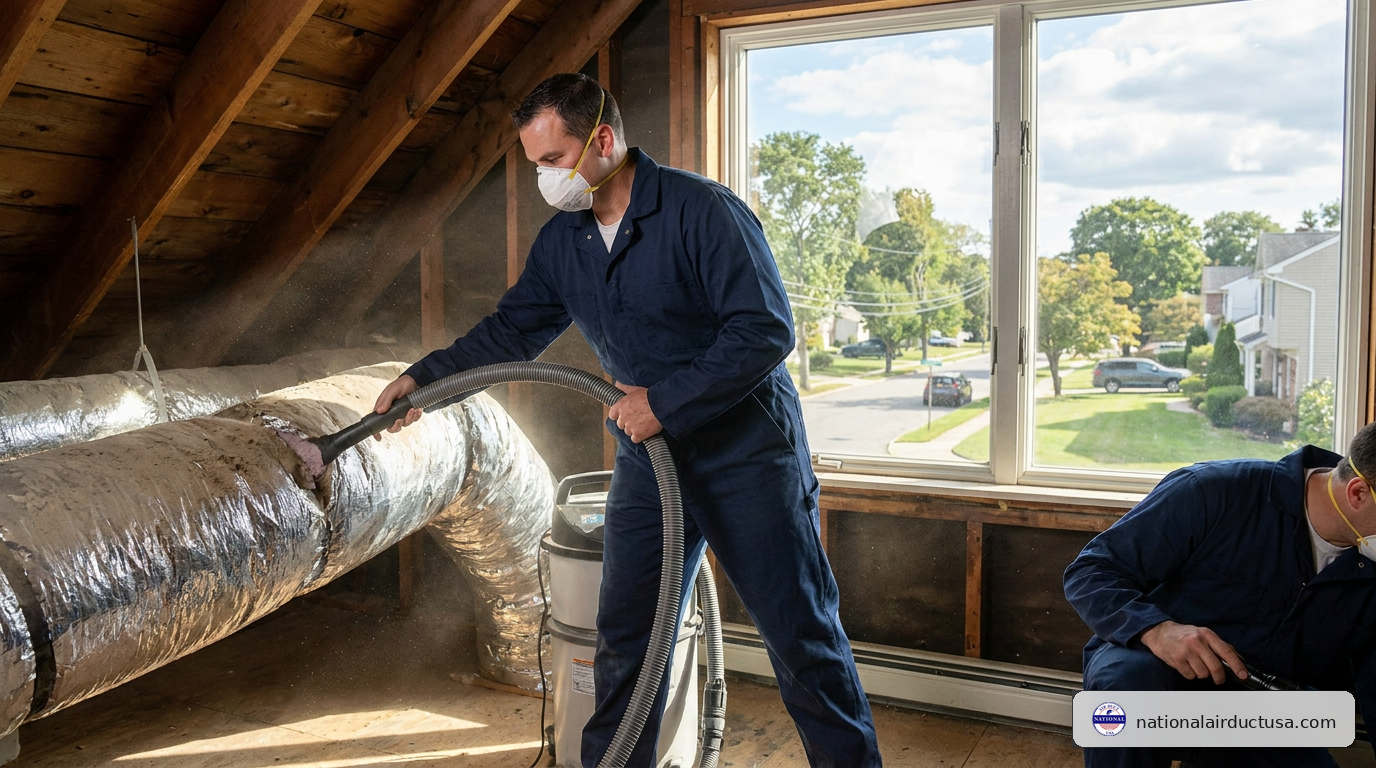
DIY duct cleaning is not recommended as it requires specialized equipment to reach deep contamination and avoid spreading pollutants throughout your home. Professional services use HEPA-filtered vacuums, rotating brushes, and antimicrobial treatments that homeowners cannot replicate safely or effectively.
Frequently Asked Questions
What is the average cost of air duct cleaning in New York?+
Air duct cleaning costs in New York vary widely from $300 to $1,200+ depending on system size, contamination severity, accessibility, and service scope. Multi-unit buildings and systems requiring mold remediation or extensive repairs fall at the higher end. Always request detailed quotes and verify the company uses proper NADCA-certified techniques.
How long does professional air duct cleaning take?+
Comprehensive duct cleaning typically requires 3-5 hours for average residential systems but can extend to a full day for larger homes or severely contaminated ductwork. Professional technicians should inspect the entire system, clean all components including returns and supply ducts, and verify proper operation before completing service.
Will duct cleaning reduce my allergies?+
Many allergy sufferers experience significant symptom reduction after professional duct cleaning removes accumulated allergens, dust mites, and mold spores. However, results vary by individual sensitivity and require combining duct cleaning with proper filtration, regular maintenance, and addressing other indoor air quality factors for maximum benefit.
Do all HVAC companies clean air ducts?+
Not all HVAC companies offer comprehensive duct cleaning services. Look for specialists certified by the National Air Duct Cleaners Association (NADCA) who have proper equipment including HEPA-filtered vacuums, camera inspection tools, and antimicrobial treatments. Verify credentials and request references before hiring any service provider.
Should I clean ducts before or after moving into a new home?+
Cleaning air ducts before moving into a previously occupied home is highly recommended, especially if the cleaning history is unknown. This ensures you start with clean indoor air quality and identifies any hidden problems like mold or pest infestations that previous occupants may have ignored or been unaware of.
Can duct cleaning damage my HVAC system?+
Professional duct cleaning performed by certified technicians using proper equipment should not damage your HVAC system. However, aggressive DIY attempts or unqualified services can dislodge insulation, damage duct joints, or spread contamination. Always verify company credentials and ensure they follow NADCA standards to protect your investment.
What should I do to prepare for duct cleaning service?+
Clear access to all vents and registers, provide workspace near your HVAC equipment, secure pets in a separate area, and communicate any specific concerns about odors or health symptoms. Reputable companies will conduct a pre-service inspection to assess contamination levels and explain their cleaning process before beginning work.
Recognizing the signs your air ducts need cleaning in New York protects your family’s health and maximizes your HVAC system’s efficiency. The city’s unique environmental challenges demand vigilant monitoring and proactive maintenance to ensure optimal indoor air quality.
Don’t wait until respiratory symptoms develop or energy bills skyrocket. Schedule a professional duct inspection with National Air Duct USA today to assess your system’s condition and develop a customized maintenance plan. Your lungs and your wallet will thank you for prioritizing this critical home maintenance task.