Cleaning PTAC Units in Long Island NY: The Complete Maintenance Guide
Quick Answer
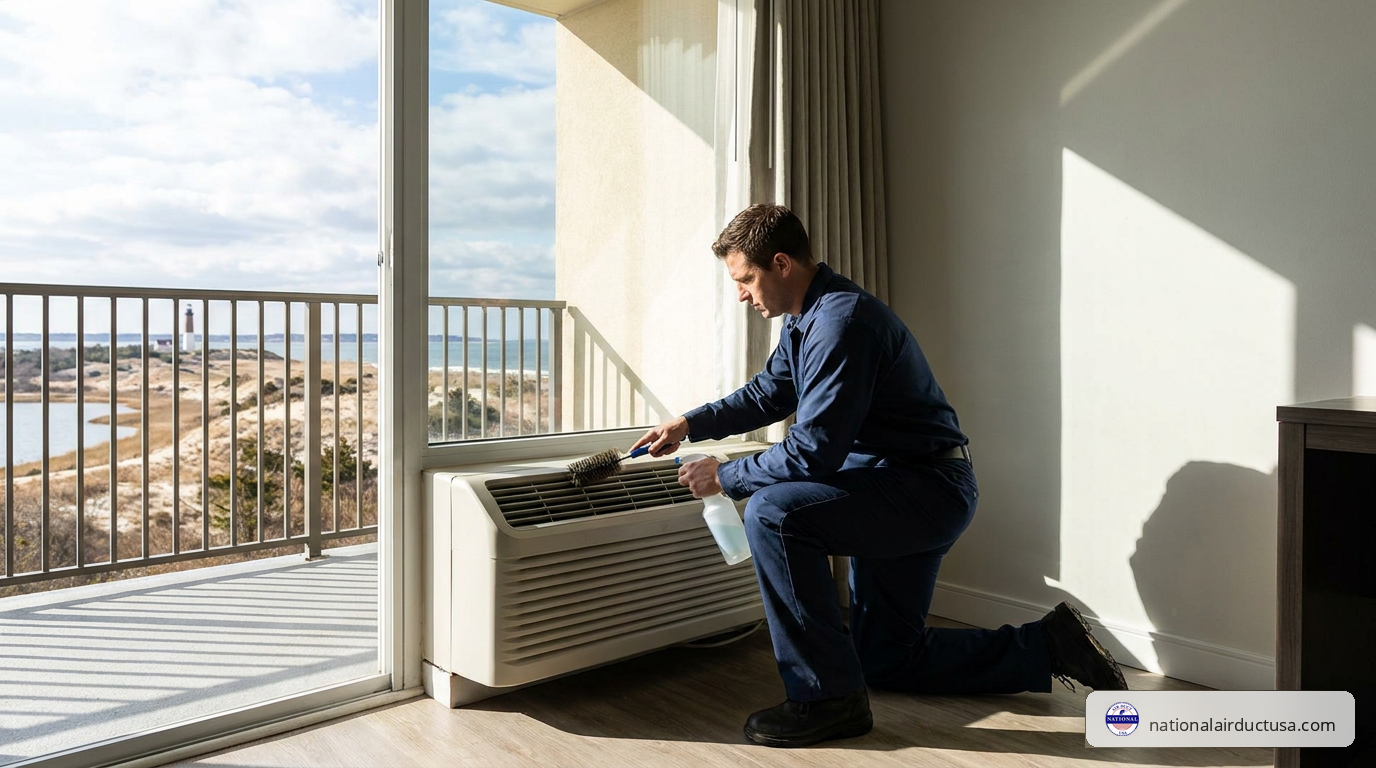
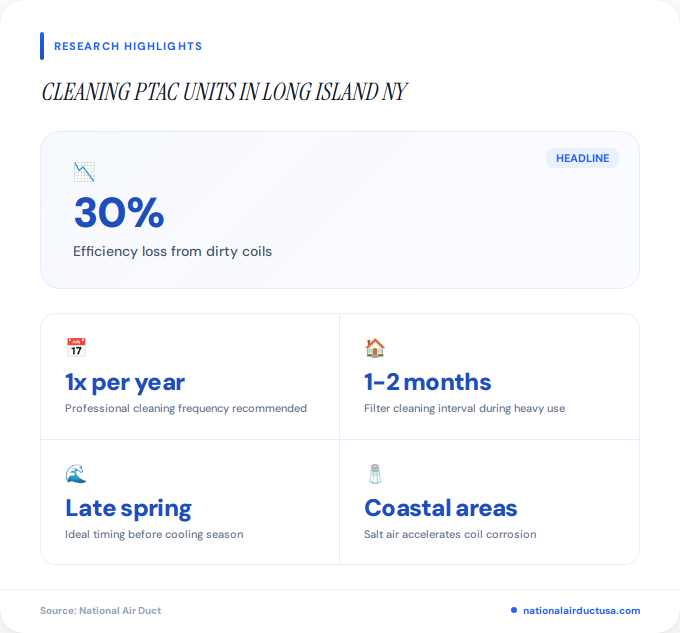
Cleaning PTAC units in Long Island NY should happen at least once a year through a professional service, ideally in late spring before cooling season begins, with homeowners checking or cleaning filters every 1 to 2 months during heavy summer and winter use. Long Island’s humidity and coastal salt air make coils and drains foul faster than in drier climates, so annual professional coil and condensate pan cleaning is the local standard for reliable performance.
Did you know a single dirty evaporator coil can cut a PTAC unit’s cooling efficiency by as much as 30 percent, quietly driving up electric bills all summer long? For property managers, hotel operators, and homeowners across Nassau and Suffolk County, cleaning PTAC units in Long Island NY is one of the most overlooked maintenance tasks, yet it directly affects comfort, air quality, and equipment lifespan. Packaged Terminal Air Conditioners are the workhorses of apartment buildings, motels, and waterfront homes throughout the region, and they take a beating from humidity, salt air, and heavy seasonal use.
This guide breaks down exactly how often PTAC units should be cleaned, what professional service actually includes, what it costs, and why Long Island’s climate makes this task more urgent than in most other parts of the country.
Why Does PTAC Cleaning Matter So Much on Long Island?
Long Island’s combination of humid summers and coastal salt exposure creates a uniquely tough environment for PTAC equipment. Communities from Montauk to Massapequa deal with salt-laden air that accelerates corrosion on condenser coils, while inland humidity encourages mold growth inside the cabinet and drain pan. Industry maintenance guidance consistently points to coil fouling, clogged drains, and corrosion as more common in coastal and humid regions, which is exactly why annual professional cleaning is the standard recommendation for the area.
Neglected units don’t just run less efficiently, they also become a source of poor indoor air quality. Dust, mold spores, and bacteria trapped in a dirty coil or condensate pan get recirculated into apartments, hotel rooms, and living spaces every time the unit cycles on. For a deeper look at how HVAC neglect affects breathing air across the region, see our guide on improving indoor air quality at home in New York.
“On Long Island, we see coils fail years earlier near the coast than they do just a few miles inland. Salt air combined with humidity is a brutal combination for PTAC equipment, and skipping annual cleaning almost always shortens the life of the unit,” notes an industry perspective echoed across multiple regional HVAC service providers.
How Often Should PTAC Units Be Cleaned in Long Island NY?
The clearest local guidance calls for professional PTAC cleaning at least once per year, ideally scheduled in late spring before peak cooling season hits. This timing lets technicians clear out winter dust, inspect coils, and confirm proper drainage before the humid months when the unit will run nearly nonstop. Local providers like PTAC Repair Long Island City and Lion-Aire’s Long Island City PTAC service both emphasize routine tune-ups as a core part of preventing costly breakdowns.
Between professional visits, filter maintenance is the responsibility that falls on homeowners and building staff. Most maintenance guides recommend checking filters monthly and cleaning or replacing them every 1 to 2 months during heavy use, which for Long Island typically means the peak of summer cooling and the coldest stretches of winter heating.
| Task | Recommended Frequency | Who Handles It |
|---|---|---|
| Filter check | Monthly | Homeowner / building staff |
| Filter cleaning or replacement | Every 1 to 2 months (peak season) | Homeowner / building staff |
| Coil, pan, and drain cleaning | Annually, late spring | Licensed HVAC technician |
| Full tune-up and inspection | Annually or bi-annually | Licensed HVAC technician |
What Does Professional PTAC Cleaning Actually Involve?
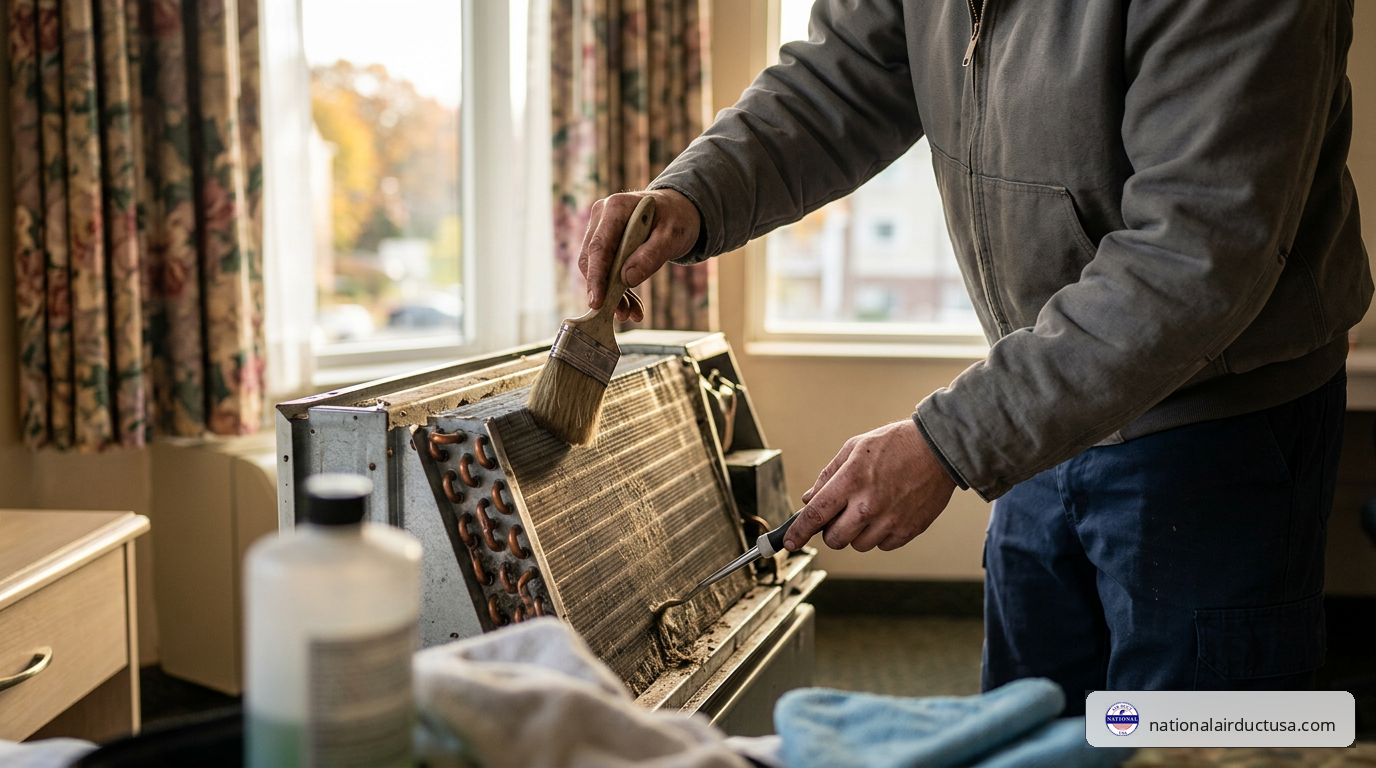
Professional PTAC service goes far beyond wiping down a filter. A thorough cleaning covers the evaporator coil, condenser coil, and condensate pan, since these are the components most likely to accumulate dirt, biofilm, and mold that restrict airflow and reduce cooling capacity. Guidance from The Furnace Outlet’s PTAC maintenance walkthrough outlines this coil-and-pan focus as the backbone of a proper cleaning.
Steam and low-pressure washing are common professional methods, but technicians must be careful with technique. Industry procedures documented by MaintainX’s PTAC cleaning guidelines recommend keeping pressure at or below 50 psi and holding the nozzle at least 12 inches from the coil surface to avoid bending the delicate aluminum fins, which would otherwise choke off airflow and heat transfer.
- Removal and inspection of the front cover and chassis
- Vacuuming loose debris from the cabinet and blower wheel
- Low-pressure rinse or steam cleaning of coils
- Flushing and inspecting the condensate drain line
- Checking electrical connections and capacitor condition
- Reassembly and a minimum 24-hour drying period before power is restored
That 24-hour drying window is critical. Multiple professional procedures, including guidance referenced by PTAC in NYC’s steam cleaning service page, warn that restoring power to a wet unit too soon risks electrical shorts and can trap moisture that encourages mold growth inside the cabinet.
DIY vs Professional Cleaning: Who Should Do What?
The clearest trend across HVAC maintenance guidance is a simple division of labor: homeowners handle filters and surface dusting, while licensed technicians handle everything involving coils, pans, and drains. This split makes sense given the specialized tools and safety knowledge required for deep cleaning.
Scope: Filters, exterior grille, visible dust
Tools needed: Vacuum, mild soap, soft brush
Scope: Coils, condensate pan, drain line, electrical
Tools needed: Steam cleaner, coil brush, low-pressure washer
Scope: Full building fleet inspection
Tools needed: Service contract with licensed provider
Attempting a full coil cleaning without proper training is one of the most common mistakes property owners make. Bent fins, improper chemical use, and inadequate drying time can turn a routine cleaning into an expensive repair. For a broader view of how PTAC upkeep fits into a home’s overall system, our HVAC system maintenance checklist for Long Island NY homeowners walks through the full annual calendar.
How Much Does PTAC Cleaning Cost in Long Island NY?
Pricing for professional PTAC cleaning in Long Island varies widely, generally ranging from $75 to $400 or more per unit, depending on the scope of work, accessibility, level of grime buildup, and whether the service includes coil cleaning, drain flushing, or a full tune-up. Multi-unit buildings and hospitality properties often negotiate volume pricing across a fleet of units, which can shift the per-unit cost significantly.
Pricing also depends on whether steam cleaning, chemical coil treatment, or additional repairs are needed once the technician opens the cabinet. Providers such as Air Conditioning in NYC’s tune-up service and Norwest AC’s PTAC preventative maintenance program structure their pricing around inspection findings rather than a flat rate, which is standard across the industry. Because every property’s PTAC fleet, access conditions, and coil condition differ, pricing varies based on your specific project, and the most reliable way to get an accurate number is to request a custom quote after an on-site look at the units.
Think of PTAC cleaning as an investment in equipment longevity rather than a commodity expense. A well-maintained unit typically outlasts a neglected one by several years, which more than offsets the annual service cost through avoided replacement expenses and lower energy bills.
What Are the Signs Your PTAC Needs Cleaning Now?
Some warning signs shouldn’t wait for the annual spring appointment. If any of the following show up, it’s time to call a technician sooner rather than later.
- Weak or reduced airflow from the unit despite the fan running normally
- Musty or moldy odor when the unit powers on, often signaling condensate pan buildup
- Water pooling near or under the unit, indicating a clogged drain line
- Rising energy bills without a change in usage patterns
- Visible dust or debris around the front grille or coil fins
- Unusual noise such as rattling or grinding from the blower assembly
Coastal properties in areas like Long Beach, Freeport, and the Hamptons should be especially alert to corrosion signs on the condenser coil, since salt air accelerates metal degradation faster than technicians typically see just a few miles inland. If you’re also noticing broader air quality symptoms throughout the property, review the signs your air ducts need cleaning in New York to rule out contributing issues beyond the PTAC itself.
What’s Next for PTAC Maintenance Technology?
The PTAC maintenance industry is shifting toward predictive and preventive strategies rather than reactive repairs. Research on equipment trends from Intel Market Research’s PTAC market analysis points to the rise of IoT-enabled units with remote monitoring capabilities, allowing property managers to track filter status, coil temperature, and drainage performance without a physical inspection every time.
For large properties managing dozens or hundreds of units, this shift matters. Predictive maintenance reduces emergency service calls, guest complaints in hospitality settings, and unplanned downtime. Even without smart sensors, building owners can apply the same philosophy by sticking to a strict cleaning calendar rather than waiting for a unit to fail. Steam cleaning remains a preferred professional method, as detailed by Green Lodging News’ overview of steam cleaning for PTAC efficiency, since it lifts grime without saturating internal components the way a garden hose or aggressive pressure washer would.
If your property relies on central ductwork alongside PTAC units, it’s worth reviewing your full ventilation picture. Explore professional air duct cleaning services in Long Island NY or, for properties using mini splits instead of or alongside PTACs, see our guide to ductless mini split cleaning service in Long Island NY.
Key Takeaways
- Professional PTAC cleaning should happen at least once a year in Long Island, ideally in late spring before cooling season.
- Filters need attention every 1 to 2 months during heavy summer and winter use, with monthly checks recommended year-round.
- Coastal salt air and Long Island humidity accelerate coil corrosion and mold growth compared to drier inland climates.
- Low-pressure or steam cleaning at 50 psi or less, with the nozzle kept 12 inches from coil fins, protects equipment during wet cleaning.
- Units should dry for a full 24 hours before power is restored after a wet cleaning to prevent electrical and mold issues.
- Pricing varies based on your specific project, unit count, and condition, so a custom on-site quote is the most reliable way to budget.
- The industry is moving toward IoT-enabled, predictive maintenance to cut emergency repairs and improve comfort across managed properties.
People Also Ask
How often should you clean a PTAC unit?
Filters should be checked monthly and cleaned or replaced every 1 to 2 months during heavy use, while a full professional cleaning of the coils and drain pan should happen at least once a year, ideally in late spring.
Can I clean my PTAC unit myself?
Homeowners can safely clean or replace filters and wipe down exterior grilles, but coil cleaning, condensate pan flushing, and electrical inspection should be left to a licensed HVAC technician to avoid damage or safety hazards.
Why does salt air affect PTAC units on Long Island?
Salt-laden coastal air accelerates corrosion on condenser coils and metal cabinet components, which is why waterfront properties in areas like Long Beach or the Hamptons often need more vigilant inspection than inland locations.
What happens if a PTAC unit is never cleaned?
A neglected PTAC loses cooling efficiency, runs longer to reach set temperatures, drives up energy costs, and becomes a breeding ground for mold and bacteria that get circulated into the living or guest space.
Frequently Asked Questions
What is the best time of year to schedule PTAC cleaning in Long Island?+
Late spring is the recommended window, since it allows the unit to start peak cooling season with clean coils, proper drainage, and reduced risk of mold buildup from winter downtime.
How long should a PTAC unit dry after wet cleaning before it’s turned back on?+
Industry guidance recommends waiting a full 24 hours after steam or wet cleaning before restoring power, which prevents electrical shorts and gives internal components time to fully dry.
What pressure setting is safe for cleaning PTAC coils?+
Professional guidance recommends staying at or below 50 psi and keeping the nozzle at least 12 inches from the coil surface to avoid bending the thin aluminum fins, which would otherwise reduce heat transfer efficiency.
Does PTAC cleaning improve indoor air quality?+
Yes, removing dust, mold, and biofilm from the coil and condensate pan reduces the amount of contaminants circulated into the room every time the unit runs, which is especially important in apartment buildings and hotels.
How much does professional PTAC cleaning cost in Long Island NY?+
Costs vary widely based on unit count, accessibility, and scope of service, generally falling between $75 and $400 or more per unit; pricing varies based on your specific project, so requesting a custom quote is recommended.
Are PTAC units and mini splits cleaned the same way?+
No, PTAC units and ductless mini splits have different component layouts and access points, so cleaning procedures differ; property owners running both systems should schedule separate maintenance for each type.
PTAC units are a major investment for Long Island properties, and the difference between a unit that lasts 8 years and one that lasts 15 often comes down to consistent, professional maintenance. Whether you manage a single coastal rental or a full apartment complex, staying ahead of coil buildup, drain clogs, and filter neglect pays off in lower energy bills and fewer emergency calls. Learn more about our approach and experience on our about us page, or explore the full range of services at National Air Duct.
Related: Air Duct Cleaning Near Me Same Day Service in Long Island NY
Related: 7 Signs You Need Air Duct Cleaning in New York (2026 Guide)
Related: Air Duct Cleaning and Mold Removal in New York: The Complete 2026 Guide
Ready to get your PTAC units professionally cleaned before the next cooling season hits Long Island? Contact our team today to schedule an inspection and get a custom quote tailored to your property.
Further reading: Dryer Vent Cleaning Long Island NY: The Complete Homeowner Guide