7 Signs You Need Air Duct Cleaning in New York (2026 Guide)
Quick Answer
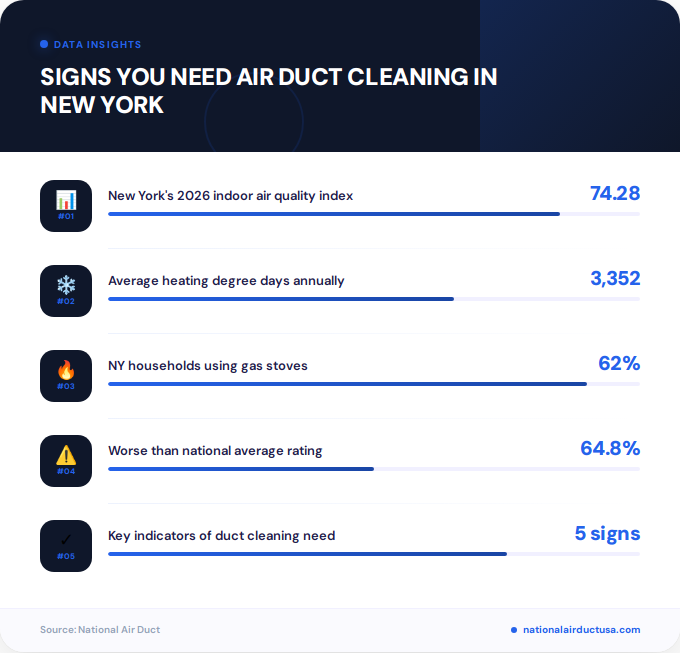
The clearest signs you need air duct cleaning in New York are visible dust blowing from vents, musty odors when the HVAC kicks on, uneven room temperatures, rapidly clogging filters, and worsening allergy or respiratory symptoms indoors. These signs matter more in New York because the state’s 2026 indoor air quality index of 74.28 ranks 64.8% worse than the national average, and a heating season averaging 3,352 heating degree days means ducts recirculate the same air for months on end.
Ask any HVAC technician in Long Island or the five boroughs what they see most in winter, and you’ll hear the same answer: apartments and homes sealed tight against the cold, ducts working overtime, and dust pouring out of vents that haven’t been touched in years. Recognizing the signs you need air duct cleaning in New York isn’t just about tidiness. It’s about protecting indoor air in a state where the 2026 indoor air quality index sits at a troubling 74.28, a figure reported as 64.8% worse than the national average.
From Westbury to Smithtown, homeowners are noticing the same warning signs: gritty dust on vent covers, musty smells at startup, and filters that clog faster than they should. This guide breaks down exactly what those signs mean, what the latest New York air quality data shows, and when it’s time to call in a professional.
Why Does Duct Cleaning Matter More in New York?
New York’s climate and housing stock create a perfect storm for duct contamination. The state logged 3,352 heating degree days in recent reporting, meaning furnaces and forced-air systems run for months without a break, continuously pulling air through the same ductwork. Add in that 62% of New York households use gas stoves, and you have a steady source of combustion byproducts being drawn into HVAC returns.
A Brooklyn-based industry report described a “surge in air duct cleaning requests” as winter sealed up NYC apartments, trapping pollutants indoors with nowhere to go, according to a Brooklyn company’s winter service report. That seasonal sealing effect is exactly why so many New Yorkers notice odors and dust spikes right when the heat turns on for the first time each year.
Outdoor air plays a role too. New York City’s own health department tracks pollution levels that can infiltrate homes through leaky windows, open doors, and duct systems, as detailed on the NYC Department of Health air quality page. When outdoor particulate matter gets pulled indoors, it settles inside ductwork and recirculates every time the system cycles.
What Are the Top Signs You Need Air Duct Cleaning?
Most New York homeowners discover duct problems through a handful of repeatable symptoms. If you notice two or more of the following, it’s time to schedule an inspection.
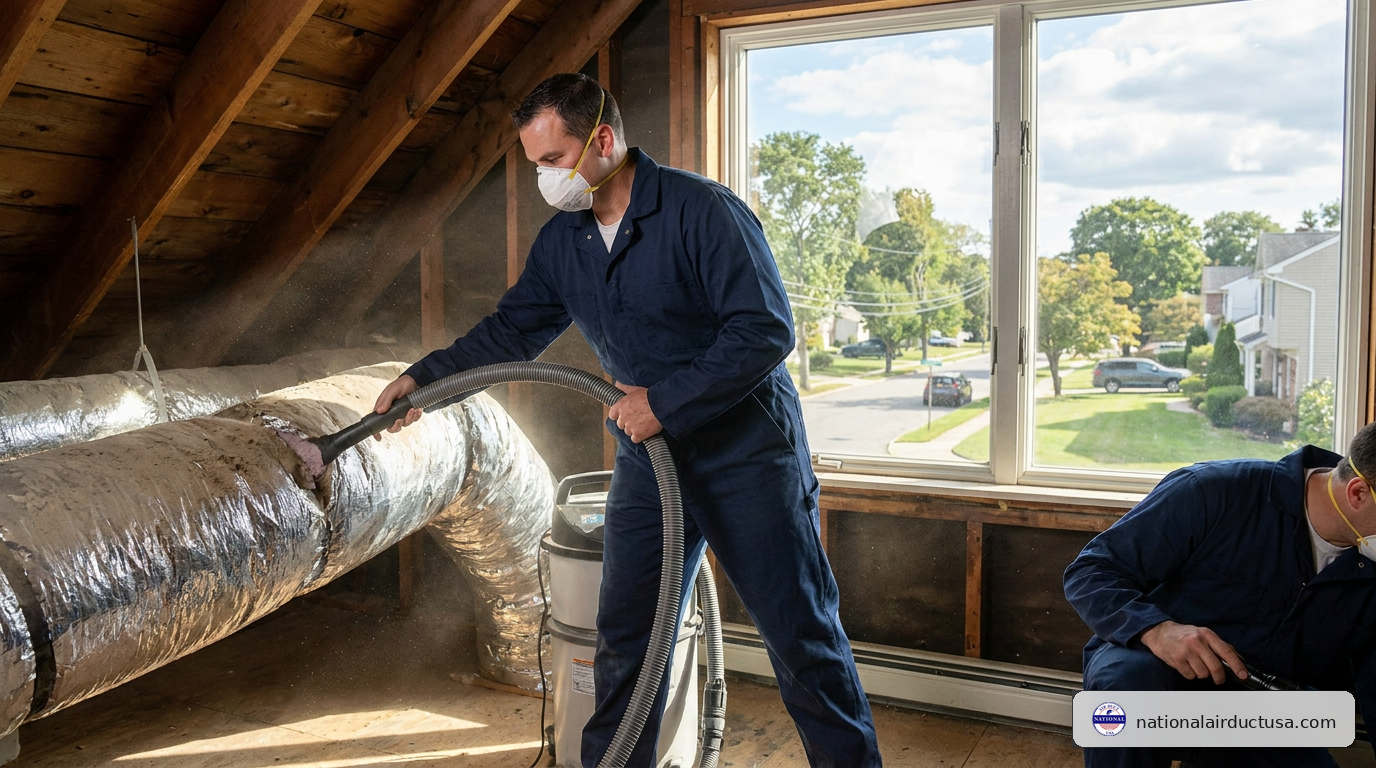
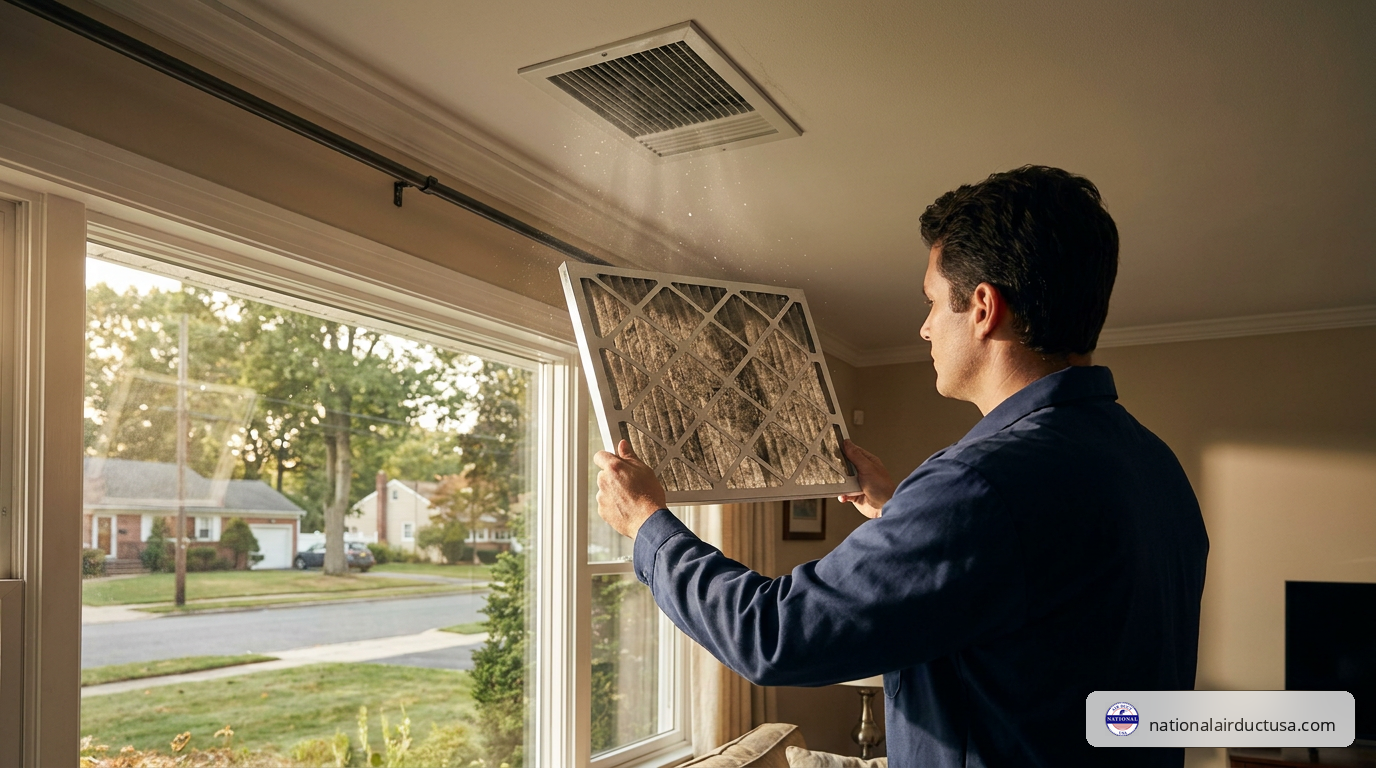
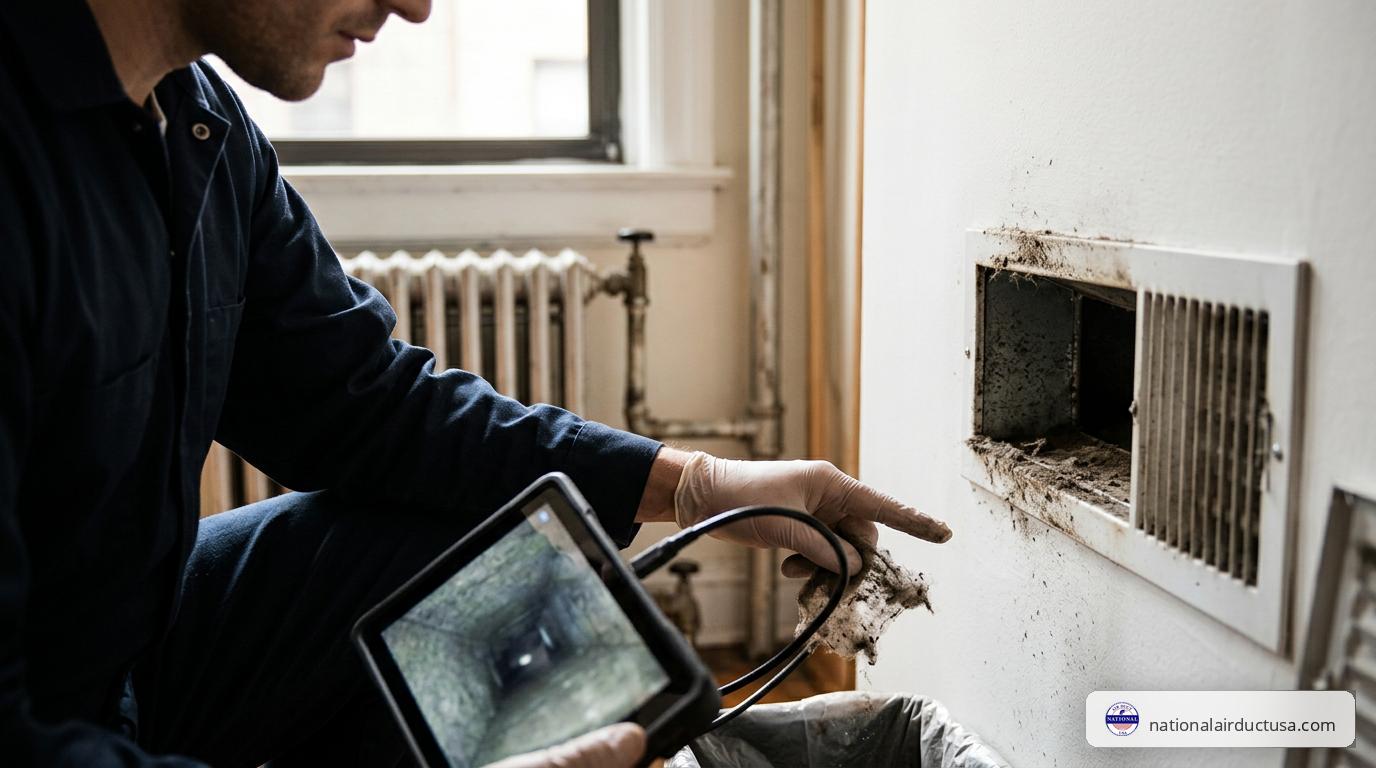
- Visible dust at the vents: Dust blowing out of registers when the system starts, or grilles that get dirty again within days of cleaning.
- Musty or stale odors: A noticeable smell when the heat or AC first kicks on, often a sign of mold, dust buildup, or trapped debris in the ducts.
- Uneven airflow or temperature: Some rooms run hot while others stay cold, often caused by blockages or leaks somewhere in the duct run.
- Filters clogging fast: Needing to replace filters far more often than the manufacturer recommends is a strong signal of excess debris moving through the system.
- Worsening allergy or respiratory symptoms: Coughing, sneezing, or asthma flare-ups that improve when you leave the house point to indoor air contamination.
- Rising energy bills without explanation: Clogged ducts force your system to work harder, driving up costs even when usage hasn’t changed.
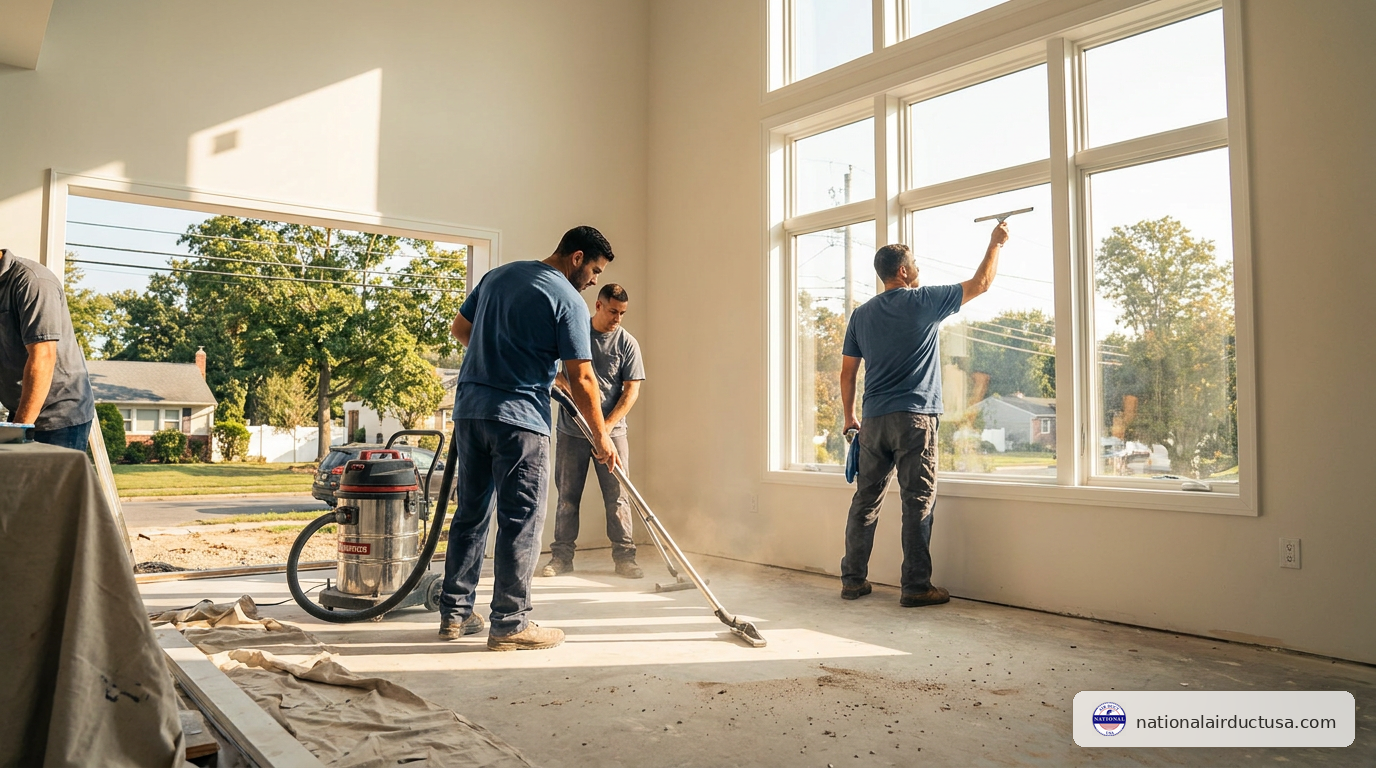
- Evidence of pests or recent renovation dust: Rodent droppings, insect debris, or drywall dust from a remodel are common contaminants found during inspections.
These triggers echo guidance widely used across the HVAC industry, including checklists that flag visible vent dust and odor as urgent warning signs and technical breakdowns of when duct cleaning actually improves airflow and system performance.
“Duct cleaning makes the biggest difference when it’s paired with better filtration and humidity control, not treated as a one-time fix. If a homeowner sees dust at the vents or smells something musty at startup, that’s the system telling them it’s time to look inside, not just spray air freshener and move on.”
What Does the Data Say About New York’s Indoor Air?
The numbers back up what technicians are seeing in the field. New York’s January 2026 mean PM2.5 was recorded at 7.93, a level that suggests meaningful fine-particle exposure risk during the exact months when ducts are running nonstop, according to reporting from the River Reporter’s analysis of New York’s winter indoor air data.
The American Lung Association’s 2026 “State of the Air” report gave New York an annual PM2.5 grade of 8.0 and an ozone grade of 2.7, reinforcing that outdoor pollution regularly finds its way into homes through leaks, open windows, and duct intake, as detailed in the American Lung Association’s full 2026 State of the Air report. Meanwhile, real-time monitoring tools like AirNow’s national air quality tracker let residents check daily conditions before deciding whether to ventilate manually or rely on their HVAC system.
Federal data compiled by the EPA’s air quality trends by city and county shows New York communities experience a meaningful share of elevated pollution days each year, even when the annual average looks moderate on paper.
Comparison: 64.8% worse than U.S. average
Risk period: Peak heating season
Impact: Extended duct recirculation
Concern: Combustion byproducts indoors
Why Are Older New York Homes at Higher Risk?
Housing age is one of the biggest hidden factors behind duct contamination. One 2026 analysis put the median home age in New York at 65 years, meaning a large share of the housing stock has decades of accumulated debris, aging duct seals, and dust from prior renovations sitting inside the ventilation system.
Older duct systems are also more likely to have gaps, disconnected sections, or insulation that has broken down, all of which let contaminants enter that a newer, tightly sealed system wouldn’t. This is especially relevant in established neighborhoods across Nassau and Suffolk counties, where many homes still run original or heavily modified ductwork from earlier decades.
If you live in a pre-war building or a mid-century home, it’s worth reading our 2026 expert guide on signs your air ducts need cleaning for a deeper look at how home age changes the maintenance timeline, or checking our guide on how often you should clean air ducts in Long Island homes specifically.
How Do Symptoms Compare to Root Causes?
Not every symptom points to the same underlying problem. The table below breaks down common complaints and what’s typically driving them.
| Symptom Noticed | Likely Root Cause |
|---|---|
| Dust blowing from vents | Accumulated debris inside duct runs |
| Musty smell at startup | Mold, moisture, or trapped organic material |
| Uneven room temperatures | Blockages, leaks, or duct disconnections |
| Filters clogging quickly | High debris volume moving through the system |
| Worsening allergies indoors | Recirculated dust, pet dander, or allergens |
This mirrors symptom checklists used by facility managers, including those detailed in a guide on signs that school and institutional air ducts need cleaning, which applies the same logic homeowners can use residentially.
How Much Does Air Duct Cleaning Cost in New York?
Pricing for professional duct cleaning in New York varies widely depending on the size of your home, the number of vents, the age of your system, and how much contamination has built up over time. Rather than quoting a single average, most reputable companies price jobs anywhere from a few hundred dollars for smaller apartments to well over a thousand for larger multi-zone homes with extensive ductwork.
Pricing varies based on your specific project, so it’s worth requesting a custom quote rather than relying on ballpark figures found online. For a detailed breakdown of what factors into cost, see our 2026 pricing guide on air duct cleaning cost per vent in New York or our full cost, process, and expectations guide for professional duct cleaning in Long Island.
What Should You Do Next?
If you’re seeing two or more of the warning signs above, the next step is a professional inspection rather than guesswork. National Air Duct offers full-service air duct cleaning across New York, with local teams serving Westbury, Plainview, Babylon, Smithtown, and Huntington.
If you also run PTAC units or ductless mini-splits, don’t overlook them: our guides on cleaning PTAC units in Long Island and ductless mini-split cleaning service costs and frequency cover systems that traditional duct cleaning doesn’t reach. And if same-day service is what you need, check our page on air duct cleaning near me with same-day service in Long Island.
Key Takeaways
- New York’s 2026 indoor air quality index of 74.28 is 64.8% worse than the national average, raising the stakes for dirty ducts.
- Visible dust, musty odors, and uneven airflow are the three most common early warning signs.
- January 2026 PM2.5 levels of 7.93 show winter is the highest-risk season for indoor pollutant buildup.
- 3,352 heating degree days mean New York ducts run longer and recirculate air more often than in milder climates.
- A median home age of 65 years in New York increases the odds of degraded ducts and accumulated debris.
- Rising energy bills without explanation often trace back to clogged or leaking ductwork forcing systems to overwork.
- Duct cleaning works best as part of a layered strategy: better filters, humidity control, and source management alongside cleaning.
People Also Ask
How do I know if my air ducts are dirty?
Check vent covers for dust buildup, listen for a musty smell when your HVAC starts, and notice if you’re replacing filters more often than usual. A quick flashlight look inside an accessible duct section can also reveal visible debris.
Does duct cleaning really improve air quality?
Yes, when combined with proper filtration and source control. Duct cleaning removes accumulated dust, allergens, and debris that would otherwise recirculate every time the system runs.
How often should New York homeowners clean their air ducts?
Most experts recommend every 3 to 5 years for typical homes, but older homes, pet owners, and recently renovated properties may need cleaning more frequently. New York’s long heating season also justifies more frequent checks.
Can dirty ducts cause allergies?
Yes. Dust, pet dander, and mold spores trapped in ductwork get pushed into every room each time the system cycles, which can trigger or worsen allergy and asthma symptoms indoors.
Why does my apartment smell musty when the heat turns on?
A musty smell at startup usually means dust, moisture, or mold has built up inside the ductwork or heating unit over the off-season. It’s one of the clearest signs professional cleaning is overdue.
Frequently Asked Questions
What are the most common signs you need air duct cleaning in New York?+
The most common signs are visible dust at vents, musty odors on startup, uneven room temperatures, filters clogging faster than normal, and worsening allergy symptoms indoors. Rising energy bills without an obvious cause is another frequent red flag.
Is New York’s indoor air quality actually worse than other states?+
New York’s 2026 indoor air quality index of 74.28 was reported as 64.8% worse than the national average, largely due to long heating seasons, high gas stove usage, and outdoor pollution infiltrating homes.
Do older New York homes need duct cleaning more often?+
Yes. With a median home age of around 65 years in New York, older duct systems tend to have more accumulated debris, degraded sealing, and leftover renovation dust than newer construction.
Can duct cleaning lower my energy bills?+
Clean ducts allow air to move more efficiently through your system, which can reduce the strain on your HVAC unit and help stabilize energy costs. If bills have risen without a clear cause, dirty ducts are a common culprit.
How much does professional duct cleaning cost in New York?+
Costs vary widely based on home size, number of vents, system age, and contamination level, so pricing is best determined with a custom quote rather than a flat estimate. Contact a local provider for an accurate assessment of your specific property.
Should I get duct cleaning after a home renovation?+
Yes. Renovation work generates drywall dust, sawdust, and debris that often gets pulled into the return vents and settles throughout the ductwork, making post-renovation cleaning strongly recommended.
New York’s climate, aging housing stock, and long heating season all make dirty ducts more likely and more impactful than in many other parts of the country. If you’re noticing dust, odors, uneven airflow, or unexplained health symptoms, don’t wait for the problem to get worse. National Air Duct offers professional inspection and cleaning services across New York, backed by local expertise in neighborhoods from Nassau to Suffolk County. Contact our team today for a custom quote and take the first step toward cleaner indoor air. Learn more about our company on our about us page, or explore our complete 2026 HVAC maintenance checklist and our guide on how to improve indoor air quality at home in New York for more ways to protect your household year-round.
Further reading: Air Duct Cleaning and Mold Removal in New York: The Complete 2026 Guide
Further reading: Air Duct Cleaning Mold Removal in Long Island, NY: A Step-by-Step Homeowner Checklist