Commercial Air Duct Cleaning Services in Long Island NY: Complete 2026 Guide for Businesses
Quick Answer
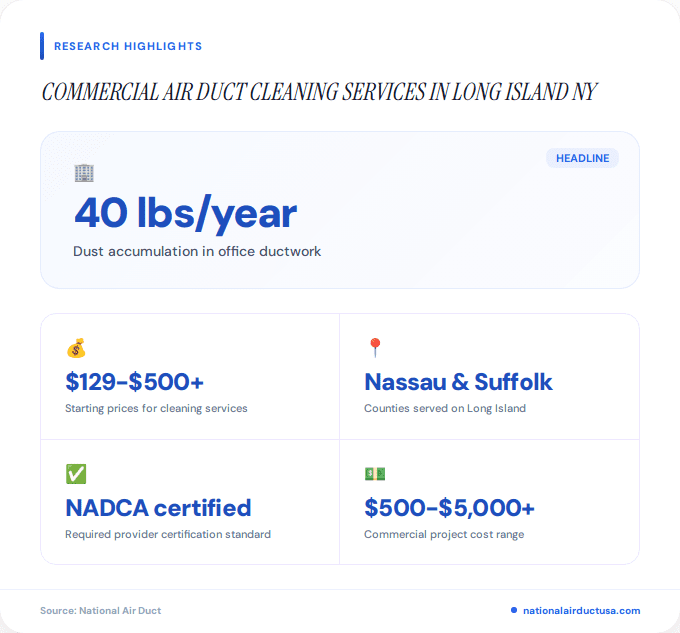
Commercial air duct cleaning services in Long Island NY serve both Nassau and Suffolk counties, with NADCA-certified providers offering comprehensive indoor air quality solutions for offices, retail spaces, and multifamily buildings. Reputable companies typically charge starting prices from $129 to $500+ depending on system size and complexity, with commercial projects ranging from $500 to $5,000+ based on property scope, contamination levels, and HVAC system configuration.
Did you know that commercial HVAC systems can accumulate up to 40 pounds of dust per year in ductwork serving a typical office building? For businesses across Long Island’s Nassau and Suffolk counties, maintaining clean air ducts is no longer optional. It is a fundamental component of operational efficiency, employee health, and regulatory compliance.
As indoor air quality becomes increasingly linked to workplace productivity and health outcomes, commercial air duct cleaning services in Long Island NY have evolved from occasional maintenance to strategic facility management. This comprehensive guide examines the current state of commercial duct cleaning services, market dynamics, pricing structures, and selection criteria for businesses seeking professional HVAC hygiene solutions.
What Is Commercial Air Duct Cleaning and Why Does It Matter?
Commercial air duct cleaning is the systematic removal of dust, debris, allergens, mold, and contaminants from heating, ventilation, and air conditioning (HVAC) systems serving business properties. Unlike residential services, commercial cleaning addresses larger systems, higher air volume requirements, and specific operational demands of offices, retail spaces, medical facilities, schools, and multi-tenant buildings.
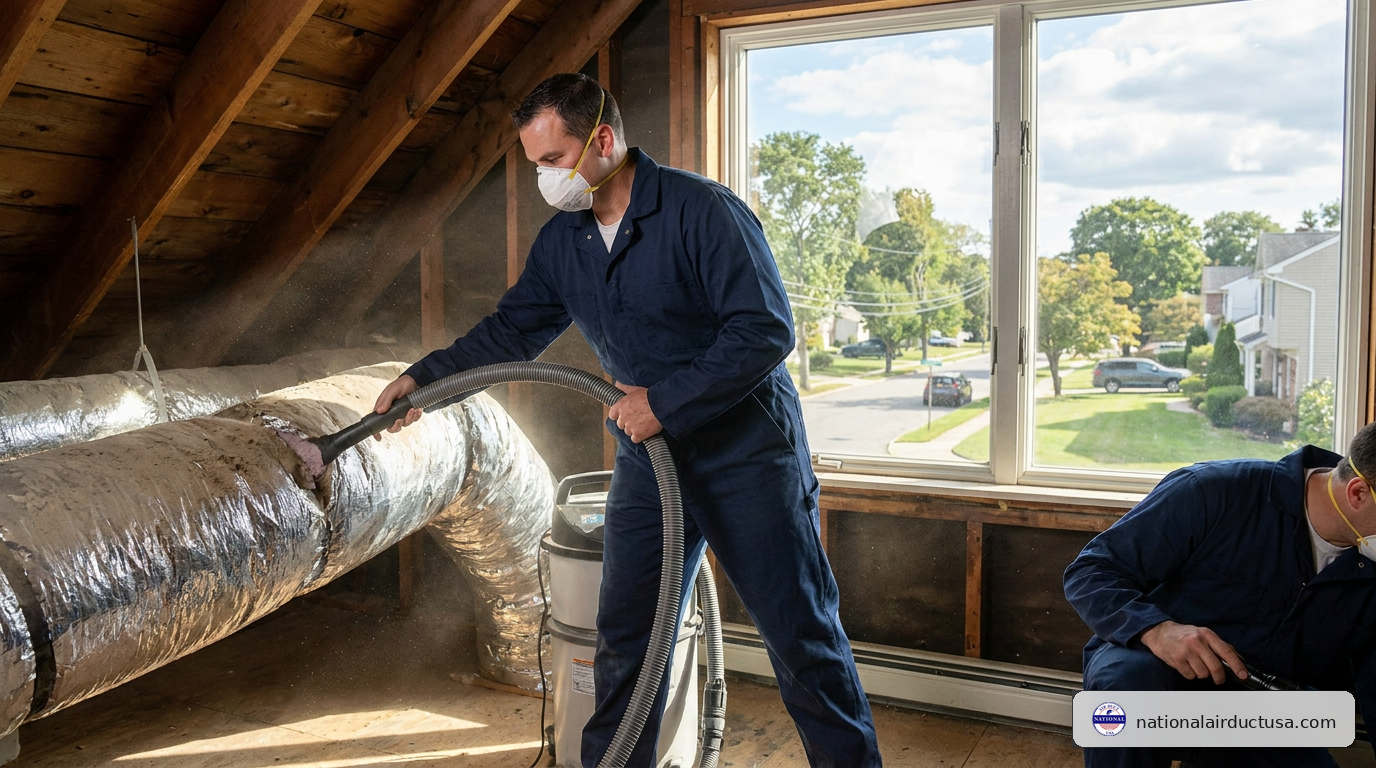
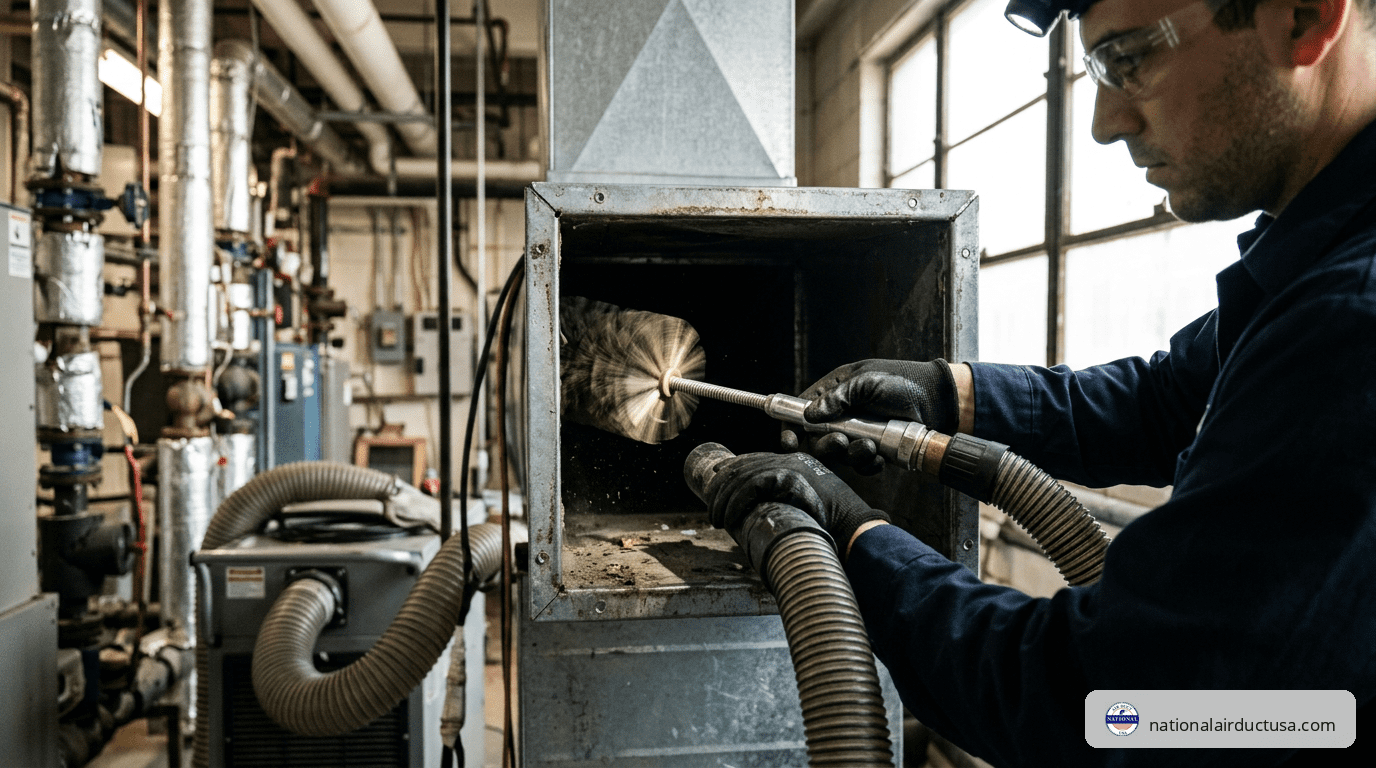
The process involves specialized equipment including high-powered vacuum systems, rotary brushes, compressed air tools, and camera inspection technology. Professional commercial air duct cleaning targets supply ducts, return ducts, grilles, diffusers, heat exchangers, cooling coils, condensate drain pans, fan motors, and air handling unit housings throughout the HVAC infrastructure.
For Long Island businesses, the coastal climate creates unique challenges. High humidity levels, salt air exposure in coastal areas like the Hamptons and North Shore, and seasonal temperature extremes contribute to accelerated contamination and biological growth within duct systems. Regular professional cleaning directly impacts indoor air quality, energy efficiency, and system longevity.
How Does the Long Island Commercial Air Duct Cleaning Market Work?
The commercial air duct cleaning services in Long Island NY market operates across both Nassau and Suffolk counties, with many providers extending coverage into the broader New York City metropolitan area. The regional market demonstrates maturity, with established companies differentiating through certification credentials, specialized equipment, and documented performance histories.
According to recent air duct cleaning market analysis, the industry continues to grow as businesses prioritize indoor environmental quality and preventive maintenance strategies. Long Island’s dense commercial real estate footprint, from Garden City office parks to Hauppauge industrial complexes, creates sustained demand for professional cleaning services.
Market leaders like established Long Island duct cleaning providers emphasize service breadth covering commercial and residential properties throughout Nassau and Suffolk counties. These companies typically maintain insurance coverage, documented operational histories, and multi-service capabilities extending beyond basic duct cleaning to comprehensive indoor air quality management.
| Service Area | Coverage Characteristics | Primary Business Types |
|---|---|---|
| Nassau County | Dense commercial zones, established business districts | Office buildings, retail, medical facilities |
| Suffolk County | Industrial parks, mixed-use developments | Warehouses, schools, hospitality |
| Extended Service Areas | NYC boroughs, Westchester, Connecticut | Multi-location commercial clients |
Local providers position themselves around several key value propositions: NADCA certification, documented experience measured in thousands of completed projects, comprehensive service offerings including air quality testing and mold remediation, and rapid response capabilities for emergency contamination events. These factors shape buyer selection criteria across Long Island’s competitive commercial services marketplace.
Why Is NADCA Certification Critical for Commercial Services?
The National Air Duct Cleaners Association (NADCA) certification represents the industry’s leading credential for professional air duct cleaning services. For commercial properties in Long Island, working with NADCA-certified professionals ensures adherence to established cleaning standards, proper equipment usage, and documented best practices.
NADCA certification requires companies to demonstrate technical competency, maintain appropriate insurance coverage, and follow the association’s ACR (Assessment, Cleaning, and Restoration) Standard for HVAC systems. This standardization matters particularly for commercial clients who need verifiable performance documentation for facility management records, lease compliance, or health department requirements.
NADCA-certified providers in Long Island consistently demonstrate operational excellence through documented project histories. One local company reports completing over 4,800 cleanings since 2012, with certification serving as a primary trust signal for commercial clients evaluating vendors for multi-year facility maintenance contracts.
Beyond baseline competency, NADCA certification signals ongoing professional development, equipment investment, and accountability to industry standards. For businesses managing Long Island air quality concerns across multiple locations or complex facilities, this credential functions as an efficient vendor screening mechanism.
What Factors Impact Commercial Air Duct Cleaning Costs?
Commercial air duct cleaning pricing varies significantly based on system complexity, building size, contamination levels, and service scope. Unlike residential services with standardized pricing, commercial projects require customized assessment and quotation based on specific facility characteristics and operational requirements.
Entry-level pricing for small commercial spaces may start around $129 to $500, typically covering basic cleaning of limited ductwork in retail spaces or small offices. However, comprehensive commercial cleaning for medium to large facilities generally ranges from $500 to $5,000+, with larger facilities, hospitals, or contaminated systems requiring investments of $10,000 to $50,000+ depending on scope and complexity.
Pricing is fundamentally dependent on several key variables that professional providers assess during initial consultation. Understanding these factors helps businesses budget appropriately and evaluate proposals from multiple vendors serving the Long Island duct cleaning market.
Number of vents/registers: Impacts labor time
Multi-zone systems: Increases complexity
Heavy debris buildup: Premium pricing
Mold/biohazards: Specialized protocols
After-hours work: Premium rates apply
Occupied spaces: Coordination costs
Sanitization/disinfection: $150-$1,000+
Air quality testing: $300-$1,500+
For accurate cost assessment, businesses should request on-site evaluations from multiple NADCA-certified providers. Pricing varies based on your specific project’s square footage, system configuration, accessibility, and service timing requirements. Premium providers emphasize value through certified technicians, advanced equipment, documentation, and warranty coverage rather than competing solely on price.
What Services Are Included in Commercial Air Duct Cleaning?
Comprehensive commercial air duct cleaning services in Long Island NY extend well beyond simple dust removal. Professional providers offer integrated solutions addressing multiple components of HVAC hygiene, indoor air quality management, and system performance optimization.
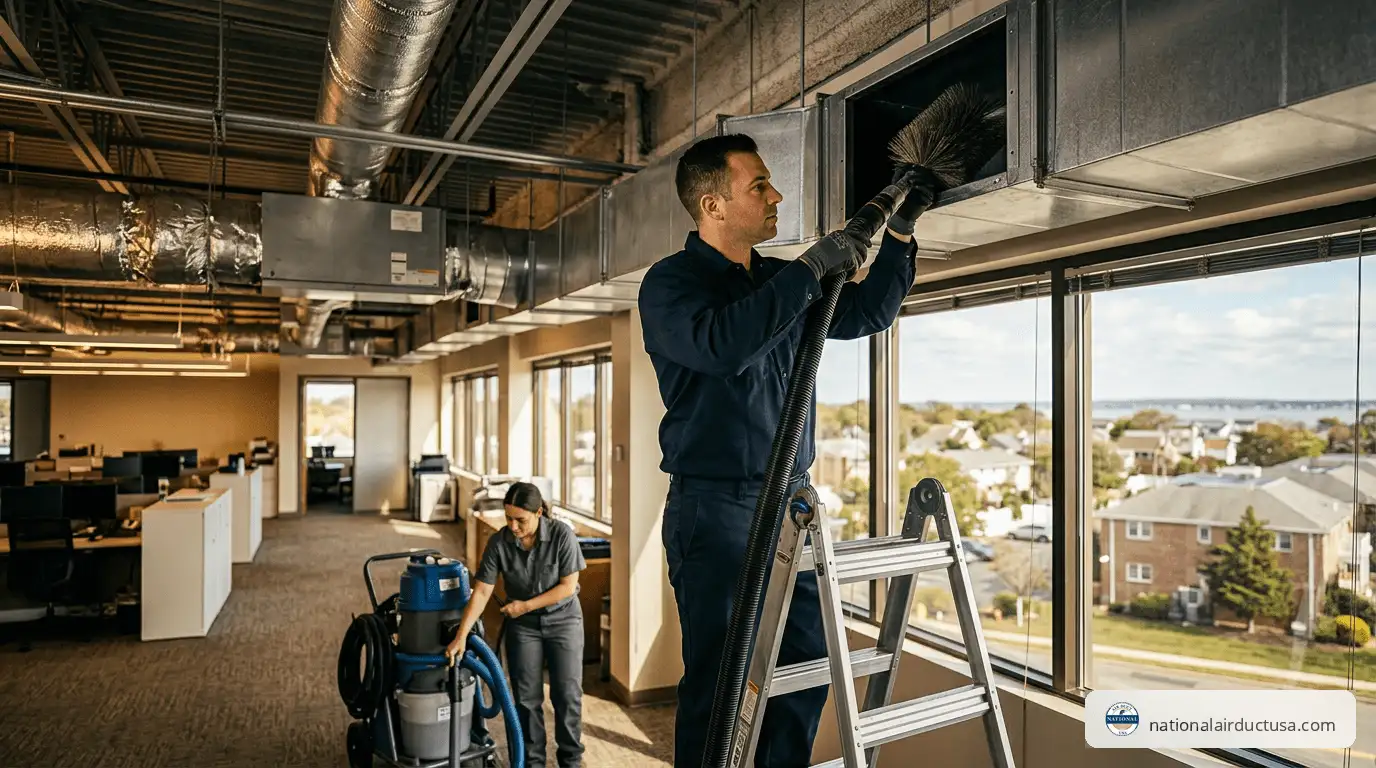
A typical commercial cleaning project begins with pre-cleaning inspection and documentation, often using video camera systems to assess contamination levels and identify problem areas. Technicians then systematically clean all accessible ductwork using negative pressure collection systems, mechanical agitation devices, and specialized tools designed for commercial-scale HVAC infrastructure.
Leading providers include several core services as part of their comprehensive air duct cleaning approach:
- Supply and return air duct cleaning: Complete removal of dust, debris, and contaminants from all accessible ductwork throughout the system
- Register and grille cleaning: Thorough cleaning of all air supply and return openings, including decorative elements
- Air handler unit service: Cleaning of blower assemblies, fan motors, housing interiors, and filter compartments
- Coil cleaning: Removal of debris from evaporator and condenser coils affecting heat transfer efficiency
- Drain pan service: Cleaning and sanitization of condensate collection systems to prevent biological growth
- System sanitization: Application of EPA-approved antimicrobial treatments to inhibit future contamination
Many commercial providers also offer complementary services including dryer duct cleaning, mold remediation, air quality testing, filter replacement programs, and preventive maintenance contracts. These integrated service offerings allow facility managers to consolidate vendors and ensure coordinated HVAC hygiene management.
How Do You Choose the Right Commercial Air Duct Cleaning Provider?
Selecting a qualified commercial duct cleaning provider requires evaluation across multiple criteria beyond basic pricing comparison. For Long Island businesses, the abundance of service providers necessitates systematic vetting to identify companies capable of delivering documented results while minimizing operational disruption.
Start with NADCA certification verification. This credential immediately separates professionally operated companies from opportunistic contractors lacking proper training or equipment. Request certification documentation, insurance certificates showing general liability and workers’ compensation coverage, and references from comparable commercial clients in your industry or building type.
Evaluate operational capacity and experience with projects similar to your facility. A provider experienced in office building cleaning in Westbury or retail spaces throughout Long Island will understand local building codes, common HVAC configurations, and coordination requirements for occupied commercial properties. Look for companies demonstrating deep market tenure and documented project portfolios.
Assessment methodology matters significantly. Quality providers conduct thorough pre-service inspections, document baseline conditions with photographs or video, and provide detailed scope-of-work proposals specifying exactly what will be cleaned and how. Avoid companies offering flat-rate pricing without physical inspection or those using high-pressure sales tactics.
| Selection Criteria | What to Verify | Red Flags |
|---|---|---|
| Certification & Credentials | Current NADCA membership, technician training | No verifiable certification, vague credentials |
| Insurance & Bonding | Proof of liability and workers’ comp coverage | Reluctance to provide certificates |
| Experience & References | Similar projects, verifiable commercial clients | No references, only residential experience |
| Process Transparency | Detailed proposals, pre/post documentation | Vague service descriptions, no inspection |
Finally, evaluate communication practices and business professionalism. Quality providers maintain regular communication throughout projects, accommodate facility-specific scheduling needs, and stand behind their work with satisfaction guarantees or warranty coverage. These operational characteristics often distinguish premium providers from commodity-focused competitors.
How Often Should Commercial Properties Schedule Air Duct Cleaning?
Commercial air duct cleaning frequency depends on building type, occupancy patterns, HVAC system usage, and indoor environmental conditions. While residential properties may clean ducts every 3 to 5 years, commercial facilities typically require more frequent service due to higher air volume processing, extended operating hours, and greater contamination exposure.
NADCA recommends professional inspection and cleaning “as needed” based on system condition rather than arbitrary time intervals. For most commercial properties in Long Island, this translates to professional assessment every 1 to 3 years, with actual cleaning performed based on documented contamination levels, visible debris accumulation, or operational performance indicators.
Certain property types and operational scenarios warrant more aggressive cleaning schedules. Medical facilities, restaurants, manufacturing environments, and properties with high foot traffic typically require annual or even bi-annual service. Buildings experiencing water damage, renovation projects, or pest infestations should schedule immediate post-remediation cleaning regardless of previous service timing.
Facility managers can monitor several indicators suggesting the need for professional cleaning between scheduled services. Visible dust accumulation around registers, musty odors when the HVAC system operates, inconsistent airflow across zones, and increased occupant complaints about air quality or allergic symptoms all warrant professional inspection. For guidance on optimal cleaning frequency for Long Island properties, consult with NADCA-certified providers familiar with local environmental conditions.
What Are the Key Benefits for Commercial Properties?
Professional commercial air duct cleaning delivers measurable benefits extending beyond basic cleanliness to impact operational efficiency, occupant health, and facility management effectiveness. For Long Island businesses, these advantages translate to tangible return on investment through reduced operating costs and improved workplace environments.
Energy efficiency improvements represent one of the most quantifiable benefits. Clean HVAC systems operate with less resistance, allowing air handlers to move conditioned air more efficiently throughout the facility. Reduced system runtime and lower energy consumption directly impact utility costs, with some facilities reporting energy savings of 15 to 25 percent following comprehensive cleaning and system optimization.
Indoor air quality enhancement addresses growing concerns about workplace health and productivity. Research increasingly links poor indoor air quality to reduced cognitive performance, increased sick days, and lower employee satisfaction. Professional duct cleaning removes accumulated allergens, dust, and biological contaminants that circulate through occupied spaces, creating healthier work environments and potentially reducing health-related absenteeism.
System longevity and maintenance cost reduction occur when HVAC components operate under optimal conditions. Dust and debris accumulation forces motors, blowers, and heat exchangers to work harder, accelerating wear and increasing failure risk. Regular professional cleaning extends equipment life, reduces emergency repair frequency, and helps preserve manufacturer warranty coverage that may require documented maintenance compliance.
Regulatory compliance and risk mitigation matter particularly for healthcare facilities, food service operations, and buildings subject to indoor air quality regulations. Professional cleaning provides documentation for facility management records, lease compliance requirements, and health department inspections. For businesses concerned about health implications of contaminated duct systems, preventive cleaning represents proactive risk management.
People Also Ask
How much does commercial air duct cleaning cost in Long Island?
Commercial air duct cleaning costs in Long Island typically range from $500 to $5,000+ for standard facilities, with larger buildings or contaminated systems requiring $10,000 to $50,000+ depending on system size, contamination levels, and service scope. Pricing varies significantly based on building square footage, ductwork configuration, and accessibility requirements.
What is NADCA certification and why does it matter?
NADCA (National Air Duct Cleaners Association) certification verifies that air duct cleaning companies meet industry standards for equipment, training, and procedures. For commercial properties, NADCA certification ensures vendors follow established cleaning protocols and maintain appropriate insurance coverage and technical competency.
How long does commercial air duct cleaning take?
Commercial air duct cleaning duration varies from several hours for small retail spaces to multiple days for large office buildings or complex facilities. Most medium-sized commercial properties require 4 to 12 hours of on-site work, with timing dependent on system size, contamination levels, and whether work occurs during business hours or after-hours.
Will air duct cleaning disrupt business operations?
Professional commercial air duct cleaning can be scheduled to minimize operational disruption, with many providers offering after-hours or weekend service. During cleaning, some noise occurs from equipment operation, and certain HVAC zones may temporarily lose climate control, but experienced providers coordinate timing to reduce impact on business activities.
Can dirty air ducts cause employee health problems?
Contaminated air ducts can circulate allergens, dust, mold spores, and other irritants that may trigger respiratory symptoms, allergic reactions, or exacerbate existing health conditions among building occupants. While not all health issues stem from duct contamination, professional cleaning removes accumulated pollutants and improves overall indoor air quality for occupant health and comfort.
Do commercial buildings need air duct cleaning more often than homes?
Yes, commercial buildings typically require more frequent air duct cleaning than residential properties due to higher occupancy levels, extended HVAC operating hours, greater contamination exposure, and larger air volume processing. Most commercial facilities benefit from professional inspection every 1 to 3 years, compared to 3 to 5 years for residential properties.
Key Takeaways
- Commercial air duct cleaning services in Long Island NY serve both Nassau and Suffolk counties through NADCA-certified providers offering comprehensive HVAC hygiene solutions for diverse commercial property types.
- NADCA certification represents the industry’s leading credential, ensuring providers follow established standards, maintain proper insurance, and demonstrate verifiable technical competency for commercial cleaning projects.
- Commercial cleaning costs range from $500 to $5,000+ for typical facilities, with pricing dependent on system size, contamination levels, building access, and service scope rather than fixed rates.
- Professional services extend beyond basic duct cleaning to include air handler service, coil cleaning, sanitization, air quality testing, and integrated indoor environmental quality management.
- Commercial properties typically require inspection and cleaning every 1 to 3 years, with frequency adjusted for building type, occupancy patterns, and operational conditions.
- Key benefits include improved energy efficiency (15 to 25 percent savings potential), enhanced indoor air quality, extended HVAC system longevity, and documented compliance for facility management requirements.
- Provider selection should prioritize NADCA certification, insurance verification, documented commercial experience, transparent processes, and references from comparable projects rather than lowest-cost options.
Frequently Asked Questions
What areas of Long Island do commercial air duct cleaning services cover?+
Most established commercial air duct cleaning providers serve all of Nassau and Suffolk counties, including major business districts in Garden City, Westbury, Hauppauge, Melville, and surrounding communities. Many providers extend coverage to New York City boroughs, Westchester County, and parts of Connecticut for multi-location commercial clients requiring coordinated service across broader geographic areas.
Does commercial air duct cleaning improve HVAC efficiency?+
Yes, professional air duct cleaning typically improves HVAC efficiency by removing obstructions that impede airflow and force systems to work harder. Clean ducts reduce resistance throughout the air distribution system, allowing equipment to operate at design specifications with lower energy consumption. Many facilities report measurable utility cost reductions following comprehensive cleaning and system optimization.
What documentation should commercial air duct cleaners provide?+
Professional commercial providers should supply pre-service inspection reports with photographic or video documentation, detailed scope-of-work proposals, proof of NADCA certification, current insurance certificates, post-cleaning verification showing completed work, and service records for facility management files. This documentation supports compliance requirements, warranty maintenance, and future service planning.
Is air duct sanitization necessary after cleaning?+
Air duct sanitization using EPA-approved antimicrobial treatments is often recommended following mechanical cleaning, particularly for healthcare facilities, food service operations, or systems with previous mold contamination. Sanitization helps inhibit biological growth between cleaning cycles, though proper moisture control and regular maintenance remain the primary contamination prevention strategies.
Can air duct cleaning help with odor problems in commercial buildings?+
Professional air duct cleaning often eliminates persistent odors caused by accumulated dust, biological growth, or contaminants trapped in ductwork. However, odors originating from sources outside the duct system (such as plumbing issues, building materials, or external infiltration) require separate remediation. Camera inspection during cleaning can help identify odor sources within HVAC infrastructure.
Do commercial tenants or building owners pay for duct cleaning?+
Responsibility for air duct cleaning costs depends on lease terms and building ownership structure. In triple-net leases, tenants typically bear maintenance costs including HVAC service, while gross leases usually assign system maintenance to building owners. For multi-tenant properties with shared HVAC systems, building owners generally manage and fund central system cleaning as a capital maintenance expense.
How do I verify a company’s NADCA certification?+
You can verify NADCA certification directly through the association’s online member directory at nadca.com, which lists certified companies by location and service type. Request certification documentation from prospective providers and confirm membership status, as certification requires ongoing compliance with standards, continuing education, and dues payment that inactive companies may let lapse.
Protect Your Commercial Investment with Professional Air Duct Cleaning
Maintaining clean, efficient HVAC systems directly impacts your facility’s operational costs, occupant health, and long-term asset value. For commercial properties throughout Nassau and Suffolk counties, professional air duct cleaning represents preventive maintenance that pays measurable dividends in energy savings, system longevity, and indoor environmental quality.
Contact National Air Duct for Professional Commercial Services
Related: How Much for Dryer Vent Cleaning in Long Island NY: Complete 2026 Cost Guide
Related: How Much Is Dryer Vent Cleaning in New York: Complete 2026 Pricing Guide
Related: Commercial HVAC Duct Cleaning Services in Long Island NY: Complete 2026 Guide
Schedule a comprehensive HVAC system assessment with Long Island’s trusted NADCA-certified professionals. Request your custom commercial service proposal today.