How to Improve Indoor Air Quality at Home in New York: The Complete 2026 Guide
Quick Answer
The fastest way to improve indoor air quality at home in New York is to control pollution sources (no indoor smoking, vented cooking exhaust, no candles or harsh cleaners), run HVAC systems on recirculate during wildfire smoke or high-AQI days, and add HEPA filtration plus humidity control year-round. New York’s climate swings from humid summers to dry, tightly-sealed winters, so a layered approach of source control, ventilation timing, and filtration works best across all five boroughs and Long Island.
Why Does Indoor Air Quality Matter So Much in New York Homes?
Most New Yorkers spend the majority of their day indoors, in prewar apartments in Brooklyn, radiator-heated co-ops on the Upper West Side, or single-family homes across Nassau and Suffolk counties, which means the air trapped inside these spaces matters more than most people realize. Learning how to improve indoor air quality at home in New York isn’t just a wellness trend; it’s a direct response to a climate that swings between smoky summer skies, humid heat waves, and long, dry heating seasons that can trap pollutants indoors for months at a time.
New York’s housing stock adds complexity. Many buildings are decades old, with aging ductwork, inconsistent ventilation, and steam or forced-air heating systems that recirculate dust, allergens, and combustion byproducts. Add wildfire smoke events, seasonal humidity, and dense urban traffic pollution, and it’s clear why state and city health agencies keep repeating the same guidance: control what you can control indoors, because you can’t control what’s happening outside your window.
What Does the Latest New York Air Quality Data Show?
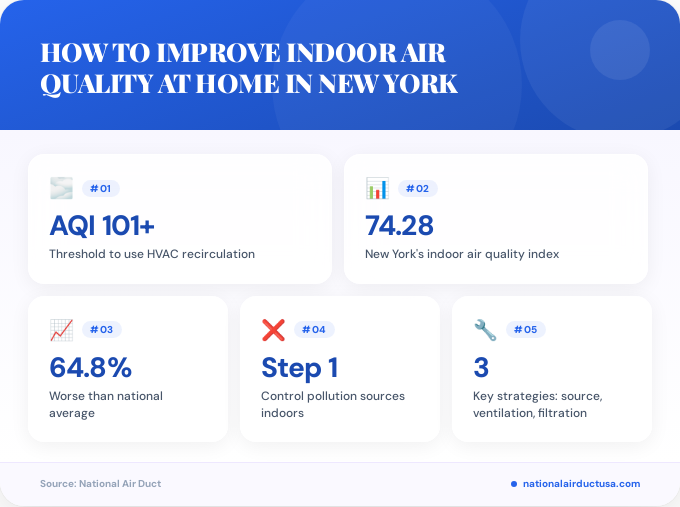
During the 2026 Canadian wildfire smoke episodes, NYC Emergency Management’s official guidance advised residents to keep windows and doors closed and run air conditioning or HVAC systems in recirculation mode once outdoor AQI reached 101 or higher. At AQI 151 and above, the guidance escalated further: move activities indoors entirely and limit outdoor time, especially for children, older adults, and people with asthma or COPD.
Separately, a 2026 news analysis of compiled air-quality data reported New York’s indoor air quality index at 74.28, with a January 2026 mean PM2.5 reading of 7.93, and a comparison suggesting New York’s index was roughly 64.8% worse than the national average. This should be treated as a secondary data point rather than official state surveillance, but it lines up with what public health officials have long warned: dense housing, older buildings, and heavy heating-season use all compound indoor pollution risk.
The American Lung Association’s State of the Air 2026 report also underscores that fine particulate matter and ozone remain persistent challenges in the New York metro region, reinforcing why indoor strategies matter as a buffer against outdoor conditions that residents can’t directly control.
“Indoor air quality isn’t just about opening a window anymore. In New York, it’s about timing ventilation around outdoor conditions, maintaining HVAC systems properly, and controlling humidity in buildings that were never designed for today’s tighter building envelopes,” note HVAC specialists interviewed in a recent roundup of NYC HVAC winter indoor air quality tips.
How Do You Control Pollution Sources Indoors?
Public health guidance from New York State and NYC Health consistently ranks source control as the single most effective indoor air quality strategy, ahead of any filter or gadget. That means eliminating or reducing the things that generate pollution in the first place.
- No indoor smoking or vaping, which can spike particulate matter indoors well beyond outdoor wildfire smoke levels
- Skip candles, incense, and air fresheners, which release volatile organic compounds (VOCs) and fine particles even when labeled “natural”
- Use vented range hoods when cooking, especially with gas stoves, since unvented cooking is a major indoor PM2.5 source
- Avoid harsh chemical cleaners in favor of fragrance-free, low-VOC alternatives
- Fix leaks quickly to prevent mold growth, a chronic problem in older New York buildings with aging plumbing and poor insulation
The EPA’s Care for Your Air guide confirms that source control is more cost-effective long-term than trying to filter out pollution after it’s already airborne. A peer-reviewed study in the National Institutes of Health’s PMC database similarly found that reducing indoor combustion sources produced measurably greater air quality improvements than filtration alone in residential settings.
When Should You Ventilate vs. Seal Your Home?
Ventilation timing is one of the most misunderstood parts of indoor air quality in New York. The rule from state guidance is straightforward: if outdoor air quality is unhealthy, keep it out; if outdoor air improves, open up and ventilate.
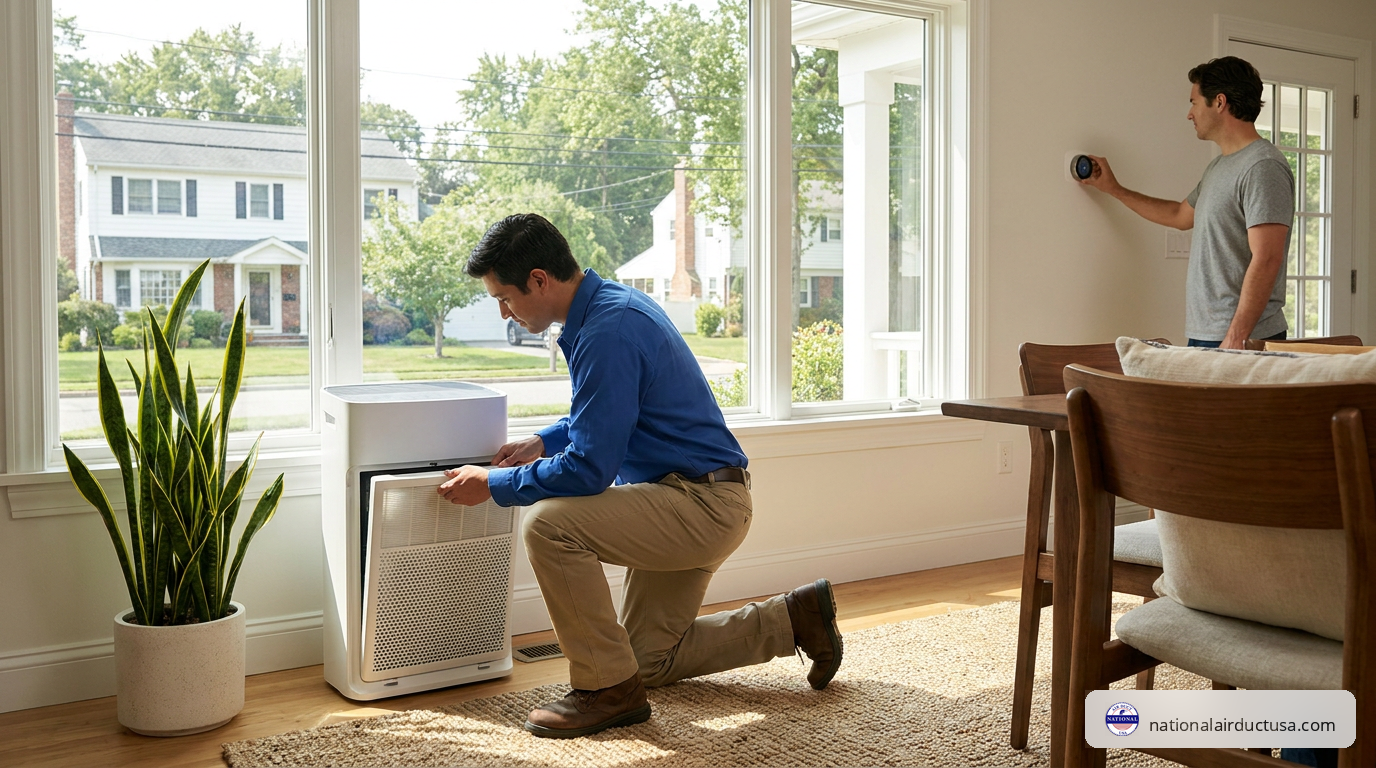
During wildfire smoke advisories, like those covered by ABC7 New York’s air quality advisory reporting, the recommendation flips completely from typical “fresh air is always better” advice. Close windows, set HVAC to recirculate, and designate one room as a clean-air space with a portable HEPA unit running continuously.
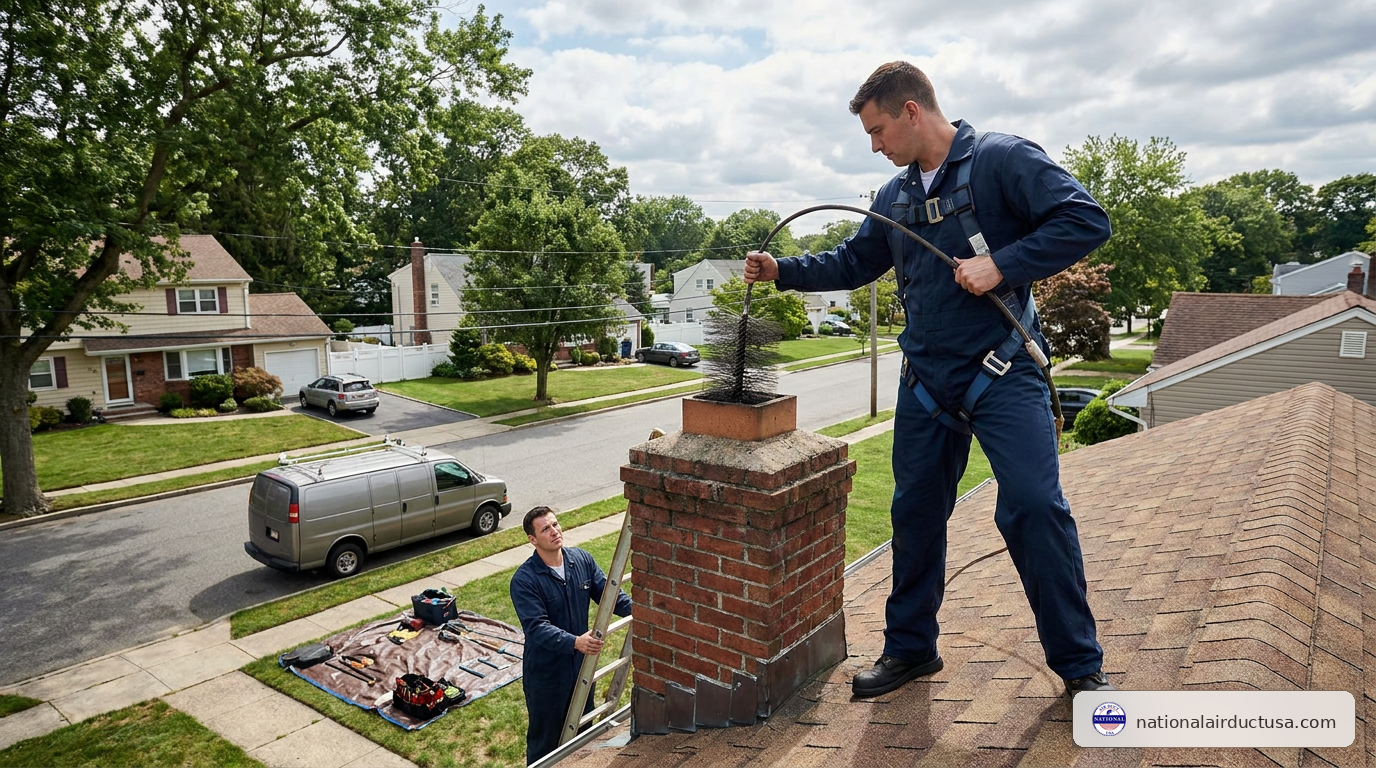
In winter, New York’s heating season creates a different challenge. Homes get sealed tightly to conserve energy, which traps moisture, dust, and combustion byproducts from furnaces and boilers. This is precisely when scheduled maintenance matters, including furnace chimney cleaning in New York to prevent combustion gases from backing up into living spaces.
What Filtration and Dehumidification Tools Actually Work?
Once source control and ventilation timing are handled, filtration and humidity control round out the strategy. HEPA air purifiers are increasingly mainstream in New York homes, particularly for creating “clean air spaces” during smoke events, a practice explicitly recommended in NYC preparedness guidance.
- Portable HEPA units: best for single rooms, bedrooms, or designated clean-air spaces during smoke events
- MERV 13 HVAC filters: capture fine particulates through central systems if your equipment can handle the airflow restriction
- Dehumidifiers: critical during New York’s humid summer months to keep indoor humidity between 30-50% and prevent mold
- Avoid ozone-generating air cleaners, which state guidance specifically warns against because they can create secondary pollutants
Humidity control deserves special attention in New York because leaks, condensation, and mold are recurring problems in both older housing stock and newer, tightly sealed homes. NYSERDA has positioned indoor air quality as a building-health and energy-efficiency issue, recommending preventive maintenance and regular testing when dust, odors, or mold persist, a stance echoed by the Environmental Law Institute’s profile of New York’s indoor air cleaner programs.
How Does HVAC Maintenance Affect Indoor Air Quality?
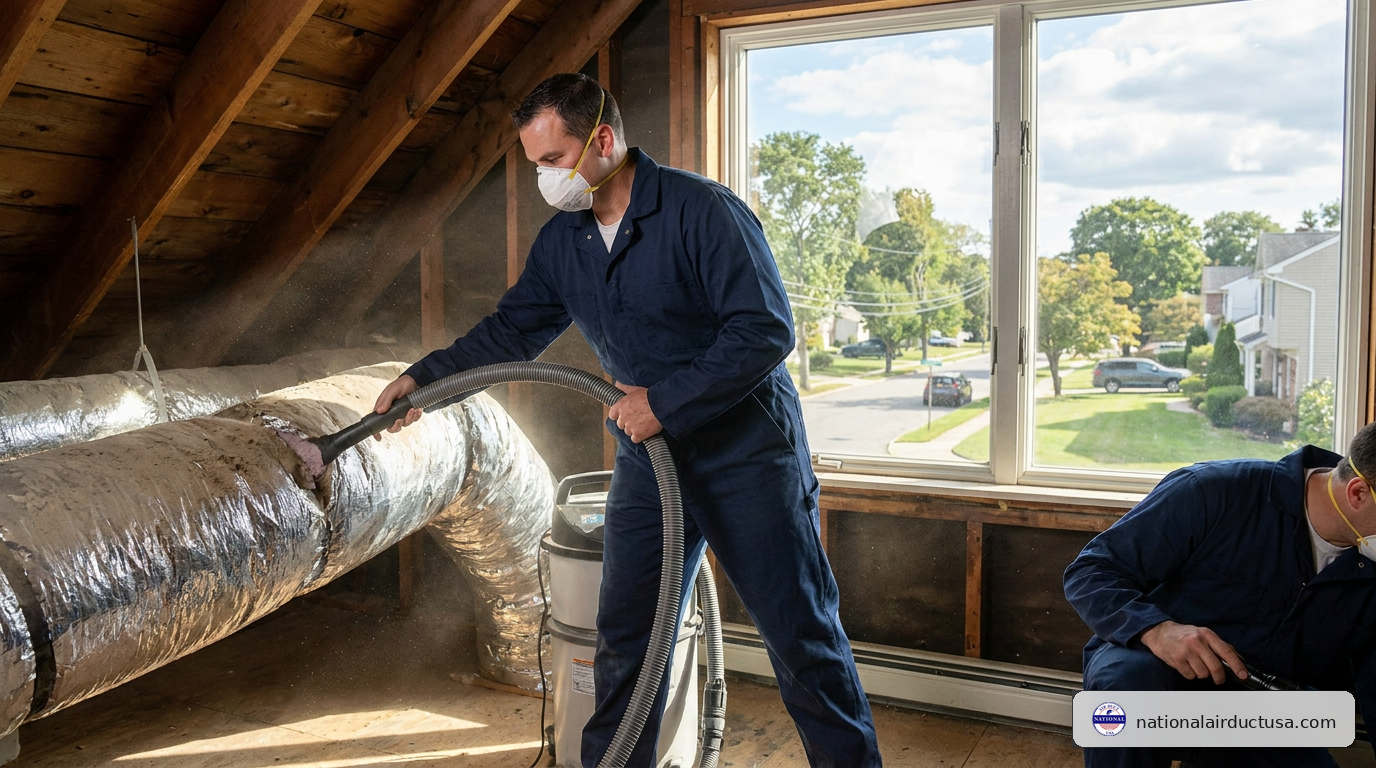
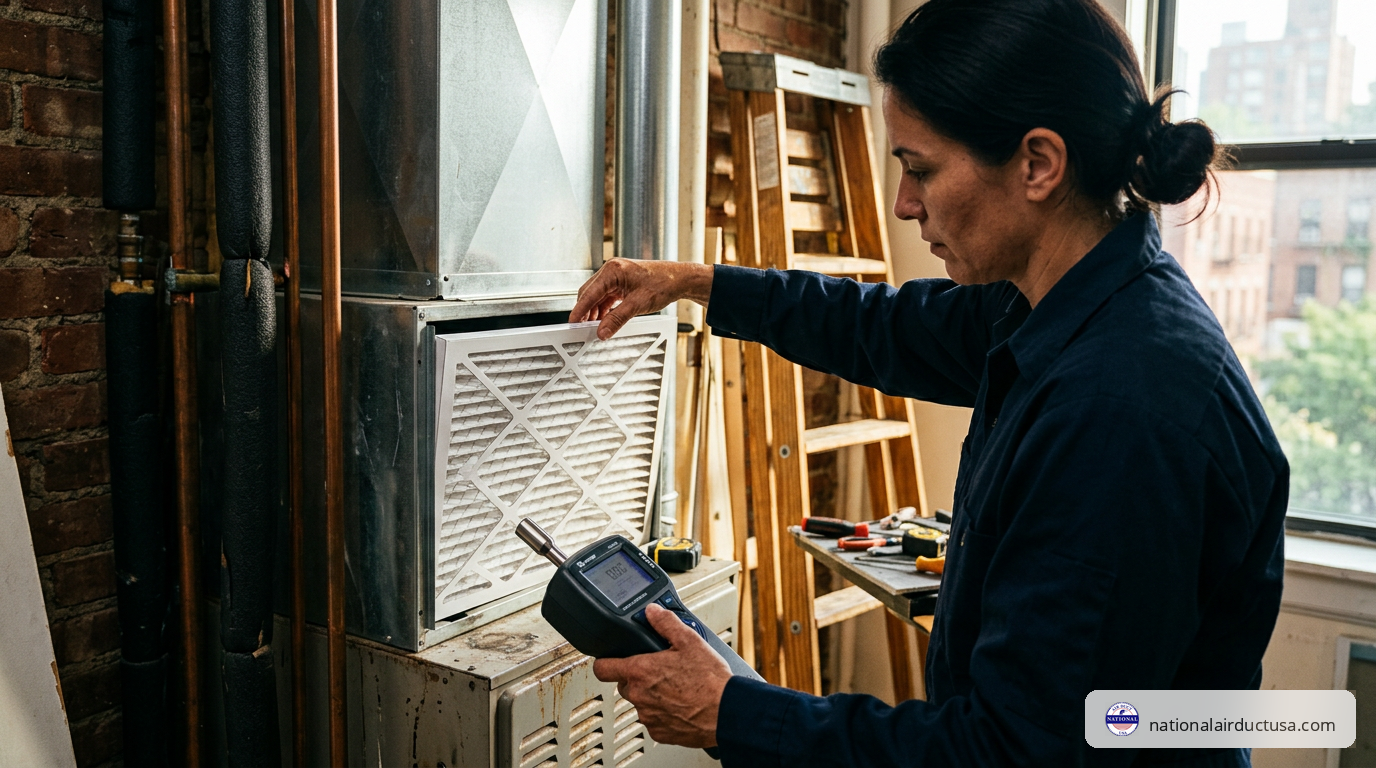
Your HVAC system is either helping or actively working against your indoor air quality goals, depending on how well it’s maintained. Dust, dander, and debris accumulate in ductwork over years of use, and every time the system runs, it can redistribute that buildup throughout your home.
This is why demand for HVAC cleaning, filtration upgrades, and system commissioning is rising across the state. Homeowners preparing for a seasonal changeover should review a proper duct cleaning checklist for New York homes before heating season begins, since ducts that haven’t been serviced in years can harbor mold spores, dust mites, and pest debris.
Homeowners on Long Island dealing with musty odors or visible dust buildup often ask whether duct cleaning actually improves air quality, and the evidence-based answer is that it helps most when paired with source control and filtration upgrades, not as a standalone fix. For homes with persistent allergy symptoms, understanding how duct cleaning affects dust mite populations can clarify expectations before booking service.
Oil-heated homes across Long Island face an added layer of maintenance need. Regular oil furnace chimney cleaning prevents soot and creosote buildup from affecting both combustion efficiency and indoor air safety.
Indoor Air Quality Strategies Compared
| Strategy | Best Use Case in New York | Effectiveness |
|---|---|---|
| Source control (no smoking, vented cooking) | Year-round, all housing types | Highest impact, lowest cost |
| HEPA portable filtration | Wildfire smoke days, bedrooms | High for PM2.5 reduction |
| HVAC/duct cleaning and maintenance | Pre-heating season, older homes | Moderate to high, compounding |
| Dehumidification | Humid summer months, basements | High for mold prevention |
What New York Policies and Programs Should You Know About?
New York policymakers are actively expanding indoor air quality oversight. Proposed 2025 legislation, detailed in New York State Assembly Bill A05078, would create formal indoor air quality inspection and guidance programs, though this reflects policy momentum rather than current enforcement.
At the city level, NYC Council legislation tracked through the Legistar system has moved to tighten school standards for measurable contaminants including CO2, CO, PM2.5, and PM10, a signal that finer-grained monitoring is becoming standard practice across New York’s institutions and, increasingly, expected in residential settings too.
Homeowners searching for certified professionals as this landscape shifts can review the complete guide to indoor air quality councils and certified services in New York to understand what credentials and inspections actually mean.
Key Takeaways
- Source control (no smoking, vented cooking, no candles or harsh cleaners) delivers the biggest indoor air quality improvement for the lowest cost
- Close windows and run HVAC on recirculate when outdoor AQI hits 101+; escalate precautions at AQI 151+
- New York’s indoor air quality index has been estimated at 74.28, notably worse than the national average, according to 2026 compiled data
- Humidity control between 30-50% prevents mold, a chronic issue in both older and newly sealed New York homes
- HVAC and duct maintenance compounds the benefits of filtration and source control, especially before heating season
- Avoid ozone-generating air cleaners; stick with HEPA filtration recommended by state guidance
- New York policy is moving toward more formal indoor air quality inspection programs and stricter institutional standards
People Also Ask
What is the fastest way to improve indoor air quality in a New York apartment?
Stop indoor pollution sources first: no smoking, no candles, and always use a vented range hood while cooking. Add a portable HEPA air purifier in your bedroom or main living space for immediate, measurable PM2.5 reduction.
Should I open windows during wildfire smoke events in NYC?
No. NYC Emergency Management guidance advises keeping windows and doors closed once outdoor AQI reaches 101 or higher, and running AC or HVAC systems in recirculation mode instead.
Does duct cleaning really improve indoor air quality in New York homes?
Duct cleaning helps most when combined with source control and filtration upgrades, particularly in older homes with years of dust and debris buildup. It’s not a standalone fix but a valuable part of a layered strategy.
What humidity level should New York homes maintain?
Aim for 30-50% indoor relative humidity year-round. This range prevents mold growth during humid summers while avoiding overly dry air during winter heating season.
Frequently Asked Questions
How often should I replace HVAC filters in New York?
Most homes should replace filters every 60-90 days, but during wildfire smoke season or heavy winter heating use, check monthly since New York’s fine particulate levels can clog filters faster than in less dense regions.
How much does professional air duct cleaning cost in New York?
Pricing varies based on your specific project, including home size, duct accessibility, system complexity, and whether additional services like sanitizing or dryer vent cleaning are included; costs can range from a few hundred dollars to well over a thousand for larger properties. Contact a licensed provider for a custom quote tailored to your home.
What are the warning signs that my ducts need cleaning?
Visible dust around vents, musty odors when the system runs, increased allergy symptoms indoors, and uneven airflow are common indicators. Review a full list of signs your air ducts need cleaning in New York to assess your home.
Are air purifiers with ozone generation safe to use?
No. New York state guidance specifically advises against ozone-generating air cleaners because they can create secondary pollutants that worsen indoor air quality rather than improve it. Stick with HEPA filtration instead.
Why is mold such a common problem in New York homes?
Older housing stock combined with humid summers and condensation from tightly sealed winter homes creates ideal mold conditions. Fixing leaks promptly and maintaining 30-50% indoor humidity are the two most effective prevention steps.
Does secondhand research support indoor air quality concerns in older buildings?
Yes. Peer-reviewed research published on PubMed has documented links between indoor pollutant exposure and respiratory health outcomes, reinforcing why source control and ventilation timing matter in dense, older housing stock like much of New York’s.
Related: Air Duct Cleaning Cost Per Vent in New York: 2026 Pricing Guide
Improving indoor air quality at home in New York isn’t a one-time project, it’s an ongoing combination of smart habits, seasonal awareness, and properly maintained systems. Whether you’re in a Queens co-op, a Staten Island single-family home, or a Long Island house on well water and oil heat, the fundamentals stay the same: control your sources, time your ventilation, and maintain your equipment. If your ductwork, chimney, or HVAC system hasn’t been inspected recently, now is the time to request a professional assessment and learn more about our approach to indoor air quality services at National Air Duct.
Further reading: HVAC System Maintenance Checklist in Long Island NY: The Complete 2026 Homeowner Guide
Further reading: How to Improve Indoor Air Quality in Long Island NY