HVAC System Maintenance Checklist in Long Island NY: The Complete 2026 Homeowner Guide
Quick Answer
A complete HVAC system maintenance checklist in Long Island NY includes monthly filter checks, seasonal coil and drain cleaning, spring cooling tune-ups, fall heating inspections, and at least one annual licensed technician visit covering electrical, refrigerant, and safety components. Homeowners who follow this schedule typically avoid the airflow losses and breakdowns that peak during Long Island’s humid summers and damp coastal winters.
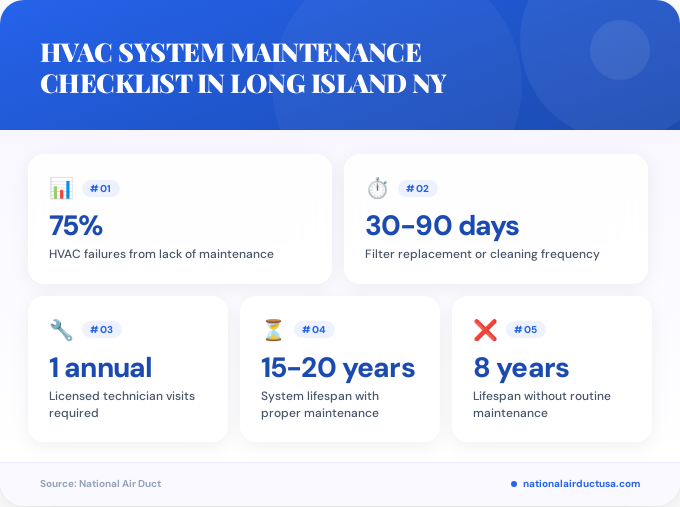
Nearly 75% of HVAC system failures trace back to a lack of routine maintenance, yet most Long Island homeowners only think about their heating and cooling equipment once it stops working. An HVAC system maintenance checklist in Long Island NY isn’t a nice-to-have, it’s the difference between a system that lasts 15 to 20 years and one that limps along for eight before an expensive replacement. Between Nassau County’s humid summers and Suffolk County’s coastal salt air, local systems face conditions that push components harder than in drier inland climates.
This guide breaks down exactly what to check, when to check it, and when to call a licensed technician instead of tackling it yourself. Whether you’re in Huntington, Massapequa, Babylon, or out toward the Hamptons, the fundamentals stay the same, though timing shifts slightly based on your microclimate and proximity to the water.
Why Does HVAC Maintenance Matter So Much on Long Island?
Long Island’s climate is uniquely demanding on HVAC equipment. Summers bring heavy humidity off the Atlantic and Long Island Sound, forcing air conditioners to work overtime removing moisture, not just heat. Winters swing between damp coastal chill and sharp cold snaps, meaning furnaces and heat pumps cycle constantly through wide temperature swings.
According to ENERGY STAR’s official heating and cooling maintenance checklist, neglected systems lose efficiency gradually and often without obvious symptoms until a full breakdown occurs. A dirty filter, a clogged drain line, or worn electrical contacts rarely announce themselves loudly. They just quietly cost you money every single month.
Homes across Nassau and Suffolk Counties also deal with pollen-heavy springs, salt-air corrosion near the coast, and older housing stock with ductwork that’s decades old. That combination makes proactive maintenance, not reactive repair, the smarter long-term strategy for anyone serious about comfort and utility costs.
What Should a Long Island HVAC Maintenance Checklist Include?
A thorough checklist blends simple homeowner tasks with items only a licensed technician should handle. Skipping either half leaves gaps that eventually turn into costly repairs.
Homeowner-Level Tasks
- Replace or clean air filters every 30 to 90 days. ENERGY STAR recommends monthly checks for central AC, furnaces, and heat pumps, especially during peak usage months.
- Check thermostat settings and calibration to confirm the system responds correctly and setback schedules are actually saving energy.
- Inspect supply and return vents throughout the house to make sure furniture, rugs, or storage bins aren’t blocking airflow.
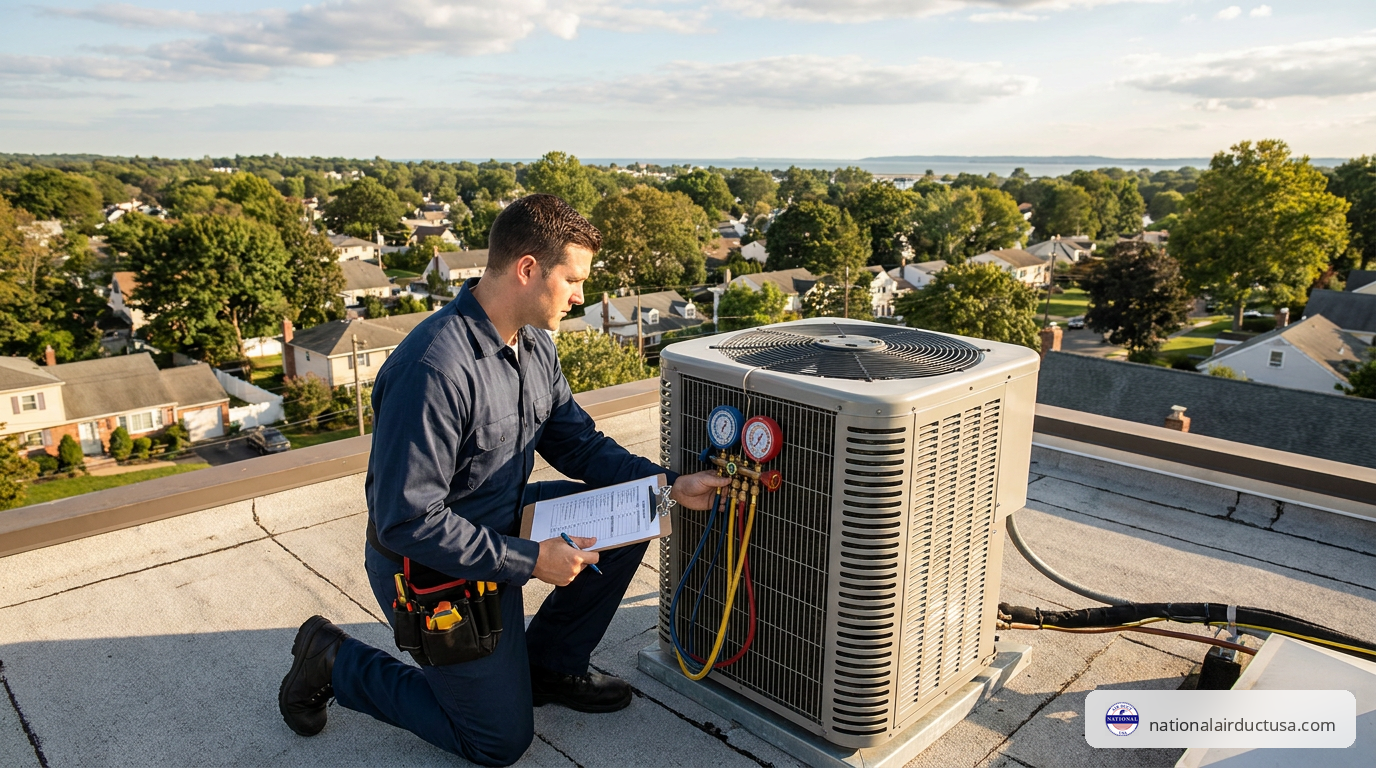
- Clear debris around the outdoor condenser unit, removing leaves, grass clippings, and clutter that restrict airflow, a step Long Island-specific summer maintenance guidance highlights repeatedly for coastal humidity conditions.
- Watch for unusual noises, odors, or vibration and log dates so patterns are easier to spot.
Licensed Technician Tasks
- Clean evaporator and condenser coils, since dirty coils reduce cooling capacity and force the system to run longer for the same result.
- Inspect condensate drain lines and pans to prevent water damage, mold growth, and humidity problems common in Long Island’s damp summers.
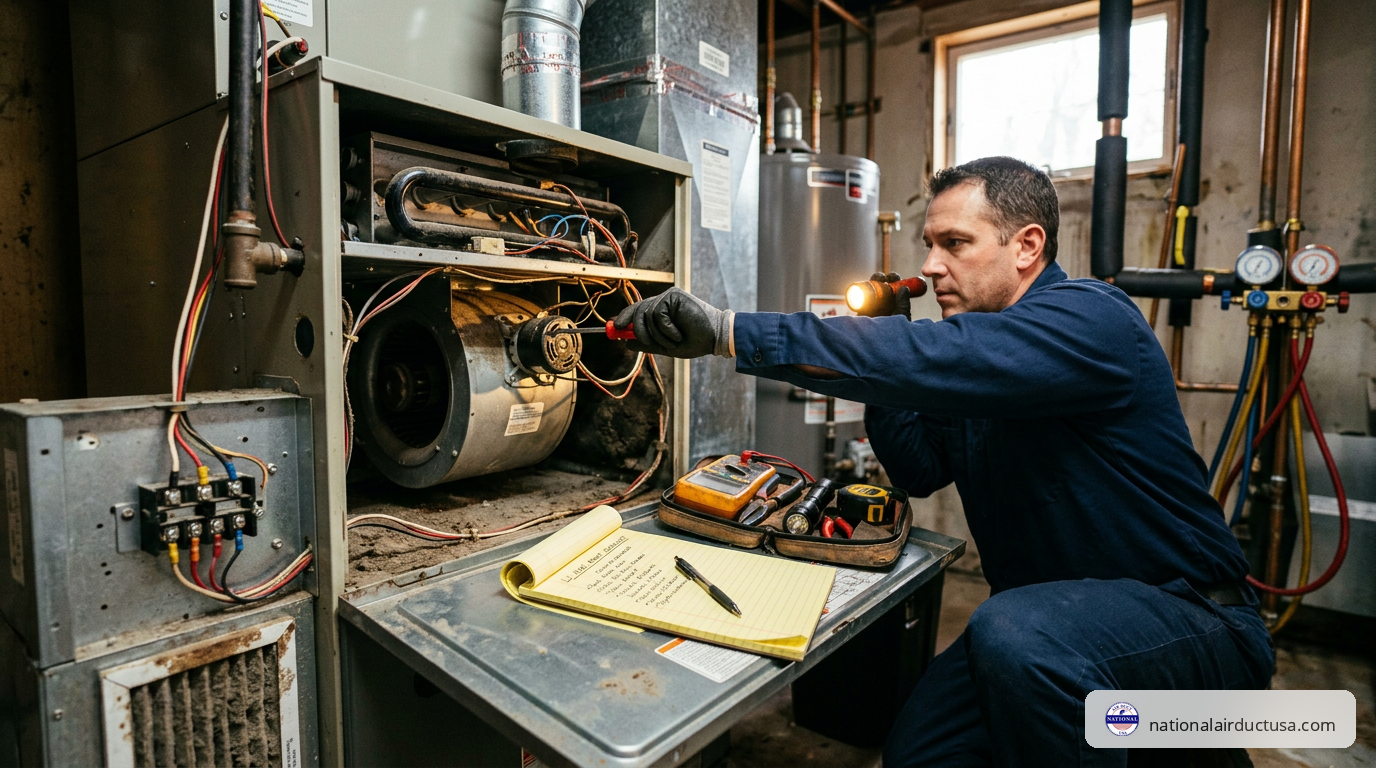
- Check electrical connections, capacitors, and contactors for tightness, overheating, pitting, or discoloration.
- Verify refrigerant charge and inspect for leaks, a step the American Home Shield DIY inspection guide notes should never be attempted without proper certification and equipment.
- Test blower components and airflow performance, since airflow problems can reduce system efficiency by up to 15%.
- Inspect combustion and safety components on gas or oil systems, including burner operation and heat exchanger condition.
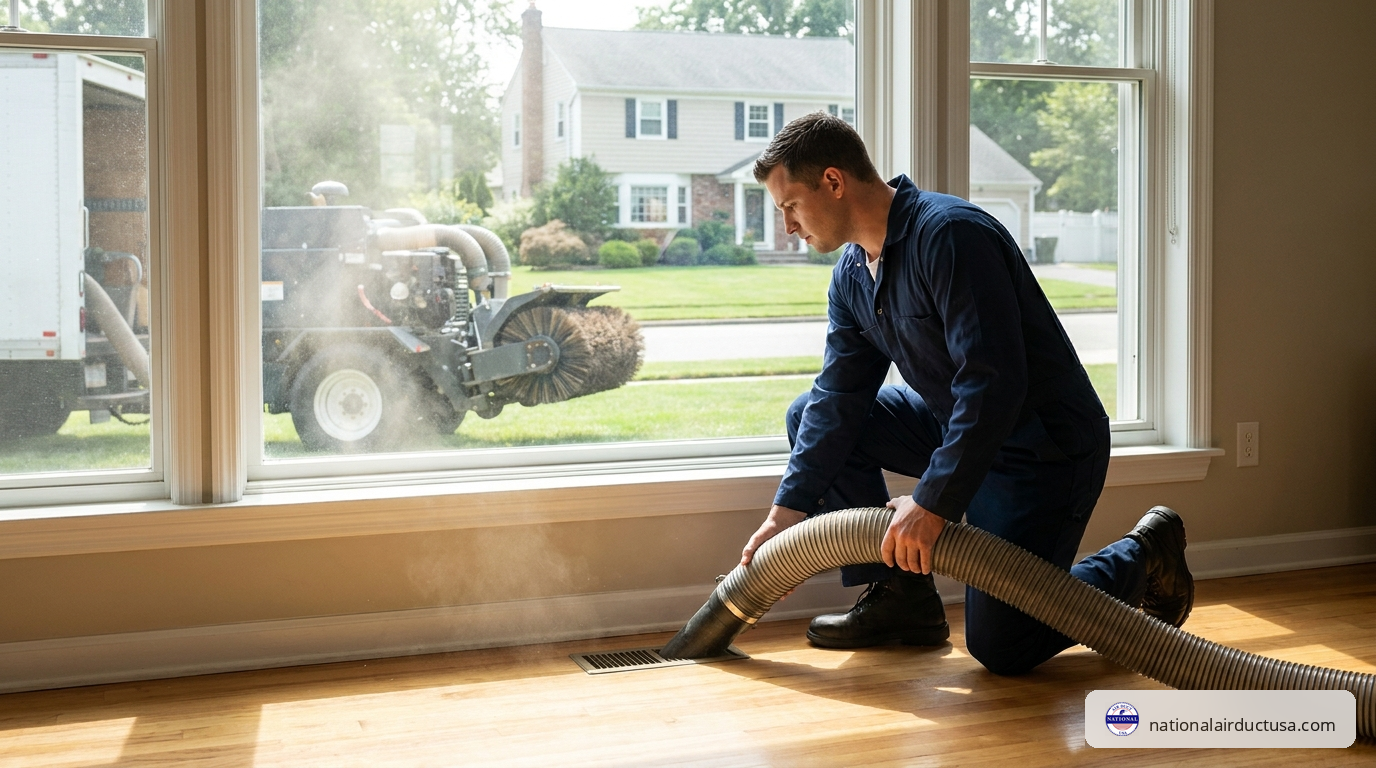
If your ductwork hasn’t been professionally cleaned in several years, it’s worth pairing your maintenance visit with professional HVAC system cleaning to address dust, allergens, and buildup that filters alone can’t catch.
What Is the Best Seasonal HVAC Schedule for Long Island Homes?
Timing matters as much as the tasks themselves. Long Island’s shoulder seasons (spring and fall) are the ideal windows to catch problems before extreme heat or cold exposes them.
| Season | Primary Focus | Who Should Do It |
|---|---|---|
| Monthly | Filter checks, thermostat function, vent obstructions | Homeowner |
| Spring | Cooling tune-up, coil cleaning, refrigerant check, drain flush | Licensed technician |
| Summer | Outdoor unit clearance, monitor for airflow loss or ice buildup | Homeowner |
| Fall | Furnace/boiler/heat pump inspection, combustion safety checks | Licensed technician |
| Annually | Full electrical, refrigerant, and safety inspection | Licensed technician |
This cadence aligns closely with recommendations from New York HVAC seasonal maintenance scheduling guidance, which stresses that homes in coastal and humid regions benefit from tightening the standard national schedule by a few weeks in each direction. Long Island’s high spring pollen count and August humidity peaks both argue for scheduling your cooling tune-up in April rather than June.
If you’re also managing indoor air quality concerns alongside your maintenance routine, our guide on improving indoor air quality at home in New York covers complementary steps worth pairing with your HVAC checklist.
DIY Tasks vs. Professional Service: What’s the Difference?
Not every checklist item belongs to the homeowner, and knowing the line prevents both wasted money and voided warranties.
Vent clearing: Yes
Outdoor unit debris removal: Yes
Thermostat programming: Yes
Electrical component testing: Yes
Coil deep-cleaning: Yes
Combustion safety checks: Yes
Drain line flushing: Pro-led
Annual full-system checkup: Pro-led
A structured preventive maintenance approach, as detailed in the complete HVAC preventive maintenance PM guide, treats these categories as complementary rather than either/or. Homeowners handling the light monthly tasks actually make the professional visits faster and cheaper, since technicians spend less time on basic troubleshooting and more on precision diagnostics.
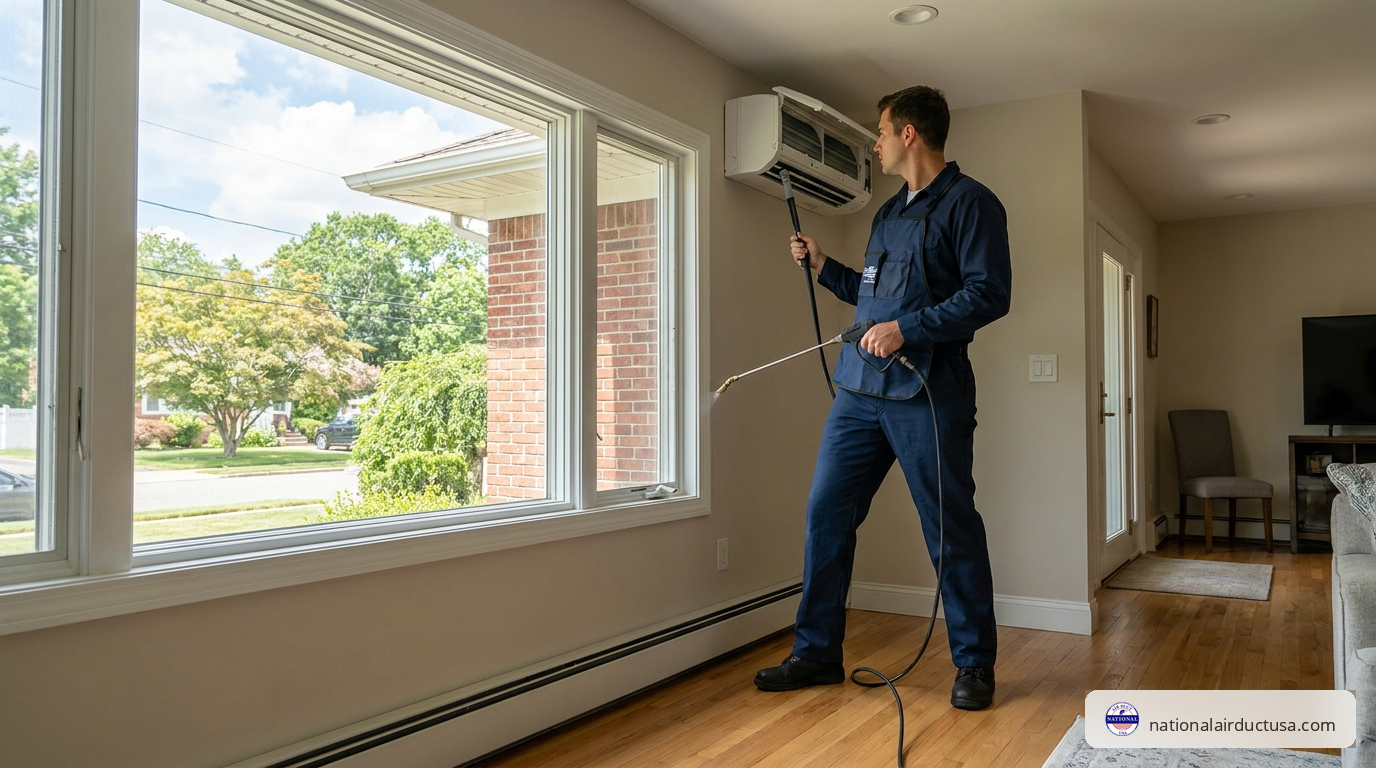
If you run a ductless system in a converted garage, sunroom, or addition common across Long Island homes, the maintenance approach differs slightly. See our dedicated breakdown of ductless mini-split cleaning service in Long Island NY for specifics.
How Much Does HVAC Maintenance Cost on Long Island?
Pricing for HVAC maintenance varies widely depending on system type, age, home size, and how long it’s been since the last service. Homes that skip several years of maintenance often need deeper cleaning and repair during that first visit, which affects cost more than any single flat rate can capture.
Generally, homeowners should expect costs to range anywhere from $100 to $600+ for a standard seasonal tune-up, and significantly more if coil cleaning, duct work, or component replacement is needed. Full-system deep cleaning and duct service can run higher depending on square footage and duct accessibility. Because pricing varies based on your specific project, scope, and equipment condition, the most reliable way to budget is a custom on-site quote rather than relying on a generic estimate.
For homeowners specifically curious about duct-related costs, our detailed air duct cleaning cost per vent in New York pricing guide breaks down what drives per-vent pricing across different home types.
What Warning Signs Mean You Need Service Now?
Some issues can’t wait for the next scheduled maintenance window. According to the SafetyCulture HVAC maintenance checklist framework, documenting symptoms as soon as they appear dramatically improves diagnostic speed and reduces repair costs.
- Warm air from vents during cooling mode, often signaling refrigerant loss or a failing compressor.
- Ice buildup on the outdoor or indoor coil, usually tied to restricted airflow or low refrigerant charge.
- Musty or burning odors from vents, which can indicate mold in ductwork or overheating electrical components.
- Unusual rattling, squealing, or grinding noises pointing to worn belts, loose panels, or motor bearing failure.
- Sudden spikes in utility bills without a change in usage habits, a classic sign of declining efficiency.
- Uneven heating or cooling between rooms, which may point to duct leaks or blower problems.
If you notice several of these signs at once, it’s worth reviewing our guide on signs your air ducts need cleaning in New York before assuming the issue is mechanical rather than duct-related.
People Also Ask
How often should HVAC filters be changed in Long Island homes?
Most homes should change filters every 30 to 90 days, but Long Island’s humid summers and pollen-heavy springs often push that toward the shorter end of the range. Homes with pets or allergy sufferers typically need monthly changes year-round.
Can I do my own HVAC maintenance instead of hiring a technician?
Homeowners can safely handle filter changes, vent clearing, and outdoor debris removal, but refrigerant, electrical, and combustion checks require a licensed technician. Attempting these without certification can void warranties and create safety risks.
Why does my AC struggle more in Long Island summers than inland areas?
Coastal humidity forces cooling systems to remove more moisture from the air, increasing runtime and strain on components. This makes coil cleanliness and refrigerant charge especially critical for homes near the Sound or Atlantic shoreline.
What’s the difference between HVAC maintenance and duct cleaning?
HVAC maintenance focuses on the mechanical equipment itself, filters, coils, refrigerant, electrical parts, while duct cleaning addresses dust, debris, and allergens inside the ventilation pathways. Both contribute to system efficiency and indoor air quality but target different components.
Key Takeaways
- Monthly filter checks are the single highest-impact task any Long Island homeowner can do themselves.
- Spring cooling tune-ups should happen before humidity peaks, ideally in April.
- Airflow problems can cut efficiency by up to 15%, making coil and duct cleanliness essential.
- Coastal salt air and humidity accelerate wear on outdoor condenser units more than in inland climates.
- Annual licensed inspections catch electrical and refrigerant issues that DIY checks can’t safely assess.
- Pairing HVAC maintenance with duct cleaning maximizes efficiency gains and indoor air quality improvements.
- Documenting symptoms early (noises, odors, comfort complaints) speeds up diagnosis and reduces repair costs.
Frequently Asked Questions
What should be on a basic HVAC maintenance checklist for Long Island homes?+
A basic checklist includes monthly filter checks, thermostat verification, vent inspection, outdoor unit debris clearance, and annual professional inspection of coils, refrigerant, electrical components, and safety systems. Seasonal tune-ups before summer and winter round out the schedule.
How much does professional HVAC maintenance cost in Long Island NY?+
Costs vary widely, generally ranging from $100 to $600 or more depending on system type, age, and scope of work needed. Because pricing depends heavily on your specific equipment and home, a custom on-site quote provides the most accurate estimate.
How often should HVAC systems be professionally serviced?+
Most Long Island homes benefit from two professional visits per year: one in spring for cooling preparation and one in fall for heating system inspection. Older systems or those with prior issues may need quarterly check-ins.
Does neglecting HVAC maintenance really shorten equipment life?+
Yes. Dirty coils, clogged filters, and unresolved airflow issues force systems to run longer and harder, accelerating wear on compressors, motors, and electrical components. This routinely cuts years off expected system lifespan.
Should I clean my air ducts as part of HVAC maintenance?+
Yes, duct cleaning complements mechanical maintenance by removing dust, allergens, and debris that reduce airflow and indoor air quality. It’s especially important for Long Island homes with older ductwork or recent renovation work.
What’s the biggest maintenance mistake Long Island homeowners make?+
The most common mistake is waiting until a system fails rather than scheduling seasonal inspections. Reactive repairs cost significantly more than preventive maintenance and often coincide with the least convenient timing, like a summer heatwave.
Ready to build a maintenance routine that actually protects your investment? Our team at National Air Duct helps Long Island homeowners combine professional HVAC servicing with expert duct cleaning for maximum efficiency and air quality. Learn more about our process on our about us page, review our detailed professional air duct cleaning process for Long Island homes, or contact us today to schedule your seasonal inspection before the next heat wave or cold front arrives.