Quick Answer
Air duct cleaning for Cherry Hill area homeowners on Long Island, NY matters most when there’s visible mold, pest activity, heavy debris, or post-renovation dust in the HVAC system, not as a routine annual chore. The EPA does not recommend scheduled duct cleaning without a specific cause, but Long Island’s coastal humidity, older housing stock, and finished basements create conditions where a professional inspection is often worthwhile. Always verify a contractor’s physical location, NADCA certification, and insurance before booking.
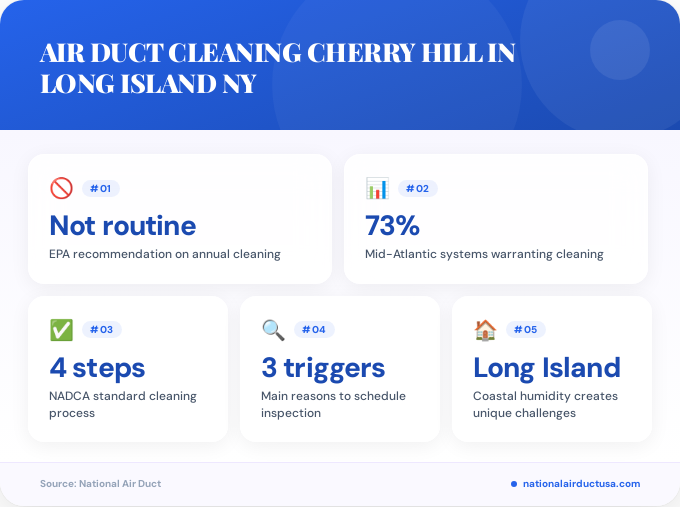
Here’s a statistic that surprises most homeowners: the Environmental Protection Agency actually does not recommend routine residential duct cleaning as a standard maintenance task. Yet a 2026 industry-reported review of inspected HVAC systems across the mid-Atlantic found that 73% were judged to warrant cleaning once technicians actually looked inside them. That gap between “not routinely necessary” and “frequently needed once inspected” is exactly why understanding air duct cleaning in the Cherry Hill area of Long Island, NY requires more nuance than a quick search result provides.
Before going further, a clarification matters. Cherry Hill is a name more commonly associated with New Jersey, while Long Island covers Nassau and Suffolk counties in New York. If you’re searching for “air duct cleaning Cherry Hill” while living on Long Island, it’s worth confirming any contractor’s physical address, license and insurance status, and documented service area before scheduling an appointment. This guide explains how duct cleaning actually works, when it’s warranted, and what matters specifically for homes in Long Island’s varied housing stock, so you can make an informed decision regardless of which neighborhood you’re calling from.
What Is Air Duct Cleaning, and Why Does Cherry Hill Need a Local Perspective?
Air duct cleaning is the mechanical removal of dust, debris, and contaminants from the full HVAC system, not just the visible metal grilles in your ceiling or floor. According to NADCA’s industry standard, a proper cleaning addresses assessment, cleaning, restoration, and cleanliness verification across the entire system, including plenums, coils, drain pans, blower assemblies, and filters.
For homeowners in and around the Cherry Hill area, this distinction matters because many older Long Island homes have ductwork that’s been modified, patched, or left untouched for decades. A surface-level “wipe the vents” job isn’t the same service NADCA standards describe, and it won’t address what’s actually accumulating deeper in the system. For a broader look at how this service applies across the region, see this comprehensive air duct cleaning guide for Long Island.
When Is Air Duct Cleaning Actually Necessary?
This is the question most homeowners get wrong. The EPA’s official guidance on duct cleaning states clearly that cleaning should happen for a specific reason, not on a fixed calendar schedule. Those reasons include substantial visible mold growth, a pest or rodent infestation inside the ducts, or excessive debris being released into living spaces through the vents.
That said, specific triggers are common enough on Long Island that many households eventually hit one. Consider scheduling an inspection if you notice:
- Visible mold or a musty odor near vents, especially after humid summers
- Recent renovation work involving drywall, sanding, or demolition
- A new pest or rodent problem in the attic, crawlspace, or basement ductwork
- Noticeably reduced airflow from multiple vents
- A household member with worsening allergy or respiratory symptoms
- Visible dust buildup blowing out of registers when the system starts
If any of these apply, a professional assessment is the logical next step, which you can learn more about through this guide to signs your air ducts need cleaning.
How Does Professional Duct Cleaning Actually Work?
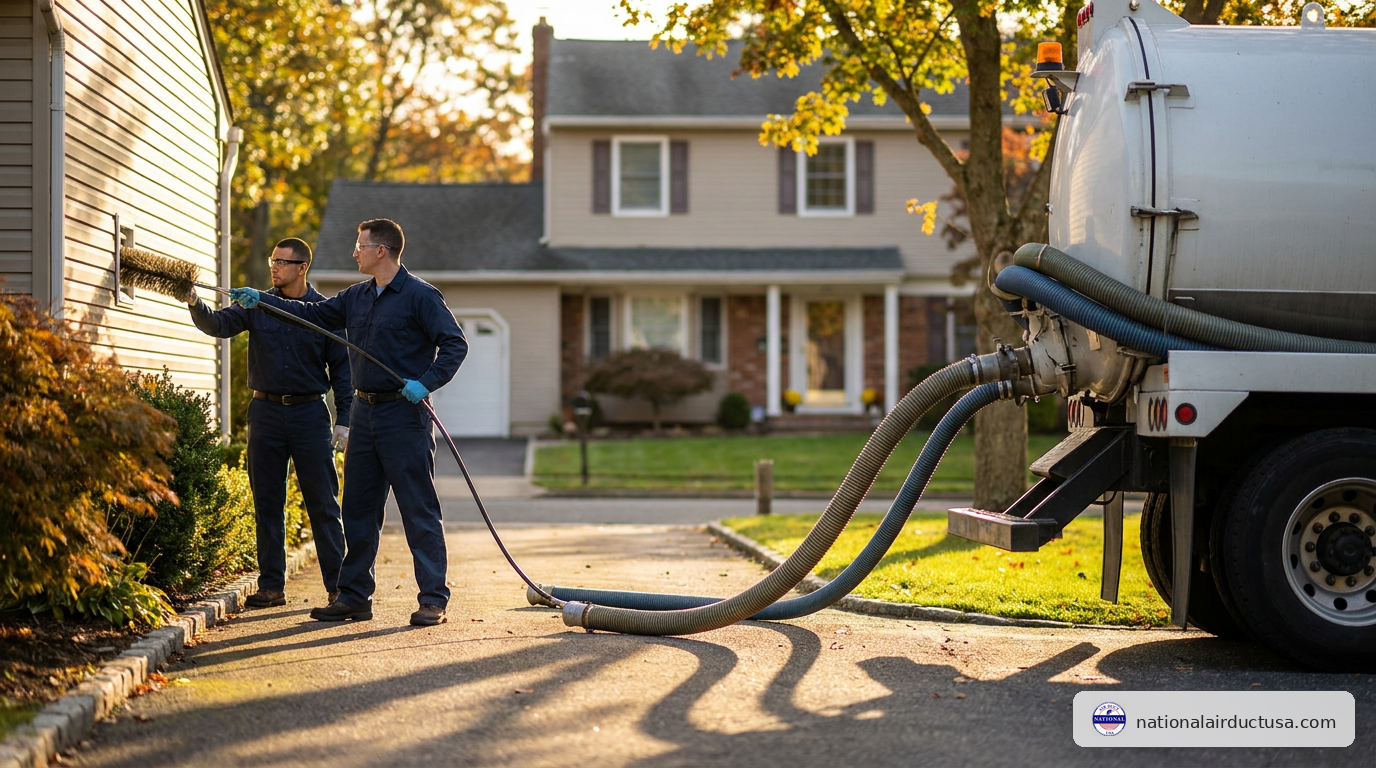
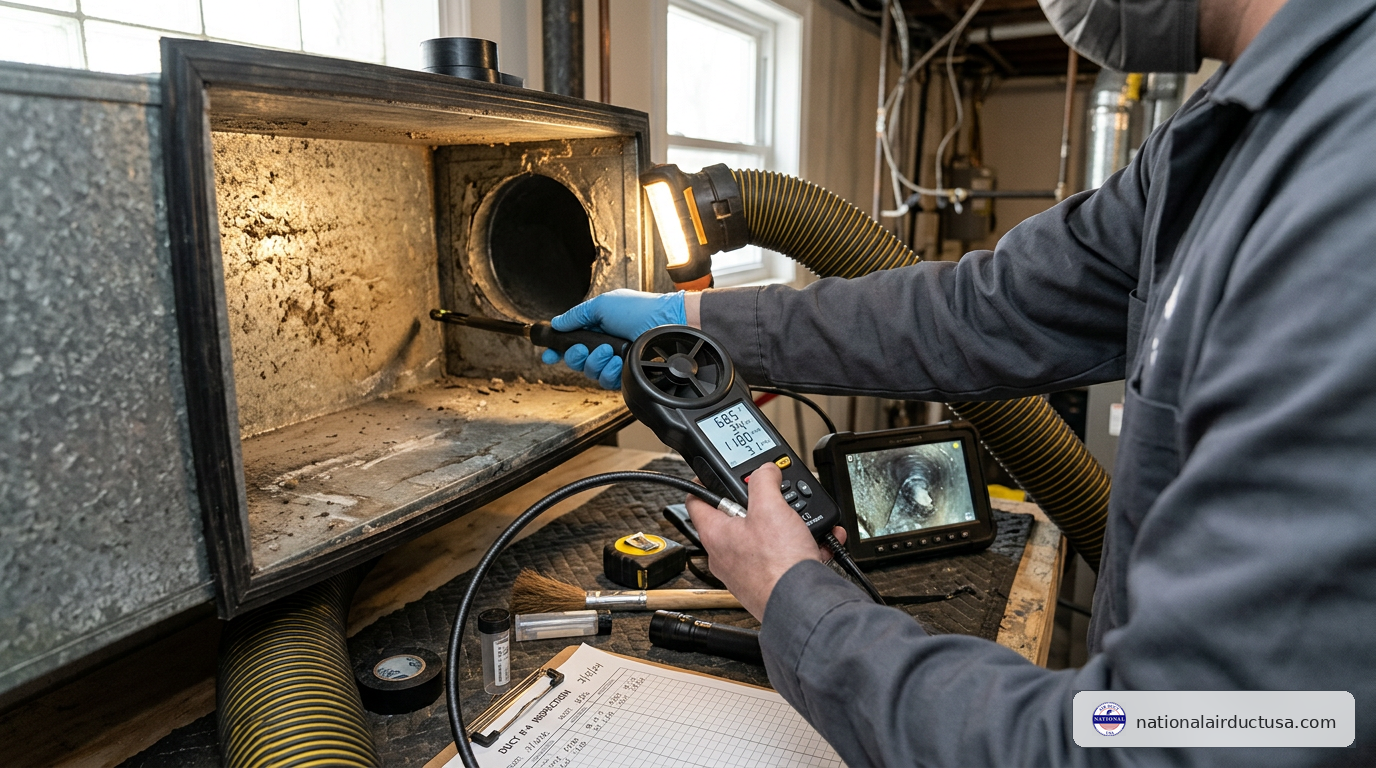
Proper source-removal cleaning relies on mechanical agitation combined with continuous negative pressure. Technicians use tools like rotating brushes, air whips, or compressed-air devices to dislodge debris from duct walls, while a powerful vacuum maintains negative pressure inside the system so loosened particles are captured rather than blown back into your living space.
This negative-pressure requirement is non-negotiable in a legitimate cleaning process. Without it, agitation alone can push dust and allergens out through gaps in the ductwork and into the room, making indoor air quality temporarily worse rather than better. NADCA’s published cleanliness benchmark defines acceptable results as no more than 0.75 mg of collected debris per 100 cm² of filter media after a post-cleaning vacuum test, a measurable standard that separates professional service from a quick shop-vac pass.
It’s also worth understanding what duct cleaning cannot fix. It won’t correct undersized ductwork, poor system balancing, or chronic moisture intrusion at the source. If your ducts are physically damaged or leaking, that’s a separate repair issue covered in this resource on why ducts leak water and how to address it.
What HVAC Challenges Are Unique to Long Island Homes?
Long Island’s housing stock and climate create specific conditions that make duct inspections worthwhile more often than in newer, drier regions. The combination of coastal humidity, older construction, and finished basement living space adds up to real differences in what technicians find inside local ductwork.
Why it matters: Deteriorated duct insulation sheds fibers over time
Why it matters: Damp conditions can support microbial growth
Why it matters: Can pull in soil-related debris and insulation fibers
Why it matters: Requires separate carbon-monoxide safety inspection
Many Long Island communities, from older Nassau County neighborhoods to Suffolk County’s coastal towns, share these same structural realities. For homeowners specifically evaluating local conditions, this Long Island air quality overview explains how regional humidity and pollen patterns interact with indoor HVAC systems throughout the year.
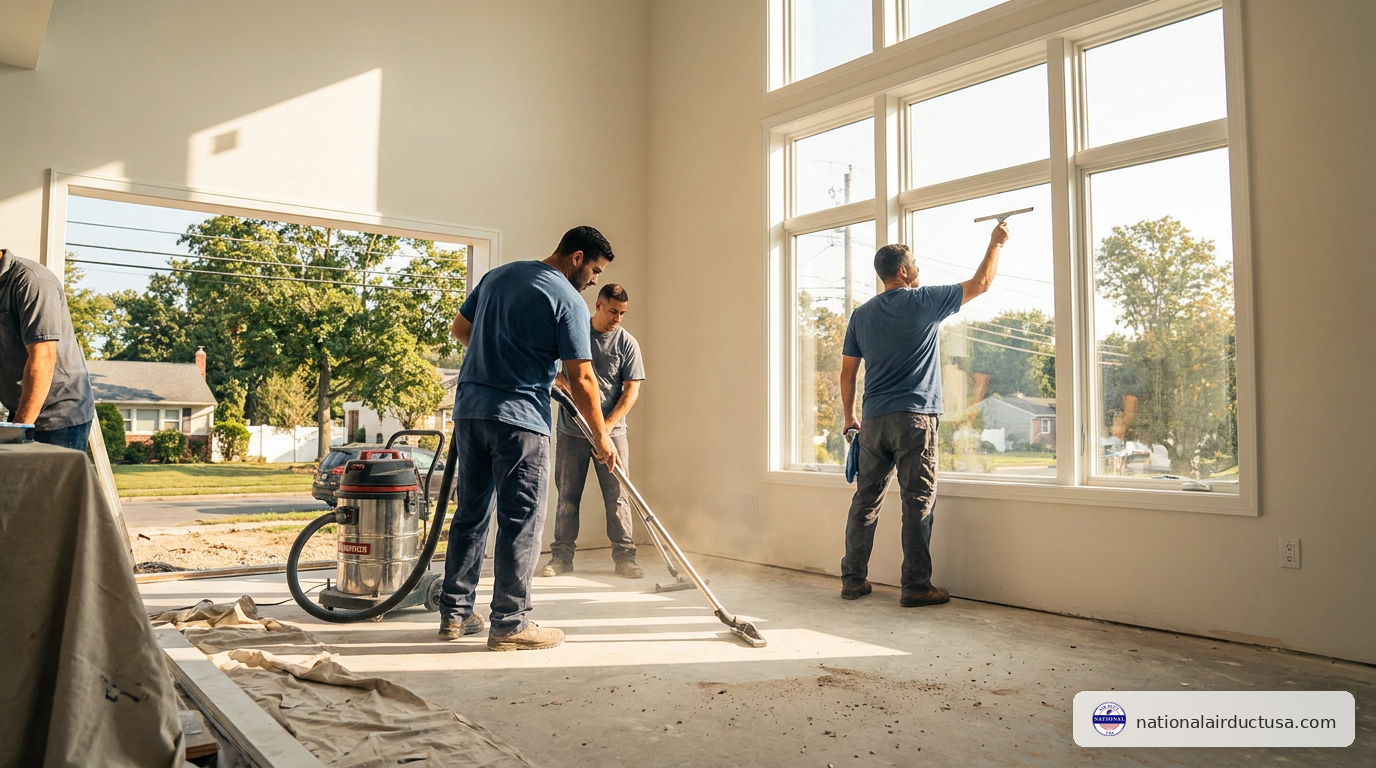
Post-renovation dust deserves special mention. If a Cherry Hill-area property, or any home nearby, recently went through drywall work, sanding, or demolition, fine particulate can settle deep into the duct system long after visible cleanup is finished. This is one of the few scenarios where the EPA’s guidance and most HVAC professionals agree that cleaning is clearly warranted, a topic covered further in this post-construction deep cleaning cost guide.
What Determines Air Duct Cleaning Pricing?
Pricing for air duct cleaning varies widely, typically ranging from $10,000 to $50,000+ for larger or more complex whole-system projects, though many standard residential jobs fall well below that depending on scope. The real answer is that cost depends on the size of your home, the number of supply and return vents, how accessible the ductwork is, whether mold remediation or sanitizing is needed, and the overall condition of the system.
Homes with finished basements, multiple HVAC zones, or combined dryer vent service tend to cost more than a single-system, easily accessible setup. Pricing also varies based on whether a contractor uses full NADCA-standard source-removal equipment versus a lighter-duty service. Because every home’s ductwork configuration is different, the most reliable approach is requesting a custom quote after an in-person assessment rather than relying on a flat advertised rate.
If your home also has a dryer vent that hasn’t been serviced recently, it’s worth addressing at the same time since lint accumulation is a documented fire hazard separate from HVAC duct concerns. Learn more in this guide to dryer duct cleaning for Long Island homes.
How Do You Choose a Qualified Provider Near Cherry Hill?
Because “Cherry Hill” searches can be ambiguous between New Jersey and New York, the single most important step is confirming a company’s actual physical location and documented service radius before booking. A legitimate Long Island provider should be able to clearly state which towns and zip codes they serve, show proof of licensing and insurance, and reference NADCA certification for their technicians.
Industry research on NADCA-certified air duct cleaning in New York suburbs emphasizes that certification, documented methodology, and transparent assessment reports are the clearest indicators of a trustworthy local provider, not marketing claims alone.
Ask any prospective contractor how they measure cleanliness post-service, whether they maintain continuous negative pressure during cleaning, and whether they provide before-and-after documentation. A national report on duct cleaning industry practices notes that transparency about methodology separates reputable companies from those offering bargain-rate, low-quality service. For homeowners who want to see real examples of what thorough documentation looks like, this before-and-after guide with real results is a useful reference point.
If you’re comparing providers across Nassau or Suffolk County, including areas near Westbury, it helps to see how service standards are applied consistently across the region. This Westbury, NY air duct cleaning overview illustrates the same assessment-first approach that should apply to any neighborhood, Cherry Hill included. For homeowners simply looking for a vetted provider nearby, this resource on finding duct cleaning near you on Long Island walks through what to verify before scheduling.
Key Takeaways
- The EPA does not recommend routine duct cleaning without a specific documented reason, such as visible mold or heavy debris.
- NADCA standards require cleaning the full HVAC system, not just visible vents, using mechanical agitation with continuous negative pressure.
- A 2026 industry review found 73% of inspected systems warranted cleaning, though this figure is not a government statistic and shouldn’t be treated as universal.
- Long Island’s coastal humidity, older housing stock, and finished basements create conditions where inspections are often worthwhile.
- Pricing varies significantly based on home size, system complexity, and condition, always request a custom quote rather than relying on flat rates.
- Confirm any provider’s physical location, licensing, insurance, and NADCA certification before booking, especially given naming overlap between Cherry Hill, NJ and Long Island, NY.
- Duct cleaning cannot fix undersized ducts, poor airflow balance, or ongoing moisture intrusion at the source.
People Also Ask
Is Cherry Hill part of Long Island, New York?
Cherry Hill is most commonly associated with New Jersey, not Long Island, which covers Nassau and Suffolk counties in New York. If you’re searching for this service on Long Island, always confirm a contractor’s actual physical address and service area before booking.
How often should air ducts be cleaned on Long Island?
There’s no universal schedule; the EPA recommends cleaning based on specific triggers like visible mold, pests, or heavy debris rather than a fixed calendar. Homes with recent renovations, pets, or finished basements may need inspections more frequently than newer, drier homes.
Can dirty air ducts actually make my family sick?
Dirty ducts can contribute to worsened allergy or respiratory symptoms when mold, dust, or pest debris is present, though they are not the sole cause of most illnesses. A deeper look at this connection is available in this guide on whether dirty air ducts can make you sick.
What’s the difference between duct cleaning and dryer vent cleaning?
Duct cleaning addresses the HVAC system’s supply and return ductwork, while dryer vent cleaning removes lint buildup from a separate exhaust line, a distinct fire-safety concern. Many Long Island homeowners schedule both services together for efficiency.
Frequently Asked Questions
Does the EPA recommend regular duct cleaning?+
No. The EPA states duct cleaning should be done for specific documented reasons, such as visible mold, pest infestation, or excessive debris, not on a routine schedule. This distinction is important when evaluating whether your home actually needs service.
What does NADCA certification mean for a contractor?+
NADCA certification means a company follows an established industry standard covering assessment, source-removal cleaning, restoration, and verification of cleanliness across the entire HVAC system. It’s a strong indicator of professional methodology rather than a surface-level service.
How much does air duct cleaning typically cost on Long Island?+
Pricing varies widely, from a few hundred dollars for small, accessible systems up to $10,000 to $50,000+ for large, complex, or multi-zone properties requiring remediation. The best way to get an accurate number is a custom quote after an in-person assessment of your specific ductwork.
Why does coastal humidity matter for Long Island HVAC systems?+
Moisture retention in ductwork and HVAC components can support microbial growth, which is a more common concern in coastal areas with higher ambient humidity. This makes periodic inspection more relevant for Long Island homes than for drier inland regions.
Will duct cleaning fix poor airflow or an undersized system?+
No, duct cleaning only removes accumulated debris and contaminants; it cannot correct undersized ductwork, poor system balancing, or structural leaks. Those issues require separate HVAC repair or redesign work.
Should I clean ducts after a home renovation?+
Yes, post-renovation dust from drywall, sanding, or demolition is one of the clearest, most widely agreed-upon reasons to schedule duct cleaning. Fine particulate can settle deep in the system long after visible surfaces are cleaned.
How do I verify a duct cleaning company actually serves my Long Island neighborhood?+
Ask directly for their physical business address, proof of license and insurance, and a list of towns or zip codes they regularly service. Reputable companies will answer this clearly rather than giving vague coverage claims.
Understanding the real evidence behind air duct cleaning, rather than relying on marketing claims or ambiguous location searches, puts you in control of a smarter decision for your home. Whether you’re comparing providers near the Cherry Hill area or elsewhere across Nassau and Suffolk counties, the fundamentals stay the same: verify credentials, understand the methodology, and request an assessment before committing to a price. If you’re ready to get a clear, honest evaluation of your Long Island home’s ductwork, reach out to National Air Duct or contact our team directly to schedule a professional inspection and custom quote.