Quick Answer
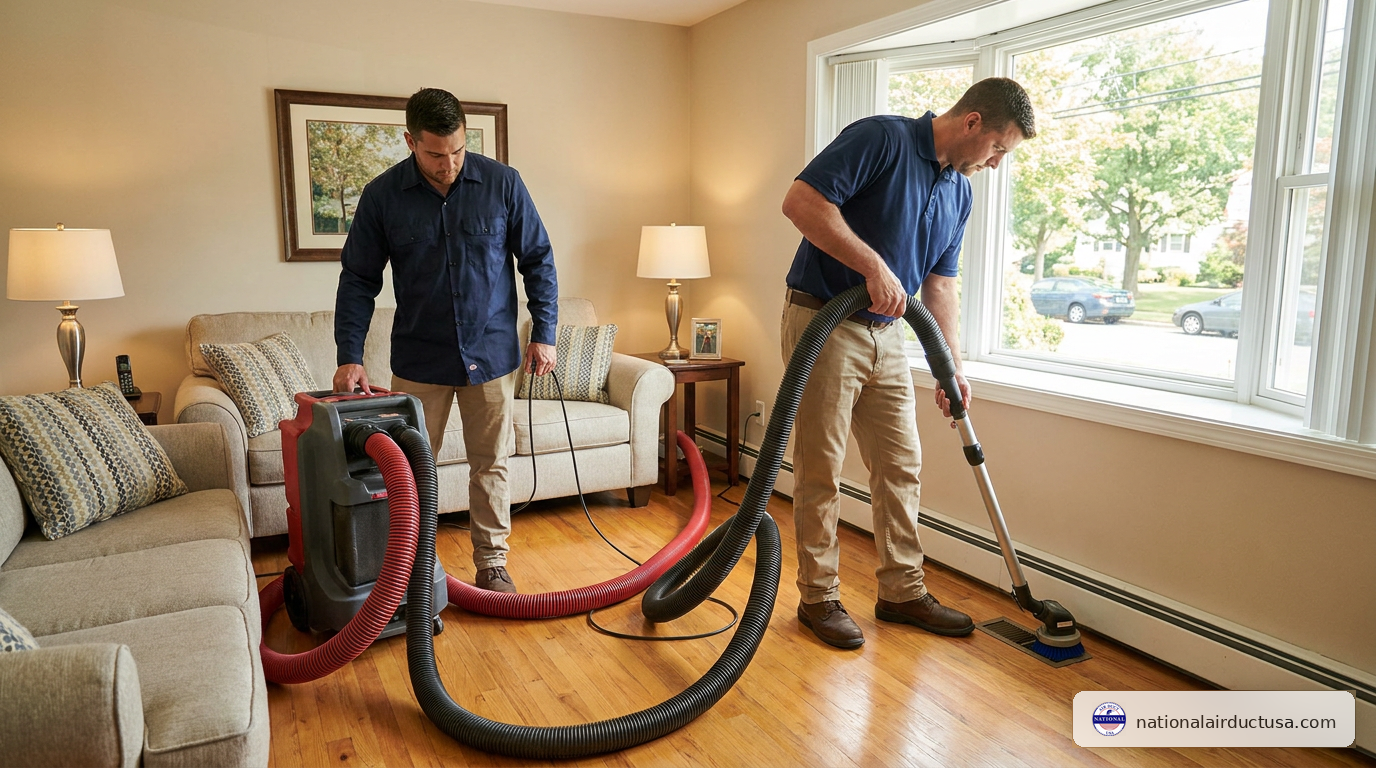
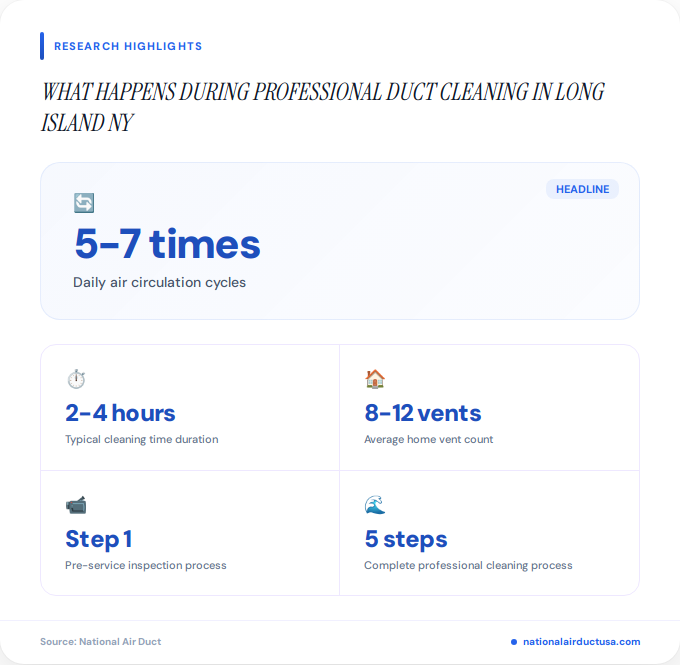
Professional duct cleaning in Long Island NY involves a pre-service inspection, sealing and protecting the home, connecting a negative-air machine to pull dust toward collection equipment, mechanically agitating and vacuuming every supply and return line, and cleaning accessible HVAC components like the blower and coil. For a typical 1,000 to 1,500 square foot ranch or Cape Cod with 8 to 12 vents, the full process generally takes two to four hours and should end with a visual or camera-based verification that the ductwork is clean.
What Is Professional Duct Cleaning and Why Does Long Island Need It?
Here’s a number that surprises most homeowners: a single central air system can circulate the air in a house five to seven times a day, pulling dust, pollen, pet dander, and construction debris through miles of ductwork every single cycle. On Long Island, where homes swing between humid summers and damp, salt-air winters, that dust often mixes with moisture and settles into trunk lines for years without anyone noticing. Understanding what happens during professional duct cleaning in Long Island NY starts with knowing that it is not a single vacuum pass through a vent cover. It is a structured, multi-step mechanical process.
The EPA’s guidance on air duct cleaning notes that cleaning may be worthwhile when ducts are visibly contaminated with heavy deposits, mold, or debris, but a dusty register alone doesn’t prove the entire system needs it. That’s why a real inspection, not a sales pitch, is the proper first step.
Long Island’s older Levittown-era Capes, 1960s ranches in Huntington, and newer colonials in Suffolk County all share one thing: ductwork that’s rarely been touched since installation. If you’re trying to find a qualified provider, this guide to finding duct cleaning near you on Long Island is a useful starting point before booking anyone.
What Happens During the Pre-Service Inspection?
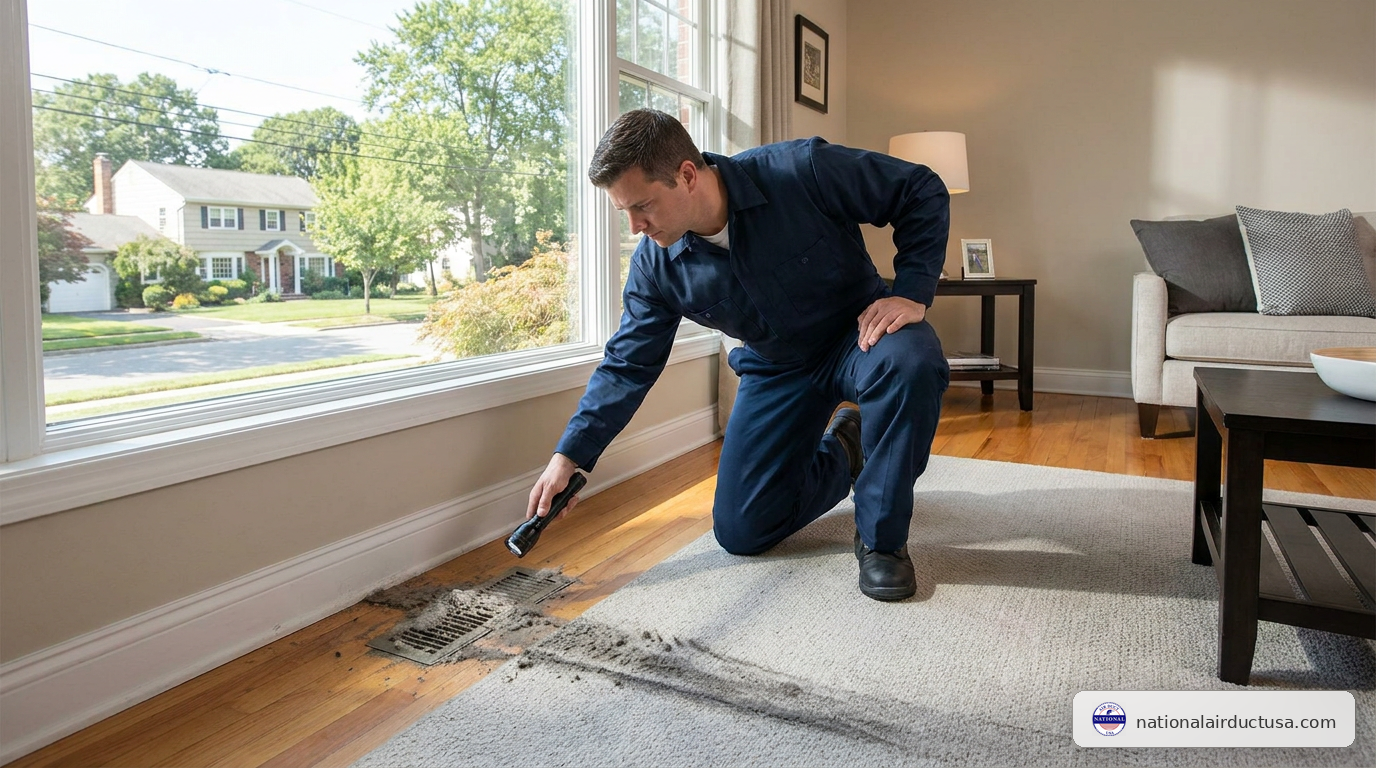
A reputable technician never quotes a final price over the phone without first looking at the system. On arrival, they typically walk the house and count supply registers and return grilles, then trace the main supply and return trunks back to the air handler, furnace, or evaporator coil.
- Counting registers and return grilles throughout the home
- Locating the air handler, furnace, or coil and checking its condition
- Assessing duct material (sheet metal, flex duct, or fiberboard) and accessibility
- Checking for existing access panels or marking where temporary openings are needed
- Looking for dust buildup, construction debris, mold-like growth, pest evidence, or moisture staining
- Confirming whether the home runs on oil, gas, heat pump, or electric equipment, since each affects cleaning approach
Many Long Island companies now offer camera inspection of accessible trunk lines and the return plenum before and after cleaning. This documents the actual condition of the ductwork rather than relying on guesswork. If a technician skips this step entirely and jumps straight to a quote, that’s a red flag worth noting in our full air duct cleaning guide for Long Island homeowners.
How Do Technicians Prepare and Contain the Work Area?
Once the inspection confirms the scope, the crew moves into preparation. This phase is designed to protect the home and keep dislodged dust from spreading into living spaces, which is arguably the most important part of the entire visit.
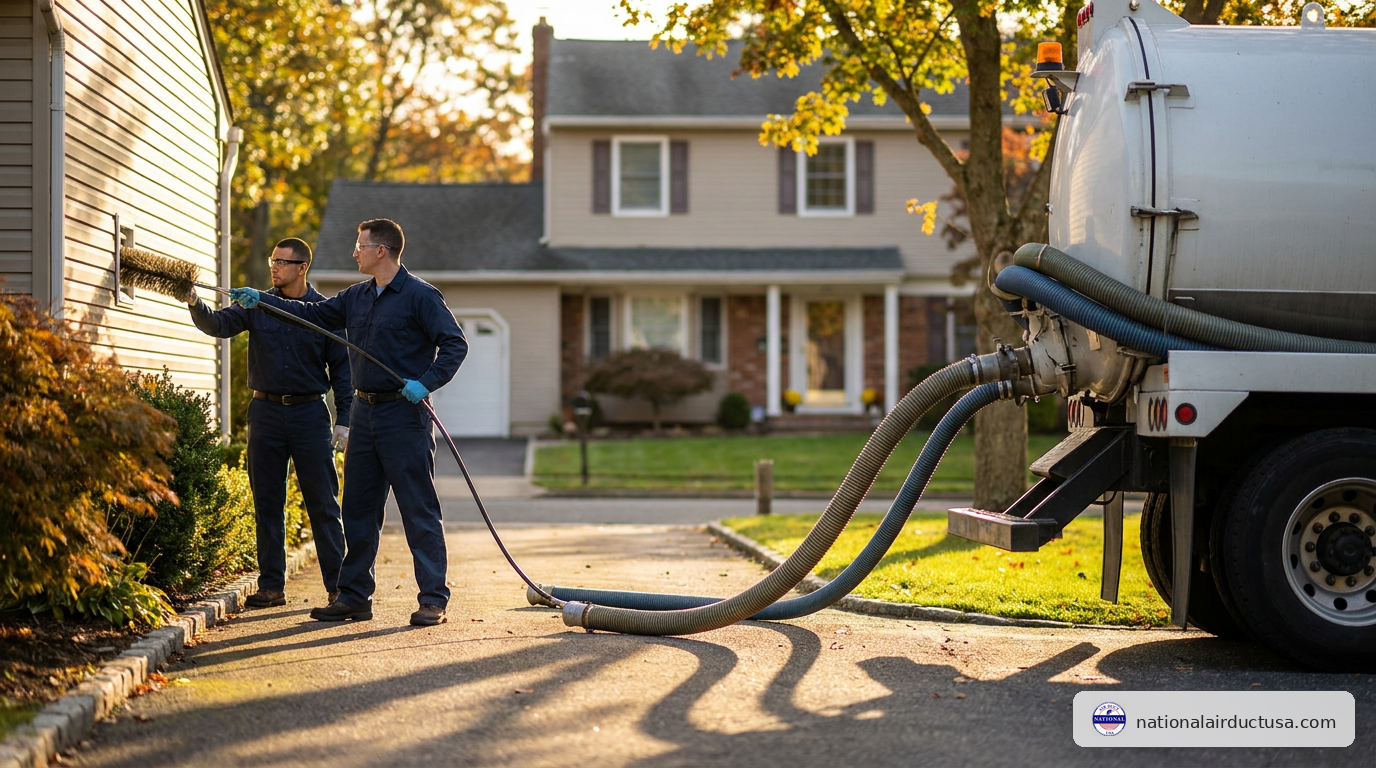
Typical preparation steps include turning off the HVAC blower and relevant electrical power, laying down floor and furniture protection near registers, and sealing off any openings that aren’t part of the current cleaning scope. The crew then connects a high-capacity negative-air machine to the return side or a main trunk line.
Some Long Island providers market HEPA filtration rated at 99.97% efficiency paired with negative-air equipment exceeding 2,000 cubic feet per minute. Those specifications sound impressive, but they should always be confirmed in a written scope of work rather than assumed from a flyer or ad. The entire point of negative pressure is to make air flow toward the collection equipment instead of letting loosened debris puff back into bedrooms and kitchens. The U.S. Department of Energy’s documentation on HVAC duct cleaning and treatment outlines similar containment principles used in federal facility maintenance.
What Equipment Is Used to Clean Supply and Return Ducts?
With the system under negative pressure, technicians begin mechanical agitation. This is the physical heart of the job and it separates professional duct cleaning from a basic register vacuuming service.
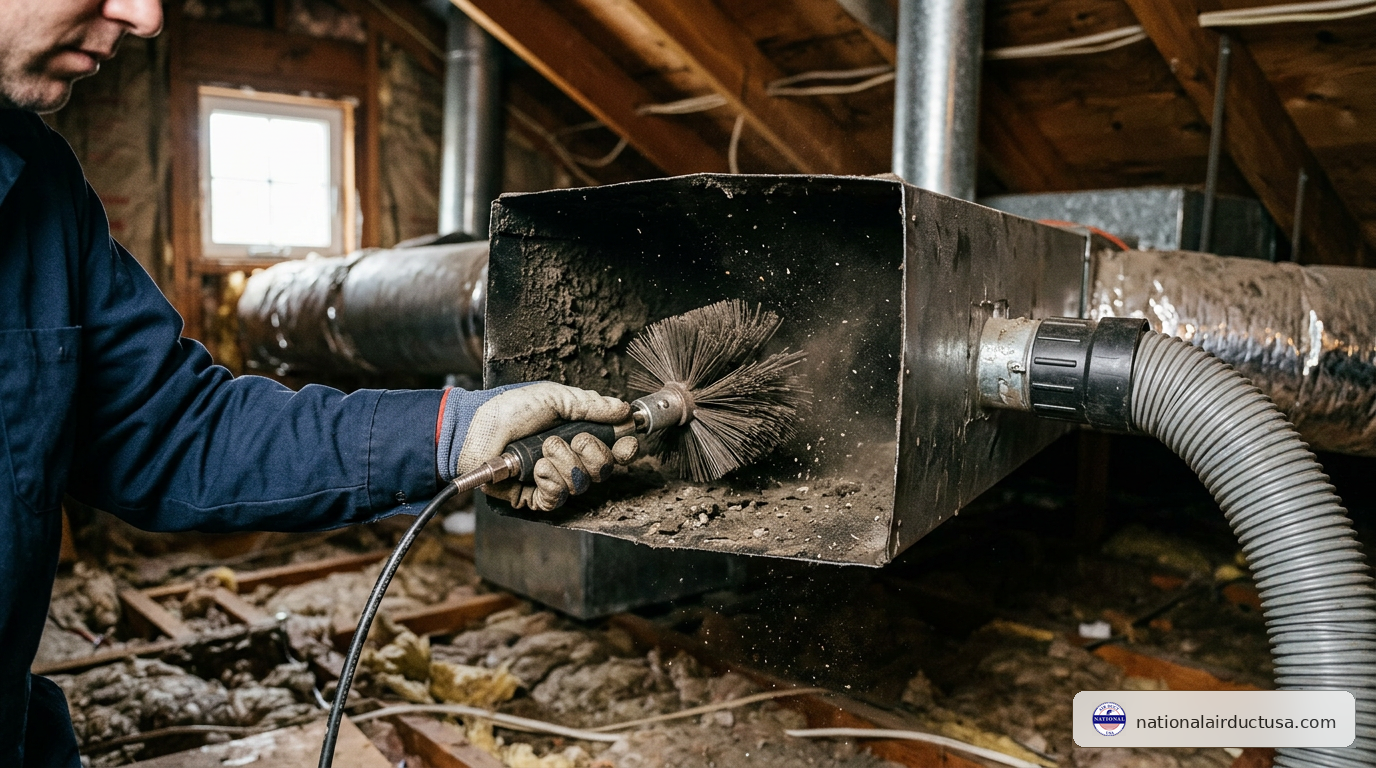
- Rotary brushes that scrub interior duct walls as they travel through branch lines
- Air whips that use compressed air to knock loose dust from metal and flex duct surfaces
- Compressed-air skipper balls that bounce through ductwork dislodging stubborn debris
- Agitation rods for tighter or harder-to-reach sections
- Vacuum collection hoses connected to the negative-air machine to capture everything in real time
- Robotic cameras or cleaning devices for extensive or difficult-to-access systems
This is known in the industry as the “source removal” method, meaning contamination is physically dislodged and extracted rather than masked with sprays or deodorizers. Source removal represented roughly 42% of the air-duct-cleaning market in 2025, according to a global HVAC duct cleaning market report, and it remains the gold standard endorsed by national industry associations. Technicians should clean both supply ducts and return ducts, working each branch line back toward the trunk while the vacuum captures what’s loosened. Robotic tools are seeing increased adoption industry-wide, a trend confirmed in forecasts on duct cleaning robotics through 2035.
Homeowners dealing with musty odors or visible staining around vents should also review the signs covered in our guide to identifying mold in air ducts, since mold contamination requires additional protocols beyond standard agitation.
What HVAC Components Get Cleaned Beyond the Ducts?
A thorough job doesn’t stop at the ductwork itself. Accessible HVAC components are part of the same contamination pathway and should be addressed in the same visit.
Technicians typically clean the blower assembly, evaporator coil area (when accessible without violating refrigerant seals), and the inside of the air handler housing. Register and grille covers come off for a deeper wipe-down and vacuum rather than a quick surface pass. Homes with gas or oil furnaces may also need coordination around combustion components, which is why confirming equipment type during inspection matters.
Many Long Island homes also run a separate dryer vent system that gets overlooked during HVAC service. Lint-clogged dryer ducts are a documented fire hazard, and they require a distinct cleaning process covered in our dryer duct cleaning service details for Long Island. Pet owners in particular should ask whether dander-heavy coils and blower wheels are part of the standard scope, a topic explored further in our guide to duct cleaning for pet hair and dander.
| Service Tier | What’s Typically Included | Reported 2026 Price Range |
|---|---|---|
| Budget/basic service | Limited register cleaning, minimal agitation, smaller crew time | $179 to $350 |
| NADCA-certified full-system cleaning | Full inspection, negative-air containment, mechanical agitation, component cleaning, verification | $450 to $800 |
| Larger homes (2,000+ sq ft) | Extended trunk lines, more registers, additional labor time | $600 to $1,200 |
How Is the Job Verified and Completed?
Before the crew packs up, a complete job includes a verification step. This might be a visual check through open access points or a camera pass through the main trunks to compare against the pre-cleaning footage.
Technicians should then re-seal any temporary access openings, reinstall register covers, restore power to the blower, and remove containment materials and floor protection. You should receive a summary of what was found, what was cleaned, and photo or video documentation if a camera was used. If you’ve recently had renovation work done, pairing this with our post-construction deep cleaning cost guide can help you plan both services together.
For homeowners who want a broader view of indoor air quality beyond the ducts themselves, our guide to improving indoor air quality in Long Island covers filtration, humidity control, and ventilation strategies that complement a clean duct system.
What Affects the Price of Duct Cleaning on Long Island?
Pricing varies based on your specific project, and several factors drive the final number more than square footage alone. Duct material and accessibility, the number of registers, system complexity (multiple zones or units), visible mold or moisture damage, and whether dryer vent cleaning is bundled in all shift the scope significantly.
2,000+ sq ft: 14-20+ vents
Mold/moisture: additional treatment cost
Multi-zone/multi-unit: higher scope
NADCA-certified: full-system protocol
Rather than chasing the lowest quote, Long Island homeowners are better served by asking for a written scope of work that spells out exactly which steps described above are included. A premium, NADCA-aligned cleaning done right the first time avoids the cost of repeat visits. Industry salary data from ServiceTitan’s analysis of air duct cleaning technician compensation also helps explain why properly trained, certified technicians command higher service rates than bargain operators. For a full breakdown of value versus budget options, see our core air duct cleaning service page, and contact us directly for a custom quote tailored to your home’s layout and system.
- A proper appointment always starts with inspection, not a flat-rate quote over the phone
- Negative-air containment is what prevents dust from spreading into living spaces during the job
- Source removal, using brushes, air whips, and vacuum collection, made up about 42% of the market in 2025
- Both supply and return ducts should be cleaned, not just visible vent covers
- Accessible components like the blower and coil housing are part of a complete service
- Verification through camera or visual check confirms the work was done thoroughly
- Full NADCA-certified cleanings for a typical Long Island home run roughly $450 to $800, with larger homes reaching $600 to $1,200
People Also Ask
How long does professional duct cleaning take?
A typical Long Island home with 8 to 12 vents takes roughly two to four hours from inspection through verification. Larger homes with multiple zones or extensive ductwork can take longer, especially if mold remediation or dryer vent cleaning is bundled into the visit.
Is duct cleaning messy or disruptive?
It shouldn’t be if the crew uses proper containment. Negative-air equipment and sealed registers keep loosened dust contained within the ductwork and vacuum system rather than spreading into rooms.
Do I need to leave the house during duct cleaning?
Most homeowners stay home during the service, though some prefer to be out during the loudest agitation phase. If anyone in the household has severe respiratory sensitivity, discuss timing with the technician in advance.
Will duct cleaning fix a musty smell in my house?
If the odor comes from dust or debris buildup in the ducts, cleaning typically resolves it. If the smell is caused by mold growth or moisture intrusion, additional remediation steps beyond standard cleaning are usually required.
Frequently Asked Questions
What exactly happens during a duct cleaning appointment on Long Island?+
The technician inspects the system, seals registers and sets up negative-air containment, mechanically agitates and vacuums every supply and return line, cleans accessible HVAC components like the blower, and verifies the result before leaving. The full process generally runs two to four hours for an average-sized home.
How much does duct cleaning cost in Long Island NY?+
Reported 2026 prices range widely from about $179 to $350 for budget services up to $450 to $800 for a NADCA-certified full-system cleaning on a typical 1,000 to 1,500 square foot home. Larger homes over 2,000 square feet may run $600 to $1,200, and final pricing depends on vent count, duct condition, and system complexity.
What equipment do professionals use to clean air ducts?+
Technicians commonly use rotary brushes, compressed-air skipper balls, air whips, agitation rods, vacuum collection hoses connected to a negative-air machine, and sometimes robotic cameras for complex or extensive ductwork. This combination is known as the source removal method.
Does duct cleaning include the furnace or air handler?+
A thorough service cleans accessible components such as the blower assembly and the interior of the air handler housing, in addition to the ductwork itself. Evaporator coils may be addressed when accessible without breaking refrigerant seals.
Is dryer vent cleaning part of standard duct cleaning?+
No, dryer vents are a separate system and require their own cleaning process, often sold as an add-on service. Lint buildup in dryer ducts is a known fire hazard and should be inspected annually regardless of HVAC duct cleaning schedules.
How do I know if my Long Island home actually needs duct cleaning?+
Related: Signs You Need Duct Cleaning Services in Long Island NY: A Homeowner’s Buyer’s Guide
A dusty register alone isn’t proof the whole system needs cleaning; a proper inspection, ideally with a camera, should confirm actual debris inside the ductwork before you pay for a full service. Visible mold, pest evidence, or recent renovation debris are strong signals that cleaning is warranted.