Quick Answer
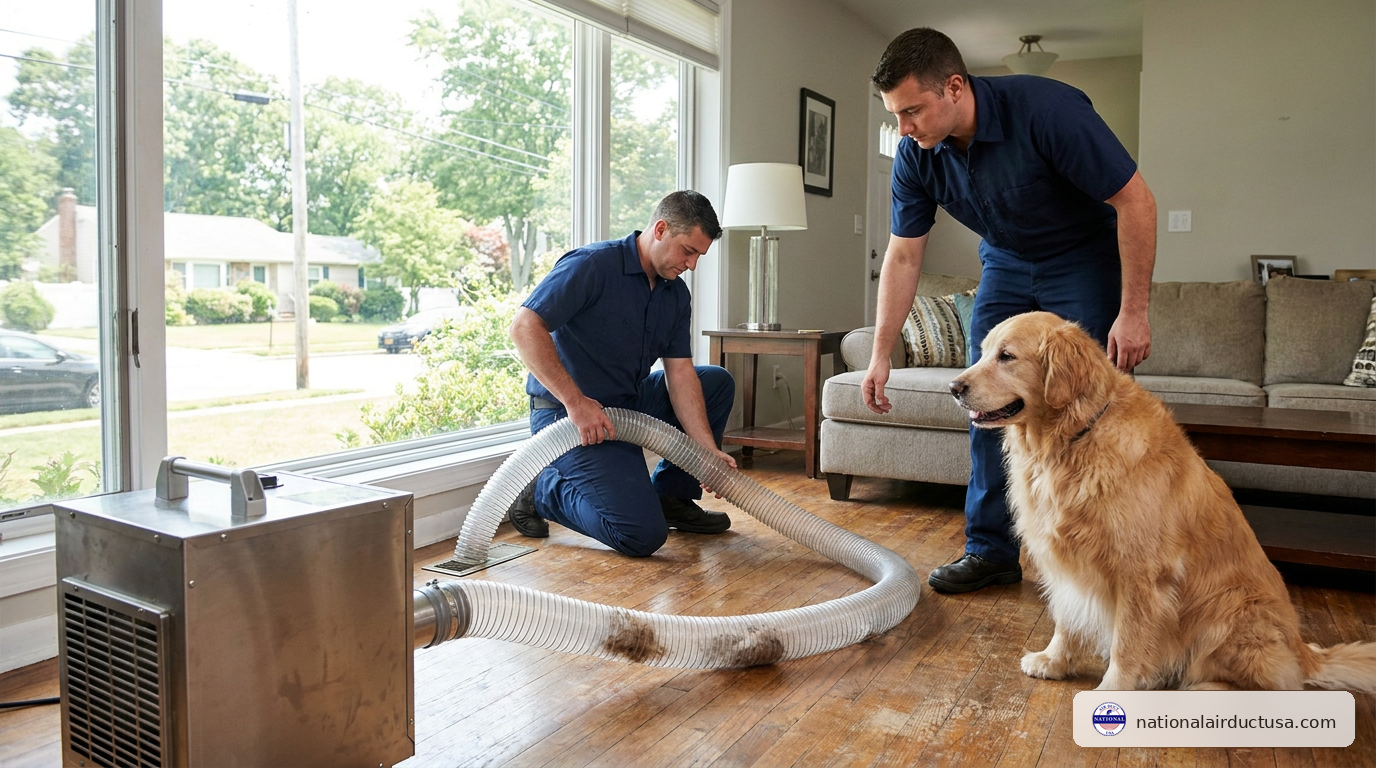
Air duct cleaning for pet hair and dander in New York is most effective and most honest when treated as condition-based maintenance rather than an automatic yearly service. A reputable contractor inspects your system first, documents visible hair, dander buildup, or odor at the source, and only recommends cleaning when evidence supports it, following EPA guidance that routine duct cleaning has not been proven to prevent health problems on its own.
Why Trust Matters More Than a Quick Fix for Pet Owners
Here is a number that surprises a lot of pet owners: roughly half of New York households own a pet, compared with about 66% nationally, which means fewer homes statewide but often more concentrated shedding in the apartments and co-ops where pets do live. If you are searching for air duct cleaning for pet hair and dander in New York, you have probably already noticed hair at the vents or a lingering odor when the heat kicks on. The real question is not whether a company will show up and vacuum your ducts. It is whether that company will tell you the truth about what your system actually needs.
This article is not a sales pitch. It is a breakdown of how licensing, safety protocols, honest inspection, and clear warranties separate a trustworthy duct cleaning company from one that simply runs a hose through your vents and hands you an invoice. We will walk through what the EPA’s guidance on air duct cleaning actually says, what a responsible process looks like, and how to evaluate a contractor before you let them into your home.
What Does New York’s Pet Population Mean for Your Ductwork?
New York is estimated to have roughly 600,000 dogs and 500,000 cats, with a separate 2026 estimate placing statewide totals closer to 1.1 million dogs and 900,000 cats. Ownership is not evenly distributed. Estimates suggest pet ownership sits near 30% in New York City, compared with approximately 62 to 65% in upstate areas, where larger homes and yards make multi-pet households more common.
Density changes the equation. In a Brooklyn brownstone converted into multiple units, or a high-rise in Queens with shared mechanical systems, pet dander has less room to settle before it reaches a return grille. Limited ventilation, frequent cooking exhaust, and renovation dust common in older New York buildings all add to what circulates through a duct system alongside pet-related debris.
New York’s long heating season is another factor. Once the furnace or boiler-driven air handler starts running in late fall and continues through early spring, HVAC systems move enormous volumes of air through the same ductwork for months at a stretch. A recent report noted a surge in Brooklyn air duct cleaning requests as winter seals NYC apartments, which tracks with what pet owners experience: closed windows, constant recirculation, and more hair and dander pulled through the system during colder months.
How Are Pet Hair and Pet Dander Different Inside an HVAC System?
Pet hair and pet dander behave very differently once they enter a duct system, and understanding that difference is the first step toward an honest assessment.
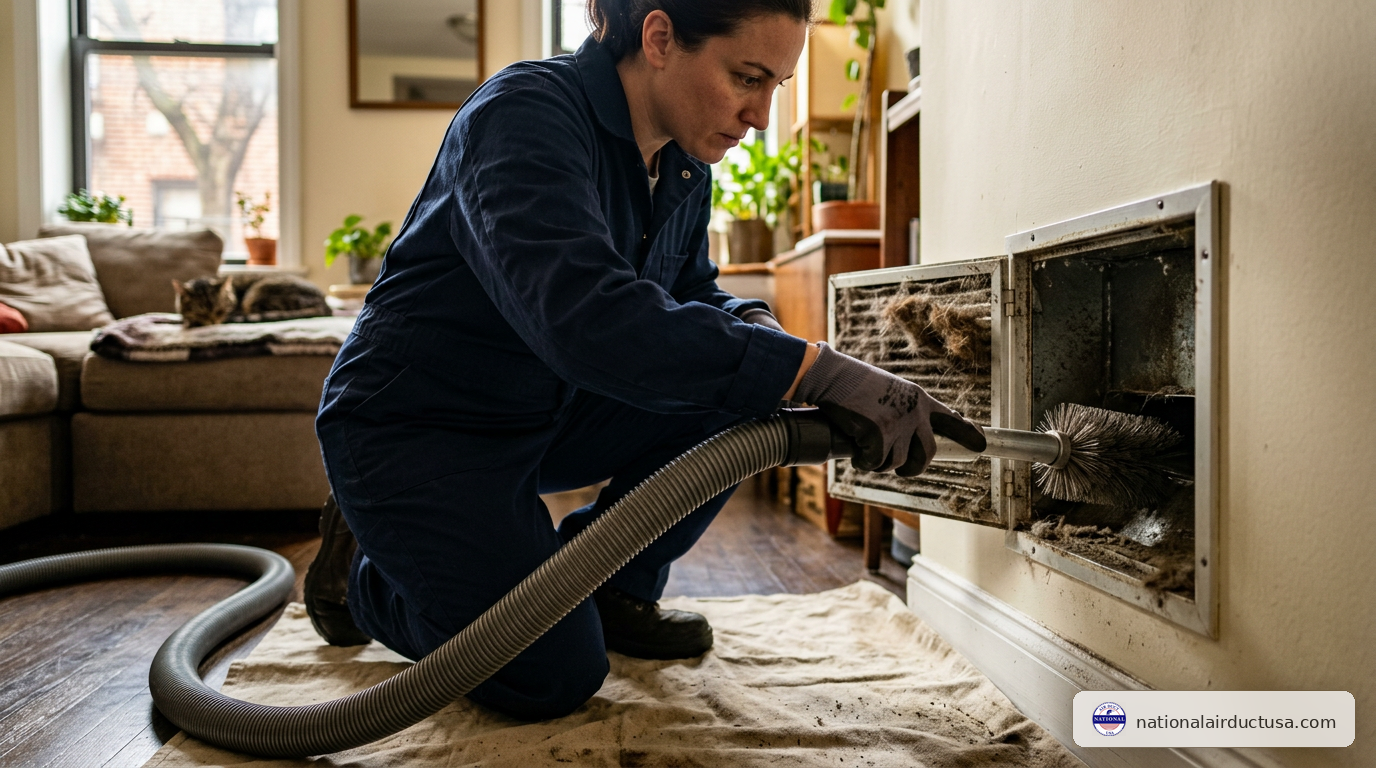
Pet hair is visible and relatively heavy. It tends to collect at return grilles, on filter surfaces, in blower compartments, and along accessible sections of ductwork. Because of its size and weight, it is usually too large to stay airborne for long, which is why you often find it in clumps rather than floating through a room.
Pet dander is a different story. These microscopic flakes of skin, along with associated proteins, are light enough to stay suspended in air for extended periods. Dander attaches to dust, upholstery, carpet fibers, filters, and duct interiors, and it can keep recirculating even after all visible hair has been removed from a system. This is part of why pet dander removal is often discussed separately from general duct cleaning, since dander control depends as much on filtration and surface cleaning as on duct vacuuming.
“The hair you can see behind a vent cover is rarely the problem. It’s the dander you can’t see, bonded to dust on the coil and buried in the blower wheel, that keeps triggering allergy symptoms long after the visible fur is gone.”
What Licensing and Safety Standards Should a New York Contractor Meet?
A trustworthy duct cleaning company should be able to answer basic questions about licensing, insurance, and technician training without hesitation. In New York, that means verifiable business registration, liability insurance that covers your home and HVAC equipment, and technicians trained to work around live electrical components, refrigerant lines, and, in older buildings, potential asbestos-containing materials in insulation.
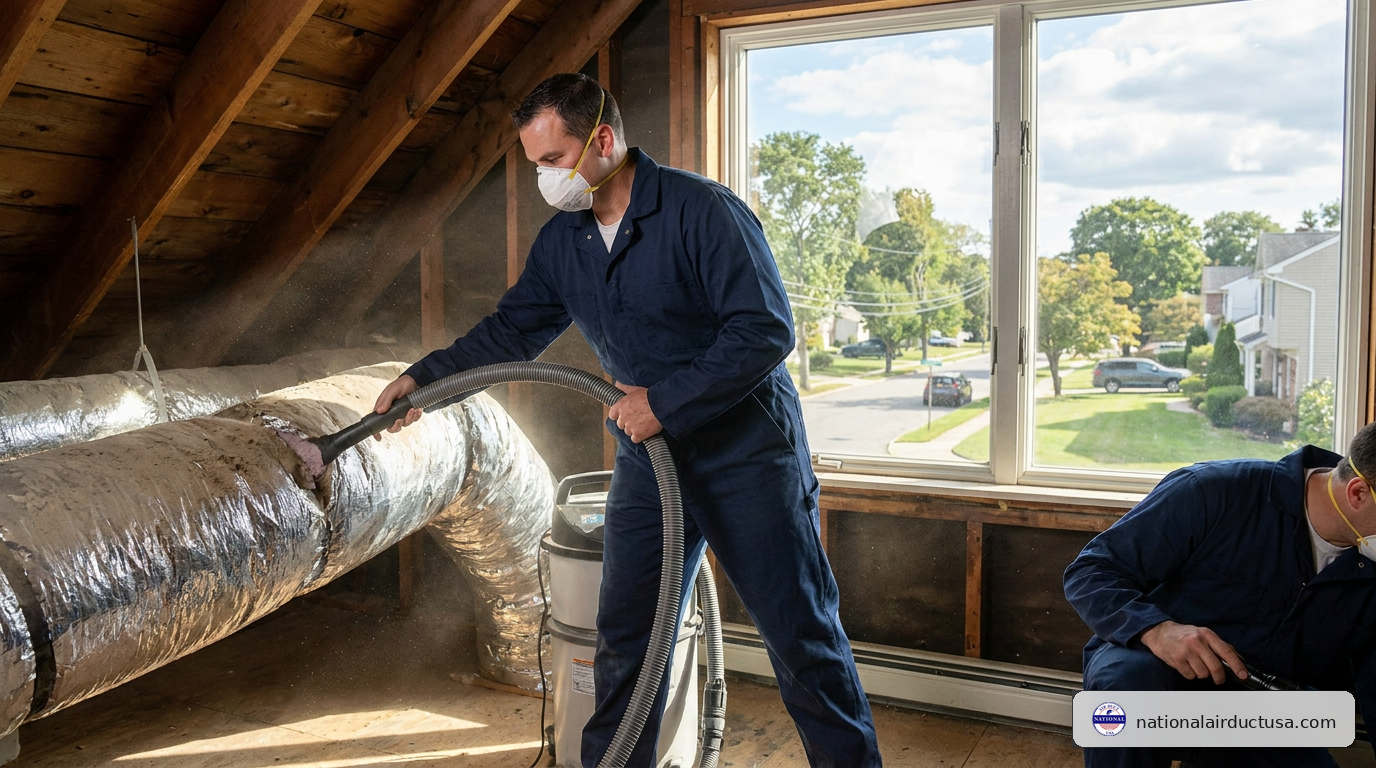
Safety also means protecting your home during the job itself. A professional crew should use negative-air containment or HEPA-filtered vacuum equipment so that dislodged hair and dander are captured rather than pushed into your living space. Floor coverings, corner guards, and sealed work zones around registers are standard practice, not an upsell.
Equally important is what a licensed contractor will not do. They will not recommend unnecessary chemical biocides or sealants without a documented reason, such as confirmed mold growth. The EPA’s guidance on biological pollutants and indoor air quality notes that chemical treatments inside ducts should only be used when there is a specific, identified problem, not as a routine add-on.
What Does a Trustworthy Inspection and Cleaning Process Look Like?
The difference between a company you can trust and one you should avoid often shows up before any equipment is turned on. A good process looks like this:
- Visual inspection first. Technicians remove a sample of vent covers and use a camera to document actual conditions, including hair accumulation, dander buildup, dust loading, and any signs of moisture or pests.
- Honest reporting. You should receive photos or video of what was found before being told you need a full cleaning. If the system is only lightly dusty, a reputable company will say so.
- Source-focused cleaning. For pet owners, this includes special attention to return grilles, the blower compartment, and the evaporator coil, which are the areas where hair and dander concentrate most heavily.
- HEPA-filtered extraction. Negative pressure equipment pulls debris into a sealed collection system rather than stirring it into the air you breathe during the job.
- Filter and register restoration. Covers are cleaned or replaced, and a new filter appropriate for pet owners, often a higher MERV-rated option, is installed or recommended.
- Final walkthrough. You should be shown before-and-after documentation and given a clear explanation of what was removed and why.
If you want a deeper look at what this looks like in practice, our guide on air duct cleaning before and after results in Long Island shows real documentation from past jobs. For general service standards, see our core air duct cleaning page.
What Should a Warranty or Guarantee Actually Cover?
A warranty on duct cleaning should be specific, not vague. Ask what happens if hair or dander reappears quickly, whether the company will return at no charge if a filter was overlooked, and whether the warranty covers only labor or also includes any parts replaced, such as access panels or damaged register covers.
Reasonable guarantees typically include a satisfaction window, usually 30 to 90 days, during which the company will revisit the home if the original inspection findings were not fully addressed. Be cautious of companies offering vague “lifetime” guarantees with no documented inspection criteria behind them, since those promises are difficult to enforce and often signal marketing over substance.
| Warranty Feature | What It Should Include |
|---|---|
| Documentation | Before-and-after photos or video of duct interiors |
| Follow-up window | 30 to 90 days for a no-cost revisit |
| Scope clarity | Written list of components cleaned, including coil and blower |
| Insurance proof | Certificate available on request, not just a verbal claim |
What Signs Suggest Your Ducts Actually Need Cleaning?
Not every pet-owning household needs duct cleaning on a fixed schedule. The EPA’s position, echoed in discussions like whether duct cleaning is worth the cost, is that cleaning should be driven by actual evidence of contamination, not calendar dates. For pet owners, that evidence usually includes:
- Visible hair or clumped debris behind return and supply grilles
- Dust or fine debris blowing out of vents when the system starts up
- A filter that becomes heavily loaded far faster than expected
- Multiple pets or heavy-shedding breeds in the household
- No cleaning since a major renovation, flooring replacement, or construction project
- Persistent odor tied specifically to when the HVAC system is running
- Confirmed mold, rodent activity, or insect evidence inside the ductwork
Homes in Nassau and Suffolk counties with central systems, including areas we service like Westbury, Plainview, and Smithtown, tend to show these signs more clearly because ductwork is often more extensive and accessible for inspection than in compact city apartments. For a broader checklist, see our article on signs you need air duct cleaning in New York.
How Does Pet-Related Duct Cleaning Compare to Standard Cleaning?
Pet-related jobs are not identical to a standard duct cleaning. The presence of hair, dander, and often odor changes where technicians focus their time and what equipment gets used.
| Factor | Pet-Owner Household |
|---|---|
| Primary debris type | Hair clumps plus fine dander versus general household dust |
| Filter recommendation | Higher MERV rating often suggested for allergen control |
| Odor concern | More common, tied to coil moisture and trapped dander |
| Inspection focus | Return grilles, blower compartment, and coil surfaces |
Pricing for pet-focused duct cleaning varies based on your specific project, including the number of pets, system size, number of return vents, and whether coil cleaning or filter upgrades are included. Rather than quoting a flat number, a reputable contractor will inspect first and provide a written estimate reflecting the actual scope of work, generally within a wide range depending on home size and system condition. Always ask for a custom quote rather than relying on a generic online price.
For related reading, our guides on improving indoor air quality in Long Island and whether dirty air ducts can make you sick go deeper into the health-related research behind these recommendations. Pet owners dealing with lint and hair in dryer vents may also find our dryer vent cleaning guide useful, since pet hair commonly clogs both systems.
Key Takeaways
- Roughly half of New York households own a pet, slightly below the national average of about 66%, with ownership rates far higher upstate than in New York City.
- Pet hair is visible and settles near grilles and the blower, while pet dander is microscopic and can keep recirculating long after hair is removed.
- The EPA has not found that routine duct cleaning prevents health problems, so cleaning should be based on documented conditions, not a fixed calendar schedule.
- A trustworthy contractor inspects before cleaning, shows photo or video evidence, and explains exactly what will be done and why.
- Licensing, insurance, and HEPA-filtered containment equipment are non-negotiable safety basics for any contractor entering your home.
- Warranties should specify a follow-up window, documented scope, and proof of insurance, not vague lifetime promises.
- New York’s long heating season and dense housing stock, especially in apartments, can accelerate pet hair and dander accumulation compared to other regions.
People Also Ask
Does air duct cleaning really remove pet dander?
Professional cleaning can remove dander that has settled on duct surfaces, filters, and the blower compartment, but dander already circulating in carpets and upholstery requires separate cleaning. Combining duct cleaning with a higher-rated filter typically produces better long-term dander control than duct cleaning alone.
How often should pet owners in New York clean their air ducts?
There is no universal schedule; the EPA recommends cleaning based on visible contamination rather than a fixed interval. Multi-pet households or homes with heavy shedders should have systems inspected periodically to catch buildup early, as outlined in our guide on how often to clean air ducts in Long Island.
Can pet hair clog an HVAC system?
Yes. Hair commonly accumulates at return grilles, filters, and blower compartments, restricting airflow and forcing the system to work harder. In severe cases this can reduce heating and cooling efficiency and shorten equipment lifespan.
Is duct cleaning worth it for apartment dwellers with pets?
It depends on the system type and documented conditions. Apartments with shared mechanical systems or limited ventilation can benefit from inspection-based cleaning, especially if hair or dust is visibly blowing from vents or odor persists when the system runs.
Frequently Asked Questions
Will duct cleaning get rid of pet odor completely?+
Duct cleaning can significantly reduce odor tied to dander and hair trapped in the system, especially on the coil and in the blower compartment. However, odor sources outside the ductwork, like carpets or upholstery, require separate treatment for complete odor control.
What credentials should I ask a New York duct cleaning company for?+
Ask for proof of business registration, liability insurance, and technician training records. A trustworthy company will provide these without hesitation and explain their inspection and containment process before quoting a price.
Is it safe to clean ducts with pets in the home during the job?+
Most jobs are safe with pets present, but it is best to keep animals in a separate room away from open vents and equipment. HEPA-filtered containment reduces airborne disturbance, but the noise and activity can still stress some pets.
Does the EPA recommend regular duct cleaning for pet owners?+
No. The EPA states that routine duct cleaning has not been shown to prevent health problems and recommends cleaning only when there is substantial visible contamination, mold, pest activity, or debris entering living spaces, regardless of pet ownership.
How much does pet-focused duct cleaning cost in New York?+
Pricing varies based on your specific project, including system size, number of vents, and whether coil or filter work is included. Request an inspection and written estimate rather than relying on a flat advertised price, since scope differs significantly between homes.
Do homes in Huntington or Babylon need different service than city apartments?+
Larger homes with central systems, such as those we service in Huntington and Babylon, often have more extensive ductwork than city apartments, which can mean more surface area for hair and dander to accumulate. The inspection process is the same, but the scope of cleaning may differ based on duct length and system complexity.
Related: Signs of Mold in Air Ducts: What Long Island NY Homeowners Must Know
Related: Air Duct Cleaning Mold Removal in Long Island, NY: A Step-by-Step Homeowner Checklist
If you suspect your system has reached the point of needing professional attention, the safest first step is a straightforward inspection, not an automatic cleaning appointment. Visit our homepage to learn more about our inspection-first approach, or reach out through our contact page to schedule an evaluation with a licensed, insured technician who will show you exactly what is in your ducts before recommending any work.
Further reading: Post-Construction Deep Cleaning Services in Long Island NY: 2026 Cost Guide