Quick Answer
An accurate air duct cleaning cost estimate in Long Island, NY depends on your home’s square footage, number of vents, system accessibility, duct material, and whether mold, pests, or dryer vent issues are present. Pricing varies based on your specific project, so the best next step is a home inspection and a free written quote rather than relying on a flat number. Homeowners can do simple prep steps themselves, but the actual inspection, measurement, and cleaning should always be handled by a licensed professional.
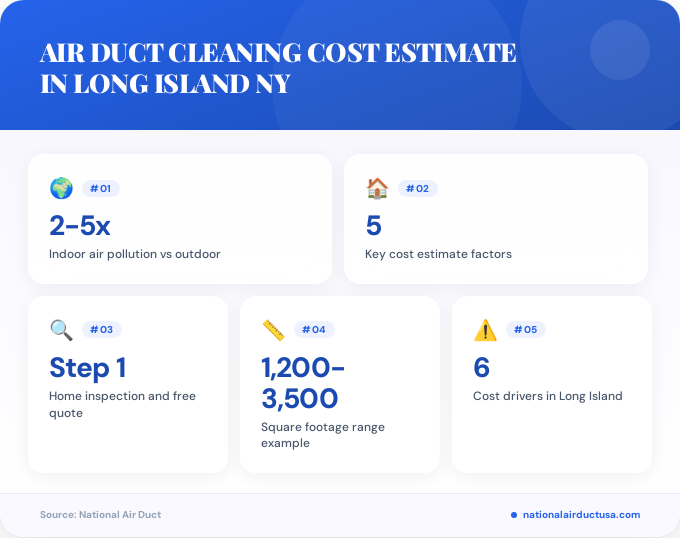
Here’s a surprising fact: the EPA estimates that indoor air can be two to five times more polluted than outdoor air, and in many homes, a huge share of that pollution is recirculating through ductwork that hasn’t been cleaned in years. If you’re searching for an air duct cleaning cost estimate in Long Island, NY, you’ve probably already noticed dusty vents, musty odors, or a furnace that seems to run longer than it used to. Before you call anyone, this checklist walks you through exactly what shapes a fair, accurate estimate and what you can realistically evaluate yourself.
Long Island’s mix of older Levittown-era homes, newer construction in Suffolk County, and coastal humidity near the North and South Shores means duct systems here face unique stress. Salt air, seasonal humidity swings, and decades-old ductwork all factor into pricing. This guide breaks down the process step by step so you know what’s reasonable to expect and what’s worth a professional’s time.
Why Do Air Duct Cleaning Estimates Vary So Much?
No two homes have identical duct systems, so no two estimates should look the same. A 1,200 square foot ranch in Hicksville with six supply vents is a completely different job than a 3,500 square foot colonial in Huntington with two HVAC zones and twenty registers.
Pricing varies based on your specific project, including the number of vents, the length and layout of the ductwork, whether the system is a single trunk line or multiple zones, and how long it’s been since the last cleaning. This is why reputable companies avoid quoting a number over the phone without seeing your system first.
What Actually Drives Air Duct Cleaning Costs in Long Island?
Several concrete factors influence every estimate, and understanding them helps you ask better questions when you call for a quote.
- Home size and vent count: More square footage typically means more supply and return vents, which adds labor time.
- System accessibility: Crawl spaces, finished basements, or ductwork buried in tight attic spaces (common in older Nassau County homes) take longer to access.
- Duct material and condition: Sheet metal, flex duct, and fiberboard all respond differently to cleaning tools and may require different techniques.
- Contamination level: Visible mold, rodent activity, or heavy dust buildup requires additional treatment steps, as outlined in our guide to removing mold in air ducts safely.
- Dryer vent condition: Many homeowners bundle dryer duct cleaning in Long Island with HVAC duct service, which affects total scope.
- Urgency and scheduling: Emergency requests after a flood, fire, or pest infestation often require faster turnaround.
What Can Homeowners Check Before Calling a Pro?
There’s real value in doing a basic self-assessment before your appointment. This helps you describe your system accurately and spot obvious issues.
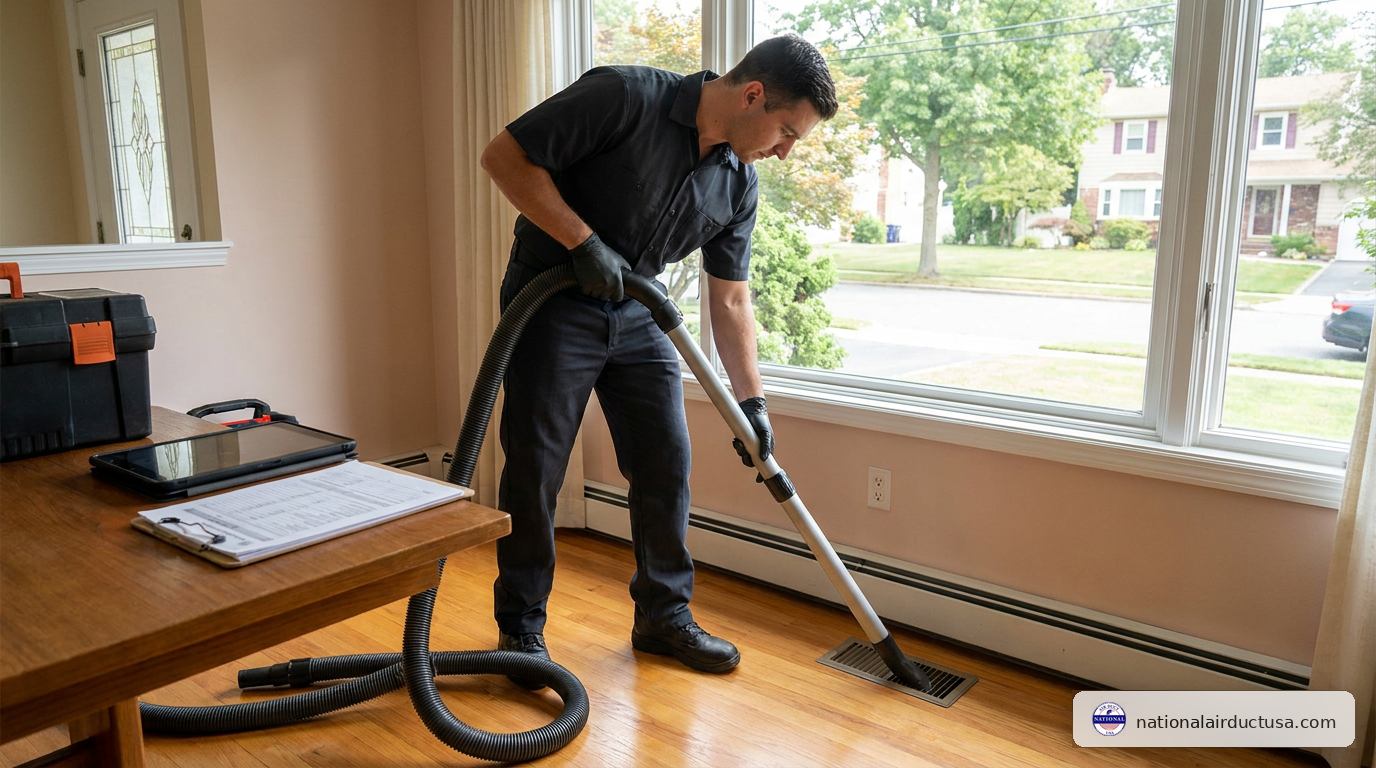
- Remove a vent cover and look inside with a flashlight for visible dust buildup, debris, or discoloration.
- Check your air filter’s condition. A filter clogged within weeks of replacement often signals heavier duct contamination.
- Note any musty or stale odors when the HVAC system first kicks on, especially after sitting idle.
- Count your vents and returns room by room so you can give an accurate number when requesting quotes.
- Check the attic or basement for visible ductwork damage, disconnected sections, or pest entry points.
- Review your last cleaning date if you have service records, since most experts recommend cleaning every three to five years (sooner with pets, allergies, or renovations). See our guide on how often to clean air ducts for specifics.
If you’ve spotted several warning signs already, our article on signs your air ducts need cleaning can help confirm what you’re seeing.
What Should a Professional Inspection Include?
This is where the job shifts from homeowner observation to licensed expertise. A thorough in-home inspection is the only reliable way to generate an accurate estimate, and it should never be rushed.
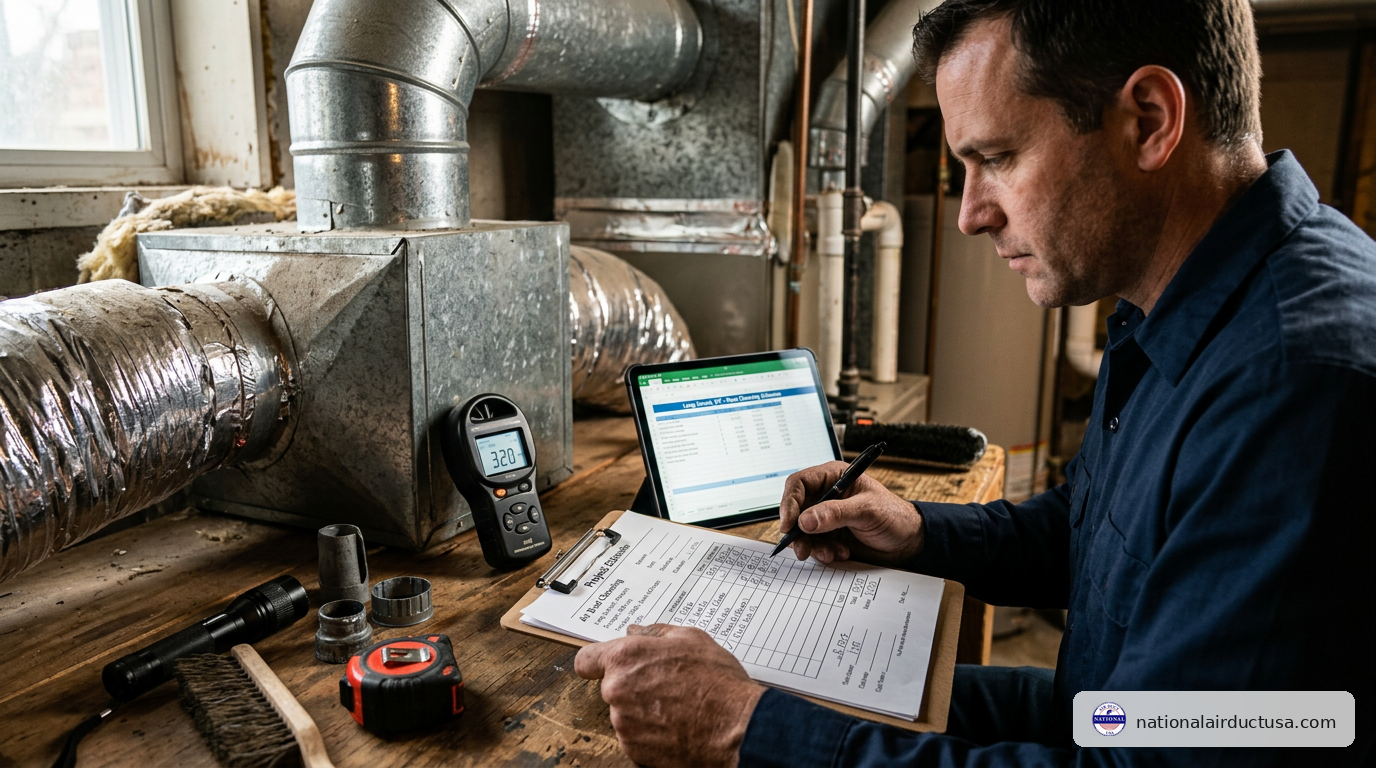
- Camera inspection of ductwork interior to assess dust, mold, or pest contamination
- Measurement of total duct length, number of branches, and system type (single zone vs. multi-zone)
- Testing for negative pressure or airflow restrictions caused by buildup
- Assessment of the HVAC unit itself, including coils and blower components
- Identification of any mold growth requiring specialized remediation
- Written, itemized estimate before any work begins, not a verbal ballpark
This level of detail is exactly what separates a credentialed company from a quick side job. Our professional duct cleaning checklist breaks down exactly what should happen during a real service visit, and our piece on what sets licensed duct cleaners apart explains why licensing matters for Long Island’s older HVAC configurations.
How Does the Estimate Process Actually Work?
A legitimate estimate typically follows a predictable sequence, and knowing it helps you avoid companies that cut corners.
- Initial phone or online inquiry where you describe your home size, symptoms, and any visible issues.
- Scheduled in-home visit for a technician to physically inspect the system, not just estimate from photos.
- Written quote detailing labor, equipment used, and any additional treatments like mold remediation or sanitizing.
- Scope confirmation where you approve the plan before any work starts.
- Service day with before-and-after documentation, similar to what’s shown in our before and after duct cleaning guide.
If you want a deeper walkthrough of the entire process from first call to final inspection, our air duct cleaning Long Island guide covers it in full detail.
How Do Cost Factors Compare Side by Side?
The table below compares common cost-driving scenarios homeowners encounter across Long Island, from Nassau to Suffolk County.
| Scenario | Typical Cost Impact |
|---|---|
| Small home, under 10 vents, easy attic access | Lower end of the range |
| Large multi-zone home, 20+ vents | Higher end of the range |
| Visible mold or pest contamination | Additional remediation cost layered on top |
| Bundled dryer vent + duct cleaning | Often more efficient than separate visits |
| Hard-to-reach crawl space ductwork | Added labor time and equipment needs |
Because of this variability, we always recommend requesting a free written quote instead of relying on a number from a competitor’s website that may not reflect your home’s actual layout.
What Red Flags Signal an Inflated or Lowball Estimate?
Price alone doesn’t tell you whether an estimate is fair. Watch for these warning signs instead.
- No in-home inspection offered before quoting a firm number.
- Extremely low advertised rates that balloon once the technician arrives and finds “additional” issues.
- No mention of equipment type, such as HEPA-filtered vacuum systems or rotary brushes.
- Lack of licensing or insurance documentation when asked directly.
- No before-and-after photos or written scope provided for the job.
Homes with poor air quality already face enough risk from Long Island’s regional air quality challenges, so cutting corners on duct cleaning only compounds the problem.
How Should Long Island Homeowners Budget for Duct Cleaning?
Rather than fixating on a single number, budget around the scope of your home and the condition of your system. Homeowners in older Levittown, Massapequa, or Babylon homes with original ductwork should expect to budget more generously than those in newer Suffolk County construction with modern HVAC zoning.
It also helps to think long-term. Neglected ducts can quietly raise monthly utility bills, a topic we cover in detail in do dirty air ducts increase energy bills in Long Island, NY. Factoring in these hidden costs often makes professional cleaning a smarter long-term investment than it first appears.
For homeowners specifically in Nassau County’s Westbury area, local humidity and older housing stock make routine maintenance especially important; see our dedicated air duct cleaning Westbury, NY resource for area-specific guidance.
System: Single zone
Access: Typically easy
System: Often one or two zones
Access: Moderate, attic/basement mix
System: Multi-zone HVAC
Access: Complex layout, longer runs
Key Takeaways
- Accurate air duct cleaning cost estimates in Long Island, NY require an in-home inspection, not a phone quote.
- Home size, vent count, ductwork accessibility, and contamination level all directly affect pricing.
- Homeowners can safely inspect vents, check filters, and note odors before calling a professional.
- Mold, pest activity, or dryer vent issues typically add scope and should be flagged upfront.
- Always request a written, itemized quote and verify licensing before approving work.
- Bundling dryer vent and duct cleaning often makes scheduling and budgeting more efficient.
- Long Island’s older housing stock and coastal humidity make routine maintenance especially valuable.
People Also Ask
How much does it cost to clean air ducts in a house?
Cost depends on home size, vent count, ductwork accessibility, and contamination level, so pricing varies significantly between homes. The only reliable way to know your cost is a professional in-home inspection followed by a written quote.
Is duct cleaning worth the money?
For homes with visible dust, mold, pest activity, or rising energy bills, professional cleaning often pays off through improved air quality and system efficiency. It’s especially worth it if ducts haven’t been cleaned in three to five years.
How long does professional duct cleaning take?
Most residential jobs take a few hours depending on home size and system complexity. Larger multi-zone homes or those with mold remediation needs may take longer.
Can I clean my own air ducts?
Homeowners can clean vent covers and change filters, but deep ductwork cleaning requires specialized vacuum equipment and training. Attempting it without proper tools can push dust further into the system rather than removing it.
What’s included in a typical duct cleaning estimate?
A thorough estimate includes an in-home inspection, measurement of ductwork, assessment of contamination, and a written breakdown of labor and any additional treatments like mold remediation.
Frequently Asked Questions
Why can’t companies give me a price over the phone?+
Every home’s duct system differs in length, accessibility, and condition, so an accurate quote requires a physical inspection. Phone estimates are often inaccurate and can lead to surprise charges on service day.
Does Long Island’s climate affect duct cleaning needs?+
Yes, coastal humidity and seasonal temperature swings across Long Island can accelerate dust buildup and create conditions favorable to mold growth inside ductwork. Homes near the North and South Shores often need more frequent monitoring.
Should I get multiple estimates before choosing a company?+
Yes, comparing two or three in-home inspections helps you understand the typical scope and cost range for your specific home. Just make sure you’re comparing written estimates based on actual inspections, not phone quotes.
What’s the difference between duct cleaning and dryer vent cleaning cost factors?+
Dryer vent cleaning typically involves a single, shorter duct run but carries higher urgency due to fire risk from lint buildup. HVAC duct cleaning involves a more extensive network of supply and return lines throughout the home.
How do I know if mold is adding to my estimate?+
During the inspection, the technician should show you camera footage or visible evidence of mold and explain what additional remediation steps are needed. This should always appear as a separate line item on your written quote.
How often should I budget for duct cleaning in Long Island?+
Most experts recommend every three to five years, though homes with pets, allergies, recent renovations, or visible mold may need it sooner. Review our guide on how often to clean air ducts for a personalized timeline.
Related: Best Time to Clean Air Ducts in Long Island NY: What Licensed Pros Know
Getting a reliable air duct cleaning cost estimate in Long Island, NY starts with understanding your home’s unique system, not chasing a generic number online. Whether you’re dealing with visible dust, musty odors, or simply overdue maintenance, the smartest move is a professional, in-home inspection backed by a written quote. Explore our full air duct cleaning services or learn more about our team on the about us page, then reach out through our duct cleaning near me resource for Long Island homeowners to schedule your free, no-pressure estimate today.
Further reading: Indoor Air Care Professionals (IAC) in Long Island NY: What They Do and Why You Need One
Further reading: How to Prepare for Air Duct Cleaning in Long Island NY: A Step-by-Step Guide
Further reading: Air Duct Cleaning Nassau County NY: Process, Cost, and Results for Long Island Homeowners
Further reading: Air Duct Cleaning Cost Breakdown: What You’ll Really Pay in Long Island, NY