Quick Answer
Removing mold in air ducts in Long Island, NY requires shutting down the HVAC system, confirming contamination through inspection (not guesswork), and having a licensed professional clean, disinfect, or replace affected ductwork and insulation. Moldy duct insulation generally cannot be cleaned and must be removed and replaced, while hard surfaces can often be treated with HEPA vacuuming and EPA-registered antimicrobials. Long Island’s humid coastal climate, basement moisture, and storm history make prevention through dehumidification and sealed ductwork just as important as the initial cleanup.
Nearly every Long Island homeowner has caught that musty smell drifting from a vent the moment the air conditioning kicks on, and most assume a quick duct cleaning will solve it. But mold in air ducts is rarely a surface problem, it’s a sign of a deeper moisture issue inside the HVAC system itself. Learning mold in air ducts how to remove in Long Island NY properly means treating it as an HVAC contamination and moisture-control problem, not a routine cleaning job, because operating a contaminated system can actively spread spores through every room in the house.
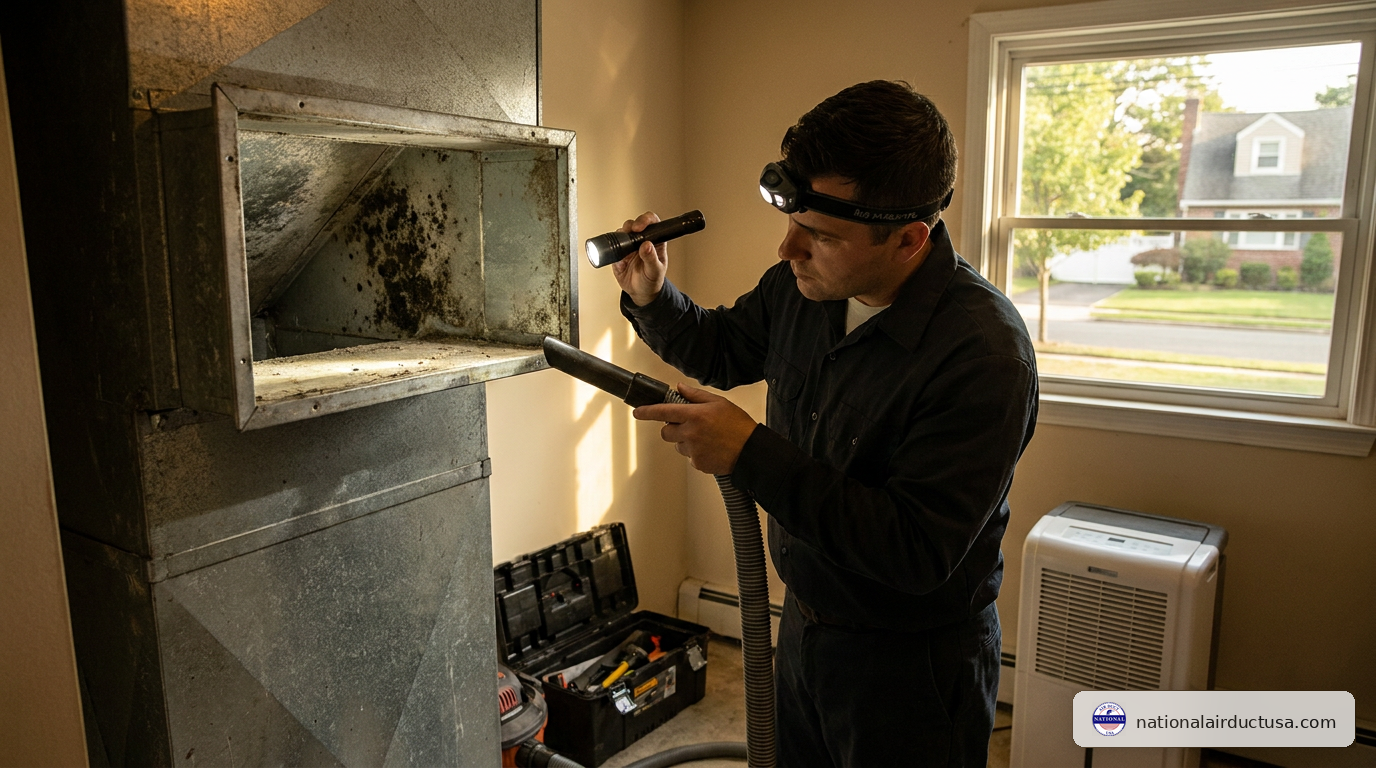
The Environmental Protection Agency has made this distinction clear in its own guidance: if mold is suspected inside ductwork, the heating and cooling system should be shut off until a qualified professional can evaluate it, since running the equipment can distribute spores throughout the building. The EPA’s brief guide to mold, moisture, and your home outlines exactly this risk. This guide walks through how to identify duct mold, what professional remediation actually involves, what it costs, and how Long Island’s climate makes prevention essential.
What Is Mold in Air Ducts, and Why Does It Matter?
Mold in air ducts is fungal growth that colonizes dust, moisture, and organic debris inside the supply or return plenum, the duct lining, or components like the evaporator coil and drain pan. It requires three things to grow: moisture, a moderate temperature, and a food source, which duct dust and fiberglass insulation provide in abundance once humidity rises.
This matters because central HVAC systems don’t just heat and cool air, they move it through every living space in the home multiple times a day. A contaminated system becomes a distribution network for spores, which is why the EPA’s course materials describe mold-in-duct conditions as something requiring prompt investigation, particularly when tied to leaks, flooding, or condensation near an intake, as detailed in the EPA’s mold remediation course materials.
Why Are Long Island Homes So Vulnerable to Duct Mold?
Long Island’s coastal geography creates near-ideal conditions for duct moisture problems. Homes in Nassau and Suffolk Counties regularly deal with summer humidity levels that push air conditioning systems into heavy condensation cycles, and that moisture has to go somewhere.
Common moisture pathways local technicians encounter include:
- Summer humidity combined with AC condensation on coils and plenums
- Damp basements and crawl spaces common in older homes from Levittown to Babylon
- Groundwater intrusion after heavy rain or nor’easters
- Clogged or overflowing condensate pans and drain lines
- Attic ductwork exposed to extreme seasonal temperature swings
- Poorly insulated ducts that “sweat” during humid stretches
- Air leaks drawing humid basement or attic air into return ducts
- Storm surge and flooding from hurricanes and coastal weather events
- Fiberglass-lined or flex ducts that trap moisture and organic debris
Properties near the North Shore and South Shore that have experienced storm flooding are especially prone to recurring issues, since floodwater often reaches ductwork run through basements or crawl spaces. For a deeper look at how seasonal humidity swings affect indoor air, see this breakdown of winter mold risks in Long Island air ducts.
“Duct dust alone does not prove active mold contamination. The real question is whether there’s a moisture source feeding growth, and that’s what a proper inspection needs to confirm before any cleaning begins.”
How Do You Know Mold Is Actually in Your Ducts?
Many homeowners jump straight to assuming mold the moment they smell something musty, but confirmation requires looking for specific, consistent signs rather than a single clue.
- Visible growth inside a supply or return duct, register, or plenum
- Persistent musty odor that starts or intensifies when the HVAC system runs
- Recurring condensation around registers, coils, plenums, or duct seams
- Water stains or microbial growth near the air handler or blower compartment
- A history of flooding or extended HVAC shutdowns
- Mold that keeps returning after surface cleaning attempts
- Contamination near the evaporator coil or condensate drain pan
If you’re noticing excess dust alongside these symptoms, it’s worth reviewing why air ducts get so dusty in Long Island homes, since dust accumulation and moisture problems often compound each other. A qualified inspector will typically check the blower compartment, coil area, and any duct sections near past leaks, since these are the most common failure points according to BELFOR’s professional guide to mold in air vents and ducts.
What Does Professional Mold Removal From Ducts Involve?
Professional remediation follows a structured sequence rather than a single cleaning pass. Skipping steps is why many DIY attempts and budget cleanings fail to stop regrowth.
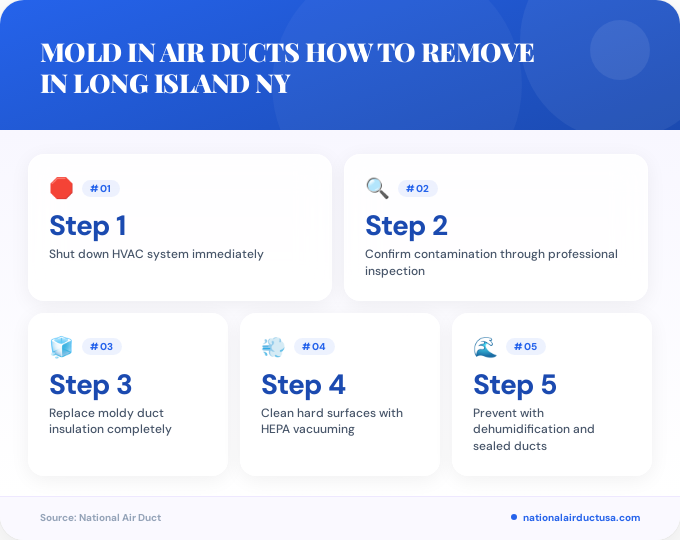
- System shutdown: HVAC operation stops immediately to prevent further spore circulation.
- Inspection and testing: A technician identifies the extent of contamination, moisture source, and affected components, including coils, drain pans, and duct sections.
- Containment: Work areas are sealed off to prevent cross-contamination into living spaces during remediation.
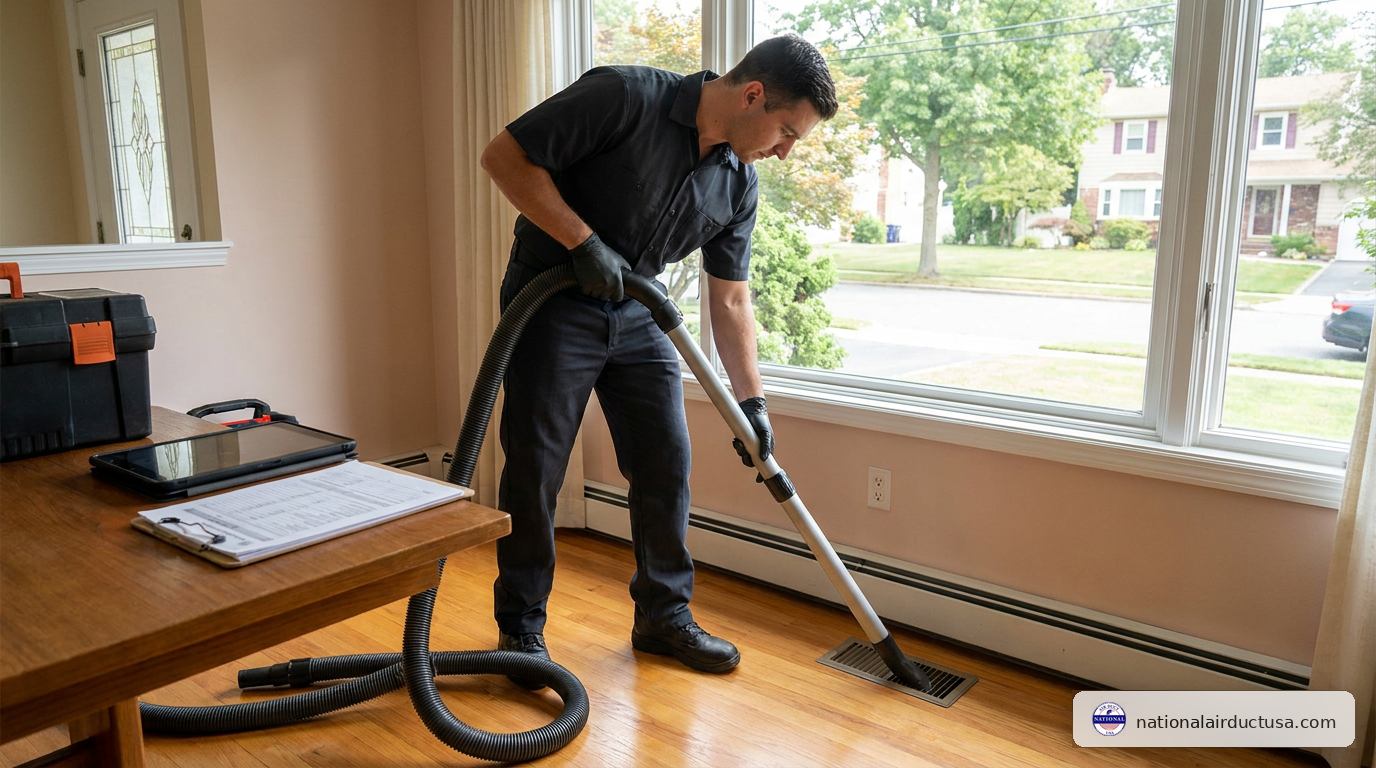
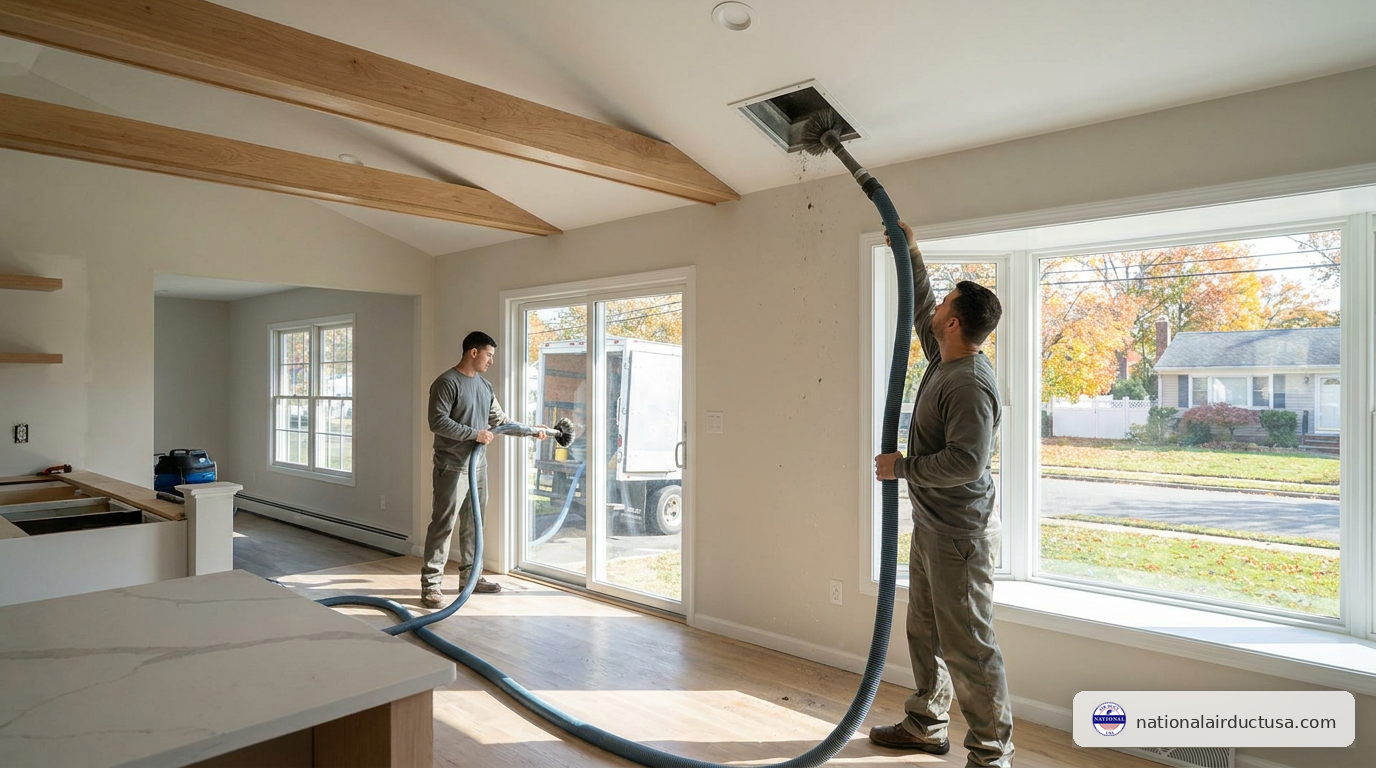
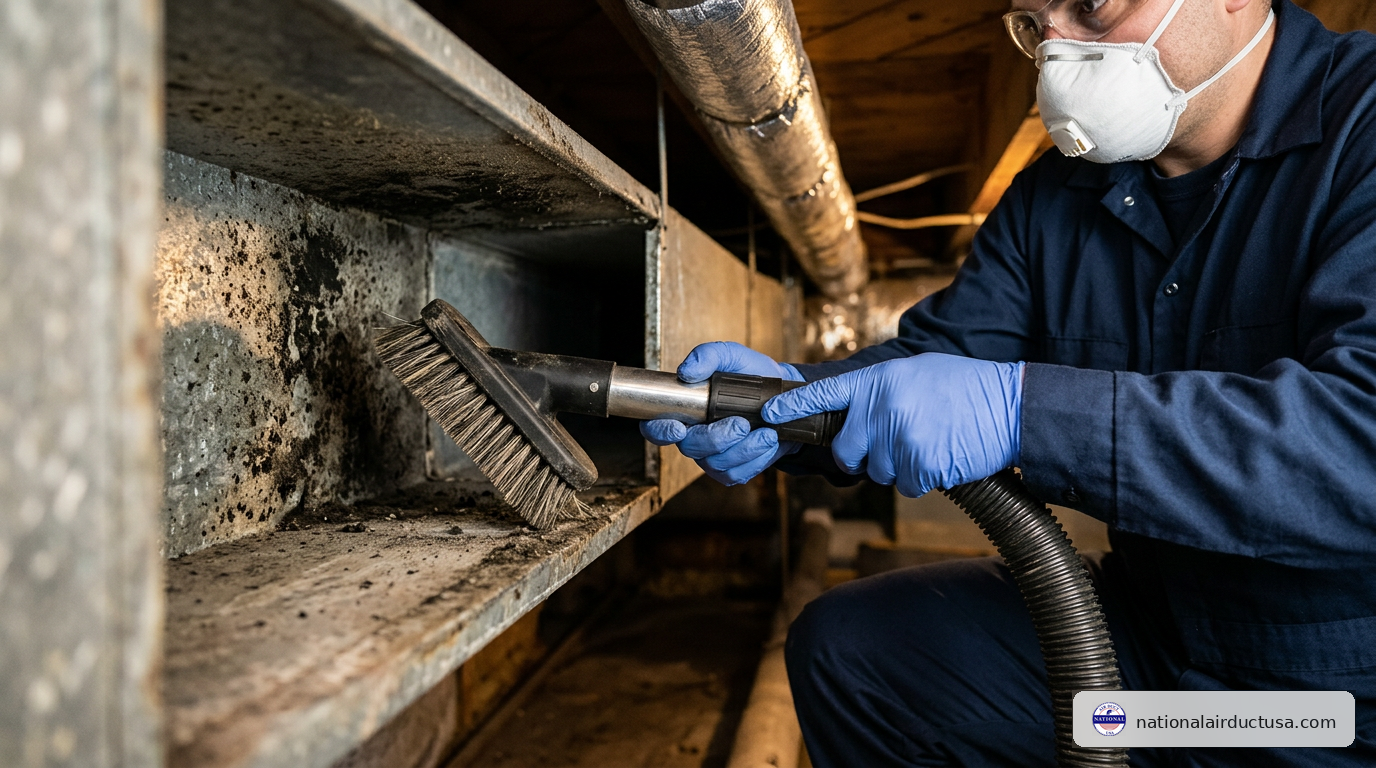
- HEPA vacuuming and source removal: Hard, non-porous duct surfaces are cleaned with HEPA-filtered equipment and brush agitation.
- Removal of contaminated insulation: Moldy internal fiberglass duct liner is not considered effectively cleanable and must be physically removed and replaced, a point the EPA emphasizes directly in its mold and moisture guidance.
- Antimicrobial treatment: EPA-registered antimicrobial products are applied to remaining hard surfaces to address residual spores, sometimes using fogging equipment for hard-to-reach sections, a method explained further on our mold fogger for AC ducts page.
- Moisture source correction: The underlying cause (a leak, clogged drain, poor insulation, or humidity imbalance) must be fixed, or mold will return.
- Verification and clearance: A final inspection, and sometimes post-remediation testing, confirms the system is safe to restart.
This sequence mirrors the EPA’s own position that remediation isn’t just cleaning, it’s addressing contamination and its root cause together, as outlined in the agency’s guidance on when air duct cleaning is appropriate. For a complete walkthrough of what a standard service visit includes, see our step-by-step duct cleaning process guide and the professional duct cleaning checklist for Long Island homes.
Can You Remove Duct Mold Yourself, or Do You Need a Professional?
Minor surface mold on an easily accessible register cover can sometimes be wiped with a mild detergent, but internal duct contamination is a different matter entirely. Homeowners cannot see inside most ductwork, cannot access the blower compartment or coil safely, and cannot replace contaminated insulation without specialized tools and containment procedures.
| Factor | DIY Attempt | Professional Remediation |
|---|---|---|
| Internal duct access | Limited, no visibility | Full inspection cameras and tools |
| Insulation replacement | Not feasible | Removed and replaced properly |
| Spore containment | High risk of spreading | Sealed containment protocols |
| Root cause diagnosis | Often missed | Identified and corrected |
If your ducts have been contaminated repeatedly, it may also be time to evaluate how your cleaning provider is licensed and trained; our article on what sets licensed duct cleaners apart explains why credentials matter for systems like those common across Long Island.
What Affects the Cost of Duct Mold Remediation in Long Island?
Pricing for duct mold remediation in Long Island, NY varies significantly based on the scope of contamination, the size and layout of the HVAC system, whether insulation or ductwork must be replaced, and how much containment and labor the job requires. Minor isolated surface treatment sits at the lower end, while full duct replacement following a flood event or long-term moisture problem sits considerably higher.
Multi-zone or large duct systems
Flood or storm damage history
Hidden contamination behind walls
Single-zone, accessible ductwork
No insulation replacement needed
Routine maintenance history
HEPA cleaning and antimicrobial treatment
Moisture source correction
Post-job verification
Because every home’s ductwork, moisture history, and contamination level differ, pricing varies based on your specific project, and it’s best to request a custom quote after an in-home or video inspection rather than rely on a flat estimate. National Air Duct prioritizes thorough diagnostics and lasting correction over quick, surface-level fixes, which is reflected in the scope of work rather than the lowest possible price tag. You can learn more about our approach on our about us page or review our guidance on cleaning frequency to understand how maintenance schedules affect long-term costs.
How Can You Prevent Mold From Returning to Your Ducts?
Remediation only solves half the problem if the moisture source isn’t addressed. Long Island’s humid summers and storm-prone falls make ongoing moisture control essential, not optional.
- Maintain indoor relative humidity below roughly 50 percent using a dehumidifier in basements and crawl spaces
- Seal duct joints and seams to stop humid air infiltration from attics or basements
- Upgrade or repair insulation on ducts that run through unconditioned spaces
- Inspect and clear condensate drain lines every cooling season
- Address roof, basement, or plumbing leaks immediately, before they reach ductwork
- Schedule regular professional inspections, especially after flooding or major storms
- Replace flex ducts that have trapped moisture or organic debris repeatedly
Indoor air quality concerns go beyond mold alone. For a broader view of pollutants affecting Long Island homes, see our resource on Long Island air quality factors and how HVAC systems contribute to them. The theindoorreport also outlines useful home-level warning signs in its guide to recognizing mold in air vents.
What Does New York Law Require for Mold Remediation Contractors?
New York has specific legal protections for homeowners dealing with mold remediation, even outside New York City. For residential buildings in New York City with 10 or more units, state law requires properties with more than 10 square feet of mold to use a New York State Department of Labor-licensed mold assessor and a separately licensed remediator, with the two contractors kept independent of each other, as detailed in NYC’s mold busters resource page. This specific rule applies to NYC properties, not automatically to every Nassau or Suffolk County home, but it signals the state’s broader licensing standards.
For any home-improvement contract in New York, including mold remediation work, the law generally requires a written agreement specifying scope, price, and cancellation rights. The New York Attorney General’s office notes homeowners typically have a three-business-day cancellation period on covered home-improvement contracts, a protection outlined in the Attorney General’s guide to fighting mold. Always request a detailed written contract before remediation begins.
- Key Takeaways
- Mold in ductwork is a moisture and HVAC contamination issue, not a simple cleaning job, and systems should be shut down once mold is suspected.
- Moldy internal duct insulation generally cannot be cleaned effectively and must be removed and replaced.
- Long Island’s humidity, storm history, and basement moisture make ducts especially prone to recurring mold without proper prevention.
- Warning signs include musty odors when the system runs, visible growth, recurring condensation, and mold that keeps returning after cleaning.
- Professional remediation follows a multi-step process: shutdown, inspection, containment, cleaning, insulation removal, antimicrobial treatment, and moisture correction.
- Pricing depends heavily on contamination scope and system size, so always request a custom quote rather than relying on flat estimates.
- New York law requires written contracts and cancellation rights for home-improvement work, including mold remediation.
People Also Ask
Can you clean mold out of air ducts yourself?
Surface mold on an accessible register can sometimes be wiped clean, but internal duct contamination requires professional tools, containment, and often insulation replacement that homeowners cannot safely perform themselves.
Is it safe to run my HVAC system if I suspect mold in the ducts?
No, the EPA recommends shutting off heating and cooling equipment immediately if mold is suspected, since running the system can distribute spores throughout the home.
Why does mold keep coming back after I clean my air ducts?
Recurring mold usually means the underlying moisture source, such as a leak, clogged condensate line, or humid air infiltration, was never addressed, so cleaning alone treats the symptom rather than the cause.
How do I know if my Long Island home’s ducts have mold versus just dust?
Look for a musty smell that intensifies when the system runs, visible dark growth, recurring condensation near vents or coils, or a history of flooding, since dust alone does not confirm active mold contamination.
Frequently Asked Questions
How much does mold removal from air ducts cost in Long Island, NY?+
Costs vary widely depending on the extent of contamination, whether insulation or ductwork must be replaced, and system size, so it is best to request a custom quote after an inspection rather than rely on a flat price.
Can duct insulation be cleaned, or does it need to be replaced?+
EPA guidance indicates that moldy internal duct insulation is generally not effectively cleanable and should be removed and replaced rather than treated in place.
What causes mold in air ducts on Long Island specifically?+
Coastal humidity, air conditioning condensation, damp basements, storm flooding, and poorly insulated ductwork all contribute to the moisture conditions that allow mold to grow inside HVAC systems across Nassau and Suffolk Counties.
Does New York law require licensed contractors for mold remediation?+
New York City buildings with 10 or more units and over 10 square feet of mold must use licensed, independent assessors and remediators; smaller properties and those outside NYC should still verify contractor licensing and request a written contract.
How long does professional duct mold remediation take?+
Timeframes depend on contamination severity and whether ductwork or insulation needs replacement, ranging from a single day for isolated issues to multiple days for extensive flood-related damage.
What’s the difference between duct cleaning and mold remediation?+
Standard duct cleaning removes dust and debris, while mold remediation addresses active fungal contamination, requires containment protocols, and often involves replacing materials rather than just cleaning them.
How can I prevent mold from returning after remediation?+
Keep indoor humidity below roughly 50 percent, seal duct leaks, clear condensate drains regularly, and fix any water intrusion immediately, since remediation without moisture correction almost always leads to recurrence.
If you’ve noticed musty odors, visible growth, or recurring condensation around your vents, don’t wait for the problem to spread further through your home’s air supply. Learn more about mold in HVAC ducts and how our team approaches diagnosis and correction, or visit National Air Duct to schedule an inspection. You can also review our signs you need duct cleaning services guide or reach out directly through our contact page to get a custom assessment of your Long Island home’s HVAC system.
Further reading: What Happens If You Don’t Clean Air Ducts in Long Island NY This Fall
Further reading: How to Prepare for Air Duct Cleaning in Long Island NY: A Step-by-Step Guide