Clogged Coil Air Conditioner in Long Island NY: Complete 2026 Guide to Diagnosis, Costs & Prevention
Quick Answer
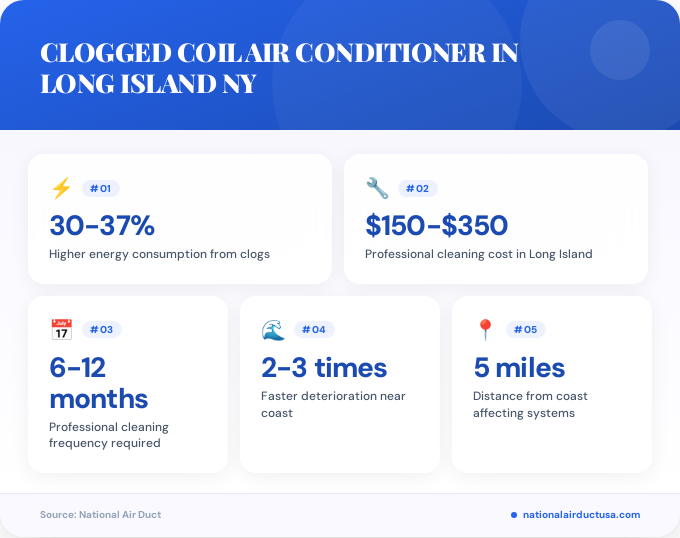
Clogged coil air conditioners in Long Island NY experience 2-3 times faster deterioration than inland systems due to coastal salt air corrosion, causing 30-37% higher energy consumption and requiring professional cleaning every 6-12 months at costs ranging from $150-$350. Coastal homeowners should schedule twice-yearly maintenance to prevent salt deposits from permanently damaging evaporator and condenser coils.
Long Island homeowners face a unique challenge that sets their air conditioning systems apart from nearly anywhere else in New York: aggressive coastal corrosion. If you’ve noticed your AC struggling to cool your home, strange odors, or utility bills creeping higher each summer, a clogged coil air conditioner in Long Island NY is likely the culprit. The same Atlantic breezes that make waterfront living desirable also carry salt-laden moisture that wreaks havoc on HVAC equipment.
Here’s a startling reality: homes within 5 miles of the coast in Nassau and Suffolk Counties experience 2-3 times faster coil deterioration than properties just 15 miles inland. This accelerated degradation isn’t just a minor inconvenience. Dirty, corroded coils force your system to consume up to 37% more energy, transforming what should be efficient cooling into a costly struggle against physics itself.
This comprehensive guide explores everything Long Island residents need to know about clogged air conditioner coils, from identifying early warning signs to understanding professional cleaning costs, maintenance schedules specific to coastal environments, and prevention strategies that can extend your system’s lifespan by years. Whether you’re in Babylon, Huntington, or the Hamptons, understanding how salt air affects your HVAC investment is essential to maintaining comfort and controlling costs.
What Causes Clogged Coils in Long Island Air Conditioners?
Air conditioner coils serve as the heat exchange interface where refrigerant absorbs warmth from your indoor air (evaporator coils) or releases it outdoors (condenser coils). When these aluminum or copper fins become clogged, the entire cooling cycle becomes dramatically less efficient.
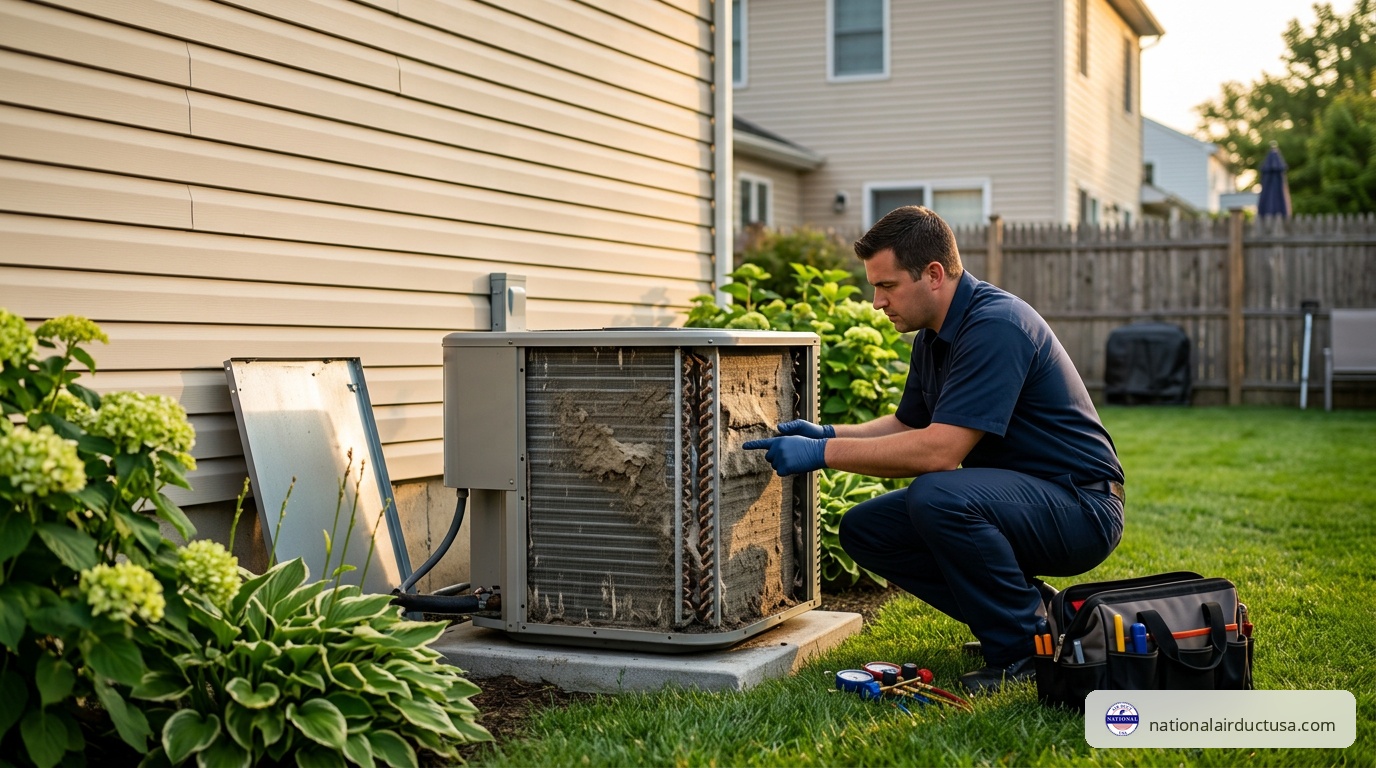
In Long Island, clogged coils result from a perfect storm of environmental factors. Coastal salt spray deposits microscopic salt crystals on outdoor condenser coils, creating an insulating layer that blocks heat transfer. Pollen from the region’s abundant vegetation, particularly during spring months, combines with Long Island’s high humidity levels to form sticky residue that traps dust, dirt, and other airborne particles.
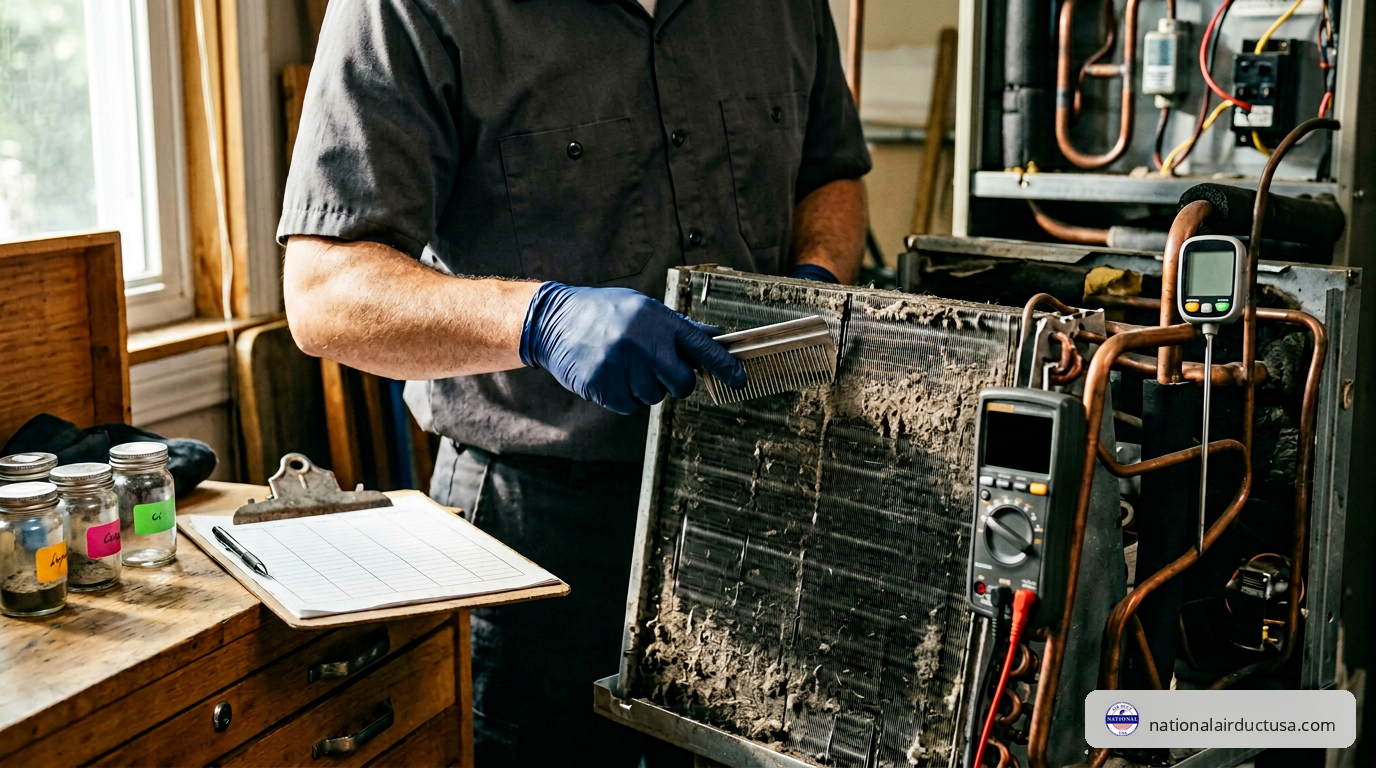
Indoor evaporator coils face different challenges. Without proper filtration, household dust, pet dander, and cooking oils circulate through your system. As moist air passes over cold evaporator fins, condensation acts like glue, causing particles to accumulate. Over months and years, this buildup creates an insulating barrier that prevents proper heat absorption. The connection between Long Island air quality issues and HVAC performance cannot be overstated.
| Contaminant Type | Primary Source in Long Island | Affected Coil |
|---|---|---|
| Salt Deposits | Coastal moisture, ocean spray | Condenser (outdoor) |
| Pollen & Vegetation | Trees, grasses, gardens | Both indoor/outdoor |
| Household Dust | Normal indoor activity | Evaporator (indoor) |
How Does Coastal Salt Air Affect Long Island HVAC Systems?
The Atlantic Ocean’s proximity makes Long Island exceptional in many ways, but for HVAC equipment, it creates an extraordinarily corrosive environment. Salt-laden air accelerates metal corrosion at rates that confound homeowners accustomed to typical maintenance schedules from other regions.
When salt particles land on aluminum fins and copper tubing, they attract moisture from the air. This creates an electrolytic reaction that etches away protective coatings and corrodes the metal itself. Over time, salt corrosion can create pinhole leaks in refrigerant lines, requiring expensive repairs that far exceed simple cleaning costs.
Properties in waterfront communities like the Hamptons, Fire Island, Long Beach, and Jones Beach face the most severe exposure. However, prevailing winds can carry salt spray several miles inland, affecting homes throughout Nassau and Suffolk Counties. This is why HVAC professionals in Long Island recommend specialized maintenance protocols for coastal installations, including protective coatings and more frequent inspections.
What Are the Warning Signs of a Clogged Coil Air Conditioner?
Recognizing clogged coil symptoms early can save thousands in repair costs and prevent complete system failure during Long Island’s hottest summer weeks. Several telltale indicators should prompt immediate inspection.
Reduced cooling capacity is the most obvious sign. If your thermostat reads 72°F but rooms feel closer to 78°F, restricted airflow across dirty coils is preventing proper heat exchange. You may notice the system running continuously without reaching set temperatures, especially during afternoon heat peaks.
Increased energy bills provide quantifiable evidence. HVAC systems account for 40-60% of residential energy consumption, so even a modest efficiency drop creates noticeable cost increases. Compare current summer bills to previous years. Jumps of 20-30% without corresponding usage changes often indicate coil problems that are related to overall system efficiency issues affecting your entire HVAC infrastructure.
Physical symptoms include frozen evaporator coils, visible ice formation on refrigerant lines, water pooling around the indoor unit from excessive condensation, and unusual sounds like hissing or bubbling. Frozen evaporator coils often result from restricted airflow caused by dirt buildup preventing proper refrigerant evaporation.
How Much Energy Does a Clogged Coil Waste?
The financial impact of dirty coils extends far beyond initial cleaning costs. Research consistently shows that clogged coils force HVAC systems to consume 30-37% more electricity than properly maintained units, as compromised heat transfer requires longer runtime to achieve desired temperatures.
For context, a typical Long Island home running a 3-ton central air conditioner approximately 8 hours daily during summer months uses roughly 3,600 kWh per cooling season. At average electricity rates of $0.20-$0.25 per kWh, that represents $720-$900 in seasonal cooling costs. A 35% efficiency penalty from dirty coils adds $250-$315 annually in wasted electricity alone.
This calculation doesn’t account for accelerated wear on compressors and other components. When coils can’t transfer heat efficiently, compressors work harder and longer, operating at higher pressures and temperatures. This stress shortens equipment lifespan, potentially advancing the need for a $4,000-$10,000+ system replacement by several years. Many homeowners notice connections between overall system maintenance, including ductwork and furnace components, all contributing to total energy efficiency.
What Does Professional Coil Cleaning Cost in Long Island?
Professional coil cleaning costs vary significantly based on system accessibility, contamination severity, and whether salt corrosion requires specialized treatment. Understanding the pricing landscape helps homeowners make informed maintenance decisions.
Standard coil cleaning typically ranges from $150-$350 for residential systems, with coastal properties often toward the higher end due to corrosion complexity. This service includes cleaning both evaporator and condenser coils, removing accumulated debris, checking refrigerant levels, and inspecting for damage.
Annual tune-up packages that include coil cleaning as part of comprehensive maintenance run $89-$200 depending on service provider and system size. These preventive plans often provide better value than emergency cleaning after efficiency has already degraded. Regular maintenance programs typically include filter replacement, electrical testing, and performance verification alongside coil treatment.
Repair costs when clogged coils cause secondary damage increase substantially. Salt corrosion leading to refrigerant leaks can cost $200-$800 for parts and labor, while complete coil replacement due to permanent damage may require $1,000-$2,500+ depending on system configuration and accessibility.
| Service Type | Typical Cost Range | What’s Included |
|---|---|---|
| Basic Coil Cleaning | $150-$350 | Both coils cleaned, visual inspection |
| Annual Tune-Up Package | $89-$200 | Coil cleaning, filter change, full system check |
| Salt Corrosion Repair | $200-$800 | Leak detection, refrigerant recharge, minor repairs |
| Coil Replacement | $1,000-$2,500+ | New coil, installation labor, refrigerant charge |
Pricing varies based on your specific installation, accessibility challenges, and the extent of maintenance neglect. Premium service providers offering specialized coastal treatments and warranty programs may charge higher rates but deliver superior long-term value through extended equipment life and improved efficiency.
Should You Clean AC Coils Yourself or Hire a Professional?
YouTube tutorials make DIY coil cleaning look straightforward, but Long Island’s unique salt corrosion challenges and refrigerant handling requirements create significant risks for untrained homeowners. Understanding when professional service is essential versus when basic maintenance is appropriate helps protect your investment.
Basic outdoor condenser coil maintenance is reasonable for handy homeowners. Shutting off power, gently spraying fins from inside-out with a garden hose, and trimming vegetation to maintain 2-foot clearance requires no special tools or expertise. This surface cleaning removes loose debris but cannot address internal contamination or salt deposits embedded in fin spaces.
However, thorough cleaning of coastal-affected coils requires specialized equipment and knowledge. Professional technicians use commercial-grade coil cleaners formulated to dissolve salt residue without damaging aluminum fins or copper tubing. They understand proper chemical dilution ratios, contact times, and neutralization procedures that prevent corrosive damage. Similar expertise applies across various HVAC maintenance procedures requiring professional knowledge.
Indoor evaporator coil access typically requires removing panels and potentially disconnecting components in ways that void warranties if done incorrectly. More critically, working around refrigerant lines without proper recovery equipment violates EPA regulations and poses environmental hazards. Professional HVAC technicians are certified to handle refrigerants safely and possess vacuum equipment necessary if lines must be opened.
How Often Should Long Island Homeowners Clean AC Coils?
Optimal maintenance frequency depends heavily on proximity to saltwater and environmental exposure. Unlike inland properties where annual service suffices, coastal Long Island locations demand more aggressive schedules to combat accelerated corrosion.
Coastal properties within 5 miles of the ocean should schedule professional coil cleaning twice annually, ideally in spring before cooling season begins and again in fall after heavy use ends. This bi-annual approach prevents salt accumulation from progressing to permanent corrosion stages. Waterfront homes in communities like the Hamptons, Fire Island, and Montauk face the most aggressive exposure and benefit most from this frequency.
Properties 5-15 miles inland can typically maintain efficiency with annual professional cleaning scheduled in early spring. This timing ensures coils are clean before summer heat stress begins. Mid-season filter changes and basic condenser cleaning help maintain performance between professional services, particularly relevant for homes also managing indoor air quality concerns affecting allergy and asthma sufferers.
Homes with pets, nearby construction activity, or heavily landscaped properties may require more frequent attention regardless of coastal proximity. Similarly, new construction homes in Long Island NY often need additional cleaning during the first year due to drywall dust and construction debris circulation through HVAC systems.
How Can You Prevent Coil Buildup and Corrosion?
While Long Island’s coastal environment guarantees some level of coil contamination, strategic prevention measures can dramatically slow accumulation rates and extend time between professional cleanings. A multi-layered approach addresses both outdoor and indoor challenges.
Protective coil coatings represent the gold standard for coastal installations. These specialized epoxy or polymer treatments create a barrier between metal surfaces and salt-laden air, significantly reducing corrosion rates. While adding $300-$800 to initial installation costs depending on system size and coating type, they can double or triple coil lifespan in harsh coastal environments.
Regular filter changes form the foundation of evaporator coil protection. High-quality pleated filters rated MERV 8-11 changed every 30-60 days during cooling season capture the majority of particles before they reach coils. Upgrading from basic fiberglass filters to pleated media filters costs only $3-$8 per filter but provides exponentially better protection. This basic maintenance parallels the importance of comprehensive duct cleaning services that remove contamination sources from your entire air distribution system.
Outdoor unit placement and landscaping choices affect condenser coil exposure. Installing units on elevated pads reduces ground-level dust and debris. Maintaining 24-inch clearance around all sides ensures adequate airflow and simplifies cleaning access. Avoiding placement directly downwind of driveways, where tire dust and road salt concentrate, minimizes contamination sources.
Lifespan Extension: 2-3x longer
Best For: Coastal properties
Particle Capture: Up to 85%
Change Frequency: 30-60 days
Elevation: 6-12 inches
Shade Benefit: 10-15% efficiency gain
Equipment: Garden hose
Time Required: 5-10 minutes
People Also Ask
Why is my AC blowing warm air in Long Island?
Warm air from your AC typically indicates clogged evaporator or condenser coils preventing proper heat transfer, particularly common in coastal Long Island due to salt and debris buildup. Low refrigerant from corrosion-induced leaks or failed compressors are other possibilities requiring professional diagnosis.
How often should I clean AC coils in Long Island?
Coastal Long Island properties within 5 miles of the ocean need professional coil cleaning twice yearly to combat salt corrosion, while inland homes typically require annual service. Homes with pets, heavy landscaping, or construction exposure may benefit from more frequent cleaning regardless of location.
Can dirty AC coils cause high electric bills?
Yes, clogged coils force air conditioners to consume 30-37% more electricity than clean systems as restricted heat transfer requires longer runtime to achieve desired temperatures. For typical Long Island homes, this can add $250-$315 annually to cooling costs during summer months.
Should I clean AC coils myself or hire a professional?
While basic outdoor condenser rinsing is safe for homeowners, thorough coil cleaning requires specialized chemicals for salt removal and refrigerant handling certifications. Professional service prevents warranty violations, ensures proper treatment of coastal corrosion, and addresses internal contamination inaccessible to DIY methods.
What’s included in an AC tune-up for Long Island homes?
Comprehensive tune-ups include coil cleaning for both evaporator and condenser units, filter replacement, refrigerant level checks, electrical connection testing, thermostat calibration, and performance verification. Coastal-specific services may add salt corrosion inspection and protective coating application.
How long do AC coils last in coastal Long Island?
Without protection, condenser coils in coastal areas may only last 5-8 years before salt corrosion causes leaks or permanent damage, compared to 12-15 years for inland installations. Protective coatings and bi-annual professional cleaning can extend coastal coil lifespan to near-inland durability levels.
Frequently Asked Questions
What happens if I never clean my air conditioner coils?+
Neglected coils progressively reduce cooling capacity and efficiency, eventually leading to compressor failure from overwork and overheating. In coastal Long Island environments, salt corrosion will create refrigerant leaks requiring expensive repairs or complete system replacement years before normal equipment lifespan.
Can I use vinegar to clean AC coils?+
While diluted white vinegar can dissolve some buildup, it’s ineffective against salt corrosion and may not fully penetrate between tightly-spaced fins. Professional coil cleaners use pH-balanced formulas specifically designed for aluminum and copper that provide superior cleaning without risking metal damage or incomplete rinsing.
How do I know if my coils are damaged beyond cleaning?+
Visible corrosion holes, bent or crushed fins covering more than 20% of coil surface, active refrigerant leaks indicated by oily residue or hissing sounds, and coils that remain inefficient after professional cleaning all suggest replacement may be necessary. Professional inspection with pressure testing provides definitive diagnosis.
Does homeowners insurance cover coil damage from salt corrosion?+
Most standard homeowners policies exclude damage from lack of maintenance or gradual deterioration, categorizing salt corrosion as preventable wear rather than sudden covered peril. Some coastal-specific policies or HVAC equipment warranties may provide limited coverage, but documentation of regular professional maintenance is typically required.
Are there air conditioners specifically designed for coastal environments?+
Several manufacturers offer marine-grade or coastal models featuring factory-applied coil coatings, corrosion-resistant fasteners, and enhanced fin spacing to resist salt buildup. While costing 15-25% more than standard units, these specialized systems can double equipment lifespan in aggressive Long Island coastal locations.
What’s the difference between evaporator and condenser coil problems?+
Dirty evaporator coils (indoor) typically cause frozen coils, reduced airflow, and ice formation, while clogged condenser coils (outdoor) lead to high-pressure shutdowns, warm air output, and compressor overheating. Both reduce efficiency, but condenser issues are more common in coastal areas due to salt exposure.
Should I replace my entire AC system if coils are severely corroded?+
If your system is over 10 years old and coil replacement costs exceed 50% of new equipment price, full replacement often provides better long-term value through improved efficiency and warranty coverage. Modern systems with coastal-rated components and proper protection can deliver significantly better performance and longevity in Long Island’s challenging environment.
Key Takeaways: Protecting Your Long Island AC Investment
- Coastal properties experience 2-3 times faster coil corrosion than inland homes, requiring twice-yearly professional cleaning to prevent permanent damage and maintain efficiency.
- Dirty coils waste 30-37% more energy, adding $250-$315 annually to typical Long Island cooling costs while accelerating wear on expensive compressor components.
- Professional coil cleaning costs $150-$350, far less than the $1,000-$2,500+ expense of coil replacement or $4,000-$10,000+ for complete system failure from neglect.
- Salt-specific maintenance protocols are essential for waterfront properties, including specialized cleaners, protective coatings, and corrosion monitoring that DIY methods cannot provide.
- Prevention through quality filters, strategic placement, and protective coatings can double equipment lifespan in harsh coastal environments while reducing cleaning frequency.
- Annual maintenance contracts typically cost $89-$200 and include coil cleaning alongside comprehensive system checks that identify problems before they become expensive failures.
- Recognizing early warning signs like reduced cooling, higher bills, frozen coils, or unusual sounds allows intervention before clogged coils cause secondary damage to compressors and refrigerant systems.
Protect Your Comfort and Investment
Living in Long Island comes with unique HVAC challenges that require proactive attention and specialized knowledge. The same coastal environment that makes Nassau and Suffolk Counties desirable places to live also creates accelerated wear on air conditioning systems that homeowners in other regions never experience.
A clogged coil air conditioner in Long Island NY isn’t just an inconvenience during summer heat waves. It’s a progressive efficiency killer that silently drains your wallet through higher electric bills while shortening your equipment’s lifespan. The good news? With proper maintenance schedules, quality professional service, and strategic prevention measures, you can protect your investment and maintain optimal comfort despite the challenging coastal environment.
Don’t wait until warm air blowing from vents or skyrocketing utility bills force emergency service calls during peak season. Establishing a relationship with qualified HVAC professionals who understand Long Island’s specific challenges, scheduling preventive maintenance before problems develop, and investing in protective measures for coastal installations pays dividends through lower operating costs and extended equipment life.
At National Air Duct, we understand the unique demands Long Island’s coastal environment places on HVAC systems. Our comprehensive services address not just coil cleaning but the entire indoor air quality ecosystem, from affordable air duct cleaning to specialized treatments that extend equipment life in salt air conditions.
Contact us today for a comprehensive assessment of your system’s condition and a customized maintenance plan designed specifically for your property’s location and exposure. Whether you’re on the waterfront or miles inland, protecting your HVAC investment starts with understanding the challenges and implementing solutions before problems develop.