Quick Answer
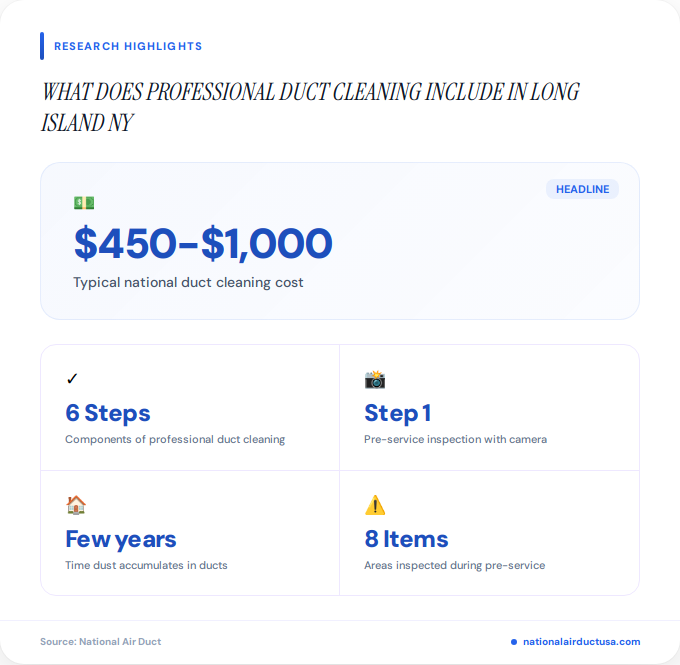
Professional duct cleaning in Long Island, NY should include a full pre-service inspection, containment and system protection, negative-pressure vacuum collection, mechanical agitation of every duct run, cleaning of the air handler and coil components, and a post-cleaning verification walkthrough. The EPA cites typical national pricing of $450 to $1,000 per heating-and-cooling system, though Long Island costs vary by home size, number of systems, and accessibility. A homeowner can handle light vent-cover dusting and filter changes, but everything beyond that requires licensed, insured equipment and technicians.
Here’s a statistic that surprises most homeowners: the average residential HVAC system can accumulate pounds of dust, pet dander, and debris inside its ductwork within just a few years, yet many “duct cleaning” services on Long Island amount to little more than a technician vacuuming a handful of supply vents for twenty minutes. So what does professional duct cleaning include in Long Island, NY, when it’s done correctly? The answer is a documented, multi-step process covering the entire HVAC system, not a quick cosmetic pass.
This checklist walks through exactly what a legitimate job looks like, from the first inspection to the final verification, so you know what to expect, what equipment should show up at your door, and where the line falls between a task you can do yourself and one that demands licensed professionals.
Why Does a Written Checklist Matter for Long Island Homeowners?
Long Island’s housing stock ranges from century-old Cape Cods in Huntington to newer split-levels in Suffolk County, and each home presents different duct configurations, crawlspace access, and contamination levels. Without a written scope of work, it’s nearly impossible to verify that a contractor actually cleaned your full system rather than a few visible registers.
According to the EPA’s guidance on air duct cleaning, there is no evidence that simply blowing air through ducts improves air quality unless the job addresses the entire system with proper source removal. That’s why a transparent checklist, covering inspection, containment, vacuum collection, agitation, and verification, is the only way to confirm you received a complete service rather than a shortcut.
If you’re comparing providers, our air duct cleaning guide for Long Island breaks down how local contractors should scope a job before any equipment touches your system.
What Happens During the Pre-Service Inspection?
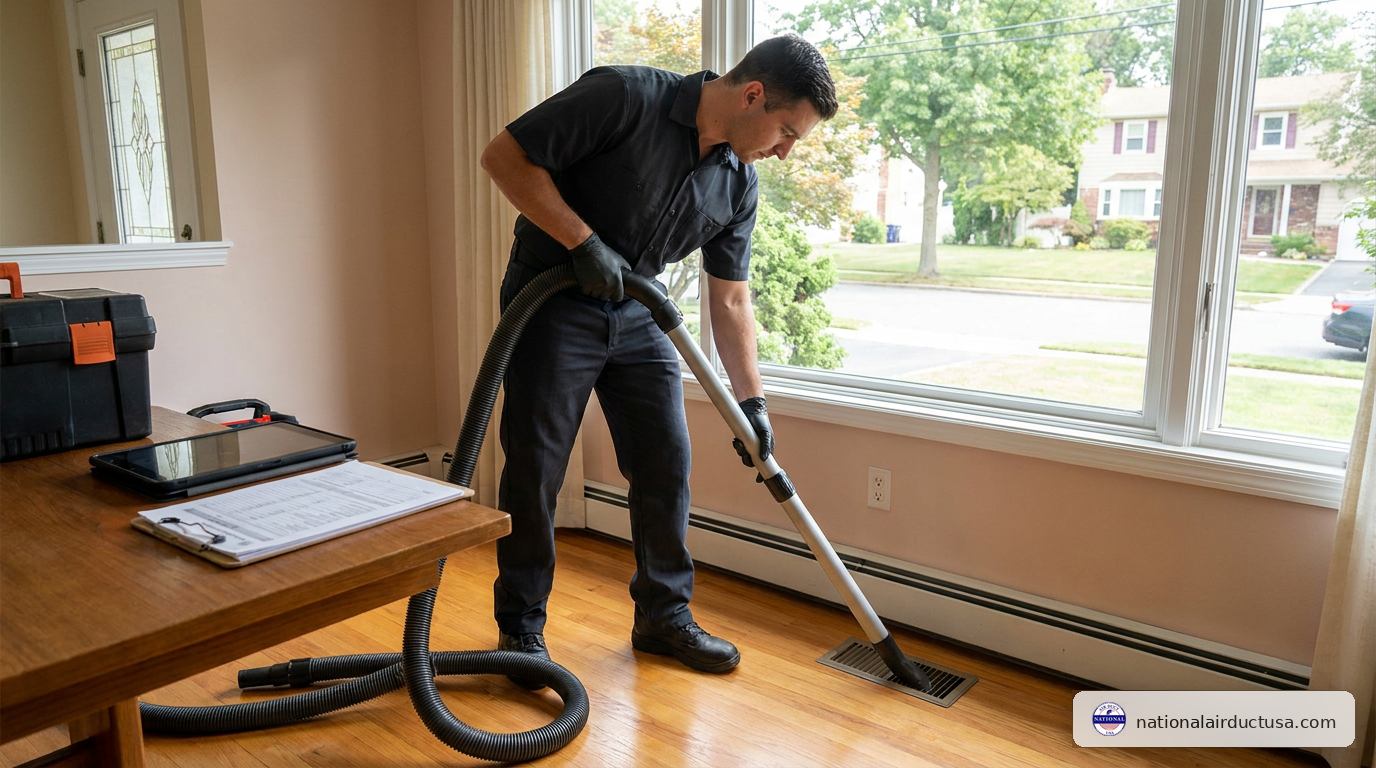
A reputable technician starts with a visual and camera inspection before touching anything. This step determines the scope, confirms the number of systems involved, and flags any hazards.
- Supply and return duct runs, checked for disconnections or crushed sections
- Furnace or air handler cabinet and blower assembly
- Evaporator coil condition and airflow restriction
- Filter rack, cabinet seams, and gasket integrity
- Drain pan and condensate line for standing water or mold
- Accessible insulation, especially in older Long Island attics and crawlspaces
- Registers and grilles throughout the home
- Evidence of mold, rodents, water intrusion, or suspected asbestos wrap on older duct lines
A trustworthy company documents these findings and provides a written estimate before work begins, clarifying whether the quote covers one HVAC system or multiple zones, which matters for larger Long Island homes with separate heating and cooling setups. For a deeper look at how inspections tie into a full maintenance plan, see our complete homeowner HVAC maintenance checklist.
How Do Technicians Protect Your Home Before Cleaning Begins?
Containment is the step most often skipped by low-cost operators, and it’s also the one that protects your floors, furniture, and indoor air during the job itself.
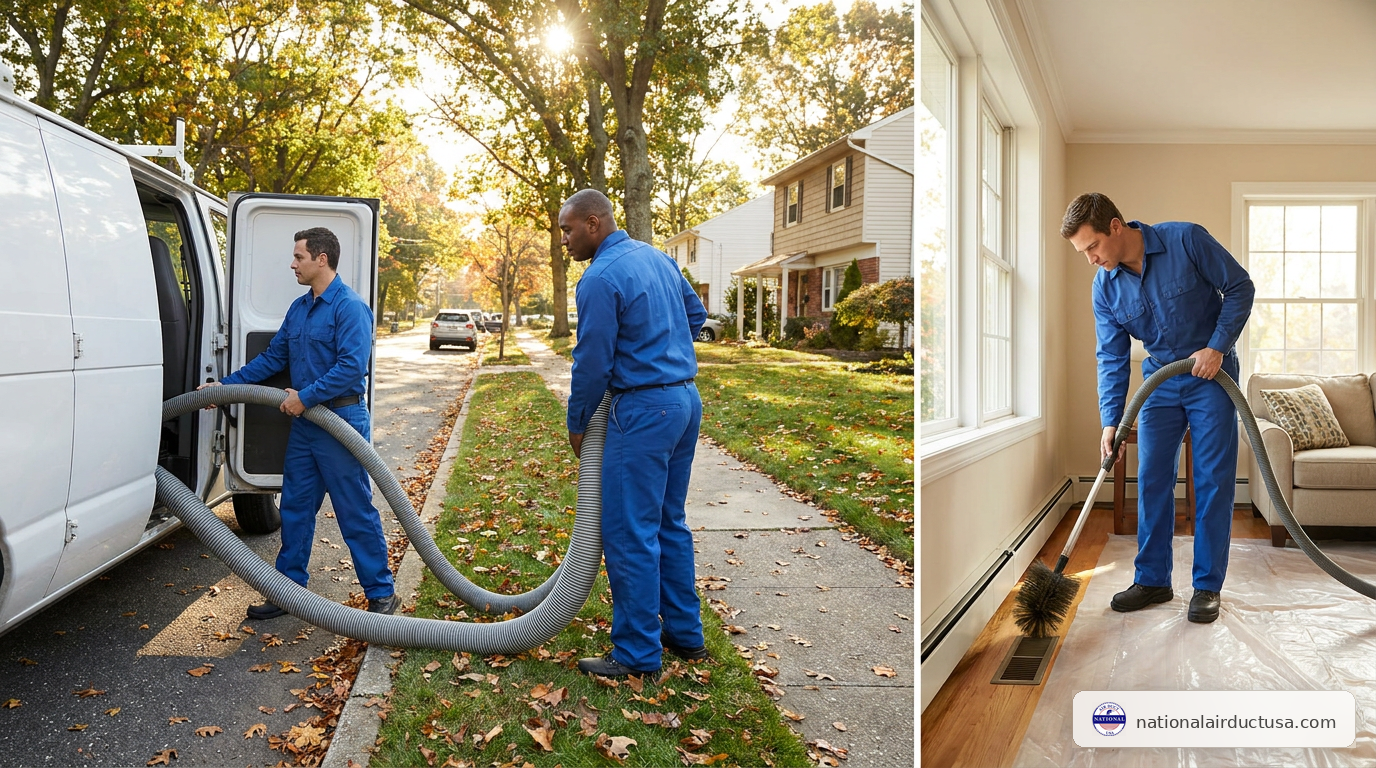
- Covering furniture and flooring near work zones with drop cloths
- Sealing every supply and return opening not actively being serviced
- Protecting the blower motor and electrical components from moisture or debris
- Establishing controlled airflow so loosened contaminants are captured, not pushed into living spaces
The National Air Duct Cleaners Association (NADCA) emphasizes source-removal cleaning and vacuum collection rather than simply blowing compressed air through a system, a distinction outlined in NADCA’s published cleaning standards. Containment is what makes source removal possible without turning your living room into a dust cloud.
What Equipment Creates Negative-Pressure Vacuum Collection?
The core engineering principle behind professional duct cleaning is negative pressure: the main trunk lines connect to a high-powered vacuum so the entire system pulls inward while debris is dislodged, rather than scattering it further into the home.
Filtration: HEPA-rated
Common use: Smaller Nassau County residences
Power: High-volume, sustained suction
Common use: Suffolk County single-family homes
Use: Before/after documentation
Why it matters: Proves the job was completed
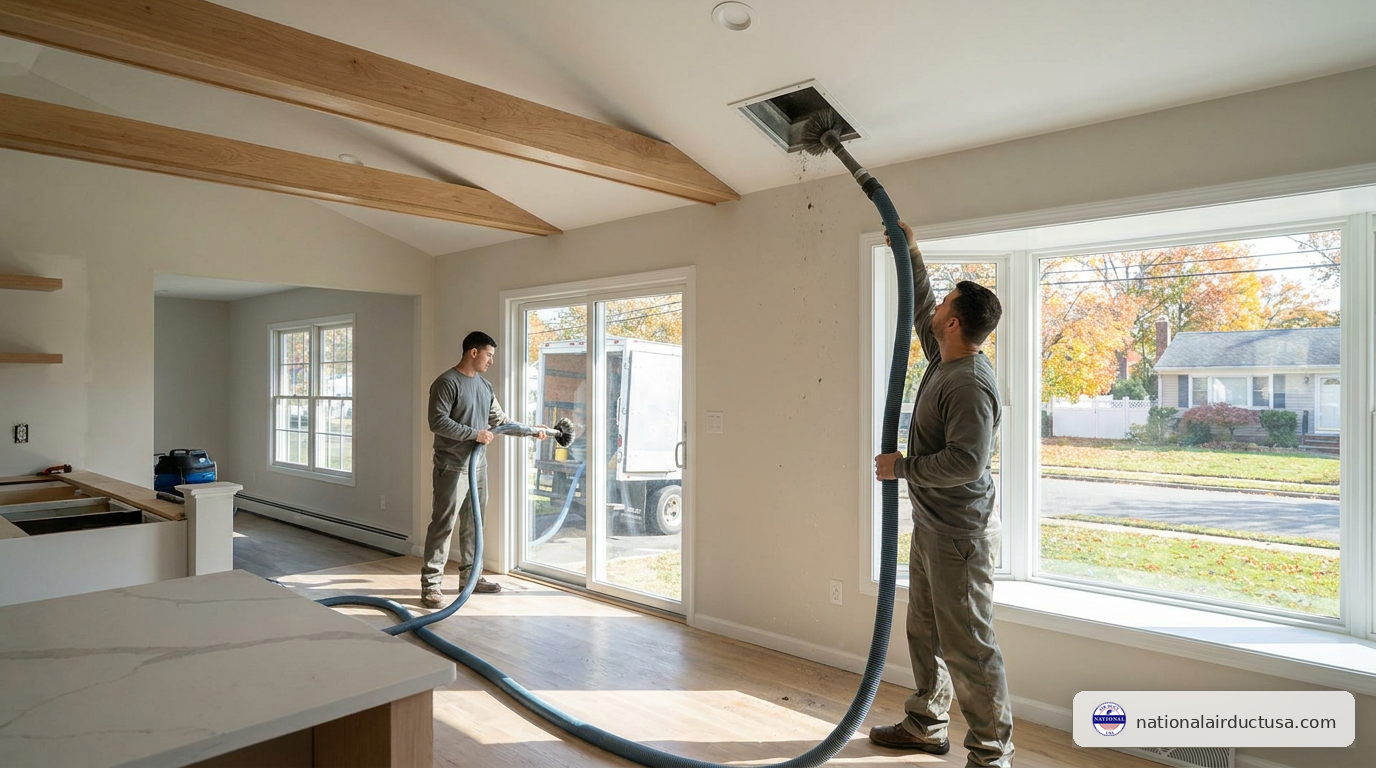
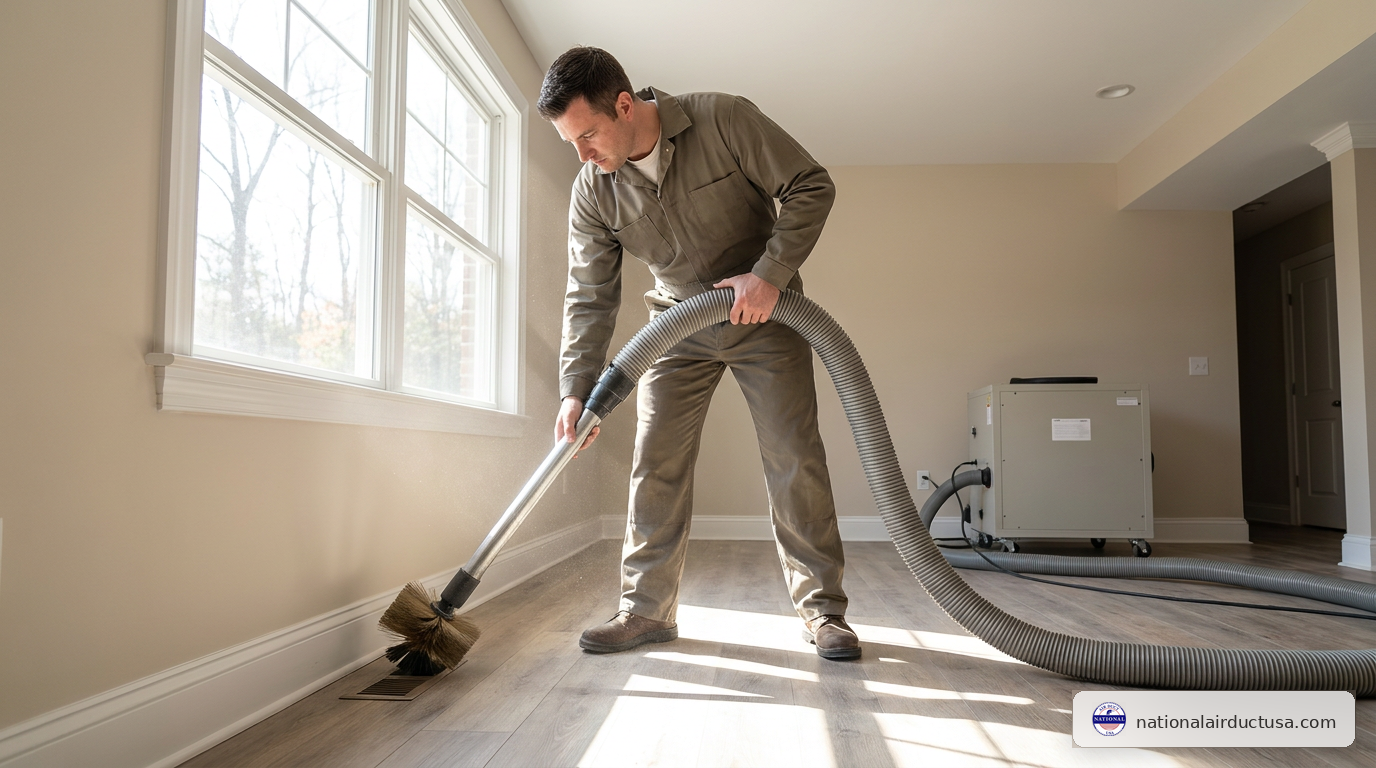
Additional tools like air whips, skipper balls, and rotary brushes work alongside the vacuum system to loosen debris while suction captures it. The specific brand of equipment matters less than whether the contractor opens and services the entire system under negative pressure, a point echoed in older EPA archived guidance on duct cleaning methods.
What Is Mechanical Agitation and Why Does It Matter?
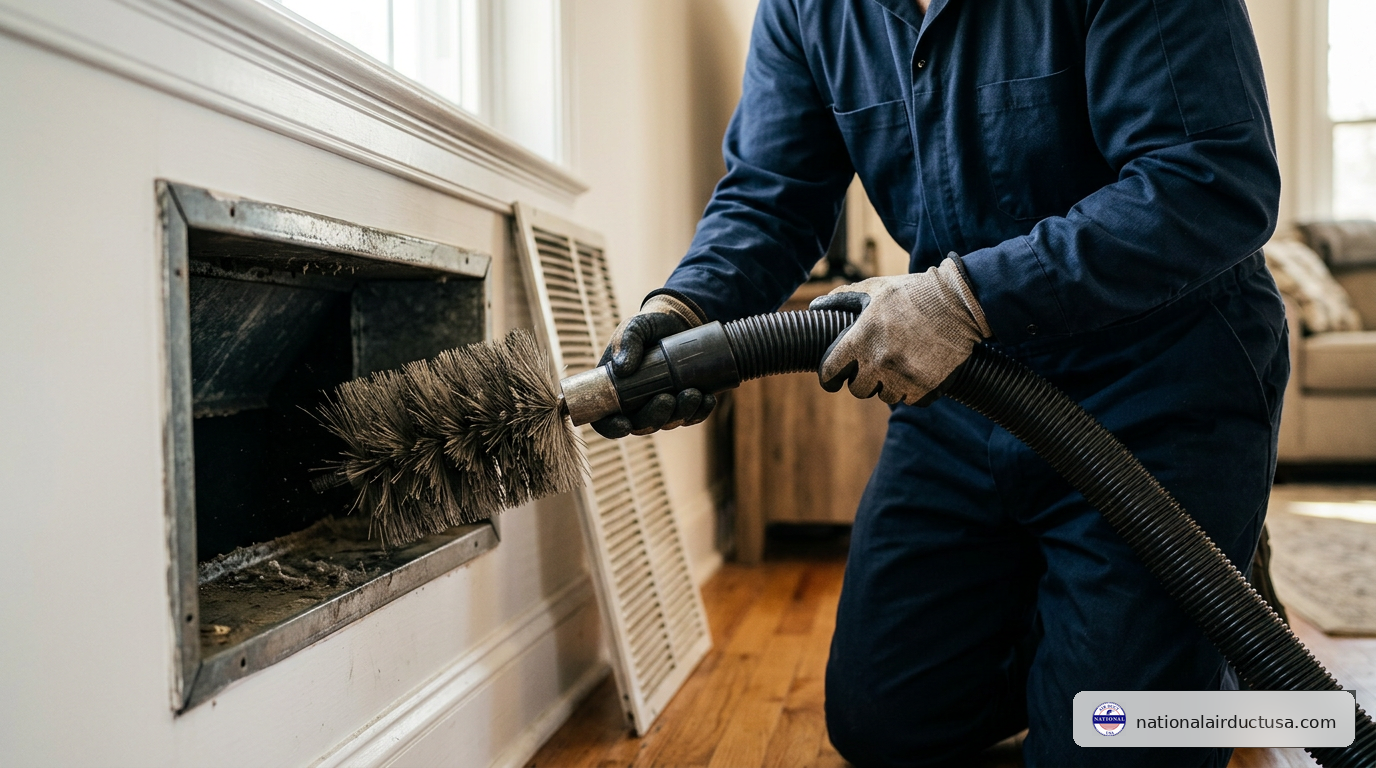
Vacuum suction alone rarely removes debris that’s bonded to duct walls over years of use. Mechanical agitation physically dislodges that buildup so it can be captured by the vacuum system.
- Rotary brushing: Spinning brush heads scrub duct interiors as they travel through branch lines
- Air whips: Compressed-air lines that snap and flex to knock loose debris from duct walls
- Compressed-air tools: Targeted bursts for stubborn buildup in hard-to-reach bends
- Contact vacuuming: Direct vacuum contact for accessible straight runs
- Hand cleaning: Manual wipe-down of accessible components like boots and grilles
A company that only inserts a hose through a few registers without any agitation step is not performing a comprehensive cleaning, regardless of what the invoice calls it.
Which Components Should a Full-System Cleaning Cover?
A complete job addresses the entire air path, not just the parts visible from the living room. Expect a professional to document work on each of the following:
- Supply branch lines and supply trunks
- Return branches and return trunks
- Register boots and return grilles
- Main plenums and accessible duct interiors
- Evaporator coil and blower assembly (cleaned, not just inspected)
- Filter rack and cabinet interior
- Drain pan and condensate line clearing
When service openings are cut into ductwork to access hard-to-reach sections, they should be sealed afterward with durable, code-compliant closures, not duct tape. If your home also has a gas or electric dryer, note that vent cleaning is a separate service with its own fire-safety stakes; our dryer duct cleaning service for Long Island covers that process in detail, and it’s worth bundling if your technician is already on-site.
For homeowners who want a plain-language walkthrough of the entire appointment from start to finish, our step-by-step walkthrough of a professional duct cleaning visit is a useful companion to this checklist.
What Can Homeowners Do Themselves vs. What Requires a Professional?
Not everything in this process needs a licensed crew. Knowing where the line falls saves money and prevents damage to sensitive HVAC components.
| Task | Homeowner or Professional? |
|---|---|
| Replacing air filters every 1-3 months | Homeowner |
| Dusting visible vent covers and grilles | Homeowner |
| Vacuuming within arm’s reach of a register | Homeowner |
| Negative-pressure system cleaning | Professional |
| Coil and blower assembly cleaning | Professional |
| Mold or asbestos-suspected material handling | Professional |
| Cutting and sealing duct access points | Professional |
This is also where older HVAC infrastructure common in Long Island’s pre-war and mid-century homes becomes relevant. Systems with unusual zoning or converted boiler setups often require a contractor familiar with regional quirks; see our piece on what sets licensed duct cleaners apart in Connecticut-style HVAC systems serving Long Island for more on this.
How Much Should Professional Duct Cleaning Cost on Long Island?
The EPA cites typical national pricing between $450 and $1,000 per heating-and-cooling system. On Long Island, pricing varies based on home size, number of systems, duct accessibility, contamination severity, and whether add-ons like dryer vent cleaning or sanitizing treatments are included.
Pricing varies based on your specific project, and the only way to get an accurate number is a documented in-home or virtual estimate from a licensed contractor. Homes with crawlspace-only access, older boiler-converted duct systems, or multiple zones in Nassau and Suffolk County will typically see higher quotes than a single-system ranch home. We encourage treating any flat, too-good-to-be-true price as a red flag rather than a deal, since it usually signals a stripped-down version of the process outlined above.
If dirty ducts are also driving up your utility bills, it’s worth reading how dirty air ducts can increase energy bills on Long Island to understand the cost of deferring this service entirely.
What Red Flags Signal a Low-Quality Duct Cleaning Service?
Older EPA technical guidance on HVAC and indoor air quality warns that improper cleaning techniques can actually damage ductwork or worsen air quality. Watch for these warning signs before hiring anyone.
- No written scope of work or estimate provided before the job starts
- A quote that seems unusually low compared to the EPA’s $450-$1,000 per-system range
- No mention of negative-pressure equipment or mechanical agitation
- Technicians who only service visible supply vents, skipping returns and the air handler
- No before-and-after documentation or camera inspection offered
- Reluctance to explain licensing, insurance, or NADCA-aligned training
If you’re trying to identify whether your own system shows signs of needing service in the first place, our guide on signs you need duct cleaning services in Long Island walks through the visible and hidden indicators worth checking before you call anyone.
People Also Ask
Is professional duct cleaning worth the cost?
It’s worth it when the job follows a full process: inspection, containment, negative-pressure vacuuming, agitation, and verification. A stripped-down cleaning that only touches a few vents provides little value regardless of price.
How long does a full duct cleaning take?
A thorough single-system cleaning typically takes two to four hours, depending on home size, duct accessibility, and contamination level. Homes with multiple HVAC zones or difficult crawlspace access can take longer.
Can duct cleaning damage my HVAC system?
Improper techniques, like excessive compressed air without containment, can potentially damage ductwork or dislodge insulation. This is why hiring a contractor who follows NADCA-aligned standards and uses controlled negative pressure matters.
Does duct cleaning include the dryer vent?
No, dryer vent cleaning is a separate service with different equipment and safety considerations tied to fire prevention. Most Long Island providers offer it as an add-on alongside HVAC duct cleaning.
Key Takeaways
- A complete professional duct cleaning covers inspection, containment, negative-pressure vacuuming, mechanical agitation, and post-service verification, not just a quick vacuum pass through a few vents.
- The EPA cites typical national pricing of $450 to $1,000 per heating-and-cooling system, with Long Island pricing shaped by home size, system count, and accessibility.
- NADCA standards emphasize source removal and mechanical agitation over simply blowing compressed air through ductwork.
- Homeowners can safely handle filter changes and dusting visible vent covers; everything involving the air handler, coil, or sealed duct sections requires a licensed technician.
- Service openings cut into ductwork should always be sealed afterward with durable, code-compliant closures.
- Red flags include no written estimate, unusually low pricing, and no mention of negative-pressure equipment.
- Dryer vent cleaning is a separate but related service worth bundling for fire-safety reasons.
Frequently Asked Questions
What does professional duct cleaning include in Long Island, NY?+
It includes a pre-service inspection, system containment, negative-pressure vacuum collection, mechanical agitation of supply and return lines, cleaning of the coil and blower assembly, and a post-cleaning verification walkthrough. A written scope of work should be provided before the job begins.
How often should Long Island homeowners get ducts cleaned?+
Most homes benefit from cleaning every three to five years, though homes with pets, recent renovations, or allergy sufferers may need it more often. Our guide on how often to clean air ducts in Long Island breaks this down by household type.
What equipment should a professional duct cleaner bring?+
Expect a HEPA-filtered or truck-mounted vacuum system, rotary brushes, air whips, inspection cameras, and sealing materials for any access points. If the crew arrives with only a shop vacuum and no containment materials, that’s a sign of an incomplete process.
Can I clean my own air ducts to save money?+
You can safely dust visible vent covers and change filters, but opening ductwork, cleaning the coil, or using negative-pressure equipment requires professional tools and training. Attempting DIY deep cleaning risks damaging the system or pushing debris further inside.
How do I verify the job was done correctly?+
Ask for before-and-after camera footage or photos of key duct sections and the coil assembly. A reputable contractor documents this as a standard part of the before-and-after verification process.
Does post-construction cleaning include duct cleaning?+
Not always. Duct cleaning is often a separate add-on to general post-construction cleanup, which is important since renovation dust is a common contaminant found in Long Island ductwork. See our post-construction deep cleaning cost guide for details.
Related: Mold in Air Ducts: How to Remove It Safely in Long Island, NY
Related: What Happens If You Don’t Clean Air Ducts in Long Island NY This Fall
Choosing a contractor who follows this full checklist, rather than a shortcut version, is the difference between genuinely improved air quality and a wasted service call. If you’re ready to schedule a documented, full-system cleaning, explore our air duct cleaning services or find a duct cleaning provider near you on Long Island. You can also visit National Air Duct directly or contact our team to request a written estimate before any work begins.
Further reading: Air Duct Cleaning Nassau County NY: Process, Cost, and Results for Long Island Homeowners
Further reading: Air Duct Cleaning Cost Breakdown: What You’ll Really Pay in Long Island, NY