Quick Answer
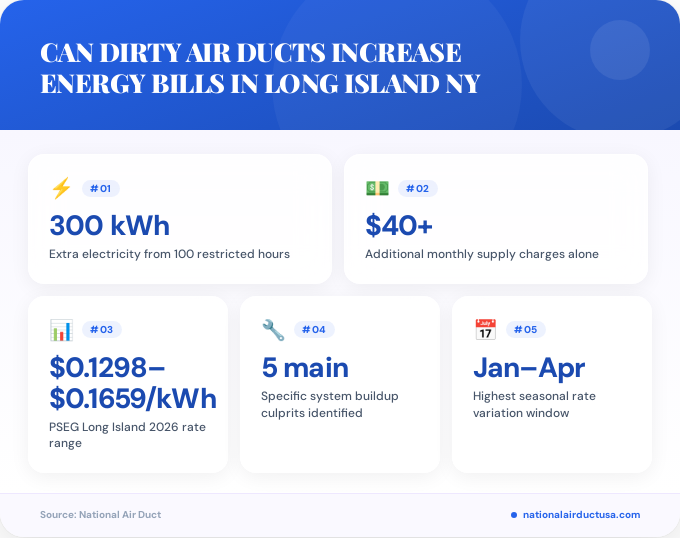
Yes, dirty air ducts can increase energy bills in Long Island, NY, but the effect comes from heavy buildup on filters, blower wheels, coils, registers, and dampers, not light dust alone. With PSEG Long Island’s 2026 power-supply rates ranging from $0.129777/kWh to $0.165927/kWh, even a modest airflow restriction that forces your HVAC system to run longer can add measurable dollars to a monthly bill.
Why Does This Question Matter for Long Island Homeowners?
Here’s a number that surprises most people: a central air conditioner running just 100 extra hours a season because of restricted airflow can burn through roughly 300 kWh of additional electricity. At PSEG Long Island’s September 2026 supply rate of $0.139822/kWh, that’s over $40 in supply charges alone, before delivery fees and taxes are added. Multiply that across a humid Long Island summer or a cold snap from Montauk to Massapequa, and it’s easy to see why so many homeowners ask whether dirty air ducts can increase energy bills in Long Island, NY.
The honest answer is nuanced. Dust sitting quietly in a return duct rarely moves the needle much on its own. But when buildup accumulates on filters, blower wheels, coils, registers, or dampers, your HVAC system has to work harder and longer to hit the same thermostat setting, and that extra runtime shows up on your bill.
Because PSEG Long Island’s power-supply rates swing widely throughout the year, from a low of $0.129777/kWh in January to a high of $0.165927/kWh in April, timing matters too. A system fighting airflow restriction during a high-rate month costs more to operate than the same inefficiency during a cheaper month. For homeowners trying to understand their total indoor air picture, our Long Island air quality guide is a useful companion resource.
How Can Dirty Ducts Raise Your Energy Bills?
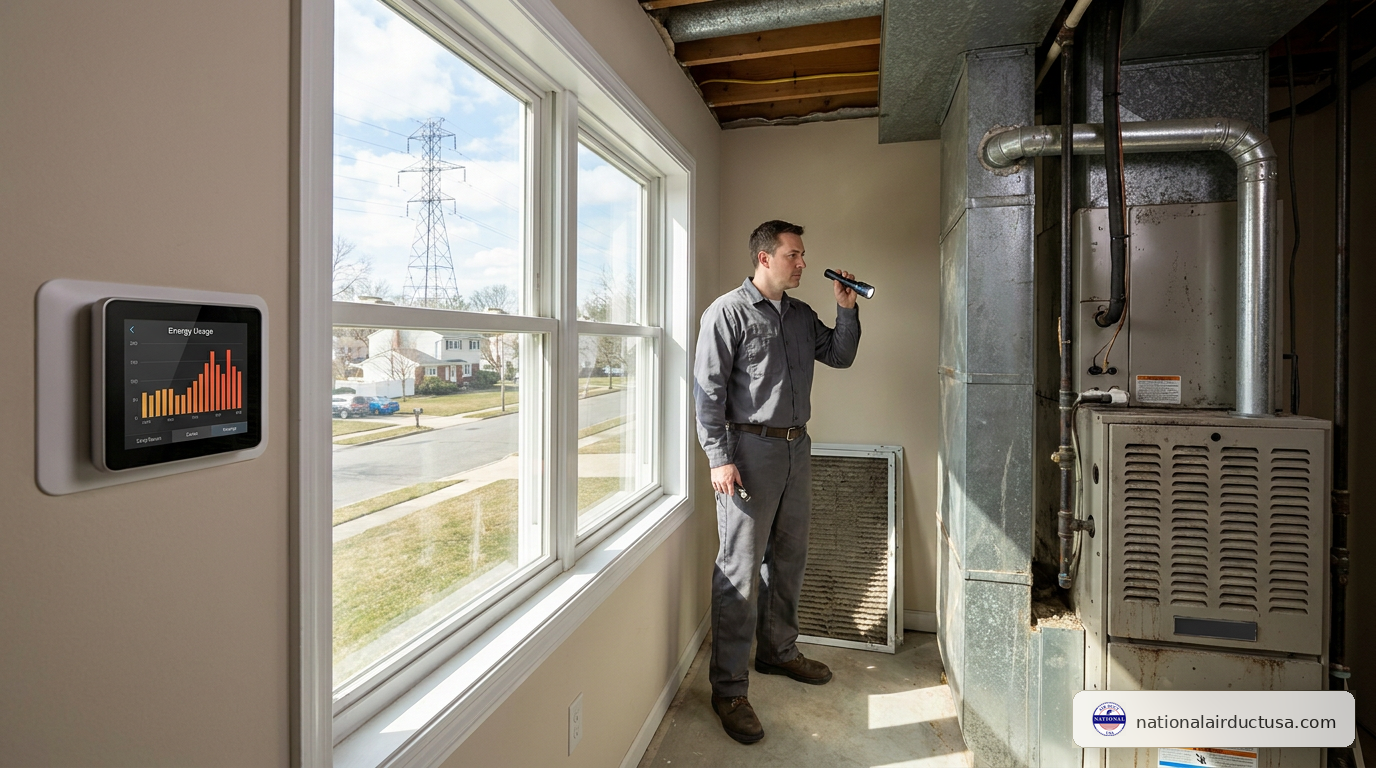
Airflow restriction forces your blower motor and HVAC components to work harder to deliver the same amount of conditioned air. Several specific points in the system are more likely culprits than general duct dust:
- Clogged return-air paths: Less air reaches the system, reducing heat transfer efficiency and extending run time.
- Dust-covered blower wheels: A dirty blower moves less air even at the same motor speed, forcing longer cycles.
- Dirty evaporator or heating coils: Dust acts like insulation, reducing heat exchange and efficiency.
- Blocked supply registers or dampers: Rooms take longer to reach the thermostat setting, so the system runs longer.
- Duct leakage: Leaky ducts in attics, crawl spaces, garages, or unfinished basements, common in older Long Island homes from Levittown to Huntington, lose conditioned air before it reaches living spaces.
- Dirty filters: Often a bigger and more immediate issue than duct dust itself.
- Poor duct insulation: Uninsulated or poorly sealed ducts in hot attics or cold crawl spaces waste energy even when the ducts themselves are clean.
The EPA’s guidance on air duct cleaning notes that duct contamination’s effect on energy use isn’t uniform across every home, which is exactly why a professional inspection matters more than guesswork. Similarly, Carrier’s HVAC cleaning resources point out that restricted airflow is one of the most common reasons systems lose efficiency over time.
What Savings Are Realistic After Duct Cleaning?
There’s no universal rule, like “dirty ducts add 20% to your bill,” that applies evenly to every home. The real impact depends on your equipment age, duct design, contamination severity, filter habits, and how many hours your system runs each month. Research summarized by NADCA’s findings on HVAC cleaning and efficiency supports the idea that improved airflow translates into measurable system performance gains, even if the exact percentage varies by household.
To make this concrete, here’s what added electricity use caused by airflow problems could cost at PSEG Long Island’s September 2026 supply rate:
| Extra Monthly Electricity Use | Approx. Supply-Charge Cost |
|---|---|
| 100 kWh | $14.00 |
| 250 kWh | $34.96 |
| 500 kWh | $69.91 |
These figures reflect only PSEG Long Island’s published rate information and exclude delivery charges, taxes, and other line items, so your actual bill impact could be higher. Worth noting too: PSEG’s time-of-day structure flags 3–7 p.m. weekdays as peak hours, meaning an inefficient system running hardest during those windows compounds the cost further.
For a 3 kW central air conditioner, an extra 100 hours of runtime caused by restricted airflow computes to roughly 300 kWh: 3 kW × 100 hours = 300 kWh, or about $41.95 in supply charges alone at the September rate. The U.S. Department of Energy’s Energy Saver Guide echoes this logic: reducing unnecessary HVAC runtime is one of the most direct ways to cut household energy costs.
Likely cause: Dirty filter only
Cost at Sept. rate: $14.00
Likely cause: Dirty coil + blower
Cost at Sept. rate: $34.96
Likely cause: Blocked registers + leaks
Cost at Sept. rate: $69.91
Is Duct Leakage a Bigger Problem Than Dust?
It’s important to separate two different issues: duct contamination and duct leakage. Cleaning removes dust, pet dander, and debris, but it does not seal cracks, reconnect separated joints, repair crushed flexible duct, or add insulation. If your Long Island home has ductwork running through an unconditioned attic, a damp crawl space, or an unfinished basement, poor insulation or physical leaks could be wasting conditioned air regardless of how clean the interior surfaces are.
Industry research featured by ACHR News on HVAC cleaning and decarbonization suggests that combining duct cleaning with airflow and leakage corrections produces more consistent efficiency gains than cleaning alone. That’s a key reason a trustworthy contractor inspects the whole system, not just the ducts, before recommending a service.
If you’re unsure whether contamination or leakage is driving up your bills, our guide on signs you need duct cleaning services in Long Island, NY walks through the visible and measurable clues homeowners can check themselves before calling a professional.
What Does a Trustworthy Long Island Contractor Do Differently?
Not every duct cleaning service approaches the job the same way, and that difference matters for both safety and your wallet. A reputable contractor follows a documented, inspection-first process rather than jumping straight to a sales pitch.
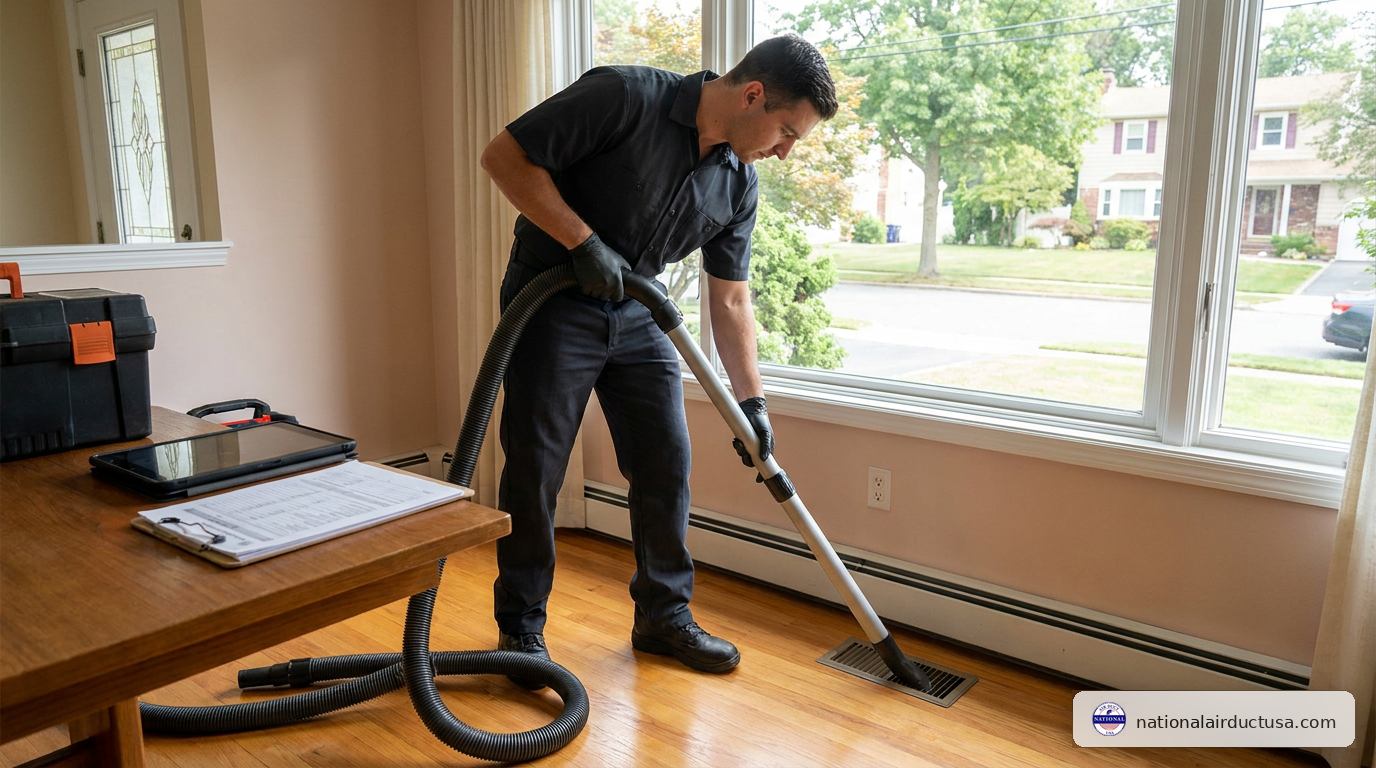
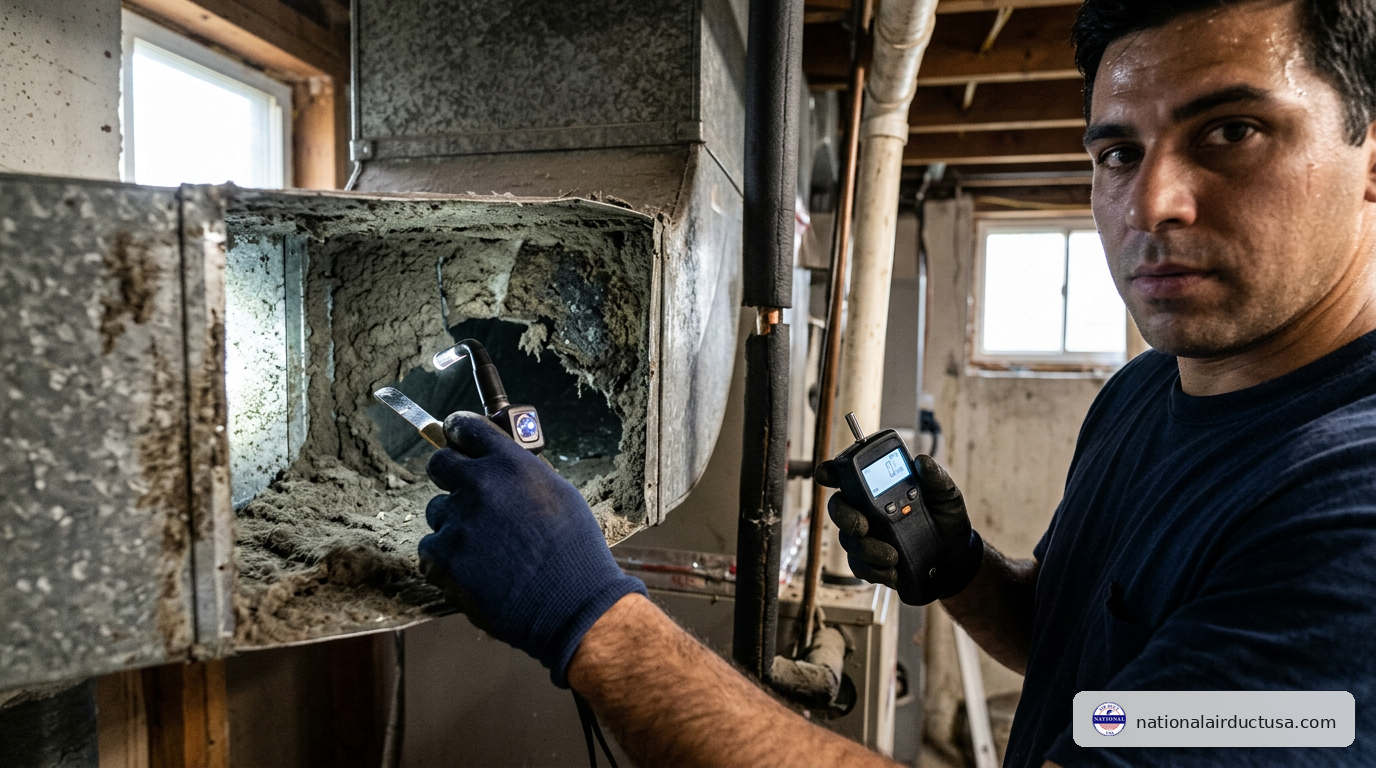
- Pre-service inspection: Cameras or visual checks of ductwork, coils, and blower components before recommending any service.
- Transparent findings: Photos or video showing actual buildup, not vague claims of “severe contamination.”
- Licensed, insured technicians: Verified credentials and liability coverage protecting your home.
- NADCA-informed methods: Procedures aligned with national duct cleaning standards rather than improvised shortcuts.
- Clear scope of work: Separating what cleaning will and won’t fix, including flagging leaks or insulation gaps for a separate repair conversation.
- Written estimates: Pricing tied to home size, duct accessibility, and contamination level, not a flat marketing number.
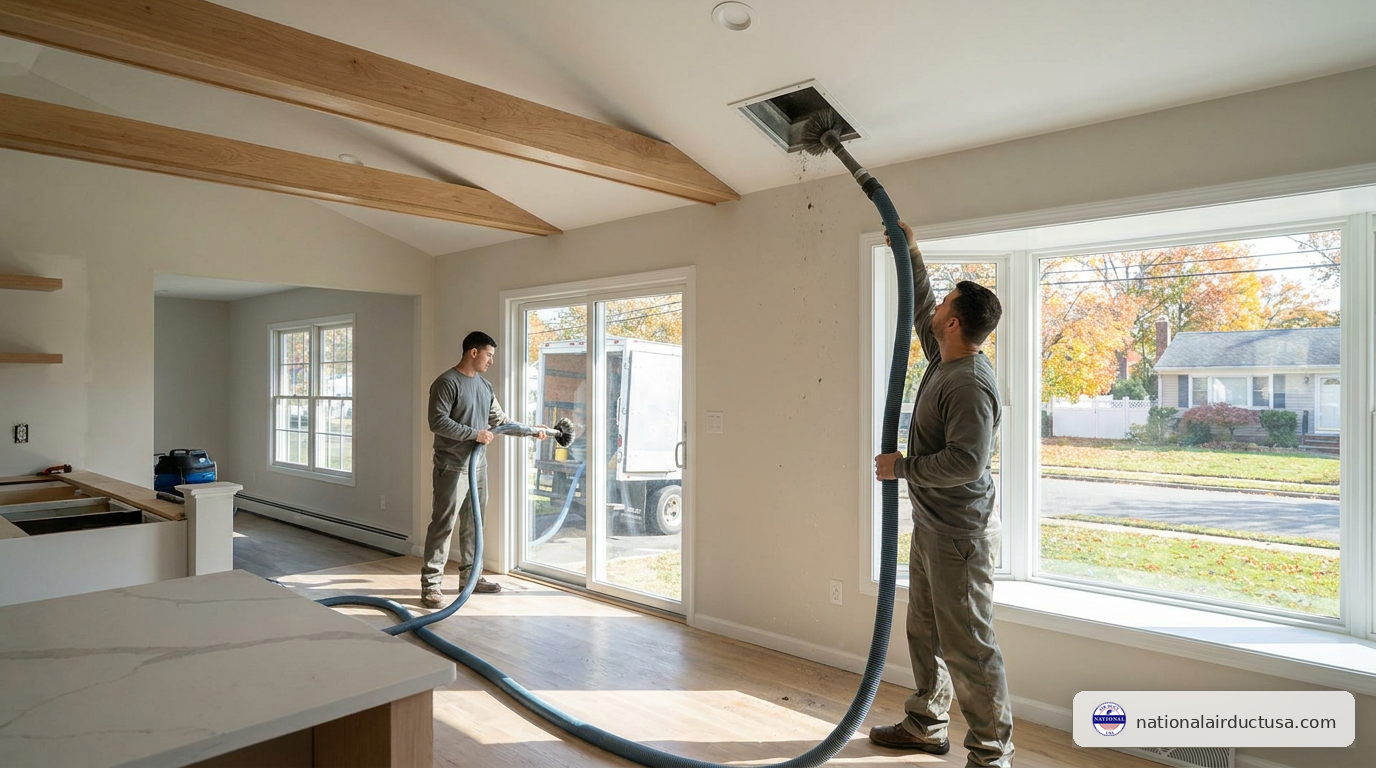
You can see this kind of process in action in our breakdown of what happens during professional duct cleaning in Long Island, NY, which walks through each stage step by step. Pricing for a full-system service varies widely depending on home size, duct layout, and contamination severity, typically ranging anywhere from a few hundred to well over a thousand dollars for larger or more complex systems. The right number depends on your specific project, which is why a custom, in-home or photo-based quote is always more reliable than a published average.
Homeowners dealing with related concerns, like musty smells or visible mold near vents, should also review our resource on signs of mold in air ducts, since mold growth can compound both air quality and efficiency problems.
What Warning Signs Suggest Your Ducts Are Costing You Money?
Certain patterns tend to show up before homeowners connect them to ductwork. Watch for these:
- Uneven temperatures between rooms, especially upper floors versus lower floors.
- Longer HVAC run cycles than in previous seasons, with no change in thermostat settings.
- Rising kWh usage on your PSEG bill compared to the same month last year.
- Visible dust blowing from supply registers shortly after the system starts.
- Weak airflow at vents farthest from the air handler.
- Frequent filter clogging that requires replacement sooner than the manufacturer’s recommended interval.
Older case studies referenced in the EPA’s archived HVAC maintenance materials reinforce that airflow restriction compounds gradually, which is why most homeowners don’t notice the cost creep until their bill jumps noticeably. If you’re seeing two or more of these signs, it may be time to schedule an inspection rather than wait for a bigger spike. You can also review our general resource on how often you should clean air ducts in Long Island, NY to set a reasonable maintenance schedule for your home.
Key Takeaways
- Dirty air ducts can increase energy bills in Long Island, NY, primarily through buildup on filters, blower wheels, coils, registers, and dampers, not light duct dust alone.
- PSEG Long Island’s 2026 power-supply rates ranged from $0.129777/kWh to $0.165927/kWh, meaning inefficiency costs more during high-rate months like April.
- An extra 100 kWh of monthly HVAC use costs roughly $14.00 in supply charges at the September 2026 rate, excluding delivery and taxes.
- Duct leakage and poor insulation are separate problems from contamination, and cleaning alone won’t fix leaks or crushed flex duct.
- A trustworthy contractor inspects before recommending service, documents findings, and provides a written, scope-specific estimate.
- Watching for uneven room temperatures, longer run cycles, and rising kWh usage can help catch airflow problems early.
People Also Ask
Do dirty air ducts really increase energy bills?
Yes, but typically through heavy buildup on filters, coils, blowers, registers, or dampers rather than light dust inside the ducts themselves. The increase comes from the system running longer to compensate for restricted airflow.
How much can duct cleaning save on energy bills?
There’s no universal percentage, but illustrative examples show 100 to 500 kWh of avoided monthly waste could translate to roughly $14 to $70 in supply charges alone at current PSEG Long Island rates. Actual savings depend on your specific system and contamination level.
Is a dirty filter worse than dirty ductwork?
Often, yes. A clogged filter is typically a larger and more immediate cause of reduced airflow and higher energy use than dust sitting inside the ducts.
Can leaky ducts cost more than dirty ones?
In many homes, yes. Duct leakage in attics, crawl spaces, or unfinished basements can lose conditioned air before it reaches living spaces, and cleaning alone does not repair leaks, joints, or crushed flex duct.
How do I know if my ducts are affecting my Long Island energy bill?
Watch for uneven room temperatures, longer HVAC run cycles, rising kWh usage compared to past bills, and dust blowing from registers. A professional inspection can confirm whether ductwork is the cause.
Frequently Asked Questions
Can dirty air ducts increase energy bills in Long Island, NY specifically?+
Yes. Local PSEG Long Island power-supply rates, which ranged from $0.129777/kWh to $0.165927/kWh in 2026, mean any added HVAC runtime from restricted airflow translates directly into measurable dollars on your bill, especially during high-rate months.
What parts of the duct system matter most for energy efficiency?+
Filters, blower wheels, evaporator and heating coils, supply registers, and dampers have the greatest impact on efficiency. General dust inside straight duct runs has comparatively less effect than buildup at these key points.
Will duct cleaning fix my high energy bills completely?+
Not necessarily on its own. Cleaning addresses contamination, but if your bills are driven by duct leakage, poor insulation, or an aging HVAC unit, those issues require separate repairs alongside cleaning.
How often should Long Island homeowners clean their air ducts?+
Most homes benefit from an inspection every few years, though factors like pets, renovations, or visible mold can shorten that interval. Our guide on how often to clean air ducts in Long Island, NY offers a practical schedule.
What should I look for in a duct cleaning company near me?+
Look for licensed and insured technicians, a pre-service inspection with photo or video evidence, adherence to national cleaning standards, and a written estimate tied to your home’s specific duct layout and contamination level.
Does PSEG Long Island’s time-of-day pricing affect dirty duct costs?+
Yes. PSEG’s structure flags 3 to 7 p.m. weekdays as peak pricing hours, so an inefficient HVAC system running longest during those windows due to airflow restriction will cost more than the same inefficiency during off-peak hours.
Related: Air Duct Cleaning and HVAC Maintenance in Long Island NY: The Complete Homeowner Checklist
Related: What Sets Licensed Duct Cleaners Apart in Connecticut-Style HVAC Systems Serving Long Island, NY
If you suspect restricted airflow is driving up your utility costs, the most reliable next step is a professional inspection rather than guesswork. Learn more about our approach and credentials on our about us page, browse real before-and-after results in our air duct cleaning before and after guide, or visit National Air Duct USA to request a custom quote tailored to your home’s size and condition. You can also contact our team directly to schedule an inspection and get a clear, no-pressure assessment of whether your ductwork is costing you money.
Further reading: Winter Mold in Air Ducts: Health Risks and What To Do Now in Long Island, NY
Further reading: Mold in Air Ducts: How to Remove It Safely in Long Island, NY