Quick Answer
If you don’t clean air ducts in Long Island NY, you risk higher energy bills, premature HVAC breakdowns, worsened allergies and respiratory issues, and mold growth that thrives in the region’s damp fall and winter air. Dust, pollen, and debris that build up over spring and summer get circulated non-stop once heating systems kick on, straining equipment and degrading indoor air quality right through the holiday season. Scheduling a professional cleaning now, before peak heating season, prevents the most costly and uncomfortable consequences.
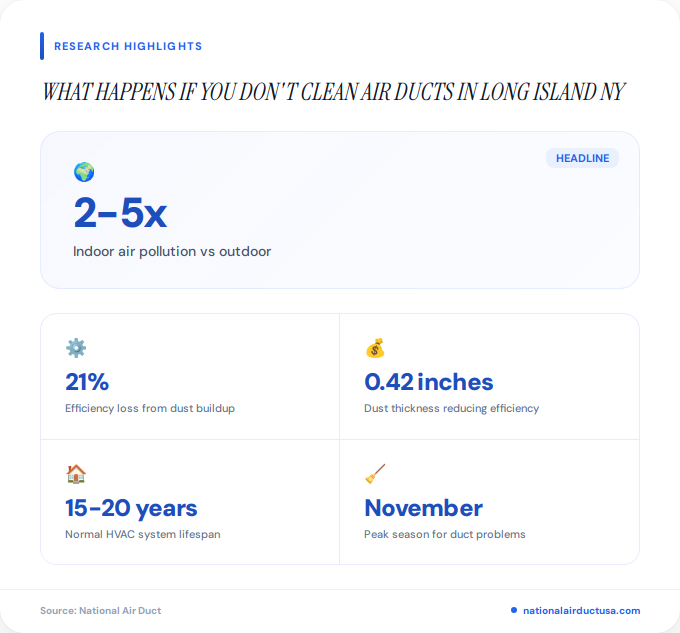
Thanksgiving is two weeks away, Long Island’s radiators and furnaces are firing up for the season, and most homeowners haven’t thought about their air ducts since last spring. Here’s the surprising part: the EPA estimates indoor air can be 2 to 5 times more polluted than outdoor air, and in many homes that gap widens dramatically once heating systems start pushing a summer’s worth of dust, pollen, and debris through the vents. So what happens if you don’t clean air ducts in Long Island NY as temperatures drop? The consequences show up fast, in your wallet, your equipment, and your lungs.
From Massapequa to Huntington to Hempstead, the pattern is the same every November: homeowners switch on the heat for the first time and immediately smell something musty or burnt. That smell is often the first sign that neglected ductwork is about to become an expensive problem. Let’s break down exactly what’s at stake if you skip cleaning this fall.
Why Does Fall Matter for Air Duct Neglect?
Long Island’s humid summers create ideal conditions for mold spores, dust mites, and moisture to settle deep inside ductwork. When the first cold snap arrives, usually by mid-November, homeowners switch from air conditioning to heating almost overnight, and that reversal in airflow stirs up everything that’s accumulated for months.
Unlike drier climates, Long Island’s coastal humidity means ducts near Nassau and Suffolk County waterways can retain moisture longer, giving mold and mildew extra time to establish themselves before the heat turns on. If you’ve been noticing more dust on furniture or a stale smell since October, your system is already telling you something. Learn more about why your air ducts get so dusty in Long Island NY before the problem compounds further this winter.
How Does Skipping Duct Cleaning Damage Your HVAC System?
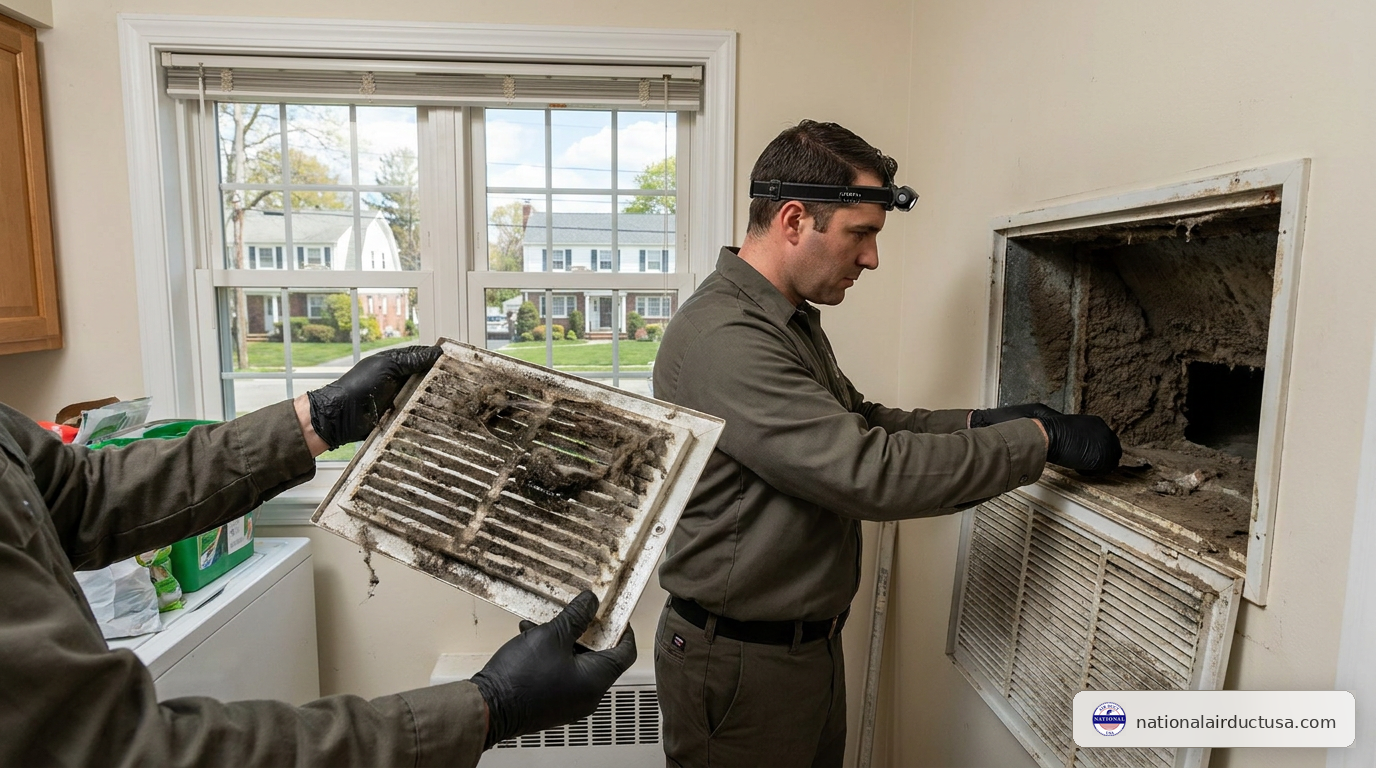
Every pound of dust, pet hair, and debris sitting in your ducts eventually gets pulled back toward your furnace or heat pump. Over time, this buildup coats blower motors, clogs filters faster, and forces internal components to work harder than they were designed to.
Industry data suggests a layer of dust just 0.42 inches thick on heating coils can reduce efficiency by over 21%, and that inefficiency translates directly into added mechanical strain. Left unaddressed through an entire Long Island winter, that strain commonly leads to:
- Premature blower motor failure from dust-clogged components overheating
- Frozen or cracked heat exchangers due to restricted airflow
- More frequent filter replacements as debris accelerates clogging
- Shortened system lifespan, often cutting years off equipment that should last 15 to 20 years
- Increased repair calls during the busiest, coldest months when technicians are hardest to book
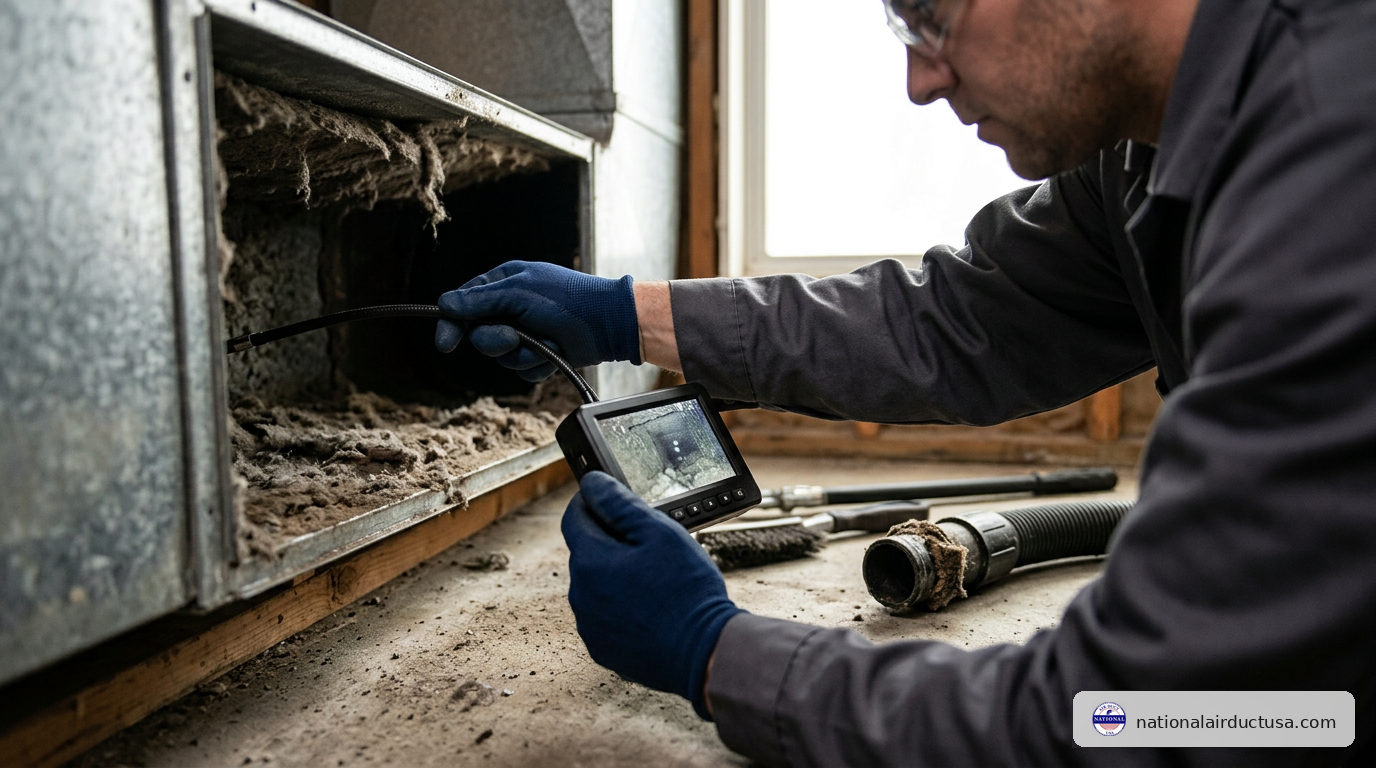
A full professional duct cleaning checklist typically addresses these stress points directly, clearing supply and return lines before they can damage expensive components.
Why Do Dirty Ducts Raise Your Energy Bills?
Restricted airflow means your HVAC system has to run longer and harder to hit the same thermostat setting. The U.S. Department of Energy notes that duct leaks and blockages can waste as much as 20% to 30% of the air moving through a system, a figure that climbs when ducts are also coated in dust and debris.
On Long Island, where winter heating bills already run high due to oil and gas price volatility, that inefficiency adds up fast across a full heating season. Homeowners who’ve gone several years without cleaning often see noticeably higher bills compared to neighbors who maintain their systems. For a deeper breakdown of this connection, see how dirty air ducts increase energy bills in Long Island NY.
What Health Risks Come From Neglected Air Ducts?
This is the consequence most homeowners underestimate. Dirty ducts don’t just affect your equipment, they affect every breath you take indoors for the next several months while windows stay shut against the cold.
Common health effects linked to neglected ductwork include:
- Increased allergy symptoms (sneezing, congestion, itchy eyes) as pollen and dust recirculate
- Worsened asthma flare-ups, especially in children and older adults
- Respiratory irritation from mold spores and mildew, particularly common in Long Island’s humid microclimates near the South Shore
- More frequent colds and sinus infections tied to poor indoor air circulation
- Unpleasant, musty odors that linger in bedding, furniture, and carpets
Mold is a particular concern once winter humidity shifts indoors. If you’ve spotted dark spots near vents or registered a musty smell, review this guide on how to remove mold from air ducts safely in Long Island NY before attempting any DIY fix. Winter conditions can make mold problems worse, not better, as detailed in this resource on winter mold in air ducts and what to do now. For a broader look at regional pollution and allergen patterns, check Long Island air quality trends and how they interact with indoor environments.
Clean vs. Neglected Ducts: What’s the Real Difference?
The contrast between a maintained system and a neglected one becomes obvious once you line up the outcomes side by side.
| Factor | Clean Ducts | Neglected Ducts |
|---|---|---|
| HVAC Efficiency | Operates near manufacturer specs | Can lose 20%+ efficiency from blockages |
| Equipment Lifespan | Reaches expected 15-20 year range | Often shortened by premature part failure |
| Indoor Air Quality | Fewer allergens, less dust circulation | Elevated allergens, mold risk, odors |
| Winter Breakdown Risk | Low, system runs predictably | Higher risk of mid-season failure |
What Should You Do Now, Before Winter Hits?
With Thanksgiving approaching and the coldest months of the year still ahead, now is the ideal window to act, before technicians get booked solid during the first deep freeze. Start by checking how long it’s been since your last service using this guide on how often you should clean air ducts in Long Island NY.
If you’re noticing any red flags already, visible dust around vents, musty odors, uneven heating, or recent allergy flare-ups, don’t wait for a full system failure. Review this homeowner’s guide to signs you need duct cleaning services to confirm what you’re seeing. Pricing for professional cleaning varies based on your home’s size, duct layout, level of contamination, and system accessibility, so the best next step is requesting a custom, written quote rather than guessing based on a flat number.
Choosing a qualified provider matters too. Not every duct cleaner follows the same standards, and licensed duct cleaners bring a different level of expertise to older Long Island homes with Connecticut-style HVAC layouts common in pre-war construction. For a full seasonal maintenance plan covering both ducts and equipment, see this complete homeowner checklist for air duct cleaning and HVAC maintenance.
Key Takeaways
- Switching from AC to heat in November stirs up a full season’s worth of trapped dust, pollen, and moisture inside your ductwork.
- Neglected ducts force HVAC systems to work harder, increasing the risk of premature motor failure, frozen heat exchangers, and costly mid-winter breakdowns.
- Dirty ducts can waste 20% to 30% of conditioned air, driving up heating bills throughout the Long Island winter.
- Indoor air pollution from neglected ducts can be 2 to 5 times worse than outdoor air, worsening allergies, asthma, and respiratory irritation.
- Long Island’s humid summers make ducts especially prone to mold and mildew buildup that becomes active once heating season begins.
- Scheduling service now, before the holiday rush and deep winter cold, avoids the longest wait times and the worst-case failures.
- Pricing depends on home size, duct condition, and accessibility, so a custom written quote is the only accurate way to budget.
People Also Ask
What happens if you never clean your air ducts?
Over years of neglect, dust and debris accumulate to the point of restricting airflow, straining HVAC components, raising energy costs, and creating conditions where mold, bacteria, and allergens thrive. Eventually this leads to reduced system lifespan and worsening indoor air quality.
Can dirty air ducts make you sick?
Yes, dirty air ducts can circulate dust, pet dander, mold spores, and bacteria throughout your home, triggering allergy symptoms, asthma flare-ups, sinus irritation, and in some cases more serious respiratory issues over time.
How do I know if my air ducts need cleaning?
Common signs include visible dust around vent covers, musty odors when the heat first turns on, uneven heating between rooms, increased allergy symptoms indoors, and higher than usual energy bills. A professional inspection can confirm the extent of buildup.
Does duct cleaning really improve air quality?
Yes, removing accumulated dust, allergens, and mold from ductwork reduces what gets recirculated through your home’s air supply, which can noticeably ease allergy and respiratory symptoms, especially during months when windows stay closed.
Frequently Asked Questions
What happens if you don’t clean air ducts in Long Island NY before winter?+
You risk higher heating bills, reduced HVAC efficiency, premature equipment breakdowns during the coldest months, and worsened indoor air quality from recirculated dust, pollen, and mold. Long Island’s humid summers make ductwork especially prone to buildup that becomes a bigger problem once the heat turns on.
How often should Long Island homeowners clean their air ducts?+
Most homes benefit from professional cleaning every three to five years, though homes with pets, recent renovations, or allergy sufferers may need it more frequently. Review this guide on how often to clean air ducts in Long Island NY for a personalized timeline.
Is mold common in Long Island air ducts?+
Yes, Long Island’s coastal humidity and seasonal temperature swings create favorable conditions for mold growth inside ductwork, especially in homes near the shore. Professional removal is recommended rather than DIY cleaning methods.
Will dirty ducts really raise my energy bill?+
Yes. Blocked or dirty ductwork forces your HVAC system to run longer to reach the same temperature, and the Department of Energy notes duct inefficiencies can waste up to 20% to 30% of conditioned air. That waste shows up directly in monthly heating costs.
How much does air duct cleaning cost in Long Island?+
Pricing depends on home size, number of vents, duct accessibility, and the level of contamination present. The most accurate way to budget is requesting a free, custom written quote rather than relying on a general estimate.
Can I clean my own air ducts instead of hiring a professional?+
Basic vent cover cleaning is fine for homeowners, but deep ductwork cleaning requires specialized equipment to reach the full system without pushing debris further inside. Professional cleaning also includes inspection for mold, pests, and damage that DIY methods can miss.
What’s included in a professional duct cleaning service?+
A thorough service typically includes inspection, vent and register cleaning, full ductwork vacuuming, sanitizing treatments, and a check of the HVAC unit itself. See this professional duct cleaning checklist for a full breakdown of what should be covered.
Related: Get an Air Duct Cleaning Cost Estimate: A Homeowner Checklist for Long Island, NY
Related: Best Time to Clean Air Ducts in Long Island NY: What Licensed Pros Know
Don’t wait for a mid-winter breakdown or a mold scare to take action. Long Island’s heating season is just getting started, and the homeowners who schedule service now avoid the worst of what neglected ductwork can cause. National Air Duct offers inspections and custom quotes tailored to your home’s specific needs, so reach out through our contact page or learn more about our team and our professional duct cleaning services across Long Island NY today.
Further reading: Indoor Air Care Professionals (IAC) in Long Island NY: What They Do and Why You Need One