Quick Answer
Air duct cleaning and HVAC maintenance in Long Island NY are two different services that work together: HVAC maintenance (twice-yearly tune-ups) protects equipment performance and safety, while duct cleaning is condition-based and only needed when inspection reveals mold, pests, construction debris, or visible contamination. Most Long Island homeowners should schedule a spring cooling check and fall heating check, and only pursue duct cleaning when a trained technician confirms a specific problem.
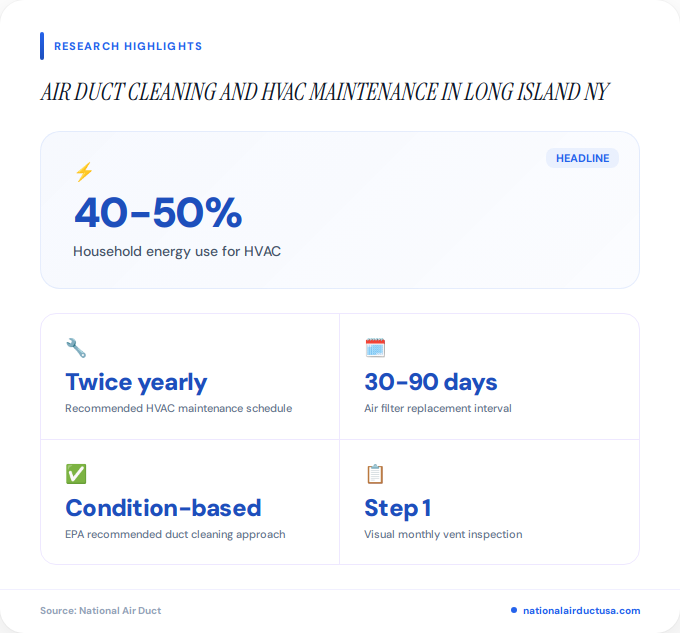
Here’s a number that surprises most homeowners: HVAC systems can account for 40% to 50% of total household energy use on Long Island, yet most people only think about their ductwork when something smells off or the vents look dusty. Air duct cleaning and HVAC maintenance in Long Island NY are frequently treated as the same service, but they solve completely different problems, and confusing them costs homeowners money, comfort, and sometimes equipment life.
This guide breaks the process into a clear, step-by-step checklist. You’ll see exactly what you can reasonably handle yourself between Montauk and Massapequa, and what genuinely requires a licensed technician with the right tools and training. The goal isn’t to sell you a service you don’t need. It’s to help you protect the system you already have.
What’s the Difference Between Duct Cleaning and HVAC Maintenance?
HVAC maintenance is about the equipment: the furnace, air handler, condenser, heat pump, and electrical components that generate and move conditioned air. Duct cleaning is about the pathways: the sheet metal or flex ductwork that carries that air through your walls, attic, or crawlspace to every room.
A technician can tune up a furnace perfectly and the ducts can still be contaminated with construction dust from a renovation. Conversely, spotless ducts won’t fix a failing capacitor or a dirty condenser coil. Both systems need attention, but on different schedules and for different reasons.
The U.S. Environmental Protection Agency has been notably cautious here. The agency’s guidance states plainly that it does not recommend routine duct cleaning as a blanket practice, because benefits haven’t been proven for systems that are only lightly dusty. This same position appears in the agency’s earlier published guidance as well, which notes that duct cleaning should be condition-based, not calendar-based. In other words: clean when there’s a reason, not just because a year has passed.
What Can a Long Island Homeowner Do Without a Professional?
There’s a meaningful list of tasks any homeowner on Long Island can and should handle between professional visits. These are low-risk, low-cost, and they genuinely extend equipment life.
- Replace or clean air filters every 30 to 90 days. The right interval depends on pets, allergies, household size, and whether you’ve had recent construction or renovation dust in the home.
- Visually inspect supply and return vents monthly. Look for dust buildup, pet hair, or debris being pushed out when the system runs.
- Keep registers and return grilles unblocked. Furniture, rugs, and curtains covering vents throttle airflow and strain the blower motor.
- Clear outdoor condenser unit debris. Leaves, grass clippings, and mulch piling up around a central AC unit (common in leafy North Shore neighborhoods like Huntington and Cold Spring Harbor) restrict airflow.
- Check for musty odors after flooding or high humidity. Long Island’s humid summers and coastal proximity make basements and crawlspaces prone to moisture issues.
- Monitor your thermostat and utility bills for sudden spikes. A jump in cooling costs can be an early warning sign worth investigating.
- Vacuum visible dust near vents and baseboard registers. This won’t clean inside the ductwork, but it reduces surface buildup between deeper cleanings.
None of these tasks require specialized equipment, and doing them consistently is one of the simplest ways to avoid premature repairs. For a deeper dive into recognizing problems early, this homeowner’s guide to warning signs walks through what to watch for room by room.
What Should Be Left to a Licensed HVAC Technician?
Once you’re inside the equipment cabinet, working with refrigerant, or inspecting the interior surfaces of ductwork, this is professional territory. Attempting these tasks yourself risks damaging expensive components or voiding manufacturer warranties.
- Refrigerant level checks and recharging. This requires EPA certification and specialized gauges.
- Electrical component testing. Capacitors, contactors, and control boards carry real shock risk and require diagnostic tools.
- Combustion analysis on gas furnaces and boilers. Technicians check for carbon monoxide leaks and proper venting, which is a safety issue, not just a performance one.
- Blower motor and belt inspection. Imbalanced or worn components can fail unexpectedly without a trained eye catching early wear.
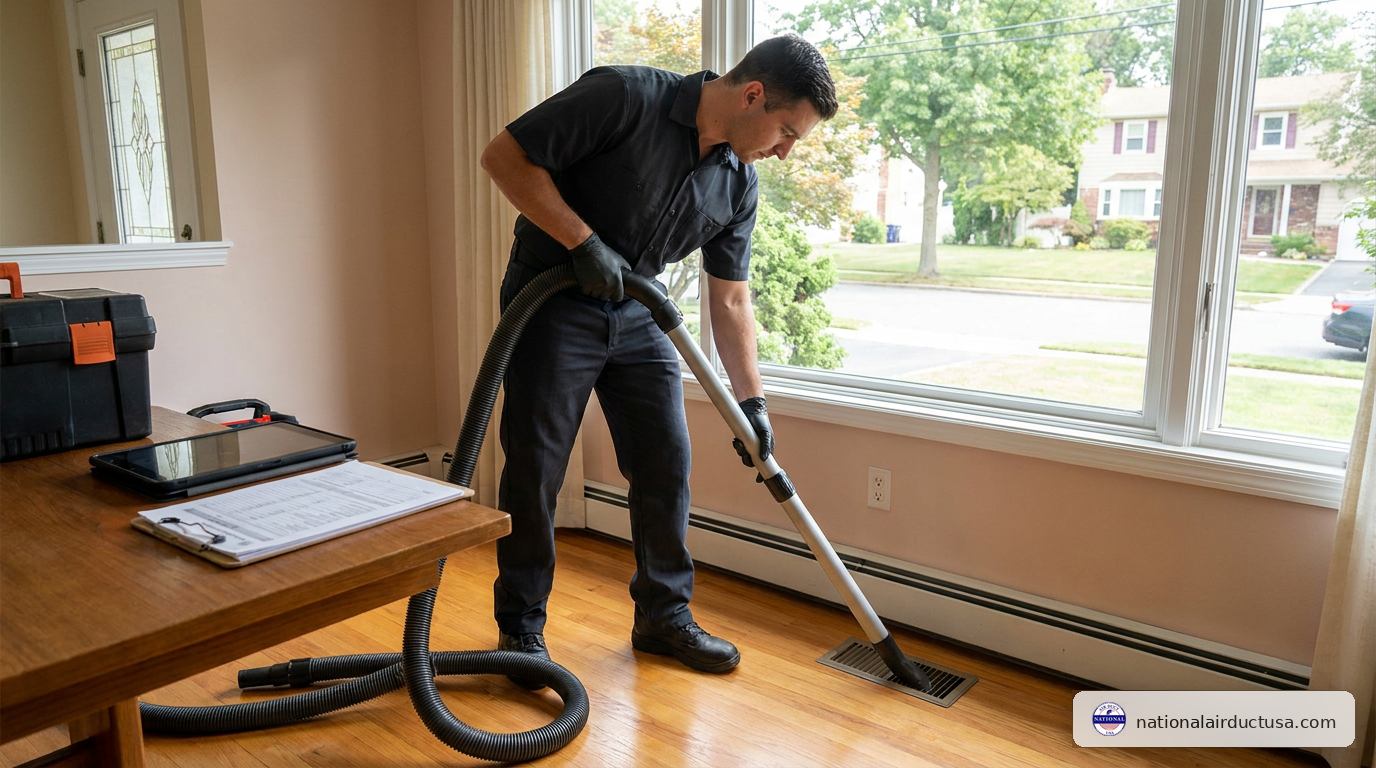
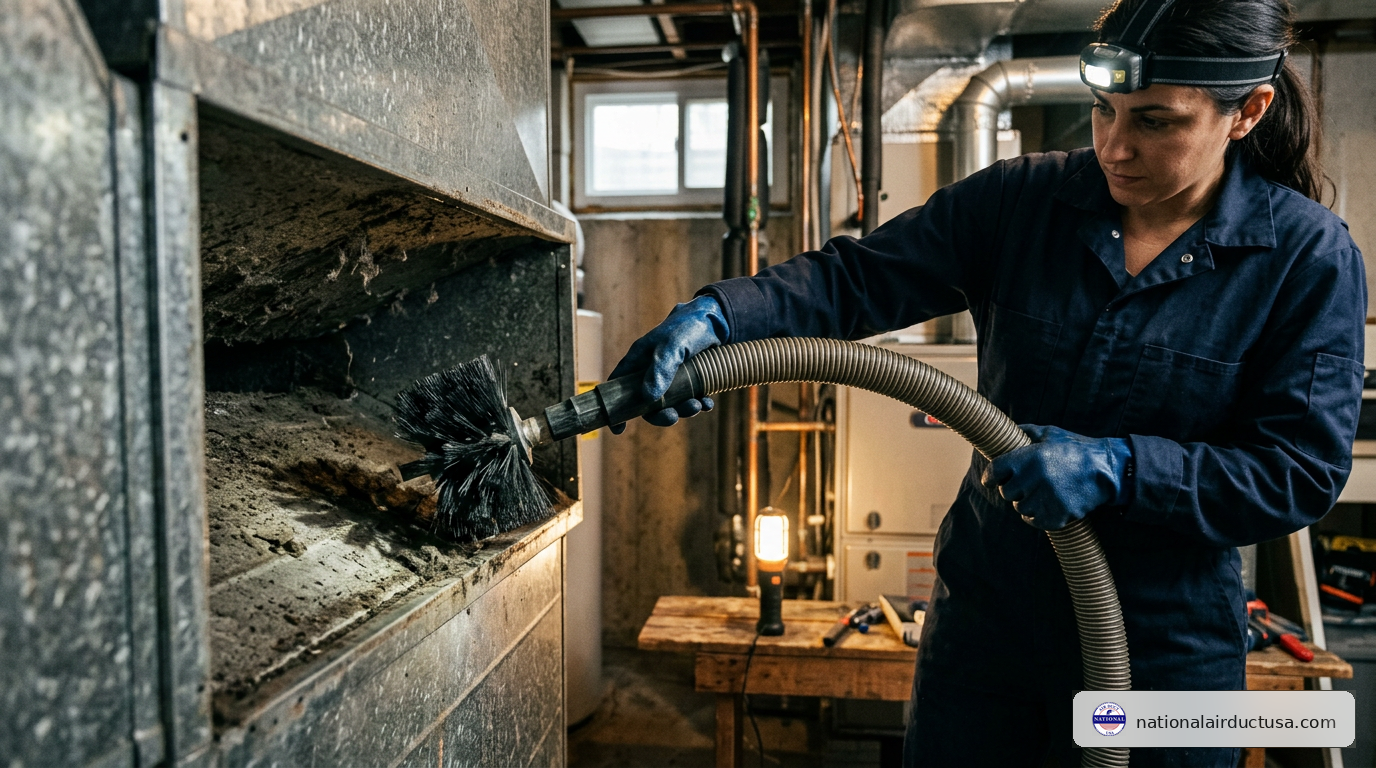
- Full interior duct inspection with a camera. This is the only reliable way to confirm whether mold, pests, or heavy debris actually exist inside the ductwork, as opposed to guessing from vent covers alone.
- NADCA-standard duct cleaning. The National Air Duct Cleaners Association publishes specific source-removal cleaning methods that require negative pressure equipment and agitation tools most homeowners simply don’t own.
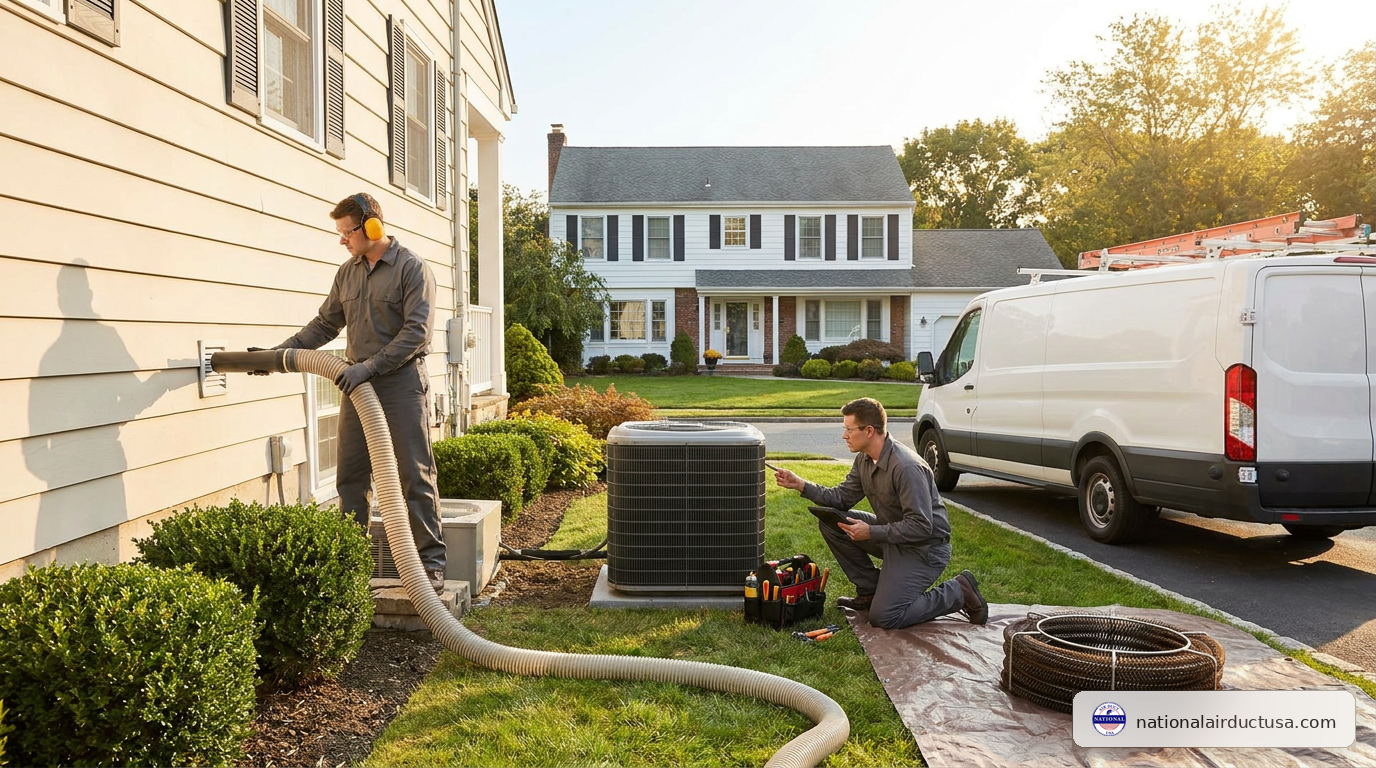
- Dryer vent cleaning. Lint-clogged dryer vents are a documented fire hazard, and professional dryer duct cleaning clears blockages that homeowners often can’t reach with a standard vacuum.
“The biggest mistake we see on Long Island is homeowners scheduling duct cleaning out of habit while skipping the equipment tune-up that actually prevents breakdowns. The ducts are the pathway, but the equipment is what fails first, and it usually fails at the worst possible moment: the first heat wave in July or the first cold snap in January.”
When Does Duct Cleaning Actually Make Sense?
Since the EPA doesn’t endorse cleaning on a fixed schedule, the better question is: what specific conditions justify it? Based on EPA and NADCA guidance, duct cleaning is reasonable when one or more of these apply:
- Substantial visible mold growth is present inside hard-surface ducts or on other HVAC components.
- There’s verified evidence of rodents, insects, or other pest infestation in the ductwork.
- Large amounts of dust or debris are visibly blowing out of supply registers.
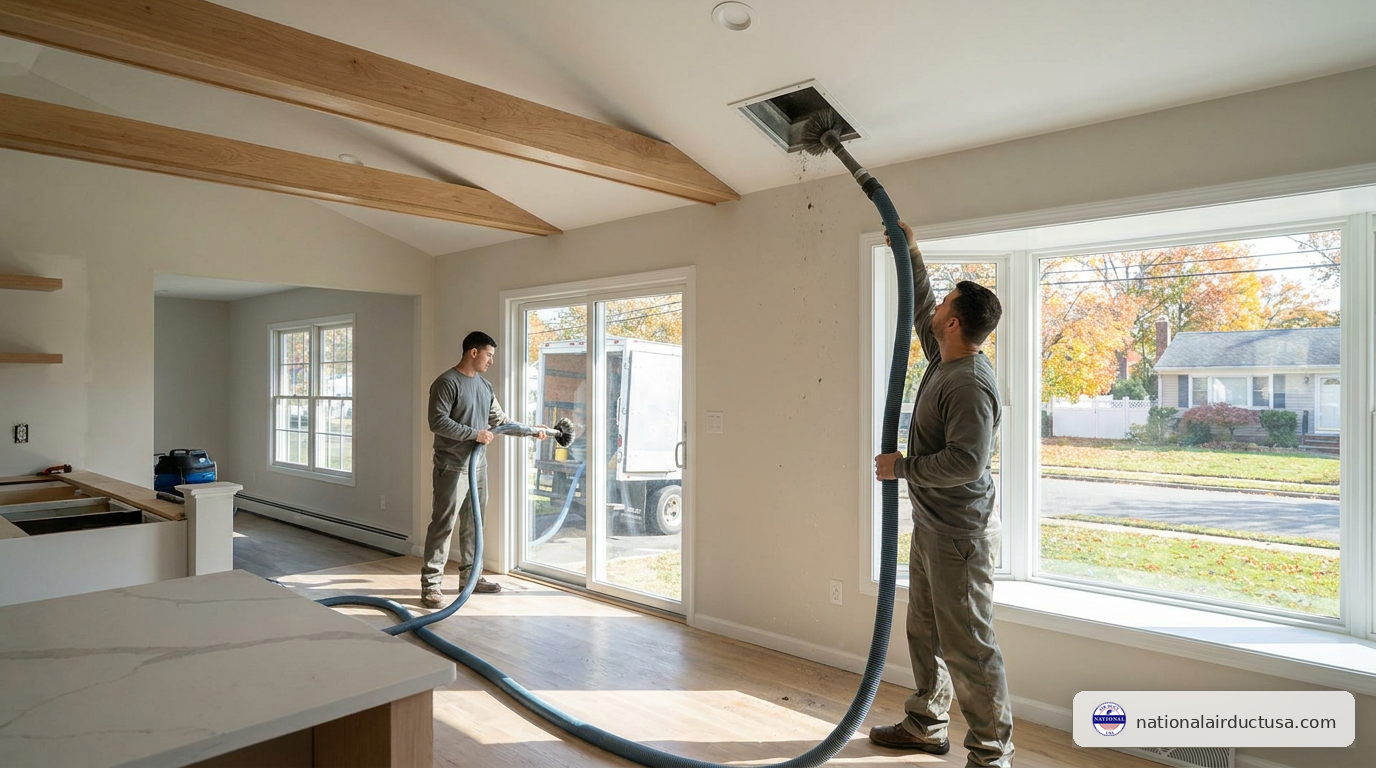
- Heavy construction or renovation debris has entered the system, which is common after a Long Island kitchen remodel or attic insulation project.
- A persistent musty odor remains even after moisture sources have been addressed.
If none of these apply, routine cleaning may not deliver a measurable benefit, and your money is better spent on equipment maintenance. If you’re unsure which category your home falls into, a professional inspection is the right first step, not a guess. This comprehensive Long Island duct cleaning guide covers inspection criteria in more detail, and homeowners dealing with suspected mold should review this step-by-step mold removal checklist before scheduling any work.
What Does a Full Long Island Seasonal Maintenance Schedule Look Like?
Long Island’s climate, humid summers off the Atlantic and cold, damp winters, makes twice-yearly HVAC service the most practical baseline. Here’s how the two visits typically differ.
| Spring Cooling Inspection | Fall Heating Inspection |
|---|---|
| Check refrigerant charge and pressure | Inspect heat exchanger for cracks |
| Clean condenser coil and clear debris | Test for carbon monoxide and proper venting |
| Test capacitors and contactors | Check ignition system and pilot assembly |
| Inspect ductwork connections for leaks | Replace or inspect filters before heating season |
This two-visit rhythm aligns with what local providers and industry trend data both point to: a recent New York HVAC market report highlights rising demand for preventive seasonal service as equipment ages and energy costs climb. Homeowners in areas like Westbury have local options for both equipment checks and air duct cleaning service in Westbury NY when inspection findings call for it.
Don’t overlook boiler and chimney safety if your home uses oil or gas heat, which is common across older Long Island housing stock. A seasonal boiler chimney cleaning checklist is worth reviewing before the coldest months arrive.
How Much Does This Cost on Long Island?
Pricing varies widely based on home size, equipment age, accessibility, and whether repairs are needed alongside maintenance. As a general reference point, local providers report tune-up visits in the $150 to $300 range, with some annual maintenance plans priced similarly after an introductory period. Emergency repairs, by contrast, often start around $400 and can climb well beyond $1,200 depending on the failed component.
Frequency: Twice yearly
Goal: Catch small issues early
Frequency: Unplanned
Goal: Fix a failure already in progress
Frequency: Peak season
Goal: Restore comfort urgently
Summer cooling costs are climbing too. One Massapequa-area estimate puts July and August air-conditioning expenses around $250 to $400 per month, with older or larger homes potentially topping $500. That trend tracks with broader reporting: a recent New York Post analysis on rising AC costs points to equipment age and energy prices as key drivers. Duct cleaning pricing is similarly variable and should always be quoted after an inspection, not sold as a flat-rate package sight unseen. Pricing varies based on your specific project, home layout, and duct condition, so request a custom quote rather than relying on a generic number.
How Does This Combination Extend System Life?
A well-maintained HVAC system paired with clean airflow pathways doesn’t just run better today, it lasts longer overall. An aging, roughly 20-year-old air conditioner rated at SEER 8 can use nearly twice the electricity of a modern 14+ SEER unit to deliver the same cooling. That gap compounds every summer the old equipment stays in service.
Dirty ducts and neglected filters make the equipment work harder to push air through restricted pathways, which accelerates wear on blower motors and compressors. Research referenced by the American Home Shield homeowner air quality study found that indoor air concerns rank high among homeowner priorities, reinforcing why airflow and filtration matter alongside equipment health. For a broader look at how contamination affects both comfort and cost, see this breakdown of whether dirty air ducts increase energy bills.
Professional standards bodies back this dual approach too. ASHRAE’s published handbook chapter on system and equipment covers how airflow design and maintenance interact to affect long-term performance, underscoring that ducts and equipment are part of one connected system, not two unrelated maintenance items.
Why Local Air Quality Conditions Matter Here
Long Island’s coastal humidity, seasonal pollen, and mixed housing stock, from older Levittown-era homes to newer construction in Suffolk County, all affect indoor air differently. Homes near the water often deal with higher ambient moisture, which can contribute to musty duct odors even when the HVAC equipment itself is functioning properly. Understanding regional air quality factors specific to Long Island helps homeowners decide whether a musty smell points to a duct issue, a moisture issue, or both.
If you’re searching for a provider, it helps to understand what a thorough inspection actually looks like before you commit. This resource on finding reliable duct cleaning near you on Long Island outlines questions to ask any company before scheduling service, and the step-by-step walkthrough of professional duct cleaning shows exactly what NADCA-standard work involves from start to finish.
People Also Ask
Is air duct cleaning worth it on Long Island?
It’s worth it when there’s a verified condition like mold, pest infestation, or heavy construction debris inside the ducts. For a lightly dusty system with no symptoms, the EPA does not find established evidence that routine cleaning improves health or performance.
How often should HVAC systems be serviced in New York?
Most HVAC professionals recommend two visits per year: one in spring before cooling season and one in fall before heating season. This schedule catches small issues, like worn capacitors or refrigerant leaks, before they turn into costly breakdowns.
Can dirty ducts shorten the life of an HVAC system?
Heavily contaminated ducts can restrict airflow, forcing the blower motor and compressor to work harder than designed. Over years, that added strain can contribute to premature component failure, even though the ducts themselves aren’t the equipment.
What’s the difference between HVAC maintenance and a repair visit?
Maintenance is scheduled, preventive, and typically costs $150 to $300 per visit. Repair visits address a specific failure that’s already occurred and can range from $415 to $1,200 or more depending on the part involved.
Frequently Asked Questions
Does the EPA recommend cleaning air ducts every year?+
No. The EPA explicitly states there is no evidence supporting a fixed cleaning schedule, and recommends cleaning only when a specific condition, like mold or pest infestation, is identified.
What can I do myself versus hire a professional for?+
Homeowners can safely replace filters, clear debris around outdoor units, and keep vents unblocked. Refrigerant work, electrical testing, combustion safety checks, and interior duct cleaning require a licensed technician with specialized equipment.
How much does HVAC maintenance cost on Long Island?+
Local providers typically charge in the $150 to $300 range per seasonal tune-up visit. Pricing varies based on home size, equipment type, and whether any repairs are needed, so a custom quote is the most accurate approach.
Can I clean my own air ducts?+
You can vacuum visible dust near vent covers, but reaching inside the ductwork safely and effectively requires negative-pressure equipment and NADCA-standard agitation tools that most homeowners don’t own.
Will duct cleaning lower my energy bill?+
It can help if ducts were significantly obstructed with debris, since clear pathways reduce strain on the blower motor. However, equipment efficiency, insulation, and thermostat habits usually have a bigger overall impact on bills.
How do I know if my Long Island home needs duct cleaning versus just HVAC maintenance?+
Schedule a professional inspection first. If the technician finds visible mold, pest evidence, heavy debris, or construction dust inside the ducts, cleaning is justified; otherwise, a standard seasonal HVAC tune-up is likely sufficient.
Keeping your system running efficiently doesn’t require guesswork. For homeowners weighing these decisions right now, reviewing how often air ducts actually need cleaning on Long Island is a smart next step before booking any service.
- Air duct cleaning and HVAC maintenance are separate services, one addresses contamination, the other protects equipment performance and safety.
- Schedule HVAC maintenance twice yearly, once in spring before cooling season and once in fall before heating season.
- Duct cleaning should be condition-based, not scheduled automatically every year or every few years, per EPA guidance.
- Homeowners can safely handle filter changes, visual inspections, and keeping vents clear, but should leave refrigerant, electrical, and interior duct work to licensed professionals.
- Preventive maintenance typically costs $150 to $300 per visit, far less than emergency repairs, which can reach $1,200 or more.
- Older, lower-efficiency equipment can use nearly twice the electricity of modern systems, making maintenance and timely replacement decisions financially meaningful.
- Long Island’s humid, coastal climate makes moisture-related duct odors and seasonal HVAC stress more common than in drier regions.
Related: What Sets Licensed Duct Cleaners Apart in Connecticut-Style HVAC Systems Serving Long Island, NY
If you’re ready to find out whether your home needs a seasonal HVAC tune-up, a duct inspection, or both, the team at National Air Duct serves homeowners across Long Island with honest, inspection-first recommendations rather than one-size-fits-all packages. Reach out for a custom assessment or learn more about our approach on our about us page before your next heating or cooling season begins.
Further reading: Professional Duct Cleaning Checklist: What’s Actually Included in Long Island, NY
Further reading: Get an Air Duct Cleaning Cost Estimate: A Homeowner Checklist for Long Island, NY