Quick Answer
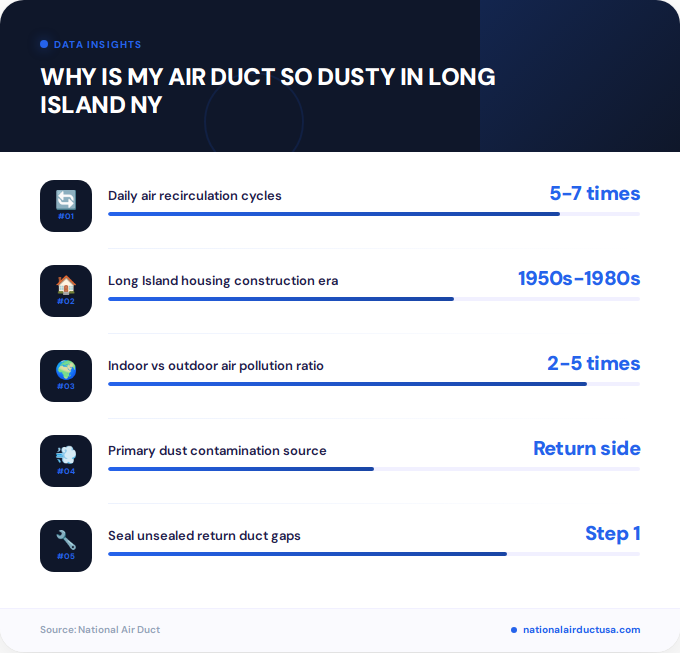
Air ducts in Long Island homes usually get dusty because of return-side air leaks, poorly fitted or outdated filters, humid basements and crawlspaces, and the region’s seasonal pollen and particulate load, not simply because the ducts themselves are “dirty.” Since HVAC systems recirculate the same indoor air roughly five to seven times a day, any unsealed gap, weak filter, or moisture source gets pulled through the system repeatedly and redeposited as household dust.
If you dust your shelves on Monday and they look gray again by Thursday, you’ve probably already asked the question: why is my air duct so dusty in Long Island NY homes, even when I clean constantly? The honest answer surprises most homeowners. Dust rarely comes from dirt sitting inside the ductwork itself. It comes from what’s being pulled into the system, how well it’s filtered, and how many gaps exist along the way.
Long Island’s housing stock, much of it built between the 1950s and 1980s across towns like Massapequa, Huntington, and Patchogue, adds its own wrinkles: older duct seams, unfinished basements, and crawlspaces that interact with coastal humidity. Understanding the mechanics behind dust buildup is the first step to actually solving it, rather than just buying another air purifier.
What’s Actually Happening Inside a Dusty Duct System?
Your HVAC system isn’t a sealed loop. It’s constantly pulling air in through return vents, pushing it through the blower and filter, and distributing it through supply ducts. According to a 2026 industry report, HVAC systems can circulate the air inside a home roughly five to seven times per day, meaning any contaminant that enters the system gets redistributed repeatedly rather than removed.
That repetition matters. A small amount of fine dust, pollen, or fiber entering through a single leak or gap gets cycled through the home’s air dozens of times before a filter ever has a real chance to catch it. The EPA has noted that indoor air can be two to five times more polluted than the air outside, a gap driven largely by ventilation gaps, combustion sources, and filtration quality rather than outdoor conditions alone.
For a deeper look at how indoor air quality interacts with duct performance region-wide, see our Long Island air quality resource, which breaks down local pollutant trends by season.
How Do Leaky Return Ducts Cause Household Dust?
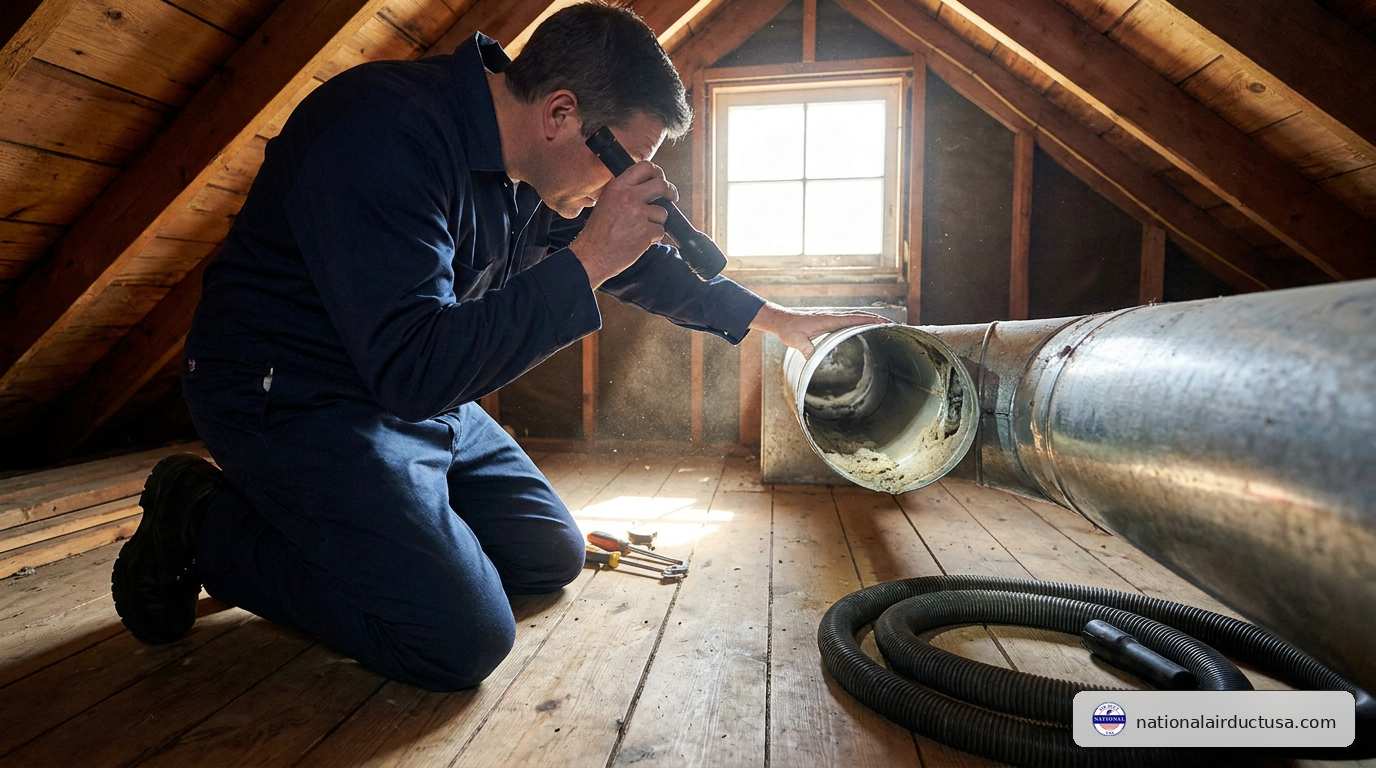
The single most overlooked cause of chronic dust is a leak on the return side of the system. Return ducts are under negative pressure, meaning they actively suck air in from wherever there’s a gap, whether that’s a seam in an unfinished basement, a gap near a crawlspace access panel, or a loose connection in an attic.
When return ducts run through these unconditioned spaces, which is extremely common in older Long Island homes, they can pull in:
- Fiberglass insulation fragments
- Basement or crawlspace soil particles
- Sawdust from past renovations
- Loose insulation fibers
- Pest debris and droppings
- Moisture and mold spores from damp framing
This is why a home can have relatively clean supply ducts but still produce a steady stream of dust: the contamination is entering downstream of the filter, through the return side, where it never gets screened out before reaching the living space.
“Most homeowners assume dust means dirty supply ducts, but in my experience inspecting systems, the return side is where the real damage happens. A single unsealed seam in a crawlspace can introduce more contaminants than a decade of normal household dust ever could,” notes HVAC expert Wayne Johnson, as cited in a recent industry explainer on allergens and ductwork buildup.
Is Your Filter Actually Doing Its Job?
A filter that looks “fine” on paper can still be failing in practice. Common issues include filters installed backward, filters that are the wrong size for the slot (allowing air to bypass around the edges), and filters left in place far longer than the manufacturer recommends.
For most Long Island homes, a properly fitted MERV 8 to MERV 11 filter is a reasonable baseline. MERV 13 filters capture significantly more fine particulate matter, but a technician should confirm the blower motor and duct system can handle the added resistance before upgrading, since an overly restrictive filter can strain the system and actually reduce airflow efficiency.
| Filter Rating | Typical Use Case | Consideration |
|---|---|---|
| MERV 8 | Standard residential dust and pollen | Low airflow resistance, needs frequent changes |
| MERV 11 | Homes with pets or moderate allergy concerns | Good balance of capture and airflow |
| MERV 13 | Fine particulate and smoke-sensitive households | Requires HVAC compatibility check |
How Does Long Island’s Climate and Air Quality Affect Your Ducts?
New York State’s air-quality tracking system groups Nassau and Suffolk counties together as the Long Island region, and that regional data offers useful context. In 2026, Long Island received multiple ozone-health advisories, including ones issued for June 5 and August 7, and at least one July 2026 advisory period where the New York State DEC forecast conditions reaching “Unhealthy” levels across Long Island and the greater New York City metro area.
On quieter days, readings have been far lower. One 2026 Long Island air-quality reading reported an AQI of 43 for fine particles, categorized as “Good,” while another nearby reading showed 46, with PM2.5 still the dominant pollutant according to the New York State DEC’s AQI tracking tool. The takeaway: air quality swings day to day, and those fine particles don’t disappear at your front door. They settle in return vents, on coils, and inside ductwork over time.
Coastal humidity compounds this. Homes near the Sound or South Shore often deal with higher ambient moisture, which encourages dust particles to clump, stick to duct interiors, and occasionally support microbial growth in poorly ventilated sections. You can track regional conditions through resources like Long Island’s local air quality health index to see how outdoor pollution trends might be influencing what’s entering your home.
Can Renovations and Damp Basements Make Dust Worse?
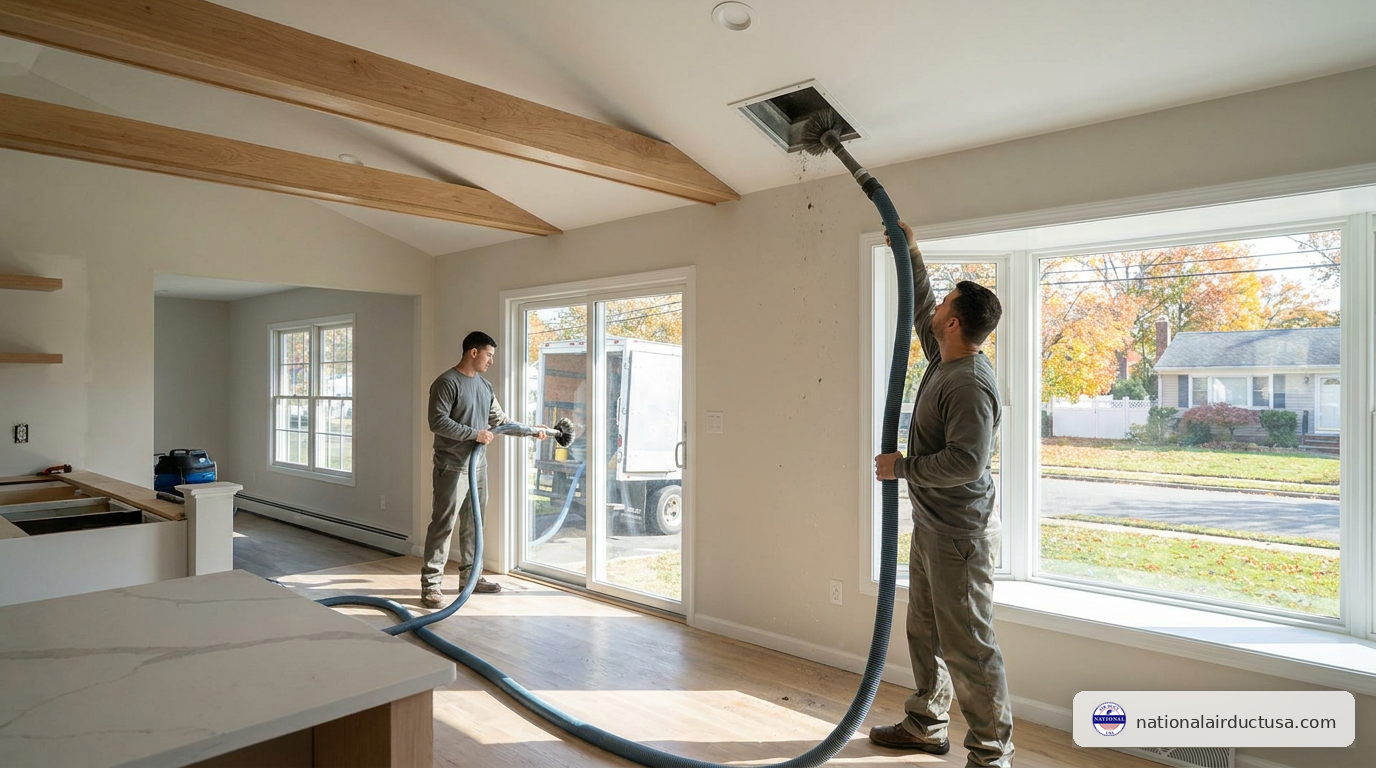
Yes, and often dramatically. Any renovation work, from a kitchen remodel in Garden City to a basement finish in Islip, generates fine drywall dust and sawdust that can infiltrate open ductwork during construction if vents aren’t sealed off properly. That debris doesn’t always show up immediately; it can linger in the system and get redistributed for months afterward.
Unsealed crawlspaces and damp basements add a second layer. Moisture encourages dust to bind together and can introduce musty odors alongside visible dust. If you’ve noticed both issues together, it’s worth reviewing our guide on winter mold in air ducts and the health risks it poses, since mold and dust complaints frequently travel together in older Long Island basements.
When Does Dust Mean You Need Professional Duct Cleaning?
Not every dusty home needs duct cleaning. The EPA’s longstanding guidance, including its archived indoor air quality guidance on residential duct cleaning, notes that duct cleaning has not been conclusively shown to prevent health problems, and should be approached based on visible evidence rather than routine scheduling alone.
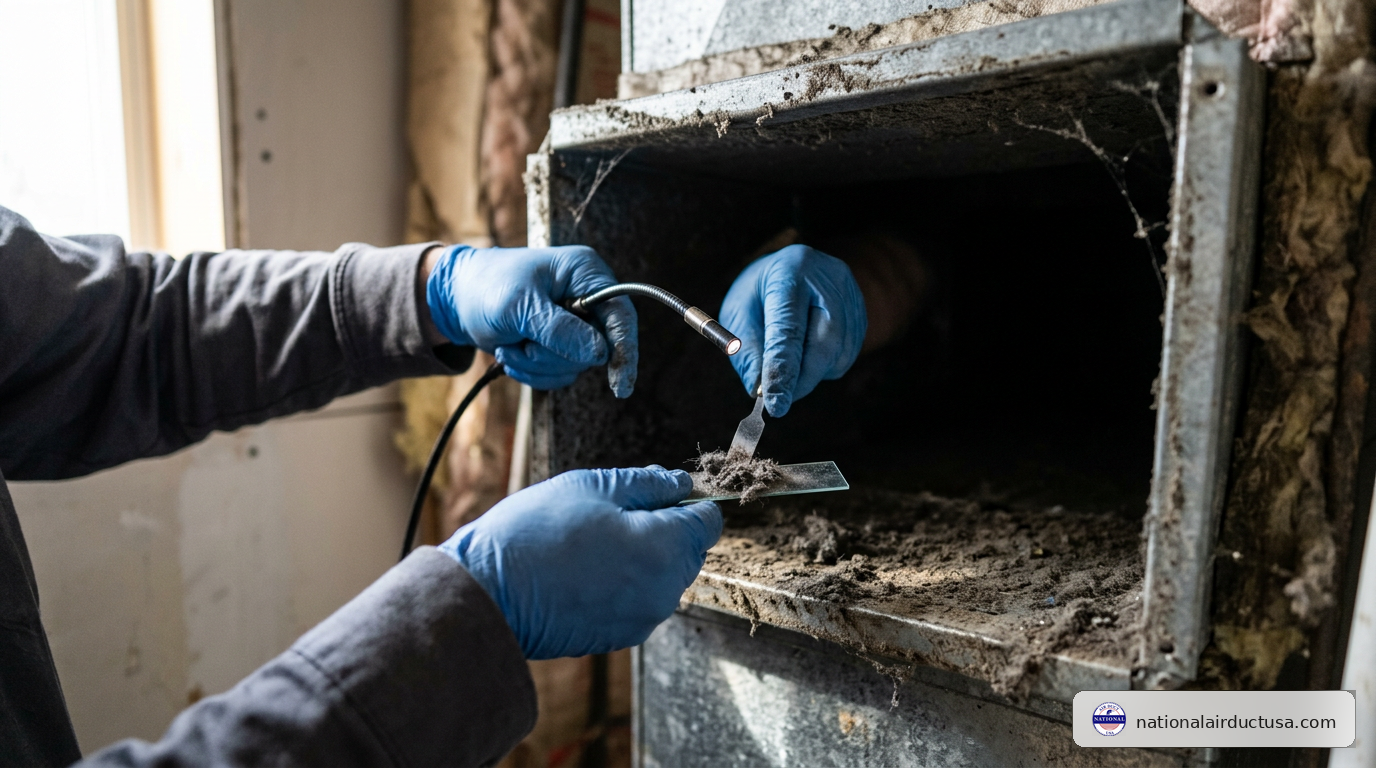
That said, certain signs point clearly toward a professional inspection:
- Visible dust or debris blowing out of supply registers
- Dust buildup returning within days of cleaning surfaces
- Musty or stale odors when the system runs
- Recent renovation work without duct protection
- Known pest activity in the attic or crawlspace
- Family members with worsening allergy or asthma symptoms indoors
NADCA, the National Air Duct Cleaners Association, commonly recommends inspection or cleaning intervals of roughly three to five years, depending on household conditions like pets, smokers, renovations, or known HVAC leaks. Homes with any of the risk factors above may need attention sooner. Our guide on cleaning frequency for Long Island homes breaks this down by housing type and household activity level.
DIY Fixes vs. Professional Service: What’s the Difference?
Some dust sources are genuinely fixable without a technician. Others require equipment and diagnostic skill that go well beyond a vacuum attachment.
Vent cover dusting: Monthly
Sealing visible gaps with mastic tape: As needed
Checking filter orientation: Immediate
Return leak diagnosis: Pressure testing required
Mold remediation in ductwork: Certified handling
Coil and blower cleaning: System disassembly
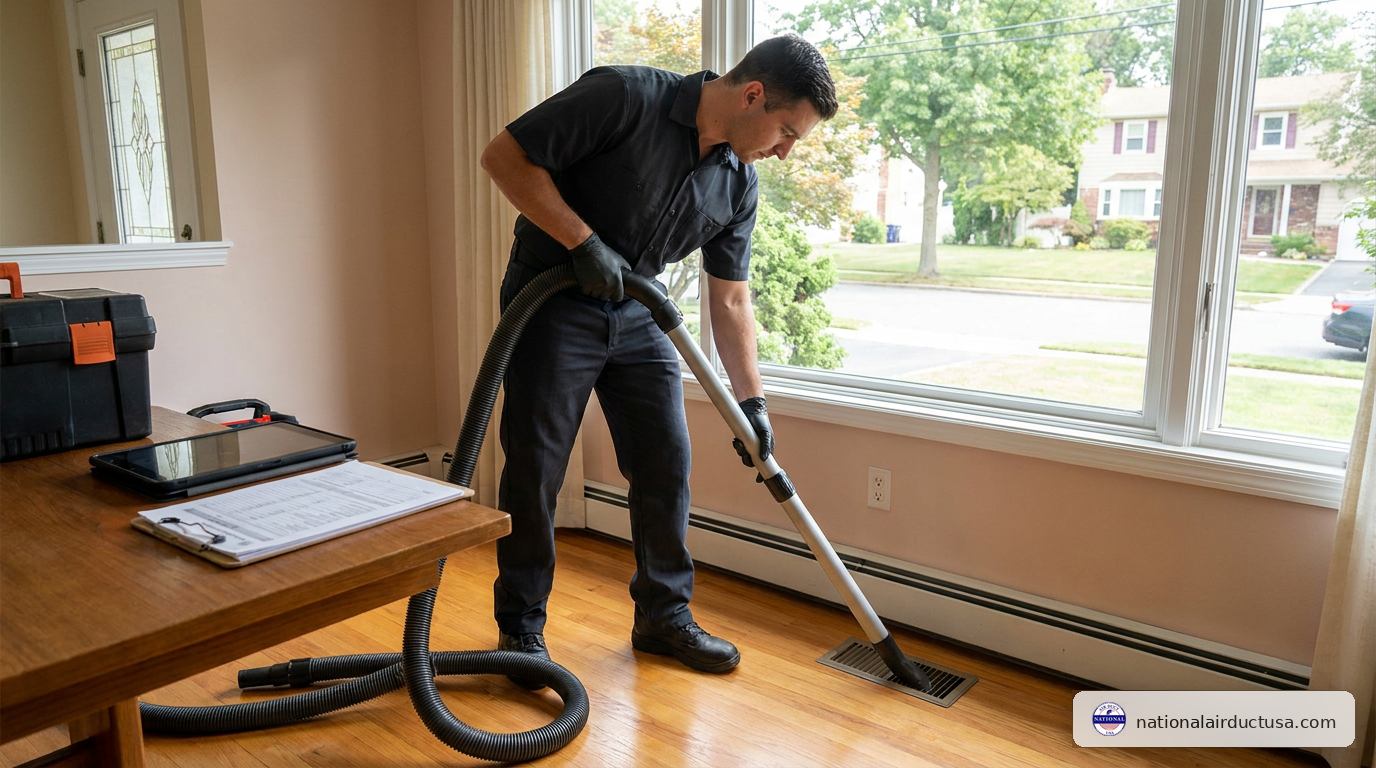
A technician inspecting your system will typically check for return leaks, inspect insulation condition, assess filter fit, and evaluate whether duct sealing or a full cleaning is the more appropriate fix. If you want to understand exactly what a thorough service includes, our professional duct cleaning checklist outlines each step. For homeowners weighing whether cleaning is worth the investment, research from Indoor Science’s analysis of when duct cleaning actually helps is a useful independent perspective.
Pricing for professional duct cleaning in Long Island varies widely, generally ranging from a few hundred dollars for a basic single-system service up to $10,000 or more for extensive multi-system homes requiring sealing, sanitizing, or mold remediation. Final cost depends on home size, duct accessibility, number of HVAC zones, and the extent of repair work needed alongside cleaning. A custom quote after an in-home inspection is the only reliable way to know what your specific property will require.
For a full walkthrough of what happens during a visit, see our step-by-step duct cleaning process guide, and if you’re still deciding whether your symptoms warrant a call, our signs you need duct cleaning services guide offers a practical self-assessment.
Key Takeaways
- Dusty ducts are usually caused by return-side leaks pulling in basement, attic, or crawlspace contaminants, not by dirt generated inside clean ductwork.
- HVAC systems recirculate indoor air roughly five to seven times daily, so even small leaks get amplified across hundreds of cycles.
- Long Island’s PM2.5 and ozone levels vary significantly day to day, and outdoor particulate matter does make its way indoors through ventilation gaps.
- A correctly fitted MERV 8 to MERV 11 filter, replaced on schedule, solves a large share of chronic dust complaints.
- Renovation dust, damp basements, and unsealed crawlspaces are common and often overlooked contributors in older Long Island homes.
- NADCA generally recommends duct inspection or cleaning every three to five years, sooner if pets, allergies, or visible debris are present.
- Professional diagnosis, not guesswork, is the fastest way to identify whether the issue is filtration, leaks, or genuine duct contamination.
People Also Ask
Why is my house so dusty even though I clean regularly?
Persistent dust despite cleaning usually points to a source that’s continuously replenishing itself, most often a return-duct leak, a poorly sealed filter, or ongoing humidity issues rather than a one-time buildup you can simply wipe away.
Does duct cleaning actually reduce dust in the home?
Duct cleaning can reduce dust when the ductwork itself holds visible contamination or debris, but if the real cause is a leak or filter problem, cleaning alone won’t stop dust from returning; the underlying issue needs to be fixed too.
How often should Long Island homeowners clean their air ducts?
NADCA commonly suggests inspection or cleaning every three to five years, though homes with pets, recent renovations, known leaks, or allergy-sensitive residents may benefit from more frequent checks.
Can a bad filter really cause this much dust?
Yes. A filter installed backward, the wrong size, or left in place too long allows significant amounts of particulate matter to bypass filtration entirely and recirculate through the home multiple times a day.
Does Long Island’s air quality affect indoor dust levels?
Outdoor PM2.5 and ozone levels, which fluctuate across Nassau and Suffolk counties throughout the year, can infiltrate homes through ventilation systems and unsealed gaps, adding to the dust load inside ductwork.
Frequently Asked Questions
Why is my air duct so dusty in Long Island NY if I just had the system serviced?+
A recent service may have addressed the furnace or AC unit without inspecting the ductwork itself for leaks, especially on the return side. Dust can also be pulled in from an unsealed basement or crawlspace regardless of how well the equipment runs.
Is dusty ductwork a sign of mold?+
Not always, but dust combined with musty odors or visible discoloration around vents can indicate mold growth, particularly in humid basements common across Long Island. A professional inspection can confirm whether mold is present.
What’s the difference between duct cleaning and duct sealing?+
Duct cleaning removes existing debris from inside the ductwork, while duct sealing closes gaps and leaks that allow new contaminants to enter in the first place. Many dusty homes need both to see lasting improvement.
How much does professional duct cleaning cost on Long Island?+
Pricing varies based on your specific project, home size, number of HVAC zones, and whether repairs like sealing are needed alongside cleaning. A custom quote after an in-home inspection is the most accurate way to understand your cost.
Can pets really make that much of a difference in duct dust?+
Yes. Pet dander and hair are lightweight enough to circulate through return vents repeatedly, and in homes with multiple pets this can significantly shorten how long filters stay effective between changes.
Should I upgrade to a higher MERV-rated filter to reduce dust?+
A higher MERV rating, such as MERV 13, captures more fine particles, but only if your blower and ductwork can handle the added airflow resistance. A technician should confirm compatibility before upgrading to avoid straining the system.
Does new construction or renovation dust eventually clear on its own?+
Rarely without intervention. Fine drywall and sawdust particles tend to settle into ductwork and get redistributed for months after a renovation unless the system is professionally cleaned following the project.
Related: Mold in Air Ducts: How to Remove It Safely in Long Island, NY
Related: What Happens If You Don’t Clean Air Ducts in Long Island NY This Fall
Chronic dust is frustrating, but it’s rarely mysterious once you look at the system as a whole rather than just the visible vents. Whether the culprit is a return leak behind your Levittown basement wall, a filter installed one size too small in a Smithtown colonial, or seasonal particulate matter drifting in from outside, the fix starts with an accurate diagnosis. Explore our complete Long Island air duct cleaning guide for a deeper walkthrough, or browse our air duct cleaning services to see how a professional inspection can pinpoint exactly what’s driving the dust in your home. Ready to stop guessing? Contact our team for a custom assessment, or learn more about our approach on our homepage and about us page.