Quick Answer
Mold in air ducts can worsen allergies, irritate eyes and airways, and trigger asthma, especially as Long Island homeowners seal up houses and run heating systems heavily through winter. The risk comes from moisture sources like clogged condensate drains, damp crawl spaces, and poorly sealed attic ductwork, not from dust alone, so homes with visible growth, water damage, or persistent musty odors should be evaluated promptly rather than left to run through the cold season.
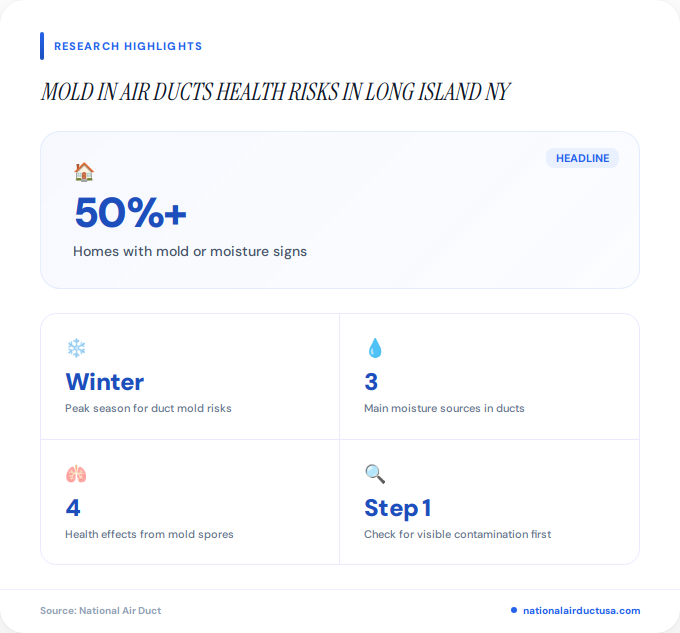
Why Does Winter Make Duct Mold Worse on Long Island?
As of late September and into early winter, Long Island homeowners are closing windows, cranking up central heat, and sealing homes tighter against the cold off the Atlantic. That’s exactly when hidden mold in air ducts health risks in Long Island NY become a serious, season-specific concern. A furnace or heat pump that hasn’t run since last spring can push dormant mold spores from the ductwork straight into every room the moment it kicks on.
Long Island’s humid coastal climate, aging housing stock, and basement-heavy construction create a near-perfect setup for duct contamination heading into the heating season. Homes in Nassau and Suffolk counties, from Massapequa to Hauppauge to Huntington, often have ductwork running through damp basements, unconditioned attics, and crawl spaces that trap moisture long after a summer storm or a leaky pipe has been “fixed.”
Once the thermostat drops and the system runs for hours at a stretch, any moisture sitting in a condensate pan, coil, or duct liner gets aerosolized and distributed through every supply vent in the house. This is the window when symptoms tend to spike and when it pays to act, not wait until January.
What Is Mold in Air Ducts, and How Common Is It Here?
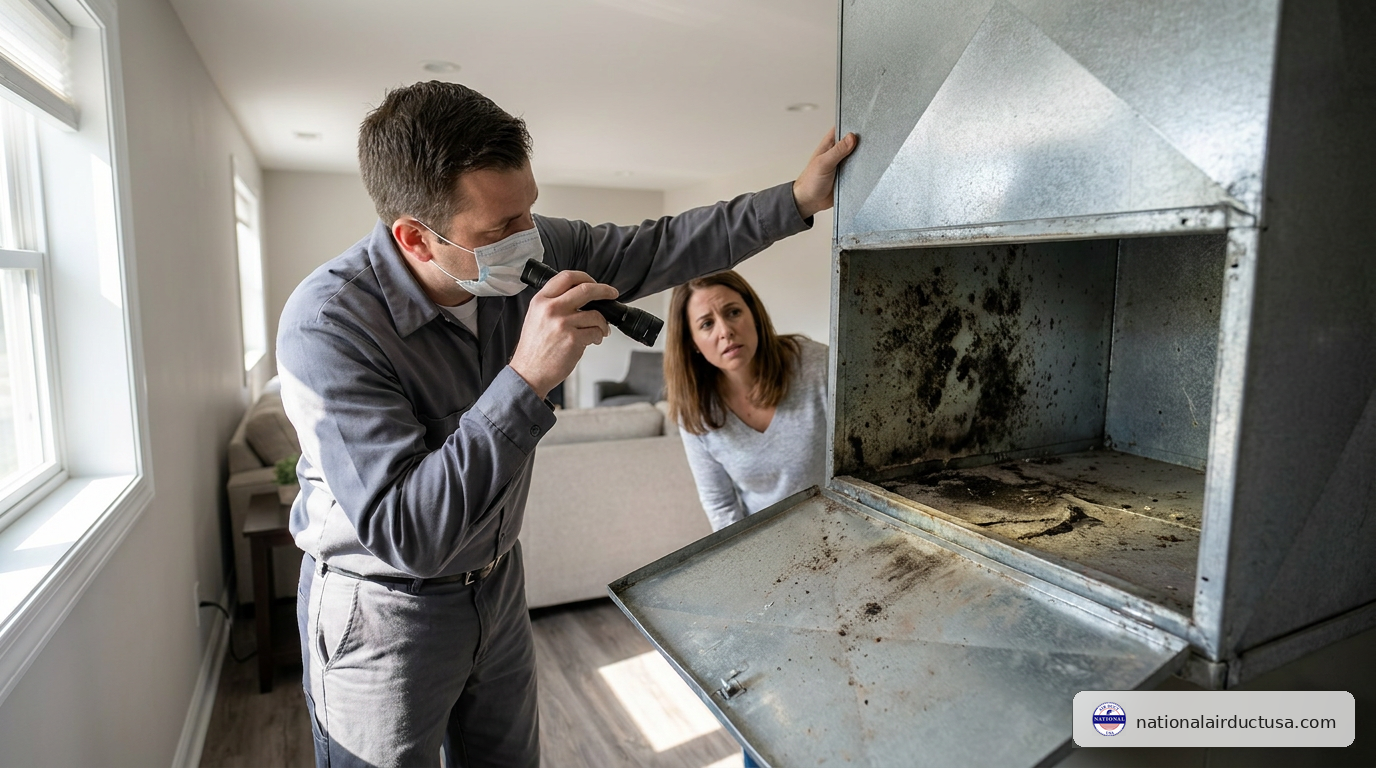
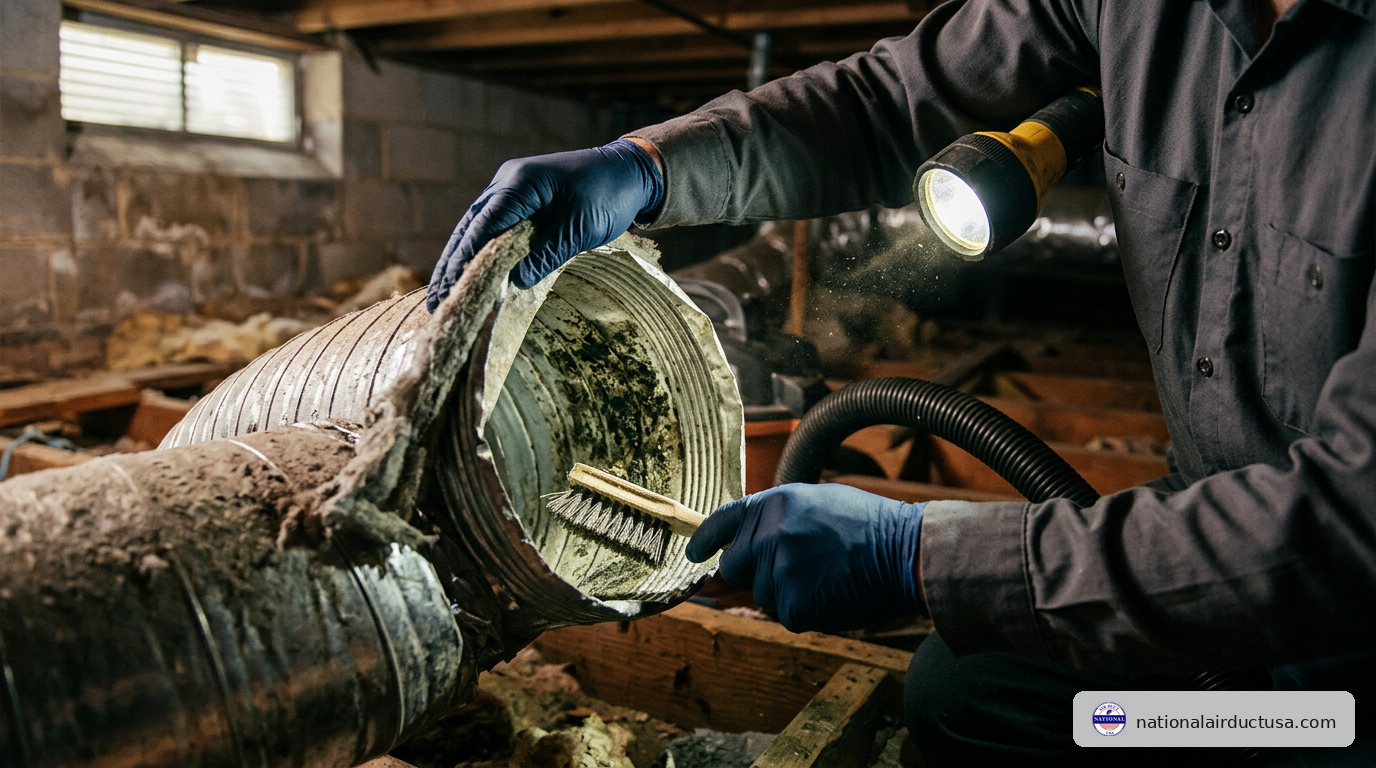
Mold in air ducts is fungal growth that colonizes damp surfaces inside supply or return ductwork, evaporator coils, blower compartments, or condensate pans, then releases spores that travel through the HVAC system and into living spaces. It typically needs a moisture source, an organic food source like dust or duct liner material, and stagnant air to establish itself.
There is no reliable public dataset establishing exactly how many Long Island homes currently have mold-contaminated ducts, and homeowners should be skeptical of any contractor who cites a precise local statistic. What is documented nationally is more sobering: one industry analysis found that more than half of homes inspected in a humid coastal region showed signs of mold, moisture, or leaks, a pattern that mirrors conditions found across much of Long Island’s shoreline communities.
There are also no validated “safe” airborne mold-spore thresholds for residential decision-making, which means health-risk claims based solely on spore counts should always be treated cautiously. The presence and location of visible growth, paired with moisture history, matters far more than any single number.
What Health Effects Can Duct Mold Cause?
Mold produces allergens, irritants, and in some cases mycotoxins, and when an HVAC system is contaminated it can distribute these particles throughout an entire home continuously during the heating season. According to guidance summarized by the EPA, reported effects of indoor mold exposure include:
- Sneezing, nasal congestion, and runny nose
- Red, itchy, or watery eyes
- Persistent cough, wheezing, or throat irritation
- Skin irritation or dermatitis
- Asthma attacks in mold-sensitive individuals
- Increased respiratory symptoms in people who are already sensitive to airborne irritants
Children with asthma, older adults, people with chronic lung disease, and immunocompromised individuals face higher risk from ongoing exposure. The New York City Department of Health notes that mold exposure can trigger or worsen asthma symptoms and cause irritation even in people without diagnosed allergies, which is relevant guidance for Long Island households as well given the similar coastal, humid conditions.
It’s worth stating plainly: “black mold” is not a reliable risk classification. Risk depends far more on the amount and location of growth, the moisture conditions sustaining it, ventilation, how long exposure continues, and each person’s individual susceptibility than on color alone. If a household member develops severe or persistent breathing difficulty, that calls for medical evaluation, not just environmental remediation.
How Does Mold Spread Through an HVAC System?
An HVAC system becomes a distribution network the moment mold establishes itself anywhere inside it. Common contamination points include:
- Supply or return ducts
- Evaporator-coil cabinets
- Blower compartments
- Condensate pans
- Flexible duct liners
- Insulation surrounding ductwork
- Air-handler cabinets near an intake
The EPA’s guidance on mold in buildings specifically states that known or suspected HVAC contamination should be investigated promptly because the system itself can spread mold throughout a structure. This is why a single damp basement duct run can eventually affect air quality in bedrooms on the opposite end of the house.
Homeowners should never operate a system suspected of containing active mold growth, especially after flooding or significant water intrusion, until it has been professionally evaluated. The CDC’s guidance on reopening buildings after water and wind damage reinforces that HVAC systems exposed to moisture need inspection before returning to normal operation, a precaution especially relevant after Long Island’s nor’easters and coastal flooding events.
What Moisture Sources Cause Duct Mold in Long Island Homes?
Long Island’s combination of coastal humidity, older housing, and a mix of basement and attic duct configurations creates several recurring moisture problems. The most common culprits include:
| Moisture Source | Why It’s a Problem |
|---|---|
| Clogged condensate drains or wet drain pans | Standing water sits directly inside the air handler, feeding mold near the airflow path |
| Damp basements and crawl spaces | Common in older Nassau and Suffolk homes; ducts absorb ambient moisture |
| Poorly insulated attic ductwork | Condensation forms on duct exteriors during temperature swings |
| Coastal storm flooding or plumbing leaks | Introduces large volumes of water quickly, often unnoticed inside duct runs |
| Ducts passing through unconditioned spaces | Temperature differentials encourage condensation inside and outside ducts |
| Indoor relative humidity above 60% | Creates widespread conditions favorable to mold throughout the duct system |
These issues are explored in more depth in our guide on Long Island air quality factors affecting local homes, which covers how regional humidity and housing age interact to create indoor air problems specific to this area. Homes with flat roofs, finished basements converted without proper vapor barriers, or additions with improperly sealed ductwork are especially susceptible.
Why Attics and Basements Are the Biggest Risk Zones
Long Island’s split-level and cape-style homes frequently route ductwork through both attics and basements, doubling the exposure to temperature extremes and moisture. Attics can swing from near-freezing to well above ambient temperature during a sunny winter afternoon, while basements stay cool and damp year-round, especially in homes near the Long Island Sound or South Shore bays where groundwater levels run higher.
When Is Duct Cleaning Actually Justified?
It’s important to be direct here: the EPA does not recommend routine duct cleaning as a standard maintenance task, and its chapter on mold and HVAC systems confirms that cleaning dust alone has not been shown to improve health outcomes. Cleaning becomes genuinely worth considering when specific conditions exist, such as:
- Substantial visible mold growth inside hard-surface ducts
- Mold found on HVAC components like coils, blower housings, or drain pans
- Water damage or flooding that involved the HVAC system directly
- Rodent or insect infestation inside ductwork
- Large deposits of debris being released from vents into living spaces
If any of these apply to your home, it’s time for a professional inspection rather than guesswork. Our detailed breakdown of mold in HVAC ducts explains what inspectors look for and how contamination is confirmed before any remediation work begins.
What Does Professional Remediation Involve?
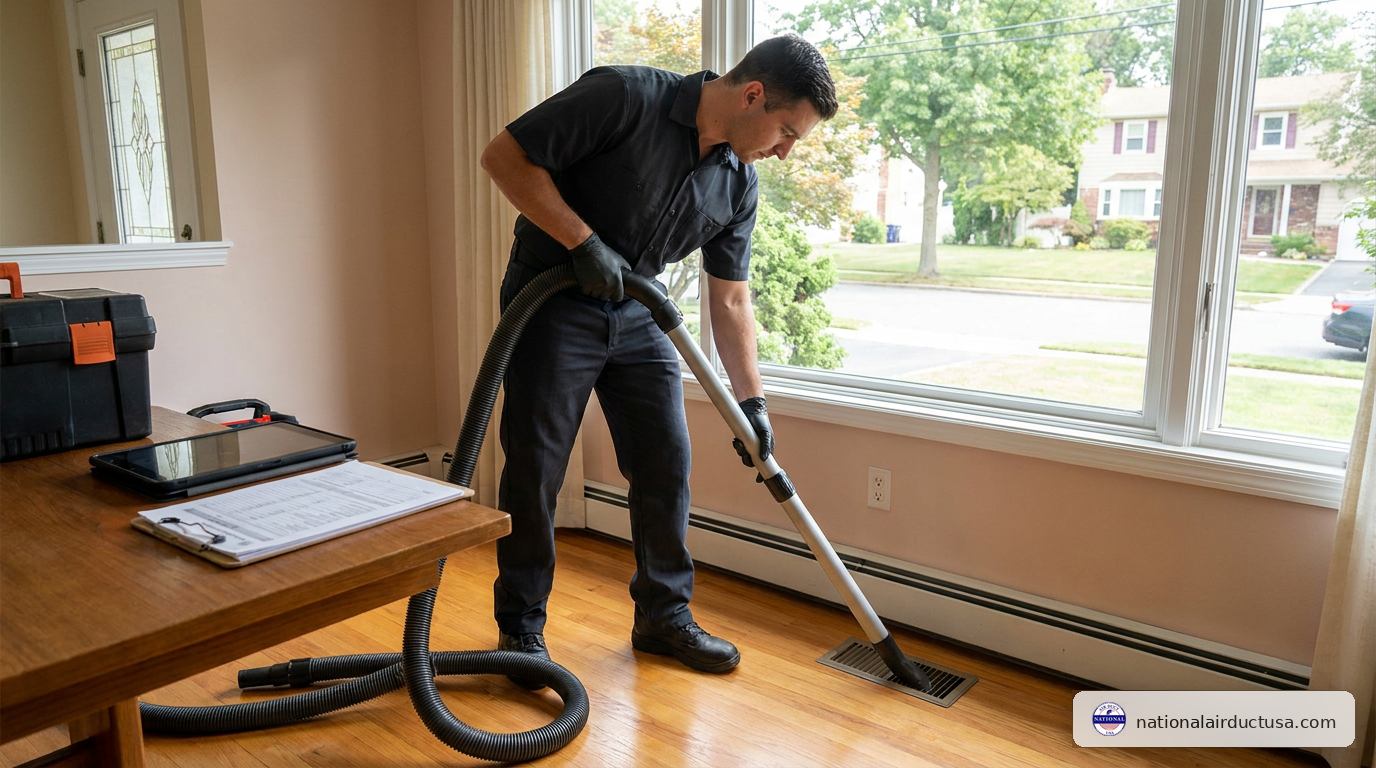
When mold is confirmed, remediation typically goes beyond a basic vacuum-and-brush duct cleaning. Techniques like antimicrobial fogging can treat hard-to-reach interior surfaces after physical debris is removed, a method explained further in our resource on mold fogging for AC ducts. The BELFOR disaster recovery team notes in its guide to mold in air vents and ducts that addressing the underlying moisture source is just as critical as cleaning visible contamination, since mold will simply return if the water problem isn’t fixed first.
Action: Routine filter changes, monitor humidity
Urgency: Not emergency
Action: Professional inspection within weeks
Urgency: Schedule soon
Action: Shut down system, call for emergency evaluation
Urgency: Immediate
What Should You Do Now, Before Winter Sets In?
With heating season already underway across Long Island, this is the moment to act rather than wait for symptoms to worsen. The New York Attorney General’s consumer guidance on mold recommends that homeowners address moisture problems promptly and document conditions before hiring a remediation contractor, a practical first step detailed in the office’s publication on fighting mold in New York homes.
Practical steps homeowners can take this week include checking condensate drain lines for clogs, inspecting visible ductwork in the basement and attic for staining or odor, and running a hygrometer to confirm indoor humidity stays below 60%. If your home experienced any flooding, roof leaks, or plumbing failures in the past year, even if it seemed minor at the time, that area of ductwork deserves a direct inspection before the furnace runs for months straight.
For homes without obvious red flags, routine maintenance still matters. Our guide on how often to clean air ducts in Long Island and our professional duct cleaning checklist outline what a thorough seasonal inspection should include, so you know what to expect from any contractor who comes to your home.
Pricing Considerations for Duct Mold Remediation
Costs for mold remediation and duct cleaning vary significantly, generally ranging from $450 to $6,000 or more depending on the extent of contamination, accessibility of ductwork, whether coils or air handlers need treatment, and the materials involved in repairs. Homes with extensive attic or crawl space duct runs, or those requiring moisture-source repairs like sealing or re-insulating, typically fall at the higher end of that range. Pricing varies based on your specific project, and the only way to get an accurate number is a direct inspection, so we encourage Long Island homeowners to request a custom quote rather than rely on generic estimates found online.
People Also Ask
Can mold in air ducts make you sick?
Yes, mold in air ducts can trigger sneezing, congestion, eye irritation, coughing, and asthma attacks in sensitive individuals when an HVAC system distributes spores throughout a home. Severity depends on the amount of growth, moisture conditions, and personal susceptibility, not simply the presence of mold.
How do you know if there is mold in your HVAC system?
Common signs include a persistent musty odor when the system runs, visible dark or discolored patches near vents, unexplained allergy or respiratory symptoms that improve away from home, and recent water damage near ductwork. A professional camera inspection is the most reliable way to confirm contamination.
Is it safe to run my furnace if I suspect mold in the ducts?
It’s safer to turn off the system and have it evaluated first, especially if the suspected mold is linked to recent flooding or water intrusion. Running a contaminated system continues to spread spores throughout the home during the exact season when windows stay closed and air circulates the most.
Does duct cleaning get rid of mold permanently?
Duct cleaning can remove visible mold and debris, but it won’t prevent regrowth unless the underlying moisture source, such as a clogged condensate drain or damp crawl space, is also fixed. Remediation without addressing moisture is typically a temporary solution.
Key Takeaways
- Mold in air ducts can worsen allergies, irritate airways, and trigger asthma, particularly as heating systems run continuously through Long Island’s winter.
- Ordinary dust is not evidence of a health hazard; routine duct cleaning has not been shown to prevent illness on its own.
- Long Island’s humid coastal climate, basements, crawl spaces, and attic ductwork create recurring moisture conditions favorable to mold growth.
- There are no validated “safe” spore-count thresholds, so decisions should rest on visible growth, moisture history, and symptoms rather than numbers alone.
- “Black mold” is not a reliable risk classification; location, moisture, ventilation, and exposure duration matter more than color.
- Cleaning is justified when there’s substantial visible growth, water damage involving the HVAC system, pest infestation, or coil and drain pan contamination.
- Addressing the moisture source is just as important as removing visible mold, or contamination will likely return.
Frequently Asked Questions
What are the first symptoms of mold exposure from air ducts?+
Early symptoms typically include sneezing, nasal congestion, watery or itchy eyes, and throat irritation that worsens at home and improves elsewhere. Individuals with asthma may notice increased wheezing or shortness of breath shortly after the heating system runs.
Why is mold in air ducts more common in Long Island homes during winter?+
As homes are sealed tighter for winter and furnaces or heat pumps run for extended periods, any moisture sitting dormant in condensate pans, coils, or duct liners gets aerosolized and pushed through the entire house. Long Island’s humid coastal climate and older basement and attic duct configurations make this more likely than in drier regions.
Who is most at risk from duct mold exposure?+
Children with asthma, older adults, people with chronic lung disease, and immunocompromised individuals face the highest risk from ongoing mold exposure. Severe or persistent breathing difficulty in any household member should prompt medical evaluation, not just environmental remediation.
What causes mold to grow inside ductwork in the first place?+
Mold needs moisture, an organic food source like dust or duct liner material, and stagnant air to establish itself. Common causes on Long Island include clogged condensate drains, damp basements and crawl spaces, poorly insulated attic ductwork, and indoor humidity above 60 percent.
How much does mold remediation for air ducts typically cost?+
Costs generally range from roughly $450 to $6,000 or more, depending on the extent of contamination, duct accessibility, whether HVAC components need treatment, and any moisture-source repairs required. Pricing varies based on your specific project, so a direct inspection is the only way to get an accurate quote.
Should I clean my ducts every year as a precaution?+
The EPA does not recommend routine duct cleaning as a blanket precaution, since dust alone isn’t a proven health hazard. Cleaning is justified when there’s visible mold, water damage involving the HVAC system, pest infestation, or heavy debris release from vents.
What should I do if I find mold near my air vents right now?+
Turn off the HVAC system to avoid spreading spores further, avoid disturbing the growth, and contact a qualified inspection or remediation professional promptly. Given that Long Island homes are entering peak heating season, delaying action means prolonged daily exposure for everyone inside.
Related: Mold in Air Ducts: How to Remove It Safely in Long Island, NY
Winter is not the time to guess about what’s circulating through your home’s air. If you’ve noticed musty odors, visible staining near vents, recent water damage, or unexplained respiratory symptoms, don’t wait for symptoms to escalate before acting. Visit National Air Duct to schedule a professional inspection, or review our signs you need duct cleaning services guide to see whether your home matches the warning signs discussed here. Long Island’s coastal humidity and aging housing stock mean this is a recurring risk, not a one-time fix, and getting ahead of it before winter fully sets in protects both your HVAC system and your family’s health.
Further reading: What Happens If You Don’t Clean Air Ducts in Long Island NY This Fall
Further reading: Best Time to Clean Air Ducts in Long Island NY: What Licensed Pros Know